

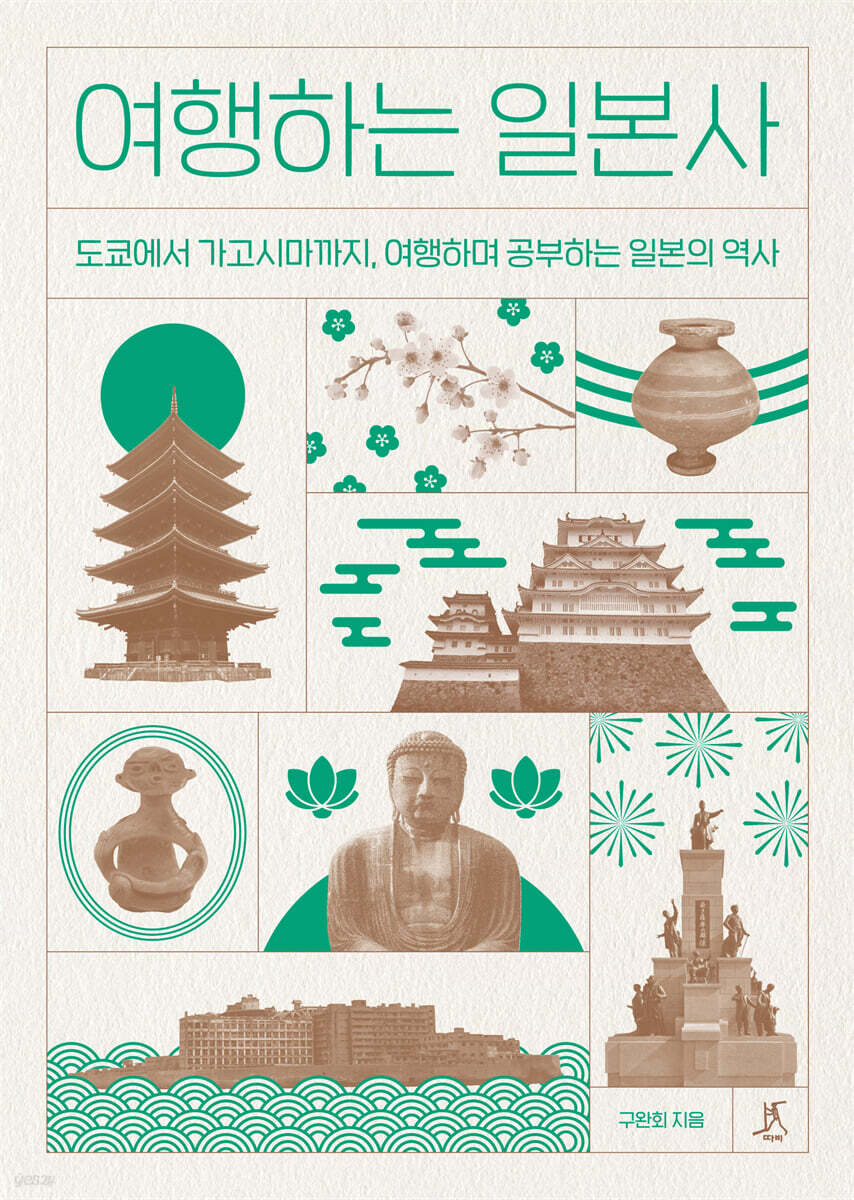
Traveling Japanese History
 |
Description
Book Introduction
From Tokyo to Kagoshima, from ancient to modern, from food alleys to museums
Studying Japanese History While Traveling
Discover Japan's past and present through travel
A country that is close yet far, a country that is known yet unknown.
It is an adjective referring to Japan.
Because it is the closest and also the most familiar to Korea in many ways, it is also the travel destination most visited by Koreans.
Traveling for relaxation, sightseeing, or simply to savor delicious food... Japan offers all these possibilities, but the most effective way to enjoy a trip is to explore history.
The author, who writes and lectures on history and travel, has published “Traveling Japanese History – From Tokyo to Kagoshima, Studying Japanese History While Traveling,” combining travel, which is “the best way to learn about Japanese history,” and history, which is “the best concept to make your trip to Japan more meaningful.”
Studying Japanese History While Traveling
Discover Japan's past and present through travel
A country that is close yet far, a country that is known yet unknown.
It is an adjective referring to Japan.
Because it is the closest and also the most familiar to Korea in many ways, it is also the travel destination most visited by Koreans.
Traveling for relaxation, sightseeing, or simply to savor delicious food... Japan offers all these possibilities, but the most effective way to enjoy a trip is to explore history.
The author, who writes and lectures on history and travel, has published “Traveling Japanese History – From Tokyo to Kagoshima, Studying Japanese History While Traveling,” combining travel, which is “the best way to learn about Japanese history,” and history, which is “the best concept to make your trip to Japan more meaningful.”
- You can preview some of the book's contents.
Preview
index
Publishing the [Traveling World History] series 005
Publishing a book 006
Part 1: Warm-up: Understanding the Flow of Japanese History
Jomon and Yayoi: The Mysterious Prehistory 021
Emperor and Noble's 'Ancient' Title Match 026
The Birth of the Warrior, the Beginning of the Middle Ages 033
Those who rise by the sword, fall by the sword! The Rise and Fall of the Shogunate 037
Troubled Times Give Birth to Heroes: The Three Heroes of Sengoku, Vol. 042
From the peace and prosperity of the Edo period to the Meiji Restoration 048
The Meiji Era: A Roller Coaster of Modernization 053
Japan, destroyed by war, revived by war 059
Let's Remember! Joyagoa-Nahegamu-Seneme 064
Japanese Geography Basics 068
Part 2: A Journey Through Japanese History
Chapter 1: Osaka: The "Kitchen of the World" That Fed Japan
Osaka Museum of History①: A Glance at 1,400 Years of City History 077
From "The World's Fortress" to "The World's Kitchen": Osaka Museum of History② 082
Osaka Castle ① 086: The Dream of "Passing the Words" Fizzled
Tokugawa Ieyasu, the Master of Tricks: Osaka Castle ② 089
Dotonbori, the "Eat-and-Run Street" History ① 097
History flows through Osaka's top three foods, too. Dotonbori② 102
The Sweat and Tears of Zainichi Koreans, Tsuruhashi① 106
Discrimination in Japan: The Zainichi Struggle: Tsuruhashi② 110
Himeji Castle, the only Japanese castle to be designated a UNESCO World Heritage Site 114
Chapter 2: Nara: A Treasure Trove of Ancient Japanese Culture Flourished by Buddhism
Asuka①: Cradle of Ancient Japanese Culture and Hiking Spot 125
Asuka Culture Led by the "Pro-Baekje Faction" Asuka② 130
Horyuji Temple, the Brilliant Flower of Asuka Culture ① 137
Prince Shotoku, who laid the foundation for the ancient nation, Horyuji② 144
Horyuji Temple ③ 147: A Beautiful Mural Painting Even Without Damjing
The beginning of the Nara period, Heijokyu ruins 152
A collaborative work of ancient Chinese, Korean, and Japanese cultures, Todaiji Daibutsu Todaiji 159
Why is the deer the national symbol? Kasuga Taisha 167
Shinto and Buddhism: A History of Love and Hate Kofukuji Temple 174
Chapter 3: Kyoto: The Millennium-Old Capital That Even Air Raids Avoided
Toji Temple, the "National" Temple of Heian-kyo, the Starting Point of a Millennium-Long Capital 183
Kiyomizu-dera Temple: The Triple Crown of History, Culture, and Tourism 189
Gion 198, the home of festivals and geisha
From "Dangpung" to "Gukpung" (Byodoin 205)
The power of the situation that created the Thousand-Armed Kannon statues Sanjusangendo 214
The Two Faces of the Muromachi Shogunate: The Golden Pavilion and the Silver Pavilion 222
Were the Emperor and the Shogun Neighboring Cousins? Kyoto Imperial Palace and Nijo Castle 229
History flows even in the bamboo forest! Arashiyama 239
Chapter 4: Tokyo: The No. 1 Place in Japanese History, the No. 1 Place in Japanese Politics
Tokyo Station 251: The starting point of your Tokyo journey and your continental invasion.
From the Shogun to the Emperor, from Edo Castle to the Imperial Palace ① 257
The Tokyo Air Raid and the Attempted Assassination of the Emperor: Imperial Palace, Part 2, 261
Yasukuni Shrine: Japan's True Feelings as a "War Criminal State" 268
Time Travel from Edo to Tokyo: Edo-Tokyo Museum 276
The Meiji Restoration and the Birth of Tonkatsu Rengatei 284
Ueno Park 290: The Bloody History Hidden in a Cherry Blossom Spot
Tokyo National Museum: Seeing Japan's History in the Real World 298
The Story of the "Fertile King Shogun" and the "Zen Gong Struggle" (Tokyo University 309)
Chapter 5: Yokohama, Kamakura, Hakone, and Nikko: Kanto's Tourist Attractions Shaped by History
A Walk Through Modern Japanese History Along the Ports of Yokohama Yamate Area 321
The assassination of the Shogun at the guardian shrines of Kamakura Kotokuin and Tsurugaoka Hachimangu Shrine 331
The history of travel flowing through the hot spring town: Hakone Sekisho and Hakone Old Highway 338
The Glory of Tokugawa Ieyasu, Shining Even After Death: Nikko Toshogu Shrine and Rinnoji Daiyuin 346
Chapter 6 Fukuoka: Gateway to Kyushu, Gateway to History
Traces of a medieval free city connecting Korea, China, and Japan: Fukuoka Hakata Station 359
From Busan to Fukuoka, from mentaiko to mentaiko HakuHaku 364
Dazaifu, the ancient capital of Kyushu, became a "mecca for entrance exams."
The Pain of the Ferry Returning to Oryukdo: Mojiko and Shimonoseki Ports 378
Chapter 7: The Land of the Arriving, the Home of King Muryeong
Yoshinogari Historical Park 387: A New Japanese Culture Created by the Newcomers
Yesterday's blood alliance is today's enemy: Hizen Nagoya Castle and Kakarashima 396
Arita, the Joseon potter who became the "god of Japanese porcelain" 404
Chapter 8: Nagasaki: The Original Port with 500 Years of History
Dejima 415, the only window of communication with the West during the Edo period
The History of Chapon, Zanpon, and Champon: Nagasaki Shinchichukagai and Shikairo 422
Battleship Island 428, the Hell Island that Led Japan's Industrialization
True peace begins with a sincere apology. Nagasaki Atomic Bomb Museum 436
Chapter 9 Kagoshima: Home of the Meiji Restoration
From Tozama Daimyo to Ungbun, Senganen and Shokoshuseikan 445
Meet the Key Figures of the Meiji Restoration: "Young Satsuma Soldiers" and the Restoration Furusatokan 453
Saigo Takamori, the man Kagoshima loved: Historic Site 460
Search 472
Photo source: 477
Publishing a book 006
Part 1: Warm-up: Understanding the Flow of Japanese History
Jomon and Yayoi: The Mysterious Prehistory 021
Emperor and Noble's 'Ancient' Title Match 026
The Birth of the Warrior, the Beginning of the Middle Ages 033
Those who rise by the sword, fall by the sword! The Rise and Fall of the Shogunate 037
Troubled Times Give Birth to Heroes: The Three Heroes of Sengoku, Vol. 042
From the peace and prosperity of the Edo period to the Meiji Restoration 048
The Meiji Era: A Roller Coaster of Modernization 053
Japan, destroyed by war, revived by war 059
Let's Remember! Joyagoa-Nahegamu-Seneme 064
Japanese Geography Basics 068
Part 2: A Journey Through Japanese History
Chapter 1: Osaka: The "Kitchen of the World" That Fed Japan
Osaka Museum of History①: A Glance at 1,400 Years of City History 077
From "The World's Fortress" to "The World's Kitchen": Osaka Museum of History② 082
Osaka Castle ① 086: The Dream of "Passing the Words" Fizzled
Tokugawa Ieyasu, the Master of Tricks: Osaka Castle ② 089
Dotonbori, the "Eat-and-Run Street" History ① 097
History flows through Osaka's top three foods, too. Dotonbori② 102
The Sweat and Tears of Zainichi Koreans, Tsuruhashi① 106
Discrimination in Japan: The Zainichi Struggle: Tsuruhashi② 110
Himeji Castle, the only Japanese castle to be designated a UNESCO World Heritage Site 114
Chapter 2: Nara: A Treasure Trove of Ancient Japanese Culture Flourished by Buddhism
Asuka①: Cradle of Ancient Japanese Culture and Hiking Spot 125
Asuka Culture Led by the "Pro-Baekje Faction" Asuka② 130
Horyuji Temple, the Brilliant Flower of Asuka Culture ① 137
Prince Shotoku, who laid the foundation for the ancient nation, Horyuji② 144
Horyuji Temple ③ 147: A Beautiful Mural Painting Even Without Damjing
The beginning of the Nara period, Heijokyu ruins 152
A collaborative work of ancient Chinese, Korean, and Japanese cultures, Todaiji Daibutsu Todaiji 159
Why is the deer the national symbol? Kasuga Taisha 167
Shinto and Buddhism: A History of Love and Hate Kofukuji Temple 174
Chapter 3: Kyoto: The Millennium-Old Capital That Even Air Raids Avoided
Toji Temple, the "National" Temple of Heian-kyo, the Starting Point of a Millennium-Long Capital 183
Kiyomizu-dera Temple: The Triple Crown of History, Culture, and Tourism 189
Gion 198, the home of festivals and geisha
From "Dangpung" to "Gukpung" (Byodoin 205)
The power of the situation that created the Thousand-Armed Kannon statues Sanjusangendo 214
The Two Faces of the Muromachi Shogunate: The Golden Pavilion and the Silver Pavilion 222
Were the Emperor and the Shogun Neighboring Cousins? Kyoto Imperial Palace and Nijo Castle 229
History flows even in the bamboo forest! Arashiyama 239
Chapter 4: Tokyo: The No. 1 Place in Japanese History, the No. 1 Place in Japanese Politics
Tokyo Station 251: The starting point of your Tokyo journey and your continental invasion.
From the Shogun to the Emperor, from Edo Castle to the Imperial Palace ① 257
The Tokyo Air Raid and the Attempted Assassination of the Emperor: Imperial Palace, Part 2, 261
Yasukuni Shrine: Japan's True Feelings as a "War Criminal State" 268
Time Travel from Edo to Tokyo: Edo-Tokyo Museum 276
The Meiji Restoration and the Birth of Tonkatsu Rengatei 284
Ueno Park 290: The Bloody History Hidden in a Cherry Blossom Spot
Tokyo National Museum: Seeing Japan's History in the Real World 298
The Story of the "Fertile King Shogun" and the "Zen Gong Struggle" (Tokyo University 309)
Chapter 5: Yokohama, Kamakura, Hakone, and Nikko: Kanto's Tourist Attractions Shaped by History
A Walk Through Modern Japanese History Along the Ports of Yokohama Yamate Area 321
The assassination of the Shogun at the guardian shrines of Kamakura Kotokuin and Tsurugaoka Hachimangu Shrine 331
The history of travel flowing through the hot spring town: Hakone Sekisho and Hakone Old Highway 338
The Glory of Tokugawa Ieyasu, Shining Even After Death: Nikko Toshogu Shrine and Rinnoji Daiyuin 346
Chapter 6 Fukuoka: Gateway to Kyushu, Gateway to History
Traces of a medieval free city connecting Korea, China, and Japan: Fukuoka Hakata Station 359
From Busan to Fukuoka, from mentaiko to mentaiko HakuHaku 364
Dazaifu, the ancient capital of Kyushu, became a "mecca for entrance exams."
The Pain of the Ferry Returning to Oryukdo: Mojiko and Shimonoseki Ports 378
Chapter 7: The Land of the Arriving, the Home of King Muryeong
Yoshinogari Historical Park 387: A New Japanese Culture Created by the Newcomers
Yesterday's blood alliance is today's enemy: Hizen Nagoya Castle and Kakarashima 396
Arita, the Joseon potter who became the "god of Japanese porcelain" 404
Chapter 8: Nagasaki: The Original Port with 500 Years of History
Dejima 415, the only window of communication with the West during the Edo period
The History of Chapon, Zanpon, and Champon: Nagasaki Shinchichukagai and Shikairo 422
Battleship Island 428, the Hell Island that Led Japan's Industrialization
True peace begins with a sincere apology. Nagasaki Atomic Bomb Museum 436
Chapter 9 Kagoshima: Home of the Meiji Restoration
From Tozama Daimyo to Ungbun, Senganen and Shokoshuseikan 445
Meet the Key Figures of the Meiji Restoration: "Young Satsuma Soldiers" and the Restoration Furusatokan 453
Saigo Takamori, the man Kagoshima loved: Historic Site 460
Search 472
Photo source: 477
Detailed image


Into the book
The eras of history are like a navigation system that tells me where I am.
The only difference is that it is a location in time, not a location in space.
Just as you don't have to worry about getting lost if you have a navigation system, you don't have to worry about getting confused if you clearly distinguish between eras.
Now that you've equipped your head with the 'era navigation system', let's embark on a full-fledged historical journey through Japan.
--- p.67
Osaka Castle, built by Toyotomi Hideyoshi, is the symbolic historical site of Osaka, but the Osaka Museum of History right next door is a better starting point for a historical tour of Osaka.
This is because you can see Osaka's history from ancient times to the present at a glance, and it is done realistically through a life-size model.
--- p.77
What is interesting is that Baekje had full support for the construction of Asuka-dera.
When the Soga clan, who were planning to build a temple, asked for help, Baekje sent not only monks but also architects, civil engineers, tile craftsmen, and painters.
It was almost like sending a 'national-level construction team'.
--- p.130
He did his best to build Sanjusangen-do in order to look good to the Pope.
In addition, he promoted the Taira clan to high-ranking officials and took over more than half of the land in Japan at the time as his family's fief.
Gradually, Kiyomori's power began to surpass that of the retired emperor.
He amassed enormous wealth through private trade with the Song Dynasty, which succeeded the Tang Dynasty (official trade at the national level was carried out during the Muromachi period).
--- p.219
In spring, when the 1,000 or so cherry trees in this spacious park come into bloom, Ueno Park becomes a veritable mountain and sea of people.
It is common to see people staying for days to enjoy the flowers at a 'good spot'.
But just 150 years ago, the area around Ueno Park was a battlefield covered in blood instead of flowers.
The Battle of Ueno, the final stand of the Boshin War against the Shogunate, took place here.
--- p.290
The Yokohama Foreigners' Cemetery, located about 200 meters from Minato-no-Mieru-Oka Park, is a rare park cemetery in Japan with hundreds of crosses lined up in a row.
The view of Yokohama's cityscape beyond the cross is unique.
The beginning of the foreign cemetery was when Admiral Perry buried sailors who died in an accident on a black ship during his second visit.
--- p.324
There are several reasons why Toyotomi Hideyoshi chose Karatsu as the starting point for his invasion force.
First of all, it was closer to Busan in a straight line than Hakata Port in Fukuoka, and the water was deep, so even large ships could easily anchor there.
Additionally, there was a fairly large island (Kabeishima) right in front of the port, which not only blocked the waves but was also good for hiding invasion ships.
--- p.396
If you go like this for about 30 minutes, you will see Gunhamdo Island outside the window.
As you can see in the picture, it looks exactly like a warship.
Upon landing, you can tour some of the buildings, including the mining facilities, miners' apartments, and swimming pool, while listening to the guide's explanations.
The sight of massive buildings collapsing here and there is striking, but nowhere can you see or hear any explanation of forced labor.
The only difference is that it is a location in time, not a location in space.
Just as you don't have to worry about getting lost if you have a navigation system, you don't have to worry about getting confused if you clearly distinguish between eras.
Now that you've equipped your head with the 'era navigation system', let's embark on a full-fledged historical journey through Japan.
--- p.67
Osaka Castle, built by Toyotomi Hideyoshi, is the symbolic historical site of Osaka, but the Osaka Museum of History right next door is a better starting point for a historical tour of Osaka.
This is because you can see Osaka's history from ancient times to the present at a glance, and it is done realistically through a life-size model.
--- p.77
What is interesting is that Baekje had full support for the construction of Asuka-dera.
When the Soga clan, who were planning to build a temple, asked for help, Baekje sent not only monks but also architects, civil engineers, tile craftsmen, and painters.
It was almost like sending a 'national-level construction team'.
--- p.130
He did his best to build Sanjusangen-do in order to look good to the Pope.
In addition, he promoted the Taira clan to high-ranking officials and took over more than half of the land in Japan at the time as his family's fief.
Gradually, Kiyomori's power began to surpass that of the retired emperor.
He amassed enormous wealth through private trade with the Song Dynasty, which succeeded the Tang Dynasty (official trade at the national level was carried out during the Muromachi period).
--- p.219
In spring, when the 1,000 or so cherry trees in this spacious park come into bloom, Ueno Park becomes a veritable mountain and sea of people.
It is common to see people staying for days to enjoy the flowers at a 'good spot'.
But just 150 years ago, the area around Ueno Park was a battlefield covered in blood instead of flowers.
The Battle of Ueno, the final stand of the Boshin War against the Shogunate, took place here.
--- p.290
The Yokohama Foreigners' Cemetery, located about 200 meters from Minato-no-Mieru-Oka Park, is a rare park cemetery in Japan with hundreds of crosses lined up in a row.
The view of Yokohama's cityscape beyond the cross is unique.
The beginning of the foreign cemetery was when Admiral Perry buried sailors who died in an accident on a black ship during his second visit.
--- p.324
There are several reasons why Toyotomi Hideyoshi chose Karatsu as the starting point for his invasion force.
First of all, it was closer to Busan in a straight line than Hakata Port in Fukuoka, and the water was deep, so even large ships could easily anchor there.
Additionally, there was a fairly large island (Kabeishima) right in front of the port, which not only blocked the waves but was also good for hiding invasion ships.
--- p.396
If you go like this for about 30 minutes, you will see Gunhamdo Island outside the window.
As you can see in the picture, it looks exactly like a warship.
Upon landing, you can tour some of the buildings, including the mining facilities, miners' apartments, and swimming pool, while listening to the guide's explanations.
The sight of massive buildings collapsing here and there is striking, but nowhere can you see or hear any explanation of forced labor.
--- p.435
Publisher's Review
Navigation for your trip to Japan, Japanese history
'Joyagoa-nahegamu-sen-eme'.
This enigmatic phrase is a major thread of Japanese history that the author puts forward as a 'navigation for traveling in Japan.'
Unlike us, who divide eras by the change of dynasties, in Japan, where dynasties have never changed even if they had no real power, eras are divided by the beginning of something (pottery, rice farming, burial mounds), the relocation of the capital (Asuka, Nara, Heian), or the rise and fall of the shogunate (warrior regime) (Kamakura, Muromachi, Sengoku, Edo, Meiji).
Part 1 of this book summarizes the major flow of Japanese history: the Jomon period (pottery) - Yayoi period (rice farming) - Kofun period (large tumuli) - Asuka period - Nara period - Heian period - Kamakura period - Muromachi period - Sengoku period - Edo period - after the Meiji Restoration.
It sets the navigation for history/travel by following the major events in Japanese history.
Enjoy Japan at the site of history
In Part 2, we take a deeper look into Japanese history by actually traveling to the sites of that history.
First, we will visit Osaka, Nara, and Kyoto, the most popular travel destinations for Koreans and the center of Japan's thousand-year history, and trace the historical footsteps of Japan since it took shape as an ancient nation.
In Osaka (and Himeji Castle in Hyogo Prefecture), the most visited city by Koreans, we explore the fascinating history of Japan, from the turbulent Sengoku period to the prosperity of the Edo shogunate, as well as the pain and struggles of Koreans in Japan.
In a country famous for its deer, we delve into the roots of Japanese culture by examining the Japanese people's efforts to establish an ancient state spanning the Asuka and Nara periods, their exchanges with the Korean Peninsula, and the role of the religions of Buddhism and Shinto.
In Kyoto, a symbol of Japanese culture, you can thoroughly experience the political history of the Heian, Muromachi, and Sengoku periods, from the imperial relatives to the shogunate, which turned the emperor into a puppet, as well as the splendidly blossoming national culture.
In Tokyo, the center of Japanese history and politics, we explore Japan's modern and contemporary history, from the peace and prosperity achieved by the Edo shogunate, to the bloody struggles of the final days of the shogunate, the Meiji Restoration, World War II, and the Zengakuren (student protest movement).
Japan's ambitions for "modernity" and "imperialism" are vividly brought to life in historical sites, hidden throughout stations, palaces, parks, shrines, restaurants, and universities.
You will also master the history of the Kanto region by traveling to Kamakura, where the first shogunate was established; Yokohama, which connected Japan to the world; Hakone, the birthplace of Japanese travel culture; and Nikko, where the glory of Tokugawa Ieyasu is preserved.
A trip to Kyushu, the closest island to the Korean Peninsula, will reveal the inseparable relationship between the Korean Peninsula and the Japanese archipelago.
In Fukuoka (and Shimonoseki, Yamaguchi Prefecture), which has been a gateway to the continent and the Korean Peninsula since ancient times, traces of the medieval free city and Joseon Tongsinsa can be found to this day.
In neighboring Saga, the relationship between Korea and Japan, which started as a blood alliance and became enemies, becomes more complicated.
In Yoshinogari, people from the Korean Peninsula formed a village around the 3rd century BC, and in Kakarashima, King Muryeong of Baekje was born.
Hizen Nagoya Castle was the starting point for the Japanese invasion force during the Imjin War, and in Arita, the Joseon potter Yi Sam-pyeong, who was brought here during the Imjin War, fired Japan's first porcelain.
From isolation to openness, from the Tozama daimyo oppressed by the Edo shogunate to the Ugo domain that played a leading role in Japan's modernization, from the center of Japan's industrialization to the site of the atomic bombing, Nagasaki and Kagoshima, on the westernmost tip of Japan, are where Japan's breathless modern and contemporary history unfolds.
This tourist destination also offers a glimpse into Japan's attitude toward its past.
Renewing our history through a historical tour of Japan
Osaka's street food is delicious even on its own, the deer in Nara Park are a sight to behold, and Kyoto's Kinkaku-ji Temple is a sight to behold.
But once you learn about the history of Japan, which is layered upon layer upon layer, the food tastes even better, the scenery becomes more memorable, and the old buildings, steeped in time, tell new stories.
As you follow the historical story that unfolds at times like a historical drama and at other times like a miniseries, you will naturally become familiar with core concepts of Japanese history such as the expedition (Insei), sekkan politics, the shogunate, sankin shifts, Taisei Hokan, and Hakone Yangsai.
A historical tour of Japan is also an opportunity to look at our own history in a new way.
In the bronze swords and tombs of Yoshinogari Historical Park, the Baekje Gate of Tsuruhashi, and the collapsed buildings of Gunkanjima, you can feel our history in Japan, which is sometimes connected by friendship and sometimes by hatred.
If through this, we can learn about our past and Japan's, understand the present, and think about the future, isn't that the very reason we travel?
'Joyagoa-nahegamu-sen-eme'.
This enigmatic phrase is a major thread of Japanese history that the author puts forward as a 'navigation for traveling in Japan.'
Unlike us, who divide eras by the change of dynasties, in Japan, where dynasties have never changed even if they had no real power, eras are divided by the beginning of something (pottery, rice farming, burial mounds), the relocation of the capital (Asuka, Nara, Heian), or the rise and fall of the shogunate (warrior regime) (Kamakura, Muromachi, Sengoku, Edo, Meiji).
Part 1 of this book summarizes the major flow of Japanese history: the Jomon period (pottery) - Yayoi period (rice farming) - Kofun period (large tumuli) - Asuka period - Nara period - Heian period - Kamakura period - Muromachi period - Sengoku period - Edo period - after the Meiji Restoration.
It sets the navigation for history/travel by following the major events in Japanese history.
Enjoy Japan at the site of history
In Part 2, we take a deeper look into Japanese history by actually traveling to the sites of that history.
First, we will visit Osaka, Nara, and Kyoto, the most popular travel destinations for Koreans and the center of Japan's thousand-year history, and trace the historical footsteps of Japan since it took shape as an ancient nation.
In Osaka (and Himeji Castle in Hyogo Prefecture), the most visited city by Koreans, we explore the fascinating history of Japan, from the turbulent Sengoku period to the prosperity of the Edo shogunate, as well as the pain and struggles of Koreans in Japan.
In a country famous for its deer, we delve into the roots of Japanese culture by examining the Japanese people's efforts to establish an ancient state spanning the Asuka and Nara periods, their exchanges with the Korean Peninsula, and the role of the religions of Buddhism and Shinto.
In Kyoto, a symbol of Japanese culture, you can thoroughly experience the political history of the Heian, Muromachi, and Sengoku periods, from the imperial relatives to the shogunate, which turned the emperor into a puppet, as well as the splendidly blossoming national culture.
In Tokyo, the center of Japanese history and politics, we explore Japan's modern and contemporary history, from the peace and prosperity achieved by the Edo shogunate, to the bloody struggles of the final days of the shogunate, the Meiji Restoration, World War II, and the Zengakuren (student protest movement).
Japan's ambitions for "modernity" and "imperialism" are vividly brought to life in historical sites, hidden throughout stations, palaces, parks, shrines, restaurants, and universities.
You will also master the history of the Kanto region by traveling to Kamakura, where the first shogunate was established; Yokohama, which connected Japan to the world; Hakone, the birthplace of Japanese travel culture; and Nikko, where the glory of Tokugawa Ieyasu is preserved.
A trip to Kyushu, the closest island to the Korean Peninsula, will reveal the inseparable relationship between the Korean Peninsula and the Japanese archipelago.
In Fukuoka (and Shimonoseki, Yamaguchi Prefecture), which has been a gateway to the continent and the Korean Peninsula since ancient times, traces of the medieval free city and Joseon Tongsinsa can be found to this day.
In neighboring Saga, the relationship between Korea and Japan, which started as a blood alliance and became enemies, becomes more complicated.
In Yoshinogari, people from the Korean Peninsula formed a village around the 3rd century BC, and in Kakarashima, King Muryeong of Baekje was born.
Hizen Nagoya Castle was the starting point for the Japanese invasion force during the Imjin War, and in Arita, the Joseon potter Yi Sam-pyeong, who was brought here during the Imjin War, fired Japan's first porcelain.
From isolation to openness, from the Tozama daimyo oppressed by the Edo shogunate to the Ugo domain that played a leading role in Japan's modernization, from the center of Japan's industrialization to the site of the atomic bombing, Nagasaki and Kagoshima, on the westernmost tip of Japan, are where Japan's breathless modern and contemporary history unfolds.
This tourist destination also offers a glimpse into Japan's attitude toward its past.
Renewing our history through a historical tour of Japan
Osaka's street food is delicious even on its own, the deer in Nara Park are a sight to behold, and Kyoto's Kinkaku-ji Temple is a sight to behold.
But once you learn about the history of Japan, which is layered upon layer upon layer, the food tastes even better, the scenery becomes more memorable, and the old buildings, steeped in time, tell new stories.
As you follow the historical story that unfolds at times like a historical drama and at other times like a miniseries, you will naturally become familiar with core concepts of Japanese history such as the expedition (Insei), sekkan politics, the shogunate, sankin shifts, Taisei Hokan, and Hakone Yangsai.
A historical tour of Japan is also an opportunity to look at our own history in a new way.
In the bronze swords and tombs of Yoshinogari Historical Park, the Baekje Gate of Tsuruhashi, and the collapsed buildings of Gunkanjima, you can feel our history in Japan, which is sometimes connected by friendship and sometimes by hatred.
If through this, we can learn about our past and Japan's, understand the present, and think about the future, isn't that the very reason we travel?
GOODS SPECIFICS
- Date of issue: October 25, 2024
- Page count, weight, size: 480 pages | 720g | 147*205*29mm
- ISBN13: 9791192169415
You may also like
카테고리
korean


korean

![GQ KOREA Mark (Monthly): December [2025]](http://librairie.coreenne.fr/cdn/shop/files/8ef265dbbfbf186523ed75ba7319009d.jpg?v=1765340328&width=3840)


