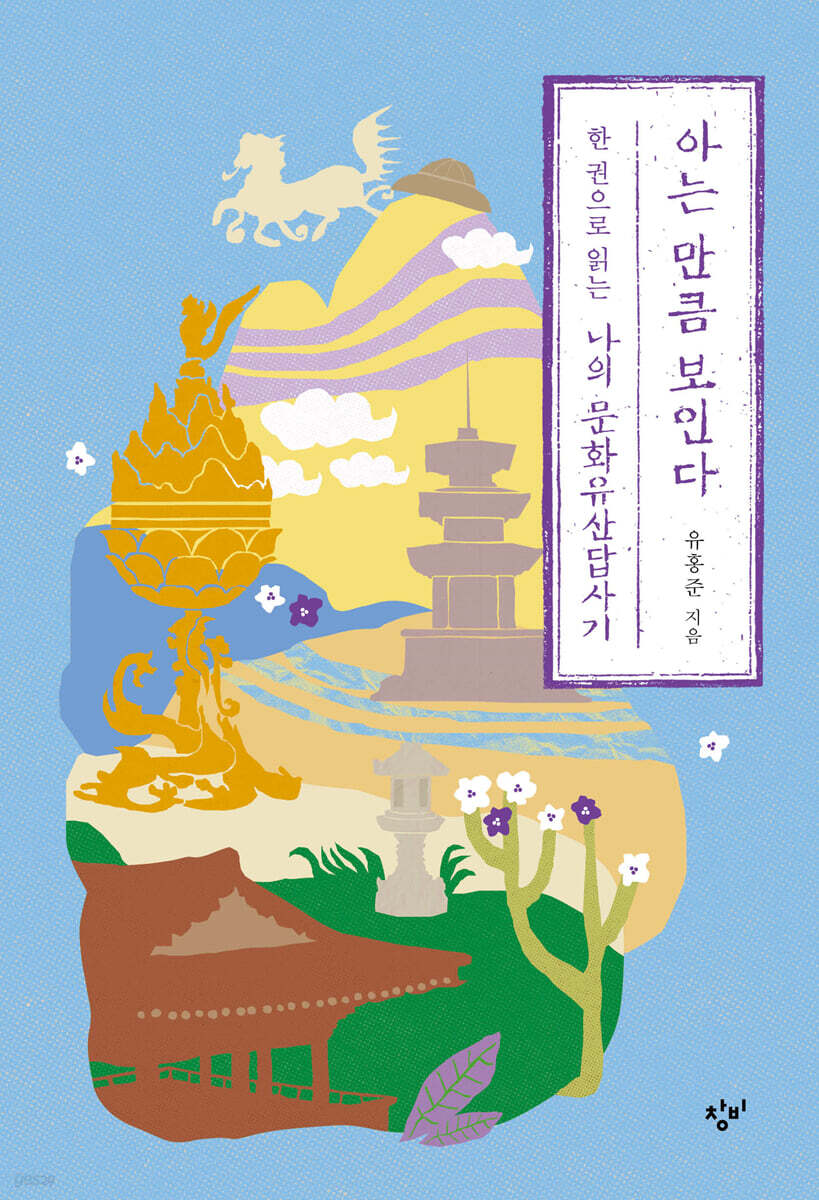
![[Yesuri Cover] You see as much as you know](http://librairie.coreenne.fr/cdn/shop/files/a6fd85f941a2d8df8ee388e20f9fb989.jpg?v=1765440176&width=3840)

[Yesuri Cover] You see as much as you know
 |
Description
Book Introduction
- A word from MD
-
Our Cultural Heritage Tour"Humans only feel as much as they know, and see as much as they feel." The 30th anniversary edition of "My Cultural Heritage Tour," beloved by 5 million readers.
We have selected 14 pieces that will help you feel the beauty of our country.
The cultural heritage commentary that showcases the essence of Korean beauty and the praise for the country's natural scenery and cultural heritage stands out.
June 16, 2023. History PD Ahn Hyun-jae
A monumental work in Korean cultural history
Revisit the highlights of "Dapsagi" in a collectible edition.
A special edition of "You See as Much as You Know" has been published on Yes24 Recover, featuring highlights from the "My Cultural Heritage Tour" series by National Museum of Korea Director Yoo Hong-jun.
The book has been republished in a luxurious hardcover edition with a photo of Director Yoo Hong-jun himself, who lovingly guides children through cultural heritage, on the cover, and the author's special edition commemorative preface has been added, adding to its value as a collectible.
To commemorate the 30th anniversary of the longest-running best-selling "Travelogue" series in Korea, which has been loved by 5 million readers, "You See as Much as You Know" was selected to contain 14 articles that show the essence of Korean beauty and the origin of K-culture. It has been much loved as a representative book of the "Travelogue" series, which has already become a modern cultural heritage.
Part 1, "If You Love, You Will Know," contains a tribute to our land, where natural scenery and cultural heritage blend together, allowing you to deeply experience the philosophy of "If You Love, You Will Know," which Director Yoo Hong-jun has always preached toward our cultural heritage.
In Part 2, 'Geomibulru Hwaibulchi', the cultural heritage masterpieces that show the essence of Korean beauty are explained, allowing readers to see at a glance where the so-called K-culture's confident confidence, represented by the popularity of 'K-pop Demon Hunters', originated.
In the special edition commemorative preface of Yes24, Director Yoo Hong-jun tells the story of Andong Manhyujeong (晩休停), which he considers the best pavilion.
This is a piece written with a uniquely gentle and delicate gaze, sublimating the affection for Manhyujeong, which was almost destroyed by the great fire in Andong in March of this year, into boundless love for our cultural heritage.
For readers curious about the origins of K-culture's vitality, we hope the Yes24 Recover Special Edition of "You See as Much as You Know", now in its new form, will provide a faithful answer.
Revisit the highlights of "Dapsagi" in a collectible edition.
A special edition of "You See as Much as You Know" has been published on Yes24 Recover, featuring highlights from the "My Cultural Heritage Tour" series by National Museum of Korea Director Yoo Hong-jun.
The book has been republished in a luxurious hardcover edition with a photo of Director Yoo Hong-jun himself, who lovingly guides children through cultural heritage, on the cover, and the author's special edition commemorative preface has been added, adding to its value as a collectible.
To commemorate the 30th anniversary of the longest-running best-selling "Travelogue" series in Korea, which has been loved by 5 million readers, "You See as Much as You Know" was selected to contain 14 articles that show the essence of Korean beauty and the origin of K-culture. It has been much loved as a representative book of the "Travelogue" series, which has already become a modern cultural heritage.
Part 1, "If You Love, You Will Know," contains a tribute to our land, where natural scenery and cultural heritage blend together, allowing you to deeply experience the philosophy of "If You Love, You Will Know," which Director Yoo Hong-jun has always preached toward our cultural heritage.
In Part 2, 'Geomibulru Hwaibulchi', the cultural heritage masterpieces that show the essence of Korean beauty are explained, allowing readers to see at a glance where the so-called K-culture's confident confidence, represented by the popularity of 'K-pop Demon Hunters', originated.
In the special edition commemorative preface of Yes24, Director Yoo Hong-jun tells the story of Andong Manhyujeong (晩休停), which he considers the best pavilion.
This is a piece written with a uniquely gentle and delicate gaze, sublimating the affection for Manhyujeong, which was almost destroyed by the great fire in Andong in March of this year, into boundless love for our cultural heritage.
For readers curious about the origins of K-culture's vitality, we hope the Yes24 Recover Special Edition of "You See as Much as You Know", now in its new form, will provide a faithful answer.
- You can preview some of the book's contents.
Preview
index
Yes24 Recover Special Edition published in the midst of flames
The story of Andong Manhyujeong, which survived even in
As you publish a book, you see what you know.
Part 1: When you love, you will know
Yeongam Dogapsa Temple and Gangjin Muwisa Temple
-Beautiful Wolchulsan Mountain and spring in the southern region
Andong Byeongsan Seowon
-Climb up to Mandeoru under the moonlight
Damyang Soswaewon, an old pavilion and garden
- A happy harmony between nature and artificiality
Cheongpung Hanbyeokru
-The breeze is alive in the pavilion.
Auraji River Jeongseon Arirang and Jeongseon Jeongamsa Temple
-The road that goes around under the three-layered sky
Seoraksan Jinjeonsa Temple Site and Seonlimwon Site
-The end of the village under the sky
Hallasan Yeongsil
-Is it azalea or rhododendron?
Part 2: Sword and Fire
Yeongju Buseoksa Temple
-I keep going and going with a heavy heart
Gyeongju Daewangam and Gameunsa Temple Sites
-Ah! Gamsansa Temple, Gamsansa Pagoda!
Bulguksa Temple in Gyeongju
-There is no flower garden in the courtyard of Bulguksa Temple.
Seosan Rock-carved Buddha
-The meaning behind that gentle smile
Buyeo Neungsan-ri Ancient Tombs and Jeongnimsa Temple Site
-May it bloom on the mountain and hill
Seoul Jongmyo Shrine
-Praise of the Jongmyo Shrine
Changdeokgung Palace in Seoul
- A palace where human scent lives on
The story of Andong Manhyujeong, which survived even in
As you publish a book, you see what you know.
Part 1: When you love, you will know
Yeongam Dogapsa Temple and Gangjin Muwisa Temple
-Beautiful Wolchulsan Mountain and spring in the southern region
Andong Byeongsan Seowon
-Climb up to Mandeoru under the moonlight
Damyang Soswaewon, an old pavilion and garden
- A happy harmony between nature and artificiality
Cheongpung Hanbyeokru
-The breeze is alive in the pavilion.
Auraji River Jeongseon Arirang and Jeongseon Jeongamsa Temple
-The road that goes around under the three-layered sky
Seoraksan Jinjeonsa Temple Site and Seonlimwon Site
-The end of the village under the sky
Hallasan Yeongsil
-Is it azalea or rhododendron?
Part 2: Sword and Fire
Yeongju Buseoksa Temple
-I keep going and going with a heavy heart
Gyeongju Daewangam and Gameunsa Temple Sites
-Ah! Gamsansa Temple, Gamsansa Pagoda!
Bulguksa Temple in Gyeongju
-There is no flower garden in the courtyard of Bulguksa Temple.
Seosan Rock-carved Buddha
-The meaning behind that gentle smile
Buyeo Neungsan-ri Ancient Tombs and Jeongnimsa Temple Site
-May it bloom on the mountain and hill
Seoul Jongmyo Shrine
-Praise of the Jongmyo Shrine
Changdeokgung Palace in Seoul
- A palace where human scent lives on
Detailed image

Publisher's Review
Love our cultural heritage
The ultimate guide for everyone
In 1993, when the first volume of “My Cultural Heritage Tour” was published, the concept of “cultural heritage” and the word “tour” were not very familiar to the general public.
At that point, 『My Cultural Heritage Tour』, which appeared under the motto of “You see as much as you know,” has consistently appealed to the love for our cultural heritage to this day.
Thanks to this, we, who had been busy longing for and imitating Western culture, finally began to reflect on our own appearance and historical heritage, and were able to breathe with the world and create a new contemporary culture without falling into a sense of cultural inferiority.
This is why the "Travelogue" series, which is richly filled with not only cultural heritage but also the natural scenery, historical context, and stories of the people where it is located, is still highly regarded as a monumental work of Korean cultural history.
"You See as Much as You Know: My Cultural Heritage Tour in One Volume" brings together seven natural wonders of our country and seven masterpieces that showcase the pinnacle of Korean beauty, which have become the foundation of K-culture, allowing you to feel confident in Korean culture.
For readers who are reading 'Dapsagi' for the first time,
For readers who want to start 'reading with reminiscence'
The now familiar saying, “You see as much as you know,” originated from ‘Dapsagi’ and is also the exclusive property of Yoo Hong-jun’s travelogue.
Taking this phrase as the title, the 30th anniversary edition of 『You See as Much as You Know』, which has a youthful appearance, does not simply include the original text of the existing travelogue, but rather refines the facts and information to fit the current situation, and tries to make Chinese characters and art history terms that could be difficult to understand as easy as possible.
This is to reach out to a new generation of readers who may have felt burdened by the scale and volume of the 'Travelogue' series, which consists of 20 volumes (12 volumes on Korea, 5 volumes on Japan, and 3 volumes on China).
Professor Yoo Hong-jun, the author, expressed his hope that through “You See as Much as You Know,” new-generation readers would acquire the aesthetics of our proud cultural heritage and use it as a foundation for their own new cultural creation.
Professor Yoo Hong-jun's commentary on Korean beauty, which awakens the value of Korean culture and breathes life into it, will serve as an excellent foundation for a global-oriented K-culture.
Of course, for existing readers who have loved "My Cultural Heritage Tour," I hope this will be a reminiscent read that will bring back old memories and rekindle their love for our cultural heritage.
To celebrate the 30th anniversary of the publication of “My Cultural Heritage Tour,” Changbi will hold a story contest for readers and a book signing event at the Seoul International Book Fair on Sunday, June 18.
Starting Tuesday, July 4th, the exhibition ‘Author Yoo Hong-jun’s Room’ will be held at the Changbi Seogyo building, and follow-up promotions for the new book ‘My Cultural Heritage Tour: Pilgrimage to National Museums’ (tentative title) to be published within the year will continue.
Author's Note
『You See as Much as You Know』 Special Edition Published on Yes24
The Story of Andong Manhyujeong, Surviving the Flames
『You See as Much as You Know』 is a book that selects the most representative sites of the ten domestic volumes of 『My Cultural Heritage Tour』 and publishes them in one volume.
The reason this book is so loved by readers is because it is not just a one-time read, but also serves as a guide for field trips.
When we go on field trips, the cultural heritages we encounter are almost all architectural structures, such as palaces, temples, pagodas at abandoned temple sites, seowon (Confucian academies), noblemen's houses, and gardens.
However, many readers ask why gardens are not as developed in our country as in China or Japan.
The question is, what kind of gardens are there in private gardens, not palace gardens like the rear garden of Changdeokgung Palace?
I'd like to take this opportunity to briefly answer that question.
The reason is not that gardens are not developed in our country, but rather that the concept and types of gardens are different from those in other countries.
While Chinese and Japanese gardens basically recreate nature in artificial spaces, Korean gardens place artificial buildings in scenic natural spaces, making the entire landscape into a garden.
The most representative examples include Damyang Soswaewon and Bogildo Seyeonjeong.
People in ancient times called this type of garden a garden.
And during the Joseon Dynasty, noblemen built many villas.
This is a place where you can escape the world and live in harmony with nature, creating a leisurely living space.
In modern terms, it is similar to a villa.
Representative villas in Seoul include Heungseon Daewonkwon's Seokpajeong and Seongbuk-dong villa.
Separately, there is a Jeongsa (精舍).
Originally, a Buddhist temple referred to a house where a monk practiced asceticism, but during the Joseon Dynasty, noblemen would set up a separate place for reading not far from their homes, where they would read books and teach their disciples.
Representative examples include the Oksanjeongsa (玉山精舍) of Hoejae Yi Eon-jeok (李彦迪, 1491-1553) located next to Oksan Seowon (玉山書院) in Gyeongju, the Okyeonjeongsa (玉淵精舍) of Seoae Yu Seong-ryong (柳成龍, 1542-1607) located across from Hahoe Village in Andong, and the Namganjeongsa (南澗精舍) of Uam Song Si-yeol located in Hoedeok, South Chungcheong Province, and there are countless others.
These palaces are simple in their architecture, but their locations offer breathtaking views, embracing the valley or river as if it were their own garden.
So, when you visit the temple, you can feel the spirit of humanity along with the profound beauty of the scenery.
And the most abundant one is sperm.
The main house is located far from the house and has a living space, but the pavilion is located close to the house, usually in a valley, and is a small building with only three rooms and a veranda.
However, the pavilion is a unique Korean garden building that takes up all of the surrounding natural scenery.
If I were asked to recommend one of them, I would not hesitate to choose Manhyujeong (晩休亭) in Gilan-myeon, Andong.
National Route 35, which runs from Andong City to Yeongcheon along the Gilancheon River, is a quiet old road that is rare to find these days.
In the distant past, the post station in Mukgye-ri was called Geomu-yeok (居無驛), meaning a place where no one lived, as it was a remote inland area.
The first person to enter this remote mountain village was Kim Gye-haeng (金係行, 1431-1517) of the Andong Kim clan, Bobaekdang.
Bae Baek-dang was appointed to the government office at the age of 50 and held various positions in the three ministries. However, after suffering severe hardships during the Murosa Incident, he came down to Mukgye-ri and lived in seclusion.
This house is the Bo Baek Dang Jong Tak (寶白堂宗宅) of the Mukgye clan.
He said, “There is no treasure in our house.
He said, “If there is anything, it is integrity (吾家無寶物 寶物惟淸白)” and used the characters for treasure (寶) and white (白) to name his pen name, Bobaekdang.
In front of the Baebakdangjongtaek mountain, water flows down in a magnificent waterfall. On the other side of the stream on the mountainside, across a precarious single-log bridge, there is a pavilion called Manhyujeong.
Manhyu (晩休) means ‘a place of rest for ten thousand years’, and Bobaekdang stayed here until he was 87 years old.
After Baekdang passed away, the Seowon established to commemorate his learning and virtue is Mukgye Seowon (溪書院).
Thus, Mukgye-ri, which was once uninhabited, has become a scenic spot for exploration, with the Bobaekdangjongtaek, Mukgye Seowon, and Manhyujeong all designated as cultural properties, and I have introduced them in my book, ‘Pilgrimage to National Treasures.’
But in the spring of 2025, a terrible forest fire swept through the mountain where Manhyujeong was located.
Dozens of fire trucks prevented forest fires at Byeongsan Seowon and Hahoe Village in Andong, but Manhyujeong in Mukgye-ri, a remote area, was only covered with flame retardant cloth and was left exposed to the fire.
The forest fire was so intense that all the trees on Mt. Mukgye-ri were burned, turning the entire mountain black.
Everyone felt sorry, thinking that Manhyujeong had been lost.
However, after the forest fire passed, when I visited Manhyujeong, I found that it was still alive, wrapped in yellow flame retardant cloth, as if by a miracle of heaven.
The moment I heard this news, I couldn't help but let out a shout of joy and surprise.
It will take several years for the trees on the mountain behind Manhyujeong to grow again.
But as long as the valley, the single-log bridge, and Manhyujeong Pavilion exist, the beauty of our country's representative pavilion will live on.
August 2025, Yoo Hong-jun
Editor's and Designer's Note
In an age where AI quickly summarizes and guides all information, "See as Much as You Know: My Cultural Heritage Tour in One Volume" still conveys the rich human experience of walking, feeling, and thinking.
It teaches you the knowledge that you can only realize when you look at the stone wall of an old house and the flowers at your feet for a long time and love them.
You might ask, "What does all this mean?" But this book is filled with the insights and inspiration the author gained from traveling the country for 30 years, championing our cultural heritage.
Wouldn't the creativity of K-culture, which is gaining global acclaim, blossom even more fully when we directly experience the aesthetics of our cultural heritage, which can be considered its origin?
I hope that readers will also have a valuable time encountering the essence of our culture through this book.
- Editor Kim Sae-rom
The stone steps of Daeungjeon Hall have delicate curves like the ends of sleeves of a jeogori.
After reading this book, whenever I visit a palace or temple, I find myself looking again at the stone steps and stone floors that I had previously walked on without a second thought.
My mindset has changed in trying to read the design and beauty intended by the ancients.
Just as this book allowed me to see things I had previously been unable to see, I hope that this book will also become a window through which readers can rediscover beauty.
I hope that your vision will reach beyond the holographic screen that changes color as much as the light it absorbs, and that you will be able to see as much as you know.
- Designer Noh Hye-ji
The ultimate guide for everyone
In 1993, when the first volume of “My Cultural Heritage Tour” was published, the concept of “cultural heritage” and the word “tour” were not very familiar to the general public.
At that point, 『My Cultural Heritage Tour』, which appeared under the motto of “You see as much as you know,” has consistently appealed to the love for our cultural heritage to this day.
Thanks to this, we, who had been busy longing for and imitating Western culture, finally began to reflect on our own appearance and historical heritage, and were able to breathe with the world and create a new contemporary culture without falling into a sense of cultural inferiority.
This is why the "Travelogue" series, which is richly filled with not only cultural heritage but also the natural scenery, historical context, and stories of the people where it is located, is still highly regarded as a monumental work of Korean cultural history.
"You See as Much as You Know: My Cultural Heritage Tour in One Volume" brings together seven natural wonders of our country and seven masterpieces that showcase the pinnacle of Korean beauty, which have become the foundation of K-culture, allowing you to feel confident in Korean culture.
For readers who are reading 'Dapsagi' for the first time,
For readers who want to start 'reading with reminiscence'
The now familiar saying, “You see as much as you know,” originated from ‘Dapsagi’ and is also the exclusive property of Yoo Hong-jun’s travelogue.
Taking this phrase as the title, the 30th anniversary edition of 『You See as Much as You Know』, which has a youthful appearance, does not simply include the original text of the existing travelogue, but rather refines the facts and information to fit the current situation, and tries to make Chinese characters and art history terms that could be difficult to understand as easy as possible.
This is to reach out to a new generation of readers who may have felt burdened by the scale and volume of the 'Travelogue' series, which consists of 20 volumes (12 volumes on Korea, 5 volumes on Japan, and 3 volumes on China).
Professor Yoo Hong-jun, the author, expressed his hope that through “You See as Much as You Know,” new-generation readers would acquire the aesthetics of our proud cultural heritage and use it as a foundation for their own new cultural creation.
Professor Yoo Hong-jun's commentary on Korean beauty, which awakens the value of Korean culture and breathes life into it, will serve as an excellent foundation for a global-oriented K-culture.
Of course, for existing readers who have loved "My Cultural Heritage Tour," I hope this will be a reminiscent read that will bring back old memories and rekindle their love for our cultural heritage.
To celebrate the 30th anniversary of the publication of “My Cultural Heritage Tour,” Changbi will hold a story contest for readers and a book signing event at the Seoul International Book Fair on Sunday, June 18.
Starting Tuesday, July 4th, the exhibition ‘Author Yoo Hong-jun’s Room’ will be held at the Changbi Seogyo building, and follow-up promotions for the new book ‘My Cultural Heritage Tour: Pilgrimage to National Museums’ (tentative title) to be published within the year will continue.
Author's Note
『You See as Much as You Know』 Special Edition Published on Yes24
The Story of Andong Manhyujeong, Surviving the Flames
『You See as Much as You Know』 is a book that selects the most representative sites of the ten domestic volumes of 『My Cultural Heritage Tour』 and publishes them in one volume.
The reason this book is so loved by readers is because it is not just a one-time read, but also serves as a guide for field trips.
When we go on field trips, the cultural heritages we encounter are almost all architectural structures, such as palaces, temples, pagodas at abandoned temple sites, seowon (Confucian academies), noblemen's houses, and gardens.
However, many readers ask why gardens are not as developed in our country as in China or Japan.
The question is, what kind of gardens are there in private gardens, not palace gardens like the rear garden of Changdeokgung Palace?
I'd like to take this opportunity to briefly answer that question.
The reason is not that gardens are not developed in our country, but rather that the concept and types of gardens are different from those in other countries.
While Chinese and Japanese gardens basically recreate nature in artificial spaces, Korean gardens place artificial buildings in scenic natural spaces, making the entire landscape into a garden.
The most representative examples include Damyang Soswaewon and Bogildo Seyeonjeong.
People in ancient times called this type of garden a garden.
And during the Joseon Dynasty, noblemen built many villas.
This is a place where you can escape the world and live in harmony with nature, creating a leisurely living space.
In modern terms, it is similar to a villa.
Representative villas in Seoul include Heungseon Daewonkwon's Seokpajeong and Seongbuk-dong villa.
Separately, there is a Jeongsa (精舍).
Originally, a Buddhist temple referred to a house where a monk practiced asceticism, but during the Joseon Dynasty, noblemen would set up a separate place for reading not far from their homes, where they would read books and teach their disciples.
Representative examples include the Oksanjeongsa (玉山精舍) of Hoejae Yi Eon-jeok (李彦迪, 1491-1553) located next to Oksan Seowon (玉山書院) in Gyeongju, the Okyeonjeongsa (玉淵精舍) of Seoae Yu Seong-ryong (柳成龍, 1542-1607) located across from Hahoe Village in Andong, and the Namganjeongsa (南澗精舍) of Uam Song Si-yeol located in Hoedeok, South Chungcheong Province, and there are countless others.
These palaces are simple in their architecture, but their locations offer breathtaking views, embracing the valley or river as if it were their own garden.
So, when you visit the temple, you can feel the spirit of humanity along with the profound beauty of the scenery.
And the most abundant one is sperm.
The main house is located far from the house and has a living space, but the pavilion is located close to the house, usually in a valley, and is a small building with only three rooms and a veranda.
However, the pavilion is a unique Korean garden building that takes up all of the surrounding natural scenery.
If I were asked to recommend one of them, I would not hesitate to choose Manhyujeong (晩休亭) in Gilan-myeon, Andong.
National Route 35, which runs from Andong City to Yeongcheon along the Gilancheon River, is a quiet old road that is rare to find these days.
In the distant past, the post station in Mukgye-ri was called Geomu-yeok (居無驛), meaning a place where no one lived, as it was a remote inland area.
The first person to enter this remote mountain village was Kim Gye-haeng (金係行, 1431-1517) of the Andong Kim clan, Bobaekdang.
Bae Baek-dang was appointed to the government office at the age of 50 and held various positions in the three ministries. However, after suffering severe hardships during the Murosa Incident, he came down to Mukgye-ri and lived in seclusion.
This house is the Bo Baek Dang Jong Tak (寶白堂宗宅) of the Mukgye clan.
He said, “There is no treasure in our house.
He said, “If there is anything, it is integrity (吾家無寶物 寶物惟淸白)” and used the characters for treasure (寶) and white (白) to name his pen name, Bobaekdang.
In front of the Baebakdangjongtaek mountain, water flows down in a magnificent waterfall. On the other side of the stream on the mountainside, across a precarious single-log bridge, there is a pavilion called Manhyujeong.
Manhyu (晩休) means ‘a place of rest for ten thousand years’, and Bobaekdang stayed here until he was 87 years old.
After Baekdang passed away, the Seowon established to commemorate his learning and virtue is Mukgye Seowon (溪書院).
Thus, Mukgye-ri, which was once uninhabited, has become a scenic spot for exploration, with the Bobaekdangjongtaek, Mukgye Seowon, and Manhyujeong all designated as cultural properties, and I have introduced them in my book, ‘Pilgrimage to National Treasures.’
But in the spring of 2025, a terrible forest fire swept through the mountain where Manhyujeong was located.
Dozens of fire trucks prevented forest fires at Byeongsan Seowon and Hahoe Village in Andong, but Manhyujeong in Mukgye-ri, a remote area, was only covered with flame retardant cloth and was left exposed to the fire.
The forest fire was so intense that all the trees on Mt. Mukgye-ri were burned, turning the entire mountain black.
Everyone felt sorry, thinking that Manhyujeong had been lost.
However, after the forest fire passed, when I visited Manhyujeong, I found that it was still alive, wrapped in yellow flame retardant cloth, as if by a miracle of heaven.
The moment I heard this news, I couldn't help but let out a shout of joy and surprise.
It will take several years for the trees on the mountain behind Manhyujeong to grow again.
But as long as the valley, the single-log bridge, and Manhyujeong Pavilion exist, the beauty of our country's representative pavilion will live on.
August 2025, Yoo Hong-jun
Editor's and Designer's Note
In an age where AI quickly summarizes and guides all information, "See as Much as You Know: My Cultural Heritage Tour in One Volume" still conveys the rich human experience of walking, feeling, and thinking.
It teaches you the knowledge that you can only realize when you look at the stone wall of an old house and the flowers at your feet for a long time and love them.
You might ask, "What does all this mean?" But this book is filled with the insights and inspiration the author gained from traveling the country for 30 years, championing our cultural heritage.
Wouldn't the creativity of K-culture, which is gaining global acclaim, blossom even more fully when we directly experience the aesthetics of our cultural heritage, which can be considered its origin?
I hope that readers will also have a valuable time encountering the essence of our culture through this book.
- Editor Kim Sae-rom
The stone steps of Daeungjeon Hall have delicate curves like the ends of sleeves of a jeogori.
After reading this book, whenever I visit a palace or temple, I find myself looking again at the stone steps and stone floors that I had previously walked on without a second thought.
My mindset has changed in trying to read the design and beauty intended by the ancients.
Just as this book allowed me to see things I had previously been unable to see, I hope that this book will also become a window through which readers can rediscover beauty.
I hope that your vision will reach beyond the holographic screen that changes color as much as the light it absorbs, and that you will be able to see as much as you know.
- Designer Noh Hye-ji
GOODS SPECIFICS
- Date of issue: August 13, 2025
- Format: Hardcover book binding method guide
- Page count, weight, size: 428 pages | 624g | 148*215*25mm
- ISBN13: 9788936479381
- ISBN10: 8936479385
You may also like
카테고리
korean


korean

![GQ KOREA Mark (Monthly): December [2025]](http://librairie.coreenne.fr/cdn/shop/files/8ef265dbbfbf186523ed75ba7319009d.jpg?v=1765340328&width=3840)


