

A child's brain remembers the parents' attitude.
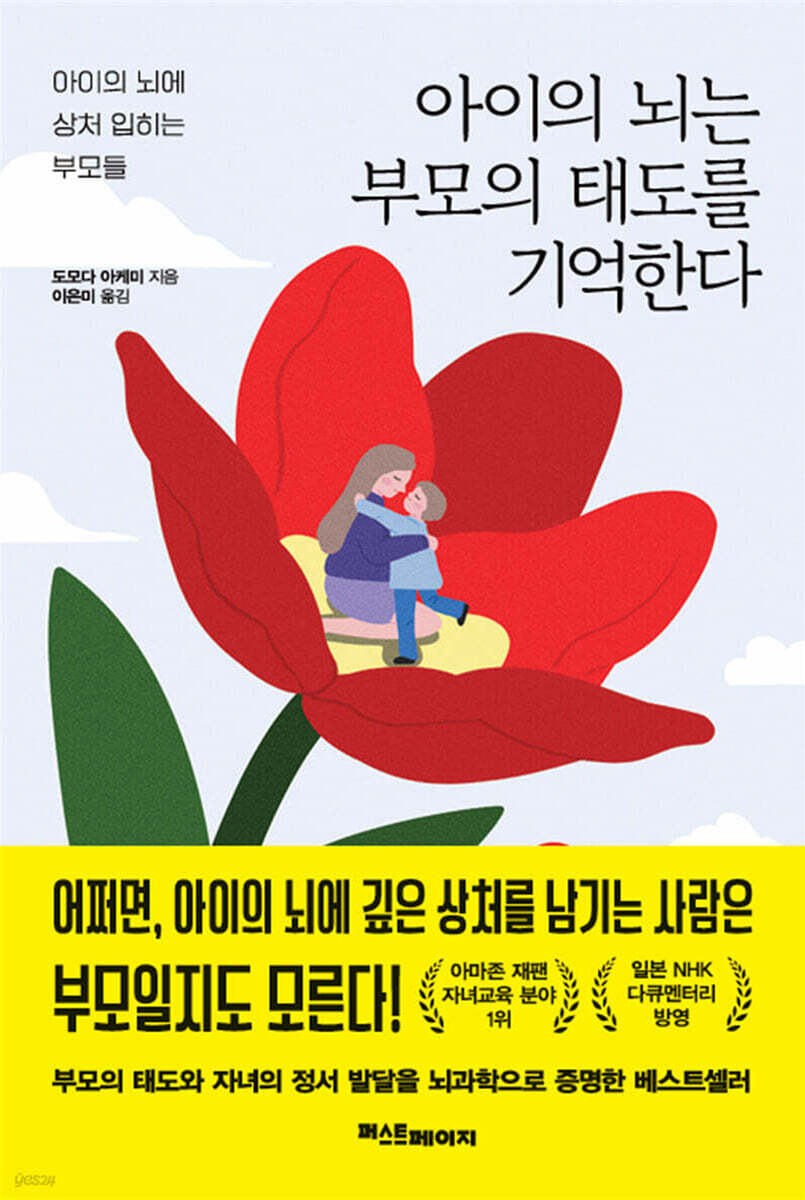 |
Description
Book Introduction
“Perhaps, a deep wound in the child’s brain
“The person who leaves behind might be the parents!”
A pediatric psychiatrist with 38 years of experience tells you
Parenting tips to boost your child's self-esteem and support brain development
Amazon Japan ranks #1 in children's education
Japanese NHK documentary aired
Professor Akemi Tomoda, a leading Japanese neuroscientist who has studied child development for nearly 40 years and is also a mother of two daughters, reveals in her book, “A Child’s Brain Remembers its Parents’ Attitudes,” the surprising fact that a child’s delicate brain transforms itself to adapt to pain when it is subjected to extreme stress, or multi-treatment.
As a result, the brain function is affected, the child cannot develop normally, and furthermore, the child suffers aftereffects throughout his or her life.
Multi-treatment, which refers to any type of inappropriate attitude that hinders the healthy growth and development of a child's mind and body, includes fighting between couples in front of the child.
So, there are probably no parents who can confidently say that they have never tried multi-therapy.
The author even confesses that he is no exception.
So, what parents and caregivers need to do right now is to recognize what inappropriate parenting looks like and avoid repeating it.
Moreover, if we properly understand and practice proper parenting methods, we can prevent our children from growing up with wounds.
"A Child's Brain Remembers its Parents' Attitudes" analyzes the relationship between multi-treatment and a child's brain development using brain science, and discusses the importance of early intervention and practical advice for parents.
From the inappropriate parenting practices we may not have noticed in our daily lives, to the damage that misaligned parenting can do to a child's brain, to the know-how to form attachments that will boost a child's self-esteem and help their brain development, to even the recovery and happiness of parents as wounded healers, if we put the wisdom of this book into practice, our children will be able to grow up healthier and more mature.
“The person who leaves behind might be the parents!”
A pediatric psychiatrist with 38 years of experience tells you
Parenting tips to boost your child's self-esteem and support brain development
Amazon Japan ranks #1 in children's education
Japanese NHK documentary aired
Professor Akemi Tomoda, a leading Japanese neuroscientist who has studied child development for nearly 40 years and is also a mother of two daughters, reveals in her book, “A Child’s Brain Remembers its Parents’ Attitudes,” the surprising fact that a child’s delicate brain transforms itself to adapt to pain when it is subjected to extreme stress, or multi-treatment.
As a result, the brain function is affected, the child cannot develop normally, and furthermore, the child suffers aftereffects throughout his or her life.
Multi-treatment, which refers to any type of inappropriate attitude that hinders the healthy growth and development of a child's mind and body, includes fighting between couples in front of the child.
So, there are probably no parents who can confidently say that they have never tried multi-therapy.
The author even confesses that he is no exception.
So, what parents and caregivers need to do right now is to recognize what inappropriate parenting looks like and avoid repeating it.
Moreover, if we properly understand and practice proper parenting methods, we can prevent our children from growing up with wounds.
"A Child's Brain Remembers its Parents' Attitudes" analyzes the relationship between multi-treatment and a child's brain development using brain science, and discusses the importance of early intervention and practical advice for parents.
From the inappropriate parenting practices we may not have noticed in our daily lives, to the damage that misaligned parenting can do to a child's brain, to the know-how to form attachments that will boost a child's self-esteem and help their brain development, to even the recovery and happiness of parents as wounded healers, if we put the wisdom of this book into practice, our children will be able to grow up healthier and more mature.
- You can preview some of the book's contents.
Preview
index
Entering_ The brains of our children who were being hurt
The close relationship between the brain and the mind
Children's brains are being damaged
A child's brain is damaged by the parents' wrong attitude.
A child's mental development cannot be resolved by parents alone.
What I really want to say through this book
PART 1 Parents Who Didn't Realize They Were Doing Something Wrong
: Inappropriate parenting hidden in everyday life
What is mental development disorder?
Inappropriate attitudes that hinder mental development
Inappropriate parenting, multi-treatment
I was doing multi-treatment without knowing it
Corporal punishment cannot be discipline.
Corporal punishment that hurts both body and mind
Violence that is not easy to detect
Things to consider when considering sexual multi-treatment
Parents have a duty to protect their children.
Skin contact helps healthy brain development
To prevent attachment disorders caused by neglect
One more skinship than a smartphone
Psychological multi-treatment that is easily overlooked
You can discipline without using harsh language.
Small acknowledgements and praise can help children grow their potential.
Fights between spouses should be held in a place where the children are not present.
Verbal abuse that causes more serious damage to the brain
Even if the brain appears healthy on the outside, it is already damaged
People who harm their own children for attention
PART 2 Children Hurt by Misdirected Parenting
: The Effects of Multi-Treatment on a Child's Brain
Trauma that impedes a child's development
What Happens in the Brains of Children Who Have Been Physically Punished
Brain damage caused by sexual masturbation
Sensitive areas of the brain that are vulnerable to damage
Verbal abuse that causes emotional instability or relationship difficulties
Parental Fighting Affects IQ and Memory
A brain dulled by attachment disorder
There may be more wounds
Children who grow up with scars
PART 3: Post-Traumatic Growth and Child Resilience
: How to heal and restore a wounded child's brain
Is a wounded brain irreversible?
Drug treatment and psychotherapy
Supportive psychotherapy to support the child's mind
Exposure therapy to give new meaning to memories
Play Therapy for Overcoming Trauma
New treatments for trauma resolution
To build children's resilience
Children who overcome their wounds and grow
Case Study ① Psychological Multi-Treatment for Witnessing Domestic Violence
Case Study ② Maternal Neglect and Psychological Multi-Treatment
Case Study ③ Multi-Treatment Due to Father's Corporal Punishment
Case Study ④ Witnessing Domestic Violence and Sexual Multi-Treatment
PART 4: How to Raise a Child with High Self-Esteem
: Forming attachments that boost a child's self-esteem and help brain development
Strong bond and attachment between parents and children
Types of attachment styles
The process of forming attachment
Attachment disorder, which can become a mental illness
Two types of attachment disorders
The Difference Between Attachment Disorder and Developmental Disorder
It will take a long time and be difficult, but the children will definitely recover.
Conversation skills that will nurture your child's heart
Case Study ① Attachment Disorder Caused by Mother's Death and Father's Indifference
Case Study ② Attachment Disorders Caused by Difficulties in Parenting
Case Study ③ Attachment Disorder Caused by Excessive Discipline from the Father
PART 5 Parents Should Be Wounded Healers
: Wisdom for becoming a good parent who nurtures the heart of a child
To break the vicious cycle
If parents can enjoy happiness first
It's my first time as a parent, mom and dad.
If you could just wait a little bit before getting angry,
It takes a village to raise a child.
So that all children can grow up without being hurt
In conclusion: There are no parents who do not love their children, even if they are clumsy.
Glossary of Terms
References
The close relationship between the brain and the mind
Children's brains are being damaged
A child's brain is damaged by the parents' wrong attitude.
A child's mental development cannot be resolved by parents alone.
What I really want to say through this book
PART 1 Parents Who Didn't Realize They Were Doing Something Wrong
: Inappropriate parenting hidden in everyday life
What is mental development disorder?
Inappropriate attitudes that hinder mental development
Inappropriate parenting, multi-treatment
I was doing multi-treatment without knowing it
Corporal punishment cannot be discipline.
Corporal punishment that hurts both body and mind
Violence that is not easy to detect
Things to consider when considering sexual multi-treatment
Parents have a duty to protect their children.
Skin contact helps healthy brain development
To prevent attachment disorders caused by neglect
One more skinship than a smartphone
Psychological multi-treatment that is easily overlooked
You can discipline without using harsh language.
Small acknowledgements and praise can help children grow their potential.
Fights between spouses should be held in a place where the children are not present.
Verbal abuse that causes more serious damage to the brain
Even if the brain appears healthy on the outside, it is already damaged
People who harm their own children for attention
PART 2 Children Hurt by Misdirected Parenting
: The Effects of Multi-Treatment on a Child's Brain
Trauma that impedes a child's development
What Happens in the Brains of Children Who Have Been Physically Punished
Brain damage caused by sexual masturbation
Sensitive areas of the brain that are vulnerable to damage
Verbal abuse that causes emotional instability or relationship difficulties
Parental Fighting Affects IQ and Memory
A brain dulled by attachment disorder
There may be more wounds
Children who grow up with scars
PART 3: Post-Traumatic Growth and Child Resilience
: How to heal and restore a wounded child's brain
Is a wounded brain irreversible?
Drug treatment and psychotherapy
Supportive psychotherapy to support the child's mind
Exposure therapy to give new meaning to memories
Play Therapy for Overcoming Trauma
New treatments for trauma resolution
To build children's resilience
Children who overcome their wounds and grow
Case Study ① Psychological Multi-Treatment for Witnessing Domestic Violence
Case Study ② Maternal Neglect and Psychological Multi-Treatment
Case Study ③ Multi-Treatment Due to Father's Corporal Punishment
Case Study ④ Witnessing Domestic Violence and Sexual Multi-Treatment
PART 4: How to Raise a Child with High Self-Esteem
: Forming attachments that boost a child's self-esteem and help brain development
Strong bond and attachment between parents and children
Types of attachment styles
The process of forming attachment
Attachment disorder, which can become a mental illness
Two types of attachment disorders
The Difference Between Attachment Disorder and Developmental Disorder
It will take a long time and be difficult, but the children will definitely recover.
Conversation skills that will nurture your child's heart
Case Study ① Attachment Disorder Caused by Mother's Death and Father's Indifference
Case Study ② Attachment Disorders Caused by Difficulties in Parenting
Case Study ③ Attachment Disorder Caused by Excessive Discipline from the Father
PART 5 Parents Should Be Wounded Healers
: Wisdom for becoming a good parent who nurtures the heart of a child
To break the vicious cycle
If parents can enjoy happiness first
It's my first time as a parent, mom and dad.
If you could just wait a little bit before getting angry,
It takes a village to raise a child.
So that all children can grow up without being hurt
In conclusion: There are no parents who do not love their children, even if they are clumsy.
Glossary of Terms
References
Detailed image
.jpg)
Into the book
If you were asked where your heart is, what would you say? In Japan, when someone's heart is hurt, they say their chest hurts, and when trying to understand the state of their heart, they use the expression "Place your hand on your heart and think."
Seeing that the English word 'heart' is also translated as 'mind' or 'heart', it seems that many people, regardless of nationality, believe that the heart is in the chest.
When you feel anxious or scared, your heart races, and when you are extremely nervous or under a lot of stress, it feels like someone is squeezing your heart.
But scientists say, “The mind is in the brain.”
The reason your heart is pounding and your stomach hurts is because your brain orders hormones to be released, which affect organs like your heart and stomach.
The brain, the organ in our heads, is the command center that controls everything from our living and breathing at this very moment to our daily thoughts and actions, including our emotions of joy, anger, sorrow, and pleasure, as well as our perspective on things, our way of thinking, how we form relationships with people and society around us, and how we respond to unexpected accidents or difficult situations.
--- pp.13~14, from “Introduction_The Brains of Our Children Who Were Wounded”
Maltreatment is a derivative of treatment with the prefix mal- (bad), and is translated into Japanese as 'inappropriate parenting'.
It has almost the same meaning as abuse, but it is a general term for parenting that hinders the healthy growth and development of a child's mind and body.
It can be said to be a broader concept that means all kinds of inappropriate behavior that adults show toward children.
Even if there was no intention to harm the adult, and even if the child does not show any visible injuries or mental illness, if the act was inappropriate, it is already 'multi-treatment' in itself.
--- p.33, from “PART 1_ Parents who didn’t realize they were doing something wrong”
Our body is equipped with the ability to sensitively perceive all external stimuli, including sight, hearing, and physical sensations, and to respond to those stimuli.
But what if the child lives in an environment full of danger and anxiety, with no support available from those around them?
What if the source of that danger and anxiety is the parent or caregiver they most rely on? The child has no choice but to find a solution on their own.
The fact that the brain itself undergoes transformation and change as a result is a very convincing story even from a biological perspective.
For example, the amygdala, which controls fear, is more active in people who have experienced severe masturbation, which can be considered a defense instinct, a measure to always be on guard and prepared for danger.
Additionally, people who have undergone mult-treatment tend to begin sexual activity at an earlier age than those who have not.
It is thought to be an instinctive adaptation to survive in a world full of danger and to leave behind offspring.
--- pp.103~104, from 「PART 2_ Children who are hurt by misguided parenting」
Even the adult brain, which seems to have almost finished growing, has hope, so the child's brain, which continues to grow day by day, naturally has a greater chance of recovery with proper treatment and care.
This is because the brain of a sensitive period is as flexible as it is vulnerable to damage.
The brain is largely developed during the period from childhood to adolescence.
However, this does not mean that growth does not occur at all afterward, and recent research has revealed that some aspects are gradually completed over time until the late 20s.
Even though it may not be as flexible as it was in childhood, it is possible to recover with consistent time and effort.
What is most important at this time is early response.
Especially for children, the sooner they receive appropriate treatment, the faster their brain and mind can recover.
--- p.113, from “PART 3_ Post-traumatic growth and children’s resilience”
Imagine this.
A small child is left neglected and ignored by his parents when he needs help.
Even if you approach your child to show affection, look up at them, and smile, your parents don't respond at all.
Even when you are anxious and feeling down, don't give them words of empathy or encouragement.
How can healthy attachments be formed in this environment?
Children learn about human relationships and the principles of society by giving and receiving affection and trust from their parents.
But if this interaction is lacking, the way we interact with people changes.
In fact, if the attachment between parents and children is shallow, the child will not engage in instinctive attachment behaviors.
When parents go out, they don't chase after them or burst into tears, and when they come home, instead of welcoming them, they pretend not to see them.
They assume, 'This is basically how people get along' or 'This is the norm' and even after they grow up and go out into society, they are unable to form proper relationships with other people.
The word that collectively refers to the various symptoms that appear due to lack of attachment is 'attachment disorder'.
Attachment disorders have been treated as a mental problem, but as explained in Chapter 2, they also have a significant impact on brain development itself.
In particular, attachment disorders caused by excessive multi-treatment during infancy are said to easily cause problems with emotional control, which can progress to serious mental illnesses such as depression, ADHD, and dissociative identity disorder.
--- pp.167~168, from 「PART 4_ Parenting Methods for Raising Children with High Self-Esteem」
A child is not a miniature version of an adult.
If you don't understand this, you may find yourself unknowingly giving your child unnecessarily forceful instructions in an attempt to make them listen.
For example, there is a period of time when children are particularly disobedient, called the 'ugly four-year-old', and this occurs because the prefrontal cortex is still underdeveloped.
It is difficult for an immature brain that is still growing to suppress its desires.
In other words, in a sense, judging the behavior during this period as simply 'bullying' and scolding them is a waste of time.
What is needed at this time is a ‘watchful’ attitude.
So how can we manage our anger wisely? Anger management is an effective strategy.
Anger is a natural emotion, and there is no need to deny it.
However, in order to deal with anger appropriately, it is necessary to learn techniques to deal with stress that causes irritation or anger, such as recognizing the types of anger, finding the causes, and wisely conveying those feelings to the other person.
Anger management is helpful not only for relationships between parents and children, couples, but also between coworkers and friends.
Recently, there has been an increase in the number of books and lectures on this topic.
Another effort we adults can make is to train our children to improve their communication skills so that they do not use harsh language or violence when conveying something to them.
Seeing that the English word 'heart' is also translated as 'mind' or 'heart', it seems that many people, regardless of nationality, believe that the heart is in the chest.
When you feel anxious or scared, your heart races, and when you are extremely nervous or under a lot of stress, it feels like someone is squeezing your heart.
But scientists say, “The mind is in the brain.”
The reason your heart is pounding and your stomach hurts is because your brain orders hormones to be released, which affect organs like your heart and stomach.
The brain, the organ in our heads, is the command center that controls everything from our living and breathing at this very moment to our daily thoughts and actions, including our emotions of joy, anger, sorrow, and pleasure, as well as our perspective on things, our way of thinking, how we form relationships with people and society around us, and how we respond to unexpected accidents or difficult situations.
--- pp.13~14, from “Introduction_The Brains of Our Children Who Were Wounded”
Maltreatment is a derivative of treatment with the prefix mal- (bad), and is translated into Japanese as 'inappropriate parenting'.
It has almost the same meaning as abuse, but it is a general term for parenting that hinders the healthy growth and development of a child's mind and body.
It can be said to be a broader concept that means all kinds of inappropriate behavior that adults show toward children.
Even if there was no intention to harm the adult, and even if the child does not show any visible injuries or mental illness, if the act was inappropriate, it is already 'multi-treatment' in itself.
--- p.33, from “PART 1_ Parents who didn’t realize they were doing something wrong”
Our body is equipped with the ability to sensitively perceive all external stimuli, including sight, hearing, and physical sensations, and to respond to those stimuli.
But what if the child lives in an environment full of danger and anxiety, with no support available from those around them?
What if the source of that danger and anxiety is the parent or caregiver they most rely on? The child has no choice but to find a solution on their own.
The fact that the brain itself undergoes transformation and change as a result is a very convincing story even from a biological perspective.
For example, the amygdala, which controls fear, is more active in people who have experienced severe masturbation, which can be considered a defense instinct, a measure to always be on guard and prepared for danger.
Additionally, people who have undergone mult-treatment tend to begin sexual activity at an earlier age than those who have not.
It is thought to be an instinctive adaptation to survive in a world full of danger and to leave behind offspring.
--- pp.103~104, from 「PART 2_ Children who are hurt by misguided parenting」
Even the adult brain, which seems to have almost finished growing, has hope, so the child's brain, which continues to grow day by day, naturally has a greater chance of recovery with proper treatment and care.
This is because the brain of a sensitive period is as flexible as it is vulnerable to damage.
The brain is largely developed during the period from childhood to adolescence.
However, this does not mean that growth does not occur at all afterward, and recent research has revealed that some aspects are gradually completed over time until the late 20s.
Even though it may not be as flexible as it was in childhood, it is possible to recover with consistent time and effort.
What is most important at this time is early response.
Especially for children, the sooner they receive appropriate treatment, the faster their brain and mind can recover.
--- p.113, from “PART 3_ Post-traumatic growth and children’s resilience”
Imagine this.
A small child is left neglected and ignored by his parents when he needs help.
Even if you approach your child to show affection, look up at them, and smile, your parents don't respond at all.
Even when you are anxious and feeling down, don't give them words of empathy or encouragement.
How can healthy attachments be formed in this environment?
Children learn about human relationships and the principles of society by giving and receiving affection and trust from their parents.
But if this interaction is lacking, the way we interact with people changes.
In fact, if the attachment between parents and children is shallow, the child will not engage in instinctive attachment behaviors.
When parents go out, they don't chase after them or burst into tears, and when they come home, instead of welcoming them, they pretend not to see them.
They assume, 'This is basically how people get along' or 'This is the norm' and even after they grow up and go out into society, they are unable to form proper relationships with other people.
The word that collectively refers to the various symptoms that appear due to lack of attachment is 'attachment disorder'.
Attachment disorders have been treated as a mental problem, but as explained in Chapter 2, they also have a significant impact on brain development itself.
In particular, attachment disorders caused by excessive multi-treatment during infancy are said to easily cause problems with emotional control, which can progress to serious mental illnesses such as depression, ADHD, and dissociative identity disorder.
--- pp.167~168, from 「PART 4_ Parenting Methods for Raising Children with High Self-Esteem」
A child is not a miniature version of an adult.
If you don't understand this, you may find yourself unknowingly giving your child unnecessarily forceful instructions in an attempt to make them listen.
For example, there is a period of time when children are particularly disobedient, called the 'ugly four-year-old', and this occurs because the prefrontal cortex is still underdeveloped.
It is difficult for an immature brain that is still growing to suppress its desires.
In other words, in a sense, judging the behavior during this period as simply 'bullying' and scolding them is a waste of time.
What is needed at this time is a ‘watchful’ attitude.
So how can we manage our anger wisely? Anger management is an effective strategy.
Anger is a natural emotion, and there is no need to deny it.
However, in order to deal with anger appropriately, it is necessary to learn techniques to deal with stress that causes irritation or anger, such as recognizing the types of anger, finding the causes, and wisely conveying those feelings to the other person.
Anger management is helpful not only for relationships between parents and children, couples, but also between coworkers and friends.
Recently, there has been an increase in the number of books and lectures on this topic.
Another effort we adults can make is to train our children to improve their communication skills so that they do not use harsh language or violence when conveying something to them.
--- pp.203~204, from “PART 5_ Parents who must become wounded healers”
Publisher's Review
Maybe, a deep wound in the child's brain
The person left behind might be the parents!
Parents' attitudes and children's emotional development
Bestseller Proven by Brain Science
★ Amazon Japan's #1 child education category
★ Japanese NHK documentary aired
There was a time when a research team led by Professor Jeong Ik-joong of the Department of Social Welfare at Ewha Womans University published the results of a study that found that the social cost that Korean society has to pay due to child abuse amounts to up to 76 trillion won per year, which became a hot topic.
Of course, the problem of child abuse cannot be completely solved by economic aspects.
However, from a social perspective, this is a case that clearly shows that enormous support and effort are needed to solve the problem of child abuse.
When we think of 'abuse,' we might only think of incidents covered in the media and think that it has nothing to do with us.
Professor Akemi Tomoda, a leading Japanese neuroscientist who has studied child development for nearly 40 years and is also a mother of two daughters, asserts in her book, “A Child’s Brain Remembers the Parents’ Attitudes,” that this is absolutely not the case.
The author worries that the image of the word abuse can obscure the essence, and calls the "inappropriate attitude of a strong adult toward a weak child" "maltreatment."
Multitreatment is a concept that refers to all types of inappropriate attitudes that hinder the healthy growth and development of a child's mind and body.
Even if there was no intention, if the action was inappropriate, it is already multtreatment in itself.
This also includes fights between couples that happen in front of the child.
So, there are probably no parents who can confidently say that they have never tried multi-therapy.
The author also confesses that he is no exception.
So, what parents and caregivers need to do right now is to recognize what inappropriate parenting looks like and avoid repeating it.
Moreover, if we properly understand and practice proper parenting methods, we can prevent our children from growing up with wounds.
A person becomes a 'parent' for the first time when a child is born.
There are no parents who do not love their children, even if they are clumsy.
The author generously shares with all those struggling to raise children even at this very moment how to become better parents, how to protect their children, and how to help them overcome their pain.
A pediatric psychiatrist with 38 years of experience tells you
Parenting tips to boost your child's self-esteem and support brain development
The human brain, which weighs only 300 grams at birth, gradually acquires survival skills as it grows.
For the brain to develop healthily, it is essential to receive appropriate care and affection from parents or caregivers in the early stages of life.
However, if the child is subjected to extreme stress, or multi-treatment, during this period, the child's delicate brain will change itself to adapt to the pain.
In other words, it is a kind of defense mechanism for survival.
As a result, the author's research results show that the brain function is affected, the child cannot develop normally, and furthermore, the child suffers aftereffects throughout his or her life.
"A Child's Brain Remembers its Parents' Attitudes" analyzes the relationship between multi-treatment and a child's brain development using brain science, and discusses the importance of early intervention and practical advice for parents.
Part 1 explores what constitutes maltreatment, not just behaviors that can be considered overt abuse, but also those we encounter in everyday life. Part 2 examines the scientific implications of maltreatment, including everyday inappropriate parenting, on a child's brain. Part 3 explores the resilience and flexibility of the child's brain and provides specific ways to heal the emotional wounds they have suffered. Part 4 explores attachment formation, which is essential for a child's healthy development, and demonstrates that attachment can be rebuilt even now.
And in the last PART 5, it is said that it is also important to help parents who were doing wrong because they were not aware of it and were clumsy.
In this way, we warmly encourage parents to become ‘wounded healers’ and embrace our children.
Neither parents nor children can escape from multi-treatment all at once.
Even so, let's put into practice the practical parenting techniques contained in this book one by one to help our children grow up with a healthy mind and brain.
As the author wishes, our child will grow up to be a healthy and mature adult without any emotional pain.
Adults will also be able to break the vicious cycle and experience recovery.
The person left behind might be the parents!
Parents' attitudes and children's emotional development
Bestseller Proven by Brain Science
★ Amazon Japan's #1 child education category
★ Japanese NHK documentary aired
There was a time when a research team led by Professor Jeong Ik-joong of the Department of Social Welfare at Ewha Womans University published the results of a study that found that the social cost that Korean society has to pay due to child abuse amounts to up to 76 trillion won per year, which became a hot topic.
Of course, the problem of child abuse cannot be completely solved by economic aspects.
However, from a social perspective, this is a case that clearly shows that enormous support and effort are needed to solve the problem of child abuse.
When we think of 'abuse,' we might only think of incidents covered in the media and think that it has nothing to do with us.
Professor Akemi Tomoda, a leading Japanese neuroscientist who has studied child development for nearly 40 years and is also a mother of two daughters, asserts in her book, “A Child’s Brain Remembers the Parents’ Attitudes,” that this is absolutely not the case.
The author worries that the image of the word abuse can obscure the essence, and calls the "inappropriate attitude of a strong adult toward a weak child" "maltreatment."
Multitreatment is a concept that refers to all types of inappropriate attitudes that hinder the healthy growth and development of a child's mind and body.
Even if there was no intention, if the action was inappropriate, it is already multtreatment in itself.
This also includes fights between couples that happen in front of the child.
So, there are probably no parents who can confidently say that they have never tried multi-therapy.
The author also confesses that he is no exception.
So, what parents and caregivers need to do right now is to recognize what inappropriate parenting looks like and avoid repeating it.
Moreover, if we properly understand and practice proper parenting methods, we can prevent our children from growing up with wounds.
A person becomes a 'parent' for the first time when a child is born.
There are no parents who do not love their children, even if they are clumsy.
The author generously shares with all those struggling to raise children even at this very moment how to become better parents, how to protect their children, and how to help them overcome their pain.
A pediatric psychiatrist with 38 years of experience tells you
Parenting tips to boost your child's self-esteem and support brain development
The human brain, which weighs only 300 grams at birth, gradually acquires survival skills as it grows.
For the brain to develop healthily, it is essential to receive appropriate care and affection from parents or caregivers in the early stages of life.
However, if the child is subjected to extreme stress, or multi-treatment, during this period, the child's delicate brain will change itself to adapt to the pain.
In other words, it is a kind of defense mechanism for survival.
As a result, the author's research results show that the brain function is affected, the child cannot develop normally, and furthermore, the child suffers aftereffects throughout his or her life.
"A Child's Brain Remembers its Parents' Attitudes" analyzes the relationship between multi-treatment and a child's brain development using brain science, and discusses the importance of early intervention and practical advice for parents.
Part 1 explores what constitutes maltreatment, not just behaviors that can be considered overt abuse, but also those we encounter in everyday life. Part 2 examines the scientific implications of maltreatment, including everyday inappropriate parenting, on a child's brain. Part 3 explores the resilience and flexibility of the child's brain and provides specific ways to heal the emotional wounds they have suffered. Part 4 explores attachment formation, which is essential for a child's healthy development, and demonstrates that attachment can be rebuilt even now.
And in the last PART 5, it is said that it is also important to help parents who were doing wrong because they were not aware of it and were clumsy.
In this way, we warmly encourage parents to become ‘wounded healers’ and embrace our children.
Neither parents nor children can escape from multi-treatment all at once.
Even so, let's put into practice the practical parenting techniques contained in this book one by one to help our children grow up with a healthy mind and brain.
As the author wishes, our child will grow up to be a healthy and mature adult without any emotional pain.
Adults will also be able to break the vicious cycle and experience recovery.
GOODS SPECIFICS
- Date of issue: November 10, 2025
- Page count, weight, size: 224 pages | 364g | 140*205*13mm
- ISBN13: 9791199340022
- ISBN10: 1199340022
You may also like
카테고리
korean


korean

![GQ KOREA Mark (Monthly): December [2025]](http://librairie.coreenne.fr/cdn/shop/files/8ef265dbbfbf186523ed75ba7319009d.jpg?v=1765340328&width=3840)


