

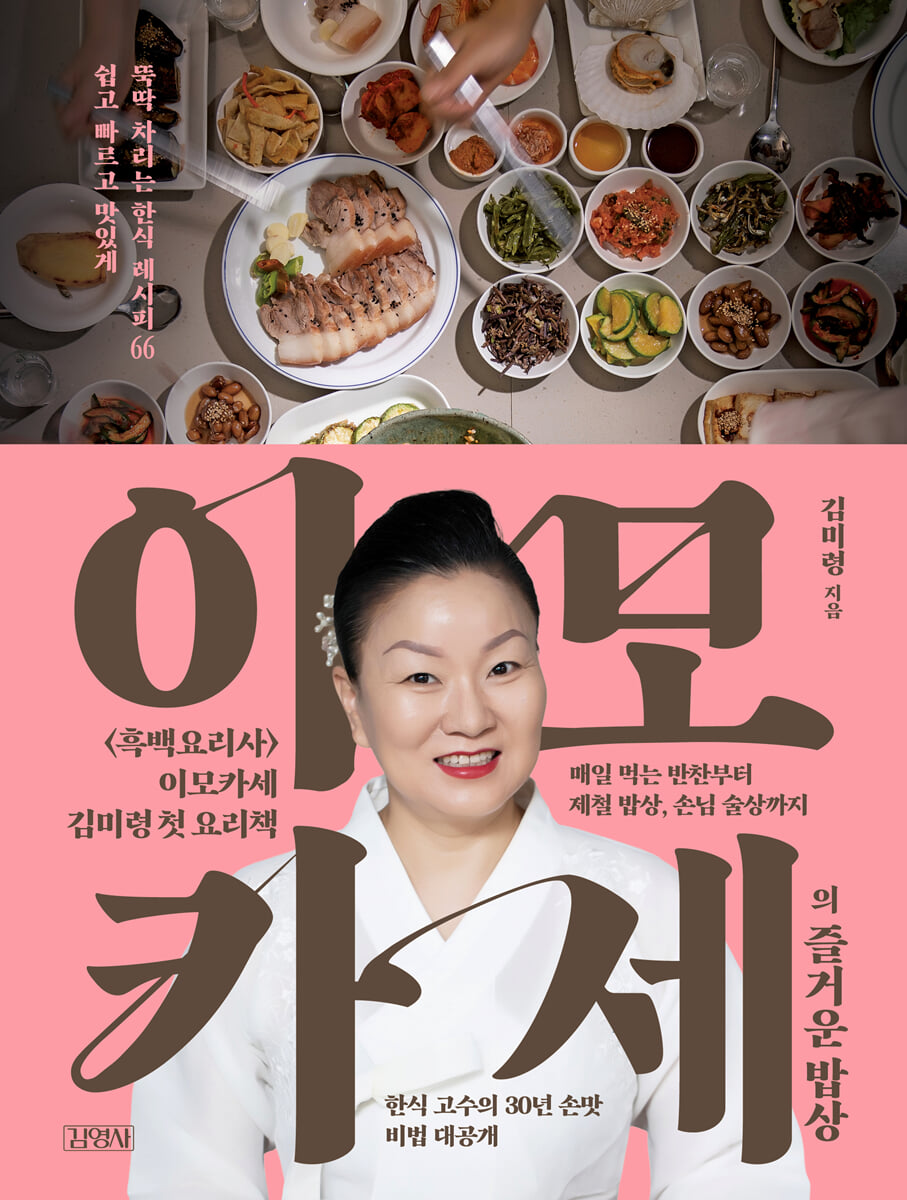
Imokase's delightful table
 |
Description
Book Introduction
Kim Mi-ryeong, "Imokase No. 1" on "Black and White Chef"
My first cookbook is published!
Boil 700 bowls of noodles every day,
Quickly prepares 20 different seasonal dishes
A Korean cuisine expert reveals his 30-year culinary secrets.
Chef Kim Mi-ryeong, the first Imokase chef, gained attention after making it to the final six on Netflix's "Black and White Chef" with "Roasted Seaweed Tastier Than Caviar" and "Andong Guksu, the Dish of a Lifetime."
He cooks 700 bowls of noodles a day at Gyeongdong Market and prepares over 20 dishes at his "Happy Table" in the evening. His 30 years of culinary secrets are now published in his first cookbook, "Imokase's Happy Table."
From home-cooked side dishes that will have you emptying a bowl of rice in an instant, to seasonal meals for all four seasons, to a table where drinks flow smoothly for guests, we've captured the best flavors of Korean cuisine, carefully selected at your fingertips.
All-purpose seasonings and broths that bring out the natural flavors of ingredients while adding richness, techniques for selecting and preparing seasonal ingredients, recipes that kill two birds with one stone for creating multiple dishes with one ingredient, and even practical tips for kimchi beginners.
It generously shares the recipe for a simple yet profound, simple yet warm life in the style of emojis.
“It may not be flashy, but it has a taste that makes someone smile,
I think that's the taste of Kim Mi-ryeong's life right now." _From the text
My first cookbook is published!
Boil 700 bowls of noodles every day,
Quickly prepares 20 different seasonal dishes
A Korean cuisine expert reveals his 30-year culinary secrets.
Chef Kim Mi-ryeong, the first Imokase chef, gained attention after making it to the final six on Netflix's "Black and White Chef" with "Roasted Seaweed Tastier Than Caviar" and "Andong Guksu, the Dish of a Lifetime."
He cooks 700 bowls of noodles a day at Gyeongdong Market and prepares over 20 dishes at his "Happy Table" in the evening. His 30 years of culinary secrets are now published in his first cookbook, "Imokase's Happy Table."
From home-cooked side dishes that will have you emptying a bowl of rice in an instant, to seasonal meals for all four seasons, to a table where drinks flow smoothly for guests, we've captured the best flavors of Korean cuisine, carefully selected at your fingertips.
All-purpose seasonings and broths that bring out the natural flavors of ingredients while adding richness, techniques for selecting and preparing seasonal ingredients, recipes that kill two birds with one stone for creating multiple dishes with one ingredient, and even practical tips for kimchi beginners.
It generously shares the recipe for a simple yet profound, simple yet warm life in the style of emojis.
“It may not be flashy, but it has a taste that makes someone smile,
I think that's the taste of Kim Mi-ryeong's life right now." _From the text
- You can preview some of the book's contents.
Preview
index
Introduction / The Taste of Life Learned at the Daily Table
Chapter 1: The Secret to a Delicious Cook
Before cooking, take a peek at the Imokase kitchen.
Imokase Recipe Basics: Easy, Quick, and Delicious!
The secret to perfecting the taste of the dish
Basic broth that adds savory flavor
Quick Hand Material Handling Method
Measurements that make cooking easier
Chapter 2: The Secret to a Bountiful Table
Imokasepyo's Daily Side Dish Set Makes Table Setting Easy
1 set of highly praised imokase signature side dishes
Roasted seaweed
Spicy tofu stew
Grilled shiitake mushrooms
Dakbokkeumtang
2 sets of tofu side dishes that are both delicious and nutritious
Grilled tofu with sesame oil
Soft tofu stew
Tofu jelly rice
3 sets of rice, one bowl, quick and easy side dish
Pork Kimchi Stew
Bean sprout salad
Stir-fried pork
Chapter 3 Ingredient Secrets
A seasonal table filled with delicious seasonal ingredients
Spring
Spring Vegetable Dishes
Soybean powder chive stew
Stir-fried mugwort leaves
Stir-fried garlic chives and shrimp
Cold soybean paste stew
Bean powder mugwort soup
Spring Seafood Dishes
Stir-fried squid
Stir-fried tofu and seaweed
Stir-fried sea squirt
Spring kimchi
green onion kimchi
Sedum water kimchi
Spring seasonal table
A table of fragrant spring vegetables
Durupjeon
Water parsley salad
summer
Summer Vegetable Dishes
Stir-fried chili peppers
Potato pancakes
Spicy braised potatoes
Grilled eggplant
Cucumber and seaweed cold soup
Stir-fried semi-dried squid and chili peppers
Summer seafood dishes
Braised mackerel with potatoes
Octopus porridge
Octopus salad with vinegar
Summer kimchi
Cucumber Sobagi
Pickled radish water kimchi
Summer seasonal table
A hearty meal of barley rice
Stir-fried zucchini
Turnip bibimbap
Wooronggang soybean paste
A nutritious meal to beat the summer heat
Dakgaejang
Chicken salad
Autumn
Autumn Vegetable Dishes
Pork and mung bean pancakes
Beef and Taro Soup
One-bite sweet potato candy
Auk Doenjang Guk
Pumpkin and goji vegetables
Old pumpkin soup
Autumn Seafood Dishes
Octopus and cabbage stew
Flower crab soup
Braised Yangmiri
Autumn kimchi
Pickled cabbage
Autumn seasonal table
3 full-course meals made in one go
Dongrang-daeng
Gochujeon
Sanjeok Skewers
winter
Winter vegetable dishes
Shiitake mushroom soup
Spring onion soybean paste salad
Stir-fried deodeok
Stir-fried radish greens
Winter seafood dishes
Clam dumplings
Oyster salad
Myeongtae soup
Seasoned cockles
Winter kimchi
Dongchimi
Kimchi
Kakdugi
Winter seasonal table
A plate of hot Andong guksu and boiled pork
Andong Guksi
boiled pork
Cabbage pancakes
Andongjip Ggotjeori
The joy of a warm meal
Chapter 1: The Secret to a Delicious Cook
Before cooking, take a peek at the Imokase kitchen.
Imokase Recipe Basics: Easy, Quick, and Delicious!
The secret to perfecting the taste of the dish
Basic broth that adds savory flavor
Quick Hand Material Handling Method
Measurements that make cooking easier
Chapter 2: The Secret to a Bountiful Table
Imokasepyo's Daily Side Dish Set Makes Table Setting Easy
1 set of highly praised imokase signature side dishes
Roasted seaweed
Spicy tofu stew
Grilled shiitake mushrooms
Dakbokkeumtang
2 sets of tofu side dishes that are both delicious and nutritious
Grilled tofu with sesame oil
Soft tofu stew
Tofu jelly rice
3 sets of rice, one bowl, quick and easy side dish
Pork Kimchi Stew
Bean sprout salad
Stir-fried pork
Chapter 3 Ingredient Secrets
A seasonal table filled with delicious seasonal ingredients
Spring
Spring Vegetable Dishes
Soybean powder chive stew
Stir-fried mugwort leaves
Stir-fried garlic chives and shrimp
Cold soybean paste stew
Bean powder mugwort soup
Spring Seafood Dishes
Stir-fried squid
Stir-fried tofu and seaweed
Stir-fried sea squirt
Spring kimchi
green onion kimchi
Sedum water kimchi
Spring seasonal table
A table of fragrant spring vegetables
Durupjeon
Water parsley salad
summer
Summer Vegetable Dishes
Stir-fried chili peppers
Potato pancakes
Spicy braised potatoes
Grilled eggplant
Cucumber and seaweed cold soup
Stir-fried semi-dried squid and chili peppers
Summer seafood dishes
Braised mackerel with potatoes
Octopus porridge
Octopus salad with vinegar
Summer kimchi
Cucumber Sobagi
Pickled radish water kimchi
Summer seasonal table
A hearty meal of barley rice
Stir-fried zucchini
Turnip bibimbap
Wooronggang soybean paste
A nutritious meal to beat the summer heat
Dakgaejang
Chicken salad
Autumn
Autumn Vegetable Dishes
Pork and mung bean pancakes
Beef and Taro Soup
One-bite sweet potato candy
Auk Doenjang Guk
Pumpkin and goji vegetables
Old pumpkin soup
Autumn Seafood Dishes
Octopus and cabbage stew
Flower crab soup
Braised Yangmiri
Autumn kimchi
Pickled cabbage
Autumn seasonal table
3 full-course meals made in one go
Dongrang-daeng
Gochujeon
Sanjeok Skewers
winter
Winter vegetable dishes
Shiitake mushroom soup
Spring onion soybean paste salad
Stir-fried deodeok
Stir-fried radish greens
Winter seafood dishes
Clam dumplings
Oyster salad
Myeongtae soup
Seasoned cockles
Winter kimchi
Dongchimi
Kimchi
Kakdugi
Winter seasonal table
A plate of hot Andong guksu and boiled pork
Andong Guksi
boiled pork
Cabbage pancakes
Andongjip Ggotjeori
The joy of a warm meal
Detailed image

Into the book
We are publishing a book for those who want to share imokase cuisine at home.
I will convey to you the taste that I have slowly acquired over the years and the know-how that I have diligently accumulated day after day.
We've simplified the complicated process and combined seasonal and commercial ingredients in a practical way so that anyone can easily follow along.
--- p.18
Kim is baking it the same way her mother made it for her when she was little.
Even though it takes a little time, it's much more delicious than buying it.
Now our children enjoy eating that seaweed.
It's a taste filled with sincerity and memories.
These days, kids are used to seasoned seaweed, but I think it would be nice to try warm, freshly roasted seaweed like this every now and then.
--- p.50
You can get a deep flavor even without vegetables.
The key to this stew is to first make the chili oil to enhance the flavor and savory taste.
You can enjoy a more refreshing and rich soup flavor by adding vegetables such as onions, cabbage, and radish left in the refrigerator.
--- p.55
Purslane water kimchi is delicious even when eaten right away without fermentation, and the flavor deepens after a day or so.
If you have kimchi, you can strain the kimchi broth and add purslane and vegetables to enjoy a simple and delicious meal without having to make the broth separately.
--- p.109
The trick is to chop the meat with a knife instead of blending it! It's much more delicious because it retains the chewy texture.
To get that old-fashioned, rustic flavor, you need to fry it thickly rather than pressing it thinly into the pan.
Mung beans help remove the pork's unpleasant odor, so the dish is completed cleanly and savory without being greasy or heavy.
It's delicious when eaten with all-purpose seasoned soy sauce (see page 33).
--- p.165
Adding leeks or green onions to match the seasonal ingredients adds flavor and enriches the taste.
When eating octopus, squid, or cuttlefish, we usually think of soy sauce, but dipping it in oil sauce makes it more savory and flavorful.
Using fresh sesame oil brings out the depth of flavor even more.
--- p.179
The pork placed between the kimchi ferments and naturally melts, adding a deep, refreshing flavor to the kimchi soup.
Even if it is the same kimchi, if you make stew with kimchi that has been aged with pork, the broth tastes much richer and more refreshing, so you can feel the difference right away when you compare.
--- p.223
The secret to this dish's flavor is that instead of adding garlic to the broth, you add raw garlic to the soup right before eating.
You can feel a cooler and cleaner flavor.
Noodles mixed with soybean powder may turn yellow or red during cooking, but this is a natural oxidation phenomenon, so you can eat them without worry.
In the past, it was difficult to obtain Chinese cabbage all year round, so seasonal vegetables such as turnip greens or chives were used.
Instead of cabbage, you can enjoy other vegetables that are delicious depending on the season.
--- p.237
If you mix a little of the water you boiled the noodles in with the seasoning for the kimchi, the flavor will be enhanced.
In the summer, you can make it more refreshing by adding a drop or two of vinegar, and in the winter, you can make it more savory and delicious by adding a round of sesame oil.
It's very tasty when eaten with millet rice.
I will convey to you the taste that I have slowly acquired over the years and the know-how that I have diligently accumulated day after day.
We've simplified the complicated process and combined seasonal and commercial ingredients in a practical way so that anyone can easily follow along.
--- p.18
Kim is baking it the same way her mother made it for her when she was little.
Even though it takes a little time, it's much more delicious than buying it.
Now our children enjoy eating that seaweed.
It's a taste filled with sincerity and memories.
These days, kids are used to seasoned seaweed, but I think it would be nice to try warm, freshly roasted seaweed like this every now and then.
--- p.50
You can get a deep flavor even without vegetables.
The key to this stew is to first make the chili oil to enhance the flavor and savory taste.
You can enjoy a more refreshing and rich soup flavor by adding vegetables such as onions, cabbage, and radish left in the refrigerator.
--- p.55
Purslane water kimchi is delicious even when eaten right away without fermentation, and the flavor deepens after a day or so.
If you have kimchi, you can strain the kimchi broth and add purslane and vegetables to enjoy a simple and delicious meal without having to make the broth separately.
--- p.109
The trick is to chop the meat with a knife instead of blending it! It's much more delicious because it retains the chewy texture.
To get that old-fashioned, rustic flavor, you need to fry it thickly rather than pressing it thinly into the pan.
Mung beans help remove the pork's unpleasant odor, so the dish is completed cleanly and savory without being greasy or heavy.
It's delicious when eaten with all-purpose seasoned soy sauce (see page 33).
--- p.165
Adding leeks or green onions to match the seasonal ingredients adds flavor and enriches the taste.
When eating octopus, squid, or cuttlefish, we usually think of soy sauce, but dipping it in oil sauce makes it more savory and flavorful.
Using fresh sesame oil brings out the depth of flavor even more.
--- p.179
The pork placed between the kimchi ferments and naturally melts, adding a deep, refreshing flavor to the kimchi soup.
Even if it is the same kimchi, if you make stew with kimchi that has been aged with pork, the broth tastes much richer and more refreshing, so you can feel the difference right away when you compare.
--- p.223
The secret to this dish's flavor is that instead of adding garlic to the broth, you add raw garlic to the soup right before eating.
You can feel a cooler and cleaner flavor.
Noodles mixed with soybean powder may turn yellow or red during cooking, but this is a natural oxidation phenomenon, so you can eat them without worry.
In the past, it was difficult to obtain Chinese cabbage all year round, so seasonal vegetables such as turnip greens or chives were used.
Instead of cabbage, you can enjoy other vegetables that are delicious depending on the season.
--- p.237
If you mix a little of the water you boiled the noodles in with the seasoning for the kimchi, the flavor will be enhanced.
In the summer, you can make it more refreshing by adding a drop or two of vinegar, and in the winter, you can make it more savory and delicious by adding a round of sesame oil.
It's very tasty when eaten with millet rice.
--- p.243
Publisher's Review
“You can get this flavor with just sesame oil and perilla oil?”
“I can make this dinner in 30 minutes!”
“I added chili oil to the stew and it tastes just like a restaurant dish.”
Like seaweed, tofu, and noodles
Adding savory flavor to ordinary ingredients
The Secret to Imokase Kim Mi-ryeong's Tasty Cooking
This book is divided into three chapters and guides you through easily preparing an 'Imokase-style table' at home.
The first chapter, "Secrets of Hand Taste," introduces versatile seasoning and broth recipes that can be used in bibimbap, ssam, geotjeori, and soup dishes.
Thanks to Chef Kim Mi-ryeong's unique know-how, including simple measuring methods using spoons and fingers and quick ingredient preparation techniques, even beginners can quickly become masters of home cooking.
In the second 'Secret to a Bountiful Table', you can find three types of 'Imokase side dish sets' that can be placed on your table every day.
The signature side dish set that has been highly praised on TV, the healthy side dish set made with tofu, and the side dish set that is loved by everyone from children to adults are a solid answer for home cooks who are having trouble deciding what to eat for dinner.
In the third 'Ingredient Secret', we present seasonal dishes using seasonal vegetables and seafood, along with seasonal alcohol combinations that go down smoothly.
In the spring, a table of fragrant vegetables, in the summer, a nutritious table of two dishes made with one chicken, in the fall, a table of jeon to enjoy with makgeolli, and in the winter, a table of boiled pork to go with freshly made kimchi.
You can enjoy a rich and colorful meal at home by following the imokase.
Easy, fast, and delicious
5 points to trust in the Imokase brand!
① The secret to a 'hand-made' taste that's even tastier than caviar
Chef Kim Mi-ryeong reveals her all-purpose seasoning and broth recipes.
Once you make it, you can add a deep flavor to grilled dishes, side dishes, bibimbap, and even a bowl of soup.
② The famous 'life dish' recipe from the broadcast
It contains representative menu items that became a hot topic on TV shows, including roasted seaweed, spicy tofu stew, Andong guksu, and a plate of boiled pork.
From the golden ratio of sesame oil and perilla oil, to how to enhance the flavor of stew with chili oil, to the secrets of Andong House's pickled vegetables that taste even better when served with hot noodles, this book is full of practical know-how that you won't find anywhere else.
③ Easy recipes that even beginner cooks can follow
You don't need a large kitchen or any special tools.
With a knife, cutting board, pot, frying pan, and simple measuring methods using spoons and fingers, even beginners can easily achieve delicious results.
For ingredients that are difficult to prepare, such as radish, octopus, and sea squirt, detailed photos and friendly explanations are provided.
④ Cheap and healthy with ‘seasonal ingredients’
We have carefully selected a menu to allow you to enjoy the seasonal ingredients of each season to their fullest potential, including fragrant radish and mugwort in spring, refreshing zucchini and cucumber in summer, octopus and crab in fall, and shiitake mushrooms and dongchimi in winter.
It includes recipes that kill two birds with one stone, such as using one ingredient to make rice bowls, side dishes, and even kimbap, cooking methods that bring out the texture of vegetables and seafood, and even secrets to adding flavor to winter kimchi broth or noodle water.
⑤ The secret to a 'guest table' where the drinks flow smoothly
We have included a menu of drinks that go well with our alcoholic beverages, such as makgeolli, soju, and bokbunja wine.
You can enjoy the same dishes you can find at Imokase restaurants at home.
Whether you're preparing a hearty meal for yourself or entertaining guests with a lavish table setting, this book is all you need.
Simple yet warm
A simple yet profound recipe for life
Imokase's cooking embodies the wisdom of life learned at the everyday table and the years of experience honed in the busy market kitchen.
For 30 years, I have been waking up at 4 a.m. to prepare my body and mind, selecting fresh seasonal ingredients from Gyeongdong Market, and then welcoming guests in a neat hanbok.
That consistent time and upright sincerity is what Chef Kim Mi-ryeong has preserved in the taste of Korean food.
I hope that this book, which contains all those days, will provide readers with warm comfort and a little encouragement.
“I can make this dinner in 30 minutes!”
“I added chili oil to the stew and it tastes just like a restaurant dish.”
Like seaweed, tofu, and noodles
Adding savory flavor to ordinary ingredients
The Secret to Imokase Kim Mi-ryeong's Tasty Cooking
This book is divided into three chapters and guides you through easily preparing an 'Imokase-style table' at home.
The first chapter, "Secrets of Hand Taste," introduces versatile seasoning and broth recipes that can be used in bibimbap, ssam, geotjeori, and soup dishes.
Thanks to Chef Kim Mi-ryeong's unique know-how, including simple measuring methods using spoons and fingers and quick ingredient preparation techniques, even beginners can quickly become masters of home cooking.
In the second 'Secret to a Bountiful Table', you can find three types of 'Imokase side dish sets' that can be placed on your table every day.
The signature side dish set that has been highly praised on TV, the healthy side dish set made with tofu, and the side dish set that is loved by everyone from children to adults are a solid answer for home cooks who are having trouble deciding what to eat for dinner.
In the third 'Ingredient Secret', we present seasonal dishes using seasonal vegetables and seafood, along with seasonal alcohol combinations that go down smoothly.
In the spring, a table of fragrant vegetables, in the summer, a nutritious table of two dishes made with one chicken, in the fall, a table of jeon to enjoy with makgeolli, and in the winter, a table of boiled pork to go with freshly made kimchi.
You can enjoy a rich and colorful meal at home by following the imokase.
Easy, fast, and delicious
5 points to trust in the Imokase brand!
① The secret to a 'hand-made' taste that's even tastier than caviar
Chef Kim Mi-ryeong reveals her all-purpose seasoning and broth recipes.
Once you make it, you can add a deep flavor to grilled dishes, side dishes, bibimbap, and even a bowl of soup.
② The famous 'life dish' recipe from the broadcast
It contains representative menu items that became a hot topic on TV shows, including roasted seaweed, spicy tofu stew, Andong guksu, and a plate of boiled pork.
From the golden ratio of sesame oil and perilla oil, to how to enhance the flavor of stew with chili oil, to the secrets of Andong House's pickled vegetables that taste even better when served with hot noodles, this book is full of practical know-how that you won't find anywhere else.
③ Easy recipes that even beginner cooks can follow
You don't need a large kitchen or any special tools.
With a knife, cutting board, pot, frying pan, and simple measuring methods using spoons and fingers, even beginners can easily achieve delicious results.
For ingredients that are difficult to prepare, such as radish, octopus, and sea squirt, detailed photos and friendly explanations are provided.
④ Cheap and healthy with ‘seasonal ingredients’
We have carefully selected a menu to allow you to enjoy the seasonal ingredients of each season to their fullest potential, including fragrant radish and mugwort in spring, refreshing zucchini and cucumber in summer, octopus and crab in fall, and shiitake mushrooms and dongchimi in winter.
It includes recipes that kill two birds with one stone, such as using one ingredient to make rice bowls, side dishes, and even kimbap, cooking methods that bring out the texture of vegetables and seafood, and even secrets to adding flavor to winter kimchi broth or noodle water.
⑤ The secret to a 'guest table' where the drinks flow smoothly
We have included a menu of drinks that go well with our alcoholic beverages, such as makgeolli, soju, and bokbunja wine.
You can enjoy the same dishes you can find at Imokase restaurants at home.
Whether you're preparing a hearty meal for yourself or entertaining guests with a lavish table setting, this book is all you need.
Simple yet warm
A simple yet profound recipe for life
Imokase's cooking embodies the wisdom of life learned at the everyday table and the years of experience honed in the busy market kitchen.
For 30 years, I have been waking up at 4 a.m. to prepare my body and mind, selecting fresh seasonal ingredients from Gyeongdong Market, and then welcoming guests in a neat hanbok.
That consistent time and upright sincerity is what Chef Kim Mi-ryeong has preserved in the taste of Korean food.
I hope that this book, which contains all those days, will provide readers with warm comfort and a little encouragement.
GOODS SPECIFICS
- Date of issue: September 22, 2025
- Page count, weight, size: 248 pages | 174*230*20mm
- ISBN13: 9791173323416
- ISBN10: 1173323414
You may also like
카테고리
korean


korean

![GQ KOREA Mark (Monthly): December [2025]](http://librairie.coreenne.fr/cdn/shop/files/8ef265dbbfbf186523ed75ba7319009d.jpg?v=1765340328&width=3840)


