

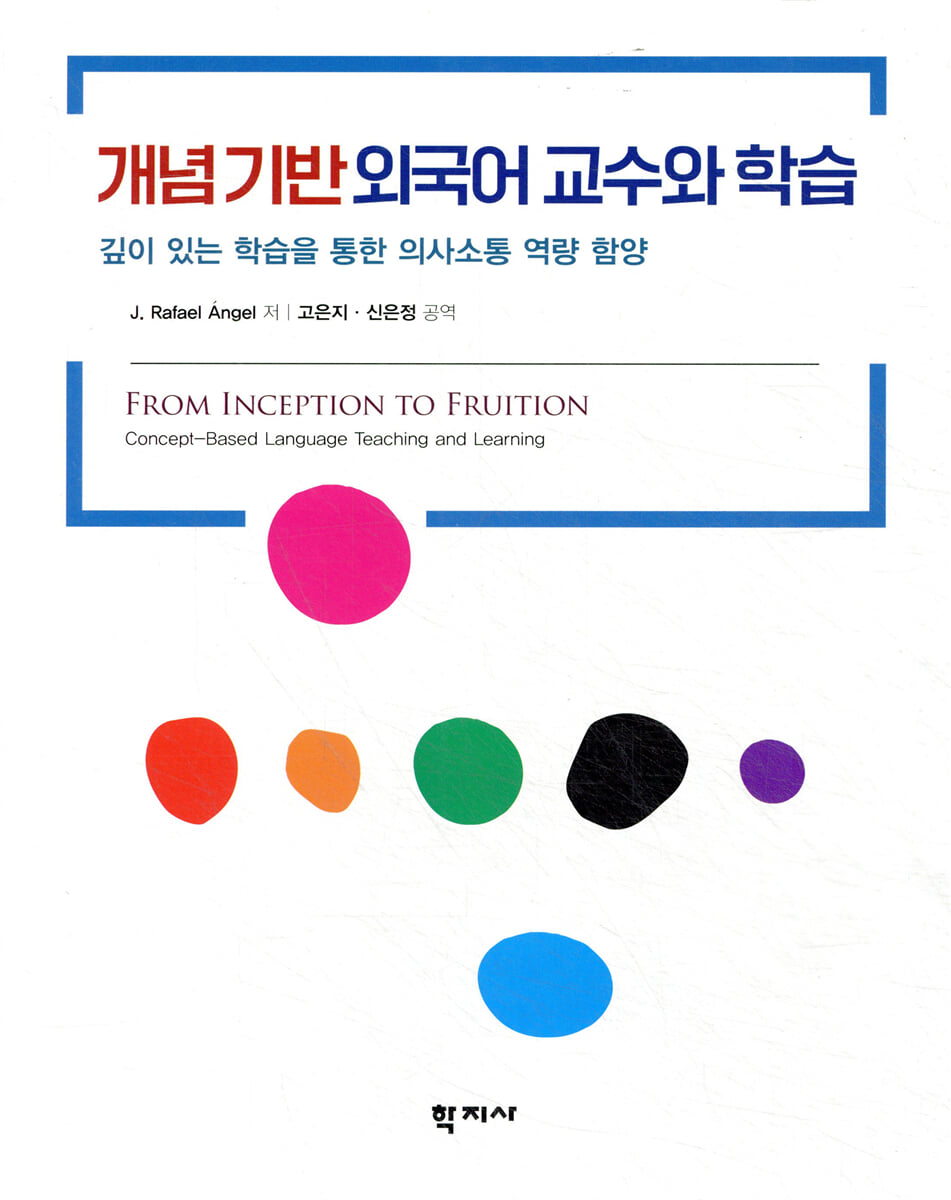
Concept-Based Foreign Language Teaching and Learning
 |
Description
Book Introduction
Beyond simple memorization of grammar and vocabulary,
A class that cultivates the power to think in language
Today, foreign language classes still largely rely on rote learning and a focus on grammar and reading comprehension.
Because English is taught primarily through problem-solving and getting the right answer, students can easily lose interest and lack opportunities to use the language they learn in real-world contexts.
Adding to this, classes often rely on translated explanations without sufficiently considering the fundamental structural differences between Korean and English, and there are many cases where students end up merely practicing "transcribing" rather than expanding their thinking through language.
In this reality, language teachers fill their classes with meticulous interpretations of textbook passages and explanations of background knowledge, but at some point, they are faced with the question, “Am I teaching the language itself, or am I using language to convey other content?”
However, if the goal of foreign language education is to cultivate effective communicators, critical information consumers, and even responsible information producers, the focus of instruction must also change.
If the process of learning a foreign language is 'understanding and expression,' learners use language while performing various roles such as reader, listener, speaker, and presenter in activities such as reading, listening, viewing, writing, speaking, and presenting.
Concept-based foreign language classes aim to develop learners not simply as recipients of information, but as active producers who think and construct meaning through language.
Rafael Angel's "Concept-Based Foreign Language Teaching and Learning" presents specific practical strategies to overcome the difficulties of foreign language education based on this awareness of the problem.
The author, a certified trainer in the International Concept-Based Curriculum and Instruction (CBCI) program, has been urging teachers around the world to “teach thinking beyond language.” In this book, he systematically guides teachers on how to transform foreign language classes from “skill training”-centered to “thinking-centered learning.”
This is a practical guide to help teachers re-establish the essence of foreign language education and implement it in their classrooms.
This book reconstructs the core of language classes into four areas: 'understanding language, responding to language, critiquing language, and producing language.'
This allows teachers to design lessons that go beyond simple language skills practice and help students connect concepts through language, critically reflect on the relationship between text and the world, and produce new meaning.
This structure supports students to develop critical thinking, creative expression, and academic language skills (CALP).
Furthermore, this book presents a lesson design method that reflects students' interests and life context while not losing sight of the essence of the subject.
Teachers can structurally implement academic language (CALP) education that expands the depth of thinking beyond everyday language (BICS) by guiding learners to deeply understand why they should perform a role in each activity (why) and how they should perform it (how).
As a result, students grow beyond being “language users” to active learners who think, interpret the world, and create meaning through language.
A class that cultivates the power to think in language
Today, foreign language classes still largely rely on rote learning and a focus on grammar and reading comprehension.
Because English is taught primarily through problem-solving and getting the right answer, students can easily lose interest and lack opportunities to use the language they learn in real-world contexts.
Adding to this, classes often rely on translated explanations without sufficiently considering the fundamental structural differences between Korean and English, and there are many cases where students end up merely practicing "transcribing" rather than expanding their thinking through language.
In this reality, language teachers fill their classes with meticulous interpretations of textbook passages and explanations of background knowledge, but at some point, they are faced with the question, “Am I teaching the language itself, or am I using language to convey other content?”
However, if the goal of foreign language education is to cultivate effective communicators, critical information consumers, and even responsible information producers, the focus of instruction must also change.
If the process of learning a foreign language is 'understanding and expression,' learners use language while performing various roles such as reader, listener, speaker, and presenter in activities such as reading, listening, viewing, writing, speaking, and presenting.
Concept-based foreign language classes aim to develop learners not simply as recipients of information, but as active producers who think and construct meaning through language.
Rafael Angel's "Concept-Based Foreign Language Teaching and Learning" presents specific practical strategies to overcome the difficulties of foreign language education based on this awareness of the problem.
The author, a certified trainer in the International Concept-Based Curriculum and Instruction (CBCI) program, has been urging teachers around the world to “teach thinking beyond language.” In this book, he systematically guides teachers on how to transform foreign language classes from “skill training”-centered to “thinking-centered learning.”
This is a practical guide to help teachers re-establish the essence of foreign language education and implement it in their classrooms.
This book reconstructs the core of language classes into four areas: 'understanding language, responding to language, critiquing language, and producing language.'
This allows teachers to design lessons that go beyond simple language skills practice and help students connect concepts through language, critically reflect on the relationship between text and the world, and produce new meaning.
This structure supports students to develop critical thinking, creative expression, and academic language skills (CALP).
Furthermore, this book presents a lesson design method that reflects students' interests and life context while not losing sight of the essence of the subject.
Teachers can structurally implement academic language (CALP) education that expands the depth of thinking beyond everyday language (BICS) by guiding learners to deeply understand why they should perform a role in each activity (why) and how they should perform it (how).
As a result, students grow beyond being “language users” to active learners who think, interpret the world, and create meaning through language.
index
Translator's Preface
Recommended Preface
Author's Preface
Chapter 1: Structure of Concept-Based Language Teaching and Learning
Structure of Concept-Based Language Teaching and Learning
Structure of Knowledge
Structure of the process
Examples of concepts that develop transferable understanding of the process
The relationship between the 'structure of knowledge' and the 'structure of the process' in the process of designing a language education curriculum.
How does the CBCI model support meaningful, concept-based language instruction?
Chapter 2: Concept-Based Curriculum Design, Unit Planning, and Foreign Language Education
Looking back at the structure of frequently adopted language education curricula
Glossary of Terms: Syllabus vs. Curriculum
The goal of a concept-based foreign language curriculum
Curriculum Design for a Concept-Based Language Environment
Planning an Exploration Unit
Caution: Do not assume awareness of the concept.
Steps for Planning an Inquiry Unit
Inquiry Unit Plan for Concept-Based Language Education
Key contents and skills
Teaching and Learning Process
evaluation
End of the unit
Chapter 3: Concept-Based Foreign Language Teaching and Learning
What changes when teaching teenagers?
Teaching and learning process of the inquiry unit
Principles of concept-based language education
Preparing the Foundation for Teaching and Learning Processes
Introducing the 'Concept': Introductory Scenario
Development of concepts and listening processes
Development of concepts and reading processes
Development of a concept- and output-centered process
Learning scenarios that model teaching strategies
How can we help students reach conceptual understanding?
Integration of understanding
Chapter 4: A System for Assessing Conceptual Understanding
progress and control
What does learning look like at different stages of the learning process?
GRASPS
RAFTS
Case 1: The First Unit of Learning Spanish as a Foreign Language
Evaluation rubric for the unit's overall assignment
Case 2: Unit for Students Learning English as a Foreign Language
Evaluation rubric for the unit's overall assignment
Transfer
Scenario 1: Using learning experiences to try to understand relationships between concepts
Scenario 2: Individual Interview (Conference)
Scenario 3: What characteristics does conceptual knowledge exhibit when applied across different contexts?
Chapter 5 Conclusion
Chapter 6 Materials
Exhibit A: Example Curriculum Map
Resource B: Sample Unit Plan (End-of-Beginner Level)
Resource C: Sample Unit Plan (Lower Intermediate Level)
Exhibit D: Examples of Strategies for Practicing Conceptual Understanding
Resource E: Designing a Learning Routine that Enables Exploration of Grammar
Resource F: Personal Reflection Tool
Resource G: Available texts by topic and tense
Recommended Reviews
Search
Recommended Preface
Author's Preface
Chapter 1: Structure of Concept-Based Language Teaching and Learning
Structure of Concept-Based Language Teaching and Learning
Structure of Knowledge
Structure of the process
Examples of concepts that develop transferable understanding of the process
The relationship between the 'structure of knowledge' and the 'structure of the process' in the process of designing a language education curriculum.
How does the CBCI model support meaningful, concept-based language instruction?
Chapter 2: Concept-Based Curriculum Design, Unit Planning, and Foreign Language Education
Looking back at the structure of frequently adopted language education curricula
Glossary of Terms: Syllabus vs. Curriculum
The goal of a concept-based foreign language curriculum
Curriculum Design for a Concept-Based Language Environment
Planning an Exploration Unit
Caution: Do not assume awareness of the concept.
Steps for Planning an Inquiry Unit
Inquiry Unit Plan for Concept-Based Language Education
Key contents and skills
Teaching and Learning Process
evaluation
End of the unit
Chapter 3: Concept-Based Foreign Language Teaching and Learning
What changes when teaching teenagers?
Teaching and learning process of the inquiry unit
Principles of concept-based language education
Preparing the Foundation for Teaching and Learning Processes
Introducing the 'Concept': Introductory Scenario
Development of concepts and listening processes
Development of concepts and reading processes
Development of a concept- and output-centered process
Learning scenarios that model teaching strategies
How can we help students reach conceptual understanding?
Integration of understanding
Chapter 4: A System for Assessing Conceptual Understanding
progress and control
What does learning look like at different stages of the learning process?
GRASPS
RAFTS
Case 1: The First Unit of Learning Spanish as a Foreign Language
Evaluation rubric for the unit's overall assignment
Case 2: Unit for Students Learning English as a Foreign Language
Evaluation rubric for the unit's overall assignment
Transfer
Scenario 1: Using learning experiences to try to understand relationships between concepts
Scenario 2: Individual Interview (Conference)
Scenario 3: What characteristics does conceptual knowledge exhibit when applied across different contexts?
Chapter 5 Conclusion
Chapter 6 Materials
Exhibit A: Example Curriculum Map
Resource B: Sample Unit Plan (End-of-Beginner Level)
Resource C: Sample Unit Plan (Lower Intermediate Level)
Exhibit D: Examples of Strategies for Practicing Conceptual Understanding
Resource E: Designing a Learning Routine that Enables Exploration of Grammar
Resource F: Personal Reflection Tool
Resource G: Available texts by topic and tense
Recommended Reviews
Search
GOODS SPECIFICS
- Date of issue: October 10, 2025
- Format: Paperback book binding method guide
- Page count, weight, size: 248 pages | 188*235*12mm
- ISBN13: 9788999735387
You may also like
카테고리
korean


korean

![GQ KOREA Mark (Monthly): December [2025]](http://librairie.coreenne.fr/cdn/shop/files/8ef265dbbfbf186523ed75ba7319009d.jpg?v=1765340328&width=3840)


