

How to live a healthy life while remaining active
 |
Description
Book Introduction
The 100-Year-Old Era: A New Paradigm for Health and Life
How to Live a Healthy and Meaningful Second Round of Life with Lifelong Active Duty
In the age of 100, a second round of life that no one has ever experienced unfolds before us.
The problem is that no one has ever properly learned how to live a longer life.
"How to Live a Healthy Life" offers a living solution to this point of anxiety and confusion.
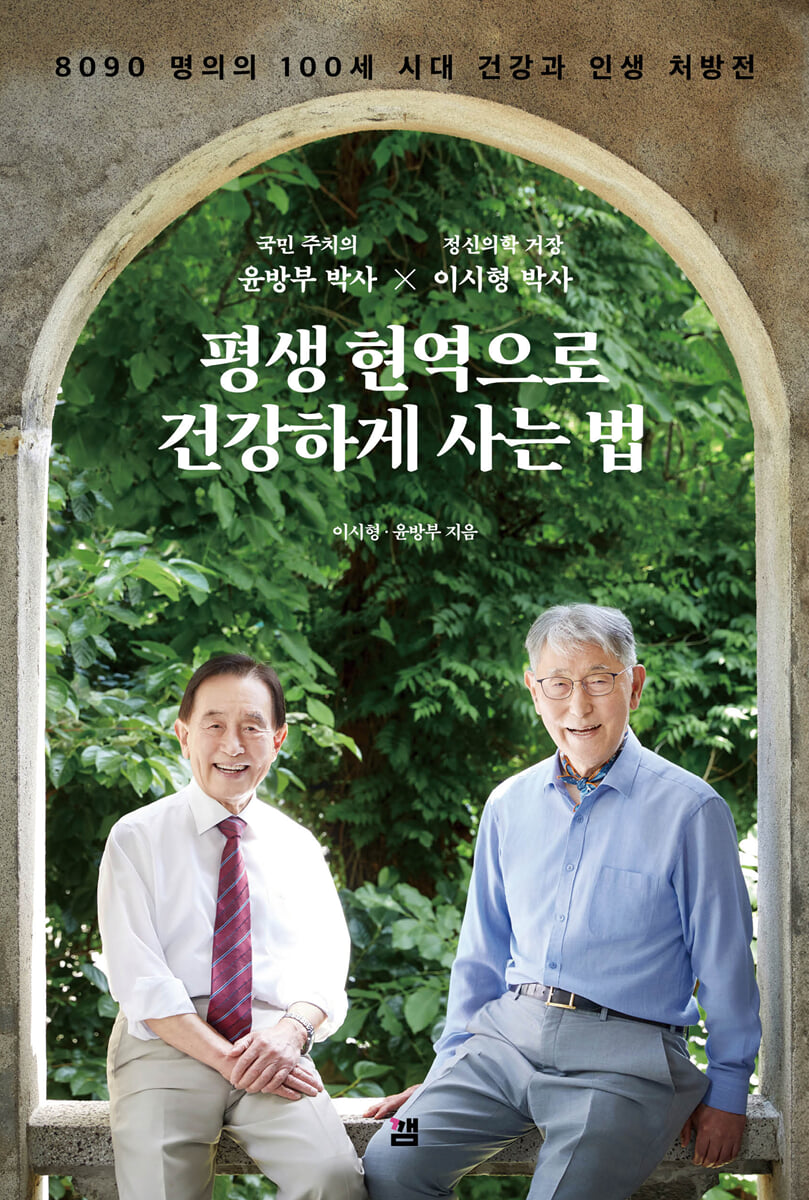
This book is a guide to health and life in the 100-year-old era, written by two active doctors in their 80s and 90s, based on their own experiences and medical insights.
Dr. Lee Si-hyung, a 92-year-old psychiatrist and Dr. Yoon Bang-bu, a 83-year-old family medicine expert.
The two authors are active doctors and intellectuals, and they are still more active than anyone else, working, studying, exercising, and practicing their own routines every day.
The conversation between the two authors over three seasons contains specific solutions for transforming aging from a period of lethargy and decline into a period of growth and challenge.
The words and lives of these two authors are like living textbooks, offering practical advice to everyone preparing for the 100-year era.
How to Live a Healthy and Meaningful Second Round of Life with Lifelong Active Duty
In the age of 100, a second round of life that no one has ever experienced unfolds before us.
The problem is that no one has ever properly learned how to live a longer life.
"How to Live a Healthy Life" offers a living solution to this point of anxiety and confusion.
This book is a guide to health and life in the 100-year-old era, written by two active doctors in their 80s and 90s, based on their own experiences and medical insights.
Dr. Lee Si-hyung, a 92-year-old psychiatrist and Dr. Yoon Bang-bu, a 83-year-old family medicine expert.
The two authors are active doctors and intellectuals, and they are still more active than anyone else, working, studying, exercising, and practicing their own routines every day.
The conversation between the two authors over three seasons contains specific solutions for transforming aging from a period of lethargy and decline into a period of growth and challenge.
The words and lives of these two authors are like living textbooks, offering practical advice to everyone preparing for the 100-year era.
- You can preview some of the book's contents.
Preview
index
Opening remarks: What is the answer to life?
Prologue: The days ahead are more precious than the past.
Chapter 1.
We didn't know we would live this long
: The Unexpected Age of Longevity: The Secret of Lifelong Active Service
- Style is not a luxury, it's an attitude.
Living and dying at full power is the ultimate longevity.
- If I had known I would live this long
- The power of small goals to lead the day
-Just live naturally
Chapter 2.
The Secret to a Happy Life Round 2
: What people who live better as they age have in common
-Why high school 'tops' die early
- A miracle created by angina and a herniated disc
-If you accept discomfort as a part of life
Life is a playground, enjoy each day.
Chapter 3.
Active life never ages
: The power of protecting the life and health of Homo Hundred
-It is human nature to work and challenge ourselves.
-Why the president of a firearms company became a janitor
- Erotic sculptures found in the Dalai Lama's inner chambers
-Work is a panacea that saves the brain.
Chapter 4.
Homo Hundred's 'Health Reconstruction'
: The health standards we have had so far are no longer adequate.
- Gray Syndrome is coming
- Big bottles start from small bottles
- We need to rebuild the foundation of health.
-What are the appropriate blood pressure, diabetes, and obesity standards for middle age?
Chapter 5.
Change your attitude and questions about health.
: Is my life in harmony with my health?
- Doctor of knowledge and doctor of wisdom
-Are you still looking for the royal road?
-The story of running with gravel at midnight
-Parking is far away! Welcome, stairs!
-If you have a partner to share your habits with
Chapter 6.
The three strengths that keep you active throughout your life: brainpower, physical strength, and immunity.
: Rebuilding the brain, body, and immune system to live 30 years younger
-5% of people in their 80s retain the brain function of a 40-year-old.
Why short poems called "haiku" are popular in Japan
-10 minutes a day, the power of meditation and prayer
-Sound body, sound mind
-What is your immune age?
Chapter 7.
Slow-Aging Health Secrets of Masters
: Every day is a 'training to live healthily without medication'
-Empty your stomach for 12 hours a day
-The right level of sustainable exercise
-Stress is the 'spice of life'
-No one has ever died from lack of sleep.
Chapter 8.
Dementia? Living with Cancer
: If you go back to basics, even severe illnesses can be seen as long-term.
- An era where dementia and cancer are also managed
-You can't live avoiding everything that's bad.
-It's good to gain weight vs. It's good to lose weight
-Do you really need nutritional supplements? vs. Do you not need them?
Walk 10,000 steps a day vs. You don't have to.
Chapter 9.
Challenge yourself, learn, and grow throughout your life.
: A person who wants to grow has a direction in life.
-From quantitative growth to qualitative growth
-The feeling that I can do it now
-Studying as you get older is real
-The first letter I wrote to my 60th birthday daughter
-For people with a purpose, every day is different.
Chapter 10.
A good life is completed by a 'good death'
: Well-dying is the final gift of a good life.
- Death is a mirror that reflects life.
- Prepare for death while you are healthy.
- The surgeon who said he would go to Switzerland to euthanize
- What kind of last moment do you dream of?
Epilogue_ Life and health, somehow, is the answer.
Prologue: The days ahead are more precious than the past.
Chapter 1.
We didn't know we would live this long
: The Unexpected Age of Longevity: The Secret of Lifelong Active Service
- Style is not a luxury, it's an attitude.
Living and dying at full power is the ultimate longevity.
- If I had known I would live this long
- The power of small goals to lead the day
-Just live naturally
Chapter 2.
The Secret to a Happy Life Round 2
: What people who live better as they age have in common
-Why high school 'tops' die early
- A miracle created by angina and a herniated disc
-If you accept discomfort as a part of life
Life is a playground, enjoy each day.
Chapter 3.
Active life never ages
: The power of protecting the life and health of Homo Hundred
-It is human nature to work and challenge ourselves.
-Why the president of a firearms company became a janitor
- Erotic sculptures found in the Dalai Lama's inner chambers
-Work is a panacea that saves the brain.
Chapter 4.
Homo Hundred's 'Health Reconstruction'
: The health standards we have had so far are no longer adequate.
- Gray Syndrome is coming
- Big bottles start from small bottles
- We need to rebuild the foundation of health.
-What are the appropriate blood pressure, diabetes, and obesity standards for middle age?
Chapter 5.
Change your attitude and questions about health.
: Is my life in harmony with my health?
- Doctor of knowledge and doctor of wisdom
-Are you still looking for the royal road?
-The story of running with gravel at midnight
-Parking is far away! Welcome, stairs!
-If you have a partner to share your habits with
Chapter 6.
The three strengths that keep you active throughout your life: brainpower, physical strength, and immunity.
: Rebuilding the brain, body, and immune system to live 30 years younger
-5% of people in their 80s retain the brain function of a 40-year-old.
Why short poems called "haiku" are popular in Japan
-10 minutes a day, the power of meditation and prayer
-Sound body, sound mind
-What is your immune age?
Chapter 7.
Slow-Aging Health Secrets of Masters
: Every day is a 'training to live healthily without medication'
-Empty your stomach for 12 hours a day
-The right level of sustainable exercise
-Stress is the 'spice of life'
-No one has ever died from lack of sleep.
Chapter 8.
Dementia? Living with Cancer
: If you go back to basics, even severe illnesses can be seen as long-term.
- An era where dementia and cancer are also managed
-You can't live avoiding everything that's bad.
-It's good to gain weight vs. It's good to lose weight
-Do you really need nutritional supplements? vs. Do you not need them?
Walk 10,000 steps a day vs. You don't have to.
Chapter 9.
Challenge yourself, learn, and grow throughout your life.
: A person who wants to grow has a direction in life.
-From quantitative growth to qualitative growth
-The feeling that I can do it now
-Studying as you get older is real
-The first letter I wrote to my 60th birthday daughter
-For people with a purpose, every day is different.
Chapter 10.
A good life is completed by a 'good death'
: Well-dying is the final gift of a good life.
- Death is a mirror that reflects life.
- Prepare for death while you are healthy.
- The surgeon who said he would go to Switzerland to euthanize
- What kind of last moment do you dream of?
Epilogue_ Life and health, somehow, is the answer.
Detailed image

Into the book
I just do stretching in the morning, and then around 4 or 5 pm I go to the gym and work out for 3 hours.
I do stretching, aerobic exercise, and muscle training for about 2 hours, then take a bath and rest for 1 hour.
For aerobic exercise, I walk or run 5-6 km on a treadmill.
It used to be 7km, but I reduced it a bit.
For muscle training, hold 8kg dumbbells in both hands and do 3 sets of 200 repetitions each, use the chest press machine for 4 sets of 40 repetitions each with 25.5kg dumbbells, and use the shoulder press machine for 4 sets of 40 repetitions each with 15.5kg dumbbells.
--- p.23, from “Style is not a luxury, it is an attitude”
Even these days, when I give lectures, I do so with such passion that my heart feels like it's going to burst.
He speaks so passionately that I can't breathe.
When I'm sitting in the car on the way home from giving a lecture in an unfamiliar place, I'm so tired that I don't want to say a word.
I often think that it would be nice to just die like this.
That's how happy I am.
As Dr. Yoon said, I believe that qualitative longevity means living with full power, that is, living with all your might.
What a healthy and wonderful life that is.
--- p.27, from “Living and Dying with ‘Full Power’ is Qualitative Longevity”
Work also activates the brain and mind.
Solving new problems, collaborating with people, setting goals and achieving them - all these processes stimulate the brain.
That's why I say, "Working is like a panacea for the brain."
Continuing to work, especially as we age, can be a huge help in maintaining cognitive function.
It is also very effective in preventing dementia.
--- p.92, from “Work is a panacea that saves the brain”
I ask myself this every morning.
“Are you okay today?” This one simple question saved me.
The problem is that our body and mind are always sending us signals, but we ignore them.
The answer is not grand.
Always pay attention to your body, don't miss small signs in your daily life, and respond early.
These small actions can make a crucial difference in your health in old age.
--- p.104, from “Big illnesses start from small illnesses”
Ultimately, the wrong questions about health stem from the attitude of looking for a 'secret recipe'.
I think it would be a good idea to rephrase the question this way:
Instead of asking, “Is this food good?” ask, “Is my diet balanced?” Instead of “What is the best exercise?” ask, “What exercise can I do consistently?” I believe that these are the real starting points for a healthy life.
--- p.120, from “The Doctor of Knowledge and the Doctor of Wisdom”
Meditation not only makes my mind feel at ease, but it also seems to deepen my philosophical understanding.
I practice 'mindful eating' when I eat.
Place a 30-minute hourglass on the table and eat your food slowly and savor it.
When I think about how many people worked hard to get a single piece of carrot or a spoonful of rice in front of me, even though I crave it 30 times in one bite, I can't help but feel grateful.
--- p.167, from “10 Minutes a Day, the Power of Meditation and Prayer”
The important thing is that as you get older, your shoulders tend to narrow and your stomach tends to protrude, so I want to protect my body as much as possible.
The intensity and amount of exercise are the next issue.
Even if you look at recent studies, there are many results that show that there is not much difference in health between people who exercise very hard and those who do it lightly occasionally.
Ultimately, exercise shouldn't be something that bothers you, and above all, it should be enjoyable.
Even just walking is exercise.
What kind of exercise you choose is up to you, and it should never be stressful.
--- p.199, from “The Right Line for Sustainable Movement”
Fortunately, there are quite a few medications available that can slow the progression from mild cognitive impairment, which does not cause significant disruption in daily life, to dementia.
If you have mild cognitive impairment, about 15% of people will develop dementia each year, and in the future, it is highly likely that dementia will eventually become a disease that you have to live with by taking medication.
Nowadays, many people with cancer are living for a long time while receiving chemotherapy.
Dementia will also go through the same process of being controlled and living.
So, I think you don't need to worry too much from middle age onwards.
--- p.214, from “An Era of Managing Dementia and Cancer”
“Having a desire to grow gives direction to your life.” People with goals don’t just let each day pass by, but fill it with living time.
Our brains are activated when we have a goal, and our bodies are energized when we move toward a goal.
So, even now, I continue to write books and give lectures every year, continuing to learn new things.
All of these things give me a reason to open my eyes in the morning and start my day.
--- p.244, from “From Quantitative Growth to Qualitative Growth”
It is necessary to ask ourselves questions like, “What kind of death do I want to face?” and “What does death mean to me?”
I think the most important thing is philosophical organization.
You must have your own standards for how you will accept death.
And more than anything, the habit of thinking about death can change a person.
Because you start to feel more complimentary, humble, and generous.
I do stretching, aerobic exercise, and muscle training for about 2 hours, then take a bath and rest for 1 hour.
For aerobic exercise, I walk or run 5-6 km on a treadmill.
It used to be 7km, but I reduced it a bit.
For muscle training, hold 8kg dumbbells in both hands and do 3 sets of 200 repetitions each, use the chest press machine for 4 sets of 40 repetitions each with 25.5kg dumbbells, and use the shoulder press machine for 4 sets of 40 repetitions each with 15.5kg dumbbells.
--- p.23, from “Style is not a luxury, it is an attitude”
Even these days, when I give lectures, I do so with such passion that my heart feels like it's going to burst.
He speaks so passionately that I can't breathe.
When I'm sitting in the car on the way home from giving a lecture in an unfamiliar place, I'm so tired that I don't want to say a word.
I often think that it would be nice to just die like this.
That's how happy I am.
As Dr. Yoon said, I believe that qualitative longevity means living with full power, that is, living with all your might.
What a healthy and wonderful life that is.
--- p.27, from “Living and Dying with ‘Full Power’ is Qualitative Longevity”
Work also activates the brain and mind.
Solving new problems, collaborating with people, setting goals and achieving them - all these processes stimulate the brain.
That's why I say, "Working is like a panacea for the brain."
Continuing to work, especially as we age, can be a huge help in maintaining cognitive function.
It is also very effective in preventing dementia.
--- p.92, from “Work is a panacea that saves the brain”
I ask myself this every morning.
“Are you okay today?” This one simple question saved me.
The problem is that our body and mind are always sending us signals, but we ignore them.
The answer is not grand.
Always pay attention to your body, don't miss small signs in your daily life, and respond early.
These small actions can make a crucial difference in your health in old age.
--- p.104, from “Big illnesses start from small illnesses”
Ultimately, the wrong questions about health stem from the attitude of looking for a 'secret recipe'.
I think it would be a good idea to rephrase the question this way:
Instead of asking, “Is this food good?” ask, “Is my diet balanced?” Instead of “What is the best exercise?” ask, “What exercise can I do consistently?” I believe that these are the real starting points for a healthy life.
--- p.120, from “The Doctor of Knowledge and the Doctor of Wisdom”
Meditation not only makes my mind feel at ease, but it also seems to deepen my philosophical understanding.
I practice 'mindful eating' when I eat.
Place a 30-minute hourglass on the table and eat your food slowly and savor it.
When I think about how many people worked hard to get a single piece of carrot or a spoonful of rice in front of me, even though I crave it 30 times in one bite, I can't help but feel grateful.
--- p.167, from “10 Minutes a Day, the Power of Meditation and Prayer”
The important thing is that as you get older, your shoulders tend to narrow and your stomach tends to protrude, so I want to protect my body as much as possible.
The intensity and amount of exercise are the next issue.
Even if you look at recent studies, there are many results that show that there is not much difference in health between people who exercise very hard and those who do it lightly occasionally.
Ultimately, exercise shouldn't be something that bothers you, and above all, it should be enjoyable.
Even just walking is exercise.
What kind of exercise you choose is up to you, and it should never be stressful.
--- p.199, from “The Right Line for Sustainable Movement”
Fortunately, there are quite a few medications available that can slow the progression from mild cognitive impairment, which does not cause significant disruption in daily life, to dementia.
If you have mild cognitive impairment, about 15% of people will develop dementia each year, and in the future, it is highly likely that dementia will eventually become a disease that you have to live with by taking medication.
Nowadays, many people with cancer are living for a long time while receiving chemotherapy.
Dementia will also go through the same process of being controlled and living.
So, I think you don't need to worry too much from middle age onwards.
--- p.214, from “An Era of Managing Dementia and Cancer”
“Having a desire to grow gives direction to your life.” People with goals don’t just let each day pass by, but fill it with living time.
Our brains are activated when we have a goal, and our bodies are energized when we move toward a goal.
So, even now, I continue to write books and give lectures every year, continuing to learn new things.
All of these things give me a reason to open my eyes in the morning and start my day.
--- p.244, from “From Quantitative Growth to Qualitative Growth”
It is necessary to ask ourselves questions like, “What kind of death do I want to face?” and “What does death mean to me?”
I think the most important thing is philosophical organization.
You must have your own standards for how you will accept death.
And more than anything, the habit of thinking about death can change a person.
Because you start to feel more complimentary, humble, and generous.
--- p.291, from “Prepare for Death While You’re Healthy”
Publisher's Review
92-year-old psychiatrist Dr. Lee Si-hyung? 83-year-old national physician Dr. Yoon Bang-bu.
A conversation about health and life between two active doctors in their 80s and 90s.
“What is the secret to staying active even in old age?”
The Secret of an Ageless Brain and Body, and an Unwavering Mind
Today's 40-60 year olds are the so-called 'Homo-hundred', the first generation in human history to live to the age of 100.
Those who have both the responsibility and opportunity to live another 40 to 50 years after retirement must design and walk a second round of life path that did not exist in the past.
These people require not just simple life extension technology, but a completely different grammar of health and life.
"How to Live a Healthy Lifelong Active Life" is a book in which two masters answer the questions posed in this era of transition through their lives.
This is a record of a conversation held over three seasons between two active doctors in their 80s and 90s: Dr. Lee Si-hyung, a giant in the field of psychiatry, and Dr. Yoon Bang-bu, the founder of family medicine in Korea.
The advice of these two authors, who have walked the path of the 100-year era and proven it through their lives, serves as a compass to help you fill your extended life with living wisdom and practice, not vague anxiety and confusion.
“Aging begins when you stop working!”
How to live 30 years younger, as practiced by a 8090 active physician.
Dr. Lee Si-hyung, 92, and Dr. Yoon Bang-bu, 83, are still active doctors who are more passionate than anyone else.
Dr. Lee Si-hyung is the first doctor to talk about 'mental health' to the people of Korea, selling 2 million copies of 'Let's Live with Guts', and is a giant in the field of psychiatry who established 'hwabyung' as a global psychiatric term.
Even now, when I'm over ninety, I still go to work at the Serotonin Cultural Center every day.
He continues to give lectures across the country.
“I am happiest when I am speaking passionately enough to leave my breath gasping,” he says.
Dr. Yoon Bang-bu is the founder of family medicine in Korea, the first doctor to appear on television, and a renowned figure in preventive medicine who has long enjoyed the trust of the nation's doctor.
Even now, in his eighties, he still commutes to Cheonan Asan Medical Center by KTX, continues to work full-time five days a week, and engages in aerobic and strength training for three hours every day with the same intensity as someone in their 30s.
People ask:
“What is the secret to staying active even in old age?”
This book questions what it means to live an "active" life, and through that insight, redesigns the fundamentals of life and health.
The two authors emphasize that 'activeness' is the most powerful energy that delays aging and sustains life.
Active duty doesn't just mean having a job.
I define presence as a sense of having a role, being connected, and being needed by someone.
'Work' is not simply an economic activity, but rather a key element that creates the rhythm of the day and activates the brain, body, and mind simultaneously.
The two authors' health routines were ultimately possible within a work-centered life structure, demonstrating that active service is the driving force behind their health routines.
Every day is a 'training to live healthily without medicine'!
Meditation, exercise, and diet: Two masters' slow-aging health tips.
As many people reach middle age, they become confused about traditional health standards.
They are sensitive to blood pressure and cholesterol levels, and often try to diet excessively based on their weight when they were younger.
But both authors say:
The health standards of the past are no longer valid, and a new 'health reconstruction' is needed after middle age.
He emphasizes that we need to move away from health management centered on absolute numbers and find “a health method that suits me.”
The two authors have been personally practicing 'How to live healthily without drugs' for a long time.
It is literally ‘slow aging training every day.’
What's interesting is that the two men have different health philosophies.
Dr. Lee Si-hyung practices “eating less and moving less.”
Manage stress through meditation and enjoy one meal a day.
Continue a lifestyle that increases the neurotransmitter serotonin, such as walking, rhythmic exercise, sunlight exposure, and community activities.
On the other hand, Dr. Yoon Bang-bu maintains his health by “eating a lot and moving a lot.”
I enjoy eating hamburgers, drinking cola, and eating a lot of meat.
At the same time, maintain your body's balance by doing aerobic and strength training for 2 to 3 hours every day.
Although their methods are different, both people maintain their health without relying on medication or hospitals.
They have something in common.
It is about creating a practical routine and living it based on a deep understanding of your own body.
Rather than offering a single answer to questions like whether walking 10,000 steps a day is really necessary, whether you really need to take supplements, or whether dieting is right for everyone, this book helps readers find their own routine.
Health doesn't follow a formula.
It's important to create a customized routine that suits your body, your rhythm, and your constitution.
We often seek out medicine for our health, and we stock up on special foods or expensive supplements.
But for both authors, health is not something special, but rather the accumulated power created through daily habits and routines.
That is the life strategy that makes ‘slow aging’ possible.
Aging is not decline, it's a second growth.
Learning stimulates the brain and is a force that overcomes aging.
The latter part of the book covers how to design the second round of life, covering topics such as work, relationships, study, and death.
Many people close off their options as they reach middle age, thinking, “What more can I do now?”
But the two authors say, “There are things we can do now.”
Dr. Lee Si-hyung continues to write books, give lectures, study new fields, and write and read every day.
He emphasizes that “the brain becomes active when it has a goal,” and that working and learning are the best ways to keep the brain young.
Dr. Yoon Bang-bu also continues to interact with his juniors while conducting clinical trials, broadcasting, and giving lectures.
He says that while quantitative growth may slow down, qualitative growth never stops, and that the latter half of life is the time to learn and grow more seriously.
The two authors emphasize that while achievement and speed have been important until now, meaning and direction are now important.
New studies, small challenges, and efforts to develop my own philosophy.
That is precisely what drives the two authors to live a life that never ages.
In particular, the two authors say that death is 'the last question we must face in life.'
Because when you face death, life becomes clearer.
The habit of preparing for death makes people humble and enriches their lives.
Having witnessed countless deaths, the two men come to the conclusion that a good death is ultimately the final gift of a good life.
“How to Live a Healthy Life” is not just a health book.
This book answers the question, “How should we live our future lives?” by examining the lives of two masters.
The routine of life is a philosophy of self-preservation, and it shows that the ordinary daily life they practice is the key to an ageless life.
Rather than passively accepting aging, the two authors suggest ways to live a healthy and meaningful life.
Two doctors, each from different perspectives—psychiatry and family medicine—present a practical guide to life that blends medicine, philosophy, and experience.
A conversation about health and life between two active doctors in their 80s and 90s.
“What is the secret to staying active even in old age?”
The Secret of an Ageless Brain and Body, and an Unwavering Mind
Today's 40-60 year olds are the so-called 'Homo-hundred', the first generation in human history to live to the age of 100.
Those who have both the responsibility and opportunity to live another 40 to 50 years after retirement must design and walk a second round of life path that did not exist in the past.
These people require not just simple life extension technology, but a completely different grammar of health and life.
"How to Live a Healthy Lifelong Active Life" is a book in which two masters answer the questions posed in this era of transition through their lives.
This is a record of a conversation held over three seasons between two active doctors in their 80s and 90s: Dr. Lee Si-hyung, a giant in the field of psychiatry, and Dr. Yoon Bang-bu, the founder of family medicine in Korea.
The advice of these two authors, who have walked the path of the 100-year era and proven it through their lives, serves as a compass to help you fill your extended life with living wisdom and practice, not vague anxiety and confusion.
“Aging begins when you stop working!”
How to live 30 years younger, as practiced by a 8090 active physician.
Dr. Lee Si-hyung, 92, and Dr. Yoon Bang-bu, 83, are still active doctors who are more passionate than anyone else.
Dr. Lee Si-hyung is the first doctor to talk about 'mental health' to the people of Korea, selling 2 million copies of 'Let's Live with Guts', and is a giant in the field of psychiatry who established 'hwabyung' as a global psychiatric term.
Even now, when I'm over ninety, I still go to work at the Serotonin Cultural Center every day.
He continues to give lectures across the country.
“I am happiest when I am speaking passionately enough to leave my breath gasping,” he says.
Dr. Yoon Bang-bu is the founder of family medicine in Korea, the first doctor to appear on television, and a renowned figure in preventive medicine who has long enjoyed the trust of the nation's doctor.
Even now, in his eighties, he still commutes to Cheonan Asan Medical Center by KTX, continues to work full-time five days a week, and engages in aerobic and strength training for three hours every day with the same intensity as someone in their 30s.
People ask:
“What is the secret to staying active even in old age?”
This book questions what it means to live an "active" life, and through that insight, redesigns the fundamentals of life and health.
The two authors emphasize that 'activeness' is the most powerful energy that delays aging and sustains life.
Active duty doesn't just mean having a job.
I define presence as a sense of having a role, being connected, and being needed by someone.
'Work' is not simply an economic activity, but rather a key element that creates the rhythm of the day and activates the brain, body, and mind simultaneously.
The two authors' health routines were ultimately possible within a work-centered life structure, demonstrating that active service is the driving force behind their health routines.
Every day is a 'training to live healthily without medicine'!
Meditation, exercise, and diet: Two masters' slow-aging health tips.
As many people reach middle age, they become confused about traditional health standards.
They are sensitive to blood pressure and cholesterol levels, and often try to diet excessively based on their weight when they were younger.
But both authors say:
The health standards of the past are no longer valid, and a new 'health reconstruction' is needed after middle age.
He emphasizes that we need to move away from health management centered on absolute numbers and find “a health method that suits me.”
The two authors have been personally practicing 'How to live healthily without drugs' for a long time.
It is literally ‘slow aging training every day.’
What's interesting is that the two men have different health philosophies.
Dr. Lee Si-hyung practices “eating less and moving less.”
Manage stress through meditation and enjoy one meal a day.
Continue a lifestyle that increases the neurotransmitter serotonin, such as walking, rhythmic exercise, sunlight exposure, and community activities.
On the other hand, Dr. Yoon Bang-bu maintains his health by “eating a lot and moving a lot.”
I enjoy eating hamburgers, drinking cola, and eating a lot of meat.
At the same time, maintain your body's balance by doing aerobic and strength training for 2 to 3 hours every day.
Although their methods are different, both people maintain their health without relying on medication or hospitals.
They have something in common.
It is about creating a practical routine and living it based on a deep understanding of your own body.
Rather than offering a single answer to questions like whether walking 10,000 steps a day is really necessary, whether you really need to take supplements, or whether dieting is right for everyone, this book helps readers find their own routine.
Health doesn't follow a formula.
It's important to create a customized routine that suits your body, your rhythm, and your constitution.
We often seek out medicine for our health, and we stock up on special foods or expensive supplements.
But for both authors, health is not something special, but rather the accumulated power created through daily habits and routines.
That is the life strategy that makes ‘slow aging’ possible.
Aging is not decline, it's a second growth.
Learning stimulates the brain and is a force that overcomes aging.
The latter part of the book covers how to design the second round of life, covering topics such as work, relationships, study, and death.
Many people close off their options as they reach middle age, thinking, “What more can I do now?”
But the two authors say, “There are things we can do now.”
Dr. Lee Si-hyung continues to write books, give lectures, study new fields, and write and read every day.
He emphasizes that “the brain becomes active when it has a goal,” and that working and learning are the best ways to keep the brain young.
Dr. Yoon Bang-bu also continues to interact with his juniors while conducting clinical trials, broadcasting, and giving lectures.
He says that while quantitative growth may slow down, qualitative growth never stops, and that the latter half of life is the time to learn and grow more seriously.
The two authors emphasize that while achievement and speed have been important until now, meaning and direction are now important.
New studies, small challenges, and efforts to develop my own philosophy.
That is precisely what drives the two authors to live a life that never ages.
In particular, the two authors say that death is 'the last question we must face in life.'
Because when you face death, life becomes clearer.
The habit of preparing for death makes people humble and enriches their lives.
Having witnessed countless deaths, the two men come to the conclusion that a good death is ultimately the final gift of a good life.
“How to Live a Healthy Life” is not just a health book.
This book answers the question, “How should we live our future lives?” by examining the lives of two masters.
The routine of life is a philosophy of self-preservation, and it shows that the ordinary daily life they practice is the key to an ageless life.
Rather than passively accepting aging, the two authors suggest ways to live a healthy and meaningful life.
Two doctors, each from different perspectives—psychiatry and family medicine—present a practical guide to life that blends medicine, philosophy, and experience.
GOODS SPECIFICS
- Date of issue: September 1, 2025
- Page count, weight, size: 312 pages | 540g | 145*215*18mm
- ISBN13: 9791198742131
- ISBN10: 1198742135
You may also like
카테고리
korean


korean

![ELLE 엘르 스페셜 에디션 A형 : 12월 [2025]](http://librairie.coreenne.fr/cdn/shop/files/b8e27a3de6c9538896439686c6b0e8fb.jpg?v=1766436872&width=3840)


