

Tokyo Hotel Guide
 |
Description
Book Introduction
"Every time I turn the page, it feels like I'm checking in!" ―Lee Yeon (author, creator)
* A detailed, meticulously documented, actual hotel essay written by an architect who personally stayed there.
* From hotels with history and tradition to design hotels with a modern sensibility
* A high-density guide to 22 Tokyo hotels that are more vivid than actual accommodations.
* Highly recommended by creator Lee Yeon, illustrator Im Jin-a, and translator Seo Ha-na!
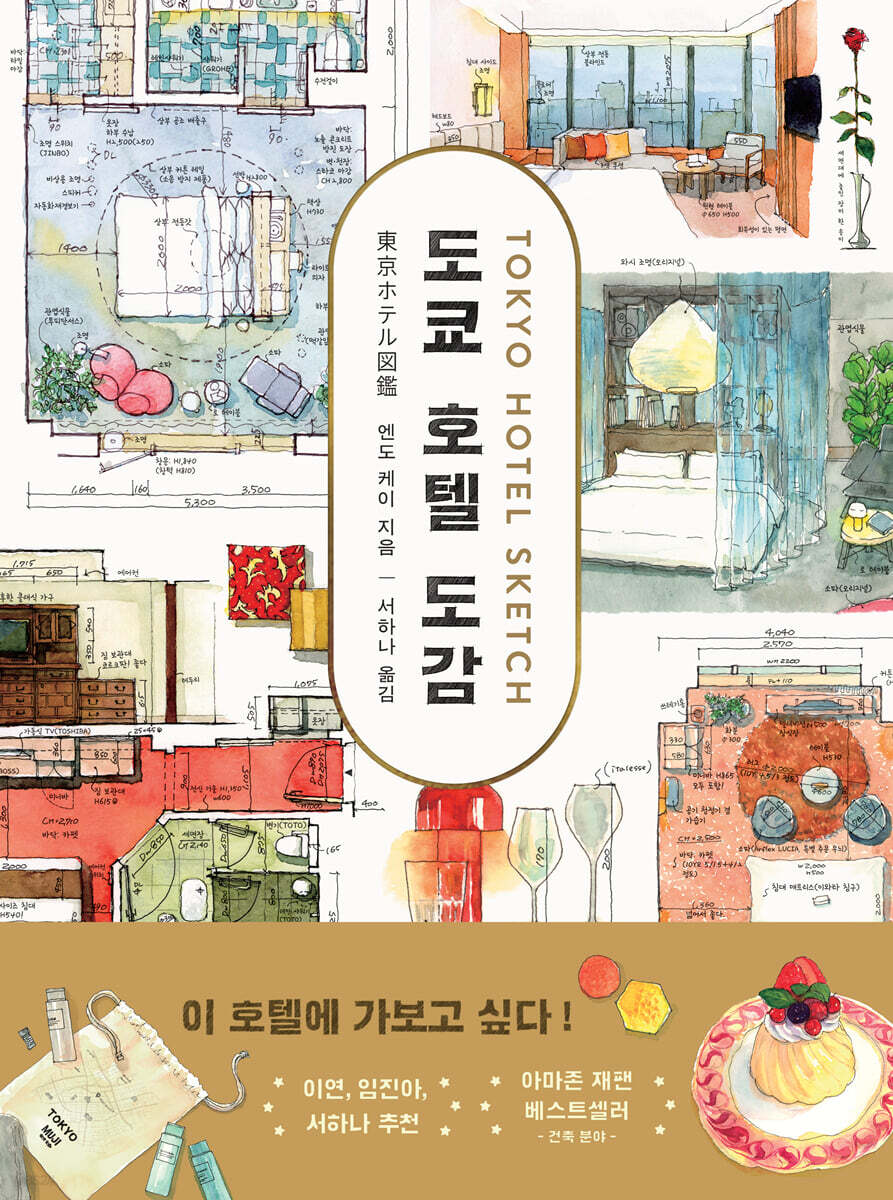
"Tokyo Hotel Guide" is a book that allows you to enjoy the most distinctive hotels around Tokyo even more than you would if you had actually visited them, with beautiful watercolor drawings by an architectural designer and fascinating analytical essays.
You can experience various hotels around Tokyo through the eyes of experts, including the Imperial Hotel and Hotel Okura, which are considered the three most famous hotels in Tokyo, the Yamanoue Hotel, which is well known for the history of famous writers being 'canned' until they finished their manuscripts, and the MUJI Hotel, which is decorated only with the Muji brand, a symbol and signboard of modern Japan, in a more vivid and in-depth way than visiting them in person.
The 22 hotels featured in this book are not just any hotels.
These are colorful hotels with unique characteristics, aura, and exciting stories.
As you explore the diverse hotel landscape, with its diverse scale and concept—from bustling city centers to interactive hotels steeped in local stories, to hotels boasting history and tradition, to hotels that have survived earthquakes—you'll find yourself picking out a few hotels you're curious about and want to visit.
The floor plan of the guest rooms unfolds so vividly that you feel as if you are actually inside the room when you open the book, and it contains the sophisticated colors and atmosphere of the space that you cannot know unless you experience it firsthand.
There is fun in finding every detail, from the interior design and amenities to the furniture, interior and exterior materials, and colors.
Not only the guest rooms, but also the hotel lobby and surrounding areas are vividly depicted, making you feel as if you are on a trip.
The author's meticulous sketches, meticulous and craftsmanlike, reveal the charm of this unique hotel space, offering a personal experience even among the many architectural gems.
This book, which is full of the charm of hotel spaces that provide new inspiration and excitement beyond just staying, is also a guidebook that allows you to gauge your own 'hotel taste' by asking 'what kind of space do I like?' and 'what kind of space do I feel comfortable in?'
When you need a break from your daily routine, when you're yearning to get away, when you need some alone time, when you need new inspiration, I recommend opening up the "Tokyo Hotel Guide" and enjoying a hotel trip where you can check in right now.
* A detailed, meticulously documented, actual hotel essay written by an architect who personally stayed there.
* From hotels with history and tradition to design hotels with a modern sensibility
* A high-density guide to 22 Tokyo hotels that are more vivid than actual accommodations.
* Highly recommended by creator Lee Yeon, illustrator Im Jin-a, and translator Seo Ha-na!
"Tokyo Hotel Guide" is a book that allows you to enjoy the most distinctive hotels around Tokyo even more than you would if you had actually visited them, with beautiful watercolor drawings by an architectural designer and fascinating analytical essays.
You can experience various hotels around Tokyo through the eyes of experts, including the Imperial Hotel and Hotel Okura, which are considered the three most famous hotels in Tokyo, the Yamanoue Hotel, which is well known for the history of famous writers being 'canned' until they finished their manuscripts, and the MUJI Hotel, which is decorated only with the Muji brand, a symbol and signboard of modern Japan, in a more vivid and in-depth way than visiting them in person.
The 22 hotels featured in this book are not just any hotels.
These are colorful hotels with unique characteristics, aura, and exciting stories.
As you explore the diverse hotel landscape, with its diverse scale and concept—from bustling city centers to interactive hotels steeped in local stories, to hotels boasting history and tradition, to hotels that have survived earthquakes—you'll find yourself picking out a few hotels you're curious about and want to visit.
The floor plan of the guest rooms unfolds so vividly that you feel as if you are actually inside the room when you open the book, and it contains the sophisticated colors and atmosphere of the space that you cannot know unless you experience it firsthand.
There is fun in finding every detail, from the interior design and amenities to the furniture, interior and exterior materials, and colors.
Not only the guest rooms, but also the hotel lobby and surrounding areas are vividly depicted, making you feel as if you are on a trip.
The author's meticulous sketches, meticulous and craftsmanlike, reveal the charm of this unique hotel space, offering a personal experience even among the many architectural gems.
This book, which is full of the charm of hotel spaces that provide new inspiration and excitement beyond just staying, is also a guidebook that allows you to gauge your own 'hotel taste' by asking 'what kind of space do I like?' and 'what kind of space do I feel comfortable in?'
When you need a break from your daily routine, when you're yearning to get away, when you need some alone time, when you need new inspiration, I recommend opening up the "Tokyo Hotel Guide" and enjoying a hotel trip where you can check in right now.
- You can preview some of the book's contents.
Preview
index
To begin with
A program called Hotel
How to read and view this book
01
[Column] A Hotel with Beautiful White Space
Hotel K5 | Sorano Hotel | Art Biotop Nasu Suite Villa
02
[Column] Hotels Imprinted with History
Imperial Hotel Tokyo | Okura Tokyo | Yamanoue Hotel | The Prince Hakone Ashinoko
03
[Column] A Hotel Surrounded by Color
Toggle Hotel Suidobashi | Hotel Hisoka Ikebukuro | Hotel Shiro | Landabout Tokyo | DDD Hotel
04
[Column] A Hotel with a Unique Worldview
Muji Hotel Ginza | All Day Place Shibuya | Ryuro Tokyo Kiyosumi | Asakusa Nono Club Hotel
05
[Column] Hotels with Local Stories
Aoyama Grand Hotel | Sequence Miyashita Park | Shiroiya Hotel | Yokohama Bay Hotel Tokyu
06
[Column] A Minimalist Hotel for Those Who Enjoy the Dimensions
Nine Hours Akasaka Sleep Lab | Book and Bed Tokyo Shinjuku
Tools & Drawing Flow
[Column] Drawing is Seeing
Tool Introduction | How to Draw a Real-Size Watercolor Sketch
Hotel overview and overall floor plan
In conclusion
A program called Hotel
How to read and view this book
01
[Column] A Hotel with Beautiful White Space
Hotel K5 | Sorano Hotel | Art Biotop Nasu Suite Villa
02
[Column] Hotels Imprinted with History
Imperial Hotel Tokyo | Okura Tokyo | Yamanoue Hotel | The Prince Hakone Ashinoko
03
[Column] A Hotel Surrounded by Color
Toggle Hotel Suidobashi | Hotel Hisoka Ikebukuro | Hotel Shiro | Landabout Tokyo | DDD Hotel
04
[Column] A Hotel with a Unique Worldview
Muji Hotel Ginza | All Day Place Shibuya | Ryuro Tokyo Kiyosumi | Asakusa Nono Club Hotel
05
[Column] Hotels with Local Stories
Aoyama Grand Hotel | Sequence Miyashita Park | Shiroiya Hotel | Yokohama Bay Hotel Tokyu
06
[Column] A Minimalist Hotel for Those Who Enjoy the Dimensions
Nine Hours Akasaka Sleep Lab | Book and Bed Tokyo Shinjuku
Tools & Drawing Flow
[Column] Drawing is Seeing
Tool Introduction | How to Draw a Real-Size Watercolor Sketch
Hotel overview and overall floor plan
In conclusion
Detailed image

Into the book
Let's say you want to experience a space designed by an architect.
First of all, the general residential area is not open to the public, so there is a high barrier to entry for a tour.
Public buildings such as art galleries and historical sites, as well as stores such as restaurants, are open to everyone.
However, there are other visitors and guests around, and you must stay only during the designated operating hours.
But hotel rooms are different.
It is a very private space related to the human body where you can relax comfortably like at home, and even wake up and take a bath naked, so you can experience it all day long.
This may be the unique charm of a lodging facility.
--- p.6 From “A Hotel with Beautiful Space”
A large shelf integrated into the bed frame held several records.
Many hotels have Bluetooth speakers, but this one was even more special because you could enjoy records curated just for that room.
As I set the needle on the record player according to the instructions, the husky voice of Canadian singer Joni Mitchell flowed out.
It matched the atmosphere of the room well and made me feel good, so I played it and enjoyed it throughout my stay.
This is my favorite hotel, and I would recommend it even more for special occasions.
--- p.16 From “Hotel K5”
The main lobby, filled with gold light, is truly breathtaking.
The deep orange wood blended well with the space, creating a luxurious yet calming effect.
I often found myself enchanted by the plum blossom-motif tables and chairs in the lobby, thanks to the soft light streaming in through the custom wooden trellis with a trellis pattern and the beautiful space.
--- p.34 From "Okura Tokyo"
When you think of the name 'Shiro', which means white, and the sophisticated design production, you imagine a pretty minimal hotel like White Cube.
But in reality, it's completely different.
This open-air hotel, located in the heart of Nishi-Ikebukuro's entertainment district, adds to the sense of being in the neighborhood itself.
--- p.56 From "Hotel Shiro"
A simple building standing on a corner of Ginza's glamorous streets.
From the 1st to the 6th floor, there is ‘Muji Ginza’.
As you ascend the escalator to the high, open space in the center, you are greeted by a spectacular display of simple-designed products in large quantities and in an orderly manner.
The quality and overwhelming quantity of the products serve as displays.
--- p.70 From "Muji Hotel Ginza"
The interior of the hotel was interesting because there were many props designed with river and water motifs.
The guest room corridors were color-coded with a blue gradation like underwater.
The guest room's focal wallpaper is said to have a pattern using blue watercolors using the water of the Sumida River, using the Edo Komon method of dyeing.
--- p.78 From "Ryuro Tokyo Kiyosumi"
One of the coolest places is the Heritage Tower Lounge.
The striking structure is a mixture of white, flexible steel staircases and art pieces, intertwined in a high, open space from the first to the fourth floor of an existing building.
This space alone is worth a visit! The meal at "the LOUNGE," a restaurant located just below this cool, open space, was also superb.
The space, filled with light from the high skylights, is filled with lush plants and nice furniture, creating a pleasant atmosphere.
--- p.96 From "Shiroiya Hotel"
At 3 p.m., the lobby was bustling with families and couples enjoying the holiday, and somehow it was filled with a thrilling energy.
The lighting was a bit dim, giving it a calm impression, but the bright outside light coming in from beyond the restaurant and the numerous palm trees gave it a resort-like feel.
First of all, the general residential area is not open to the public, so there is a high barrier to entry for a tour.
Public buildings such as art galleries and historical sites, as well as stores such as restaurants, are open to everyone.
However, there are other visitors and guests around, and you must stay only during the designated operating hours.
But hotel rooms are different.
It is a very private space related to the human body where you can relax comfortably like at home, and even wake up and take a bath naked, so you can experience it all day long.
This may be the unique charm of a lodging facility.
--- p.6 From “A Hotel with Beautiful Space”
A large shelf integrated into the bed frame held several records.
Many hotels have Bluetooth speakers, but this one was even more special because you could enjoy records curated just for that room.
As I set the needle on the record player according to the instructions, the husky voice of Canadian singer Joni Mitchell flowed out.
It matched the atmosphere of the room well and made me feel good, so I played it and enjoyed it throughout my stay.
This is my favorite hotel, and I would recommend it even more for special occasions.
--- p.16 From “Hotel K5”
The main lobby, filled with gold light, is truly breathtaking.
The deep orange wood blended well with the space, creating a luxurious yet calming effect.
I often found myself enchanted by the plum blossom-motif tables and chairs in the lobby, thanks to the soft light streaming in through the custom wooden trellis with a trellis pattern and the beautiful space.
--- p.34 From "Okura Tokyo"
When you think of the name 'Shiro', which means white, and the sophisticated design production, you imagine a pretty minimal hotel like White Cube.
But in reality, it's completely different.
This open-air hotel, located in the heart of Nishi-Ikebukuro's entertainment district, adds to the sense of being in the neighborhood itself.
--- p.56 From "Hotel Shiro"
A simple building standing on a corner of Ginza's glamorous streets.
From the 1st to the 6th floor, there is ‘Muji Ginza’.
As you ascend the escalator to the high, open space in the center, you are greeted by a spectacular display of simple-designed products in large quantities and in an orderly manner.
The quality and overwhelming quantity of the products serve as displays.
--- p.70 From "Muji Hotel Ginza"
The interior of the hotel was interesting because there were many props designed with river and water motifs.
The guest room corridors were color-coded with a blue gradation like underwater.
The guest room's focal wallpaper is said to have a pattern using blue watercolors using the water of the Sumida River, using the Edo Komon method of dyeing.
--- p.78 From "Ryuro Tokyo Kiyosumi"
One of the coolest places is the Heritage Tower Lounge.
The striking structure is a mixture of white, flexible steel staircases and art pieces, intertwined in a high, open space from the first to the fourth floor of an existing building.
This space alone is worth a visit! The meal at "the LOUNGE," a restaurant located just below this cool, open space, was also superb.
The space, filled with light from the high skylights, is filled with lush plants and nice furniture, creating a pleasant atmosphere.
--- p.96 From "Shiroiya Hotel"
At 3 p.m., the lobby was bustling with families and couples enjoying the holiday, and somehow it was filled with a thrilling energy.
The lighting was a bit dim, giving it a calm impression, but the bright outside light coming in from beyond the restaurant and the numerous palm trees gave it a resort-like feel.
--- p.100 From "Yokohama Bay Hotel Tokyu"
Publisher's Review
A special space for travel and relaxation, the hotel
What does an architect look for first when he goes to a hotel?
One of the joys of traveling that cannot be missed is the excitement of staying at a hotel.
Many people spend a lot of time and money booking accommodations when preparing for a trip.
Hotels are also something that requires a lot of effort to select.
During your stay, you will either be impressed by something the hotel has paid special attention to or has not paid special attention to.
It's no different for architects.
Even architects sometimes find a sense of ecstasy in examining how they designed these special short-term living and service spaces.
Kei Endo, a Tokyo-based architectural designer who majored in architecture and then became fascinated with the charm of hotel spaces while working on hotel designs.
"Tokyo Hotel Guide" is a hand-illustrated collection of 22 hotels in Tokyo and its vicinity that he actually stayed in and sketched over a period of four years.
Experiencing new and sophisticated architecture allows us to step outside our usual daily routine, refresh our minds, and gain new energy to return to our daily lives.
In particular, the hotel has a special charm that sets it apart from the numerous buildings in the city.
The ability to fully experience a new space while resting comfortably as if in my own home.
From five-star luxury hotels steeped in history and tradition, to design hotels imbued with unique concepts and sensibilities, to community-style hotels where you can fully experience the local atmosphere.
The charm of various hotels, where you can relax and enjoy your own rhythm, is depicted through the architect's simple appreciation and detailed sketches.
It feels like I just entered the room
A vivid view of the hotel room
The room floor plan, drawn at 1/50th of its actual size, offers a lot of fun discovering hidden details in every nook and cranny.
When you enter the room after checking in, the delicate sensibility that makes every single window, doorknob, and bathroom faucet look insignificant is captured in a colorful sketch.
As you carefully take in the guest room wallpaper and finishing materials, the beautiful and comfortable sofa and table in front of the wall, the wonderful details of the colorful velvet curtains, and the cute amenities that give a glimpse of the hotel's personality, you will nod in agreement with author Lee Yeon's recommendation that "every time you turn the page, it feels like you're checking in."
Each hotel is introduced on four pages, and the binding opens nearly 180 degrees, allowing you to enjoy the vivid floor plan sketches that give you a sense of being there.
Inside the book cover, you can see the floor plans of 22 hotels at a glance, so you can freely choose the room you want to stay in.
As you examine the sketches that even feel like craftsmanship, you can picture the author wandering around the room with a tape measure, pen, and sketchbook spread out. From the author's words about realizing the dream of a measurement enthusiast, you learn how to enjoy and immerse yourself in a new space.
Rich in history, stories, and senses
A list of hotels you absolutely must visit
"Tokyo Hotel Guide" meticulously captures the scenery, history, and characteristics of the city inside and outside the hotel, offering a special and intellectual journey that goes beyond mere appreciation.
You can encounter the historical background and knowledge of various Japanese hotel buildings through vivid photos and detailed essays, such as the main lobby of The Okura Tokyo, famous for its beautiful signature table reminiscent of plum blossoms and its enchanting lighting colors; the Imperial Hotel Tokyo, designed by architect Frank Lloyd Wright and still renowned to this day despite the Great Kanto Earthquake; the Hotel Shiro, which boasts a comfortable charm in the middle of the bustling Ikebukuro streets; and the MUJI Hotel, which stands out neatly on a corner of the flashy Ginza streets (with an interior decorated exclusively with the MUJI brand).
Hotels, which have long served as studios and offices for writers and artists, are not just places to stop by during a trip, but also spaces that inspire new ideas.
At the Yamanoue Hotel, nicknamed the "Ganzume" ("canned food" in Japanese) hotel because of the numerous writers who stayed in their rooms for a while (or couldn't) and devoted themselves to writing, you can imagine editors waiting for writers' manuscripts in the Art Deco lobby.
The book is filled with stories that allow you to enjoy the various aspects of the hotel and gauge your own taste.
Enjoy a staycation in the palm of your hand with the "Tokyo Hotel Guide," which endlessly unfolds scenes that make you feel "what a nice place" - the scent wafting from the room, the view from the window, the fresh flowers in the lobby, the food you tasted at the restaurant, even a kind word from the hotel staff who guided you.
What does an architect look for first when he goes to a hotel?
One of the joys of traveling that cannot be missed is the excitement of staying at a hotel.
Many people spend a lot of time and money booking accommodations when preparing for a trip.
Hotels are also something that requires a lot of effort to select.
During your stay, you will either be impressed by something the hotel has paid special attention to or has not paid special attention to.
It's no different for architects.
Even architects sometimes find a sense of ecstasy in examining how they designed these special short-term living and service spaces.
Kei Endo, a Tokyo-based architectural designer who majored in architecture and then became fascinated with the charm of hotel spaces while working on hotel designs.
"Tokyo Hotel Guide" is a hand-illustrated collection of 22 hotels in Tokyo and its vicinity that he actually stayed in and sketched over a period of four years.
Experiencing new and sophisticated architecture allows us to step outside our usual daily routine, refresh our minds, and gain new energy to return to our daily lives.
In particular, the hotel has a special charm that sets it apart from the numerous buildings in the city.
The ability to fully experience a new space while resting comfortably as if in my own home.
From five-star luxury hotels steeped in history and tradition, to design hotels imbued with unique concepts and sensibilities, to community-style hotels where you can fully experience the local atmosphere.
The charm of various hotels, where you can relax and enjoy your own rhythm, is depicted through the architect's simple appreciation and detailed sketches.
It feels like I just entered the room
A vivid view of the hotel room
The room floor plan, drawn at 1/50th of its actual size, offers a lot of fun discovering hidden details in every nook and cranny.
When you enter the room after checking in, the delicate sensibility that makes every single window, doorknob, and bathroom faucet look insignificant is captured in a colorful sketch.
As you carefully take in the guest room wallpaper and finishing materials, the beautiful and comfortable sofa and table in front of the wall, the wonderful details of the colorful velvet curtains, and the cute amenities that give a glimpse of the hotel's personality, you will nod in agreement with author Lee Yeon's recommendation that "every time you turn the page, it feels like you're checking in."
Each hotel is introduced on four pages, and the binding opens nearly 180 degrees, allowing you to enjoy the vivid floor plan sketches that give you a sense of being there.
Inside the book cover, you can see the floor plans of 22 hotels at a glance, so you can freely choose the room you want to stay in.
As you examine the sketches that even feel like craftsmanship, you can picture the author wandering around the room with a tape measure, pen, and sketchbook spread out. From the author's words about realizing the dream of a measurement enthusiast, you learn how to enjoy and immerse yourself in a new space.
Rich in history, stories, and senses
A list of hotels you absolutely must visit
"Tokyo Hotel Guide" meticulously captures the scenery, history, and characteristics of the city inside and outside the hotel, offering a special and intellectual journey that goes beyond mere appreciation.
You can encounter the historical background and knowledge of various Japanese hotel buildings through vivid photos and detailed essays, such as the main lobby of The Okura Tokyo, famous for its beautiful signature table reminiscent of plum blossoms and its enchanting lighting colors; the Imperial Hotel Tokyo, designed by architect Frank Lloyd Wright and still renowned to this day despite the Great Kanto Earthquake; the Hotel Shiro, which boasts a comfortable charm in the middle of the bustling Ikebukuro streets; and the MUJI Hotel, which stands out neatly on a corner of the flashy Ginza streets (with an interior decorated exclusively with the MUJI brand).
Hotels, which have long served as studios and offices for writers and artists, are not just places to stop by during a trip, but also spaces that inspire new ideas.
At the Yamanoue Hotel, nicknamed the "Ganzume" ("canned food" in Japanese) hotel because of the numerous writers who stayed in their rooms for a while (or couldn't) and devoted themselves to writing, you can imagine editors waiting for writers' manuscripts in the Art Deco lobby.
The book is filled with stories that allow you to enjoy the various aspects of the hotel and gauge your own taste.
Enjoy a staycation in the palm of your hand with the "Tokyo Hotel Guide," which endlessly unfolds scenes that make you feel "what a nice place" - the scent wafting from the room, the view from the window, the fresh flowers in the lobby, the food you tasted at the restaurant, even a kind word from the hotel staff who guided you.
GOODS SPECIFICS
- Date of issue: September 30, 2024
- Page count, weight, size: 128 pages | 442g | 182*245*10mm
- ISBN13: 9791155817612
- ISBN10: 1155817613
You may also like
카테고리
korean


korean

![ELLE 엘르 스페셜 에디션 A형 : 12월 [2025]](http://librairie.coreenne.fr/cdn/shop/files/b8e27a3de6c9538896439686c6b0e8fb.jpg?v=1766436872&width=3840)


