

Smart Investor
 |
Description
Book Introduction
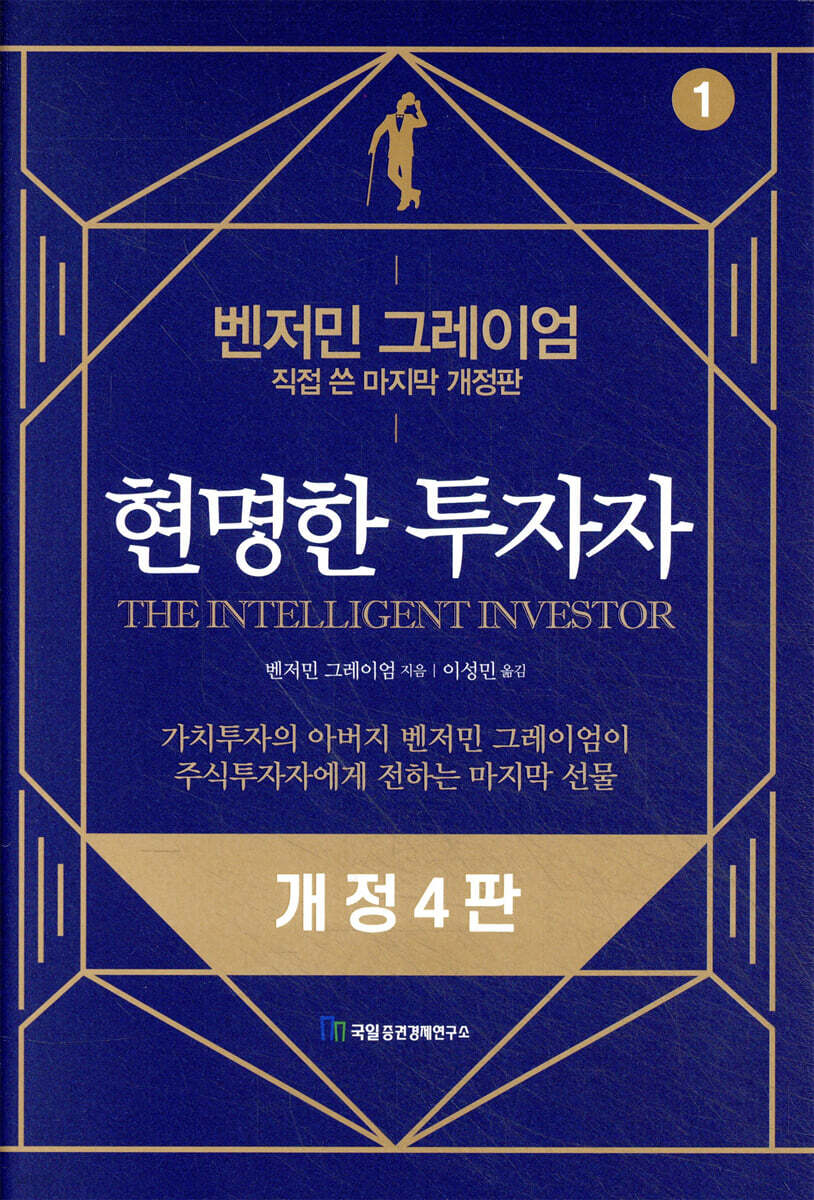
A classic investment book that Warren Buffett praised as the best investment book ever.
Benjamin Graham, the father of value investing, gives his final gift to stock investors.
Benjamin Graham, the father of value investing, published his book "The Intelligent Investor" in 1949, and went through two revised editions, three revised editions, and a fourth revised edition in 1973.
The Intelligent Investor, 4th Edition, which is significant in that it was the last revised edition written by Benjamin Graham himself during his lifetime, has been newly translated and published as a revised edition.
"The Intelligent Investor" is an investment book that guides even novice investors to develop and implement sound investment strategies.
So, it doesn't cover much about securities analysis techniques, but mainly deals with investment principles and investment attitudes.
It also divides investors into defensive and aggressive investors and explains investment principles that suit each investor's tendencies and temperament, so that they can invest accordingly.
This book, filled with Benjamin Graham's timeless wisdom, teaches investment principles that will never lose you money, emphasizing minimizing losses rather than maximizing profits.
Graham, who defines investment as "the act of securing safety of principal and appropriate returns through thorough analysis," guides investors to avoid losses through thorough "value investing" and pursue long-term investment strategies.
"The Intelligent Investor" is an investment book that transcends time and space and still delivers the greatest value, even after 70 years. It is an undisputed classic that Warren Buffett praised as "by far the best investment book of all time."
Benjamin Graham, the father of value investing, gives his final gift to stock investors.
Benjamin Graham, the father of value investing, published his book "The Intelligent Investor" in 1949, and went through two revised editions, three revised editions, and a fourth revised edition in 1973.
The Intelligent Investor, 4th Edition, which is significant in that it was the last revised edition written by Benjamin Graham himself during his lifetime, has been newly translated and published as a revised edition.
"The Intelligent Investor" is an investment book that guides even novice investors to develop and implement sound investment strategies.
So, it doesn't cover much about securities analysis techniques, but mainly deals with investment principles and investment attitudes.
It also divides investors into defensive and aggressive investors and explains investment principles that suit each investor's tendencies and temperament, so that they can invest accordingly.
This book, filled with Benjamin Graham's timeless wisdom, teaches investment principles that will never lose you money, emphasizing minimizing losses rather than maximizing profits.
Graham, who defines investment as "the act of securing safety of principal and appropriate returns through thorough analysis," guides investors to avoid losses through thorough "value investing" and pursue long-term investment strategies.
"The Intelligent Investor" is an investment book that transcends time and space and still delivers the greatest value, even after 70 years. It is an undisputed classic that Warren Buffett praised as "by far the best investment book of all time."
index
Preface: The Purpose of Writing This Book
Translator's Preface: Hoping to gain the power to think
Chapter 1: Investing and Speculation: What the Smart Investor Can Gain
Investment and Speculation / What Defensive Investors Can Expect / What Aggressive Investors Can Expect
Chapter 2: Investors and Inflation
Inflation and Corporate Profits / Other Alternatives to Hedging Against Inflation / Conclusion
Chapter 3: 100 Years of the Stock Market and Stock Prices in Early 1972
Stock Market in Early 1972 / Future Trends
Chapter 4: Portfolio Strategies for Defensive Investors
Fundamental Issues in Asset Allocation Through Bonds and Stocks / Bond Selection / Non-Convertible Preferred Stock / Other Forms of Securities
Chapter 5: Stock Investments for Defensive Investors
The Value of Stock Investment / Stock Portfolio Construction Rules / Growth Stocks and Defensive Investors / Portfolio Changes / Fixed-Rate Purchases / Investor Personality / Notes on the Concept of 'Risk' / Companies that are 'Large-Cap, Well-Known, and Have Sound Financial Structures'
Chapter 6 Portfolio Strategies for Aggressive Investors: Strategies to Avoid
Non-prime grade bonds and preferred stocks / foreign government bonds / newly issued securities / newly issued common stocks
Chapter 7 Portfolio Strategies for Aggressive Investors: Strategies Worth Trying
Stock Management / Spotting Trading Points Using Formula Techniques / Investing in Growth Stocks / Three Investment Sectors Recommended for Aggressive Investors / Implications of My Investment Principles
Chapter 8: Investment and Market Volatility
Investment decisions using market fluctuations / Buy low and sell high / Formula plan / Price fluctuations in an investor's portfolio / Business value and stock prices / A&P case / Summary / Bond price volatility
Chapter 9 Fund Investment
Overall fund investment performance / Performance funds / Closed-end vs. open-end funds / Hybrid funds
Chapter 10 Investment Advice
Investment Advisory and Banking Trust Services / Financial Information Services / Securities Firm Advice / CFA Certification and Analysts / How to Use Securities Firms / Investment Banking / Other Advisors / Summary
Chapter 11: Securities Analysis for the General Investor: A General Approach
Bond Analysis / Stock Analysis / Factors Affecting Capitalization Factors / Growth Stock Capitalization Factors / Industry Analysis / Two-Step Valuation Process
Chapter 12: Things to Consider in EPS
Utilizing average EPS / calculating past growth rates
Chapter 13 Comparison of Listed Companies
Overall status of your company
Chapter 14: Stock Selection for Defensive Investors
Applying Stock Selection Criteria to the Dow Jones Industrial Average / Investment Strategies for Public Service Companies / Investment Strategies for Financial Stocks / Investment Strategies for Railroad Stocks / Selection Criteria for Defensive Investors
Chapter 15: Stock Selection Methods for Aggressive Investors
Summary of the Graham-Newman Method / Undervalued Stocks / Stock Selection Using the S&P Stock Guide / Stock Selection by Single Criteria / Undervalued Stocks / Special Situations ('Workouts')
Chapter 16 Convertible Securities and Stock Warrants
The Impact of Convertible Securities on Common Stock / Common Stock to Convertible Preferred Stock Replacement Strategy / Stock Warrants / Additional Explanation
Chapter 17 Four Extreme Cases
Penn Central Case / Ring-Temco-Boat Case / NVF's Acquisition of Sharon Steel Case / AAA Enterprise Case
Chapter 18: Comparative Analysis of Companies
Comparison 1: REI (stores, offices, factories, etc.) and REC (real estate investment, general construction)
Comparison 2: Air Products (industrial and medical gases, etc.) and Air Reduction (industrial gases and equipment, chemicals)
Comparison 3: American Home Products (medicines, cosmetics, household goods, candy)
American Hospital Supply (distributor and manufacturer of hospital supplies and equipment)
Comparison 4: H&R Block (income tax services) and Blue Bell (manufacturer of workwear, uniforms, etc.)
Comparison 5: IFF (a fragrance company) and Harvester (a manufacturer of trucks, agricultural equipment, and construction equipment)
Comparison 6: McGraw Edison (Public Utilities and Equipment, Household Appliances) and
McGraw-Hill (books, films, education systems, magazine and newspaper publishers, information services)
Comparison 7: General (a large, diversified conglomerate) and Presto (a diversified electronics and defense industry company)
Comparison 8: Whiting (Vehicle Maintenance Equipment) vs. Wilcox (Small Conglomerate) / General Considerations
Chapter 19: Shareholders and Management: Dividend Policy
Shareholders and Dividend Policy / Stock Dividends and Stock Splits
Chapter 20: The Key to Investing: Margin of Safety
Diversification Theory / Standards for Investment and Speculation / Expansion of the Concept of Investment / Summary / Review
Appendix 1.
Investment Guru of Graham-Dodd Village
2.
Key provisions regarding investment income tax and securities transaction tax in 1972
3.
New stock speculation trends
4.
Case Study: Etna Maintenance Company
5. Tax Accounting for NVF's Acquisition of Sharon Steele Shares
6.
Technology stocks as investment targets
index
Translator's note
Translator's Preface: Hoping to gain the power to think
Chapter 1: Investing and Speculation: What the Smart Investor Can Gain
Investment and Speculation / What Defensive Investors Can Expect / What Aggressive Investors Can Expect
Chapter 2: Investors and Inflation
Inflation and Corporate Profits / Other Alternatives to Hedging Against Inflation / Conclusion
Chapter 3: 100 Years of the Stock Market and Stock Prices in Early 1972
Stock Market in Early 1972 / Future Trends
Chapter 4: Portfolio Strategies for Defensive Investors
Fundamental Issues in Asset Allocation Through Bonds and Stocks / Bond Selection / Non-Convertible Preferred Stock / Other Forms of Securities
Chapter 5: Stock Investments for Defensive Investors
The Value of Stock Investment / Stock Portfolio Construction Rules / Growth Stocks and Defensive Investors / Portfolio Changes / Fixed-Rate Purchases / Investor Personality / Notes on the Concept of 'Risk' / Companies that are 'Large-Cap, Well-Known, and Have Sound Financial Structures'
Chapter 6 Portfolio Strategies for Aggressive Investors: Strategies to Avoid
Non-prime grade bonds and preferred stocks / foreign government bonds / newly issued securities / newly issued common stocks
Chapter 7 Portfolio Strategies for Aggressive Investors: Strategies Worth Trying
Stock Management / Spotting Trading Points Using Formula Techniques / Investing in Growth Stocks / Three Investment Sectors Recommended for Aggressive Investors / Implications of My Investment Principles
Chapter 8: Investment and Market Volatility
Investment decisions using market fluctuations / Buy low and sell high / Formula plan / Price fluctuations in an investor's portfolio / Business value and stock prices / A&P case / Summary / Bond price volatility
Chapter 9 Fund Investment
Overall fund investment performance / Performance funds / Closed-end vs. open-end funds / Hybrid funds
Chapter 10 Investment Advice
Investment Advisory and Banking Trust Services / Financial Information Services / Securities Firm Advice / CFA Certification and Analysts / How to Use Securities Firms / Investment Banking / Other Advisors / Summary
Chapter 11: Securities Analysis for the General Investor: A General Approach
Bond Analysis / Stock Analysis / Factors Affecting Capitalization Factors / Growth Stock Capitalization Factors / Industry Analysis / Two-Step Valuation Process
Chapter 12: Things to Consider in EPS
Utilizing average EPS / calculating past growth rates
Chapter 13 Comparison of Listed Companies
Overall status of your company
Chapter 14: Stock Selection for Defensive Investors
Applying Stock Selection Criteria to the Dow Jones Industrial Average / Investment Strategies for Public Service Companies / Investment Strategies for Financial Stocks / Investment Strategies for Railroad Stocks / Selection Criteria for Defensive Investors
Chapter 15: Stock Selection Methods for Aggressive Investors
Summary of the Graham-Newman Method / Undervalued Stocks / Stock Selection Using the S&P Stock Guide / Stock Selection by Single Criteria / Undervalued Stocks / Special Situations ('Workouts')
Chapter 16 Convertible Securities and Stock Warrants
The Impact of Convertible Securities on Common Stock / Common Stock to Convertible Preferred Stock Replacement Strategy / Stock Warrants / Additional Explanation
Chapter 17 Four Extreme Cases
Penn Central Case / Ring-Temco-Boat Case / NVF's Acquisition of Sharon Steel Case / AAA Enterprise Case
Chapter 18: Comparative Analysis of Companies
Comparison 1: REI (stores, offices, factories, etc.) and REC (real estate investment, general construction)
Comparison 2: Air Products (industrial and medical gases, etc.) and Air Reduction (industrial gases and equipment, chemicals)
Comparison 3: American Home Products (medicines, cosmetics, household goods, candy)
American Hospital Supply (distributor and manufacturer of hospital supplies and equipment)
Comparison 4: H&R Block (income tax services) and Blue Bell (manufacturer of workwear, uniforms, etc.)
Comparison 5: IFF (a fragrance company) and Harvester (a manufacturer of trucks, agricultural equipment, and construction equipment)
Comparison 6: McGraw Edison (Public Utilities and Equipment, Household Appliances) and
McGraw-Hill (books, films, education systems, magazine and newspaper publishers, information services)
Comparison 7: General (a large, diversified conglomerate) and Presto (a diversified electronics and defense industry company)
Comparison 8: Whiting (Vehicle Maintenance Equipment) vs. Wilcox (Small Conglomerate) / General Considerations
Chapter 19: Shareholders and Management: Dividend Policy
Shareholders and Dividend Policy / Stock Dividends and Stock Splits
Chapter 20: The Key to Investing: Margin of Safety
Diversification Theory / Standards for Investment and Speculation / Expansion of the Concept of Investment / Summary / Review
Appendix 1.
Investment Guru of Graham-Dodd Village
2.
Key provisions regarding investment income tax and securities transaction tax in 1972
3.
New stock speculation trends
4.
Case Study: Etna Maintenance Company
5. Tax Accounting for NVF's Acquisition of Sharon Steele Shares
6.
Technology stocks as investment targets
index
Translator's note
Detailed image

Into the book
* The purpose of this book is to provide useful guidance for ordinary investors to develop and implement effective investment strategies.
Therefore, this book will primarily cover investment principles and attitudes that investors should adhere to, rather than techniques for analyzing securities.
However, to specifically explain the key factors necessary for stock selection, we will explain using examples of various stocks listed on the New York Stock Exchange.
Much of this book will be based on my experience in the financial markets over the past several decades.
To invest wisely in the stock market, you need to have a thorough understanding of how various bonds and stocks actually perform under various circumstances.
Because some of the past cases will reappear.
George Santayana's warning, "Those who cannot remember the past are condemned to repeat it," contains a truth that must be heeded even in the world of investing.
---From the "Preface"
* For most readers, we recommend maintaining a consistent 50:50 formula with as equal a mix of bonds and stocks in your portfolio as possible.
For example, if the stock price rises and the stock ratio becomes 55%, one-eleventh of the 5% stock holding is sold and additional bonds are purchased with the proceeds to make it 50:50 again.
Conversely, if the stock ratio falls to 45%, you would need to sell one-eleventh of the bonds and use the proceeds to purchase additional stocks.
I am convinced that the 50:50 strategy is very suitable for defensive investors.
There are several reasons for this:
It's very simple, undoubtedly points in the right direction, and gives investors at least some sense of control over market conditions.
But most importantly, it prevents you from overweighting your stocks when the market reaches dangerous levels.
---From "Chapter 4 Portfolio Strategies for Defensive Investors"
* Generally, the most helpful approach would be the so-called negative approach, which involves first eliminating what you need to avoid.
First, aggressive investors must yield preferred stocks of blue-chip companies to corporate investors.
Additionally, subprime bonds and preferred stocks should be avoided unless they can be purchased at a special discount.
A special discount price generally means that bonds with high coupon rates are trading at a discount of at least 30%, and bonds with low coupon rates must be purchased at a greater discount.
Also, no matter how high the yield on foreign government bonds is, it is better to give them to others.
In addition to convertible bonds and preferred stocks, newly listed stocks or stocks that have recently shown strong performance may also look attractive, but they should be approached cautiously.
Standard bond investing follows the recommended approach for defensive investors.
In other words, it is advisable to choose between high-grade taxable bonds that currently offer a yield of around 7.25% or high-grade tax-exempt bonds that offer a yield of 5.30% if the maturity is long.
---From "Chapter 6 Portfolio Strategies for Aggressive Investors: Strategies to Avoid"
* A prudent investor would not believe that daily or monthly fluctuations in the stock market would make him richer or poorer.
But how should we interpret long-term, large-scale fluctuations? This is where fundamental questions, including complex psychological issues, arise.
A sudden market surge can be both exciting and alarming, but it can also be a powerful temptation to take risks.
The stock price went up, so I became richer than before.
Great! So now that the stock price has risen so much, should I sell? Or should I kick myself for not buying more when the price was lower? Or, worst of all, should I get caught up in the hype, get caught up in the public's enthusiasm, overconfidence, and greed, and take on even greater risks? Everyone knows the answer to the last question is a resounding "no."
But even a wise investor needs strong willpower to avoid being swept away by the crowd.
---From Chapter 8, “Investment and Market Volatility”
* The safety margin is always determined by the price paid.
At a given price, the margin of safety may be large, but at higher prices it may be small, and even non-existent at higher prices.
Overcoming these challenges requires smart stock selection, with exceptional insight and judgment, to offset the risks inherent in the overall market.
The concept of margin of safety becomes much clearer when applied to the realm of undervalued stocks.
Here, by definition, there is a favorable difference between price and assessed value.
This difference is the safety margin.
Buyers of undervalued stocks place particular emphasis on the investment's ability to withstand adverse conditions.
The undervalued securities category consists of a large number of companies (perhaps even a majority) whose future prospects are neither clearly promising nor clearly pessimistic.
If you purchase these securities at an undervalued price, you will still be able to achieve satisfactory investment results even if your profitability is somewhat reduced.
This is the original purpose of the safety margin.
Therefore, this book will primarily cover investment principles and attitudes that investors should adhere to, rather than techniques for analyzing securities.
However, to specifically explain the key factors necessary for stock selection, we will explain using examples of various stocks listed on the New York Stock Exchange.
Much of this book will be based on my experience in the financial markets over the past several decades.
To invest wisely in the stock market, you need to have a thorough understanding of how various bonds and stocks actually perform under various circumstances.
Because some of the past cases will reappear.
George Santayana's warning, "Those who cannot remember the past are condemned to repeat it," contains a truth that must be heeded even in the world of investing.
---From the "Preface"
* For most readers, we recommend maintaining a consistent 50:50 formula with as equal a mix of bonds and stocks in your portfolio as possible.
For example, if the stock price rises and the stock ratio becomes 55%, one-eleventh of the 5% stock holding is sold and additional bonds are purchased with the proceeds to make it 50:50 again.
Conversely, if the stock ratio falls to 45%, you would need to sell one-eleventh of the bonds and use the proceeds to purchase additional stocks.
I am convinced that the 50:50 strategy is very suitable for defensive investors.
There are several reasons for this:
It's very simple, undoubtedly points in the right direction, and gives investors at least some sense of control over market conditions.
But most importantly, it prevents you from overweighting your stocks when the market reaches dangerous levels.
---From "Chapter 4 Portfolio Strategies for Defensive Investors"
* Generally, the most helpful approach would be the so-called negative approach, which involves first eliminating what you need to avoid.
First, aggressive investors must yield preferred stocks of blue-chip companies to corporate investors.
Additionally, subprime bonds and preferred stocks should be avoided unless they can be purchased at a special discount.
A special discount price generally means that bonds with high coupon rates are trading at a discount of at least 30%, and bonds with low coupon rates must be purchased at a greater discount.
Also, no matter how high the yield on foreign government bonds is, it is better to give them to others.
In addition to convertible bonds and preferred stocks, newly listed stocks or stocks that have recently shown strong performance may also look attractive, but they should be approached cautiously.
Standard bond investing follows the recommended approach for defensive investors.
In other words, it is advisable to choose between high-grade taxable bonds that currently offer a yield of around 7.25% or high-grade tax-exempt bonds that offer a yield of 5.30% if the maturity is long.
---From "Chapter 6 Portfolio Strategies for Aggressive Investors: Strategies to Avoid"
* A prudent investor would not believe that daily or monthly fluctuations in the stock market would make him richer or poorer.
But how should we interpret long-term, large-scale fluctuations? This is where fundamental questions, including complex psychological issues, arise.
A sudden market surge can be both exciting and alarming, but it can also be a powerful temptation to take risks.
The stock price went up, so I became richer than before.
Great! So now that the stock price has risen so much, should I sell? Or should I kick myself for not buying more when the price was lower? Or, worst of all, should I get caught up in the hype, get caught up in the public's enthusiasm, overconfidence, and greed, and take on even greater risks? Everyone knows the answer to the last question is a resounding "no."
But even a wise investor needs strong willpower to avoid being swept away by the crowd.
---From Chapter 8, “Investment and Market Volatility”
* The safety margin is always determined by the price paid.
At a given price, the margin of safety may be large, but at higher prices it may be small, and even non-existent at higher prices.
Overcoming these challenges requires smart stock selection, with exceptional insight and judgment, to offset the risks inherent in the overall market.
The concept of margin of safety becomes much clearer when applied to the realm of undervalued stocks.
Here, by definition, there is a favorable difference between price and assessed value.
This difference is the safety margin.
Buyers of undervalued stocks place particular emphasis on the investment's ability to withstand adverse conditions.
The undervalued securities category consists of a large number of companies (perhaps even a majority) whose future prospects are neither clearly promising nor clearly pessimistic.
If you purchase these securities at an undervalued price, you will still be able to achieve satisfactory investment results even if your profitability is somewhat reduced.
This is the original purpose of the safety margin.
---From Chapter 20, “The Key to Investment: Margin of Safety”
Publisher's Review
Graham said, 'First: Never lose money.
Second: Never forget the principle that you will never lose money.' Based on this principle, he created value investing.
He never invested based on gut feeling or rumors.
For the first time in the history of securities, we analyzed corporate financial statements and other figures to create a basis for investment.
And in 1926, he founded a company called 'Benjamin Graham Joint Account' and began applying his theories to practice.
And in the process, he made a huge amount of money and became an investment genius.
Until Graham, stocks were merely objects of speculation that fluctuated without any set rules.
In an era when investments relied on possibilities or rumors, Graham's value investing was revolutionary.
In a nutshell, 'value investing' means buying stocks at a price lower than the company's intrinsic value.
“Value investing is simple.
Look at the true value of the company (intrinsic value), don't lose money (margin of safety).
Just follow these two principles.
If the stock price is lower than its intrinsic value, ignore all the rumors that are making you afraid to invest and buy.
Conversely, if the stock price rises above its intrinsic value and the margin of safety disappears, sell it no matter how much people around you say it's good.
“All successful investors have boldly gone against the crowd.”
Graham, who believes that if you can stick to this principle, you can succeed in investing, emphasizes that buying stocks based solely on price increases without understanding the company's intrinsic value is a surefire way to ruin.
This value investing philosophy is called the 'margin of safety.'
If you buy it cheaper than its intrinsic value, you won't suffer a loss even if the stock market falls.
Therefore, a wise investor must have the knowledge to estimate the fundamental intrinsic value of a company.
Another important thing is, “Don’t buy stocks right after they rise sharply, and don’t sell them right after they fall sharply!”
The "intelligent investor" Graham speaks of is one who is patient, diligent, and never neglects learning.
A wise investor should adhere to the principle of buying low and selling high, without being swayed by market fluctuations, as long as the stocks he or she holds generate profits without any particular problems.
Graham emphasizes that investing is not a matter of IQ or academic background, but rather a matter of principles and attitude.
Although Graham passed away in 1976, his value investing strategy remains in the minds of investors as an absolute truth.
In particular, Warren Buffett emphasized that “value investing principles apply to all markets regardless of national borders, and I follow the principles written in Benjamin Graham’s book “The Intelligent Investor” when investing in the United States as well as other countries.”
Graham's value investing legacy will remain a monumental strategy that will never be forgotten in the history of stocks.
Second: Never forget the principle that you will never lose money.' Based on this principle, he created value investing.
He never invested based on gut feeling or rumors.
For the first time in the history of securities, we analyzed corporate financial statements and other figures to create a basis for investment.
And in 1926, he founded a company called 'Benjamin Graham Joint Account' and began applying his theories to practice.
And in the process, he made a huge amount of money and became an investment genius.
Until Graham, stocks were merely objects of speculation that fluctuated without any set rules.
In an era when investments relied on possibilities or rumors, Graham's value investing was revolutionary.
In a nutshell, 'value investing' means buying stocks at a price lower than the company's intrinsic value.
“Value investing is simple.
Look at the true value of the company (intrinsic value), don't lose money (margin of safety).
Just follow these two principles.
If the stock price is lower than its intrinsic value, ignore all the rumors that are making you afraid to invest and buy.
Conversely, if the stock price rises above its intrinsic value and the margin of safety disappears, sell it no matter how much people around you say it's good.
“All successful investors have boldly gone against the crowd.”
Graham, who believes that if you can stick to this principle, you can succeed in investing, emphasizes that buying stocks based solely on price increases without understanding the company's intrinsic value is a surefire way to ruin.
This value investing philosophy is called the 'margin of safety.'
If you buy it cheaper than its intrinsic value, you won't suffer a loss even if the stock market falls.
Therefore, a wise investor must have the knowledge to estimate the fundamental intrinsic value of a company.
Another important thing is, “Don’t buy stocks right after they rise sharply, and don’t sell them right after they fall sharply!”
The "intelligent investor" Graham speaks of is one who is patient, diligent, and never neglects learning.
A wise investor should adhere to the principle of buying low and selling high, without being swayed by market fluctuations, as long as the stocks he or she holds generate profits without any particular problems.
Graham emphasizes that investing is not a matter of IQ or academic background, but rather a matter of principles and attitude.
Although Graham passed away in 1976, his value investing strategy remains in the minds of investors as an absolute truth.
In particular, Warren Buffett emphasized that “value investing principles apply to all markets regardless of national borders, and I follow the principles written in Benjamin Graham’s book “The Intelligent Investor” when investing in the United States as well as other countries.”
Graham's value investing legacy will remain a monumental strategy that will never be forgotten in the history of stocks.
GOODS SPECIFICS
- Date of issue: June 2, 2025
- Page count, weight, size: 452 pages | 153*225*30mm
- ISBN13: 9788957822401
- ISBN10: 8957822402
You may also like
카테고리
korean


korean

![ELLE 엘르 스페셜 에디션 A형 : 12월 [2025]](http://librairie.coreenne.fr/cdn/shop/files/b8e27a3de6c9538896439686c6b0e8fb.jpg?v=1766436872&width=3840)


