

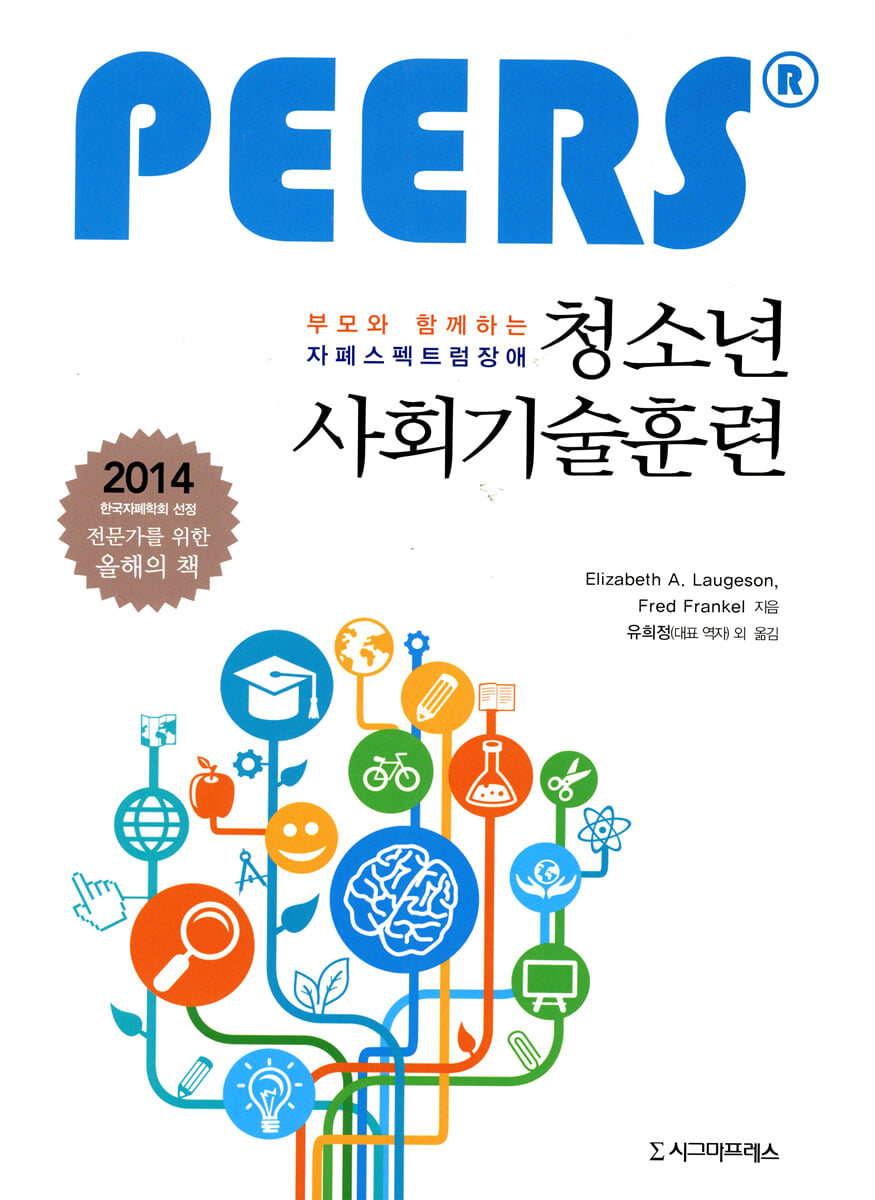
Parent-Supported Social Skills Training for Adolescents with Autism Spectrum Disorder (PEERS®)
 |
Description
Book Introduction
For adolescents with autism spectrum disorder, social skills training is an essential treatment to improve social adaptability.
The social skills training introduced in this book has advantages that differentiate it from existing training methods.
First, it is an evidence-based treatment with proven effectiveness, and parents who participate in the treatment can learn not only the social skills their children need, but also how to provide positive reinforcement and communicate healthily.
And because it provides clear guidelines that experts can easily learn and use, even if they don't implement the entire program in clinical settings, parts of it can be usefully used in the clinic.
The social skills training introduced in this book has advantages that differentiate it from existing training methods.
First, it is an evidence-based treatment with proven effectiveness, and parents who participate in the treatment can learn not only the social skills their children need, but also how to provide positive reinforcement and communicate healthily.
And because it provides clear guidelines that experts can easily learn and use, even if they don't implement the entire program in clinical settings, parts of it can be usefully used in the clinic.
index
Chapter 1 Introduction
Chapter 2: Preparing for Treatment
Chapter 3, Session 1: Introduction and Conversation Skills I - Information Exchange
Chapter 4, Session 2: Conversation Skills II - Give-and-take conversation
Chapter 5, Session 3: Conversation Skills III - Electronic Communication
Chapter 6, Session 4: Choosing the Right Friends
Chapter 7, Session 5: Appropriate Use of Humor
Chapter 8, Session 6: Entering Peer Relationships I - Entering Conversation
Chapter 9, Session 7: Entering Peer Relationships II - Exiting Conversations
Chapter 10, Session 8: Getting Together
Chapter 11, Session 9: Becoming a Good Sportsman
Chapter 12, Session 10: Rejection I - Teasing and Embarrassing Feedback
Chapter 13, Session 11: Rejection II - Bullying and Bad Reputation
Chapter 14, Session 12: Dealing with Conflicts of Opinion
Chapter 15, Session 13: Rumors and Behind-the-Scenes
Chapter 16, Session 14: Graduation and Closure
Chapter 2: Preparing for Treatment
Chapter 3, Session 1: Introduction and Conversation Skills I - Information Exchange
Chapter 4, Session 2: Conversation Skills II - Give-and-take conversation
Chapter 5, Session 3: Conversation Skills III - Electronic Communication
Chapter 6, Session 4: Choosing the Right Friends
Chapter 7, Session 5: Appropriate Use of Humor
Chapter 8, Session 6: Entering Peer Relationships I - Entering Conversation
Chapter 9, Session 7: Entering Peer Relationships II - Exiting Conversations
Chapter 10, Session 8: Getting Together
Chapter 11, Session 9: Becoming a Good Sportsman
Chapter 12, Session 10: Rejection I - Teasing and Embarrassing Feedback
Chapter 13, Session 11: Rejection II - Bullying and Bad Reputation
Chapter 14, Session 12: Dealing with Conflicts of Opinion
Chapter 15, Session 13: Rumors and Behind-the-Scenes
Chapter 16, Session 14: Graduation and Closure
GOODS SPECIFICS
- Date of issue: October 1, 2013
- Page count, weight, size: 472 pages | 974g | 188*254*30mm
- ISBN13: 9788968660542
- ISBN10: 8968660549
You may also like
카테고리
korean


korean

![ELLE 엘르 스페셜 에디션 A형 : 12월 [2025]](http://librairie.coreenne.fr/cdn/shop/files/b8e27a3de6c9538896439686c6b0e8fb.jpg?v=1766436872&width=3840)


