

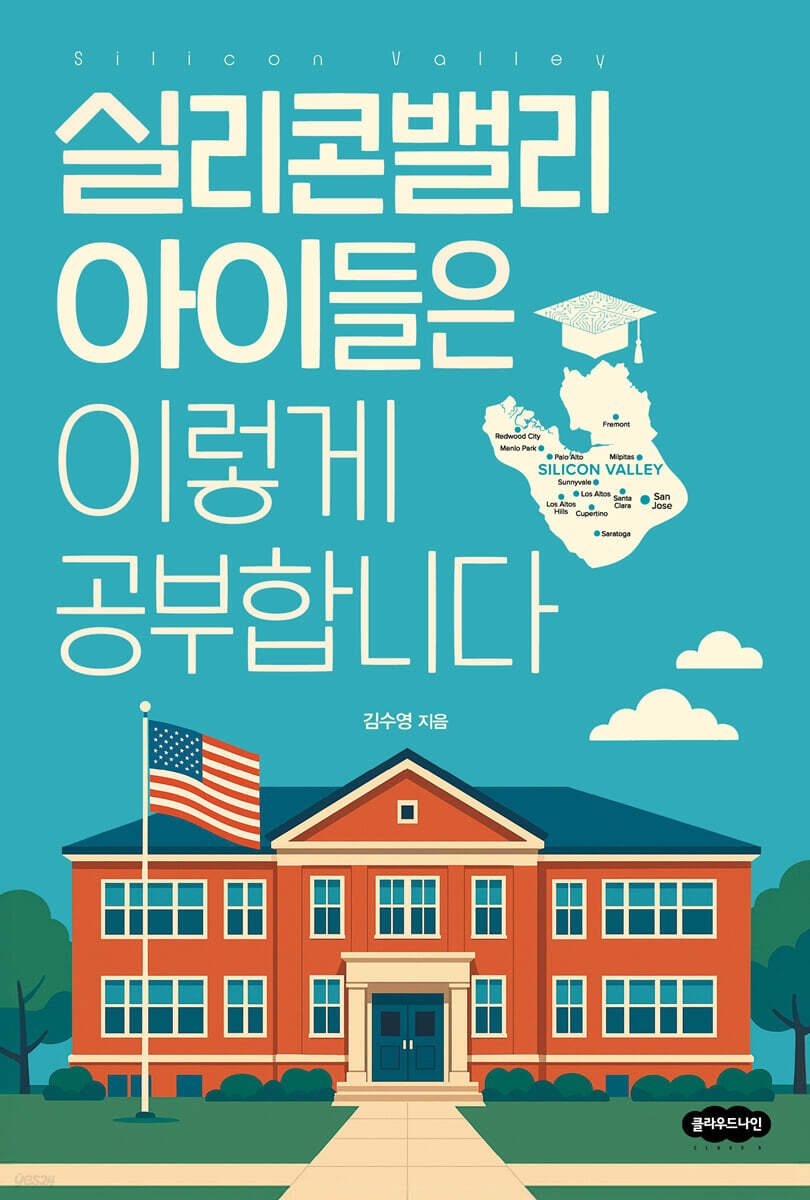
This is how Silicon Valley kids study
 |
Description
Book Introduction
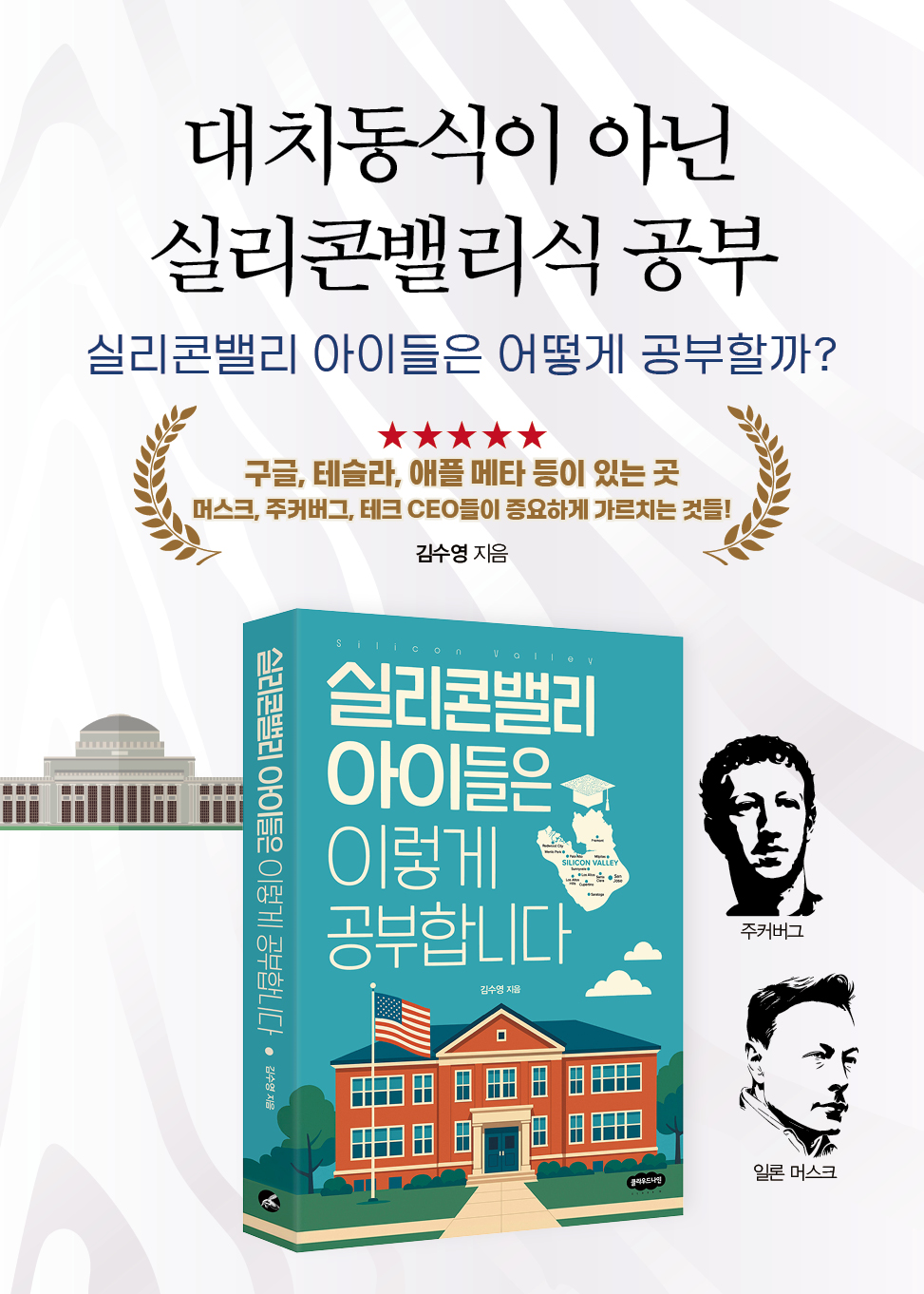
How on earth do Silicon Valley kids study?
Analyzing Silicon Valley-style education, not Daechi-dong-style education.
Silicon Valley-style learning strategies for nurturing future talent
We must prepare our children with the strength to live a lifetime!
Daechi-dong is the number one private education district in Korea.
But many parents know.
In the age of artificial intelligence, a traditional education system does not guarantee children's future.
The era where studying alone, or even just doing well on entrance exams, could guarantee a secure future is over.
So what's next? We need a different, more futuristic, and more global vision of education.
This book begins with a simple question: "How on earth do Silicon Valley kids study?"
Silicon Valley is home to some of the fastest and smartest people in the world.
How do they raise their children? What is education like in a place where global leaders like MIT, Stanford, Google, Tesla, Apple, and Meta gather? Their passion for education is as fervent as that of Daechi-dong.
Indian parents, Chinese parents, and Jewish parents are all desperately trying to educate their children.
It's just about recognizing more diversity and knowing that there are many different paths.
The author raised children in Silicon Valley and observed parents and their children from a variety of occupations and nationalities.
And I documented in detail the philosophy behind their teaching methods and the small choices they make in their daily lives.
She followed the concerns and choices of Silicon Valley parents, sometimes through interviews, sometimes as a friend, and sometimes as a parent herself.
This book is not simply about American education or early study abroad information.
It vividly shows what kind of worldview Silicon Valley parents have for their children, what core competencies they consider important, and why they place failure and challenge at the heart of their children's education.
We believe that Daechi-dong is not the only answer, and we will provide new perspectives and insights to parents seeking a more effective education for the future.
Silicon Valley wants to raise children who won't be replaced by artificial intelligence!
Make discussion, reading, writing, exercise, art, volunteering, and gratitude a routine.
Silicon Valley is not just the home of the tech industry.
It is one of the world's most dynamic immigrant communities and a vast educational laboratory for future generations.
Children discuss with friends of various nationalities in one classroom, laugh when they make mistakes, and try again.
The test isn't everything; what questions are asked and what kind of story a person has are reflected in college admissions.
This book features parents raising children in Silicon Valley.
Startup founders, engineers at big tech companies, school administrators, artists, and even immigrant parents.
Their educational characteristics can be broadly divided into six categories.
First of all, it enables you to overcome failure and become independent.
Second, it starts helping others.
He is running around here and there to help others in various ways, to the point that he even used the expression, 'I am at war with helping others.'
Third, don't give up and keep going until you succeed.
Fourth, it helps develop possibilities through various experiences.
Fifth, it cultivates the power of grit to see things through to the end.
Sixth, it allows for creative use of artificial intelligence.
Their educational goal is for children to find what they like, learn independently, and live happily.
To do this, we adhere to the following principles:
"Trust your child and wait." "Let them fail." "Bring out the direction within your child." The author shows how such parenting philosophies are being put into practice at home, what changes occur in children as a result, and what parents should let go of and hold on to.
The same goes for the founders who lead Silicon Valley's leading companies.
Elon Musk rebelled against the traditional school system and created his own school.
Mark Zuckerberg founded an educational non-profit with a child development psychologist.
Their common philosophy is to help children find their own direction.
But they don't just talk about philosophy.
Share your experiences of running, trial and error, and growing with your child.
Silicon Valley parents create a culture that tolerates failure.
Rather than telling your child the correct answer in advance, let them try it themselves, share their feelings after failure, and reflect on its meaning together.
A father said this when his son failed his math test:
“Okay, so what kind of experiment can we do using this failure?” From that day on, the child focused more on ‘attempts’ and ‘feedback’ than on grades.
One interviewee observed a child immersed in the art center for six hours a day and asked, “Why does this child like this?” rather than “How can this be connected to college entrance exams?”
Ultimately, that immersion led to self-expression and presentation skills, and although I went on to study sociology rather than art in college, I was able to create a powerful 'story'.
You don't have to go to Silicon Valley to get a Silicon Valley-style education!
You can get information and apply it through this book.
Silicon Valley parents raise people first, not technology.
Make discussion, reading, writing, exercise, art, service, and gratitude a part of your routine rather than using electronic devices.
It also helps develop emotional regulation, empathy, collaboration, and observation skills.
Because I believe that everything ultimately comes down to creativity and problem-solving skills.
This book records such educational methods and conversations.
Self-direction, resilience, engagement, emotional awareness, and the habit of questioning.
Such words are not listed abstractly.
Each chapter meticulously captures real-life conversations, cases, conflicts, and transformations between parents and children. This book is more than just a parenting guide.
This is a quiet but profound invitation to readers who want to become parents who ask questions in order to raise children who ask questions.
Analyzing Silicon Valley-style education, not Daechi-dong-style education.
Silicon Valley-style learning strategies for nurturing future talent
We must prepare our children with the strength to live a lifetime!
Daechi-dong is the number one private education district in Korea.
But many parents know.
In the age of artificial intelligence, a traditional education system does not guarantee children's future.
The era where studying alone, or even just doing well on entrance exams, could guarantee a secure future is over.
So what's next? We need a different, more futuristic, and more global vision of education.
This book begins with a simple question: "How on earth do Silicon Valley kids study?"
Silicon Valley is home to some of the fastest and smartest people in the world.
How do they raise their children? What is education like in a place where global leaders like MIT, Stanford, Google, Tesla, Apple, and Meta gather? Their passion for education is as fervent as that of Daechi-dong.
Indian parents, Chinese parents, and Jewish parents are all desperately trying to educate their children.
It's just about recognizing more diversity and knowing that there are many different paths.
The author raised children in Silicon Valley and observed parents and their children from a variety of occupations and nationalities.
And I documented in detail the philosophy behind their teaching methods and the small choices they make in their daily lives.
She followed the concerns and choices of Silicon Valley parents, sometimes through interviews, sometimes as a friend, and sometimes as a parent herself.
This book is not simply about American education or early study abroad information.
It vividly shows what kind of worldview Silicon Valley parents have for their children, what core competencies they consider important, and why they place failure and challenge at the heart of their children's education.
We believe that Daechi-dong is not the only answer, and we will provide new perspectives and insights to parents seeking a more effective education for the future.
Silicon Valley wants to raise children who won't be replaced by artificial intelligence!
Make discussion, reading, writing, exercise, art, volunteering, and gratitude a routine.
Silicon Valley is not just the home of the tech industry.
It is one of the world's most dynamic immigrant communities and a vast educational laboratory for future generations.
Children discuss with friends of various nationalities in one classroom, laugh when they make mistakes, and try again.
The test isn't everything; what questions are asked and what kind of story a person has are reflected in college admissions.
This book features parents raising children in Silicon Valley.
Startup founders, engineers at big tech companies, school administrators, artists, and even immigrant parents.
Their educational characteristics can be broadly divided into six categories.
First of all, it enables you to overcome failure and become independent.
Second, it starts helping others.
He is running around here and there to help others in various ways, to the point that he even used the expression, 'I am at war with helping others.'
Third, don't give up and keep going until you succeed.
Fourth, it helps develop possibilities through various experiences.
Fifth, it cultivates the power of grit to see things through to the end.
Sixth, it allows for creative use of artificial intelligence.
Their educational goal is for children to find what they like, learn independently, and live happily.
To do this, we adhere to the following principles:
"Trust your child and wait." "Let them fail." "Bring out the direction within your child." The author shows how such parenting philosophies are being put into practice at home, what changes occur in children as a result, and what parents should let go of and hold on to.
The same goes for the founders who lead Silicon Valley's leading companies.
Elon Musk rebelled against the traditional school system and created his own school.
Mark Zuckerberg founded an educational non-profit with a child development psychologist.
Their common philosophy is to help children find their own direction.
But they don't just talk about philosophy.
Share your experiences of running, trial and error, and growing with your child.
Silicon Valley parents create a culture that tolerates failure.
Rather than telling your child the correct answer in advance, let them try it themselves, share their feelings after failure, and reflect on its meaning together.
A father said this when his son failed his math test:
“Okay, so what kind of experiment can we do using this failure?” From that day on, the child focused more on ‘attempts’ and ‘feedback’ than on grades.
One interviewee observed a child immersed in the art center for six hours a day and asked, “Why does this child like this?” rather than “How can this be connected to college entrance exams?”
Ultimately, that immersion led to self-expression and presentation skills, and although I went on to study sociology rather than art in college, I was able to create a powerful 'story'.
You don't have to go to Silicon Valley to get a Silicon Valley-style education!
You can get information and apply it through this book.
Silicon Valley parents raise people first, not technology.
Make discussion, reading, writing, exercise, art, service, and gratitude a part of your routine rather than using electronic devices.
It also helps develop emotional regulation, empathy, collaboration, and observation skills.
Because I believe that everything ultimately comes down to creativity and problem-solving skills.
This book records such educational methods and conversations.
Self-direction, resilience, engagement, emotional awareness, and the habit of questioning.
Such words are not listed abstractly.
Each chapter meticulously captures real-life conversations, cases, conflicts, and transformations between parents and children. This book is more than just a parenting guide.
This is a quiet but profound invitation to readers who want to become parents who ask questions in order to raise children who ask questions.
- You can preview some of the book's contents.
Preview
index
Recommendation: Learn about Silicon Valley's "self-directed learning" (Jeon Ju-hyeok, Amazon Software Engineer)
Prologue: We must prepare children to live a lifetime.
Part 1: Silicon Valley Education is Self-Directed Learning
Chapter 1: What Makes Silicon Valley Education Different?
1.
Silicon Valley's enthusiasm for education is the best in the world.
Chinese tiger moms and Indian moms are very passionate / Jews teach differentiation over excellence
2.
Private education in Silicon Valley is hotter than Daechi-dong.
Each person studies intensely according to their own roadmap / Each person receives various activity training tailored to their needs
3.
There are many career paths available outside of prestigious universities.
Selecting Future Talents Who Will Lead the World / Harvard's Secret Admissions Criteria Revealed
4.
Build the basics and experience the fun
Let your children experience happiness first in their early years / Teach them how to study from their senior years.
5.
The ultimate goal is to live a happy life.
Children need to feel happy / Find small joys in everyday life.
Chapter 2: Silicon Valley is also innovating education.
1.
Silicon Valley is a city of competition, challenge, and failure.
Silicon Valley is a center of innovation and growth / Silicon Valley's future is an undying flame.
2.
Silicon Valley parents are young and innovative.
The smartest people flock together / Multiculturalism and diversity create creativity
3.
Silicon Valley kids are resilient.
Their habits and attitudes are different / Their parents help them with respect and trust.
4.
How does Stanford University select students?
We select forward-looking students / We select talents who combine experience and passion.
5. How does UC Berkeley select students?
We select enterprising and passionate students / We select students who do their best and grow.
Chapter 3: Silicon Valley Cultivates Future Talent
1.
Ad Astra is a future talent school created by Elon Musk.
Raising children who cannot be replaced by AI / Focusing on studying analysis, judgment, and finding solutions
2.
Waldorf is a school for the children of Silicon Valley CEOs.
Study without computers or cell phones / Provide holistic education without media
3.
Stanford Online High School is a specialized gifted school.
Value philosophy and debate / Take individualized classes and participate in various club activities
4.
Google's mother, Wojcicki, is the godmother of Silicon Valley education.
Sharing the joy and success of studying together / Find your own teaching method by applying the Trick Model.
Chapter 4: Silicon Valley Provides Personalized Education
1.
Overcoming failure and striving for independence
Accept failure and turn it into an asset / Help them achieve emotional and financial independence.
2.
It starts with helping others.
Think deeply about your relationships with others / If I have enjoyed it, I should help others enjoy it too.
3.
Don't give up and keep going until you succeed
A child with his own story goes to Harvard / Breathing in the world and loving others.
4.
Develop your potential through diverse experiences
Experience a diverse world through exercise and reading / Building a diverse resume is the secret to getting into a prestigious university.
5.
Develop the power of grit to see things through to the end.
Develop the strength to challenge and see things through to the end, even if you fail. Develop passion, the fundamental quality of grit.
6.
Creative use of artificial intelligence
Deep thinking and technical learning are necessary / Reflection and insight into technology are necessary.
Part 2: Silicon Valley Creates the Top 1% of Prodigies
Chapter 5: Developing Learning Ability through Reading
1.
The foundation of study is reading books and discussing them.
Read and discuss books with your mom / Enjoy the happiness you have now
2.
Silicon Valley parents foster reading habits.
Fill your boring time with books
3.
Develop your brain with a 10-minute debate
Training is to listen to good conversations between adults / Make them listen, watch, and think for 10 minutes.
4.
We provide meticulous writing training from a young age.
Let your child think for himself and ask questions / The secret is to write a lot and revise a lot.
Chapter 6: There is a special culture that promotes good study.
1.
Exercise must be done along with studying.
There's a clear connection between exercise and studying / Running relieves stress and builds stamina
2.
Enjoy music and art consistently in your daily life.
We value consistent excellence in activities other than academics / Enjoy music and art in everyday life
3.
Play and travel are essential early education.
Silicon Valley kids see chores as play / Kids plan and lead trips
4.
Teaches donation and volunteer work outside of academics
Ranking Giving and Volunteering / Giving and Volunteering Makes the Brain Happy
5.
Find something to be grateful for in any situation
Write a gratitude journal and wait silently / Have regular time to be grateful
6.
The first step to academic success is knowing your child.
Everyone has their own study style / Let's talk and share our feelings and thoughts.
Chapter 7: How to Grow into the Global Top 1%
1.
Let's ask the child to teach us
Let your child teach you / Ask questions that will spark your study skills
2.
Let's develop both memorization and thinking skills.
Memorization based on understanding is effective / Silicon Valley kids memorize through imagination.
3.
Make a study routine a habit
Sending all three children to prestigious universities through the power of routine / Raising children as neighbors and looking at them objectively
4.
Boost your brain's plasticity with good habits.
Boost your brain's plasticity with good habits and routines / Experience a sense of accomplishment with this 3-minute math study method.
5.
Develop emotional intelligence, the key to academic success.
Emotional intelligence can boost academic intelligence / Let's show our emotions first and produce happiness hormones.
6.
Experience immersion through play
Simplify your surroundings and thoughts to immerse yourself / Silicon Valley kids experience immersion through play
Epilogue
Prologue: We must prepare children to live a lifetime.
Part 1: Silicon Valley Education is Self-Directed Learning
Chapter 1: What Makes Silicon Valley Education Different?
1.
Silicon Valley's enthusiasm for education is the best in the world.
Chinese tiger moms and Indian moms are very passionate / Jews teach differentiation over excellence
2.
Private education in Silicon Valley is hotter than Daechi-dong.
Each person studies intensely according to their own roadmap / Each person receives various activity training tailored to their needs
3.
There are many career paths available outside of prestigious universities.
Selecting Future Talents Who Will Lead the World / Harvard's Secret Admissions Criteria Revealed
4.
Build the basics and experience the fun
Let your children experience happiness first in their early years / Teach them how to study from their senior years.
5.
The ultimate goal is to live a happy life.
Children need to feel happy / Find small joys in everyday life.
Chapter 2: Silicon Valley is also innovating education.
1.
Silicon Valley is a city of competition, challenge, and failure.
Silicon Valley is a center of innovation and growth / Silicon Valley's future is an undying flame.
2.
Silicon Valley parents are young and innovative.
The smartest people flock together / Multiculturalism and diversity create creativity
3.
Silicon Valley kids are resilient.
Their habits and attitudes are different / Their parents help them with respect and trust.
4.
How does Stanford University select students?
We select forward-looking students / We select talents who combine experience and passion.
5. How does UC Berkeley select students?
We select enterprising and passionate students / We select students who do their best and grow.
Chapter 3: Silicon Valley Cultivates Future Talent
1.
Ad Astra is a future talent school created by Elon Musk.
Raising children who cannot be replaced by AI / Focusing on studying analysis, judgment, and finding solutions
2.
Waldorf is a school for the children of Silicon Valley CEOs.
Study without computers or cell phones / Provide holistic education without media
3.
Stanford Online High School is a specialized gifted school.
Value philosophy and debate / Take individualized classes and participate in various club activities
4.
Google's mother, Wojcicki, is the godmother of Silicon Valley education.
Sharing the joy and success of studying together / Find your own teaching method by applying the Trick Model.
Chapter 4: Silicon Valley Provides Personalized Education
1.
Overcoming failure and striving for independence
Accept failure and turn it into an asset / Help them achieve emotional and financial independence.
2.
It starts with helping others.
Think deeply about your relationships with others / If I have enjoyed it, I should help others enjoy it too.
3.
Don't give up and keep going until you succeed
A child with his own story goes to Harvard / Breathing in the world and loving others.
4.
Develop your potential through diverse experiences
Experience a diverse world through exercise and reading / Building a diverse resume is the secret to getting into a prestigious university.
5.
Develop the power of grit to see things through to the end.
Develop the strength to challenge and see things through to the end, even if you fail. Develop passion, the fundamental quality of grit.
6.
Creative use of artificial intelligence
Deep thinking and technical learning are necessary / Reflection and insight into technology are necessary.
Part 2: Silicon Valley Creates the Top 1% of Prodigies
Chapter 5: Developing Learning Ability through Reading
1.
The foundation of study is reading books and discussing them.
Read and discuss books with your mom / Enjoy the happiness you have now
2.
Silicon Valley parents foster reading habits.
Fill your boring time with books
3.
Develop your brain with a 10-minute debate
Training is to listen to good conversations between adults / Make them listen, watch, and think for 10 minutes.
4.
We provide meticulous writing training from a young age.
Let your child think for himself and ask questions / The secret is to write a lot and revise a lot.
Chapter 6: There is a special culture that promotes good study.
1.
Exercise must be done along with studying.
There's a clear connection between exercise and studying / Running relieves stress and builds stamina
2.
Enjoy music and art consistently in your daily life.
We value consistent excellence in activities other than academics / Enjoy music and art in everyday life
3.
Play and travel are essential early education.
Silicon Valley kids see chores as play / Kids plan and lead trips
4.
Teaches donation and volunteer work outside of academics
Ranking Giving and Volunteering / Giving and Volunteering Makes the Brain Happy
5.
Find something to be grateful for in any situation
Write a gratitude journal and wait silently / Have regular time to be grateful
6.
The first step to academic success is knowing your child.
Everyone has their own study style / Let's talk and share our feelings and thoughts.
Chapter 7: How to Grow into the Global Top 1%
1.
Let's ask the child to teach us
Let your child teach you / Ask questions that will spark your study skills
2.
Let's develop both memorization and thinking skills.
Memorization based on understanding is effective / Silicon Valley kids memorize through imagination.
3.
Make a study routine a habit
Sending all three children to prestigious universities through the power of routine / Raising children as neighbors and looking at them objectively
4.
Boost your brain's plasticity with good habits.
Boost your brain's plasticity with good habits and routines / Experience a sense of accomplishment with this 3-minute math study method.
5.
Develop emotional intelligence, the key to academic success.
Emotional intelligence can boost academic intelligence / Let's show our emotions first and produce happiness hormones.
6.
Experience immersion through play
Simplify your surroundings and thoughts to immerse yourself / Silicon Valley kids experience immersion through play
Epilogue
Detailed image
Into the book
"Is my child's homework always this little? Can't you give him more?"
This is what Indian mothers said when they raised their hands at a parent-teacher meeting, the first step in their children's public education.
It is no exaggeration to say that most people in Silicon Valley in the United States are Chinese and Indian.
There are that many Asians.
The area I lived in was more than 90% Indian.
It felt like I was in an Indian village where only English was spoken.
In America, children were thought to grow up freely without studying much.
But the reality was different.
I could feel the passion laser emanating from the eyes of the parents in the classroom.
It wasn't just the mothers who saw this.
Even the polar fathers were all excited about studying.
--- p.21
You need to know the American college admissions system.
You need to know the college admissions system to understand the American education system and the desired type of talent.
If we raise children who are global in stature beyond the narrow confines of Korea by understanding and combining the strengths of Korean education with American education, especially Silicon Valley education, there is a high possibility that they will become world-class talents.
It's a different era now.
And the future will be different.
Existing educational methods alone cannot prepare us for the future.
Are there "SKY" universities in the US like in Korea? While not as common as in Korea, they are sometimes referred to as "HYP," "HYPS," or "HYPSM."
These represent Harvard, Yale, Princeton, Stanford, and MIT, respectively.
So, how does the United States compare to our country, where academic elitism is strong? In fact, the United States also has a strong academic elitism.
But this statement is half true and half false.
Based on my experience in Silicon Valley and what I've read in books and on the news, there are places where academic background is very important, but there are also many places where it isn't.
America is a country where you can find a wide range of opportunities and career paths, not just by the name of the university.
So, the statement that academic background is strong is half true and half false.
--- pp.37~38
Harvard's admissions criteria were shrouded in secrecy until they were revealed to the world as evidence in an admissions lawsuit.
Five elements of the college entrance exam criteria that people had predicted so far have been confirmed.
These five factors are divided into six grades and evaluated.
If you receive a grade 1 or 2 on this assessment, your chances of passing increase.
But even if you get a 3rd grade, there is still a possibility.
This is because Harvard takes into account the school you attended, your hometown, and your family's average income.
In other words, we see how they behave in different situations.
Because I see great potential for growth, I prefer children with distinct stories that are different from others.
So what are the five elements of Harvard admissions?
--- p.
42
The second characteristic of Silicon Valley entrepreneurs' education is 'self-reliance.'
He asked me.
“What do you think success in raising children is?” He asked me again as I hesitated to answer.
"Is success in a child's education defined as receiving awards and getting good grades in school? Is it defined as going to a prestigious university? Is it defined as landing a good job?" His question was a sharp one, one that, as a mother, I found difficult to answer.
He spoke firmly.
That can never be a criterion for success in child education.
“The conventional age for reaching a certain level of social stability is around the mid-40s.
That is also a common belief to some extent.
But most people judge their child's success or failure based on whether or not they go to college.
The world you face after graduating from college is more competitive.
This is when the real results of parenting come out.
You must learn to create your own life and live independently.
There is a very high probability that you will experience failure that is incomparable to the failures of a 3-year-old, a 12-year-old, or a college entrance exam failure.
“You have to be able to get back up and start building your life again.”
--- pp.136~137
If you listen to the secret to his becoming a Harvard student, you can see that he studied independently and lived a practical life.
First, you must have your own story.
J said that Harvard students need their own special stories that will make Harvard shine.
Any race, any region, usually has a similar common story.
He said that even the admissions officer knew about this.
I need my own special story, not the same old story, the same old story, the same story that everyone else is telling.
But expressing my own uniqueness is not easy.
Nowadays, many Korean parents are raising their children with similar goals, taking similar courses, and sending them to similar academies.
Rather than making your child do something out of anxiety because others are doing it, it may actually be more effective to help them develop areas they truly enjoy and excel in.
What's important is setting goals that are right for you and what efforts you make to achieve those goals.
--- p.
156
“I will do it until I can do it.”
When I asked J, a Harvard student, what was most special about him, he answered with a soft smile and a confident voice.
His mother always taught him that almost any problem can be solved.
So he said that he developed the belief that he could do anything from a young age until he became good at it.
When I was in middle school, I wanted to join the basketball team I wanted, but I couldn't.
My mother took me to the neighborhood basketball court every evening to practice my three-point shot.
He even cried because practice was difficult.
I was afraid, wondering, 'Will a good opportunity ever come my way?'
He said that he had a difficult time due to not wanting to practice, lack of time, fatigue, etc.
But eventually, after two years, I was able to join the team I wanted and get the opportunity to play sports to my heart's content.
It's easy to say two years, but it must not have been easy to wait with vague expectations without knowing the outcome.
His mother helped him through countless uncertain times.
During many times of failure and frustration, he was silently by his side, and sometimes he even observed his son's attitude and gave him feedback.
My mother was my best comforter, teacher, coach, and friend.
He also recalled that he was the most ardent fan who supported him.
--- pp.153~154
M was accepted to both UC Berkeley and UCLA and chose UC Berkeley.
We interviewed M's mother, who loves running and studied biology and medicine.
First, I asked what kind of mother she was.
Then she laughed and said, “She was a very extreme mother.”
He is the most humble and gentle person I know.
I was surprised by that person's first words.
He is a person who really doesn't fit with polarity.
“I was filled with the thought, ‘I have to raise my older child well.’
So, when I went to see the doctor, I wrote down a lot of questions in a notebook.
I don't remember exactly, but I think I even wrote down some ridiculous questions."
The doctor gave her a warning.
“Do you want to raise a child in a shelter?”
She should have realized then that she was giving her love at will.
So the older child suffered greatly from puberty.
He said that because of the first child's trial and error, he had a good relationship with the second child.
Speaking about his good relationship with his second child, he said, “There is nothing in this world that can be obtained for free.”
My experience with my first child helped me understand that each child has a different personality.
I stopped judging other people's children by my own standards.
He said that he came to see the child as he was.
She said that it was something to be thankful for.
A child's success or failure is not 100% due to the parents.
These days, mothers say they hope to live with freedom in their hearts.
I felt greatly comforted by the words, "Not all of my child's outcomes are my fault."
--- pp.193~194
Not everyone who is good at sports goes to a prestigious university.
However, the majority of students at prestigious universities participate in at least one sport.
In Silicon Valley, there is a gym class once a day every day.
The same goes for high school.
And many kids exercise as an after-school activity.
There are school team sports and also external sports that can be learned separately.
I've been investing a lot of time in sports since I was young.
Children here are exposed to a variety of sports at a young age.
Baseball, basketball, and soccer, which have seasons, alternate between the seasons.
So, we play team sports all year round.
And personally, I think swimming is a must for most people.
After experiencing such a variety of sports, children begin to choose their main sport starting from middle school.
This is what Indian mothers said when they raised their hands at a parent-teacher meeting, the first step in their children's public education.
It is no exaggeration to say that most people in Silicon Valley in the United States are Chinese and Indian.
There are that many Asians.
The area I lived in was more than 90% Indian.
It felt like I was in an Indian village where only English was spoken.
In America, children were thought to grow up freely without studying much.
But the reality was different.
I could feel the passion laser emanating from the eyes of the parents in the classroom.
It wasn't just the mothers who saw this.
Even the polar fathers were all excited about studying.
--- p.21
You need to know the American college admissions system.
You need to know the college admissions system to understand the American education system and the desired type of talent.
If we raise children who are global in stature beyond the narrow confines of Korea by understanding and combining the strengths of Korean education with American education, especially Silicon Valley education, there is a high possibility that they will become world-class talents.
It's a different era now.
And the future will be different.
Existing educational methods alone cannot prepare us for the future.
Are there "SKY" universities in the US like in Korea? While not as common as in Korea, they are sometimes referred to as "HYP," "HYPS," or "HYPSM."
These represent Harvard, Yale, Princeton, Stanford, and MIT, respectively.
So, how does the United States compare to our country, where academic elitism is strong? In fact, the United States also has a strong academic elitism.
But this statement is half true and half false.
Based on my experience in Silicon Valley and what I've read in books and on the news, there are places where academic background is very important, but there are also many places where it isn't.
America is a country where you can find a wide range of opportunities and career paths, not just by the name of the university.
So, the statement that academic background is strong is half true and half false.
--- pp.37~38
Harvard's admissions criteria were shrouded in secrecy until they were revealed to the world as evidence in an admissions lawsuit.
Five elements of the college entrance exam criteria that people had predicted so far have been confirmed.
These five factors are divided into six grades and evaluated.
If you receive a grade 1 or 2 on this assessment, your chances of passing increase.
But even if you get a 3rd grade, there is still a possibility.
This is because Harvard takes into account the school you attended, your hometown, and your family's average income.
In other words, we see how they behave in different situations.
Because I see great potential for growth, I prefer children with distinct stories that are different from others.
So what are the five elements of Harvard admissions?
--- p.
42
The second characteristic of Silicon Valley entrepreneurs' education is 'self-reliance.'
He asked me.
“What do you think success in raising children is?” He asked me again as I hesitated to answer.
"Is success in a child's education defined as receiving awards and getting good grades in school? Is it defined as going to a prestigious university? Is it defined as landing a good job?" His question was a sharp one, one that, as a mother, I found difficult to answer.
He spoke firmly.
That can never be a criterion for success in child education.
“The conventional age for reaching a certain level of social stability is around the mid-40s.
That is also a common belief to some extent.
But most people judge their child's success or failure based on whether or not they go to college.
The world you face after graduating from college is more competitive.
This is when the real results of parenting come out.
You must learn to create your own life and live independently.
There is a very high probability that you will experience failure that is incomparable to the failures of a 3-year-old, a 12-year-old, or a college entrance exam failure.
“You have to be able to get back up and start building your life again.”
--- pp.136~137
If you listen to the secret to his becoming a Harvard student, you can see that he studied independently and lived a practical life.
First, you must have your own story.
J said that Harvard students need their own special stories that will make Harvard shine.
Any race, any region, usually has a similar common story.
He said that even the admissions officer knew about this.
I need my own special story, not the same old story, the same old story, the same story that everyone else is telling.
But expressing my own uniqueness is not easy.
Nowadays, many Korean parents are raising their children with similar goals, taking similar courses, and sending them to similar academies.
Rather than making your child do something out of anxiety because others are doing it, it may actually be more effective to help them develop areas they truly enjoy and excel in.
What's important is setting goals that are right for you and what efforts you make to achieve those goals.
--- p.
156
“I will do it until I can do it.”
When I asked J, a Harvard student, what was most special about him, he answered with a soft smile and a confident voice.
His mother always taught him that almost any problem can be solved.
So he said that he developed the belief that he could do anything from a young age until he became good at it.
When I was in middle school, I wanted to join the basketball team I wanted, but I couldn't.
My mother took me to the neighborhood basketball court every evening to practice my three-point shot.
He even cried because practice was difficult.
I was afraid, wondering, 'Will a good opportunity ever come my way?'
He said that he had a difficult time due to not wanting to practice, lack of time, fatigue, etc.
But eventually, after two years, I was able to join the team I wanted and get the opportunity to play sports to my heart's content.
It's easy to say two years, but it must not have been easy to wait with vague expectations without knowing the outcome.
His mother helped him through countless uncertain times.
During many times of failure and frustration, he was silently by his side, and sometimes he even observed his son's attitude and gave him feedback.
My mother was my best comforter, teacher, coach, and friend.
He also recalled that he was the most ardent fan who supported him.
--- pp.153~154
M was accepted to both UC Berkeley and UCLA and chose UC Berkeley.
We interviewed M's mother, who loves running and studied biology and medicine.
First, I asked what kind of mother she was.
Then she laughed and said, “She was a very extreme mother.”
He is the most humble and gentle person I know.
I was surprised by that person's first words.
He is a person who really doesn't fit with polarity.
“I was filled with the thought, ‘I have to raise my older child well.’
So, when I went to see the doctor, I wrote down a lot of questions in a notebook.
I don't remember exactly, but I think I even wrote down some ridiculous questions."
The doctor gave her a warning.
“Do you want to raise a child in a shelter?”
She should have realized then that she was giving her love at will.
So the older child suffered greatly from puberty.
He said that because of the first child's trial and error, he had a good relationship with the second child.
Speaking about his good relationship with his second child, he said, “There is nothing in this world that can be obtained for free.”
My experience with my first child helped me understand that each child has a different personality.
I stopped judging other people's children by my own standards.
He said that he came to see the child as he was.
She said that it was something to be thankful for.
A child's success or failure is not 100% due to the parents.
These days, mothers say they hope to live with freedom in their hearts.
I felt greatly comforted by the words, "Not all of my child's outcomes are my fault."
--- pp.193~194
Not everyone who is good at sports goes to a prestigious university.
However, the majority of students at prestigious universities participate in at least one sport.
In Silicon Valley, there is a gym class once a day every day.
The same goes for high school.
And many kids exercise as an after-school activity.
There are school team sports and also external sports that can be learned separately.
I've been investing a lot of time in sports since I was young.
Children here are exposed to a variety of sports at a young age.
Baseball, basketball, and soccer, which have seasons, alternate between the seasons.
So, we play team sports all year round.
And personally, I think swimming is a must for most people.
After experiencing such a variety of sports, children begin to choose their main sport starting from middle school.
--- p.
221
221
GOODS SPECIFICS
- Date of issue: September 29, 2025
- Page count, weight, size: 316 pages | 152*225*30mm
- ISBN13: 9791194534426
- ISBN10: 1194534422
You may also like
카테고리
korean


korean

![GQ KOREA Mark (Monthly): December [2025]](http://librairie.coreenne.fr/cdn/shop/files/8ef265dbbfbf186523ed75ba7319009d.jpg?v=1765340328&width=3840)


