

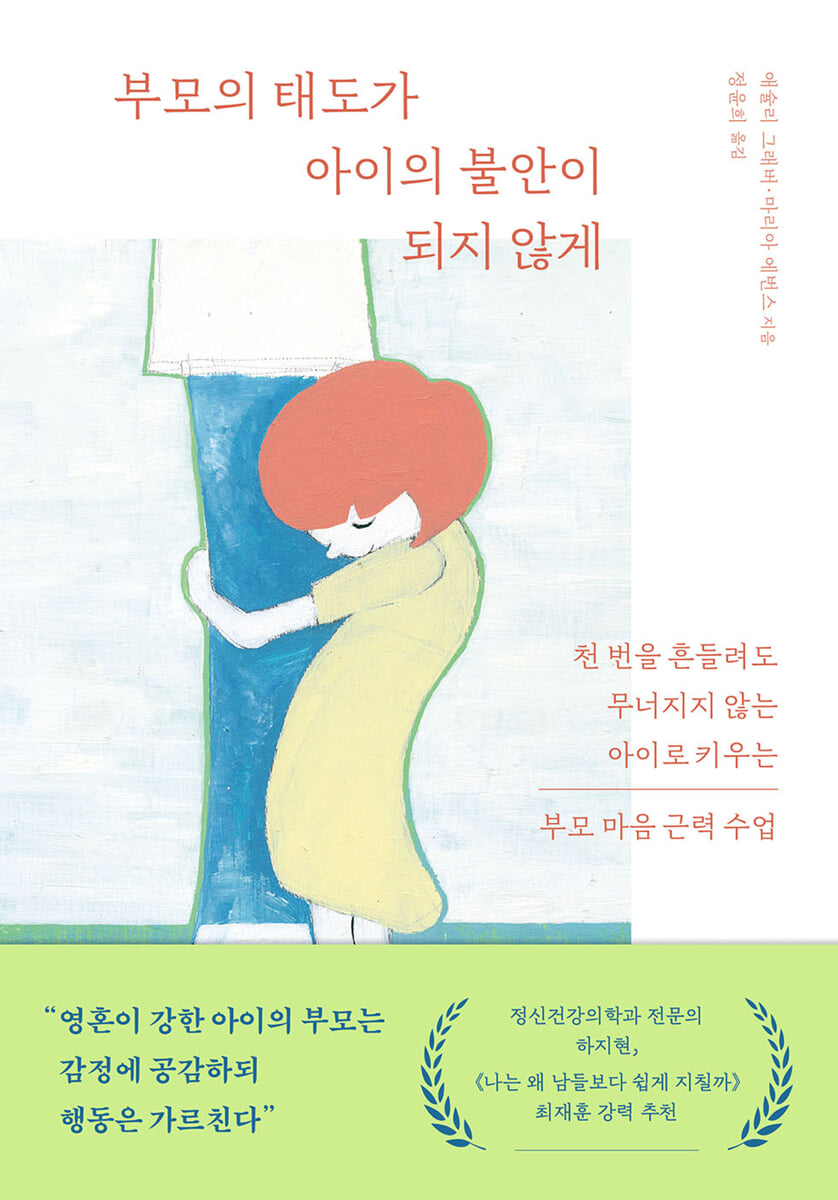
Don't let your parents' attitude cause your child to become anxious.
 |
Description
Book Introduction
Timidity, sensitivity, excessive worry… The real emotion hidden behind a child's 'unusual' behavior was 'anxiety.'
Acknowledge and empathize with feelings, but clearly establish standards for behavior.
A balanced parenting solution for parents who waver between empathy and discipline.
Psychiatrist Dr. Ha Ji-hyun strongly recommends "Why Do I Get Tired Easier Than Others?" by Choi Jae-hoon.
“My child is so timid and anxious.” “Every time a new semester starts, he struggles to make friends and can’t sleep.” These are the complaints the authors of this book, who are experienced child and family psychotherapists, hear from parents every day.
Parents who worry about why their child is so thoughtful and anxious and wonder if there's something they're doing wrong end up endlessly searching online for "child anxiety," only to become even more anxious.
However, few parents realize that anxiety lies behind their child's unusual behaviors, such as excessive worry, irritability, stubbornness, and tantrums.
In one example introduced in the book, a child in lower elementary school suddenly becomes angry and throws his notebook when he makes even a small mistake while preparing to present a book report.
The parents, who had been lamenting, “Did we raise our child this badly?” upon seeing this, realized after receiving counseling at the authors’ parenting support group that their child’s behavior stemmed from a fear of making mistakes.
This book deals with moments like these.
Based on extensive clinical experience and psychological theory, the authors developed the 'SAFER Parenting Principles', which are five practical guidelines that can be applied immediately in daily life. They show parents what kind of conversations and attitude training to use whenever their child shows anxiety signals, rather than wavering between empathy and discipline.
Meanwhile, this book consoles parents who feel guilty and wonder every day, "Am I doing a good job as a parent?" by saying, "There are no perfect parents in this world." It also advises that parents must have the space to take care of their own minds in order to manage their anxiety before their children do.
Children who grow up seeing parents who are good at controlling their emotions naturally learn that mindset.
The first step parents must take to demonstrate emotional leadership toward their children is to reflect on how they, as parents, react to their anxious children.
Acknowledge and empathize with feelings, but clearly establish standards for behavior.
A balanced parenting solution for parents who waver between empathy and discipline.
Psychiatrist Dr. Ha Ji-hyun strongly recommends "Why Do I Get Tired Easier Than Others?" by Choi Jae-hoon.
“My child is so timid and anxious.” “Every time a new semester starts, he struggles to make friends and can’t sleep.” These are the complaints the authors of this book, who are experienced child and family psychotherapists, hear from parents every day.
Parents who worry about why their child is so thoughtful and anxious and wonder if there's something they're doing wrong end up endlessly searching online for "child anxiety," only to become even more anxious.
However, few parents realize that anxiety lies behind their child's unusual behaviors, such as excessive worry, irritability, stubbornness, and tantrums.
In one example introduced in the book, a child in lower elementary school suddenly becomes angry and throws his notebook when he makes even a small mistake while preparing to present a book report.
The parents, who had been lamenting, “Did we raise our child this badly?” upon seeing this, realized after receiving counseling at the authors’ parenting support group that their child’s behavior stemmed from a fear of making mistakes.
This book deals with moments like these.
Based on extensive clinical experience and psychological theory, the authors developed the 'SAFER Parenting Principles', which are five practical guidelines that can be applied immediately in daily life. They show parents what kind of conversations and attitude training to use whenever their child shows anxiety signals, rather than wavering between empathy and discipline.
Meanwhile, this book consoles parents who feel guilty and wonder every day, "Am I doing a good job as a parent?" by saying, "There are no perfect parents in this world." It also advises that parents must have the space to take care of their own minds in order to manage their anxiety before their children do.
Children who grow up seeing parents who are good at controlling their emotions naturally learn that mindset.
The first step parents must take to demonstrate emotional leadership toward their children is to reflect on how they, as parents, react to their anxious children.
- You can preview some of the book's contents.
Preview
index
Recommendation
Entering
Part 1: Causes and Awareness of Anxiety
Chapter 1: Why does my child get anxious over trivial things?
Overt and hidden anxiety
Cause of Anxiety #1: What Your Child Sees and Hears
Cause of Anxiety 2: Various Changes Experienced During Growth
Cause of Anxiety #3: Traumatic Experiences
Cause of Anxiety #4: Unstable Relationships with Parents
Think deeper
Chapter 2: How to Recognize Your Child's Anxiety
Verbal anxiety signals
Anxiety signals manifested through physical reactions
Behavioral signs of anxiety
Critical warning signs
The importance of professional treatment
Think deeper
Part 2 SAFER Parenting
Chapter 3: Maintaining a Calm Attitude
A whirlwind of emotions that shakes parents' composure
There's a fine line between caring and worrying too much.
How to stay calm in anxious situations
Words that increase anxiety vs.
reassuring words
How to Talk to Your Child About Difficult Topics
Creating a peaceful environment
Think deeper
Chapter 4: Empathize with Emotions, but Teach Actions
Why Emotion Regulation Is Important
Suppressing emotions makes problem behavior worse.
Types of parents who have difficulty empathizing with their children's emotions
How to Empathize with Your Child's Emotions
How to Help Your Child Regulate Emotions
When Your Child's Emotions Explode: Empathize with Their Emotions, But Teach Them to Act
After an Emotional Outburst: Rebuilding Your Relationship with Your Child and Developing a Plan for Emotional Regulation
Chapter 5: Raising Children Who Love Themselves
Positive Self-Identity: A Lifelong Strength for Children
Parental interest determines a child's self-image.
A community that embraces children
Parents' words and actions that undermine a child's self-esteem
Praise, respect, and be there for them
Make them feel loved
Telling your family's 'story'
Think deeper
Chapter 6: Speaking in a Language That Opens Your Child's Heart
Types of 'Uncommunicative' Parents
Parents' words that close a child's heart
How to Open a Child's Heart
Things to keep in mind after talking to your child
Think deeper
Chapter 7: Becoming a Role Model for Emotional Regulation
Children imitate their parents' actions, not their words.
A bad example that is engraved in a child's mind
Demonstrate healthy stress coping skills
Parents' words become the child's inner voice.
Parents should not be ashamed of their own problems.
Think deeper ·
SAFER Parenting: How to Protect Your Child's Heart Even When Parents Separate
A letter of promise to my child
Acknowledgements
Entering
Part 1: Causes and Awareness of Anxiety
Chapter 1: Why does my child get anxious over trivial things?
Overt and hidden anxiety
Cause of Anxiety #1: What Your Child Sees and Hears
Cause of Anxiety 2: Various Changes Experienced During Growth
Cause of Anxiety #3: Traumatic Experiences
Cause of Anxiety #4: Unstable Relationships with Parents
Think deeper
Chapter 2: How to Recognize Your Child's Anxiety
Verbal anxiety signals
Anxiety signals manifested through physical reactions
Behavioral signs of anxiety
Critical warning signs
The importance of professional treatment
Think deeper
Part 2 SAFER Parenting
Chapter 3: Maintaining a Calm Attitude
A whirlwind of emotions that shakes parents' composure
There's a fine line between caring and worrying too much.
How to stay calm in anxious situations
Words that increase anxiety vs.
reassuring words
How to Talk to Your Child About Difficult Topics
Creating a peaceful environment
Think deeper
Chapter 4: Empathize with Emotions, but Teach Actions
Why Emotion Regulation Is Important
Suppressing emotions makes problem behavior worse.
Types of parents who have difficulty empathizing with their children's emotions
How to Empathize with Your Child's Emotions
How to Help Your Child Regulate Emotions
When Your Child's Emotions Explode: Empathize with Their Emotions, But Teach Them to Act
After an Emotional Outburst: Rebuilding Your Relationship with Your Child and Developing a Plan for Emotional Regulation
Chapter 5: Raising Children Who Love Themselves
Positive Self-Identity: A Lifelong Strength for Children
Parental interest determines a child's self-image.
A community that embraces children
Parents' words and actions that undermine a child's self-esteem
Praise, respect, and be there for them
Make them feel loved
Telling your family's 'story'
Think deeper
Chapter 6: Speaking in a Language That Opens Your Child's Heart
Types of 'Uncommunicative' Parents
Parents' words that close a child's heart
How to Open a Child's Heart
Things to keep in mind after talking to your child
Think deeper
Chapter 7: Becoming a Role Model for Emotional Regulation
Children imitate their parents' actions, not their words.
A bad example that is engraved in a child's mind
Demonstrate healthy stress coping skills
Parents' words become the child's inner voice.
Parents should not be ashamed of their own problems.
Think deeper ·
SAFER Parenting: How to Protect Your Child's Heart Even When Parents Separate
A letter of promise to my child
Acknowledgements
Detailed image

Into the book
Part 1: Causes and Awareness of Anxiety
Chapter 1: Why does my child get anxious over trivial things?
Parents may think their child is particularly anxious, but even seemingly cheerful children with lots of friends have worries in their heads.
I worry about tomorrow's homework until I go to bed, and I feel anxious when my friend replies to my messages late.
The problem is that this anxiety is not a temporary feeling, but is becoming a part of children's daily lives these days.
--- p.31
Children often unconsciously learn anxiety from the tension, reactions, speech, and facial expressions of the adults around them.
So, we say that rather than trying to eliminate anxiety outright, it's important to first look into its roots.
The first step to recovery is the ability to read the child's anxiety signals and the adult's attitude to respond to the child's emotions.
--- p.33-34
Chapter 2: How to Recognize Your Child's Anxiety
It's the same when a child clearly says in the morning, "I'm going to kindergarten!", but then when they actually get there, they cry and throw a tantrum and refuse to go.
I'm not complaining, I'm just afraid that something bad might happen.
When you feel like your child's behavior is inconsistent, it may actually be a sign that he or she is feeling anxious.
--- p.63
If a child's anxiety becomes severe enough to interfere with daily life, immediate intervention from the caregiver is necessary.
It is important to distinguish whether a child's behavior is simply rebellion or a sign of anxiety.
Especially if your child is entering puberty and is running away from home or skipping school, don't simply assume it's a sign of severe "rebellion"; remember that it could be a sign that they need help.
--- p.87-88
Part 2 SAFER Parenting
Chapter 3: Maintaining a Calm Attitude
The most effective way to develop a child's ability to regulate their emotions is for parents to demonstrate inner calmness.
This method, also known as 'co-regulation,' allows parents to help their children feel more secure by sharing their own sense of calm.
Co-regulation works like magic to effectively relieve a child's tension and anxiety.
The calmness of parents is contagious, like a yawn, and children find peace on their own.
--- p.101
Chapter 4: Empathizing with Emotions but Teaching Action
“You can’t stop the waves, but you can learn to surf.” Similarly, parents can’t completely eliminate their child’s emotional ups and downs, but they can help them better manage their emotions.
Emotion regulation means managing strong emotions such as anxiety, frustration, excitement, anger, and embarrassment.
--- p.150
Children often don't yet know how to regulate their emotions.
It's only natural for parents to become angry and tired when they hear their children whining, crying, screaming, and talking back.
But rather than jumping to the conclusion, "My child is really being rude," think, "My child really needs my help right now."
Children don't change overnight by suddenly saying, "I won't be so reckless anymore."
Therefore, parents should teach their children how to accept strong emotions such as anger, sadness, and frustration as they are and then manage them in a healthy way.
--- p.152
Chapter 5: Raising Children Who Love Themselves
As children learn about themselves, it is crucial that they positively accept and feel proud of their own identity, interests, and personality.
Like emotional regulation, a child's self-esteem begins at home.
The kind of relationship parents have with their children and how they talk about them have a huge impact on the formation of their children's self-identity.
Children develop stronger self-confidence when their parents recognize their achievements and abilities.
Also, how parents and those around them view the child plays an important role in the child's self-perception.
The more children feel accepted and included, the less likely they are to feel inadequate or doubt themselves.
--- p.204
Chapter 6: Speaking in a Language That Opens Your Child's Heart
As psychotherapists and parent coaches, we've seen countless clients in our counseling rooms share all sorts of stories.
But no matter how shocking a story I hear from a client, I never react with something like, "Oh my god, that's ridiculous!" or "What? You really did that?"
Instead, always listen calmly and with curiosity.
Because I know very well that the more I overreact, the more my clients will shut down.
--- p.252
Chapter 7: Becoming a Role Model for Emotional Regulation
If you want your child to remain calm in anxious or stressful situations, you must first set an example.
For example, if you want your six-year-old to calmly say, “I want cereal today,” instead of screaming, “I don’t want pancakes!” when faced with pancakes, you should first calm your child’s emotions by taking deep breaths.
If you get irritated or snap every time your spouse asks you to take out the trash, your child will learn that it's okay to be grumpy or unkind when interacting with loved ones.
--- p.296
Parents sometimes make mistakes and get stressed out.
The image of the "perfect" parent we see on social media and in the news is often artificial and far from reality.
So, if you've been showing undesirable behavior or speaking negatively to your child, read this chapter and forgive yourself first and regroup.
We too must recognize that we have inherited our parents' coping styles and strive not to pass them on to our children.
Chapter 1: Why does my child get anxious over trivial things?
Parents may think their child is particularly anxious, but even seemingly cheerful children with lots of friends have worries in their heads.
I worry about tomorrow's homework until I go to bed, and I feel anxious when my friend replies to my messages late.
The problem is that this anxiety is not a temporary feeling, but is becoming a part of children's daily lives these days.
--- p.31
Children often unconsciously learn anxiety from the tension, reactions, speech, and facial expressions of the adults around them.
So, we say that rather than trying to eliminate anxiety outright, it's important to first look into its roots.
The first step to recovery is the ability to read the child's anxiety signals and the adult's attitude to respond to the child's emotions.
--- p.33-34
Chapter 2: How to Recognize Your Child's Anxiety
It's the same when a child clearly says in the morning, "I'm going to kindergarten!", but then when they actually get there, they cry and throw a tantrum and refuse to go.
I'm not complaining, I'm just afraid that something bad might happen.
When you feel like your child's behavior is inconsistent, it may actually be a sign that he or she is feeling anxious.
--- p.63
If a child's anxiety becomes severe enough to interfere with daily life, immediate intervention from the caregiver is necessary.
It is important to distinguish whether a child's behavior is simply rebellion or a sign of anxiety.
Especially if your child is entering puberty and is running away from home or skipping school, don't simply assume it's a sign of severe "rebellion"; remember that it could be a sign that they need help.
--- p.87-88
Part 2 SAFER Parenting
Chapter 3: Maintaining a Calm Attitude
The most effective way to develop a child's ability to regulate their emotions is for parents to demonstrate inner calmness.
This method, also known as 'co-regulation,' allows parents to help their children feel more secure by sharing their own sense of calm.
Co-regulation works like magic to effectively relieve a child's tension and anxiety.
The calmness of parents is contagious, like a yawn, and children find peace on their own.
--- p.101
Chapter 4: Empathizing with Emotions but Teaching Action
“You can’t stop the waves, but you can learn to surf.” Similarly, parents can’t completely eliminate their child’s emotional ups and downs, but they can help them better manage their emotions.
Emotion regulation means managing strong emotions such as anxiety, frustration, excitement, anger, and embarrassment.
--- p.150
Children often don't yet know how to regulate their emotions.
It's only natural for parents to become angry and tired when they hear their children whining, crying, screaming, and talking back.
But rather than jumping to the conclusion, "My child is really being rude," think, "My child really needs my help right now."
Children don't change overnight by suddenly saying, "I won't be so reckless anymore."
Therefore, parents should teach their children how to accept strong emotions such as anger, sadness, and frustration as they are and then manage them in a healthy way.
--- p.152
Chapter 5: Raising Children Who Love Themselves
As children learn about themselves, it is crucial that they positively accept and feel proud of their own identity, interests, and personality.
Like emotional regulation, a child's self-esteem begins at home.
The kind of relationship parents have with their children and how they talk about them have a huge impact on the formation of their children's self-identity.
Children develop stronger self-confidence when their parents recognize their achievements and abilities.
Also, how parents and those around them view the child plays an important role in the child's self-perception.
The more children feel accepted and included, the less likely they are to feel inadequate or doubt themselves.
--- p.204
Chapter 6: Speaking in a Language That Opens Your Child's Heart
As psychotherapists and parent coaches, we've seen countless clients in our counseling rooms share all sorts of stories.
But no matter how shocking a story I hear from a client, I never react with something like, "Oh my god, that's ridiculous!" or "What? You really did that?"
Instead, always listen calmly and with curiosity.
Because I know very well that the more I overreact, the more my clients will shut down.
--- p.252
Chapter 7: Becoming a Role Model for Emotional Regulation
If you want your child to remain calm in anxious or stressful situations, you must first set an example.
For example, if you want your six-year-old to calmly say, “I want cereal today,” instead of screaming, “I don’t want pancakes!” when faced with pancakes, you should first calm your child’s emotions by taking deep breaths.
If you get irritated or snap every time your spouse asks you to take out the trash, your child will learn that it's okay to be grumpy or unkind when interacting with loved ones.
--- p.296
Parents sometimes make mistakes and get stressed out.
The image of the "perfect" parent we see on social media and in the news is often artificial and far from reality.
So, if you've been showing undesirable behavior or speaking negatively to your child, read this chapter and forgive yourself first and regroup.
We too must recognize that we have inherited our parents' coping styles and strive not to pass them on to our children.
--- p.296
Publisher's Review
How to deal with your child's anxiety,
A balanced parenting solution for parents who waver between empathy and discipline.
Today, with an abundance of toys, information, and educational resources, children are growing up in a more materially affluent environment than ever before, but emotionally, they are more vulnerable than any other generation.
The reality that the two authors of "Don't Let Your Parents' Attitudes Lead to Your Child's Anxiety" have faced while counseling parents and children for decades is by no means light.
In recent years, there has been a sharp increase in children visiting hospitals for ADHD, anxiety disorders, and depression, and there has also been a noticeable increase in self-harm and suicide attempts among adolescents.
Anxiety is no longer a problem unique to some children; it has become a universal emotion that children today face in their daily lives.
All kinds of incidents and accidents are constantly reported through the media, and social media instills unrealistic standards for appearance and living, confusing children's self-perception.
What is the role of parents in such a situation? The authors, who are child and family psychotherapists, emphasize that parents should not be the ones to eliminate anxiety, but rather serve as a strong support system, conveying a stable signal of "it's okay" to anxious children.
However, it is not as easy as it may seem for parents to become a place of emotional comfort for their children.
In reality, when faced with a child's tantrums, tantrums, stubbornness, and obsession stemming from anxiety, it is often difficult to know how to react, and parents often find themselves wavering between empathy and discipline.
This book offers comfort to such parents by saying, “There are no perfect parents in the world,” and offers practical solutions.
In particular, this book contains vivid examples of actual parents, helping readers reflect on their own parenting styles and put them into action immediately.
For example, it shows how a child's anxiety changes when the parents calmly respond to a child who comes in crying because he or she is hurt, rather than panicking and expressing their anxiety.
The 'SAFER Parenting Method' is a five-part practical guideline that helps parents demonstrate emotional leadership toward their children, systematized by the authors based on their extensive clinical experience and psychological theories.
The first step in practicing this parenting method is to reflect on how I, as a parent, react when faced with a child who is shaken by anxiety.
Signs of anxiety in children that appear in various forms
Why Parental Awareness and Setting the Tone Are Important
The human frontal lobe does not fully mature until the age of 25.
On the other hand, the amygdala, which is sensitive to anxiety, starts working actively much earlier.
Understanding the difference in the developmental rate of these two brain regions can help you more calmly accept your child's emotions when they suddenly become withdrawn or irritable.
A child's anxiety isn't just expressed through tantrums, tantrums, or crying.
It can also manifest as physical and behavioral signs, such as suddenly complaining of a stomachache, not being able to sleep, or throwing a tantrum about not wanting to go to kindergarten or school, which they usually do.
With this in mind, rather than rushing to rush, you will first check to see if your child is experiencing any changes or has been hurt.
As the authors emphasize, it allows us to “identify the cause of anxiety rather than trying to solve it.”
Also, as parents, we need to reflect on what kind of facial expression we make and what we say when our children are scared or anxious.
Do parents dismiss the situation with a "It's nothing serious," or do they become even more shocked and flustered, rushing to resolve the issue quickly? This type of response can make children feel ignored or lead to the impression that the situation is far more serious than anticipated, potentially leading to their child becoming closed off.
When dealing with an incident or accident, it is best to use 'reassuring words' as much as possible.
If you hear the news that there's a fire in your neighborhood, you might think, "Wow, that's scary.
Rather than saying, “The house burned down,” say, “There was a fire nearby, but the firefighters came quickly and put it out.”
Let's say, "I'm so glad."
The most important thing is to give the child the sense that 'I am safe now.'
It is the parents' responsibility to create a calm atmosphere so that the child can maintain peace of mind.
You don't have to do any special play.
Children find comfort in the time spent together doing nothing, the familiar routine of ending the day, and the routine of lying in bed and talking before going to sleep.
Anxiety is an emotion that requires understanding and acceptance, not suppression.
Allow Feelings to Guide Behaviors
How should parents react when faced with a child who defies their parents' commands with an unconditional "No!" or cries out loud because they feel left out among their peers? The first principle is to avoid reacting in a way that either gets caught up in their child's emotions and becomes angry with them, or, conversely, absorbs their emotions and crumbles along with them.
Above all, we must remember that the world is unfamiliar to children and that all emotions are new to them.
Anger, anxiety, sadness, jealousy… .
The child does not yet know how to deal with these emotions.
So this book suggests a variety of ways to help children feel comfortable with their own emotions.
For example, try giving your emotions cute names like ‘anxiety’ or ‘buruk’.
One way is to say to a child who is angry, “Oh, you’re starting to get angry now?”
Activities that teach us that emotions are connected to bodily responses are also beneficial.
It's also a good idea to draw a human body with your child and express emotions with color and texture, such as sharp lines for anger, round shapes for joy, and gray dots for boredom.
Also, when children have a lot of worries, creating a "worry pocket" and writing down their worries on a piece of paper is an effective way to teach them emotional distancing.
If both parents and children are experiencing emotional outbursts, it is best to postpone discipline for a while.
Because when emotions are high, no teachings can be properly conveyed.
In times like these, you should first accept the child's emotions as they are and then teach them how to behave after the emotional wave has passed.
Also, if parents first sincerely apologize by saying, “I’m sorry I was angry earlier too,” the child will also learn to reflect on his or her own emotions and gain experience in restoring relationships even in conflict situations.
Make your child feel loved for who he or she is.
Raising Children Who Love Themselves (Form Identity)
There are times when a child is all dolled up with the latest hairstyle or fashion trends, but the parents are not happy with the look.
"What's with that hair?" "Your clothes are so weird." Do you often find yourself saying things like that without even realizing it? Parents might say it casually, as if it were a joke, but for a child at a sensitive age, a single comment can leave a deep scar.
If these negative reactions are repeated, the child's self-esteem will gradually decrease.
Children may already be evaluated and compared in the world based on various criteria such as appearance, gender, and grades.
At least inside the home, the child should be able to have the confidence that he or she is loved for who he or she is, for who he or she is.
In particular, you should avoid pointing out your child's appearance as much as possible and focus on praising and supporting your child's personality strengths, interests, and talents.
Even if your interests are different from theirs, talking about your child's favorite games or celebrities is a good start.
“That game looks fun.
Ask questions like, “What’s your strategy these days?” or “What’s so appealing about that singer?” and listen to what your child has to say.
Right now, at this moment, a child's precious childhood, the only one in his or her life, is passing by.
Spend just 20 minutes a week with your child doing activities they enjoy, and tell them “I love you” often.
Even if a child acts indifferent, the words of love from parents accumulate deep in the child's heart and become a great strength in overcoming anxiety.
Approach the child carefully and listen to his story.
How to Talk to Your Child in a Language That Opens Their Heart (Engage Like a Pro)
If all you say to your child all day is, “Have you eaten?” “Did you do your homework?” “It’s time to go to school now,” then you’re not having a conversation; you’re just giving them one-sided instructions or nagging.
Families who have become accustomed to this way of doing things will soon find themselves staring at their phones during mealtimes, and even when they sit across from each other, an awkward silence will fall as they have nothing to say.
Parents often forget the obvious fact that their children are also 'individuals'.
As the saying goes, 'children are guests,' children are precious beings who stay in my life for a short time.
Moreover, children have a cautious and sensitive temperament like cats.
If you take your child's problems lightly, react too sensitively, or try to solve them hastily, your child's mind can easily become closed.
That is why we must approach this delicate guest with caution.
Let's create a natural and comfortable atmosphere and focus fully on what the child is saying.
Put your phone down for a moment and listen quietly to your child's complaints and grievances.
Sometimes, let's just wait in silence without rushing the conversation.
According to the authors, who are psychotherapists, silence can actually lead to deeper conversations.
A conversation method that is particularly emphasized in this book is the 'echo technique', which is a method of repeating what the child says in the parent's own language.
This helps the child find answers on his own, while also signaling that the parent truly understands him.
Let's try to be the first person our children can confide in when they are going through a difficult time.
Children who have such parents around are better able to overcome anxiety and stress.
Show how to cope with stress in a healthy way.
Be a role model for emotional regulation (Role Model)
The most important and difficult task for parents remains to help their anxious children.
It is important for parents to personally demonstrate how to deal with emotional difficulties in a healthy way, that is, to become emotional role models for their children.
Children imitate their parents' behavior.
If parents become irritated or respond bluntly to each other's requests, the child learns that it is okay to behave that way in relationships with loved ones.
The way parents care for their mental health is also passed on to their children.
It may feel like a burden to be careful with every action and word, but that doesn't mean you have to be perfect.
We just need to recognize that we inherited the way we deal with emotions from our parents and be determined not to pass on those undesirable traits to our children.
When parents express themselves positively, that optimistic attitude is passed on to their children.
Even if you are not satisfied with your appearance, you can say, “I like my strong arms and legs.
Let's say, "I can hug you tightly because you're so strong."
Parents' words become the child's inner voice, and the more positive that voice is, the higher the child's self-esteem.
Even if you are going through an extreme situation like divorce, you can reduce the psychological shock your child experiences by clearly explaining the changing circumstances and consistently reminding them that their love for their child will not change.
Parents who practice the SAFER parenting principle in this way will become emotional role models for their children to recall whenever they are overwhelmed by difficult emotions, and a place of refuge they can always return to.
A balanced parenting solution for parents who waver between empathy and discipline.
Today, with an abundance of toys, information, and educational resources, children are growing up in a more materially affluent environment than ever before, but emotionally, they are more vulnerable than any other generation.
The reality that the two authors of "Don't Let Your Parents' Attitudes Lead to Your Child's Anxiety" have faced while counseling parents and children for decades is by no means light.
In recent years, there has been a sharp increase in children visiting hospitals for ADHD, anxiety disorders, and depression, and there has also been a noticeable increase in self-harm and suicide attempts among adolescents.
Anxiety is no longer a problem unique to some children; it has become a universal emotion that children today face in their daily lives.
All kinds of incidents and accidents are constantly reported through the media, and social media instills unrealistic standards for appearance and living, confusing children's self-perception.
What is the role of parents in such a situation? The authors, who are child and family psychotherapists, emphasize that parents should not be the ones to eliminate anxiety, but rather serve as a strong support system, conveying a stable signal of "it's okay" to anxious children.
However, it is not as easy as it may seem for parents to become a place of emotional comfort for their children.
In reality, when faced with a child's tantrums, tantrums, stubbornness, and obsession stemming from anxiety, it is often difficult to know how to react, and parents often find themselves wavering between empathy and discipline.
This book offers comfort to such parents by saying, “There are no perfect parents in the world,” and offers practical solutions.
In particular, this book contains vivid examples of actual parents, helping readers reflect on their own parenting styles and put them into action immediately.
For example, it shows how a child's anxiety changes when the parents calmly respond to a child who comes in crying because he or she is hurt, rather than panicking and expressing their anxiety.
The 'SAFER Parenting Method' is a five-part practical guideline that helps parents demonstrate emotional leadership toward their children, systematized by the authors based on their extensive clinical experience and psychological theories.
The first step in practicing this parenting method is to reflect on how I, as a parent, react when faced with a child who is shaken by anxiety.
Signs of anxiety in children that appear in various forms
Why Parental Awareness and Setting the Tone Are Important
The human frontal lobe does not fully mature until the age of 25.
On the other hand, the amygdala, which is sensitive to anxiety, starts working actively much earlier.
Understanding the difference in the developmental rate of these two brain regions can help you more calmly accept your child's emotions when they suddenly become withdrawn or irritable.
A child's anxiety isn't just expressed through tantrums, tantrums, or crying.
It can also manifest as physical and behavioral signs, such as suddenly complaining of a stomachache, not being able to sleep, or throwing a tantrum about not wanting to go to kindergarten or school, which they usually do.
With this in mind, rather than rushing to rush, you will first check to see if your child is experiencing any changes or has been hurt.
As the authors emphasize, it allows us to “identify the cause of anxiety rather than trying to solve it.”
Also, as parents, we need to reflect on what kind of facial expression we make and what we say when our children are scared or anxious.
Do parents dismiss the situation with a "It's nothing serious," or do they become even more shocked and flustered, rushing to resolve the issue quickly? This type of response can make children feel ignored or lead to the impression that the situation is far more serious than anticipated, potentially leading to their child becoming closed off.
When dealing with an incident or accident, it is best to use 'reassuring words' as much as possible.
If you hear the news that there's a fire in your neighborhood, you might think, "Wow, that's scary.
Rather than saying, “The house burned down,” say, “There was a fire nearby, but the firefighters came quickly and put it out.”
Let's say, "I'm so glad."
The most important thing is to give the child the sense that 'I am safe now.'
It is the parents' responsibility to create a calm atmosphere so that the child can maintain peace of mind.
You don't have to do any special play.
Children find comfort in the time spent together doing nothing, the familiar routine of ending the day, and the routine of lying in bed and talking before going to sleep.
Anxiety is an emotion that requires understanding and acceptance, not suppression.
Allow Feelings to Guide Behaviors
How should parents react when faced with a child who defies their parents' commands with an unconditional "No!" or cries out loud because they feel left out among their peers? The first principle is to avoid reacting in a way that either gets caught up in their child's emotions and becomes angry with them, or, conversely, absorbs their emotions and crumbles along with them.
Above all, we must remember that the world is unfamiliar to children and that all emotions are new to them.
Anger, anxiety, sadness, jealousy… .
The child does not yet know how to deal with these emotions.
So this book suggests a variety of ways to help children feel comfortable with their own emotions.
For example, try giving your emotions cute names like ‘anxiety’ or ‘buruk’.
One way is to say to a child who is angry, “Oh, you’re starting to get angry now?”
Activities that teach us that emotions are connected to bodily responses are also beneficial.
It's also a good idea to draw a human body with your child and express emotions with color and texture, such as sharp lines for anger, round shapes for joy, and gray dots for boredom.
Also, when children have a lot of worries, creating a "worry pocket" and writing down their worries on a piece of paper is an effective way to teach them emotional distancing.
If both parents and children are experiencing emotional outbursts, it is best to postpone discipline for a while.
Because when emotions are high, no teachings can be properly conveyed.
In times like these, you should first accept the child's emotions as they are and then teach them how to behave after the emotional wave has passed.
Also, if parents first sincerely apologize by saying, “I’m sorry I was angry earlier too,” the child will also learn to reflect on his or her own emotions and gain experience in restoring relationships even in conflict situations.
Make your child feel loved for who he or she is.
Raising Children Who Love Themselves (Form Identity)
There are times when a child is all dolled up with the latest hairstyle or fashion trends, but the parents are not happy with the look.
"What's with that hair?" "Your clothes are so weird." Do you often find yourself saying things like that without even realizing it? Parents might say it casually, as if it were a joke, but for a child at a sensitive age, a single comment can leave a deep scar.
If these negative reactions are repeated, the child's self-esteem will gradually decrease.
Children may already be evaluated and compared in the world based on various criteria such as appearance, gender, and grades.
At least inside the home, the child should be able to have the confidence that he or she is loved for who he or she is, for who he or she is.
In particular, you should avoid pointing out your child's appearance as much as possible and focus on praising and supporting your child's personality strengths, interests, and talents.
Even if your interests are different from theirs, talking about your child's favorite games or celebrities is a good start.
“That game looks fun.
Ask questions like, “What’s your strategy these days?” or “What’s so appealing about that singer?” and listen to what your child has to say.
Right now, at this moment, a child's precious childhood, the only one in his or her life, is passing by.
Spend just 20 minutes a week with your child doing activities they enjoy, and tell them “I love you” often.
Even if a child acts indifferent, the words of love from parents accumulate deep in the child's heart and become a great strength in overcoming anxiety.
Approach the child carefully and listen to his story.
How to Talk to Your Child in a Language That Opens Their Heart (Engage Like a Pro)
If all you say to your child all day is, “Have you eaten?” “Did you do your homework?” “It’s time to go to school now,” then you’re not having a conversation; you’re just giving them one-sided instructions or nagging.
Families who have become accustomed to this way of doing things will soon find themselves staring at their phones during mealtimes, and even when they sit across from each other, an awkward silence will fall as they have nothing to say.
Parents often forget the obvious fact that their children are also 'individuals'.
As the saying goes, 'children are guests,' children are precious beings who stay in my life for a short time.
Moreover, children have a cautious and sensitive temperament like cats.
If you take your child's problems lightly, react too sensitively, or try to solve them hastily, your child's mind can easily become closed.
That is why we must approach this delicate guest with caution.
Let's create a natural and comfortable atmosphere and focus fully on what the child is saying.
Put your phone down for a moment and listen quietly to your child's complaints and grievances.
Sometimes, let's just wait in silence without rushing the conversation.
According to the authors, who are psychotherapists, silence can actually lead to deeper conversations.
A conversation method that is particularly emphasized in this book is the 'echo technique', which is a method of repeating what the child says in the parent's own language.
This helps the child find answers on his own, while also signaling that the parent truly understands him.
Let's try to be the first person our children can confide in when they are going through a difficult time.
Children who have such parents around are better able to overcome anxiety and stress.
Show how to cope with stress in a healthy way.
Be a role model for emotional regulation (Role Model)
The most important and difficult task for parents remains to help their anxious children.
It is important for parents to personally demonstrate how to deal with emotional difficulties in a healthy way, that is, to become emotional role models for their children.
Children imitate their parents' behavior.
If parents become irritated or respond bluntly to each other's requests, the child learns that it is okay to behave that way in relationships with loved ones.
The way parents care for their mental health is also passed on to their children.
It may feel like a burden to be careful with every action and word, but that doesn't mean you have to be perfect.
We just need to recognize that we inherited the way we deal with emotions from our parents and be determined not to pass on those undesirable traits to our children.
When parents express themselves positively, that optimistic attitude is passed on to their children.
Even if you are not satisfied with your appearance, you can say, “I like my strong arms and legs.
Let's say, "I can hug you tightly because you're so strong."
Parents' words become the child's inner voice, and the more positive that voice is, the higher the child's self-esteem.
Even if you are going through an extreme situation like divorce, you can reduce the psychological shock your child experiences by clearly explaining the changing circumstances and consistently reminding them that their love for their child will not change.
Parents who practice the SAFER parenting principle in this way will become emotional role models for their children to recall whenever they are overwhelmed by difficult emotions, and a place of refuge they can always return to.
GOODS SPECIFICS
- Date of issue: August 20, 2025
- Page count, weight, size: 348 pages | 150*215*30mm
- ISBN13: 9791193528792
- ISBN10: 1193528798
You may also like
카테고리
korean


korean

![GQ KOREA Mark (Monthly): December [2025]](http://librairie.coreenne.fr/cdn/shop/files/8ef265dbbfbf186523ed75ba7319009d.jpg?v=1765340328&width=3840)


