

Jjikbakgol Garden
 |
Description
Book Introduction
《Jikbakgol Garden - The Story of My Garden Grown Through Exciting Failure》 is this kind of book!
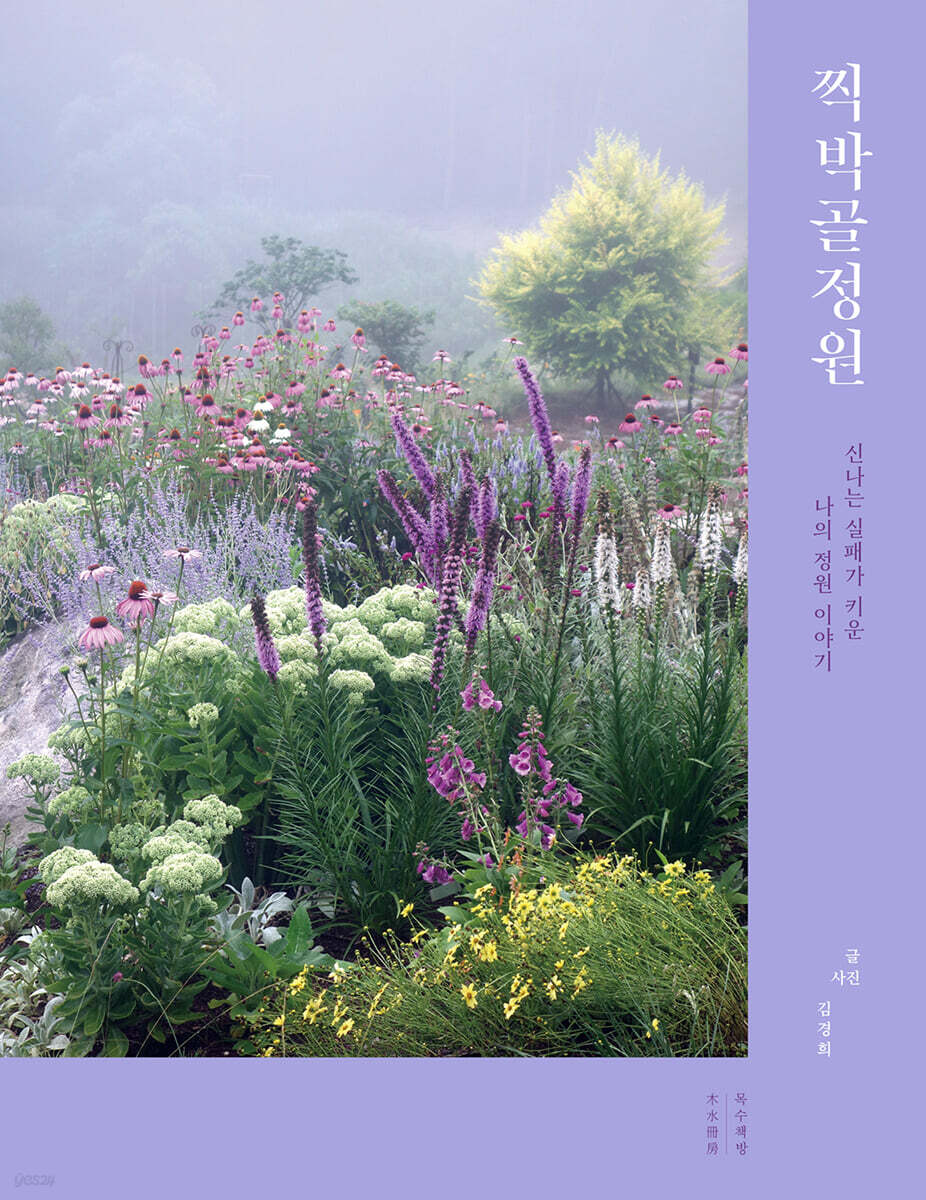
This book is intended to share the gardening knowledge learned from the precious failures experienced while creating a garden in 'Jjikbakgol', Inje, Gangwon-do over the past 10 years with people who are 'true' to plants and gardens.
Today, the exciting story of a gardener growing through experiencing 'exciting failures' at Jjikbakgol Garden will inspire and provide useful information to those who want to cultivate their own garden while being in harmony with nature.
This book is intended to share the gardening knowledge learned from the precious failures experienced while creating a garden in 'Jjikbakgol', Inje, Gangwon-do over the past 10 years with people who are 'true' to plants and gardens.
Today, the exciting story of a gardener growing through experiencing 'exciting failures' at Jjikbakgol Garden will inspire and provide useful information to those who want to cultivate their own garden while being in harmony with nature.
- You can preview some of the book's contents.
Preview
index
Starting the article
Every project begins with "planning." Planting "white-flowering" plants doesn't create a "white garden."
Whether you plant them together or scattered them, you'll still get a headache - Understanding the properties of plants and gardens
Not all perilla leaves are the same - the wild variety is different from the garden variety.
The Descent of the "God of Wisdom" Piet Oudolf - Garden, Where Happy Challenges Continue
Gardens thrive on failure - A common mistake beginner gardeners make.
Gardening begins in the fall - preparing in the fall will make next year easier.
A Winter Garden in the Making - What Beauty Should a Winter Garden Contain?
Early-maturing, mid-maturing, and late-maturing varieties: not tangerines, but tulips—flowering times vary depending on the variety.
On the Folly of Moving a Big Tree - Let Go of Greed and Start with a Small Tree
Two Thoughts on Shrubs - The Hydrangea's Challenge, The Longing of the Forsythia
Building on 10 years of failure, we recommend the "Top 10 Spring Flowers."
Top 10 Summer Flowers That Bloom Long Without Needing Hands
Top 10 Autumn Flowers to Brighten Up Your Sunset Garden
The Ordeal of Our Yard - There Are No Shortcuts to Gardening
A Garden Is More Than Just Flowers and Trees - The Benefits of Edges and Sheds
Lettuce doesn't live on water alone - gardening is also farming.
A Lost Tree Is Not a Garden Tree - Why I Plant a Tree
Even raising chickens is a form of "living education" - Can the dream of "raising animals" ever come true?
My trial and error is still ongoing - the soil comes before the plants
Living in nature also requires practice - country life is evolving.
Compost, manure, fertilizer, oil cake, where and how? - Becoming more familiar with compost than fertilizer
My garden, nurtured by failure, and me nurtured by the garden - a gardener is someone who allows plants to live in harmony with nature.
In conclusion
Every project begins with "planning." Planting "white-flowering" plants doesn't create a "white garden."
Whether you plant them together or scattered them, you'll still get a headache - Understanding the properties of plants and gardens
Not all perilla leaves are the same - the wild variety is different from the garden variety.
The Descent of the "God of Wisdom" Piet Oudolf - Garden, Where Happy Challenges Continue
Gardens thrive on failure - A common mistake beginner gardeners make.
Gardening begins in the fall - preparing in the fall will make next year easier.
A Winter Garden in the Making - What Beauty Should a Winter Garden Contain?
Early-maturing, mid-maturing, and late-maturing varieties: not tangerines, but tulips—flowering times vary depending on the variety.
On the Folly of Moving a Big Tree - Let Go of Greed and Start with a Small Tree
Two Thoughts on Shrubs - The Hydrangea's Challenge, The Longing of the Forsythia
Building on 10 years of failure, we recommend the "Top 10 Spring Flowers."
Top 10 Summer Flowers That Bloom Long Without Needing Hands
Top 10 Autumn Flowers to Brighten Up Your Sunset Garden
The Ordeal of Our Yard - There Are No Shortcuts to Gardening
A Garden Is More Than Just Flowers and Trees - The Benefits of Edges and Sheds
Lettuce doesn't live on water alone - gardening is also farming.
A Lost Tree Is Not a Garden Tree - Why I Plant a Tree
Even raising chickens is a form of "living education" - Can the dream of "raising animals" ever come true?
My trial and error is still ongoing - the soil comes before the plants
Living in nature also requires practice - country life is evolving.
Compost, manure, fertilizer, oil cake, where and how? - Becoming more familiar with compost than fertilizer
My garden, nurtured by failure, and me nurtured by the garden - a gardener is someone who allows plants to live in harmony with nature.
In conclusion
Into the book
Since I started my garden, I've always said, "Next year."
Next year, the grass will grow much bigger, next year, the soil will be better, next year, the stems will stretch long enough to climb over the fence! After a few "next years" like that, I'll be a whole lot older.
Still, I dream of a more abundant garden next year, of trees that have grown stronger, and of flowers that have bloomed healthier and more beautifully.
When planting plants in your garden, one of the most important parts is preparing the soil.
Once you've cleared all the weeds, improved drainage, and mixed in some organic compost to create the soil, 90 percent of your gardening needs are done.
If you start planting without a garden plan, boundaries, or soil preparation, you will definitely end up with a garden you will want to till.
This is not a threat, but unfortunately this is the case for many gardeners.
Just like waiting in line at a restaurant after receiving a waiting number, countless trials and errors await you.
Plants whose roots have fully adapted to the soil and survived the winter have a proper 'taste' like well-aged makgeolli.
The flowers are abundant, the stems are sturdy, and the growth rate is fast.
If possible, we changed our strategy to replacing plants in the fall.
So I decided to start the garden in the fall.
Plant the plants you've marked, pull out the ones you want to give up, and divide the plants you want to divide, and you'll be busy in the fall.
We also prune trees and pull out weeds.
The fall season is different from the summer season when the grass grows vigorously again as soon as you turn around.
This will make next spring easier.
As spring becomes easier, you will have time to prepare for summer, and if you get through summer well, you will be able to welcome a mature and dignified autumn garden.
Fortunately, the grass and trees in your garden will not die even if you don't fertilize them at all.
The purpose of fertilizing is to increase yield and to make plants grow faster and more abundantly.
When it comes to creating a beautiful garden, creating soft soil is far more important than adding nutrients.
Good soil makes gardening easier.
You only need to water it once instead of twice, and it is easy to plant and pull out.
If the soil is good, pulling out weeds becomes easier.
If the soil is good, any plant will grow well without much care.
In this sense, it is a 'good business' for a garden to be friendly with compost rather than fertilizer.
When a plant has a problem, it seems that more problems can be solved by thinking from the plant's perspective, asking, "What did this thing not like?"
I am experiencing a deep sense of empathy in my garden, thinking about the origins, climate, soil, and differences from last year's situation, and gaining new perspectives and perspectives from the other person's perspective.
Since the plants don't talk, I have to figure it out myself.
Whether you need to fertilize, water, or keep your plants warm now depends entirely on the condition of your plants!
How many times in life have you felt truly moved, happy, and filled with joy? The garden is filled with unexpected joy, delight, and a hopeful future.
After a splendid summer, I dream of the excitement of next spring as I plant tulips, alliums, and daffodils again, without even having time to immerse myself in the loneliness of the gradually fading autumn leaves.
In the garden there is always future, hope, joy and excitement.
What a gift could there be in life! Receiving such a generous gift, I am the garden's greatest beneficiary.
Next year, the grass will grow much bigger, next year, the soil will be better, next year, the stems will stretch long enough to climb over the fence! After a few "next years" like that, I'll be a whole lot older.
Still, I dream of a more abundant garden next year, of trees that have grown stronger, and of flowers that have bloomed healthier and more beautifully.
When planting plants in your garden, one of the most important parts is preparing the soil.
Once you've cleared all the weeds, improved drainage, and mixed in some organic compost to create the soil, 90 percent of your gardening needs are done.
If you start planting without a garden plan, boundaries, or soil preparation, you will definitely end up with a garden you will want to till.
This is not a threat, but unfortunately this is the case for many gardeners.
Just like waiting in line at a restaurant after receiving a waiting number, countless trials and errors await you.
Plants whose roots have fully adapted to the soil and survived the winter have a proper 'taste' like well-aged makgeolli.
The flowers are abundant, the stems are sturdy, and the growth rate is fast.
If possible, we changed our strategy to replacing plants in the fall.
So I decided to start the garden in the fall.
Plant the plants you've marked, pull out the ones you want to give up, and divide the plants you want to divide, and you'll be busy in the fall.
We also prune trees and pull out weeds.
The fall season is different from the summer season when the grass grows vigorously again as soon as you turn around.
This will make next spring easier.
As spring becomes easier, you will have time to prepare for summer, and if you get through summer well, you will be able to welcome a mature and dignified autumn garden.
Fortunately, the grass and trees in your garden will not die even if you don't fertilize them at all.
The purpose of fertilizing is to increase yield and to make plants grow faster and more abundantly.
When it comes to creating a beautiful garden, creating soft soil is far more important than adding nutrients.
Good soil makes gardening easier.
You only need to water it once instead of twice, and it is easy to plant and pull out.
If the soil is good, pulling out weeds becomes easier.
If the soil is good, any plant will grow well without much care.
In this sense, it is a 'good business' for a garden to be friendly with compost rather than fertilizer.
When a plant has a problem, it seems that more problems can be solved by thinking from the plant's perspective, asking, "What did this thing not like?"
I am experiencing a deep sense of empathy in my garden, thinking about the origins, climate, soil, and differences from last year's situation, and gaining new perspectives and perspectives from the other person's perspective.
Since the plants don't talk, I have to figure it out myself.
Whether you need to fertilize, water, or keep your plants warm now depends entirely on the condition of your plants!
How many times in life have you felt truly moved, happy, and filled with joy? The garden is filled with unexpected joy, delight, and a hopeful future.
After a splendid summer, I dream of the excitement of next spring as I plant tulips, alliums, and daffodils again, without even having time to immerse myself in the loneliness of the gradually fading autumn leaves.
In the garden there is always future, hope, joy and excitement.
What a gift could there be in life! Receiving such a generous gift, I am the garden's greatest beneficiary.
---From the text
Publisher's Review
A Gardening Experience of Triumph for Those Who Are "Serious" About Gardening
The author left city life behind and headed to Jjikbakgol, Inje, Gangwon-do, six months after moving into a remodeled apartment in Seoul.
And after being shocked by a chance garden tour in England, he decides to create his own garden in his new home in Jjikbakgol.
But, not knowing where, how, or what to start with, he experiences countless 'failures' by physically struggling with everything from start to finish.
《Jjikbakgol Garden》 contains the story of a novice gardener who, over the course of ten years, created nine different concept gardens in Jjikbakgol and experienced precious failures, and of ‘gardening learned through experience.’
The author honestly and without hesitation shares the knowledge he has gathered one by one by digging, shoveling, walking, and searching through necessary books with people who are 'serious' about gardens and plants, as if chatting with someone.
Just like gardening beginners, they plant their favorite plants without thinking and then kill or pull them out again. They also acquire the necessary knowledge by gathering a lot of data and information to solve the problems they encounter while gardening, and they create their gardens while understanding how plants live and the properties of the soil that supports them.
The gardening story I experienced in Inje Jikbakgol, which is particularly colder than other places, makes me realize that gardeners must first deeply understand the environment in which plants will grow.
“I hope the garden is not too far from us all.”
The book is full of useful information for anyone interested in gardening, including advice on common mistakes beginner gardeners make, recommendations for each season based on 10 years of failure, understanding garden species and varieties, growing trees and shrubs, things to watch out for when buying plants, and stories about garden needs other than plants, such as edges and sheds.
Above all, the author emphasizes that for a beautiful garden, one must first focus on the 'soil' rather than the 'flowers'.
Of course, you can also read interesting articles about raising animals or the joys of country life.
What the author learned while moving to the mountains and creating a garden is that growing plants requires 'empathy' and that a true gardener is someone who allows plants to live in harmony with nature.
There were times when he felt like everything had to be perfect, but even today, Jjikbakgol Garden teaches him to be forgiving, saying, "It's okay to fail."
The author hopes that readers of this book will realize that gardens are places where they learn the great ways of nature, and that gardens filled with hope, joy, and excitement are not so far away from us.
The author left city life behind and headed to Jjikbakgol, Inje, Gangwon-do, six months after moving into a remodeled apartment in Seoul.
And after being shocked by a chance garden tour in England, he decides to create his own garden in his new home in Jjikbakgol.
But, not knowing where, how, or what to start with, he experiences countless 'failures' by physically struggling with everything from start to finish.
《Jjikbakgol Garden》 contains the story of a novice gardener who, over the course of ten years, created nine different concept gardens in Jjikbakgol and experienced precious failures, and of ‘gardening learned through experience.’
The author honestly and without hesitation shares the knowledge he has gathered one by one by digging, shoveling, walking, and searching through necessary books with people who are 'serious' about gardens and plants, as if chatting with someone.
Just like gardening beginners, they plant their favorite plants without thinking and then kill or pull them out again. They also acquire the necessary knowledge by gathering a lot of data and information to solve the problems they encounter while gardening, and they create their gardens while understanding how plants live and the properties of the soil that supports them.
The gardening story I experienced in Inje Jikbakgol, which is particularly colder than other places, makes me realize that gardeners must first deeply understand the environment in which plants will grow.
“I hope the garden is not too far from us all.”
The book is full of useful information for anyone interested in gardening, including advice on common mistakes beginner gardeners make, recommendations for each season based on 10 years of failure, understanding garden species and varieties, growing trees and shrubs, things to watch out for when buying plants, and stories about garden needs other than plants, such as edges and sheds.
Above all, the author emphasizes that for a beautiful garden, one must first focus on the 'soil' rather than the 'flowers'.
Of course, you can also read interesting articles about raising animals or the joys of country life.
What the author learned while moving to the mountains and creating a garden is that growing plants requires 'empathy' and that a true gardener is someone who allows plants to live in harmony with nature.
There were times when he felt like everything had to be perfect, but even today, Jjikbakgol Garden teaches him to be forgiving, saying, "It's okay to fail."
The author hopes that readers of this book will realize that gardens are places where they learn the great ways of nature, and that gardens filled with hope, joy, and excitement are not so far away from us.
GOODS SPECIFICS
- Date of issue: June 9, 2023
- Page count, weight, size: 240 pages | 548g | 152*195*13mm
- ISBN13: 9791188806409
- ISBN10: 1188806408
You may also like
카테고리
korean


korean

![GQ KOREA Mark (Monthly): December [2025]](http://librairie.coreenne.fr/cdn/shop/files/8ef265dbbfbf186523ed75ba7319009d.jpg?v=1765340328&width=3840)


