

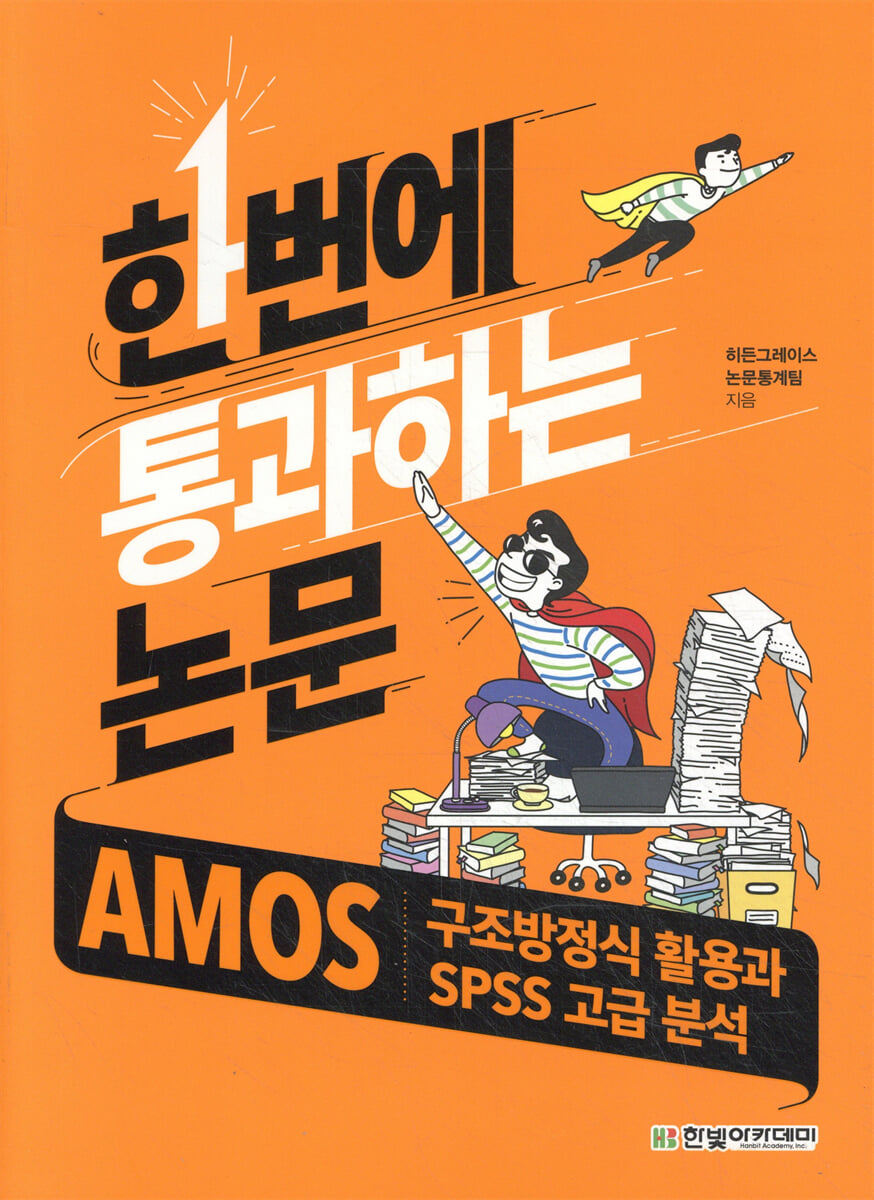
Using AMOS structural equation modeling and SPSS advanced analysis
 |
Description
Book Introduction
From research model analysis using SPSS and AMOS to creating and interpreting results tables.
We'll give you a clear idea of what beginners should and shouldn't do when writing a thesis!
Hidden Grace Co., Ltd. has been providing easy-to-understand lectures and analysis of papers for researchers since 2013, aiming to be a guide that provides quick and accurate guidance to beginners in paper writing.
This book is compiled based on the results of open lectures and analyses conducted so far.
-.
I bought several books on structural equations and attended lectures here and there, but I still couldn't understand them. But this one lecture helped me understand them.
This was a fun and informative explanation that made time fly by! _A University, Department M
-.
It was very helpful because it not only taught me how to simply calculate statistics, but also provided practical guidance on how to easily create a paper results table and how to interpret the output and results table.
_A University, Department S
-.
I liked that you focused on explaining useful analysis methods when writing a paper.
_C University, Department M
-.
I liked that it provided knowledge that could be immediately applied when writing a thesis report and that I could practice with examples for each analysis method.
_Y University, Department S
We'll give you a clear idea of what beginners should and shouldn't do when writing a thesis!
Hidden Grace Co., Ltd. has been providing easy-to-understand lectures and analysis of papers for researchers since 2013, aiming to be a guide that provides quick and accurate guidance to beginners in paper writing.
This book is compiled based on the results of open lectures and analyses conducted so far.
-.
I bought several books on structural equations and attended lectures here and there, but I still couldn't understand them. But this one lecture helped me understand them.
This was a fun and informative explanation that made time fly by! _A University, Department M
-.
It was very helpful because it not only taught me how to simply calculate statistics, but also provided practical guidance on how to easily create a paper results table and how to interpret the output and results table.
_A University, Department S
-.
I liked that you focused on explaining useful analysis methods when writing a paper.
_C University, Department M
-.
I liked that it provided knowledge that could be immediately applied when writing a thesis report and that I could practice with examples for each analysis method.
_Y University, Department S
- You can preview some of the book's contents.
Preview
index
PART 01 Advanced Analysis Using SPSS
SECTION 01 Analysis of Covariance (ANCOVA)
01 Basic Concepts and Research Hypotheses
02 Just follow SPSS
03 Interpreting the output results
04 Creating a thesis results table
05 Interpreting the paper results table
06 Know-how: Independent sample t-test and covariance analysis are actually one and the same!
SECTION 02 Multivariate Analysis of Variance (MANOVA)
01 Basic Concepts and Research Hypotheses
02 Just follow SPSS
03 Interpreting the output results
04 Creating a thesis results table
05 Interpreting the paper results table
SECTION 03 Verification of mediation effects
01 Basic Concepts and Research Hypotheses
02 Just follow SPSS
03 Interpreting the output results
04 Creating a thesis results table
05 Interpreting the paper results table
06 Another method to verify mediation effects: Sobel test
07 Another way to verify mediation effects: Using SPSS process macros.
SECTION 04 Verification of the Moderating Effect
01 Basic Concepts and Research Hypotheses
02 Just follow SPSS
03 Interpreting the output results
04 Creating a thesis results table
05 Interpreting the paper results table
06 Know-how: How to Graphically Express the Results of the Control Effect Verification
07 Another way to verify mediation effects: Using SPSS process macros.
SECTION 05 Verification of Moderated Mediation Effects
01 Basic Concepts and Research Hypotheses
02 SPSS Just Follow: Testing a Moderated Mediating Effect Model?
03 Interpreting the output results: Testing the moderated mediation effect model?
04 SPSS Just Follow: Testing a Moderated Mediating Effect Model?
05 Interpreting the Output Results: Testing the Moderated Mediation Effect Model?
06 Creating a thesis results table
07 Interpreting the paper results table
SECTION 06 Nonparametric Statistics
01 Basic Concepts and Research Hypotheses: Nonparametric Statistics
02 SPSS: Just Follow: Normality Test and Nonparametric Statistics
03 Basic Concepts and Research Hypotheses: Independent Sample Nonparametric Test (Mann-Whitney Test)
04 SPSS: Mann-Whitney Test
05 Interpreting the Output Results: Mann-Whitney Test
06 Writing a paper results table: Mann-Whitney test
07 Interpreting the Paper Results Table: Mann-Whitney Test
08 Basic Concepts and Research Hypotheses: Paired Sample Nonparametric Statistics (Wilcoxon Signed-Rank Test)
09 SPSS: Just Follow: Wilcoxon Signed-Rank Test
10 Interpreting the Output Results: Wilcoxon Signed-Rank Test
11. Creating a paper results table: Wilcoxon signed-rank test
12 Interpreting the Results Table: Wilcoxon Signed-Rank Test
SECTION 07 Cluster Analysis
01 Basic Concepts and Research Hypotheses
02 Just follow SPSS
03 Interpreting the output results
04 Creating a thesis results table
05 Interpreting the paper results table
SECTION 08 Prior knowledge you need to know before learning structural equations
01 Overview of structural equations
02 Key terms of structural equations
03 Advantages of structural equations
04 Just follow Amos' menu
PART 02 Structural Equation Analysis Using Amos
SECTION 09 General Understanding of Structural Equation Modeling
01 Location of structural equation model
02 What is a structural equation model?
03 Terminology related to structural equation models
04 Reasons for using structural equation models
05 Things to Consider When Using Structural Equation Models
06 Understanding Path Analysis
07 Overall flow of papers using structural equation models
SECTION 10 Understanding the Amos Program
01 What is the Amos Program?
02 Amos program main menu and icons
SECTION 11 Preparatory work using SPSS before structural equation model analysis
01 Data Handling
02 Preliminary analysis using SPSS
SECTION 12 Measurement Model Validation Methods: Confirmatory Factor Analysis
01 Basic Concepts
02 Amos Just follow along
03 Interpreting the output results
04 Interpreting the results of confirmatory factor analysis to improve the fit of the measurement model
05 Creating a thesis results table
06 Interpreting the paper results table
SECTION 13 Structural Model Verification Method: Path Analysis
01 Basic Concepts
02 Amos Just follow along
03 Interpreting the output results
04 Creating a thesis results table
05 Interpreting the paper results table
06 Know-how: How to Draw a Beautiful Structural Model
SECTION 14: Testing Mediation Effects Using Structural Models and Amos: Multiple Mediation Models
01 Basic Concepts
02 Amos Just follow along
03 Interpreting the output results
04 Creating a thesis results table
05 Interpreting the paper results table
06 Know-how: Multiparameter Model Analysis Methods Using Amos and Phantom Variables
SECTION 15: Verification of Moderating Effects Using the Structural Model and Amos: Multi-Group Analysis
01 Basic Concepts
02 SPSS: Data Handling and Basic Analysis
03 Amos: Just Follow: Multi-Group Confirmatory Factor Analysis
04 Interpreting the Output Results: Multigroup Confirmatory Factor Analysis
05 Creating a Thesis Results Table: Multi-Group Confirmatory Factor Analysis
06 Interpreting the Results Table: Multi-Group Confirmatory Factor Analysis
07 Amos: Just Follow the Pattern: Multi-Group Path Analysis
08 Interpreting Output Results: Multi-Group Path Analysis
09 Writing a Paper Results Table: Multi-Group Path Analysis
10 Interpreting the Results Table: Multigroup Path Analysis
SECTION 16: How to Improve Model Fit
01 Methods for improving model fit through modification indicators and parameter changes
02 How to improve model fit through parceling (question bundles)
SECTION 17 Missing Value Correction and Imputation Methods
01 Missing value replacement method
02 Missing value replacement results
SECTION 18 Major Errors and How to Deal with Them
01 If there are missing values in the data used in Amos
02 When the variable names used in Amos and SPSS are the same
03 If there is no regression weight value 1
04 If the variable name is not written
05 If there is no measurement error or structural error
06 If the covariance relationship is not set
07 If there is a space in the variable name
SECTION 01 Analysis of Covariance (ANCOVA)
01 Basic Concepts and Research Hypotheses
02 Just follow SPSS
03 Interpreting the output results
04 Creating a thesis results table
05 Interpreting the paper results table
06 Know-how: Independent sample t-test and covariance analysis are actually one and the same!
SECTION 02 Multivariate Analysis of Variance (MANOVA)
01 Basic Concepts and Research Hypotheses
02 Just follow SPSS
03 Interpreting the output results
04 Creating a thesis results table
05 Interpreting the paper results table
SECTION 03 Verification of mediation effects
01 Basic Concepts and Research Hypotheses
02 Just follow SPSS
03 Interpreting the output results
04 Creating a thesis results table
05 Interpreting the paper results table
06 Another method to verify mediation effects: Sobel test
07 Another way to verify mediation effects: Using SPSS process macros.
SECTION 04 Verification of the Moderating Effect
01 Basic Concepts and Research Hypotheses
02 Just follow SPSS
03 Interpreting the output results
04 Creating a thesis results table
05 Interpreting the paper results table
06 Know-how: How to Graphically Express the Results of the Control Effect Verification
07 Another way to verify mediation effects: Using SPSS process macros.
SECTION 05 Verification of Moderated Mediation Effects
01 Basic Concepts and Research Hypotheses
02 SPSS Just Follow: Testing a Moderated Mediating Effect Model?
03 Interpreting the output results: Testing the moderated mediation effect model?
04 SPSS Just Follow: Testing a Moderated Mediating Effect Model?
05 Interpreting the Output Results: Testing the Moderated Mediation Effect Model?
06 Creating a thesis results table
07 Interpreting the paper results table
SECTION 06 Nonparametric Statistics
01 Basic Concepts and Research Hypotheses: Nonparametric Statistics
02 SPSS: Just Follow: Normality Test and Nonparametric Statistics
03 Basic Concepts and Research Hypotheses: Independent Sample Nonparametric Test (Mann-Whitney Test)
04 SPSS: Mann-Whitney Test
05 Interpreting the Output Results: Mann-Whitney Test
06 Writing a paper results table: Mann-Whitney test
07 Interpreting the Paper Results Table: Mann-Whitney Test
08 Basic Concepts and Research Hypotheses: Paired Sample Nonparametric Statistics (Wilcoxon Signed-Rank Test)
09 SPSS: Just Follow: Wilcoxon Signed-Rank Test
10 Interpreting the Output Results: Wilcoxon Signed-Rank Test
11. Creating a paper results table: Wilcoxon signed-rank test
12 Interpreting the Results Table: Wilcoxon Signed-Rank Test
SECTION 07 Cluster Analysis
01 Basic Concepts and Research Hypotheses
02 Just follow SPSS
03 Interpreting the output results
04 Creating a thesis results table
05 Interpreting the paper results table
SECTION 08 Prior knowledge you need to know before learning structural equations
01 Overview of structural equations
02 Key terms of structural equations
03 Advantages of structural equations
04 Just follow Amos' menu
PART 02 Structural Equation Analysis Using Amos
SECTION 09 General Understanding of Structural Equation Modeling
01 Location of structural equation model
02 What is a structural equation model?
03 Terminology related to structural equation models
04 Reasons for using structural equation models
05 Things to Consider When Using Structural Equation Models
06 Understanding Path Analysis
07 Overall flow of papers using structural equation models
SECTION 10 Understanding the Amos Program
01 What is the Amos Program?
02 Amos program main menu and icons
SECTION 11 Preparatory work using SPSS before structural equation model analysis
01 Data Handling
02 Preliminary analysis using SPSS
SECTION 12 Measurement Model Validation Methods: Confirmatory Factor Analysis
01 Basic Concepts
02 Amos Just follow along
03 Interpreting the output results
04 Interpreting the results of confirmatory factor analysis to improve the fit of the measurement model
05 Creating a thesis results table
06 Interpreting the paper results table
SECTION 13 Structural Model Verification Method: Path Analysis
01 Basic Concepts
02 Amos Just follow along
03 Interpreting the output results
04 Creating a thesis results table
05 Interpreting the paper results table
06 Know-how: How to Draw a Beautiful Structural Model
SECTION 14: Testing Mediation Effects Using Structural Models and Amos: Multiple Mediation Models
01 Basic Concepts
02 Amos Just follow along
03 Interpreting the output results
04 Creating a thesis results table
05 Interpreting the paper results table
06 Know-how: Multiparameter Model Analysis Methods Using Amos and Phantom Variables
SECTION 15: Verification of Moderating Effects Using the Structural Model and Amos: Multi-Group Analysis
01 Basic Concepts
02 SPSS: Data Handling and Basic Analysis
03 Amos: Just Follow: Multi-Group Confirmatory Factor Analysis
04 Interpreting the Output Results: Multigroup Confirmatory Factor Analysis
05 Creating a Thesis Results Table: Multi-Group Confirmatory Factor Analysis
06 Interpreting the Results Table: Multi-Group Confirmatory Factor Analysis
07 Amos: Just Follow the Pattern: Multi-Group Path Analysis
08 Interpreting Output Results: Multi-Group Path Analysis
09 Writing a Paper Results Table: Multi-Group Path Analysis
10 Interpreting the Results Table: Multigroup Path Analysis
SECTION 16: How to Improve Model Fit
01 Methods for improving model fit through modification indicators and parameter changes
02 How to improve model fit through parceling (question bundles)
SECTION 17 Missing Value Correction and Imputation Methods
01 Missing value replacement method
02 Missing value replacement results
SECTION 18 Major Errors and How to Deal with Them
01 If there are missing values in the data used in Amos
02 When the variable names used in Amos and SPSS are the same
03 If there is no regression weight value 1
04 If the variable name is not written
05 If there is no measurement error or structural error
06 If the covariance relationship is not set
07 If there is a space in the variable name
Detailed image

Publisher's Review
PART 01 _ Advanced Analysis Using SPSS
In PART 01, we will look at advanced analysis methods using SPSS and the basics you need to know before working with structural equation models and Amos.
In particular, we will cover in detail the process of verifying moderating and mediating effects through bootstrap testing using the SPSS Process Macro.
At this point, we'll carefully examine the interpretation of the output results and the creation of the paper results table. Analysis methods using SPSS process macros will be of great help in understanding the structural equation modeling discussed in Part 02.
Finally, before learning various structural equation methods, we will explain the basic statistical knowledge you need to know and how to use the Amos tool.
PART 02 _ Structural Equation Analysis Using Amos
In PART 02, we will first learn about the concepts and characteristics of structural equation models required for handling Amos, and then look at how to prepare for analysis using SPSS.
Next, we will examine how to design each research model derived from the research questions and hypotheses as a structural equation model.
Finally, we will learn how to utilize the structural model using the Amos statistical program.
We also explain what to do if the Amos statistics program displays an error message when the analysis results are not good.
In PART 01, we will look at advanced analysis methods using SPSS and the basics you need to know before working with structural equation models and Amos.
In particular, we will cover in detail the process of verifying moderating and mediating effects through bootstrap testing using the SPSS Process Macro.
At this point, we'll carefully examine the interpretation of the output results and the creation of the paper results table. Analysis methods using SPSS process macros will be of great help in understanding the structural equation modeling discussed in Part 02.
Finally, before learning various structural equation methods, we will explain the basic statistical knowledge you need to know and how to use the Amos tool.
PART 02 _ Structural Equation Analysis Using Amos
In PART 02, we will first learn about the concepts and characteristics of structural equation models required for handling Amos, and then look at how to prepare for analysis using SPSS.
Next, we will examine how to design each research model derived from the research questions and hypotheses as a structural equation model.
Finally, we will learn how to utilize the structural model using the Amos statistical program.
We also explain what to do if the Amos statistics program displays an error message when the analysis results are not good.
GOODS SPECIFICS
- Date of publication: December 24, 2018
- Page count, weight, size: 536 pages | 1,064g | 188*257*35mm
- ISBN13: 9791156644347
- ISBN10: 1156644348
You may also like
카테고리
korean


korean

![GQ KOREA Mark (Monthly): December [2025]](http://librairie.coreenne.fr/cdn/shop/files/8ef265dbbfbf186523ed75ba7319009d.jpg?v=1765340328&width=3840)


