

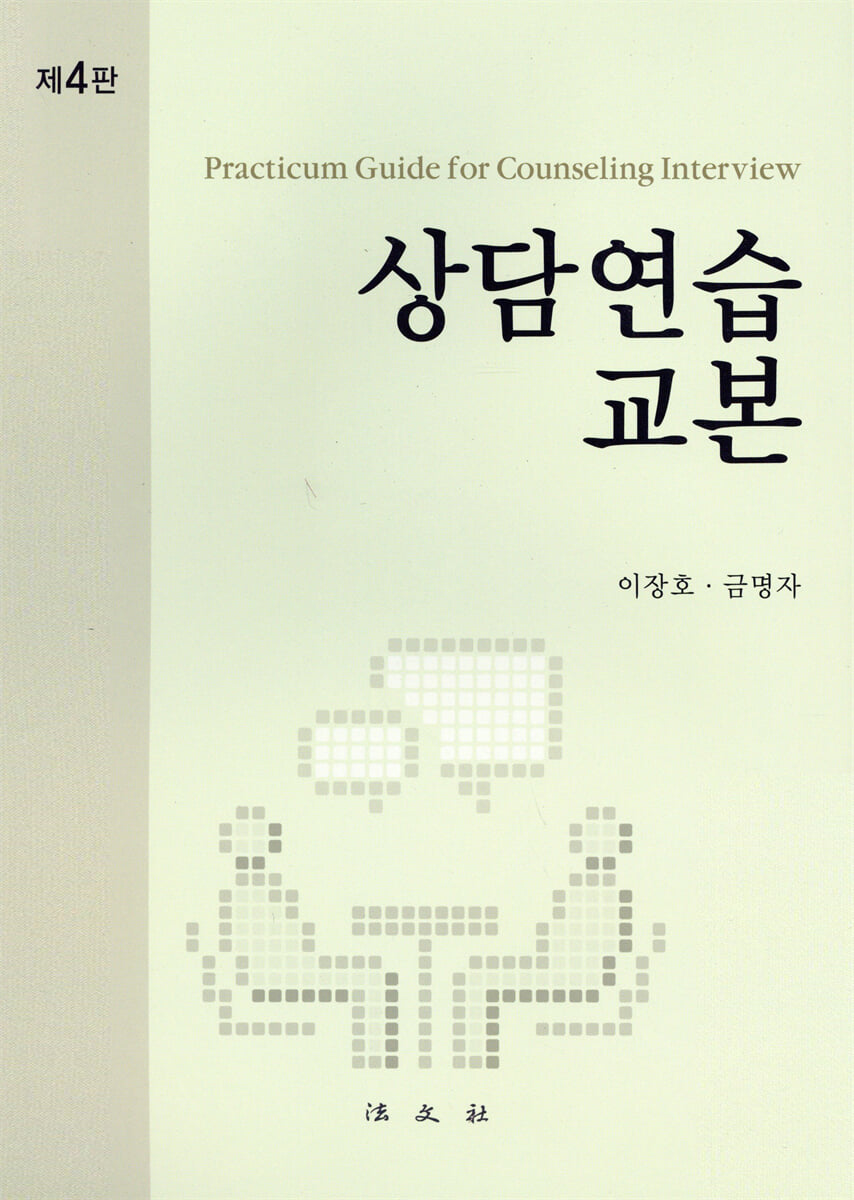
Counseling Practice Textbook
 |
Description
Book Introduction
『Counseling Practice Textbook』 is a book that presents the author's answers and suggestions for [Practices 19-30] that were not met until the 3rd edition.
In the latter half of the answer section for some 10 practice problems, we encourage readers (learners) to select and record (the most desirable answer) through group discussion to help them practice.
In the latter half of the answer section for some 10 practice problems, we encourage readers (learners) to select and record (the most desirable answer) through group discussion to help them practice.
index
1 Before practicing counseling
What's the problem?
Counseling is conducted in stages.
From the formation of a facilitative relationship to counseling
There is a sequence to honing your counseling skills.
A few things to note
2 Self-assessment of counseling practitioners
We are in this predicament
3 Counseling Practice (1): Establishing a Facilitative Relationship
empathic understanding
Accepting respect
Consistent integrity
Professional specificity
4 Counseling Practice (2): Promoting Understanding of Problems and New Perspectives
Summary Response
Response to information provision
Confrontational reaction
Self-disclosure response
Immediate response
Question response
Integrated practice
5 Counseling Practice (3): Setting Counseling Goals
6 Counseling Practice (4): Exploring Counseling Practice Methods
7 Counseling Practice (5): Handling Embarrassing Situations
8 Some Advice for Counselor Practitioners
The counselor's own mental health
Application of counseling theories and techniques
Professional growth of counseling practitioners
What's the problem?
Counseling is conducted in stages.
From the formation of a facilitative relationship to counseling
There is a sequence to honing your counseling skills.
A few things to note
2 Self-assessment of counseling practitioners
We are in this predicament
3 Counseling Practice (1): Establishing a Facilitative Relationship
empathic understanding
Accepting respect
Consistent integrity
Professional specificity
4 Counseling Practice (2): Promoting Understanding of Problems and New Perspectives
Summary Response
Response to information provision
Confrontational reaction
Self-disclosure response
Immediate response
Question response
Integrated practice
5 Counseling Practice (3): Setting Counseling Goals
6 Counseling Practice (4): Exploring Counseling Practice Methods
7 Counseling Practice (5): Handling Embarrassing Situations
8 Some Advice for Counselor Practitioners
The counselor's own mental health
Application of counseling theories and techniques
Professional growth of counseling practitioners
Publisher's Review
The purpose of this revision of the counseling practice textbook is to present the author's answers and suggestions for [Exercises 19-30] that were not met until the third edition.
Initially, this was left blank to provide readers with an opportunity to practice on their own, but this was decided upon in response to numerous inquiries and requests for the author's professional opinion.
Meanwhile, among the answers to 10 practice problems, the latter half was recommended to be selected and recorded (the most desirable answer) through group discussion among readers (learners).
Of course, we hope that the writer's planned advisory/reply regarding this [recommendation-notes] also understands that it is intended to respect the spirit of 'reader-led learning.'
As the fourth edition is being published, I would like to 'self-disclose (hopefully)' two aspects of the senior co-author's feelings.
I hope that the contents of this counseling practice textbook will not be considered a 'universal textbook' for counseling practice or a 'complete guide to learning counseling techniques.'
That is, firstly, it is not enough to simply master the effective response of practice, but also to demonstrate ‘sensitivity of the senses’, which is a common element of sincerity, respect, and empathy, and secondly, to cultivate (establish) a ‘community-conscious counselor’s perspective’.
In relation to this hope, recommendations for readers would include 'participation in educational analysis and group counseling' and 'volunteer counseling activities' for victims of social disasters.
I wish you all the best and express my gratitude.
Initially, this was left blank to provide readers with an opportunity to practice on their own, but this was decided upon in response to numerous inquiries and requests for the author's professional opinion.
Meanwhile, among the answers to 10 practice problems, the latter half was recommended to be selected and recorded (the most desirable answer) through group discussion among readers (learners).
Of course, we hope that the writer's planned advisory/reply regarding this [recommendation-notes] also understands that it is intended to respect the spirit of 'reader-led learning.'
As the fourth edition is being published, I would like to 'self-disclose (hopefully)' two aspects of the senior co-author's feelings.
I hope that the contents of this counseling practice textbook will not be considered a 'universal textbook' for counseling practice or a 'complete guide to learning counseling techniques.'
That is, firstly, it is not enough to simply master the effective response of practice, but also to demonstrate ‘sensitivity of the senses’, which is a common element of sincerity, respect, and empathy, and secondly, to cultivate (establish) a ‘community-conscious counselor’s perspective’.
In relation to this hope, recommendations for readers would include 'participation in educational analysis and group counseling' and 'volunteer counseling activities' for victims of social disasters.
I wish you all the best and express my gratitude.
GOODS SPECIFICS
- Date of issue: May 30, 2014
- Page count, weight, size: 314 pages | 625g | 177*248*20mm
- ISBN13: 9788918210643
- ISBN10: 8918210647
You may also like
카테고리
korean


korean

![GQ KOREA Mark (Monthly): December [2025]](http://librairie.coreenne.fr/cdn/shop/files/8ef265dbbfbf186523ed75ba7319009d.jpg?v=1765340328&width=3840)


