

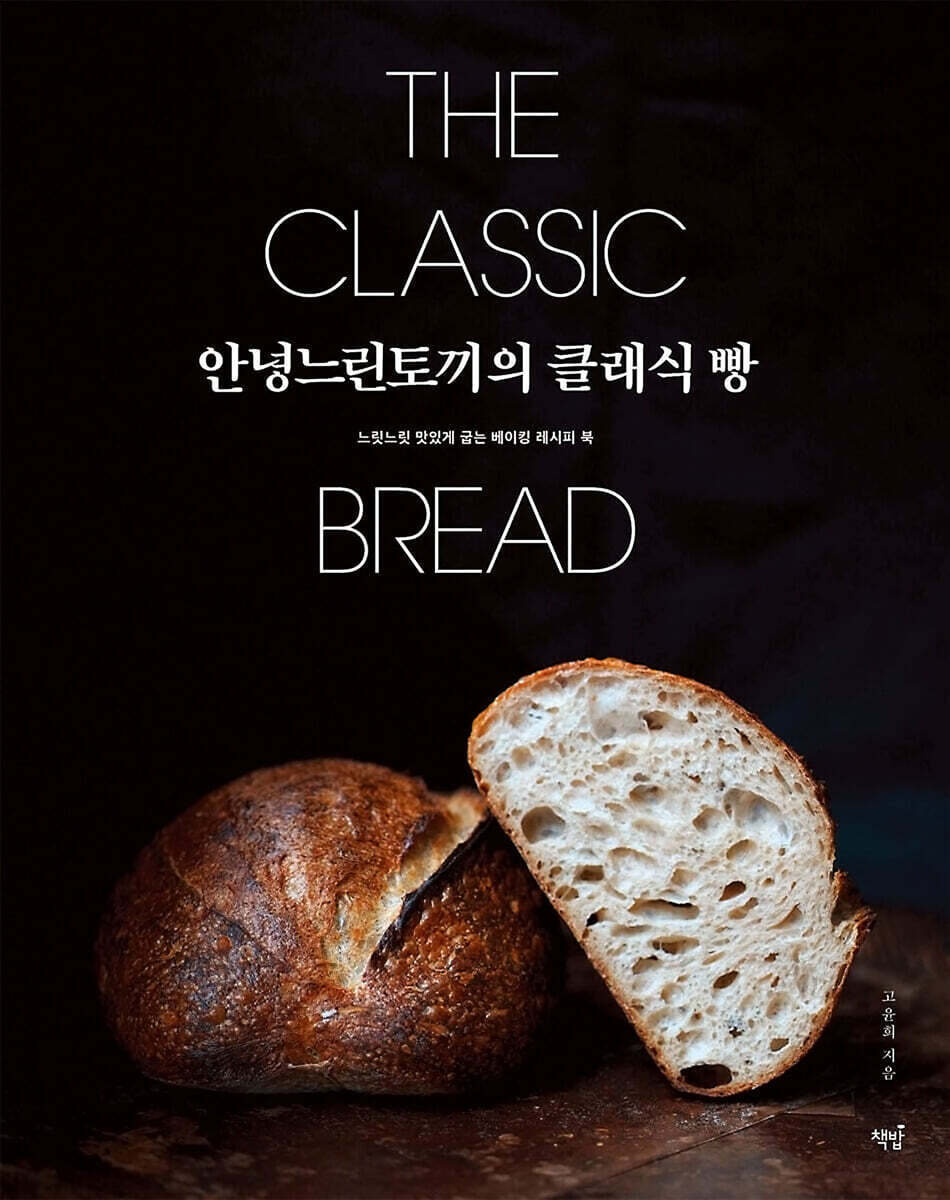
Hello Slow Rabbit's Classic Bread
 |
Description
Book Introduction
'Hello Slow Rabbit', which makes delicious bread although it is a little slow
Stylish and delicious bread recipes
A home baker who loved bread compiled the time and effort she put into kneading dough every day until she became a bread teacher into a book.
With detailed process photos like a one-on-one lesson, it contains not only various kneading methods, but also the different uses of convection ovens and deck ovens, and countless trial and errors and valuable information that I have personally experienced while making bread for a long time!
The recipes are comprised of what could be considered classic breads, and the first chapter covers breads made with commercial yeast.
You can become familiar with bread by learning how to use different pre-made doughs and their pros and cons.
The second chapter deals with bread made solely with levain.
Levain may seem a little daunting, but if you take your time and learn to make bread slowly, you will be able to create bread that is noticeably different in process and result from bread made with yeast.
The third chapter is about rye bread.
We talked about how to use rye levain, the characteristics of rye, and what to watch out for.
You can also see how the results change depending on the fermentation time and how the dough changes depending on the mixing time.
In addition, you can find breads that vary depending on the coupe and minor changes.
Don't miss our thoughts on flour either.
You can also see the difference between French wheat, which is expressed in numbers, and our wheat, which is classified into strong, medium, and weak flour.
The necessary ingredients are readily available at supermarkets and baking shops, and are sold in small portions, making it easy for anyone to follow.
Stylish and delicious bread recipes
A home baker who loved bread compiled the time and effort she put into kneading dough every day until she became a bread teacher into a book.
With detailed process photos like a one-on-one lesson, it contains not only various kneading methods, but also the different uses of convection ovens and deck ovens, and countless trial and errors and valuable information that I have personally experienced while making bread for a long time!
The recipes are comprised of what could be considered classic breads, and the first chapter covers breads made with commercial yeast.
You can become familiar with bread by learning how to use different pre-made doughs and their pros and cons.
The second chapter deals with bread made solely with levain.
Levain may seem a little daunting, but if you take your time and learn to make bread slowly, you will be able to create bread that is noticeably different in process and result from bread made with yeast.
The third chapter is about rye bread.
We talked about how to use rye levain, the characteristics of rye, and what to watch out for.
You can also see how the results change depending on the fermentation time and how the dough changes depending on the mixing time.
In addition, you can find breads that vary depending on the coupe and minor changes.
Don't miss our thoughts on flour either.
You can also see the difference between French wheat, which is expressed in numbers, and our wheat, which is classified into strong, medium, and weak flour.
The necessary ingredients are readily available at supermarkets and baking shops, and are sold in small portions, making it easy for anyone to follow.
- You can preview some of the book's contents.
Preview
index
About bread
The first ingredient of bread, flour
Learn about the materials
Explore the tools
From flour to bread
Chapter 1.
Bread made with commercial yeast and various pre-made doughs
Learn about different types of pre-made dough
Tangzhong Bagel
Herb Garlic Bagel
Tangzhong bread
Cracked Siobhan
Traditional baguette
Comparison of results according to coupe difference
Comparison of results according to fermentation time
Good-to-Know Baking Terms
Poolish Ciabatta
Comparison of results according to the difference in first fermentation time
Levain Ciabatta
Potato Focaccia
Hand croissants
Comparison of results according to the difference in secondary fermentation time
Pain au chocolat
Vanilla Quin Amang
Stollen
Chapter 2.
Bread made with levain without commercial yeast
About Levant
Making Levain
Levain Refresh
About sourdough
Campagne
Yogurt Bread
Ciabatta
baguette
Rustic
bagel
Blueberry Bagel
crepe
Chapter 3.
Bread made with rye levain without commercial yeast
Things to Know Before Baking Rye Bread
100% Seedless Rye Bread
2-Step Method 100% Rye Bread
61% rye bread
The first ingredient of bread, flour
Learn about the materials
Explore the tools
From flour to bread
Chapter 1.
Bread made with commercial yeast and various pre-made doughs
Learn about different types of pre-made dough
Tangzhong Bagel
Herb Garlic Bagel
Tangzhong bread
Cracked Siobhan
Traditional baguette
Comparison of results according to coupe difference
Comparison of results according to fermentation time
Good-to-Know Baking Terms
Poolish Ciabatta
Comparison of results according to the difference in first fermentation time
Levain Ciabatta
Potato Focaccia
Hand croissants
Comparison of results according to the difference in secondary fermentation time
Pain au chocolat
Vanilla Quin Amang
Stollen
Chapter 2.
Bread made with levain without commercial yeast
About Levant
Making Levain
Levain Refresh
About sourdough
Campagne
Yogurt Bread
Ciabatta
baguette
Rustic
bagel
Blueberry Bagel
crepe
Chapter 3.
Bread made with rye levain without commercial yeast
Things to Know Before Baking Rye Bread
100% Seedless Rye Bread
2-Step Method 100% Rye Bread
61% rye bread
Detailed image

Publisher's Review
Bread baked with a home mixer and oven
No matter what anyone says, the food that modern people, both adults and children, love the most is bread.
However, there is a perception that bread is more difficult to make than pastries and that it is a burden to the person making it.
Here's how to make delicious breads like ciabatta, croissants, bagels, sioppán, campagne, and loaves of bread using your home mixer and oven.
The author, who says that the time spent making bread, from measuring to finishing, is the happiest, hopes that bread-making, which is often considered difficult, will become as natural as setting the table.
The main difference between bread and pastry is the process called 'fermentation'. You can also compare the results obtained when using commercially available yeast and when using natural yeast found in the air.
By following this book and making bread, you will discover how sweet and delicious even seemingly tasteless breads can be without any special inserts.
No matter what anyone says, the food that modern people, both adults and children, love the most is bread.
However, there is a perception that bread is more difficult to make than pastries and that it is a burden to the person making it.
Here's how to make delicious breads like ciabatta, croissants, bagels, sioppán, campagne, and loaves of bread using your home mixer and oven.
The author, who says that the time spent making bread, from measuring to finishing, is the happiest, hopes that bread-making, which is often considered difficult, will become as natural as setting the table.
The main difference between bread and pastry is the process called 'fermentation'. You can also compare the results obtained when using commercially available yeast and when using natural yeast found in the air.
By following this book and making bread, you will discover how sweet and delicious even seemingly tasteless breads can be without any special inserts.
GOODS SPECIFICS
- Publication date: November 25, 2022
- Page count, weight, size: 232 pages | 702g | 210*260*15mm
- ISBN13: 9791190641906
- ISBN10: 1190641909
You may also like
카테고리
korean


korean

![ELLE 엘르 스페셜 에디션 A형 : 12월 [2025]](http://librairie.coreenne.fr/cdn/shop/files/b8e27a3de6c9538896439686c6b0e8fb.jpg?v=1766436872&width=3840)


