

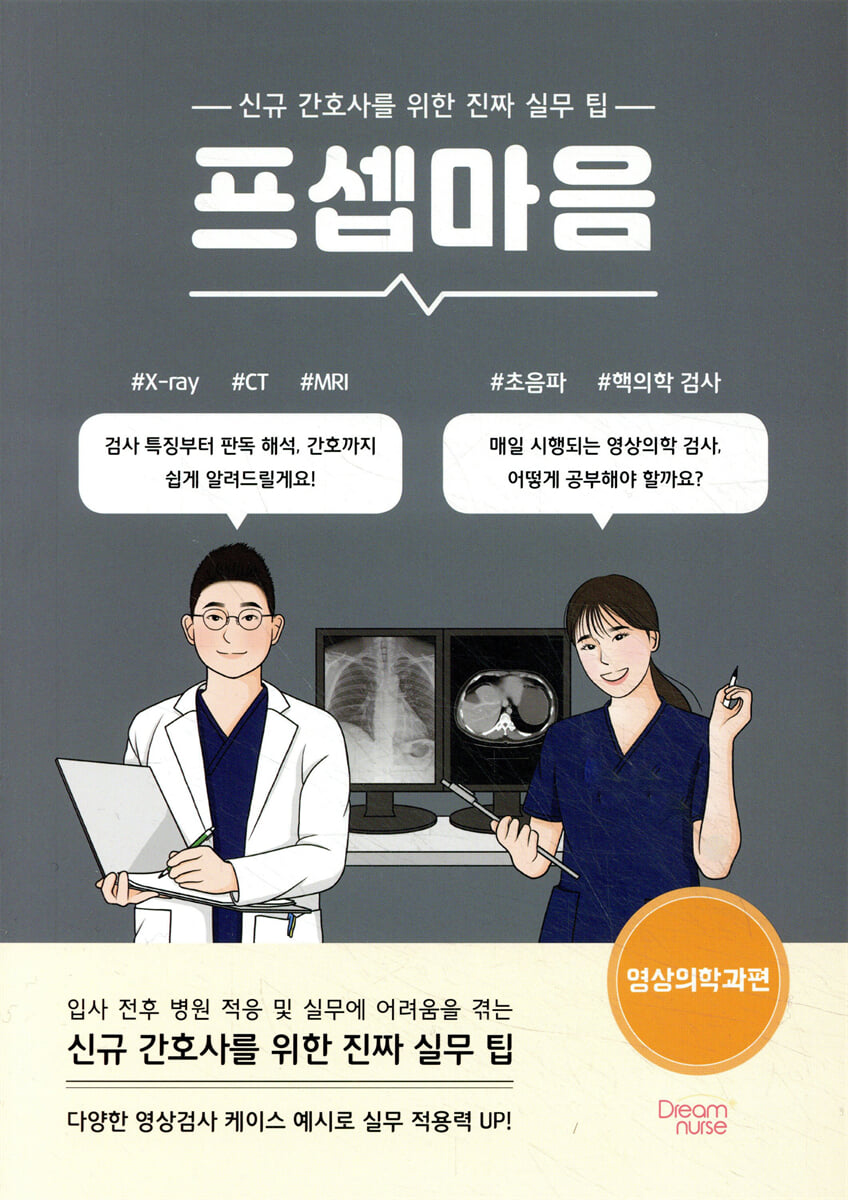
Psepmaum: Radiology Department
 |
Description
Book Introduction
This book introduces the basics of each imaging test, including how it came to be and what it is used for.
In particular, it explains the content that can answer questions that patients frequently ask and sometimes complain about.
This article focuses on important imaging tests for each body part, why such tests are absolutely necessary, and essential findings that medical professionals should not miss.
It introduces how to respond to patient questions or complaints and provides important information about patient care during specific examinations.
It mainly contains tips for checking the location of intubation, drainage tubes, etc. on routine X-rays, and can be used in practice when nursing hospitalized patients.
In particular, it explains the content that can answer questions that patients frequently ask and sometimes complain about.
This article focuses on important imaging tests for each body part, why such tests are absolutely necessary, and essential findings that medical professionals should not miss.
It introduces how to respond to patient questions or complaints and provides important information about patient care during specific examinations.
It mainly contains tips for checking the location of intubation, drainage tubes, etc. on routine X-rays, and can be used in practice when nursing hospitalized patients.
index
Part 1: Understanding the Types and Uses of Imaging Tests
1) X-ray (the basis of all imaging tests)
2) CT (advanced X-ray)
3) MRI (currently the king of imaging tests)
4) Ultrasound (the safest and most comfortable test to examine the inside of the body)
5) Nuclear Medicine Imaging Tests (PET, Bone Scan) (The Mysterious World of Isotopes)
Part 2: Radiological Findings You Must Know by Body Part
1) Brain (our body's command center)
1.
brain CT
2.
brain MRI
3.
Brain perfusion SPECT
2) Head and neck (the most complex structure, with various imaging methods to match)
1.
Head and neck X-ray
2.
Head and neck CT, MRI
3) Chest (where most shots are taken)
1.
chest X-ray
2.
Chest CT
3.
Imaging tests for the heart
4.
Myocardial SPECT
5.
cardiovascular angiography
4) Abdomen & Pelvis (Accurate image interpretation determines the patient's treatment plan and prognosis)
1.
Abdominal X-ray
2.
Abdominal ultrasound
3.
Abdominal CT
4.
Pancreatobiliary examination (ERCP, MRCP)
5.
Liver MRI
6.
Transcatheter ablation of liver cancer (TACE, radiofrequency ablation)
7.
Abdominal nuclear medicine examination
5) Lower abdomen (Genitourinary & Pelvic cavity) (genitourinary system that performs reproductive and excretory functions)
1.
Lower abdominal CT, MRI
2.
Prostate cancer screening
3.
Obstetrics and gynecology ultrasound
4.
urinary system examination
6) Breast (where cancer most commonly occurs in women)
1.
Mammography
2.
breast ultrasound
3.
breast MRI
7) Musculoskeletal system (most commonly injured and frequently examined)
1.
Musculoskeletal X-ray
2.
Musculoskeletal CT, MRI
3.
musculoskeletal ultrasound
4.
bone density test
Part 3 X-rays in Nursing Practice
1) Check the central venous catheter
1.
Peripherally inserted central venous catheter (PICC)
2.
Non-tunneled central venous catheter (Arrow, etc.)
3.
Tunneled central venous catheter (Chemoport, Hickman catheter)
2) Check the intubation
1.
nasogastric tube (L-tube)
2.
endotracheal tube (E-tube)
3.
tracheostomy tube (T-tube)
4.
Ureteral catheter (Double J stent)
3) Check the drainage tube
1.
Chest tube (PCD)
2.
Percutaneous nephrostomy (PCN)
3.
biliary drainage tube (PTBD, PTGBD)
1) X-ray (the basis of all imaging tests)
2) CT (advanced X-ray)
3) MRI (currently the king of imaging tests)
4) Ultrasound (the safest and most comfortable test to examine the inside of the body)
5) Nuclear Medicine Imaging Tests (PET, Bone Scan) (The Mysterious World of Isotopes)
Part 2: Radiological Findings You Must Know by Body Part
1) Brain (our body's command center)
1.
brain CT
2.
brain MRI
3.
Brain perfusion SPECT
2) Head and neck (the most complex structure, with various imaging methods to match)
1.
Head and neck X-ray
2.
Head and neck CT, MRI
3) Chest (where most shots are taken)
1.
chest X-ray
2.
Chest CT
3.
Imaging tests for the heart
4.
Myocardial SPECT
5.
cardiovascular angiography
4) Abdomen & Pelvis (Accurate image interpretation determines the patient's treatment plan and prognosis)
1.
Abdominal X-ray
2.
Abdominal ultrasound
3.
Abdominal CT
4.
Pancreatobiliary examination (ERCP, MRCP)
5.
Liver MRI
6.
Transcatheter ablation of liver cancer (TACE, radiofrequency ablation)
7.
Abdominal nuclear medicine examination
5) Lower abdomen (Genitourinary & Pelvic cavity) (genitourinary system that performs reproductive and excretory functions)
1.
Lower abdominal CT, MRI
2.
Prostate cancer screening
3.
Obstetrics and gynecology ultrasound
4.
urinary system examination
6) Breast (where cancer most commonly occurs in women)
1.
Mammography
2.
breast ultrasound
3.
breast MRI
7) Musculoskeletal system (most commonly injured and frequently examined)
1.
Musculoskeletal X-ray
2.
Musculoskeletal CT, MRI
3.
musculoskeletal ultrasound
4.
bone density test
Part 3 X-rays in Nursing Practice
1) Check the central venous catheter
1.
Peripherally inserted central venous catheter (PICC)
2.
Non-tunneled central venous catheter (Arrow, etc.)
3.
Tunneled central venous catheter (Chemoport, Hickman catheter)
2) Check the intubation
1.
nasogastric tube (L-tube)
2.
endotracheal tube (E-tube)
3.
tracheostomy tube (T-tube)
4.
Ureteral catheter (Double J stent)
3) Check the drainage tube
1.
Chest tube (PCD)
2.
Percutaneous nephrostomy (PCN)
3.
biliary drainage tube (PTBD, PTGBD)
Detailed image

Publisher's Review
* Book Features
- Build up the base by covering the basics of video inspection!
- Improve your practical application skills based on various cases!
- Includes imaging tests for each body part and findings that should not be missed!
- Provides actual video inspection photos and how to interpret the inspection results!
- All imaging tests, ultrasound, and nuclear medicine tests in one place!
* Key contents by part
- Part 1: This section introduces the basics of each imaging test, including how it came to be and what it is used for.
In particular, we have provided information that can answer questions that patients frequently ask, and sometimes even complain about.
- Part 2: This article focuses on important imaging tests for each part of the body, why such tests are absolutely necessary, and essential findings that medical professionals should not miss.
This chapter also covers how to respond to patient questions and complaints, as well as important information about patient care during specific examinations.
- Part 3: This is mainly for nursing hospitalized patients, and includes tips for checking the location of intubation, drainage tubes, etc. on routine X-rays, so that it can be used in practice.
* Recommended in these situations:
- Nurses who joined the intensive care unit and ward with many imaging test prescriptions
- Nurse working in the radiology department
- Nurses who want to utilize imaging test results in patient care
- Preceptors who want to easily educate new nurses about imaging tests.
- All nurses who have ever been curious about radiology examinations
- Build up the base by covering the basics of video inspection!
- Improve your practical application skills based on various cases!
- Includes imaging tests for each body part and findings that should not be missed!
- Provides actual video inspection photos and how to interpret the inspection results!
- All imaging tests, ultrasound, and nuclear medicine tests in one place!
* Key contents by part
- Part 1: This section introduces the basics of each imaging test, including how it came to be and what it is used for.
In particular, we have provided information that can answer questions that patients frequently ask, and sometimes even complain about.
- Part 2: This article focuses on important imaging tests for each part of the body, why such tests are absolutely necessary, and essential findings that medical professionals should not miss.
This chapter also covers how to respond to patient questions and complaints, as well as important information about patient care during specific examinations.
- Part 3: This is mainly for nursing hospitalized patients, and includes tips for checking the location of intubation, drainage tubes, etc. on routine X-rays, so that it can be used in practice.
* Recommended in these situations:
- Nurses who joined the intensive care unit and ward with many imaging test prescriptions
- Nurse working in the radiology department
- Nurses who want to utilize imaging test results in patient care
- Preceptors who want to easily educate new nurses about imaging tests.
- All nurses who have ever been curious about radiology examinations
GOODS SPECIFICS
- Date of issue: May 16, 2024
- Page count, weight, size: 236 pages | 448g | 182*257*20mm
- ISBN13: 9791192543826
- ISBN10: 1192543823
You may also like
카테고리
korean


korean

![ELLE 엘르 스페셜 에디션 A형 : 12월 [2025]](http://librairie.coreenne.fr/cdn/shop/files/b8e27a3de6c9538896439686c6b0e8fb.jpg?v=1766436872&width=3840)


