

Apology for Islam
 |
Description
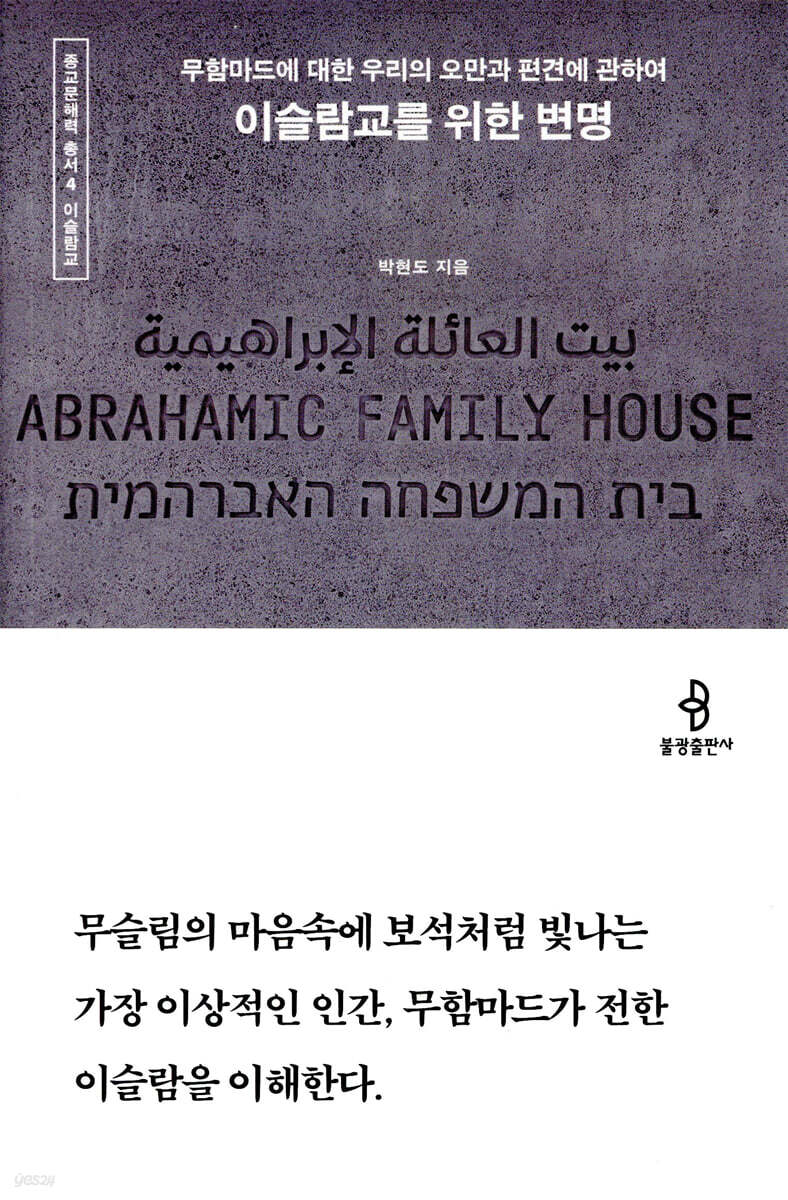
Book Introduction
The most beloved in the history of human intelligence Core messages of world religions! The fourth book in the Religious Literacy Series Apology for Islam "War instigator, terrorist? The misunderstanding is over!" For everyone to overcome Islamic illiteracy A Complete Guide to Islam in One Volume In Korean society, Islam often appears only in war-related news. That is why the perception that it is a ‘violent religion’ is particularly strong. But I ask: Is Islam, a religion believed and followed by approximately 2 billion people, 30% of the world's population, solely violent? "The misunderstanding is over!" "A Defense for Islam" is a comprehensive guide to Islam, designed to help everyone overcome Islamic illiteracy. "Apology for Islam" is the fourth book in the "Religious Literacy Series," which aims to cultivate religious sensitivity by viewing religion from the perspective of "understanding" rather than "belief." This book declares an end to our arrogance and prejudice that accepts Islam as a violent and irrational religious tradition, a breeding ground for war and terrorism. The author, a Middle East and Islam expert well-versed in Muslim society, emphasizes that Islam is a peaceful and spiritual religious tradition that firmly believes in and follows the teachings of God (Allah). He asserts that “there is not a single Muslim who believes that Islam is a violent religious tradition.” The book seeks understanding from our society, which arrogantly evaluates Islam as a "violent religion" based on the prejudices that have accumulated from misunderstandings about it. For example, there is 'Jihad', which is often translated as 'holy war'. Jihad is far from physical warfare. It is an 'internal struggle' with the mind that goes against the revelations of God given by Muhammad. However, its meaning was distorted when it was cited numerous times in wars involving Islamic fundamentalists such as Al Qaeda, ISIS, and Hamas. The author moves back and forth between the situation in 7th-century Arabia and our own present times, peeling back the thick veil of our arrogance and prejudice against Islam. The vast and fresh knowledge about Islam is the attractive point of this book that makes you want to buy it. After Muhammad's death, the genealogy of the Caliph, the leader of the Islamic community, the Sunni and Shia, the Islamic calendar (the time of the Muslims), the origin and pilgrimage to Mecca, the beliefs of the Sufis, the holy spiritual war of Ramadan fasting, polygamy, etc., the history, culture, politics, economy, and the lives of Muslims are poured out without a dull moment. In a word, it contains almost everything about Islam. Moreover, the spiritual depth of Muslims who constantly asked and searched for the path of life in Muhammad's life is admirable. This book is a reflection on what Islamic faith and religious culture mean today and how we can overcome Islamic illiteracy by understanding them. It is also a friendly guide and a product of the work of understanding Muhammad and the Islam he preached, who shine like a jewel in the hearts of Muslims as the most ideal human being. |
- You can preview some of the book's contents.
Preview
index
Publisher's Note: Now is Religious Literacy
Introduction_Muhammad's Escape from Illiteracy
_On the notation of Allah, God, and God
Chapter 1 The Life of Muhammad
Muhammad before becoming a prophet
religious life
Quran
Challenges and Criticism
Temptation and Reflection
Migration and Death to Medina
Chapter 2: Muhammad
Orthodox Caliph
Sunni and Shia
Ibadi, neither Sunni nor Shia
Shia Alawi
Chapter 3 Following Muhammad
Legal scholars who didn't want to become judges
Beware the World: Hassan al-Basri
Put out the fires of hell and set heaven on fire: Rabia
There is no end to the one you love: Duunnun
I want to get drunk: Muad and Bayezid
I am God: Halaz
Call me a disbeliever: Junaid
The most humble of creatures: Sibley
Mosque, disappear: Abu al-Khair
If you don't break your attachment now, when will you?: Ghazali
Beware of Your Tongue: Ghazali
Abandon idolatry: Jilani
Drinking with Angels: Hafez
Chapter 4: Understanding Muhammad and Islam
Muhammad the human is the messenger of God
illiterate prophet
Islamic law
Purification rites
The face of the prophet
Muhammad teddy bear
Swiss Spire Controversy
suicide
Worship and offerings
The 13 Teachings of Islam
The Prophet's Marriage Scandal
Female leaders in the Muslim world
A woman is half a man
Muslim Time: Islamic Calendar
Ramadan
Islam in Korean: Mecca, the Center of the World
Halal and Haram
Ban interest
Jerusalem: Al-Haram ash-Sharif, the Muslim holy city
40
Chapter 5: Understanding Modern Muslims: Islamic Fundamentalism and the Taliban
Why the Muslim World Is Falling Behind
Muslim Brotherhood
Monsters of Afghanistan
The Orientation and Problems of Fundamentalism
Outgoing Article_Non-Muslim's Guide to Islam
Appendix_Islamic Sect Structure
_Shia structure
Introduction_Muhammad's Escape from Illiteracy
_On the notation of Allah, God, and God
Chapter 1 The Life of Muhammad
Muhammad before becoming a prophet
religious life
Quran
Challenges and Criticism
Temptation and Reflection
Migration and Death to Medina
Chapter 2: Muhammad
Orthodox Caliph
Sunni and Shia
Ibadi, neither Sunni nor Shia
Shia Alawi
Chapter 3 Following Muhammad
Legal scholars who didn't want to become judges
Beware the World: Hassan al-Basri
Put out the fires of hell and set heaven on fire: Rabia
There is no end to the one you love: Duunnun
I want to get drunk: Muad and Bayezid
I am God: Halaz
Call me a disbeliever: Junaid
The most humble of creatures: Sibley
Mosque, disappear: Abu al-Khair
If you don't break your attachment now, when will you?: Ghazali
Beware of Your Tongue: Ghazali
Abandon idolatry: Jilani
Drinking with Angels: Hafez
Chapter 4: Understanding Muhammad and Islam
Muhammad the human is the messenger of God
illiterate prophet
Islamic law
Purification rites
The face of the prophet
Muhammad teddy bear
Swiss Spire Controversy
suicide
Worship and offerings
The 13 Teachings of Islam
The Prophet's Marriage Scandal
Female leaders in the Muslim world
A woman is half a man
Muslim Time: Islamic Calendar
Ramadan
Islam in Korean: Mecca, the Center of the World
Halal and Haram
Ban interest
Jerusalem: Al-Haram ash-Sharif, the Muslim holy city
40
Chapter 5: Understanding Modern Muslims: Islamic Fundamentalism and the Taliban
Why the Muslim World Is Falling Behind
Muslim Brotherhood
Monsters of Afghanistan
The Orientation and Problems of Fundamentalism
Outgoing Article_Non-Muslim's Guide to Islam
Appendix_Islamic Sect Structure
_Shia structure
Detailed image

Into the book
Muhammad, who received his first revelation at the age of 40, was convinced that the word of God he had received was a teaching that would lead people to the right path.
It is said that Muhammad received revelations little by little, depending on the circumstances, over a period of about 23 years until his death.
The book that contains these revelations is the Quran.
--- p.41
Muslims do not believe in God to become rich.
To live correctly.
To walk along the morally correct and straight path commanded by God.
I believe that when a person deviates from that path, he becomes someone who does not believe in God.
There is no teaching in Islam that ignores the economically weak and only benefits the rich.
There are no sermons or prayers that teach how to become materially rich.
Islam is a faith that teaches us how to become rich internally by believing in and following God.
--- p.59
Muhammad stands at the end of the prophetic line that stretches from Adam to Jesus.
Muslims believe that Muhammad was the last prophet sent by God to humanity.
After Muhammad, no more prophets appeared.
Literally, Muhammad is the last prophet.
--- p.82
As they won successive wars, they lived a life of material abundance, along with the belief that God's grace was with the Muslims.
This is because the areas conquered by Muslims were more economically and culturally prosperous than the barren Arabia where Islam was born and grew.
It was a situation that made it easy to forget the frugal life of the Prophet Muhammad.
--- p.133
Conquering oneself is an inner battle more difficult and noble than the war against unbelievers.
In Islam, this is called 'Jihad'.
It is usually translated as a holy war, but in fact, struggle is a more accurate word.
--- p.168
The Islamic creed consists of two statements: “There is no god but God, and Muhammad is the messenger of God.”
The dividing line between Islam and Judaism or Christianity lies in whether or not they recognize Muhammad as the messenger of God.
--- p.204
There are so many Muslims who bear the name Muhammad that it would be impossible to list them all.
In fact, there is a joke in Muslim cultures that if you call Muhammad on the street, almost every man on the street will respond back, making Muhammad the most popular name.
--- p.239
Islamic law, like the 『Gyeongguk Daejeon』, covers a range of laws that transcend our common sense.
It's 'secular law' plus 'social customs' plus 'religious rituals'.
In a word, it governs the entirety of life.
That is why it is said that Islam is a holistic way of life.
What a close Muslim friend said to me still rings vividly in my ears.
“We Muslims are not able to freely love our wives even for a single night without the help of a lawyer.”
--- p.245
Muslims pay alms tax of 2.5% of their net income after deducting various expenses from their annual income.
It's money for the socially disadvantaged.
This is called Zakat.
The word 'Zakat' comes from 'Zakah', which has two meanings: 'to increase' and 'to purify'.
Giving to the poor means both increase and purity, as God blesses us more and we are freed from sin.
--- p.254
Muslims around the world fast from sunrise to sunset, abstaining from all food, including water, until the first day of the next new moon.
There are even Muslims who don't even swallow their saliva.
It is a true fast in the true sense of the word, where nothing is passed down the esophagus.
Although you can eat after sunset and before sunrise, that doesn't make fasting Ramadan any easier.
--- p.306
We often use the word 'mecca' to mean a central place, such as "Hongdae, the fashion mecca for young people," "Gyeongju, the mecca of Silla studies," and "Dongdaemun Stadium, the mecca of amateur baseball."
I think it would be okay to use the word Seoul, but it somehow feels unfamiliar.
That's why Mecca has firmly established itself in our mouths.
As we all know, Mecca is a city currently part of the Kingdom of Saudi Arabia and is where the Islamic religious tradition began.
--- p.312
Muslims always face Mecca when praying to God five times a day or during the Friday prayer.
One of the reasons astronomy developed in Islam is related to the practice of worship, which requires one to face Mecca no matter where one is.
Finding the exact location of Mecca is an urgent task.
Every legal adult who is financially able and physically fit must make a pilgrimage to Mecca at least once in his or her lifetime.
It is said that Muhammad received revelations little by little, depending on the circumstances, over a period of about 23 years until his death.
The book that contains these revelations is the Quran.
--- p.41
Muslims do not believe in God to become rich.
To live correctly.
To walk along the morally correct and straight path commanded by God.
I believe that when a person deviates from that path, he becomes someone who does not believe in God.
There is no teaching in Islam that ignores the economically weak and only benefits the rich.
There are no sermons or prayers that teach how to become materially rich.
Islam is a faith that teaches us how to become rich internally by believing in and following God.
--- p.59
Muhammad stands at the end of the prophetic line that stretches from Adam to Jesus.
Muslims believe that Muhammad was the last prophet sent by God to humanity.
After Muhammad, no more prophets appeared.
Literally, Muhammad is the last prophet.
--- p.82
As they won successive wars, they lived a life of material abundance, along with the belief that God's grace was with the Muslims.
This is because the areas conquered by Muslims were more economically and culturally prosperous than the barren Arabia where Islam was born and grew.
It was a situation that made it easy to forget the frugal life of the Prophet Muhammad.
--- p.133
Conquering oneself is an inner battle more difficult and noble than the war against unbelievers.
In Islam, this is called 'Jihad'.
It is usually translated as a holy war, but in fact, struggle is a more accurate word.
--- p.168
The Islamic creed consists of two statements: “There is no god but God, and Muhammad is the messenger of God.”
The dividing line between Islam and Judaism or Christianity lies in whether or not they recognize Muhammad as the messenger of God.
--- p.204
There are so many Muslims who bear the name Muhammad that it would be impossible to list them all.
In fact, there is a joke in Muslim cultures that if you call Muhammad on the street, almost every man on the street will respond back, making Muhammad the most popular name.
--- p.239
Islamic law, like the 『Gyeongguk Daejeon』, covers a range of laws that transcend our common sense.
It's 'secular law' plus 'social customs' plus 'religious rituals'.
In a word, it governs the entirety of life.
That is why it is said that Islam is a holistic way of life.
What a close Muslim friend said to me still rings vividly in my ears.
“We Muslims are not able to freely love our wives even for a single night without the help of a lawyer.”
--- p.245
Muslims pay alms tax of 2.5% of their net income after deducting various expenses from their annual income.
It's money for the socially disadvantaged.
This is called Zakat.
The word 'Zakat' comes from 'Zakah', which has two meanings: 'to increase' and 'to purify'.
Giving to the poor means both increase and purity, as God blesses us more and we are freed from sin.
--- p.254
Muslims around the world fast from sunrise to sunset, abstaining from all food, including water, until the first day of the next new moon.
There are even Muslims who don't even swallow their saliva.
It is a true fast in the true sense of the word, where nothing is passed down the esophagus.
Although you can eat after sunset and before sunrise, that doesn't make fasting Ramadan any easier.
--- p.306
We often use the word 'mecca' to mean a central place, such as "Hongdae, the fashion mecca for young people," "Gyeongju, the mecca of Silla studies," and "Dongdaemun Stadium, the mecca of amateur baseball."
I think it would be okay to use the word Seoul, but it somehow feels unfamiliar.
That's why Mecca has firmly established itself in our mouths.
As we all know, Mecca is a city currently part of the Kingdom of Saudi Arabia and is where the Islamic religious tradition began.
--- p.312
Muslims always face Mecca when praying to God five times a day or during the Friday prayer.
One of the reasons astronomy developed in Islam is related to the practice of worship, which requires one to face Mecca no matter where one is.
Finding the exact location of Mecca is an urgent task.
Every legal adult who is financially able and physically fit must make a pilgrimage to Mecca at least once in his or her lifetime.
--- p.314
Publisher's Review
◆ A perspective that empathizes with others: 'Religious Literacy Series' ◆
Literacy, which is used in many areas of society, is the ability to understand and utilize the meaning of words beyond the ability to know them.
Religious literacy is the ability to reinterpret and communicate religion from the perspective of "rational understanding" rather than "blind faith." The power of critical reflection and exploration in religious literacy provides a direction for choosing the right religion and practicing righteous faith.
Especially for us who live in a multi-religious and multi-cultural society, it is a force that increases ‘religious sensitivity’ to understand other religions and worldviews.
The 'Religious Literacy Series', published by Mind Lab with support from the Plato Academy Foundation, is an introductory series that fosters religious sensitivity through religious literacy.
In five books, including 『In Search of Ecstasy Within Me』(Religion), 『The Sufferings and Enlightenment of Life』(Buddhism), 『Who Is Jesus to Us Now?』(Christianity), 『An Apology for Islam』(Islam), and 『The Path to Mental Enlightenment Revealed by Sotaesan』(Won Buddhism), the core messages of the world's religions, which have been loved for the longest time in human intellectual history, are approached from a humanities perspective.
The 'Religious Literacy Series' focuses on the lives of the founders of each religion, including Buddha, Jesus, Muhammad, and Sotaesan, and provides a fresh interpretation of the fundamental questions of life they pondered and the answers to them.
And for us living in an era of post-religionism, climate change, pandemics, and the AI revolution, it shows us the meaning and value of religion, and the direction of a perspective that empathizes with differences.
Starting with the last prophet Muhammad
Almost everything about Islam, including revelation, history, culture, law, and faith!
"Apology for Islam" is the fourth book in the "Religious Literacy Series," which aims to cultivate religious sensitivity by viewing religion from the perspective of "understanding," rather than "belief."
Muhammad, who was born a merchant, received revelations from God at the age of 40 and became the last prophet of the Abrahamic religious traditions, including Judaism and Christianity.
The revelations of God that he conveyed became the Islamic scripture, the Quran, and those who tried to protect the revelations of God by following the words and actions of Muhammad, who lived according to the revelations, became Muslims.
A long-standing, peaceful religious tradition dating back 1,400 years is now perceived as a religion that takes lives and suppresses human rights.
The author, who is not Muslim, claims to be an advocate for Muslims and has concisely summarized almost everything about Islam, including its vast history, culture, law, and beliefs.
I wrote this book in the hope that the disregard and hatred towards Muslims due to lack of understanding will disappear.
So, 『Apology for Islam』 is an explanation of Islam by non-Muslims, for non-Muslims, and by non-Muslims.
Muslims who live and die by the law,
Find the right path through 'noble spiritual struggle'!
Muslims live by the law and die by the law.
Islamic law is the center of life.
So a legal tradition developed to distinguish between purity and impurity.
It goes beyond our common sense, like the Joseon Dynasty's 『Gyeongguk Daejeon』, which stipulated the length of petticoats.
It is to the point where there is an exaggerated saying that Muslims cannot freely love their wives without the help of legal scholars.
For Muslims, Islamic law is a set of rules for becoming spiritually mature people by believing in the revelations of God given by the Prophet Muhammad.
For the poor and marginalized, 2.5% of one's annual net income is paid as alms tax (zakat), and earning interest is prohibited.
During the fasting month of Ramadan, smoking and sexual intercourse are not to be taken lightly, and all wrong actions, words, and thoughts are also prohibited.
Remember only God, reflect on your own life, and care for your marginalized neighbors.
“Muslims do not believe in God to become rich.
To live correctly.
To walk along the morally correct and straight path commanded by God.
I believe that when a person deviates from that path, he becomes someone who does not believe in God.
There is no teaching in Islam that ignores the economically weak and only benefits the rich.
There are no sermons or prayers that teach how to become materially rich.
Islam is a faith that teaches us how to become rich internally by believing in and following God.”
However, the author does not simply defend Muslims.
The author's criticism of groups that lean towards Islamic fundamentalism, such as the Gaza war between Israel and Hamas, is sharp.
Jihad, which is translated as ‘holy war,’ is not a physical violence, but a ‘noble spiritual struggle’ to follow the right path presented by Muhammad.
“Al Qaeda, ISIS, and the Taliban are nothing but shame to Muslims who are proud of Islam as a religion of peace.
“The return of violent fundamentalists is truly a disgrace to the Islamic world and an insult to its faith.”
Gentle and wonderful religious consciences
Islam of Sufis that expanded the world of spirituality!
“There is no god but God, and Muhammad is the messenger of God.” (Islamic Declaration of Faith)
Many people mistakenly believe that Islam is a religion that believes in Muhammad.
There is a joke that if you call out “Muhammad” on the streets of Muslim countries, most people on the street will turn around, showing how popular the name Muhammad is.
However, I like it not because I believe in Muhammad, but because it is the name of the prophet who proclaimed the Islamic faith.
Islam is a religion of those who believe in and follow the teachings of the Prophet Muhammad, who received revelations from Allah (God), which means the one and only God in Arabic.
This book contains the gentle and wonderful religious consciences of Sufi Muslims.
What was the Islam (Arabic for peace and obedience) pursued by many Sufis? In the Sufi tradition, Muhammad is seen as a Sufi who mastered instinct and temptation and waged spiritual jihad (holy war).
The author introduces how Sufis, who took Muhammad as their example, experienced and understood the God that Muhammad preached.
This makes us perceive Islam, which was previously perceived as a violent and rigid religion, as a spiritual and warm religion.
As the situation unfolded where it was easy to forget the frugal life of Muhammad, who settled in a place of prosperity through military conquest, Hasan al-Basri warned that “the world is like a snake that is soft to the touch but has deadly poison”; Rabia, who warned against a faith that was only interested in hell and heaven by putting out the fires of hell and setting fire to heaven, and looked only to God; Abu al-Khair, who emphasized spiritual awakening over outward appearances by saying, “The holy thing will happen only when all the mosques (Muslim places of worship) under the sun disappear”; etc.
We learn the true meaning of religion in the world of Sufis, who followed Muhammad's example and expanded the world of spirituality.
“For the past 1,400 years, Muslims have constantly questioned and searched for the path of life in the life of Muhammad, who was born a wealthy man in 7th-century Arabia, grew up in poverty as an orphan, and then became a prophet.
But we were so busy criticizing Islam that we didn't pay attention.
Muhammad died 1,400 years ago, but he remains a living symbol of Muslim life.”
Literacy, which is used in many areas of society, is the ability to understand and utilize the meaning of words beyond the ability to know them.
Religious literacy is the ability to reinterpret and communicate religion from the perspective of "rational understanding" rather than "blind faith." The power of critical reflection and exploration in religious literacy provides a direction for choosing the right religion and practicing righteous faith.
Especially for us who live in a multi-religious and multi-cultural society, it is a force that increases ‘religious sensitivity’ to understand other religions and worldviews.
The 'Religious Literacy Series', published by Mind Lab with support from the Plato Academy Foundation, is an introductory series that fosters religious sensitivity through religious literacy.
In five books, including 『In Search of Ecstasy Within Me』(Religion), 『The Sufferings and Enlightenment of Life』(Buddhism), 『Who Is Jesus to Us Now?』(Christianity), 『An Apology for Islam』(Islam), and 『The Path to Mental Enlightenment Revealed by Sotaesan』(Won Buddhism), the core messages of the world's religions, which have been loved for the longest time in human intellectual history, are approached from a humanities perspective.
The 'Religious Literacy Series' focuses on the lives of the founders of each religion, including Buddha, Jesus, Muhammad, and Sotaesan, and provides a fresh interpretation of the fundamental questions of life they pondered and the answers to them.
And for us living in an era of post-religionism, climate change, pandemics, and the AI revolution, it shows us the meaning and value of religion, and the direction of a perspective that empathizes with differences.
Starting with the last prophet Muhammad
Almost everything about Islam, including revelation, history, culture, law, and faith!
"Apology for Islam" is the fourth book in the "Religious Literacy Series," which aims to cultivate religious sensitivity by viewing religion from the perspective of "understanding," rather than "belief."
Muhammad, who was born a merchant, received revelations from God at the age of 40 and became the last prophet of the Abrahamic religious traditions, including Judaism and Christianity.
The revelations of God that he conveyed became the Islamic scripture, the Quran, and those who tried to protect the revelations of God by following the words and actions of Muhammad, who lived according to the revelations, became Muslims.
A long-standing, peaceful religious tradition dating back 1,400 years is now perceived as a religion that takes lives and suppresses human rights.
The author, who is not Muslim, claims to be an advocate for Muslims and has concisely summarized almost everything about Islam, including its vast history, culture, law, and beliefs.
I wrote this book in the hope that the disregard and hatred towards Muslims due to lack of understanding will disappear.
So, 『Apology for Islam』 is an explanation of Islam by non-Muslims, for non-Muslims, and by non-Muslims.
Muslims who live and die by the law,
Find the right path through 'noble spiritual struggle'!
Muslims live by the law and die by the law.
Islamic law is the center of life.
So a legal tradition developed to distinguish between purity and impurity.
It goes beyond our common sense, like the Joseon Dynasty's 『Gyeongguk Daejeon』, which stipulated the length of petticoats.
It is to the point where there is an exaggerated saying that Muslims cannot freely love their wives without the help of legal scholars.
For Muslims, Islamic law is a set of rules for becoming spiritually mature people by believing in the revelations of God given by the Prophet Muhammad.
For the poor and marginalized, 2.5% of one's annual net income is paid as alms tax (zakat), and earning interest is prohibited.
During the fasting month of Ramadan, smoking and sexual intercourse are not to be taken lightly, and all wrong actions, words, and thoughts are also prohibited.
Remember only God, reflect on your own life, and care for your marginalized neighbors.
“Muslims do not believe in God to become rich.
To live correctly.
To walk along the morally correct and straight path commanded by God.
I believe that when a person deviates from that path, he becomes someone who does not believe in God.
There is no teaching in Islam that ignores the economically weak and only benefits the rich.
There are no sermons or prayers that teach how to become materially rich.
Islam is a faith that teaches us how to become rich internally by believing in and following God.”
However, the author does not simply defend Muslims.
The author's criticism of groups that lean towards Islamic fundamentalism, such as the Gaza war between Israel and Hamas, is sharp.
Jihad, which is translated as ‘holy war,’ is not a physical violence, but a ‘noble spiritual struggle’ to follow the right path presented by Muhammad.
“Al Qaeda, ISIS, and the Taliban are nothing but shame to Muslims who are proud of Islam as a religion of peace.
“The return of violent fundamentalists is truly a disgrace to the Islamic world and an insult to its faith.”
Gentle and wonderful religious consciences
Islam of Sufis that expanded the world of spirituality!
“There is no god but God, and Muhammad is the messenger of God.” (Islamic Declaration of Faith)
Many people mistakenly believe that Islam is a religion that believes in Muhammad.
There is a joke that if you call out “Muhammad” on the streets of Muslim countries, most people on the street will turn around, showing how popular the name Muhammad is.
However, I like it not because I believe in Muhammad, but because it is the name of the prophet who proclaimed the Islamic faith.
Islam is a religion of those who believe in and follow the teachings of the Prophet Muhammad, who received revelations from Allah (God), which means the one and only God in Arabic.
This book contains the gentle and wonderful religious consciences of Sufi Muslims.
What was the Islam (Arabic for peace and obedience) pursued by many Sufis? In the Sufi tradition, Muhammad is seen as a Sufi who mastered instinct and temptation and waged spiritual jihad (holy war).
The author introduces how Sufis, who took Muhammad as their example, experienced and understood the God that Muhammad preached.
This makes us perceive Islam, which was previously perceived as a violent and rigid religion, as a spiritual and warm religion.
As the situation unfolded where it was easy to forget the frugal life of Muhammad, who settled in a place of prosperity through military conquest, Hasan al-Basri warned that “the world is like a snake that is soft to the touch but has deadly poison”; Rabia, who warned against a faith that was only interested in hell and heaven by putting out the fires of hell and setting fire to heaven, and looked only to God; Abu al-Khair, who emphasized spiritual awakening over outward appearances by saying, “The holy thing will happen only when all the mosques (Muslim places of worship) under the sun disappear”; etc.
We learn the true meaning of religion in the world of Sufis, who followed Muhammad's example and expanded the world of spirituality.
“For the past 1,400 years, Muslims have constantly questioned and searched for the path of life in the life of Muhammad, who was born a wealthy man in 7th-century Arabia, grew up in poverty as an orphan, and then became a prophet.
But we were so busy criticizing Islam that we didn't pay attention.
Muhammad died 1,400 years ago, but he remains a living symbol of Muslim life.”
GOODS SPECIFICS
- Date of issue: March 8, 2024
- Page count, weight, size: 392 pages | 454g | 130*200*25mm
- ISBN13: 9791193454619
- ISBN10: 1193454611
You may also like
카테고리
korean


korean

![GQ KOREA Mark (Monthly): December [2025]](http://librairie.coreenne.fr/cdn/shop/files/8ef265dbbfbf186523ed75ba7319009d.jpg?v=1765340328&width=3840)


