

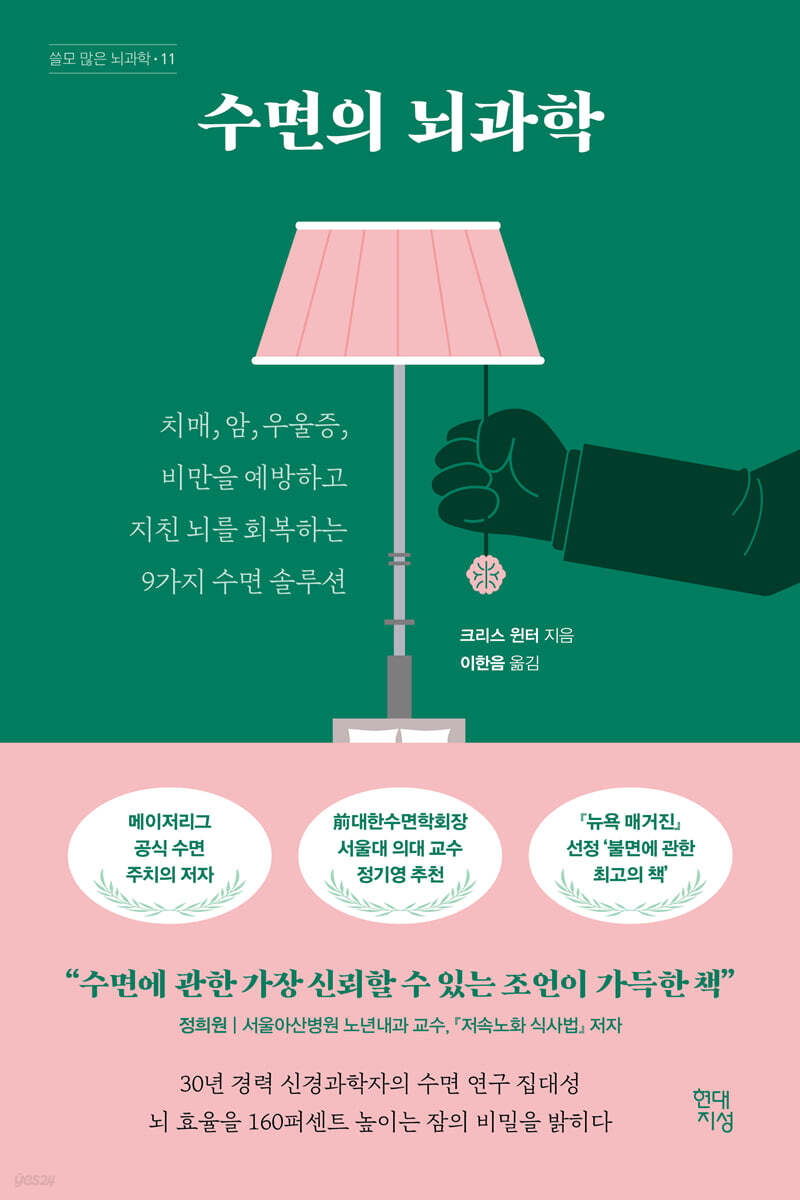
The Neuroscience of Sleep
 |
Description
Book Introduction
- A word from MD
- [Everything About Sleep for a Proper Night's Sleep] In an era of insomnia, where one in three people suffers from sleep disorders, this brain science-based sleep manual analyzes the mechanisms of sleep and empowers you to overcome them.
It emphasizes the importance of correcting bad sleeping habits and misconceptions about sleep, accurately identifying your sleep problems, and improving your lifestyle habits.
- Hyunjae Ahn, PD of Health Hobby
“If you’ve ever thought about wanting to sleep properly,
“You must read this book”
★★ Jeong Gi-yeong | Former President of the Korean Sleep Society and Professor of Neurology at Seoul National University Hospital
“The most reliable sleep advice book ever written.”
Jeong Hee-won, Professor of Geriatrics, Seoul Asan Medical Center
The official sleep doctor of Major League Baseball and a neuroscientist with 30 years of experience speaks
Sleep Solutions to Double Your Life
· I woke up this morning again, resisting the urge to sleep more.
· I'm sleepy and tired during the day, but when I get home, I just lie down and spend time on my phone.
· When I lie down in bed, I can't sleep because I keep thinking about what I have to do tomorrow.
· I can't remember the last time I slept soundly.
· I once drank alcohol and went to sleep because I wanted to sleep well.
If any of these apply to you, you need this book.
"The Neuroscience of Sleep" is a "brain science-based sleep manual" that clearly explains the mechanisms of sleep, which we only vaguely understood, and empowers us to overcome various sleep disorders.
The author, a neuroscientist and sleep specialist with 30 years of experience, points out in this book that poor sleeping habits, misunderstandings due to fragmented information, and excessive worry about insomnia are all obstacles to quality sleep.
We also urge a fundamental change in attitude towards sleep.
To solve the problem, you need to properly understand how sleep works, accurately identify your sleep problems, and gradually change your lifestyle habits. However, most people only respond with one-time measures, such as adding something like drinking a glass of wine before bed or taking melatonin supplements.
The good news is that sleep is a skill that can be learned.
The author's experience as a sleep physician for world-class athletes, including those in Major League Baseball and the NBA, in improving sleep habits and achieving optimal performance, along with numerous clinical cases encountered in the clinic, prove this.
Follow the solutions in this book, which conveys neuroscience knowledge and presents various research results through easy and humorous metaphors.
In the clinic, you will be able to get specific explanations and the most practical advice that you have never heard before.
“You must read this book”
★★ Jeong Gi-yeong | Former President of the Korean Sleep Society and Professor of Neurology at Seoul National University Hospital
“The most reliable sleep advice book ever written.”
Jeong Hee-won, Professor of Geriatrics, Seoul Asan Medical Center
The official sleep doctor of Major League Baseball and a neuroscientist with 30 years of experience speaks
Sleep Solutions to Double Your Life
· I woke up this morning again, resisting the urge to sleep more.
· I'm sleepy and tired during the day, but when I get home, I just lie down and spend time on my phone.
· When I lie down in bed, I can't sleep because I keep thinking about what I have to do tomorrow.
· I can't remember the last time I slept soundly.
· I once drank alcohol and went to sleep because I wanted to sleep well.
If any of these apply to you, you need this book.
"The Neuroscience of Sleep" is a "brain science-based sleep manual" that clearly explains the mechanisms of sleep, which we only vaguely understood, and empowers us to overcome various sleep disorders.
The author, a neuroscientist and sleep specialist with 30 years of experience, points out in this book that poor sleeping habits, misunderstandings due to fragmented information, and excessive worry about insomnia are all obstacles to quality sleep.
We also urge a fundamental change in attitude towards sleep.
To solve the problem, you need to properly understand how sleep works, accurately identify your sleep problems, and gradually change your lifestyle habits. However, most people only respond with one-time measures, such as adding something like drinking a glass of wine before bed or taking melatonin supplements.
The good news is that sleep is a skill that can be learned.
The author's experience as a sleep physician for world-class athletes, including those in Major League Baseball and the NBA, in improving sleep habits and achieving optimal performance, along with numerous clinical cases encountered in the clinic, prove this.
Follow the solutions in this book, which conveys neuroscience knowledge and presents various research results through easy and humorous metaphors.
In the clinic, you will be able to get specific explanations and the most practical advice that you have never heard before.
- You can preview some of the book's contents.
Preview
index
Change your attitude towards sleep as you go in.
Part 1: Knowing the Right Thing to Sleep Well
Understanding Sleep Disorders: A Disease Often Misdiagnosed as a Habit
Chapter 1: Sleep is the best cure-all.
The brain eliminates waste products when you sleep. │ Less sleep leads to weight gain. │ Lack of sleep damages the heart. │ Why are you depressed every day? Sleep may be the cause. │ Irregular sleep causes cancer. │ Why staying up all night makes you more likely to catch a cold.
Chapter 2: Sleep Conquers All
The Inescapable Primary Need │ Really Not Getting a Breath of Sleep? │ The Right Amount of Sleep Varies from Person to Person │ Did Previous Generations Sleep More Than We Do?
Chapter 3 Are you tired and sleepy?
Fatigue and sleepiness are different. What the brain does when you feel sleepy. Is it sleep deprivation or sleep dysfunction? Two chemicals that cause sleepiness.
Chapter 4: I didn't dream, so I slept deeply?
The 3 stages of sleep │ The various functions of dream sleep │ Light sleep is the foundation of all sleep │ What kind of sleep should I get to help my body recover │ If you want to create a healthy sleep cycle
Chapter 5: Why You're Sleepy During the Day and Tired at Night
Sleep isn't controlled by flipping a switch │ Three chemicals that trigger wakefulness │ How do your levels of sleepiness and wakefulness change throughout the day │ Is anxiety-free sleep essential for a good night's sleep?
Chapter 6: "I slept, but I didn't."
The All-Common Paradox of Insomnia │ We Sleep Deeper Than We Think
Chapter 7 Our bodies have clocks.
Circadian Rhythm: The Body's Circadian Rhythm | The Effects of Jet Lag on Long-Haul Flights | How to Solve Shift Work Sleep Disorders
Part 2: I'm so sleepy vs. I can't sleep
Accurately Diagnosing My Sleep Problems
Chapter 8 Who are you sleeping with now?
Let's make your bedroom a cave │ Prepare bedding and pajamas that are just right for you / Sometimes you need to sleep alone │ Foods that interfere with sleep │ Eating habits that are good for a good night's sleep │ Create a good sleep routine
Chapter 9: How to Root Out Simple Insomnia
The formula for defining insomnia │ Sleep is a skill you can learn │ How to manage anxiety and stress about sleep │ Cheat keys to solve sleep problems
Chapter 10: What You Should Do When You Have Severe Insomnia
Finding out my sleep identity │ Can insomnia kill you? │ Insomnia is only a matter of fear │ If it goes beyond severe insomnia and becomes malignant insomnia
Chapter 11: Can Drugs Put the Brain to Sleep?
Misconceptions and stereotypes surrounding sleeping pills │ "My savior who came to ruin my life" │ Why sleeping pills are so frequently prescribed │ Understanding the mechanisms of action of various sleeping pills │ When should you take sleeping pills?
Chapter 12: Finding Your Optimal Sleep Time
A regular wake-up time is important │ The trap of the average as the optimal sleep time │ How to find the perfect sleep time for you │ Are you a morning person or a night person? │ Advice for shift workers
Chapter 13: Napping to Maximize Sleep Efficiency
Don't make up for your night's sleep with a nap │ Keep it short and don't interrupt your night's sleep │ If you feel more drowsy after a nap │ Create a cozy nap environment │ When is it best to pay off your sleep debt?
Chapter 14 Types of Sleep Disorders That Deprive the Brain of Oxygen
Snoring can easily be exacerbated by sleep apnea. │ The negative effects of sleep apnea on our bodies. │ How is sleep apnea treated?
Chapter 15: From Narcolepsy to Sleepwalking: The Strangest Sleep Disorders
Restless legs syndrome caused by dopamine deficiency | Narcolepsy, which causes severe daytime drowsiness | REM behavior disorder, which causes hitting others while dreaming | Bruxism and parasomnias
Chapter 16: Sleep Testing: Don't Be Afraid Anymore
How to Read a Sleep Test Graph | How an Inpatient Sleep Test Is Conducted | Limitations of Home Sleep Tests
In conclusion, sleep depends on your mindset.
Part 1: Knowing the Right Thing to Sleep Well
Understanding Sleep Disorders: A Disease Often Misdiagnosed as a Habit
Chapter 1: Sleep is the best cure-all.
The brain eliminates waste products when you sleep. │ Less sleep leads to weight gain. │ Lack of sleep damages the heart. │ Why are you depressed every day? Sleep may be the cause. │ Irregular sleep causes cancer. │ Why staying up all night makes you more likely to catch a cold.
Chapter 2: Sleep Conquers All
The Inescapable Primary Need │ Really Not Getting a Breath of Sleep? │ The Right Amount of Sleep Varies from Person to Person │ Did Previous Generations Sleep More Than We Do?
Chapter 3 Are you tired and sleepy?
Fatigue and sleepiness are different. What the brain does when you feel sleepy. Is it sleep deprivation or sleep dysfunction? Two chemicals that cause sleepiness.
Chapter 4: I didn't dream, so I slept deeply?
The 3 stages of sleep │ The various functions of dream sleep │ Light sleep is the foundation of all sleep │ What kind of sleep should I get to help my body recover │ If you want to create a healthy sleep cycle
Chapter 5: Why You're Sleepy During the Day and Tired at Night
Sleep isn't controlled by flipping a switch │ Three chemicals that trigger wakefulness │ How do your levels of sleepiness and wakefulness change throughout the day │ Is anxiety-free sleep essential for a good night's sleep?
Chapter 6: "I slept, but I didn't."
The All-Common Paradox of Insomnia │ We Sleep Deeper Than We Think
Chapter 7 Our bodies have clocks.
Circadian Rhythm: The Body's Circadian Rhythm | The Effects of Jet Lag on Long-Haul Flights | How to Solve Shift Work Sleep Disorders
Part 2: I'm so sleepy vs. I can't sleep
Accurately Diagnosing My Sleep Problems
Chapter 8 Who are you sleeping with now?
Let's make your bedroom a cave │ Prepare bedding and pajamas that are just right for you / Sometimes you need to sleep alone │ Foods that interfere with sleep │ Eating habits that are good for a good night's sleep │ Create a good sleep routine
Chapter 9: How to Root Out Simple Insomnia
The formula for defining insomnia │ Sleep is a skill you can learn │ How to manage anxiety and stress about sleep │ Cheat keys to solve sleep problems
Chapter 10: What You Should Do When You Have Severe Insomnia
Finding out my sleep identity │ Can insomnia kill you? │ Insomnia is only a matter of fear │ If it goes beyond severe insomnia and becomes malignant insomnia
Chapter 11: Can Drugs Put the Brain to Sleep?
Misconceptions and stereotypes surrounding sleeping pills │ "My savior who came to ruin my life" │ Why sleeping pills are so frequently prescribed │ Understanding the mechanisms of action of various sleeping pills │ When should you take sleeping pills?
Chapter 12: Finding Your Optimal Sleep Time
A regular wake-up time is important │ The trap of the average as the optimal sleep time │ How to find the perfect sleep time for you │ Are you a morning person or a night person? │ Advice for shift workers
Chapter 13: Napping to Maximize Sleep Efficiency
Don't make up for your night's sleep with a nap │ Keep it short and don't interrupt your night's sleep │ If you feel more drowsy after a nap │ Create a cozy nap environment │ When is it best to pay off your sleep debt?
Chapter 14 Types of Sleep Disorders That Deprive the Brain of Oxygen
Snoring can easily be exacerbated by sleep apnea. │ The negative effects of sleep apnea on our bodies. │ How is sleep apnea treated?
Chapter 15: From Narcolepsy to Sleepwalking: The Strangest Sleep Disorders
Restless legs syndrome caused by dopamine deficiency | Narcolepsy, which causes severe daytime drowsiness | REM behavior disorder, which causes hitting others while dreaming | Bruxism and parasomnias
Chapter 16: Sleep Testing: Don't Be Afraid Anymore
How to Read a Sleep Test Graph | How an Inpatient Sleep Test Is Conducted | Limitations of Home Sleep Tests
In conclusion, sleep depends on your mindset.
Detailed image

Into the book
Until recently, the link between sleep and obesity was largely ignored.
But research over the past several decades shows that weight gain is a key factor in poor sleep quality.
This is mainly due to changes in breathing that occur with weight gain.
(…)
Research suggesting that weight gain can negatively impact sleep quality has been around for over 50 years.
Meanwhile, recent research results have shown that poor sleep quality directly affects weight gain.
--- pp.35-36, from “Chapter 1 Sleep is a panacea”
Not being sleepy but not feeling sleepy is a phenomenon that directly contradicts primary biological forces.
The longer a person stays awake, the more sleepy he becomes.
When arousal or anxiety is heightened, the power can be temporarily suppressed, but it cannot be completely stopped.
For example, if you lie down in bed and smell smoke, you will feel anxious and not be able to sleep.
You may not be able to sleep because you hear something moving under the bed.
Also, worrying about not being able to fall asleep can prevent you from sleeping.
--- p.52, from “Chapter 2 Sleep Conquers Everything”
In adults, N3 sleep accounts for about 25 percent of total sleep time and is distributed in the first half of the night.
Our body recovers during N3 sleep.
This is because growth hormone is secreted the most at this time.
Why growth hormone when I'm already past my growth period? In fact, growth hormone isn't just important for development.
This is why I advise athletes on sleep.
Growth hormone helps muscles recover and helps athletes perform at their best.
--- pp.87-88, from “Chapter 4: Did I Sleep Deeply Since I Didn’t Dream?”
Paradoxical insomnia is a condition in which a person believes that he or she is sleeping less than the actual amount of time he or she actually sleeps, or that he or she is not sleeping at all.
It used to be called sleep paralysis, and before that it was also called semi-dreamy sleep.
On the other hand, there are people who feel like they sleep well at night, but in fact, they do not sleep well and are very tired during the day.
--- p.113, from Chapter 6, “I slept, but I didn’t sleep”
Why do patients use the term "insomnia" when they're not actually sleep-deprived? It's simple.
Because I don't like my sleep.
Even if you don't like sleeping, you can still sleep.
It's like going to work every day even if you don't like what you're doing.
We need to understand that insomnia does not result from the absence of sleep.
The doctor's role at this time is to reframe and redefine the problem.
However, the process of redefinition must not lead to the downplaying of the patient's suffering.
(…) In other words, even if a patient who previously thought he or she had trouble sleeping realizes that he or she actually sleeps, the doctor must treat the patient.
Even if the patient is sleeping, if he or she comes to the examination room or looks through related books because of sleep, there is a reason.
--- p.158, from “Chapter 9 How to Root Out Simple Insomnia”
Sleeping pills should only be used temporarily.
Although it can have good effects when used appropriately, it was not originally designed to be taken every night.
Let's turn this into a problem when talking about daily meals.
Let's say you sit down at the table to eat, but you don't feel very hungry.
So, would I immediately take an appetite stimulant out of fear of the effects of malnutrition on my body? That's absurd.
Even taking the drug this way will make it harder to feel hungry at your next mealtime, so you will need to take more and more appetite stimulants.
--- p.199, from “Chapter 11: Can the Brain Be Put to Sleep with Medicine”
The brain weighs only about 1.3 kg on average, but uses 20 percent of the body's oxygen.
If oxygen is oil, then the brain is like the United States, which is heavily dependent on oil.
People with sleep apnea experience oxygen deprivation in their brains up to 60 times per hour during the night.
This is a situation where the quality of sleep cannot be good.
Every time you have trouble breathing, your brain worries.
Whether to just sleep and endure the suffocation or wake up and breathe.
But research over the past several decades shows that weight gain is a key factor in poor sleep quality.
This is mainly due to changes in breathing that occur with weight gain.
(…)
Research suggesting that weight gain can negatively impact sleep quality has been around for over 50 years.
Meanwhile, recent research results have shown that poor sleep quality directly affects weight gain.
--- pp.35-36, from “Chapter 1 Sleep is a panacea”
Not being sleepy but not feeling sleepy is a phenomenon that directly contradicts primary biological forces.
The longer a person stays awake, the more sleepy he becomes.
When arousal or anxiety is heightened, the power can be temporarily suppressed, but it cannot be completely stopped.
For example, if you lie down in bed and smell smoke, you will feel anxious and not be able to sleep.
You may not be able to sleep because you hear something moving under the bed.
Also, worrying about not being able to fall asleep can prevent you from sleeping.
--- p.52, from “Chapter 2 Sleep Conquers Everything”
In adults, N3 sleep accounts for about 25 percent of total sleep time and is distributed in the first half of the night.
Our body recovers during N3 sleep.
This is because growth hormone is secreted the most at this time.
Why growth hormone when I'm already past my growth period? In fact, growth hormone isn't just important for development.
This is why I advise athletes on sleep.
Growth hormone helps muscles recover and helps athletes perform at their best.
--- pp.87-88, from “Chapter 4: Did I Sleep Deeply Since I Didn’t Dream?”
Paradoxical insomnia is a condition in which a person believes that he or she is sleeping less than the actual amount of time he or she actually sleeps, or that he or she is not sleeping at all.
It used to be called sleep paralysis, and before that it was also called semi-dreamy sleep.
On the other hand, there are people who feel like they sleep well at night, but in fact, they do not sleep well and are very tired during the day.
--- p.113, from Chapter 6, “I slept, but I didn’t sleep”
Why do patients use the term "insomnia" when they're not actually sleep-deprived? It's simple.
Because I don't like my sleep.
Even if you don't like sleeping, you can still sleep.
It's like going to work every day even if you don't like what you're doing.
We need to understand that insomnia does not result from the absence of sleep.
The doctor's role at this time is to reframe and redefine the problem.
However, the process of redefinition must not lead to the downplaying of the patient's suffering.
(…) In other words, even if a patient who previously thought he or she had trouble sleeping realizes that he or she actually sleeps, the doctor must treat the patient.
Even if the patient is sleeping, if he or she comes to the examination room or looks through related books because of sleep, there is a reason.
--- p.158, from “Chapter 9 How to Root Out Simple Insomnia”
Sleeping pills should only be used temporarily.
Although it can have good effects when used appropriately, it was not originally designed to be taken every night.
Let's turn this into a problem when talking about daily meals.
Let's say you sit down at the table to eat, but you don't feel very hungry.
So, would I immediately take an appetite stimulant out of fear of the effects of malnutrition on my body? That's absurd.
Even taking the drug this way will make it harder to feel hungry at your next mealtime, so you will need to take more and more appetite stimulants.
--- p.199, from “Chapter 11: Can the Brain Be Put to Sleep with Medicine”
The brain weighs only about 1.3 kg on average, but uses 20 percent of the body's oxygen.
If oxygen is oil, then the brain is like the United States, which is heavily dependent on oil.
People with sleep apnea experience oxygen deprivation in their brains up to 60 times per hour during the night.
This is a situation where the quality of sleep cannot be good.
Every time you have trouble breathing, your brain worries.
Whether to just sleep and endure the suffocation or wake up and breathe.
--- p.246, from “Chapter 14 Types of Sleep Disorders That Deprive the Brain of Oxygen”
Publisher's Review
In an era of chronic insomnia, where one in three people suffers from sleep disorders,
Why We Need to Learn About Sleep
Did you start your morning with a cup of coffee again? The reason morning coffee has become an essential part of modern life is because you wake up feeling restless and always tired.
Because I don't get enough sleep, I feel tired when I wake up, and I nod off during the day, making it difficult to focus on work or school.
In fact, sleep disorders are so common that one in three people will experience them at least once in their lifetime.
According to 2024 statistics, there are a whopping 1.24 million patients suffering from sleep disorders in our country.
"The Neuroscience of Sleep" provides simple and specific methods to overcome sleep disorders such as chronic fatigue and insomnia, which modern people constantly suffer from, based on brain science.
We take a scientific look at the mechanisms of how and why we sleep, and provide practical ways to solve sleep problems big and small, from simple insomnia to sleep apnea.
As a sleep doctor for professional athletes in major leagues, NBA, etc.
Revealing the secrets to achieving the best results
Whether it's because we have a lot to do, because we want to play a little more, or for a variety of other reasons, we put sleep on the back burner.
But if you want to perform at your best, you need to get good sleep above all else.
Sleep improves the efficiency of the glymphatic system, which removes waste products from the nervous system, by more than 160 percent, putting our bodies in optimal condition.
The author of this book, Chris Winter, is not only a sleep physician for professional athletes in the Major League Baseball and NBA leagues, but also serves as a sleep advisor for the U.S. military and several large corporations, and has researched the correlation between sleep and performance.
He advised players on when to board the bus for away games to maintain optimal condition, and counseled players who had trouble sleeping before a big game or after a bad performance to help them improve their performance.
Based on this rich clinical experience and various neuroscience research cases, Part 1 of this book explains why sleep is important and what mechanisms we use to fall asleep and wake up.
If you suffer from insomnia, where you don't feel like you've slept well no matter how long you sleep, or have trouble falling asleep at night, Part 2 will help you diagnose your problem and find solutions that fit your situation.
In particular, the author points out that there is a serious misunderstanding surrounding insomnia due to incorrect information and newspaper articles.
For example, many people suffer from anxiety that if they miss their sleep timing, they will have to stay awake all night because of the mindset that sleep and wakefulness can be turned on and off with a single switch.
However, our body has separate sleep and wake systems, and if we calm the wake system and give priority to the sleep system, we can fall asleep comfortably at any time even if we miss the 'sleep timing'.
He also points out that the idea that if you dream, you are restless, and if you don't, you are sleeping soundly is also wrong.
Dream sleep is responsible for relieving pain in the body, so if we don't dream, our tired bodies lose the opportunity to recover.
He adds that everyone dreams, but they just don't remember their dreams.
Furthermore, the common belief that morning people are successful is also not true when viewed from the perspective of sleep mechanisms.
We are not born as morning or evening types, but rather as we grow older, our internal clock gradually shifts towards morning types.
Moreover, he says that regardless of your chronotype, maintaining a consistent wake-up time is the key to stabilizing your sleep and achieving optimal performance.
In this way, "The Neuroscience of Sleep" corrects many misconceptions about sleep, helps you escape the trap of average sleep time, and finds the right amount of sleep for you.
This book clearly guides you through various sleep questions you may have in your daily life, from how to understand the quality and efficiency of your sleep to whether you can sleep in on weekends when you have accumulated sleep debt due to not getting enough sleep.
It also provides a self-test method to measure fatigue and drowsiness levels, allowing users to accurately understand their own sleep state, and when scientific explanations are needed, it provides various pictures and graphs to aid understanding.
Sleep is a skill that can be learned!
A Brain Science-Based Sleep Manual That Will Double Your Life
"The Neuroscience of Sleep" began as the author sought simpler metaphors and explanations to persuade patients suffering from sleep disorders in his clinic.
After over 30 years of clinical experience, I discovered that sleep, like learning a foreign language or losing weight, is a skill that anyone can learn.
However, he emphasizes that in order to fundamentally solve sleep problems, it is necessary to comprehensively address the overall attitude toward life, mental health, and underlying physical illnesses, rather than a piecemeal approach, and warns against indiscriminate abuse of sleeping pills and sleep aids, which are one-dimensional responses.
Just as you need to find and resolve the underlying problem if your nosebleed persists even after blocking it with cotton, the same goes for sleep.
Impatience is a no-no, and you need to examine your entire life and gradually improve it.
This book will help you check your chronotype, your sleep and wake pattern, and find out how much sleep is appropriate for you.
By creating a comfortable sleeping environment with bedding, noise levels, and lighting, and by establishing a sleep routine, you can teach your child to fall asleep automatically when the time comes and as soon as they lie down.
Lastly, for those who are hesitant to go to a sleep center due to vague fears, we provide a detailed explanation of the sleep study process and preparation materials, and even explain how to read the results.
By learning and practicing how to sleep properly through "The Neuroscience of Sleep," you will realize that sleep is not just a minor factor that affects your daily condition, but a master key that operates in all areas of life, including managing your mood, improving work efficiency, and improving health.
Why We Need to Learn About Sleep
Did you start your morning with a cup of coffee again? The reason morning coffee has become an essential part of modern life is because you wake up feeling restless and always tired.
Because I don't get enough sleep, I feel tired when I wake up, and I nod off during the day, making it difficult to focus on work or school.
In fact, sleep disorders are so common that one in three people will experience them at least once in their lifetime.
According to 2024 statistics, there are a whopping 1.24 million patients suffering from sleep disorders in our country.
"The Neuroscience of Sleep" provides simple and specific methods to overcome sleep disorders such as chronic fatigue and insomnia, which modern people constantly suffer from, based on brain science.
We take a scientific look at the mechanisms of how and why we sleep, and provide practical ways to solve sleep problems big and small, from simple insomnia to sleep apnea.
As a sleep doctor for professional athletes in major leagues, NBA, etc.
Revealing the secrets to achieving the best results
Whether it's because we have a lot to do, because we want to play a little more, or for a variety of other reasons, we put sleep on the back burner.
But if you want to perform at your best, you need to get good sleep above all else.
Sleep improves the efficiency of the glymphatic system, which removes waste products from the nervous system, by more than 160 percent, putting our bodies in optimal condition.
The author of this book, Chris Winter, is not only a sleep physician for professional athletes in the Major League Baseball and NBA leagues, but also serves as a sleep advisor for the U.S. military and several large corporations, and has researched the correlation between sleep and performance.
He advised players on when to board the bus for away games to maintain optimal condition, and counseled players who had trouble sleeping before a big game or after a bad performance to help them improve their performance.
Based on this rich clinical experience and various neuroscience research cases, Part 1 of this book explains why sleep is important and what mechanisms we use to fall asleep and wake up.
If you suffer from insomnia, where you don't feel like you've slept well no matter how long you sleep, or have trouble falling asleep at night, Part 2 will help you diagnose your problem and find solutions that fit your situation.
In particular, the author points out that there is a serious misunderstanding surrounding insomnia due to incorrect information and newspaper articles.
For example, many people suffer from anxiety that if they miss their sleep timing, they will have to stay awake all night because of the mindset that sleep and wakefulness can be turned on and off with a single switch.
However, our body has separate sleep and wake systems, and if we calm the wake system and give priority to the sleep system, we can fall asleep comfortably at any time even if we miss the 'sleep timing'.
He also points out that the idea that if you dream, you are restless, and if you don't, you are sleeping soundly is also wrong.
Dream sleep is responsible for relieving pain in the body, so if we don't dream, our tired bodies lose the opportunity to recover.
He adds that everyone dreams, but they just don't remember their dreams.
Furthermore, the common belief that morning people are successful is also not true when viewed from the perspective of sleep mechanisms.
We are not born as morning or evening types, but rather as we grow older, our internal clock gradually shifts towards morning types.
Moreover, he says that regardless of your chronotype, maintaining a consistent wake-up time is the key to stabilizing your sleep and achieving optimal performance.
In this way, "The Neuroscience of Sleep" corrects many misconceptions about sleep, helps you escape the trap of average sleep time, and finds the right amount of sleep for you.
This book clearly guides you through various sleep questions you may have in your daily life, from how to understand the quality and efficiency of your sleep to whether you can sleep in on weekends when you have accumulated sleep debt due to not getting enough sleep.
It also provides a self-test method to measure fatigue and drowsiness levels, allowing users to accurately understand their own sleep state, and when scientific explanations are needed, it provides various pictures and graphs to aid understanding.
Sleep is a skill that can be learned!
A Brain Science-Based Sleep Manual That Will Double Your Life
"The Neuroscience of Sleep" began as the author sought simpler metaphors and explanations to persuade patients suffering from sleep disorders in his clinic.
After over 30 years of clinical experience, I discovered that sleep, like learning a foreign language or losing weight, is a skill that anyone can learn.
However, he emphasizes that in order to fundamentally solve sleep problems, it is necessary to comprehensively address the overall attitude toward life, mental health, and underlying physical illnesses, rather than a piecemeal approach, and warns against indiscriminate abuse of sleeping pills and sleep aids, which are one-dimensional responses.
Just as you need to find and resolve the underlying problem if your nosebleed persists even after blocking it with cotton, the same goes for sleep.
Impatience is a no-no, and you need to examine your entire life and gradually improve it.
This book will help you check your chronotype, your sleep and wake pattern, and find out how much sleep is appropriate for you.
By creating a comfortable sleeping environment with bedding, noise levels, and lighting, and by establishing a sleep routine, you can teach your child to fall asleep automatically when the time comes and as soon as they lie down.
Lastly, for those who are hesitant to go to a sleep center due to vague fears, we provide a detailed explanation of the sleep study process and preparation materials, and even explain how to read the results.
By learning and practicing how to sleep properly through "The Neuroscience of Sleep," you will realize that sleep is not just a minor factor that affects your daily condition, but a master key that operates in all areas of life, including managing your mood, improving work efficiency, and improving health.
GOODS SPECIFICS
- Date of issue: June 4, 2025
- Page count, weight, size: 296 pages | 458g | 150*225*20mm
- ISBN13: 9791139723700
- ISBN10: 1139723707
You may also like
카테고리
korean


korean

![GQ KOREA Mark (Monthly): December [2025]](http://librairie.coreenne.fr/cdn/shop/files/8ef265dbbfbf186523ed75ba7319009d.jpg?v=1765340328&width=3840)


