

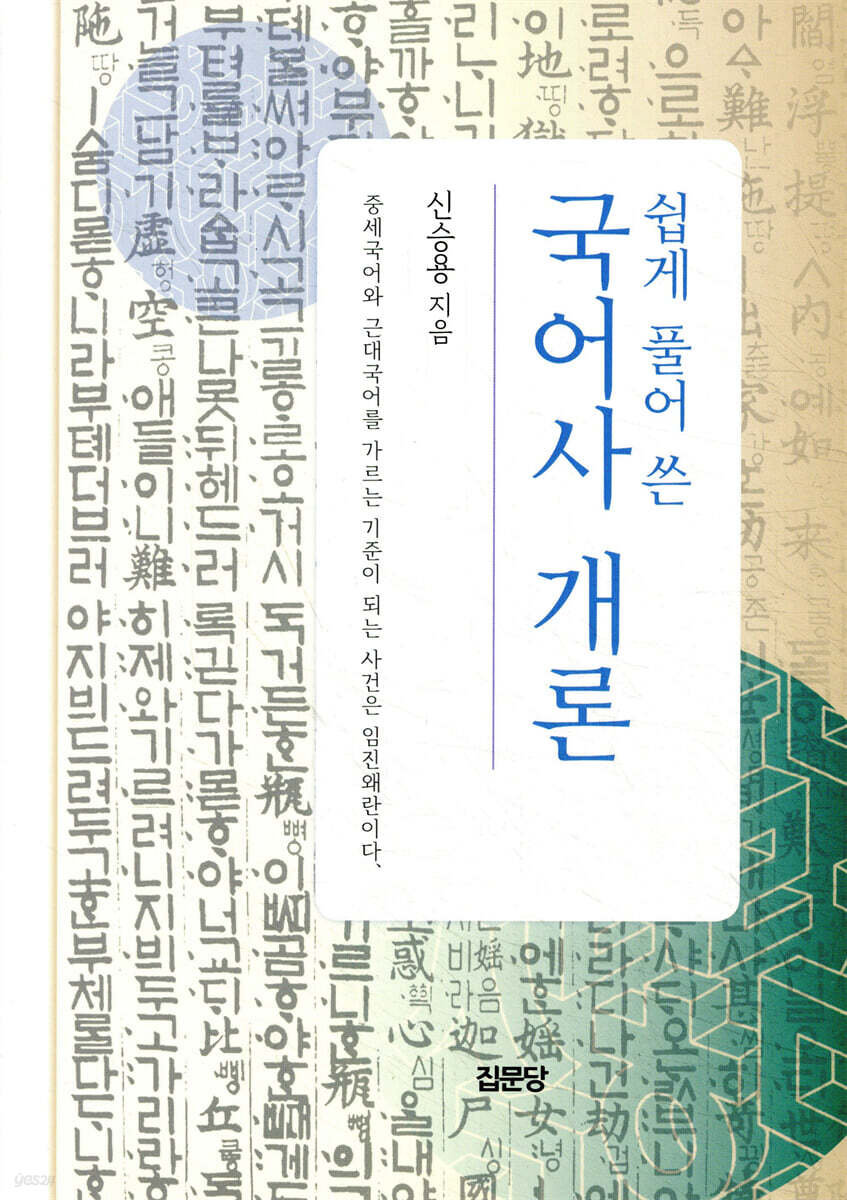
An Introduction to Korean History Explained in Easy Ways
 |
Description
Book Introduction
Students tend to think that Korean history is difficult and are reluctant to approach it simply because it is Korean history.
So, I wrote this book with the hope that it would make Korean history a little more accessible to undergraduate students.
The content is also composed of topics that are commonly covered in most introductory Korean language history books.
We have tried to avoid including content or arguments that appear only in specific introductory books, and have only briefly introduced content that we deem necessary for a comprehensive understanding of the phenomenon.
One of the main reasons why students thought Korean history was too far away to approach was Chinese characters.
Because there are so many Chinese characters in Korean language history materials, it becomes difficult to even read the materials, so analyzing the materials becomes impossible.
This is a situation where the cart is put before the horse.
So, in this book, we have presented typical examples without Chinese characters, and in cases where Chinese characters are included, we have provided the pronunciation of each Chinese character.
So, we have prevented the abnormal situation of avoiding Korean history because of Chinese characters from happening again.
Easy isn't always better, but it's better than not being able to approach something because it's too difficult.
However, this does not mean that this book neglects the fidelity of its content.
Almost all of the important topics covered in Korean language history are included in this book.
And I tried to write in a way that could be understood through analysis rather than just memorization.
So, I wrote this book with the hope that it would make Korean history a little more accessible to undergraduate students.
The content is also composed of topics that are commonly covered in most introductory Korean language history books.
We have tried to avoid including content or arguments that appear only in specific introductory books, and have only briefly introduced content that we deem necessary for a comprehensive understanding of the phenomenon.
One of the main reasons why students thought Korean history was too far away to approach was Chinese characters.
Because there are so many Chinese characters in Korean language history materials, it becomes difficult to even read the materials, so analyzing the materials becomes impossible.
This is a situation where the cart is put before the horse.
So, in this book, we have presented typical examples without Chinese characters, and in cases where Chinese characters are included, we have provided the pronunciation of each Chinese character.
So, we have prevented the abnormal situation of avoiding Korean history because of Chinese characters from happening again.
Easy isn't always better, but it's better than not being able to approach something because it's too difficult.
However, this does not mean that this book neglects the fidelity of its content.
Almost all of the important topics covered in Korean language history are included in this book.
And I tried to write in a way that could be understood through analysis rather than just memorization.
index
Chapter 1.
Korean language history period division and research methods
1.1.
Korean language history era division
1.2.
Intrinsic reconstruction and comparative methods
1.3.
The origin and differentiation of the Korean language
Chapter 2.
Hunminjeongeum and notation
2.1.
Sounds and Hangul letters
2.1.1.
Consonant letters and consonant phonology, vowel letters and vowel phonology
2.1.2.
Changes in content and format
2.2.
Phonological interpretation of notation and notation
2.2.1.
Final consonant use initial consonant method and eight-character family use method
2.2.2.
Wrought iron, powder iron, and heavy iron
2.3.
Hunminjeongeum
2.3.1.
Motive for creation
2.3.2.
Disciple Principle
2.3.2.1.
The principle of consonant discipleship and the consonant system of Hunminjeongeum
2.3.2.2.
The principles of vowel discipleship and the vowel system of Hunminjeongeum
2.4.
Notation of borrowed characters
Chapter 3.
Phonetic history
3.1.
Consonant system and consonant changes
3.1.1.
The actual consonant system of Middle Korean
3.1.2.
Changes in consonant sound
3.2.
Vowel system and vowel changes
3.2.1.
Middle Korean vowel system and changes in the vowel system
3.2.2.
Changes in vowels
3.3.
Phonological rules and changes in phonological rules
3.3.1.
Middle Korean phonetic rules
3.3.2.
Phonological phenomena that arose in modern Korean and subsequent changes
Chapter 4.
Morphological verb
4.1.
Words and word formation
4.2.
Part of speech
4.2.1.
Definition of parts of speech
4.2.2.
Some features that differ from modern Korean
4.3.
Affixes and derivatives
4.3.1.
Prefixes and derivatives
4.3.2.
Suffixes and derivatives
4.3.2.1.
Noun derivation suffix
4.3.2.2.
Verb derivation suffixes
4.3.2.3.
Adjective derivation suffix
4.3.2.4.
Adverbial derivation suffix
4.4.
synthesis
4.4.1.
compound noun
4.4.2.
compound verbs
4.4.3.
Compound adjectives
4.4.4.
Compound adverbs
4.5.
Grammaticalization
Chapter 5.
Curved
5.1.
Irregular inflection of nouns
5.2.
Middle Korean case particles
5.3.
Middle Korean auxiliary verbs
5.4.
Connection survey
5.5.
Distinction between particle and auxiliary verb
Chapter 6.
conjugation
6.1.
Irregular conjugation of verbs
6.2.
Types of mothers
6.3.
Middle Korean word endings
6.3.1.
Final ending
6.3.2.
prepositional suffix
6.3.3.
connective endings
6.3.3.1.
Equal connective endings
6.3.3.2.
subordinate connective endings
6.3.3.3.
Auxiliary connective endings
6.4.
Prepositional endings
6.4.1.
Honorific endings
6.4.1.1.
Subject honorific suffix
6.4.1.2.
Object honorific suffix
6.4.1.3.
Honorific suffix for the listener
6.4.1.4.
Changes in honorifics
6.4.2.
tense verb endings
6.4.3.
Intentional sentence endings
6.4.4.
Calligraphy suffixes
6.4.5.
Emotional method, slang endings
Chapter 7.
sentence
7.1.
Sentences and sentence structure
7.2.
Special syntax of Middle Korean
7.3.
A sentence connected to a sentence that is hugged
7.3.1.
Embedded sentence
7.3.2.
Connected sentences (connective sentences)
References
Search
Korean language history period division and research methods
1.1.
Korean language history era division
1.2.
Intrinsic reconstruction and comparative methods
1.3.
The origin and differentiation of the Korean language
Chapter 2.
Hunminjeongeum and notation
2.1.
Sounds and Hangul letters
2.1.1.
Consonant letters and consonant phonology, vowel letters and vowel phonology
2.1.2.
Changes in content and format
2.2.
Phonological interpretation of notation and notation
2.2.1.
Final consonant use initial consonant method and eight-character family use method
2.2.2.
Wrought iron, powder iron, and heavy iron
2.3.
Hunminjeongeum
2.3.1.
Motive for creation
2.3.2.
Disciple Principle
2.3.2.1.
The principle of consonant discipleship and the consonant system of Hunminjeongeum
2.3.2.2.
The principles of vowel discipleship and the vowel system of Hunminjeongeum
2.4.
Notation of borrowed characters
Chapter 3.
Phonetic history
3.1.
Consonant system and consonant changes
3.1.1.
The actual consonant system of Middle Korean
3.1.2.
Changes in consonant sound
3.2.
Vowel system and vowel changes
3.2.1.
Middle Korean vowel system and changes in the vowel system
3.2.2.
Changes in vowels
3.3.
Phonological rules and changes in phonological rules
3.3.1.
Middle Korean phonetic rules
3.3.2.
Phonological phenomena that arose in modern Korean and subsequent changes
Chapter 4.
Morphological verb
4.1.
Words and word formation
4.2.
Part of speech
4.2.1.
Definition of parts of speech
4.2.2.
Some features that differ from modern Korean
4.3.
Affixes and derivatives
4.3.1.
Prefixes and derivatives
4.3.2.
Suffixes and derivatives
4.3.2.1.
Noun derivation suffix
4.3.2.2.
Verb derivation suffixes
4.3.2.3.
Adjective derivation suffix
4.3.2.4.
Adverbial derivation suffix
4.4.
synthesis
4.4.1.
compound noun
4.4.2.
compound verbs
4.4.3.
Compound adjectives
4.4.4.
Compound adverbs
4.5.
Grammaticalization
Chapter 5.
Curved
5.1.
Irregular inflection of nouns
5.2.
Middle Korean case particles
5.3.
Middle Korean auxiliary verbs
5.4.
Connection survey
5.5.
Distinction between particle and auxiliary verb
Chapter 6.
conjugation
6.1.
Irregular conjugation of verbs
6.2.
Types of mothers
6.3.
Middle Korean word endings
6.3.1.
Final ending
6.3.2.
prepositional suffix
6.3.3.
connective endings
6.3.3.1.
Equal connective endings
6.3.3.2.
subordinate connective endings
6.3.3.3.
Auxiliary connective endings
6.4.
Prepositional endings
6.4.1.
Honorific endings
6.4.1.1.
Subject honorific suffix
6.4.1.2.
Object honorific suffix
6.4.1.3.
Honorific suffix for the listener
6.4.1.4.
Changes in honorifics
6.4.2.
tense verb endings
6.4.3.
Intentional sentence endings
6.4.4.
Calligraphy suffixes
6.4.5.
Emotional method, slang endings
Chapter 7.
sentence
7.1.
Sentences and sentence structure
7.2.
Special syntax of Middle Korean
7.3.
A sentence connected to a sentence that is hugged
7.3.1.
Embedded sentence
7.3.2.
Connected sentences (connective sentences)
References
Search
GOODS SPECIFICS
- Publication date: July 10, 2022
- Page count, weight, size: 264 pages | 176*248*20mm
- ISBN13: 9788930319294
- ISBN10: 8930319297
You may also like
카테고리
korean


korean

![GQ KOREA Mark (Monthly): December [2025]](http://librairie.coreenne.fr/cdn/shop/files/8ef265dbbfbf186523ed75ba7319009d.jpg?v=1765340328&width=3840)


