

Key Lessons in Reading Real Estate's Lowest Points
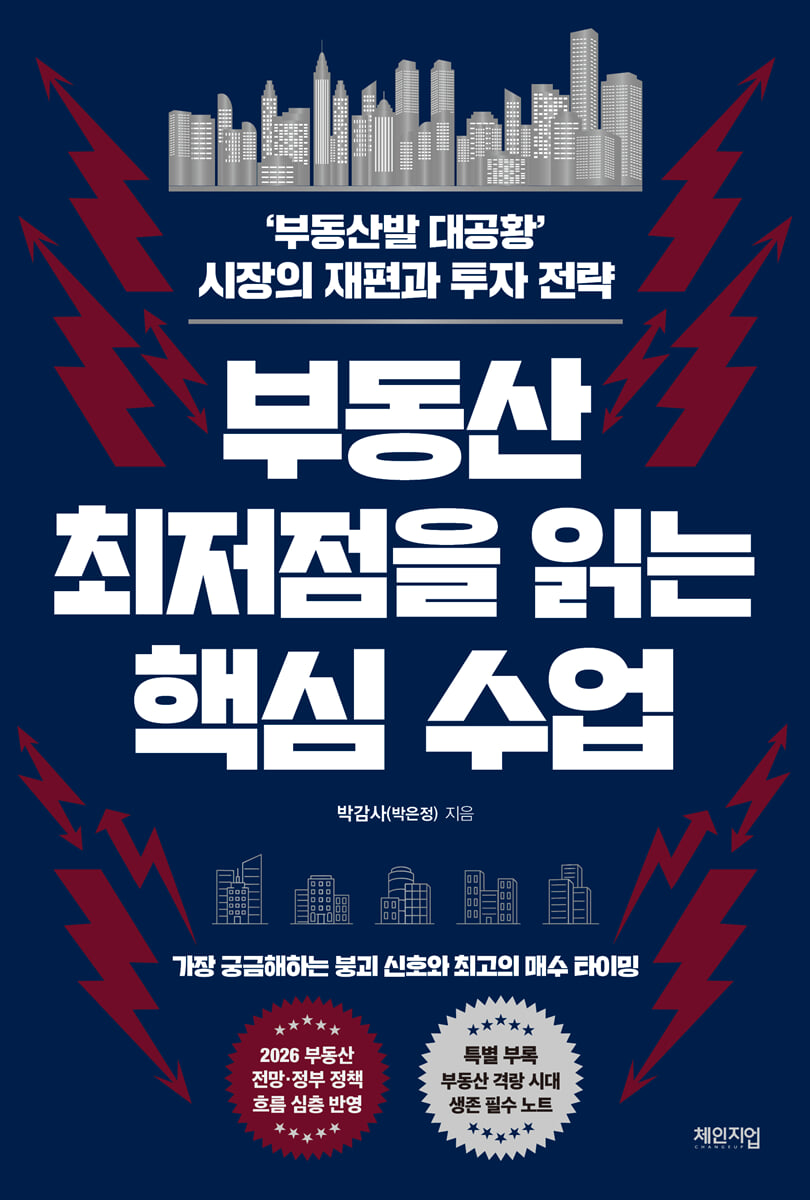 |
Description
Book Introduction
Even amidst a trading cliff, a supply explosion, and exhausted demand,
A survival guide to spotting the best time to buy at the lowest point
The last golden time of the bear market to seize the opportunity for wealth is coming!
The real estate market is now at an inflection point that no one has ever experienced before.
The belief that 'house prices never fall' no longer holds true.
"The Key Lesson in Reading Real Estate's Bottom" accurately identifies the nature of a bear market and the timing of its bottom through five essential signals investors must know.
'Auditor Park' (Eun-Jeong Park), who has been working as a real estate appraiser and certified real estate agent for over 20 years, uses her field experience to penetrate data and presents investment strategies that can be applied immediately in real-world situations, rather than simply providing forecasts.
The author guides investors through five signals—demographic changes, oversupply, financial vulnerabilities, policy limitations, and external shocks—to identify their individual positions and identify the timing for buying at the bottom.
The real estate bubble will inevitably burst.
But for those who are prepared, even a crisis can become a new opportunity.
This book is a real estate survival textbook that guides you to find a new starting point in a collapsing market through accurate market analysis.
A survival guide to spotting the best time to buy at the lowest point
The last golden time of the bear market to seize the opportunity for wealth is coming!
The real estate market is now at an inflection point that no one has ever experienced before.
The belief that 'house prices never fall' no longer holds true.
"The Key Lesson in Reading Real Estate's Bottom" accurately identifies the nature of a bear market and the timing of its bottom through five essential signals investors must know.
'Auditor Park' (Eun-Jeong Park), who has been working as a real estate appraiser and certified real estate agent for over 20 years, uses her field experience to penetrate data and presents investment strategies that can be applied immediately in real-world situations, rather than simply providing forecasts.
The author guides investors through five signals—demographic changes, oversupply, financial vulnerabilities, policy limitations, and external shocks—to identify their individual positions and identify the timing for buying at the bottom.
The real estate bubble will inevitably burst.
But for those who are prepared, even a crisis can become a new opportunity.
This book is a real estate survival textbook that guides you to find a new starting point in a collapsing market through accurate market analysis.
- You can preview some of the book's contents.
Preview
index
Prologue | To become an investor who doesn't fall even when the market fluctuates
Chapter 1: Facing Reality and Recognizing the Signals - It's Easy to Fall into Traps If You Don't Look Properly
Bubbles rising from faith
The Side Effects of Helicopter Money and the Debt Economy
A body without blood circulation, a collapse of disposable income
External crisis brought about by the hegemonic power, the United States
There's No Eternal Upside - Signs of Structural Collapse
Chapter 2: The First Signal: The Vanishing Buyer - Now It's All About Location
Population structure changes and absolute demand decline
The Reality of the Second Baby Boomer Generation, the Economic Powerhouse
The number of households is increasing even though the population is decreasing.
Future demand already exhausted - the aftermath of panic buying and the demise of the young generation.
A market where demand has disappeared
[Gamsa Park's Real Estate Special Lecture] Demand Comes from a "Reason to Live."
Chapter 3: The Second Signal: Unstoppable Supply - Supply Without Demand Is Dangerous
Supply that cannot respond immediately to demand
Government public supply
The counterattack of reconstruction begins
The disaster of unsold and unoccupied units
The stock market crash caused by gap investment and the second baby boomer generation
Chapter 4: The Third Signal: The Weak Link - The strength of a chain depends on its weakest link.
The limits of liquidity that cannot be sustained any longer
The collapse of a household that has reached its limit
Corporate Crisis: Liquidity Depletion, Collapse of PF Structure
Warning from the financial markets
[Gamsa Park's Real Estate Special Lecture] The Real Estate Market is Shackled by Debt
Chapter 5: The Fourth Signal: The Limits of Policy and Psychology - Yet, There Are Policies Available
Overheating Created by Stimulus Measures: Policies and Illusions by Administration
Background of support and government limitations
Psychological Limitations: Cooling Demand and Unraveling Market Illusions
The reality of landed houses, apartments, and apartment complexes
Chapter 6: Signal Fifth: Uncontrollable External Shocks - Global Variables Shake Domestic Markets
The US Shock: The Fed's Tightening Cycle Continues and Interest Rates Expected to Steady
China's Shadow: The Real Estate Crash and the Consequences of a Consumer Downturn
Exchange rate instability and foreign investment outflow
The impact of external variables that have become reality
[Gamsa Park's Real Estate Special Lecture] Real Estate: There Are No More "Promising Places"
Chapter 7: The Best Buying Timings - Reading Opportunities in Crisis, Finding the Answer in Your Own Situation
If you own a home, it's time to review your profits and losses and change your perspective.
The opportunity for the homeless is now! The Great Depression Buying Time
Profit is Everything! A New Perspective on Real Estate
A practical guide to finding the optimal trading timing
Special Appendix | Essential Notes for Surviving the Real Estate Turmoil
Epilogue | The Night of Fluidity is Over: "Now is the Time to See Shadows, Not Light"
Chapter 1: Facing Reality and Recognizing the Signals - It's Easy to Fall into Traps If You Don't Look Properly
Bubbles rising from faith
The Side Effects of Helicopter Money and the Debt Economy
A body without blood circulation, a collapse of disposable income
External crisis brought about by the hegemonic power, the United States
There's No Eternal Upside - Signs of Structural Collapse
Chapter 2: The First Signal: The Vanishing Buyer - Now It's All About Location
Population structure changes and absolute demand decline
The Reality of the Second Baby Boomer Generation, the Economic Powerhouse
The number of households is increasing even though the population is decreasing.
Future demand already exhausted - the aftermath of panic buying and the demise of the young generation.
A market where demand has disappeared
[Gamsa Park's Real Estate Special Lecture] Demand Comes from a "Reason to Live."
Chapter 3: The Second Signal: Unstoppable Supply - Supply Without Demand Is Dangerous
Supply that cannot respond immediately to demand
Government public supply
The counterattack of reconstruction begins
The disaster of unsold and unoccupied units
The stock market crash caused by gap investment and the second baby boomer generation
Chapter 4: The Third Signal: The Weak Link - The strength of a chain depends on its weakest link.
The limits of liquidity that cannot be sustained any longer
The collapse of a household that has reached its limit
Corporate Crisis: Liquidity Depletion, Collapse of PF Structure
Warning from the financial markets
[Gamsa Park's Real Estate Special Lecture] The Real Estate Market is Shackled by Debt
Chapter 5: The Fourth Signal: The Limits of Policy and Psychology - Yet, There Are Policies Available
Overheating Created by Stimulus Measures: Policies and Illusions by Administration
Background of support and government limitations
Psychological Limitations: Cooling Demand and Unraveling Market Illusions
The reality of landed houses, apartments, and apartment complexes
Chapter 6: Signal Fifth: Uncontrollable External Shocks - Global Variables Shake Domestic Markets
The US Shock: The Fed's Tightening Cycle Continues and Interest Rates Expected to Steady
China's Shadow: The Real Estate Crash and the Consequences of a Consumer Downturn
Exchange rate instability and foreign investment outflow
The impact of external variables that have become reality
[Gamsa Park's Real Estate Special Lecture] Real Estate: There Are No More "Promising Places"
Chapter 7: The Best Buying Timings - Reading Opportunities in Crisis, Finding the Answer in Your Own Situation
If you own a home, it's time to review your profits and losses and change your perspective.
The opportunity for the homeless is now! The Great Depression Buying Time
Profit is Everything! A New Perspective on Real Estate
A practical guide to finding the optimal trading timing
Special Appendix | Essential Notes for Surviving the Real Estate Turmoil
Epilogue | The Night of Fluidity is Over: "Now is the Time to See Shadows, Not Light"
Detailed image
.jpg)
Into the book
Is the current price reasonable?
Is this demand real?
Will this house be profitable for the next 10 years?
This book is intended to answer these questions.
I'm not trying to incite fear.
It's about seeing the opportunity.
Now is the time to change your thinking.
We need to read the signals of collapsing demand, identify the influx of supply, and accurately understand the limits of debt, policy failures, and signs of external shocks.
--- From "Prologue: To Become an Investor Who Doesn't Fell Even When the Market Fluctuates"
When will an asset bubble burst? Some say, "When everyone realizes there's no one left to buy."
That's the real estate market right now.
There are people who want to buy it.
However, even if a house that was worth 1 billion won becomes 500 million won, if there is no one who can buy it, then it has already collapsed in value.
--- From "Chapter 1: Facing Reality and Recognizing Signals"
The problem is not simply a ‘society that does not have children’.
This will soon lead to a structural collapse of real estate demand, a shrinking labor force, the demise of the domestic economic base, the collapse of pension and welfare finances, and increased selling pressure in asset markets (especially real estate).
In other words, the current population decline is a sign that the very foundation of Korean society is disintegrating.
--- From "Chapter 2, First Signal, The Disappearing Buyer"
Unlike other goods, real estate has a structural lag that prevents it from responding immediately to demand.
It takes several years for an apartment to come onto the market, from securing land to obtaining permits, starting construction, and completing it.
This time difference distorts the market.
--- From "Chapter 3, Second Signal, Unstoppable Supply"
Even a seemingly robust real estate market reveals accumulated cracks here and there.
Hidden imbalances in a surge, mismatches between supply and demand, financial risks, psychological overheating…
All of this combines to create a 'weak link' that ultimately destabilizes the entire market.
The market always breaks from the weakest link.
--- From "Chapter 4, Third Signal, The Uneasy Weak Link"
The market always operates under the expectation that 'policy will solve everything.'
But the real danger comes when those expectations are dashed.
Anyone who has ever experienced a moment when the government's announcements of "deregulation," "support for loans," and "increased supply" flood the media day after day, only to have the market remain unresponsive, will understand.
If policies fail to support psychology, the market will fall into a deeper recession.
--- From Chapter 5, “The Fourth Signal: The Limits of Policy and Psychology”
'External shocks' are factors that can destroy market sentiment, neutralize policy effects, and cut the last remaining thread of hope for a bubble.
Face the reality that a single uncontrollable variable can completely upset the market's equilibrium.
Investors must understand the types and impacts of external shocks and establish a fundamental risk management system for their investment strategies.
--- From "Chapter 6, The Fifth Signal, Uncontrollable External Shocks"
The direction of the market is important, but more important are my circumstances and choices.
Even in the same market, the positions of homeowners and non-homeowners and the strategies they should adopt are fundamentally different.
Is this demand real?
Will this house be profitable for the next 10 years?
This book is intended to answer these questions.
I'm not trying to incite fear.
It's about seeing the opportunity.
Now is the time to change your thinking.
We need to read the signals of collapsing demand, identify the influx of supply, and accurately understand the limits of debt, policy failures, and signs of external shocks.
--- From "Prologue: To Become an Investor Who Doesn't Fell Even When the Market Fluctuates"
When will an asset bubble burst? Some say, "When everyone realizes there's no one left to buy."
That's the real estate market right now.
There are people who want to buy it.
However, even if a house that was worth 1 billion won becomes 500 million won, if there is no one who can buy it, then it has already collapsed in value.
--- From "Chapter 1: Facing Reality and Recognizing Signals"
The problem is not simply a ‘society that does not have children’.
This will soon lead to a structural collapse of real estate demand, a shrinking labor force, the demise of the domestic economic base, the collapse of pension and welfare finances, and increased selling pressure in asset markets (especially real estate).
In other words, the current population decline is a sign that the very foundation of Korean society is disintegrating.
--- From "Chapter 2, First Signal, The Disappearing Buyer"
Unlike other goods, real estate has a structural lag that prevents it from responding immediately to demand.
It takes several years for an apartment to come onto the market, from securing land to obtaining permits, starting construction, and completing it.
This time difference distorts the market.
--- From "Chapter 3, Second Signal, Unstoppable Supply"
Even a seemingly robust real estate market reveals accumulated cracks here and there.
Hidden imbalances in a surge, mismatches between supply and demand, financial risks, psychological overheating…
All of this combines to create a 'weak link' that ultimately destabilizes the entire market.
The market always breaks from the weakest link.
--- From "Chapter 4, Third Signal, The Uneasy Weak Link"
The market always operates under the expectation that 'policy will solve everything.'
But the real danger comes when those expectations are dashed.
Anyone who has ever experienced a moment when the government's announcements of "deregulation," "support for loans," and "increased supply" flood the media day after day, only to have the market remain unresponsive, will understand.
If policies fail to support psychology, the market will fall into a deeper recession.
--- From Chapter 5, “The Fourth Signal: The Limits of Policy and Psychology”
'External shocks' are factors that can destroy market sentiment, neutralize policy effects, and cut the last remaining thread of hope for a bubble.
Face the reality that a single uncontrollable variable can completely upset the market's equilibrium.
Investors must understand the types and impacts of external shocks and establish a fundamental risk management system for their investment strategies.
--- From "Chapter 6, The Fifth Signal, Uncontrollable External Shocks"
The direction of the market is important, but more important are my circumstances and choices.
Even in the same market, the positions of homeowners and non-homeowners and the strategies they should adopt are fundamentally different.
--- From "Chapter 7: Best Buy Timing"
Publisher's Review
A bear market: a crisis or an opportunity? Only those who are prepared will find the answer!
Accurately reading the confusing market
The One Book to Never Miss an Opportunity
‘You absolutely must buy now’, ‘Apartment prices will never fall’, ‘This time is different’…
This is something we hear without fail whenever the real estate market overheats.
But Japan's "lost 30 years," the US financial crisis, and China's real estate collapse all taught the same lesson.
The point is that if you ignore the uncertainty of the market and vaguely believe that it will rise, you can lose both your profits and your safety net in an instant.
Today, Korea also stands at that crossroads.
"The Key Lessons in Reading Real Estate's Bottom" will serve as a compass to help investors navigate the turbulent market without getting lost.
Developing an eye for the real estate market is like developing the ability to protect not only your assets but also your future.
This book pinpoints five signs that the real estate market is collapsing.
A trading cliff, disappearing demand, unstoppable supply, policy and psychological limitations, external shocks—all these factors contribute to falling real estate prices and uncertainty.
However, many people still invest in the hope that it will simply go up, missing out on the signals of reality.
Now that you know how to read the signals, it's time to adapt and prepare accordingly to each situation and turn the crisis into an opportunity.
If you own a home, you should be able to change your perspective after examining the profit and loss structure, and if you do not own a home, you should confirm with specific examples that this could be an opportunity to buy at the lowest price.
Use the checklist included in the special appendix to assess your situation and develop an immediately actionable strategy to turn the last golden hour of a bear market into a chance for wealth.
The author analyzes the market objectively, drawing on over 20 years of experience and data from the field.
He doesn't just give warnings.
The bubble will inevitably burst, but only those who read its end and prepare for it will be able to become the masters of the next cycle.
This book provides investors with insight, judgment, and the ability to act beyond fear.
Finally, this book is not just an investment book.
It is a survival strategy book that meets the needs of the times and an essential guide to protecting one's personal property and life.
I strongly recommend this to anyone who wants to remain steadfast in the midst of market illusions, overheating, and uncertainty, and become a leading player in the next cycle by finding opportunities amidst crises.
Accurately reading the confusing market
The One Book to Never Miss an Opportunity
‘You absolutely must buy now’, ‘Apartment prices will never fall’, ‘This time is different’…
This is something we hear without fail whenever the real estate market overheats.
But Japan's "lost 30 years," the US financial crisis, and China's real estate collapse all taught the same lesson.
The point is that if you ignore the uncertainty of the market and vaguely believe that it will rise, you can lose both your profits and your safety net in an instant.
Today, Korea also stands at that crossroads.
"The Key Lessons in Reading Real Estate's Bottom" will serve as a compass to help investors navigate the turbulent market without getting lost.
Developing an eye for the real estate market is like developing the ability to protect not only your assets but also your future.
This book pinpoints five signs that the real estate market is collapsing.
A trading cliff, disappearing demand, unstoppable supply, policy and psychological limitations, external shocks—all these factors contribute to falling real estate prices and uncertainty.
However, many people still invest in the hope that it will simply go up, missing out on the signals of reality.
Now that you know how to read the signals, it's time to adapt and prepare accordingly to each situation and turn the crisis into an opportunity.
If you own a home, you should be able to change your perspective after examining the profit and loss structure, and if you do not own a home, you should confirm with specific examples that this could be an opportunity to buy at the lowest price.
Use the checklist included in the special appendix to assess your situation and develop an immediately actionable strategy to turn the last golden hour of a bear market into a chance for wealth.
The author analyzes the market objectively, drawing on over 20 years of experience and data from the field.
He doesn't just give warnings.
The bubble will inevitably burst, but only those who read its end and prepare for it will be able to become the masters of the next cycle.
This book provides investors with insight, judgment, and the ability to act beyond fear.
Finally, this book is not just an investment book.
It is a survival strategy book that meets the needs of the times and an essential guide to protecting one's personal property and life.
I strongly recommend this to anyone who wants to remain steadfast in the midst of market illusions, overheating, and uncertainty, and become a leading player in the next cycle by finding opportunities amidst crises.
GOODS SPECIFICS
- Date of issue: October 17, 2025
- Page count, weight, size: 312 pages | 554g | 152*225*18mm
- ISBN13: 9791191378832
- ISBN10: 1191378837
You may also like
카테고리
korean


korean

![GQ KOREA Mark (Monthly): December [2025]](http://librairie.coreenne.fr/cdn/shop/files/8ef265dbbfbf186523ed75ba7319009d.jpg?v=1765340328&width=3840)


