

Understanding Clinical Psychological Testing
 |
Description
Book Introduction
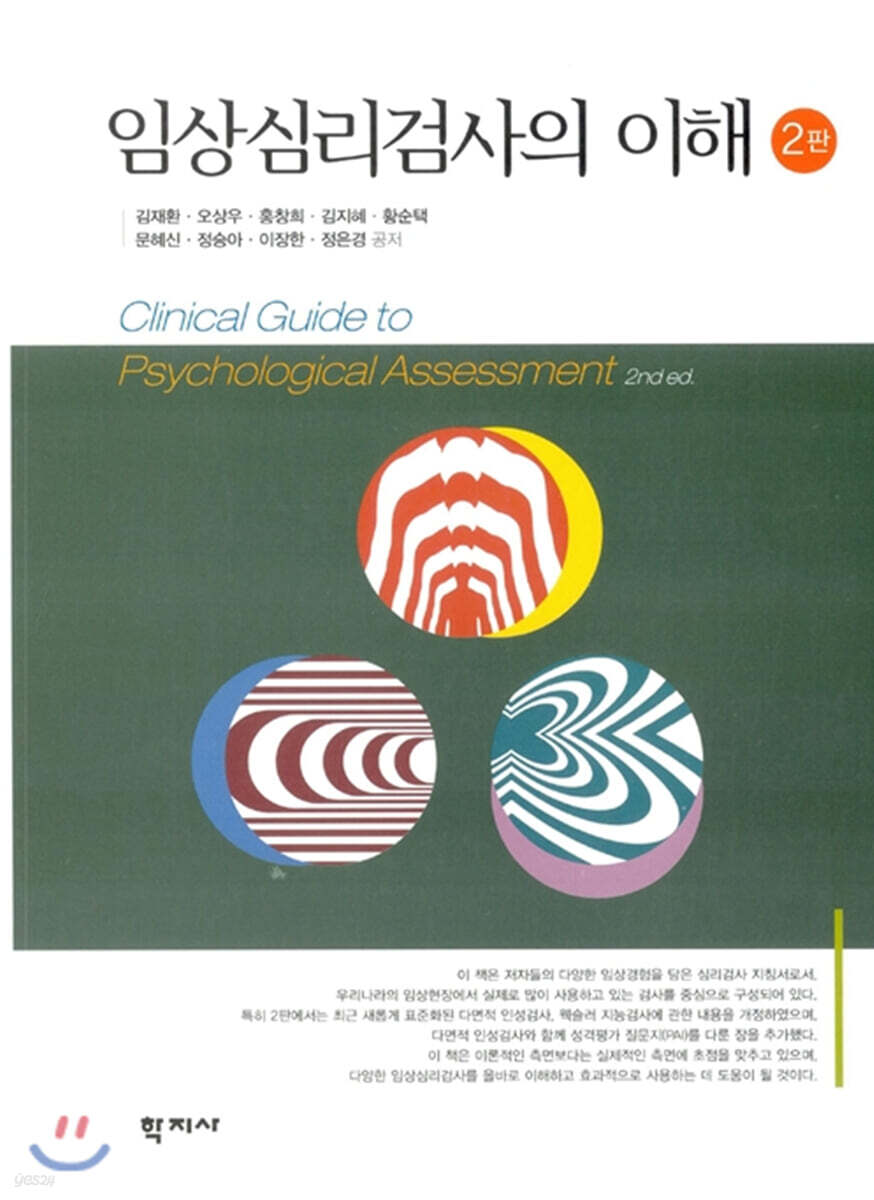
This book is a psychological testing guideline based on our clinical experience.
It was composed mainly of tests that are widely used in clinical settings in our country.
In particular, in the second edition, the authors supplemented the shortcomings they felt while using the Multiphasic Personality Inventory and the Wechsler Intelligence Scale in educational settings after they were standardized and published in Korean versions.
And we've added a new chapter covering the Personality Assessment Inventory (PAI) along with the Multiphasic Personality Inventory.
This book focuses on the practical aspects of the examination, avoiding the theoretical aspects as much as possible.
Therefore, it is of practical help to trainees who use and learn the test in actual clinical settings, as well as undergraduate and graduate students who learn psychological assessment at school.
It was composed mainly of tests that are widely used in clinical settings in our country.
In particular, in the second edition, the authors supplemented the shortcomings they felt while using the Multiphasic Personality Inventory and the Wechsler Intelligence Scale in educational settings after they were standardized and published in Korean versions.
And we've added a new chapter covering the Personality Assessment Inventory (PAI) along with the Multiphasic Personality Inventory.
This book focuses on the practical aspects of the examination, avoiding the theoretical aspects as much as possible.
Therefore, it is of practical help to trainees who use and learn the test in actual clinical settings, as well as undergraduate and graduate students who learn psychological assessment at school.
index
Preface to the 2nd edition
Preface to the 1st edition
Chapter 1: Understanding Psychological Assessment
1.
Principles of psychological assessment
2.
Materials for psychological evaluation
3.
Types and characteristics of clinical psychological tests
Chapter 2 Interviews for Psychological Evaluation
1.
Format of the evaluation interview
2.
Techniques of evaluation interviews
3.
Contents of the evaluation interview
4.
Conclusion
Chapter 3: Production and Requirements of Psychological Tests
1.
Qualifications of the Inspector Producer
2.
The process and method of producing standardized tests
3.
Definition and types of reliability and validity
Chapter 4: Korean Wechsler Adult Intelligence Scale
1.
The concept and definition of intelligence
2.
Development of intelligence tests
3.
Structure of K-WAIS-IV
4.
Subtest and composite scores
5.
Report and description of the performance of the inspection
6.
Psychometric characteristics of the K-WAIS-IV
Chapter 5: Korean Wechsler Children's Intelligence Scale
1.
Development and Development of the Wechsler Child Intelligence Scale
2.
Test composition and structure of K-WISC-Ⅳ
3.
Analysis and Description of the K-WISC-IV
4. 8 Steps of Interpreting the K-WISC-IV Based on the CHC Cognitive Ability Theory
5.
Things to Consider When Writing a K-WISC-Ⅳ Report
6.
Clinical Application of K-WISC-Ⅳ
Chapter 6 Objective Personality Test I: MMPI-2
1.
outline
2.
Implementation and Grading
3.
Validity scale
4.
Standard clinical scales and subscales
5.
Code type
6.
Reconstructed Clinical (RC) Scale
7.
Content scale
8.
supplementary scale
9. PSY-5
10.
Critical question
11. MMPI-2-RF
12. MMPI-A
13.
Interpretation strategy
14. Personality and Integrative Interpretation of the MMPI-2
Chapter 7 Objective Personality Tests II: Personality Assessment Questionnaire
1.
survey
2. Characteristics of the PAI Personality Test
3. PAI overall scale and subscales
4.
General interpretation
5.
Implementation and Grading
6. Interpretation of PAI
7. PAI Personality Test Report
Chapter 8 Projective Test I
1.
Rorschach test
2.
Exner's comprehensive system
3.
Interpreting the Rorschach Test
4.
Interpretation of the Rorschach response based on projection and card attributes
Chapter 9 Projective Tests II: Thematic Apperception Tests and Other Projective Tests
1.
Thematic Apperception Test
2.
Portrait inspection
3.
Sentence completion test
4.
Word association test
Chapter 10 Psychological Assessment of Children and Adolescents
1.
Developmental process of children and adolescents
2.
Types of Child and Adolescent Psychological Evaluation
Chapter 11 Neuropsychological Assessment
1.
Neuropsychological evaluation
2.
Major neuropsychological tests used in Korea
3.
Evaluation Cases
Chapter 12: Administration and Scoring of Psychological Tests
1.
Qualifications to conduct psychological tests
2.
Knowledge and experience required for psychological test users
3.
Administration of psychological testing tools
4.
Conducting psychological tests
5.
Variables that affect test results
6.
Scoring, clinical judgment, and interpretation of test results
Chapter 13: Writing Psychological Evaluation Reports and Evaluation Ethics
1.
General format of a psychological evaluation report
2.
General Guidelines for a Good Psychological Assessment Report
3.
Evaluation Ethics
Search
Preface to the 1st edition
Chapter 1: Understanding Psychological Assessment
1.
Principles of psychological assessment
2.
Materials for psychological evaluation
3.
Types and characteristics of clinical psychological tests
Chapter 2 Interviews for Psychological Evaluation
1.
Format of the evaluation interview
2.
Techniques of evaluation interviews
3.
Contents of the evaluation interview
4.
Conclusion
Chapter 3: Production and Requirements of Psychological Tests
1.
Qualifications of the Inspector Producer
2.
The process and method of producing standardized tests
3.
Definition and types of reliability and validity
Chapter 4: Korean Wechsler Adult Intelligence Scale
1.
The concept and definition of intelligence
2.
Development of intelligence tests
3.
Structure of K-WAIS-IV
4.
Subtest and composite scores
5.
Report and description of the performance of the inspection
6.
Psychometric characteristics of the K-WAIS-IV
Chapter 5: Korean Wechsler Children's Intelligence Scale
1.
Development and Development of the Wechsler Child Intelligence Scale
2.
Test composition and structure of K-WISC-Ⅳ
3.
Analysis and Description of the K-WISC-IV
4. 8 Steps of Interpreting the K-WISC-IV Based on the CHC Cognitive Ability Theory
5.
Things to Consider When Writing a K-WISC-Ⅳ Report
6.
Clinical Application of K-WISC-Ⅳ
Chapter 6 Objective Personality Test I: MMPI-2
1.
outline
2.
Implementation and Grading
3.
Validity scale
4.
Standard clinical scales and subscales
5.
Code type
6.
Reconstructed Clinical (RC) Scale
7.
Content scale
8.
supplementary scale
9. PSY-5
10.
Critical question
11. MMPI-2-RF
12. MMPI-A
13.
Interpretation strategy
14. Personality and Integrative Interpretation of the MMPI-2
Chapter 7 Objective Personality Tests II: Personality Assessment Questionnaire
1.
survey
2. Characteristics of the PAI Personality Test
3. PAI overall scale and subscales
4.
General interpretation
5.
Implementation and Grading
6. Interpretation of PAI
7. PAI Personality Test Report
Chapter 8 Projective Test I
1.
Rorschach test
2.
Exner's comprehensive system
3.
Interpreting the Rorschach Test
4.
Interpretation of the Rorschach response based on projection and card attributes
Chapter 9 Projective Tests II: Thematic Apperception Tests and Other Projective Tests
1.
Thematic Apperception Test
2.
Portrait inspection
3.
Sentence completion test
4.
Word association test
Chapter 10 Psychological Assessment of Children and Adolescents
1.
Developmental process of children and adolescents
2.
Types of Child and Adolescent Psychological Evaluation
Chapter 11 Neuropsychological Assessment
1.
Neuropsychological evaluation
2.
Major neuropsychological tests used in Korea
3.
Evaluation Cases
Chapter 12: Administration and Scoring of Psychological Tests
1.
Qualifications to conduct psychological tests
2.
Knowledge and experience required for psychological test users
3.
Administration of psychological testing tools
4.
Conducting psychological tests
5.
Variables that affect test results
6.
Scoring, clinical judgment, and interpretation of test results
Chapter 13: Writing Psychological Evaluation Reports and Evaluation Ethics
1.
General format of a psychological evaluation report
2.
General Guidelines for a Good Psychological Assessment Report
3.
Evaluation Ethics
Search
GOODS SPECIFICS
- Date of issue: August 19, 2014
- Format: Paperback book binding method guide
- Page count, weight, size: 608 pages | 680g | 188*254*35mm
- ISBN13: 9788999703720
- ISBN10: 899970372X
You may also like
카테고리
korean


korean

![ELLE 엘르 스페셜 에디션 A형 : 12월 [2025]](http://librairie.coreenne.fr/cdn/shop/files/b8e27a3de6c9538896439686c6b0e8fb.jpg?v=1766436872&width=3840)


