

Grout's History of Western Music (Part 2)
 |
Description
Book Introduction
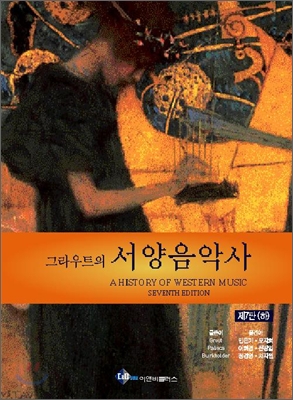
This is the translation of the 7th edition, the latest edition of 『Grout's History of Western Music』, which has been considered the bible of Western music history for over 40 years since its first edition came out in 1960, and has been translated into Korean most perfectly through a two-year translation period by six of the best translators in the field of music history, including Professor Eun-ki Min of Seoul National University College of Music, who is the main translator.
This is a definitive guide to Western music history, spanning over 1,100 pages in two volumes, covering everything from primitive music to modern rap music.
This is a definitive guide to Western music history, spanning over 1,100 pages in two volumes, covering everything from primitive music to modern rap music.
index
Part 5 19th Century
Chapter 23: Revolution and Change
Revolution, War, and Music, 1789–1815 | Chronology | Ludwig van Beethoven | Beethoven's Centrality
Chapter 24: The Romantic Generation: Songs and Piano Music
New Order, 1815–1848 | Romanticism | Chronicle | Songs | Piano Music | The Legacy of Romanticism
Chapter 25 Romanticism in Classical Form: Orchestral, Chamber, and Choral Music
Orchestral Music | Chronicles | Chamber Music | Choral Music | Romanticism and the Classical Tradition
Chapter 26: Romantic Opera and Musical Drama to the Mid-19th Century
The Role of Opera | Italy | France | Germany | United States | Chronology | Opera as High Culture
Chapter 27: Opera and Musical Theatre in the Late 19th Century
Technology, Politics, and Nationalism | Opera | Giuseppe Verdi | Italian Composers After Verdi | Richard Wagner | France | Russia | Other Countries | Chronology | Stage Music and Its Audience
Chapter 28: Late Romanticism in Germany and Austria
Divided Debate | Chronology | Johannes Brahms | Wagnerians | Reaching an Audience
Chapter 29: Various Traditions of the Late 19th Century
France | Eastern and Northern Europe | Chronology | United States | Acceptance and Recognition
Part 6: The 20th Century and Beyond
Chapter 30 Early 20th Century
The Modern Era, 1898–1918 | Regional Musical Traditions | Chronology | Modern Music in the Classical Tradition | Germany and Austria | Claude Debussy | First-Generation Modern Composers | The Avant-Garde | Late Romantic or Modern?
Chapter 31: Modernism and the Classical Tradition
Arnold Schoenberg | Chronology | Alban Berg | Anton Webern | Igor Stravinsky | Béla Bartók | Charles Ives | Composer and Audience
Chapter 32 Between the Two World Wars: Jazz and Popular Music
Between the World Wars | Chronology | American Musical Theatre and Pop Songs | The Jazz Age | Duke Ellington | Film Scores | Mass Media and Pop Music
Chapter 33 Between the Two World Wars: The Classical Tradition
Music, Politics, and the Public | Chronology | France | Germany | Soviet Union | North and South America | United States | What is Politics? [Depoliticization]
Chapter 34: Post-World War Trends
The Cold War and Divided Traditions | Pop Music | Broadway and Film Scores | Chronology | From Bebop to Free Jazz | Heirs to the Classical Tradition | Traditional Media | Serialism | Non-Serial Complexity and Virtuosity | New Sounds and Textures | The Avant-Garde | Quotations and Collages | Band and Woodwind Ensemble Music | Roll Over, Beethoven
Chapter 35: The End of the Millennium
Global Culture | Chronology | The Changing World of Music | The Specialization of Pop Music | Minimalism and Postminimalism | Accessible New Music | Interactions with Non-Western Music | The New Millennium
Further Reading
Publisher's Review
“The greatest and most complete history of Western music in history.”
A great classic of Western music history that has been loved by music students around the world for over 40 years since its first publication in 1960.
“Everything You Need to Know About Music, From Opera to Jazz”
This is the best book that perfectly organizes the history of art music, from the music of the primitive era to modern jazz and pop, and the music of the new millennium, through revisions, additions, and additions over the years to reach its seventh edition.
“There are two Gs in the West,” musicians say.
One is God and the other is Grout.
The author of this book, Donald J.
Grout is one of the most unique and outstanding writers in the history of Western music.
It is no exaggeration to say that all Western music histories published worldwide were written based on Grout's book.
All About Music
This book explains the history of music from the primitive era, through ancient, medieval, Renaissance, modern, and contemporary times, along with the historical background of each era.
The main contents of each part of this book are as follows.
1) A brief history of each era
2) Background of the emergence of music in that era
3) The lives, thoughts, and achievements of musicians active at the time
4) The types and meanings of the music they created, and the meaning of each piece of music
5) The influence it had on those who enjoyed the music and the public
6) Mainly used instruments
7) Music distribution process
This book explains the above with rich, colorful photographs, numerous quotes, various sources, and sheet music.
Additionally, we can understand the background of the music by explaining the lives, thoughts, and human aspects of the great musicians we must know, along with colorful photos.
Furthermore, by extracting numerous books, magazines, and papers from the time, we analyzed the influence of music on society.
To this end, the introduction of each chapter includes [Chronology], and various materials such as [Maps], [Reading the Original Text], [Music in Context], [Technical Innovation], and [Life and Thought], allowing readers to gain a comprehensive understanding of the history of music.
Additionally, important music was accompanied by sheet music, explaining the performance method and characteristics of the music, making it easier to understand.
Music of each era
This book is comprised of 2 volumes, 6 parts, and 35 chapters, and is a massive volume of over 10,000 pages of manuscript paper.
Part 1 of Volume 1, 'The Ancient and Medieval World', explains the background to the first appearance of music and provides an explanation of the music of ancient Greece and Mesopotamia.
It then covered the emergence of Christian music, medieval music and dance, 13th- and 14th-century music, and 14th-century French and Italian music.
Parts 2 and 3 cover the history from the Renaissance period to the 17th century, explaining the background of the Renaissance, French composers, music during the Reformation, the birth of 17th-century opera, and music from various European countries.
Part 4, 'Music of the 18th Century', explains the lives and achievements of various musicians active during that period, including the history of Baroque German composers, instrumental and vocal music, and classical music.
Part 5 of Volume 2, “Music of the 19th Century,” covers the revolutions that took place around the world, and explains the music of the Romantic generation that emerged from them, opera and musical drama, and various traditions of the late 19th century.
Part 6, 'The 20th Century and Beyond', explains the traditions of modernism and classical music, the world wars and changes in music, and the emergence of new music, and examines what form music will take in the new millennium.
Various fields and musicians
This book is a comprehensive history of Western music, including numerous musicians and their works, as well as every musical form ever created by humans.
It covers all the musicians we are familiar with, such as Mozart, Beethoven, Brahms, Tchaikovsky, and Bach, as well as those who are less familiar to the general public but played an important role in the history of music, such as Antonio Chesti, Giacomo Gastoldi, and Vincenzo Galilei, and presents their lives and works with sheet music.
Moving on to modern times, we are introduced to musicians we are familiar with, such as the Beatles, Ray Charles, and Bob Dylan.
Furthermore, historically significant figures such as Louis XVI, Napoleon, medieval popes, Henry VIII of England, Hitler, Stalin, and Goethe are also introduced.
There are approximately 1,000 Western musicians and historical figures featured in this book.
Not only musicians, but also various fields of music are comprehensively introduced.
All fields that musicians need to know are explained, including opera, instrumental music, religious music, polyphonic music, choral music, marches, songs, polyphony, geometric notes, character pieces, pentatonic scales, concerts, electronic music, and jazz.
It also explains the emergence, use, and development of all musical instruments, including brass, keyboard, and string instruments, and their influence on music, and examines the impact of radio, TV, and audio on the development of music and the general public.
A must-read music book for culture and knowledge
This book examines the history of music, examining what music is, how humanity discovered and developed it, what impact does music have on our lives, what did musicians truly intend to convey to us, how musical forms evolve, why do some disappear, and why do others persist? Who pioneered new musical approaches, and what were their philosophies? How have instruments evolved? It offers a comprehensive overview.
The author's ultimate goal is to examine the true role of music in human life and focus on how it can make humanity happier and more humane.
A great classic of Western music history that has been loved by music students around the world for over 40 years since its first publication in 1960.
“Everything You Need to Know About Music, From Opera to Jazz”
This is the best book that perfectly organizes the history of art music, from the music of the primitive era to modern jazz and pop, and the music of the new millennium, through revisions, additions, and additions over the years to reach its seventh edition.
“There are two Gs in the West,” musicians say.
One is God and the other is Grout.
The author of this book, Donald J.
Grout is one of the most unique and outstanding writers in the history of Western music.
It is no exaggeration to say that all Western music histories published worldwide were written based on Grout's book.
All About Music
This book explains the history of music from the primitive era, through ancient, medieval, Renaissance, modern, and contemporary times, along with the historical background of each era.
The main contents of each part of this book are as follows.
1) A brief history of each era
2) Background of the emergence of music in that era
3) The lives, thoughts, and achievements of musicians active at the time
4) The types and meanings of the music they created, and the meaning of each piece of music
5) The influence it had on those who enjoyed the music and the public
6) Mainly used instruments
7) Music distribution process
This book explains the above with rich, colorful photographs, numerous quotes, various sources, and sheet music.
Additionally, we can understand the background of the music by explaining the lives, thoughts, and human aspects of the great musicians we must know, along with colorful photos.
Furthermore, by extracting numerous books, magazines, and papers from the time, we analyzed the influence of music on society.
To this end, the introduction of each chapter includes [Chronology], and various materials such as [Maps], [Reading the Original Text], [Music in Context], [Technical Innovation], and [Life and Thought], allowing readers to gain a comprehensive understanding of the history of music.
Additionally, important music was accompanied by sheet music, explaining the performance method and characteristics of the music, making it easier to understand.
Music of each era
This book is comprised of 2 volumes, 6 parts, and 35 chapters, and is a massive volume of over 10,000 pages of manuscript paper.
Part 1 of Volume 1, 'The Ancient and Medieval World', explains the background to the first appearance of music and provides an explanation of the music of ancient Greece and Mesopotamia.
It then covered the emergence of Christian music, medieval music and dance, 13th- and 14th-century music, and 14th-century French and Italian music.
Parts 2 and 3 cover the history from the Renaissance period to the 17th century, explaining the background of the Renaissance, French composers, music during the Reformation, the birth of 17th-century opera, and music from various European countries.
Part 4, 'Music of the 18th Century', explains the lives and achievements of various musicians active during that period, including the history of Baroque German composers, instrumental and vocal music, and classical music.
Part 5 of Volume 2, “Music of the 19th Century,” covers the revolutions that took place around the world, and explains the music of the Romantic generation that emerged from them, opera and musical drama, and various traditions of the late 19th century.
Part 6, 'The 20th Century and Beyond', explains the traditions of modernism and classical music, the world wars and changes in music, and the emergence of new music, and examines what form music will take in the new millennium.
Various fields and musicians
This book is a comprehensive history of Western music, including numerous musicians and their works, as well as every musical form ever created by humans.
It covers all the musicians we are familiar with, such as Mozart, Beethoven, Brahms, Tchaikovsky, and Bach, as well as those who are less familiar to the general public but played an important role in the history of music, such as Antonio Chesti, Giacomo Gastoldi, and Vincenzo Galilei, and presents their lives and works with sheet music.
Moving on to modern times, we are introduced to musicians we are familiar with, such as the Beatles, Ray Charles, and Bob Dylan.
Furthermore, historically significant figures such as Louis XVI, Napoleon, medieval popes, Henry VIII of England, Hitler, Stalin, and Goethe are also introduced.
There are approximately 1,000 Western musicians and historical figures featured in this book.
Not only musicians, but also various fields of music are comprehensively introduced.
All fields that musicians need to know are explained, including opera, instrumental music, religious music, polyphonic music, choral music, marches, songs, polyphony, geometric notes, character pieces, pentatonic scales, concerts, electronic music, and jazz.
It also explains the emergence, use, and development of all musical instruments, including brass, keyboard, and string instruments, and their influence on music, and examines the impact of radio, TV, and audio on the development of music and the general public.
A must-read music book for culture and knowledge
This book examines the history of music, examining what music is, how humanity discovered and developed it, what impact does music have on our lives, what did musicians truly intend to convey to us, how musical forms evolve, why do some disappear, and why do others persist? Who pioneered new musical approaches, and what were their philosophies? How have instruments evolved? It offers a comprehensive overview.
The author's ultimate goal is to examine the true role of music in human life and focus on how it can make humanity happier and more humane.
GOODS SPECIFICS
- Date of issue: December 11, 2007
- Page count, weight, size: 464 pages | 1,150g | 152*223*30mm
- ISBN13: 9788995990162
- ISBN10: 8995990163
You may also like
카테고리
korean


korean

![GQ KOREA Mark (Monthly): December [2025]](http://librairie.coreenne.fr/cdn/shop/files/8ef265dbbfbf186523ed75ba7319009d.jpg?v=1765340328&width=3840)


