

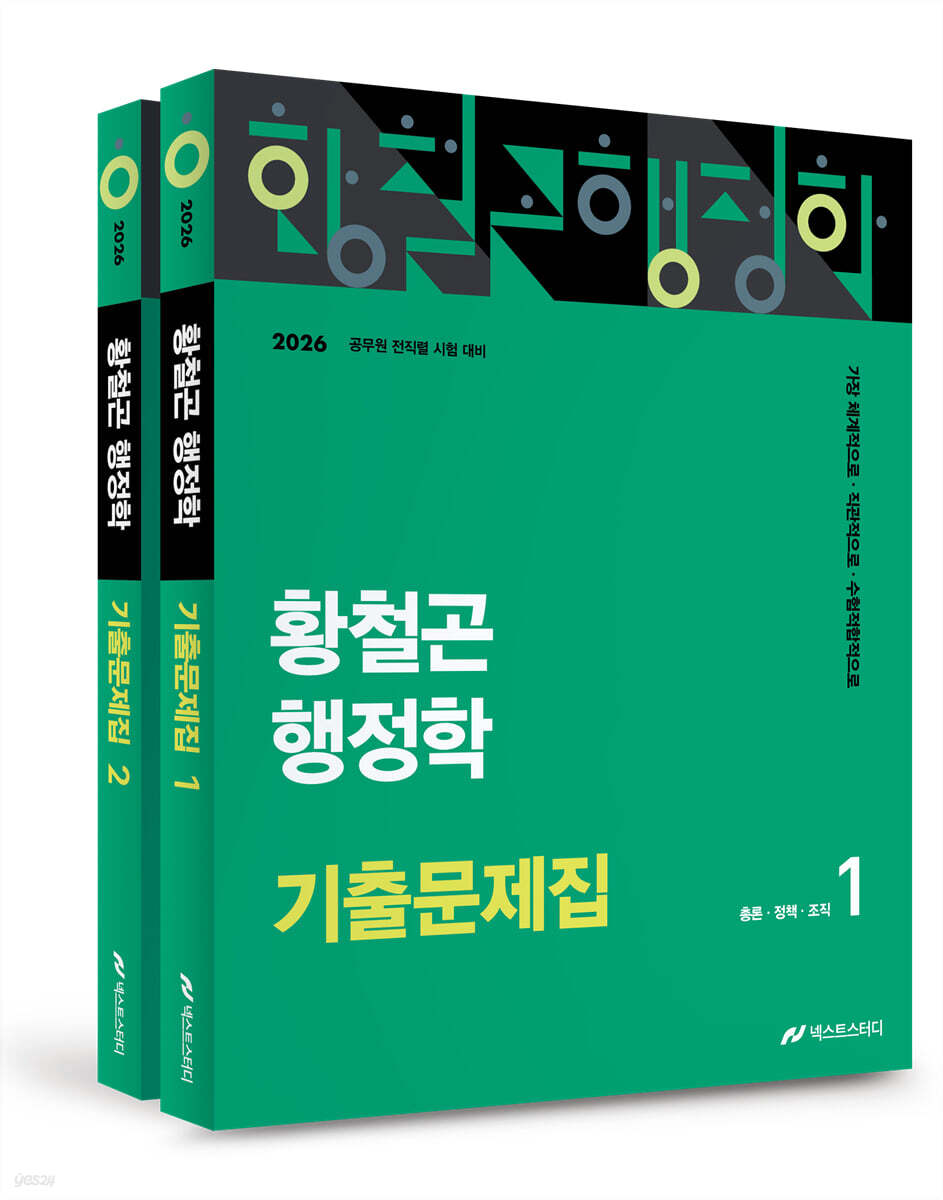
2026 Hwang Cheol-gon Public Administration Exam Questions
 |
Description
Book Introduction
The "2026 Hwang Cheol-gon Public Administration Exam Questions Collection" contains 1,800 must-read questions selected from past exam questions on public administration that have appeared in various exams over the past 18 years.
This textbook goes beyond simply listing 1,800 questions. It divides them into "core questions" and "PLUS questions," allowing for effective study of past exam questions by adjusting the intensity of the questions based on their importance.
1.
1800 carefully selected past exam questions
2.
Present the frequency of questions
3.
Commentary that cuts to the heart of the matter
4.
Linked learning with the textbook
This textbook goes beyond simply listing 1,800 questions. It divides them into "core questions" and "PLUS questions," allowing for effective study of past exam questions by adjusting the intensity of the questions based on their importance.
1.
1800 carefully selected past exam questions
2.
Present the frequency of questions
3.
Commentary that cuts to the heart of the matter
4.
Linked learning with the textbook
- You can preview some of the book's contents.
Preview
index
[Volume 1: General Theory, Policy, and Organization]
PART 1 General Introduction
CHAPTER 1 Administrative Activities
1 Regulation
2 Public services
CHAPTER 2 Administrative Values
1. Intrinsic value
2 Instrumental value
CHAPTER 3 Administrative Theory
0 Market failure and government failure
1. First Generation Public Administration (1887-1930)
2 2nd generation public administration (1930-1970)
3 3rd Generation Public Administration (1970-1990)
4 4th Generation Public Administration (1990~)
5 Other Administrative Theories
CHAPTER 4 Administration and Administrative Reform
1. Concept of administration
2 Administration and Management
3 Administrative Reform
PART 2 POLICY
CHAPTER 1 Policy Types and Participants
1 Policy and Policy Studies
2 Policy Types
3 Policy Participants
CHAPTER 2 Policy Agenda Setting
CHAPTER 3 POLICY DECISIONS
1 Policy Decision Model
2 Rational policy decisions
CHAPTER 4 POLICY EXECUTIVE
1. Policymaker-policy executor relationship
2 Policy Implementation Theory
3 Policy compliance
CHAPTER 5 POLICY EVALUATION
1 Types of Policy Evaluation
2 Validity and Threats of Policy Evaluation
Experiment 3
4 Basic Act on Government Performance Evaluation
CHAPTER 6 POLICY CHANGES
1 Types of policy changes
2 Policy Change Model
PART 3 ORGANIZATION
CHAPTER 1 ORGANIZATIONAL STRUCTURE
1 Mechanical structure
2 Organic structure
3 Mechanical Structure VS Organic Structure
CHAPTER 2 Organization and People Management
1 Organization Management
2 people management
CHAPTER 3 Our country's government organization
1 Government Organizational Structure
2nd Committee
3 Responsible Management Organization
4. Public enterprises in the form of government ministries: government enterprises
5 public institutions
6 Informatization and E-Government
[Volume 2: Personnel, Finance, and Local Government]
PART 4 Greetings
CHAPTER 1 Civil Service Classification
1. Classification of civil servants
2. Class system and rank classification system
CHAPTER 2 Civil Service Appointment
1. Appointment theory
2 Central Personnel Agency
3 Internal appointments
4 Recruitment Exam
CHAPTER 3 Civil Service Management
1. Training
2 Career Development
3. Job Performance Evaluation
4 New Human Resources Management
5 Fraud Management
CHAPTER 4 Controlling Civil Servants
1 Administrative Ethics and Control
2 Legal Control
PART 5 FINANCE
CHAPTER 1 BUDGET SYSTEM
1. The meaning and function of the budget
2. Composition of national finances
3 Budget Process
4 Budget Management Methods
CHAPTER 2 BUDGET THEORY
1. Principles of Budgeting
2 Budget Decision Theory
3 Budget Reform Theory
PART 6 Fat
CHAPTER 1: OVERVIEW OF LOCAL AUTHORITY
1. Purpose and classification of local autonomy
2 Intergovernmental Relations
3 Local Political Theory
CHAPTER 2 Local Government Areas
1 Local government hierarchy
CHAPTER 3 Autonomy
1. Local government: local government heads and local councils
2. Local legislative power
3. Autonomous administrative power
4. Local government
5 Relations between local governments
6 Central-Local Relations
7. Educational Autonomy and Autonomous Police
CHAPTER 4: RESIDENT PARTICIPATION
1. The concept of resident participation
2. Resident Participation System
PART 1 General Introduction
CHAPTER 1 Administrative Activities
1 Regulation
2 Public services
CHAPTER 2 Administrative Values
1. Intrinsic value
2 Instrumental value
CHAPTER 3 Administrative Theory
0 Market failure and government failure
1. First Generation Public Administration (1887-1930)
2 2nd generation public administration (1930-1970)
3 3rd Generation Public Administration (1970-1990)
4 4th Generation Public Administration (1990~)
5 Other Administrative Theories
CHAPTER 4 Administration and Administrative Reform
1. Concept of administration
2 Administration and Management
3 Administrative Reform
PART 2 POLICY
CHAPTER 1 Policy Types and Participants
1 Policy and Policy Studies
2 Policy Types
3 Policy Participants
CHAPTER 2 Policy Agenda Setting
CHAPTER 3 POLICY DECISIONS
1 Policy Decision Model
2 Rational policy decisions
CHAPTER 4 POLICY EXECUTIVE
1. Policymaker-policy executor relationship
2 Policy Implementation Theory
3 Policy compliance
CHAPTER 5 POLICY EVALUATION
1 Types of Policy Evaluation
2 Validity and Threats of Policy Evaluation
Experiment 3
4 Basic Act on Government Performance Evaluation
CHAPTER 6 POLICY CHANGES
1 Types of policy changes
2 Policy Change Model
PART 3 ORGANIZATION
CHAPTER 1 ORGANIZATIONAL STRUCTURE
1 Mechanical structure
2 Organic structure
3 Mechanical Structure VS Organic Structure
CHAPTER 2 Organization and People Management
1 Organization Management
2 people management
CHAPTER 3 Our country's government organization
1 Government Organizational Structure
2nd Committee
3 Responsible Management Organization
4. Public enterprises in the form of government ministries: government enterprises
5 public institutions
6 Informatization and E-Government
[Volume 2: Personnel, Finance, and Local Government]
PART 4 Greetings
CHAPTER 1 Civil Service Classification
1. Classification of civil servants
2. Class system and rank classification system
CHAPTER 2 Civil Service Appointment
1. Appointment theory
2 Central Personnel Agency
3 Internal appointments
4 Recruitment Exam
CHAPTER 3 Civil Service Management
1. Training
2 Career Development
3. Job Performance Evaluation
4 New Human Resources Management
5 Fraud Management
CHAPTER 4 Controlling Civil Servants
1 Administrative Ethics and Control
2 Legal Control
PART 5 FINANCE
CHAPTER 1 BUDGET SYSTEM
1. The meaning and function of the budget
2. Composition of national finances
3 Budget Process
4 Budget Management Methods
CHAPTER 2 BUDGET THEORY
1. Principles of Budgeting
2 Budget Decision Theory
3 Budget Reform Theory
PART 6 Fat
CHAPTER 1: OVERVIEW OF LOCAL AUTHORITY
1. Purpose and classification of local autonomy
2 Intergovernmental Relations
3 Local Political Theory
CHAPTER 2 Local Government Areas
1 Local government hierarchy
CHAPTER 3 Autonomy
1. Local government: local government heads and local councils
2. Local legislative power
3. Autonomous administrative power
4. Local government
5 Relations between local governments
6 Central-Local Relations
7. Educational Autonomy and Autonomous Police
CHAPTER 4: RESIDENT PARTICIPATION
1. The concept of resident participation
2. Resident Participation System
Publisher's Review
The importance of past exam questions in civil service examinations cannot be overemphasized.
The process of reviewing, organizing, and practicing the theories and concepts of public administration that we have diligently studied through past exam questions is an absolutely necessary part of the exam preparation process.
Past exam questions are official evidence that allows us to understand the test-giving agency's intentions and testing methods.
By analyzing and solving past exam questions, we can naturally acquire an understanding of the examiners' intentions in creating the questions, how they verify concepts, and how they assess application skills.
To study efficiently and effectively for the exam, we must treasure past exam questions and analyze and solve them repeatedly.
The "2026 Hwang Cheol-gon Public Administration Exam Questions Collection" contains 1,800 must-read questions selected from past exam questions on the Public Administration exam that have appeared in various exams over the past 18 years.
This textbook goes beyond simply listing 1,800 questions. It divides them into "core questions" and "PLUS questions," allowing for effective study of past exam questions by adjusting the intensity of the questions based on their importance.
Among the 1800 questions, the ones you absolutely must check are the 1100 questions for grades 9 and 7 created by the Ministry of Personnel Management. These questions are grouped into "core questions" and arranged by progress.
The Ministry of Personnel Management's past exam questions are designed to be a valuable resource for students studying and organizing concepts in public administration, as they clearly and elegantly address key concepts the examiners want to confirm.
You must fully digest the key questions before entering the exam room.
In addition, we have grouped 700 previous exam questions from other institutions that can provide additional assistance, such as the National Assembly, police, and administrative scrivener, into "PLUS questions" and arranged them by progress level.
These questions are valuable resources, containing anticipated topics likely to appear on the 9th and 7th grade exams. By reviewing and reviewing PLUS questions repeatedly, you'll be able to achieve a passing score on any exam.
We also put a lot of effort into providing thorough and detailed commentary.
Since it includes detailed explanations for almost all of the options, as well as the correct answers, it will be helpful not only for students who take the past exam analysis lectures, but also for those who review the past exam questions on their own multiple times.
The 『2026 Hwang Cheol-gon Public Administration Exam Questions』 is structured as follows.
1.
1800 carefully selected past exam questions
This book contains 1,800 questions selected from various civil service exams administered over the past 18 years.
The 1,800 questions are divided into core and plus questions.
The core questions, which amount to 1,100, are comprised of questions from previous 9th and 7th grade exams administered by the Ministry of Personnel Management.
The remaining 700 plus questions are selected from past exam questions from the National Assembly, Police, Seoul Metropolitan Government, Administrative Scrivener, and 7th grade elective subjects.
2.
Present the frequency of questions
To help you determine the priority and importance of each major topic, we analyzed past exam questions from the past 18 years and categorized them into SABCs according to their importance.
This will help test takers who have to study a large amount of material within a given time frame to assess the importance of their studies.
The selection of past exam questions was also based on this.
3.
Commentary that cuts to the heart of the matter
The point of studying past exam questions is not only to understand and become familiar with the types and topics of questions, but also to accurately study past exam questions, which serve as samples of questions that will appear in the future.
The commentary in this book is not a comprehensive explanation of the topic on the exam, but rather includes sharp and accurate commentary targeting the relevant question and each choice for each option, allowing you to accurately identify which points are key to learning.
4.
Linked learning with the textbook
This textbook is perfectly structured as a collection of past exam questions. However, if you feel you have not studied a certain section well, we have included pages from the 2026 Hwang Cheol-gon Public Administration Basic Book for each topic, so that you can jump right into the basic textbook. This has been prepared to assist your study.
This is because past exam questions are ultimately a process of reconfirming the contents of the textbook.
The process of reviewing, organizing, and practicing the theories and concepts of public administration that we have diligently studied through past exam questions is an absolutely necessary part of the exam preparation process.
Past exam questions are official evidence that allows us to understand the test-giving agency's intentions and testing methods.
By analyzing and solving past exam questions, we can naturally acquire an understanding of the examiners' intentions in creating the questions, how they verify concepts, and how they assess application skills.
To study efficiently and effectively for the exam, we must treasure past exam questions and analyze and solve them repeatedly.
The "2026 Hwang Cheol-gon Public Administration Exam Questions Collection" contains 1,800 must-read questions selected from past exam questions on the Public Administration exam that have appeared in various exams over the past 18 years.
This textbook goes beyond simply listing 1,800 questions. It divides them into "core questions" and "PLUS questions," allowing for effective study of past exam questions by adjusting the intensity of the questions based on their importance.
Among the 1800 questions, the ones you absolutely must check are the 1100 questions for grades 9 and 7 created by the Ministry of Personnel Management. These questions are grouped into "core questions" and arranged by progress.
The Ministry of Personnel Management's past exam questions are designed to be a valuable resource for students studying and organizing concepts in public administration, as they clearly and elegantly address key concepts the examiners want to confirm.
You must fully digest the key questions before entering the exam room.
In addition, we have grouped 700 previous exam questions from other institutions that can provide additional assistance, such as the National Assembly, police, and administrative scrivener, into "PLUS questions" and arranged them by progress level.
These questions are valuable resources, containing anticipated topics likely to appear on the 9th and 7th grade exams. By reviewing and reviewing PLUS questions repeatedly, you'll be able to achieve a passing score on any exam.
We also put a lot of effort into providing thorough and detailed commentary.
Since it includes detailed explanations for almost all of the options, as well as the correct answers, it will be helpful not only for students who take the past exam analysis lectures, but also for those who review the past exam questions on their own multiple times.
The 『2026 Hwang Cheol-gon Public Administration Exam Questions』 is structured as follows.
1.
1800 carefully selected past exam questions
This book contains 1,800 questions selected from various civil service exams administered over the past 18 years.
The 1,800 questions are divided into core and plus questions.
The core questions, which amount to 1,100, are comprised of questions from previous 9th and 7th grade exams administered by the Ministry of Personnel Management.
The remaining 700 plus questions are selected from past exam questions from the National Assembly, Police, Seoul Metropolitan Government, Administrative Scrivener, and 7th grade elective subjects.
2.
Present the frequency of questions
To help you determine the priority and importance of each major topic, we analyzed past exam questions from the past 18 years and categorized them into SABCs according to their importance.
This will help test takers who have to study a large amount of material within a given time frame to assess the importance of their studies.
The selection of past exam questions was also based on this.
3.
Commentary that cuts to the heart of the matter
The point of studying past exam questions is not only to understand and become familiar with the types and topics of questions, but also to accurately study past exam questions, which serve as samples of questions that will appear in the future.
The commentary in this book is not a comprehensive explanation of the topic on the exam, but rather includes sharp and accurate commentary targeting the relevant question and each choice for each option, allowing you to accurately identify which points are key to learning.
4.
Linked learning with the textbook
This textbook is perfectly structured as a collection of past exam questions. However, if you feel you have not studied a certain section well, we have included pages from the 2026 Hwang Cheol-gon Public Administration Basic Book for each topic, so that you can jump right into the basic textbook. This has been prepared to assist your study.
This is because past exam questions are ultimately a process of reconfirming the contents of the textbook.
GOODS SPECIFICS
- Date of issue: August 25, 2025
- Page count, weight, size: 872 pages | 205*260*40mm
- ISBN13: 9791173602016
- ISBN10: 1173602011
You may also like
카테고리
korean


korean

![GQ KOREA Mark (Monthly): December [2025]](http://librairie.coreenne.fr/cdn/shop/files/8ef265dbbfbf186523ed75ba7319009d.jpg?v=1765340328&width=3840)


