

I put dinner in the drawer.
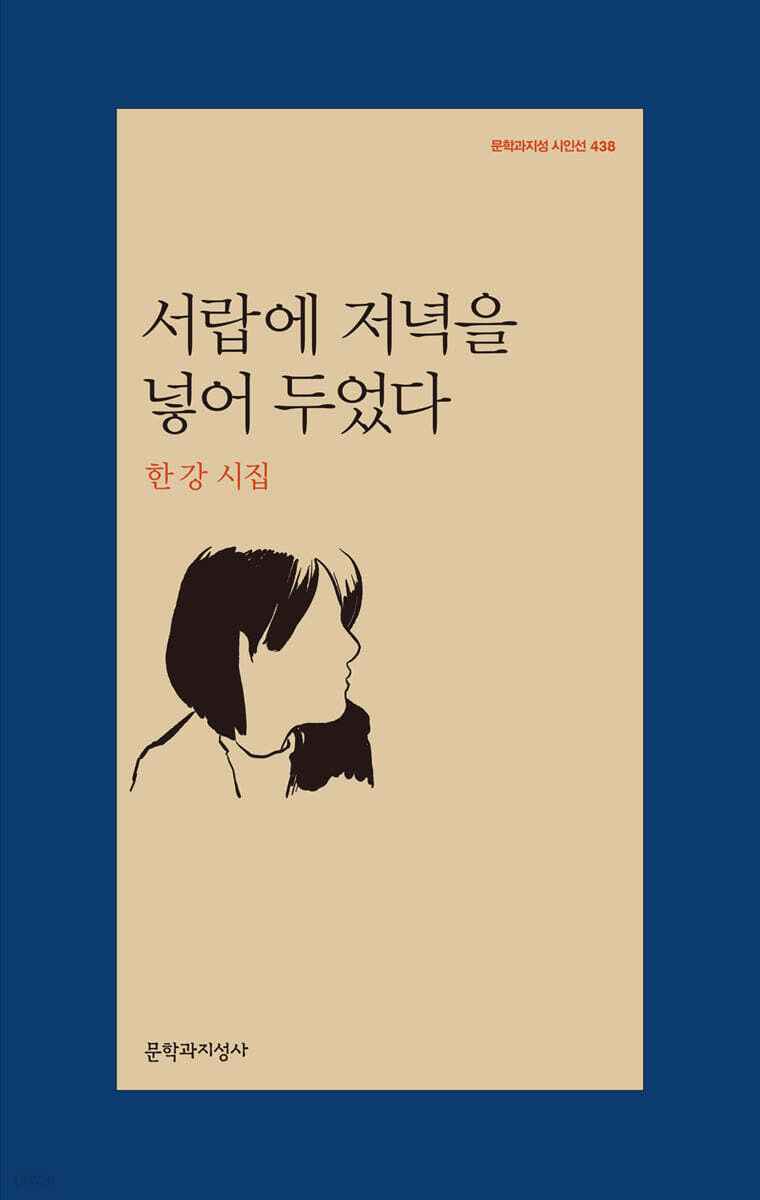 |
Description
Book Introduction
- A word from MD
-
Novelist Han Kang's first poetry collectionA writer who has carved the loneliness and sorrow of human life, and the truths and essential emotions encountered at the border between life and death, into his uniquely solid and poetic writing style.
Han Kang, who is in her 20th year since her literary debut, has compiled her first poetry collection, selecting 60 poems from among those she has written and published in between publishing eight novels.
The fiery pain that permeates life, the origin of the heartbreaking language of the Han River.
2024 Nobel Prize in Literature winner Han Kang
Deep-sea night, bloody words drawn from silence
Transparent trajectories of light reaching wounded souls
The poetic origins of Han River literature!
“People who were curious about the reality of the numerous paintings that appear in Han Kang’s novels
Now, all you have to do is open the poetry collection, “I Put Dinner in the Drawer.”
This is Han Kang's first poetry collection, published 20 years after her debut, which consists of 60 poems selected from among those written and published intermittently by her, who began her literary career in 1993 by publishing the poem "Winter of Seoul" and four other poems in the winter issue of the quarterly Literature and Society and the following year by winning the Seoul Shinmun New Year's literary contest with her short story "Red Anchor."
The poet, who has carved the loneliness and sorrow of human life, and certain truths and essential emotions encountered at the border between life and death, with his unique, solid and poetic writing style, has won the Korean Novel Literature Award (1999), Today's Young Artist Award (2000), Yi Sang Literature Award (2005), Dongni Literature Award (2010), Manhae Literature Award (2014), Hwang Sun-won Literature Award (2015), International Booker Prize (2016), Malaparte Literature Award (2017), Kim Yu-jeong Literature Award (2018), San Clemente Literature Award (2019), Daesan Literature Award (2022), Médicis Prize for Foreign Literature (2023), Émile Guimet Prize for Asian Literature (2024), and the Nobel Prize in Literature (2024).
Just by looking at the titles of the poems in the series, “Sketch of the Evening,” “Song Heard at Dawn,” “Bleeding Eyes,” and “Winter Beyond the Mirror,” the sentiment is sufficiently felt in “I Put the Evening in the Drawer,” and it is full of voices that transparently confront existence and language that become clearer in darkness and silence.
Here is a moment of joy and wonder, where, while embracing the fate of “coexisting with words,” we discover “the awakened language-soul that sparkles in the gaze of pain and despair” (literary critic Jo Yeon-jeong).
Deep-sea night, bloody words drawn from silence
Transparent trajectories of light reaching wounded souls
The poetic origins of Han River literature!
“People who were curious about the reality of the numerous paintings that appear in Han Kang’s novels
Now, all you have to do is open the poetry collection, “I Put Dinner in the Drawer.”
This is Han Kang's first poetry collection, published 20 years after her debut, which consists of 60 poems selected from among those written and published intermittently by her, who began her literary career in 1993 by publishing the poem "Winter of Seoul" and four other poems in the winter issue of the quarterly Literature and Society and the following year by winning the Seoul Shinmun New Year's literary contest with her short story "Red Anchor."
The poet, who has carved the loneliness and sorrow of human life, and certain truths and essential emotions encountered at the border between life and death, with his unique, solid and poetic writing style, has won the Korean Novel Literature Award (1999), Today's Young Artist Award (2000), Yi Sang Literature Award (2005), Dongni Literature Award (2010), Manhae Literature Award (2014), Hwang Sun-won Literature Award (2015), International Booker Prize (2016), Malaparte Literature Award (2017), Kim Yu-jeong Literature Award (2018), San Clemente Literature Award (2019), Daesan Literature Award (2022), Médicis Prize for Foreign Literature (2023), Émile Guimet Prize for Asian Literature (2024), and the Nobel Prize in Literature (2024).
Just by looking at the titles of the poems in the series, “Sketch of the Evening,” “Song Heard at Dawn,” “Bleeding Eyes,” and “Winter Beyond the Mirror,” the sentiment is sufficiently felt in “I Put the Evening in the Drawer,” and it is full of voices that transparently confront existence and language that become clearer in darkness and silence.
Here is a moment of joy and wonder, where, while embracing the fate of “coexisting with words,” we discover “the awakened language-soul that sparkles in the gaze of pain and despair” (literary critic Jo Yeon-jeong).
- You can preview some of the book's contents.
Preview
index
Poet's words
Part 1: A song heard at dawn
Late one evening I | A song I heard at dawn | The thing called the heart | Mark Rothko and I | Mark Rothko and I 2 | Wheelchair dance | A song I heard at dawn 2 | A song I heard at dawn 3 | An evening conversation | A woman at the circus | A blue stone | When tears come, my body becomes an empty jar | May 31, 2005, the spring sea of Jeju is half-sunlit.
The wind, like fish scales, powerfully pours saltiness on my body, and from now on, your life is a bonus.
Part 2: Anatomy Theater
Quiet Days | Before Dark | Anatomy Theater | Anatomy Theater 2 | Bleeding Eyes | Bleeding Eyes 2 | Bleeding Eyes 3 | Bleeding Eyes 4 | Evening Sketches | Quiet Days 2 | Evening Sketches 2 | Evening Sketches 3
Part 3 Evening Leaves
Summer days are passing | Evening leaves | To Hyo.
2002.
Winter | It's okay | Self-portrait.
2000.
Winter | Song of Recovery | Then | Again, Song of Recovery.
2008 | The Thing Called Heart 2 | Evening Sketches 4 | A Few Stories 6 | A Few Stories 12 | Wings
Part 4: Winter Beyond the Mirror
Winter on the Other Side of the Mirror | Winter on the Other Side of the Mirror 2 | Winter on the Other Side of the Mirror 3 | Winter on the Other Side of the Mirror 4 | Winter on the Other Side of the Mirror 5 | Winter on the Other Side of the Mirror 6 | Winter on the Other Side of the Mirror 7 | Winter on the Other Side of the Mirror 8 | Winter on the Other Side of the Mirror 9 | Winter on the Other Side of the Mirror 10 | Winter on the Other Side of the Mirror 11 | Winter on the Other Side of the Mirror 12
Part 5: The House of Dark Lights
A House of Dark Light | First Dawn | Reminiscence | Untitled | One Day, My Life | Oido | Preface | June | Winter in Seoul 12 | Evening Sketch 5
commentary
When the total solar eclipse ends · Jo Yeon-jeong
Part 1: A song heard at dawn
Late one evening I | A song I heard at dawn | The thing called the heart | Mark Rothko and I | Mark Rothko and I 2 | Wheelchair dance | A song I heard at dawn 2 | A song I heard at dawn 3 | An evening conversation | A woman at the circus | A blue stone | When tears come, my body becomes an empty jar | May 31, 2005, the spring sea of Jeju is half-sunlit.
The wind, like fish scales, powerfully pours saltiness on my body, and from now on, your life is a bonus.
Part 2: Anatomy Theater
Quiet Days | Before Dark | Anatomy Theater | Anatomy Theater 2 | Bleeding Eyes | Bleeding Eyes 2 | Bleeding Eyes 3 | Bleeding Eyes 4 | Evening Sketches | Quiet Days 2 | Evening Sketches 2 | Evening Sketches 3
Part 3 Evening Leaves
Summer days are passing | Evening leaves | To Hyo.
2002.
Winter | It's okay | Self-portrait.
2000.
Winter | Song of Recovery | Then | Again, Song of Recovery.
2008 | The Thing Called Heart 2 | Evening Sketches 4 | A Few Stories 6 | A Few Stories 12 | Wings
Part 4: Winter Beyond the Mirror
Winter on the Other Side of the Mirror | Winter on the Other Side of the Mirror 2 | Winter on the Other Side of the Mirror 3 | Winter on the Other Side of the Mirror 4 | Winter on the Other Side of the Mirror 5 | Winter on the Other Side of the Mirror 6 | Winter on the Other Side of the Mirror 7 | Winter on the Other Side of the Mirror 8 | Winter on the Other Side of the Mirror 9 | Winter on the Other Side of the Mirror 10 | Winter on the Other Side of the Mirror 11 | Winter on the Other Side of the Mirror 12
Part 5: The House of Dark Lights
A House of Dark Light | First Dawn | Reminiscence | Untitled | One Day, My Life | Oido | Preface | June | Winter in Seoul 12 | Evening Sketch 5
commentary
When the total solar eclipse ends · Jo Yeon-jeong
Publisher's Review
All the vivid things I have
Things that will crumble
crumbling tongue and lips,
Two warm fists
With two clear, crumbling eyes
One particularly large snowflake
I watch it sink into the black ice of the pool
What is it?
It sparkles
―Excerpt from “Evening Sketch 4”
The irony of life being born from death and light from darkness
The poet, who is mostly awake in the time between late afternoon and midnight (evening) and again in the time and space between midnight and dawn (dawn), says, “If permitted, I would like to talk about pain with my ‘broken lips//tongue in the dark’” (“Bleeding Eyes 3”).
Opening this dusky evening
If you go behind the world
Everything
Turn your back
The backs of people who quietly turned their backs
It's rather bearable for me
―Part of “Bleeding Eyes 4”
Before specific and special misfortunes arise in human life, the poet wants to reveal the origin of suffering and the truth in “a dot/that does not yet have a heartbeat/that does not know language/that does not know light/that does not know tears/in a crimson womb” and “the gap between death and life” (“Mark Rothko and I”).
To this end, he does not hesitate to put his own bleeding body on the line by “rolling his shoulders in, bending his waist, bending his knees, and pulling his ankles together with all his might” (“The Thing Called the Heart”).
If someone had tapped me on the body, I would have been surprised.
If anyone had listened, they would have been surprised.
Because the sound of black water would have resonated
Because the sound of deep water would have resonated
roundly
Rounder
Because the controversy would have spread
―“When tears come, my body becomes an empty jar”
Things that were clear and collected inside the body
The days of drying in the scorching sun are passing
sticky stuff
Even the sad ones
A day when we become dry and light together
―Excerpt from "Anatomy Theater 2"
The body, which is drying up and becoming empty, is an inseparable comrade of the soul, so in the end the soul also breaks, and an irreversible sense of loss and cracks inevitably comes.
any
Late at night I
From rice in white air
I was watching the steam rise
That's when I realized
Something has gone forever
Now and forever
It's passing by
I have to eat
I ate rice
―Full text from "One Late Evening I"
However, the poet is not overwhelmed by this sense of loss and sadness, but rather confronts the pain head on.
His voice, filled with burning passion as if he were renewing his resolve to wake himself up, is more resolute than ever.
I guess it is possible because he has lived through the days of intense breath, hot blood, passionate love, and fresh youth, which can be seen in the poems included in Part 5 of the poetry collection ('The House of Dark Light'), most of which were written in the poet's twenties.
Roll your feet while looking straight ahead
If your ankle is shaking or breaking,
The rhythm is scattered or broken
The face should face forward
Both eyes will be glaring
Look straight at something you can't face
So the sun or death,
fear or sadness
If only I could beat it
Put wind in your heart
slippery, slanted
―Excerpt from "Winter Beyond the Mirror 9 - Flamenco at the Tango Theater"
Wherever the light falls,
Pieces, pieces trying to shine
Ah, the first dawn,
I washed it all night and it's frozen now
The sadness that is always there,
Dedicated to my sorrow
Vivid blood vessels, beating sound
―Excerpt from "First Dawn"
The fiery pain that permeates life, the origin of the heartbreaking language of the Han River.
Now, when “the quiet evening flows through the ice paper” (“Evening Sketch 3”), in the dream of crossing in the darkness, in the noon on the other side of the mirror or in the dark blue midnight outside the mirror, what the poet wants to reach with his tongue “stepping back in a circle” (“The Thing Called the Heart”) are pure language, the essence of life, and scenes of urgency and recovery beyond pain and despair.
When you sob inside me
What should I do?
As if looking into the face of a crying child
Towards the salty, foamy tears
are you okay
Why is that, not
are you okay.
It's okay now.
―The "It's okay" part
now
What is the point of living?
When I was lying down and asking
On the face
The sun came down
Until the light passes
I had my eyes closed
Stay still
―Full text of "Song of Recovery"
In the poetry collection, “I Put Dinner in the Drawer,” there are words that bleed to approach the picture of silence.
And there are poets who gaze passionately into the heart of bleeding language and seek to confirm human beings as beings of the soul.
He seeks to reach the first language that brought forth shining truth from a world of silence and darkness.
This collection of poems will serve as a cornerstone for approaching a certain intimate origin and sanctuary beyond the intense images and sensuous sentences that have been the first to be mentioned when discussing Han River literature.
Poet's words
Some evenings were transparent.
(As some dawn does)
In the flames
There was a round silence.
November 2013
Han River
Back cover text
Subway Line 4,
Between Seonbawi Station and Namtaeryeong Station
There are sections where the power supply is cut off.
I counted the numbers to measure the time.
Twelve or thirteen seconds.
Meanwhile, the lights on the ceiling of the guest room went out.
There are a few low-intensity lights here and there.
It turns out to be emergency power.
It's too dark to continue reading the book.
I raise my head.
The faces of the people crouching across from me suddenly look pale.
The young man leaning against a door with a sign saying "Do Not Lean" looks precarious.
It's dark.
Were we always this dark?
If you listen closely to the rattling sound
The speed of the once fierce train is gradually decreasing.
It's just gliding along the rails with acceleration alone.
The moment I felt it had definitely slowed down,
The lights come on all at once, and there's a violent rattling again.
Suddenly no one
It doesn't look like Paris.
what
Did I come across?
Things that will crumble
crumbling tongue and lips,
Two warm fists
With two clear, crumbling eyes
One particularly large snowflake
I watch it sink into the black ice of the pool
What is it?
It sparkles
―Excerpt from “Evening Sketch 4”
The irony of life being born from death and light from darkness
The poet, who is mostly awake in the time between late afternoon and midnight (evening) and again in the time and space between midnight and dawn (dawn), says, “If permitted, I would like to talk about pain with my ‘broken lips//tongue in the dark’” (“Bleeding Eyes 3”).
Opening this dusky evening
If you go behind the world
Everything
Turn your back
The backs of people who quietly turned their backs
It's rather bearable for me
―Part of “Bleeding Eyes 4”
Before specific and special misfortunes arise in human life, the poet wants to reveal the origin of suffering and the truth in “a dot/that does not yet have a heartbeat/that does not know language/that does not know light/that does not know tears/in a crimson womb” and “the gap between death and life” (“Mark Rothko and I”).
To this end, he does not hesitate to put his own bleeding body on the line by “rolling his shoulders in, bending his waist, bending his knees, and pulling his ankles together with all his might” (“The Thing Called the Heart”).
If someone had tapped me on the body, I would have been surprised.
If anyone had listened, they would have been surprised.
Because the sound of black water would have resonated
Because the sound of deep water would have resonated
roundly
Rounder
Because the controversy would have spread
―“When tears come, my body becomes an empty jar”
Things that were clear and collected inside the body
The days of drying in the scorching sun are passing
sticky stuff
Even the sad ones
A day when we become dry and light together
―Excerpt from "Anatomy Theater 2"
The body, which is drying up and becoming empty, is an inseparable comrade of the soul, so in the end the soul also breaks, and an irreversible sense of loss and cracks inevitably comes.
any
Late at night I
From rice in white air
I was watching the steam rise
That's when I realized
Something has gone forever
Now and forever
It's passing by
I have to eat
I ate rice
―Full text from "One Late Evening I"
However, the poet is not overwhelmed by this sense of loss and sadness, but rather confronts the pain head on.
His voice, filled with burning passion as if he were renewing his resolve to wake himself up, is more resolute than ever.
I guess it is possible because he has lived through the days of intense breath, hot blood, passionate love, and fresh youth, which can be seen in the poems included in Part 5 of the poetry collection ('The House of Dark Light'), most of which were written in the poet's twenties.
Roll your feet while looking straight ahead
If your ankle is shaking or breaking,
The rhythm is scattered or broken
The face should face forward
Both eyes will be glaring
Look straight at something you can't face
So the sun or death,
fear or sadness
If only I could beat it
Put wind in your heart
slippery, slanted
―Excerpt from "Winter Beyond the Mirror 9 - Flamenco at the Tango Theater"
Wherever the light falls,
Pieces, pieces trying to shine
Ah, the first dawn,
I washed it all night and it's frozen now
The sadness that is always there,
Dedicated to my sorrow
Vivid blood vessels, beating sound
―Excerpt from "First Dawn"
The fiery pain that permeates life, the origin of the heartbreaking language of the Han River.
Now, when “the quiet evening flows through the ice paper” (“Evening Sketch 3”), in the dream of crossing in the darkness, in the noon on the other side of the mirror or in the dark blue midnight outside the mirror, what the poet wants to reach with his tongue “stepping back in a circle” (“The Thing Called the Heart”) are pure language, the essence of life, and scenes of urgency and recovery beyond pain and despair.
When you sob inside me
What should I do?
As if looking into the face of a crying child
Towards the salty, foamy tears
are you okay
Why is that, not
are you okay.
It's okay now.
―The "It's okay" part
now
What is the point of living?
When I was lying down and asking
On the face
The sun came down
Until the light passes
I had my eyes closed
Stay still
―Full text of "Song of Recovery"
In the poetry collection, “I Put Dinner in the Drawer,” there are words that bleed to approach the picture of silence.
And there are poets who gaze passionately into the heart of bleeding language and seek to confirm human beings as beings of the soul.
He seeks to reach the first language that brought forth shining truth from a world of silence and darkness.
This collection of poems will serve as a cornerstone for approaching a certain intimate origin and sanctuary beyond the intense images and sensuous sentences that have been the first to be mentioned when discussing Han River literature.
Poet's words
Some evenings were transparent.
(As some dawn does)
In the flames
There was a round silence.
November 2013
Han River
Back cover text
Subway Line 4,
Between Seonbawi Station and Namtaeryeong Station
There are sections where the power supply is cut off.
I counted the numbers to measure the time.
Twelve or thirteen seconds.
Meanwhile, the lights on the ceiling of the guest room went out.
There are a few low-intensity lights here and there.
It turns out to be emergency power.
It's too dark to continue reading the book.
I raise my head.
The faces of the people crouching across from me suddenly look pale.
The young man leaning against a door with a sign saying "Do Not Lean" looks precarious.
It's dark.
Were we always this dark?
If you listen closely to the rattling sound
The speed of the once fierce train is gradually decreasing.
It's just gliding along the rails with acceleration alone.
The moment I felt it had definitely slowed down,
The lights come on all at once, and there's a violent rattling again.
Suddenly no one
It doesn't look like Paris.
what
Did I come across?
GOODS SPECIFICS
- Publication date: November 15, 2013
- Page count, weight, size: 165 pages | 240g | 130*210*20mm
- ISBN13: 9788932024639
- ISBN10: 8932024634
You may also like
카테고리
korean


korean

![GQ KOREA Mark (Monthly): December [2025]](http://librairie.coreenne.fr/cdn/shop/files/8ef265dbbfbf186523ed75ba7319009d.jpg?v=1765340328&width=3840)


