

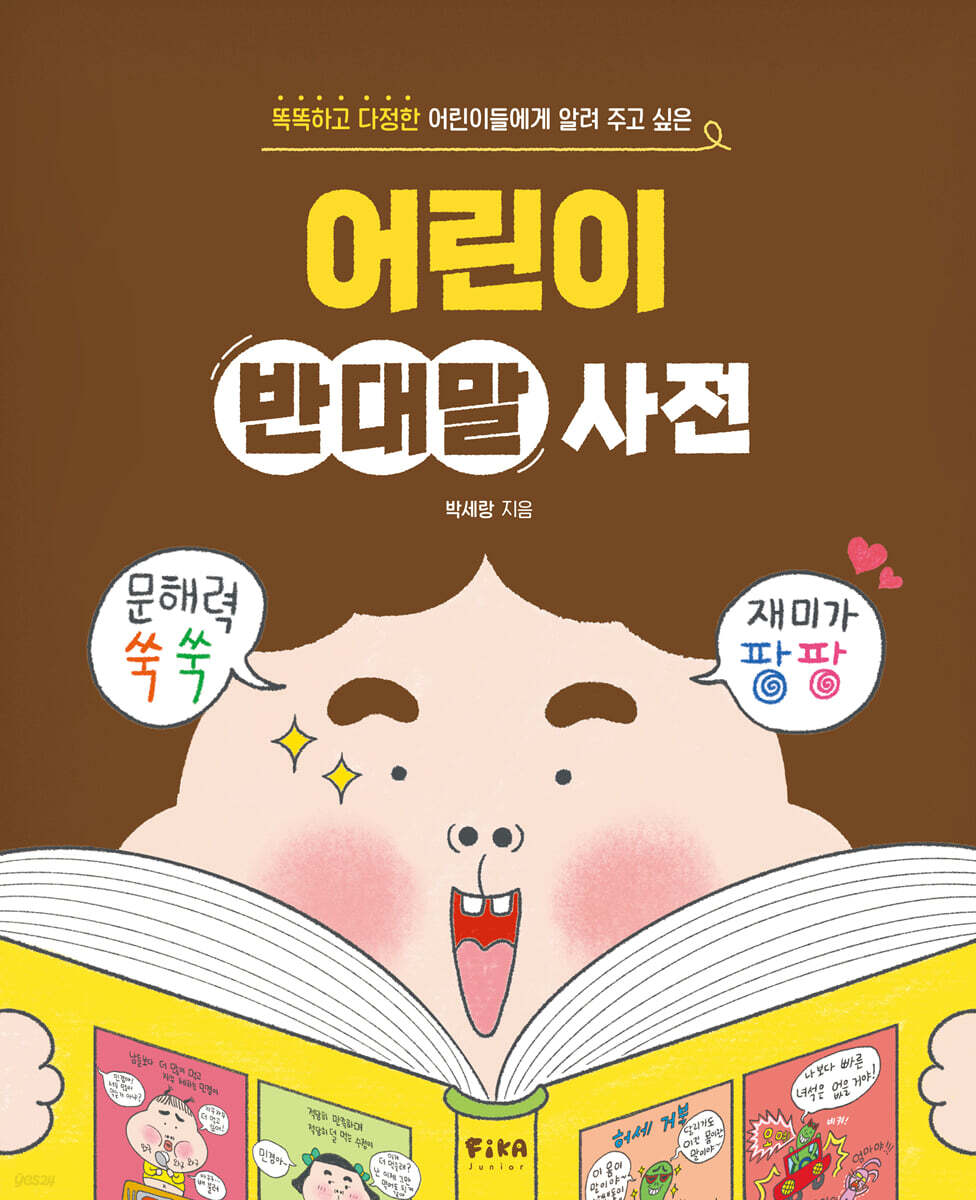
Children's Antonym Dictionary
 |
Description
Book Introduction
The ultimate first vocabulary book that adds depth and fun to children's language! Featuring 160 antonyms that can be linked to elementary school curriculum.
This self-help book for children selects the most frequently used vocabulary in children's daily lives and explains opposing concepts in an interesting story. Children can compare two opposing yet closely related words and clearly understand their meanings.
Poet Park Se-rang, winner of the 2018 Munhakdongne New Writer's Award in the poetry category, is a talented writer who crosses over various genres, including poetry, picture books, children's literature, and young adult novels.
In 『Children's Antonym Dictionary』, written and illustrated by the author himself, each page is filled with warm words from the author that will firmly capture children's hearts.
Not only does it help children develop their vocabulary and thinking skills, it also provides fun with its delightful 4-panel cartoons.
This self-help book for children selects the most frequently used vocabulary in children's daily lives and explains opposing concepts in an interesting story. Children can compare two opposing yet closely related words and clearly understand their meanings.
Poet Park Se-rang, winner of the 2018 Munhakdongne New Writer's Award in the poetry category, is a talented writer who crosses over various genres, including poetry, picture books, children's literature, and young adult novels.
In 『Children's Antonym Dictionary』, written and illustrated by the author himself, each page is filled with warm words from the author that will firmly capture children's hearts.
Not only does it help children develop their vocabulary and thinking skills, it also provides fun with its delightful 4-panel cartoons.
- You can preview some of the book's contents.
Preview
index
Author's Note, pages 8-9
Big, small, 10 pages
Long, short 12 pages
Deep, Shallow, Page 14
Enter, Exit, page 16
Tie, Untie, Page 18
Empty, Fill 20 pages
Hard, soft, page 22
Hot, Cold, Page 24
Dirty, Clean, Page 26
High, Low, page 28
Open, Close Page 30
Close, Far, Page 32
Slow, Fast, Page 34
Stop, Continue, Page 36
Dry, Wet, page 38
Flow, gather, page 40
Turn on, turn off page 42
Bitter, Sweet, Page 44
Listen, Speak, page 46
Clear, Cloudy, Page 48
decrease, increase 50 pages
Go up, go down page 52
Many, few, page 54
Page 56 above and below
58 pages front and back
Inside, outside, page 60
Thick, Thin 62 pages
Heavy, Light, page 64
Push, Pull, page 66
Wide, narrow, page 68
Put on, Take off, page 70
New, Old, Page 72
Clear, Blurry, Page 74
Different, Same, Page 76
Wrong, right, page 78
Usually, more than 80 pages
Close your eyes, open your eyes, page 82
Informal and formal speech, page 84
Easy, Hard, Page 86
Safe, Dangerous, Page 88
Lazy, Diligent, Page 90
Beginning, Ending, Page 92
Start, Stop, Page 94
First, later page 96
Time, Eternity, p. 98
Yesterday, tomorrow 100 pages
Accept, reject, page 102
Less, More, Page 104
Strong, weak, page 106
Black, White, page 108
Hate, Love, page 110
Straight lines, curves, page 112
Body, Mind, p. 114
Adults, Children, Page 116
Brothers and Sisters, page 118
Master, Guest, page 120
Master, Disciple, page 122
Me, Us, page 124
Several, many, page 126
Tasty, Tasty, Page 128
Fun, Not Fun, Page 130
Frustrating, Relief, Page 132
Precious, Trivial, Page 134
Good, Weak, p. 136
Countryside, City, Page 138
High Tide, Low Tide, page 140
Real, Fake, Page 142
Shell, kernel, page 144
First and Last Greetings, page 146
Love, Indifference, p. 148
Sadness, Joy, page 150
Courage, Fear, p. 152
Worry, Confidence, p. 154
For, Against, Page 156
Discrimination, Equality, p. 158
Real name, anonymous 160 pages
Completed, Incomplete, Page 162
Division, Unification, p. 164
Flaws, Strengths, Page 166
Yes, No, Page 168
Big, small, 10 pages
Long, short 12 pages
Deep, Shallow, Page 14
Enter, Exit, page 16
Tie, Untie, Page 18
Empty, Fill 20 pages
Hard, soft, page 22
Hot, Cold, Page 24
Dirty, Clean, Page 26
High, Low, page 28
Open, Close Page 30
Close, Far, Page 32
Slow, Fast, Page 34
Stop, Continue, Page 36
Dry, Wet, page 38
Flow, gather, page 40
Turn on, turn off page 42
Bitter, Sweet, Page 44
Listen, Speak, page 46
Clear, Cloudy, Page 48
decrease, increase 50 pages
Go up, go down page 52
Many, few, page 54
Page 56 above and below
58 pages front and back
Inside, outside, page 60
Thick, Thin 62 pages
Heavy, Light, page 64
Push, Pull, page 66
Wide, narrow, page 68
Put on, Take off, page 70
New, Old, Page 72
Clear, Blurry, Page 74
Different, Same, Page 76
Wrong, right, page 78
Usually, more than 80 pages
Close your eyes, open your eyes, page 82
Informal and formal speech, page 84
Easy, Hard, Page 86
Safe, Dangerous, Page 88
Lazy, Diligent, Page 90
Beginning, Ending, Page 92
Start, Stop, Page 94
First, later page 96
Time, Eternity, p. 98
Yesterday, tomorrow 100 pages
Accept, reject, page 102
Less, More, Page 104
Strong, weak, page 106
Black, White, page 108
Hate, Love, page 110
Straight lines, curves, page 112
Body, Mind, p. 114
Adults, Children, Page 116
Brothers and Sisters, page 118
Master, Guest, page 120
Master, Disciple, page 122
Me, Us, page 124
Several, many, page 126
Tasty, Tasty, Page 128
Fun, Not Fun, Page 130
Frustrating, Relief, Page 132
Precious, Trivial, Page 134
Good, Weak, p. 136
Countryside, City, Page 138
High Tide, Low Tide, page 140
Real, Fake, Page 142
Shell, kernel, page 144
First and Last Greetings, page 146
Love, Indifference, p. 148
Sadness, Joy, page 150
Courage, Fear, p. 152
Worry, Confidence, p. 154
For, Against, Page 156
Discrimination, Equality, p. 158
Real name, anonymous 160 pages
Completed, Incomplete, Page 162
Division, Unification, p. 164
Flaws, Strengths, Page 166
Yes, No, Page 168
Detailed image

Publisher's Review
As you read, you will naturally learn the antonyms in everyday life!
In other words, developing expressive and thinking skills
Most children who are first introduced to opposites find the vocabulary difficult.
Words like 'fast' and 'slow' are easy to understand through concrete experiences, but words like 'win' and 'lose' can feel abstract and complicated depending on the situation.
The opposite of weight is 'light', which is 'heavy', but in relation to mood, it is expressed differently, such as 'serious' or 'heavy atmosphere'.
Some words can feel more difficult because they don't have a clear opposite. The opposite of 'love' might be 'hate,' but in some situations, 'indifference' might be more appropriate.
These ambiguous antonym relationships are confusing to children.
Antonyms are not simply about changing a word, but about reversing the meaning, so children need to fully understand the concept of the word.
Developing critical thinking skills and filling in the gaps in language, the Children's Antonym Dictionary is perfect for children who still lack a grasp of abstract concepts and have limited vocabulary.
By learning 160 antonyms that can be linked to elementary school curriculum, you can learn related words such as antonyms and synonyms for a single word.
Children will develop their language skills of speaking, listening and writing while simultaneously recognizing 'differences'.
Additionally, comparing and contrasting opposing concepts helps develop logical thinking skills that are responsible for categorizing, organizing, and inferring.
Understanding 'sad' and 'happy' allows you to express your feelings and situations in a wider range of ways.
Let's quickly open "Children's Antonym Dictionary," a book that makes us look forward to a tomorrow with improved expressiveness and understanding of emotions, states, and actions.
As the horse grows, the heart grows too.
Antonym stories that will develop children's vocabulary, literacy, and empathy.
The Children's Antonym Dictionary, which allows children to learn language habits in a fun way, contains 160 vocabulary words.
If previous books on antonyms were somewhat stiff, this book goes beyond simply explaining the concept of vocabulary, and naturally blends 160 antonyms into the real-life concerns and enjoyable episodes that children experience in their daily lives at school, at home, and at academies.
In particular, if you learn well the antonyms related to emotions, such as 'angry' and 'happy', 'upset' and 'happy', you will gain the ability to express and control your own emotions in specific language.
For example, you can naturally learn structures like 'I am fast, but my friend is slow' and become good at expressing contrast, comparison, and emphasis between sentences.
You will be able to develop social skills and empathy by better understanding the world around you and the emotions of others.
At the end of the episode about two opposite words, the author's kind words, using the contrast and variation of opposites, are included on each page.
Through the author's warm words, children will find comfort in their hearts and improve their literacy skills by more easily understanding the concepts and changes in antonym vocabulary.
Let's have fun developing vocabulary skills through "Children's Antonym Dictionary," a gateway to thinking that opens with opposites.
Same word, different meaning! Is it really that fun to have antonyms?
Learn antonyms through 4-panel comics, laugh-out-loud humor, and vocabulary concepts!
The moment you find the opposite of a word, your thoughts turn around and laughter bursts out.
The first vocabulary book by author Park Se-rang, who crosses genres such as picture books, children's literature, and young adult novels with characters with humorous expressions and episodes of ups and downs in everyday life, "Children's Antonym Dictionary," is full of author Park Se-rang's signature witty lines, characters with rich emotional expressions, and humor that is closely related to everyday life.
Even ordinary words are transformed into hilarious life dramas when combined with Park Se-rang's lively four-panel cartoons.
Each and every cut is full of laughter, empathy, and learning.
Opposite words like 'high' and 'low', 'joy' and 'sadness' come to life at a child's eye level.
When you know the other side of words, the world becomes wider.
It is the best vocabulary book that adds 'depth' and 'fun' to the language used by children.
In other words, developing expressive and thinking skills
Most children who are first introduced to opposites find the vocabulary difficult.
Words like 'fast' and 'slow' are easy to understand through concrete experiences, but words like 'win' and 'lose' can feel abstract and complicated depending on the situation.
The opposite of weight is 'light', which is 'heavy', but in relation to mood, it is expressed differently, such as 'serious' or 'heavy atmosphere'.
Some words can feel more difficult because they don't have a clear opposite. The opposite of 'love' might be 'hate,' but in some situations, 'indifference' might be more appropriate.
These ambiguous antonym relationships are confusing to children.
Antonyms are not simply about changing a word, but about reversing the meaning, so children need to fully understand the concept of the word.
Developing critical thinking skills and filling in the gaps in language, the Children's Antonym Dictionary is perfect for children who still lack a grasp of abstract concepts and have limited vocabulary.
By learning 160 antonyms that can be linked to elementary school curriculum, you can learn related words such as antonyms and synonyms for a single word.
Children will develop their language skills of speaking, listening and writing while simultaneously recognizing 'differences'.
Additionally, comparing and contrasting opposing concepts helps develop logical thinking skills that are responsible for categorizing, organizing, and inferring.
Understanding 'sad' and 'happy' allows you to express your feelings and situations in a wider range of ways.
Let's quickly open "Children's Antonym Dictionary," a book that makes us look forward to a tomorrow with improved expressiveness and understanding of emotions, states, and actions.
As the horse grows, the heart grows too.
Antonym stories that will develop children's vocabulary, literacy, and empathy.
The Children's Antonym Dictionary, which allows children to learn language habits in a fun way, contains 160 vocabulary words.
If previous books on antonyms were somewhat stiff, this book goes beyond simply explaining the concept of vocabulary, and naturally blends 160 antonyms into the real-life concerns and enjoyable episodes that children experience in their daily lives at school, at home, and at academies.
In particular, if you learn well the antonyms related to emotions, such as 'angry' and 'happy', 'upset' and 'happy', you will gain the ability to express and control your own emotions in specific language.
For example, you can naturally learn structures like 'I am fast, but my friend is slow' and become good at expressing contrast, comparison, and emphasis between sentences.
You will be able to develop social skills and empathy by better understanding the world around you and the emotions of others.
At the end of the episode about two opposite words, the author's kind words, using the contrast and variation of opposites, are included on each page.
Through the author's warm words, children will find comfort in their hearts and improve their literacy skills by more easily understanding the concepts and changes in antonym vocabulary.
Let's have fun developing vocabulary skills through "Children's Antonym Dictionary," a gateway to thinking that opens with opposites.
Same word, different meaning! Is it really that fun to have antonyms?
Learn antonyms through 4-panel comics, laugh-out-loud humor, and vocabulary concepts!
The moment you find the opposite of a word, your thoughts turn around and laughter bursts out.
The first vocabulary book by author Park Se-rang, who crosses genres such as picture books, children's literature, and young adult novels with characters with humorous expressions and episodes of ups and downs in everyday life, "Children's Antonym Dictionary," is full of author Park Se-rang's signature witty lines, characters with rich emotional expressions, and humor that is closely related to everyday life.
Even ordinary words are transformed into hilarious life dramas when combined with Park Se-rang's lively four-panel cartoons.
Each and every cut is full of laughter, empathy, and learning.
Opposite words like 'high' and 'low', 'joy' and 'sadness' come to life at a child's eye level.
When you know the other side of words, the world becomes wider.
It is the best vocabulary book that adds 'depth' and 'fun' to the language used by children.
GOODS SPECIFICS
- Date of issue: July 20, 2025
- Format: Hardcover book binding method guide
- Page count, weight, size: 172 pages | 558g | 190*235*14mm
- ISBN13: 9791192869377
- ISBN10: 1192869370
- KC Certification: Certification Type: Conformity Confirmation
You may also like
카테고리
korean


korean

![GQ KOREA Mark (Monthly): December [2025]](http://librairie.coreenne.fr/cdn/shop/files/8ef265dbbfbf186523ed75ba7319009d.jpg?v=1765340328&width=3840)


