

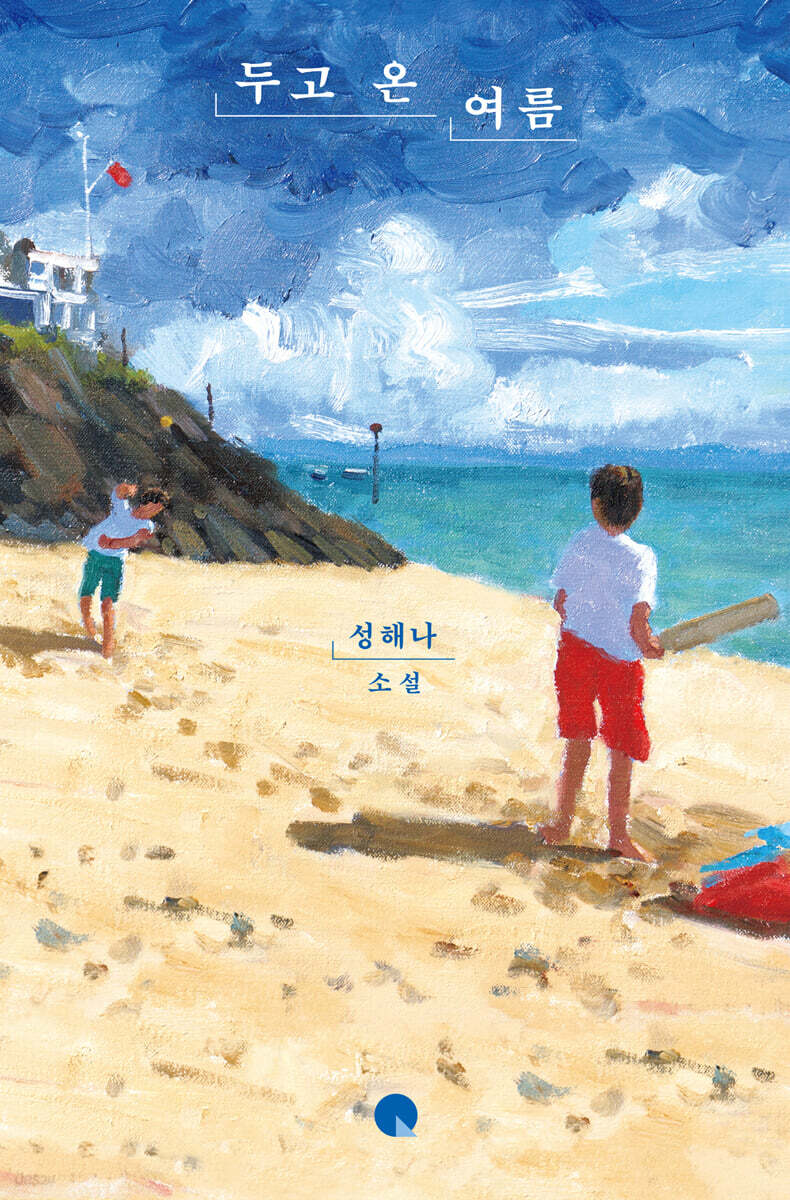
The summer I left behind
 |
Description
Book Introduction
- A word from MD
- [Spending an imperfect but brilliant time] The meeting and parting of a 'non-family' family, depicted through the warm gaze of novelist Seong Hae-na.
Kiha and Jaeha, who lived as brothers for four years due to their parents' remarriage, look back on that time.
Will they, who have lived with the feeling of "leaving nothing behind but losing something," be able to rediscover their lost heart? - Novel/Poetry PD Kim Yu-ri
The first full-length novel by Seong Hae-na, a new writer who is attracting attention from readers and critics alike.
For all the relationships and hearts we left behind
A heartfelt greeting conveyed amidst the lingering memories of a bygone era.
In her first short story collection, 『When You Walk Through the Light』 (Munhakdongne 2022), author Seong Hae-na, who explored the multiple layers of boundaries that divide us and others and the attempts to understand each other beyond those boundaries with a serious and warm gaze, has published a new novel, 『The Summer We Left Behind』.
This is the sixteenth work in the novel Q series, a light novel by Changbi that is loved for its youthful sensibility.
With a deeper gaze and lyricism, he explores why understanding and accepting others always feels so unfamiliar and difficult, how we can say goodbye to relationships we can no longer be together with without sadness or regret, and how failed understanding and unreached sincerity do not disappear without meaning but remain as faintly shining memories.
Kiha and Jaeha were brothers for a while due to their parents' remarriage, but they were unable to share their feelings and became strangers forever.
This novel, in which the stories of two people, past and present, intertwine like warp and weft, offers warm and profound comfort to all who have experienced relationships that don't go as planned and hearts that don't readily follow suit.
Moreover, Seong Hae-na's prose, which is "accurate and sensitive, clear and deep, and neat and powerful" (Yoon Seong-hee, recommendation), is something that any reader of Korean literature would gladly welcome.
For all the relationships and hearts we left behind
A heartfelt greeting conveyed amidst the lingering memories of a bygone era.
In her first short story collection, 『When You Walk Through the Light』 (Munhakdongne 2022), author Seong Hae-na, who explored the multiple layers of boundaries that divide us and others and the attempts to understand each other beyond those boundaries with a serious and warm gaze, has published a new novel, 『The Summer We Left Behind』.
This is the sixteenth work in the novel Q series, a light novel by Changbi that is loved for its youthful sensibility.
With a deeper gaze and lyricism, he explores why understanding and accepting others always feels so unfamiliar and difficult, how we can say goodbye to relationships we can no longer be together with without sadness or regret, and how failed understanding and unreached sincerity do not disappear without meaning but remain as faintly shining memories.
Kiha and Jaeha were brothers for a while due to their parents' remarriage, but they were unable to share their feelings and became strangers forever.
This novel, in which the stories of two people, past and present, intertwine like warp and weft, offers warm and profound comfort to all who have experienced relationships that don't go as planned and hearts that don't readily follow suit.
Moreover, Seong Hae-na's prose, which is "accurate and sensitive, clear and deep, and neat and powerful" (Yoon Seong-hee, recommendation), is something that any reader of Korean literature would gladly welcome.
- You can preview some of the book's contents.
Preview
index
Geometry
Jaeha
Geometry
Jaeha
Interview with Seong Hae-na and Kim Yu-na
Author's Note
Jaeha
Geometry
Jaeha
Interview with Seong Hae-na and Kim Yu-na
Author's Note
Detailed image
.jpg)
Into the book
The year I was born, my father renovated a fifty-year-old Japanese colonial house in Gangbuk and used it as both his workplace and residence.
The house was divided into two parts, one side with a photo studio and the other with three rooms.
I went back and forth between the two spaces, eating rice with my father, watching "Taejo Wang Geon" or professional baseball, solving workbooks, or playing console games.
Sometimes, people who came to take pictures would pretend not to know me.
The picture hanging in the shop window is that of your son, right?
At that time, my father laughed and tossed my hair wildly.
that's right.
Our son.
--- pp.8~9
Jaeha's mother didn't show any sign of displeasure when I called her over there.
I didn't even force her to call me mother.
Without any reason, he just said that like a person with no ulterior motive.
Was that why?
To me, Jaeha's mother was like a guest.
Someone who can leave at any time, and who will leave someday.
Maybe it was because I thought that way, but even as time passed, it was still difficult to ask her for anything or tell her anything.
--- pp.12~13
On the day of the physical examination, Jaeha talked more and laughed louder than usual.
It was obvious that he was trying hard to hide his fear.
Jaeha's expression that I don't know.
Every time something like that came into view, the old misunderstandings and contempt I had for him would ease up a little.
As I watched Jaeha eating noodles, I briefly wondered what it would be like if he were my own younger brother.
If only we could become closer by pouring out our hearts in a straightforward and blunt manner.
If only we could have shared from the beginning that kind of close friendship that naturally emerges at some point, even though we may be indifferent to each other.
--- p.26
Among the old, peeling photographs, there was an unfamiliar photo.
The photo was out of focus and had a lot of noise, so it was hard to believe it was taken by my father.
As I looked intently at the forest in the background of the photo, I realized that it was a photo Jae-ha had taken.
The back of me walking stiffly and Jae-ha's mother approaching me and trying to put her arm around me.
I looked at that photo for a long, long time, and then I hid it deep in a drawer.
--- p.42
There are people whose facial expressions, atmosphere, and silhouette remain in our memory longer than their words.
Geo-ha Hyung was that kind of person to me.
My brother, whose expression hidden behind his glasses was always dark.
My brother was about two inches taller than me, so I always had to look up at him.
My brother, who had passed puberty and had a deep voice, would sometimes stiffen his face when I caught him smoking in the alley.
How will my brother remember me?
--- p.53
I quickly got used to the cruelty, but I couldn't easily get used to the affection.
Like a mirage that suddenly appears and then disappears when touched, I always hesitate, wondering if it will evaporate in an instant or go away.
I couldn't get close.
Was I born knowing that in some relationships it's possible to express yourself without reservation and expose your true self, and in others it's impossible?
--- p.58
In the photo, my stepfather is holding my mother and I's hands tightly.
As I look at the three people holding hands and smiling softly, all the things we couldn't bear and let go of, all the things we ran away from because we couldn't bear the weight of responsibility, all disappear, and in their place, only a dreamy, vague midsummer afternoon remains.
--- p.88
Jaeha looked tired.
I looked at his bloodshot eyes and dark circles.
Except for the disappearance of the erythema, her face was similar to when she was young, but her words and actions seemed like a completely different person.
It started with consciously showing respect.
When he spoke informally, he quickly corrected himself and became polite.
Every time that happened, I felt the long time I had spent without being able to visit or ask how he was doing.
--- p.102
Do you want to take a picture together?
Jaeha shouted.
He said that it had been so long since he had taken a solo photo that he felt embarrassed, and that it would be less embarrassing if we took one together.
After hesitating for a moment, I nodded.
(…)
It came out well.
It came out well.
The backlight was so strong that it was hard to tell who was him and who was me.
It was a badly taken photo, but no one asked to take it again.
Jaeha looked at the photo for a long time with an unreadable expression.
Under the light we were like two shadows.
The house was divided into two parts, one side with a photo studio and the other with three rooms.
I went back and forth between the two spaces, eating rice with my father, watching "Taejo Wang Geon" or professional baseball, solving workbooks, or playing console games.
Sometimes, people who came to take pictures would pretend not to know me.
The picture hanging in the shop window is that of your son, right?
At that time, my father laughed and tossed my hair wildly.
that's right.
Our son.
--- pp.8~9
Jaeha's mother didn't show any sign of displeasure when I called her over there.
I didn't even force her to call me mother.
Without any reason, he just said that like a person with no ulterior motive.
Was that why?
To me, Jaeha's mother was like a guest.
Someone who can leave at any time, and who will leave someday.
Maybe it was because I thought that way, but even as time passed, it was still difficult to ask her for anything or tell her anything.
--- pp.12~13
On the day of the physical examination, Jaeha talked more and laughed louder than usual.
It was obvious that he was trying hard to hide his fear.
Jaeha's expression that I don't know.
Every time something like that came into view, the old misunderstandings and contempt I had for him would ease up a little.
As I watched Jaeha eating noodles, I briefly wondered what it would be like if he were my own younger brother.
If only we could become closer by pouring out our hearts in a straightforward and blunt manner.
If only we could have shared from the beginning that kind of close friendship that naturally emerges at some point, even though we may be indifferent to each other.
--- p.26
Among the old, peeling photographs, there was an unfamiliar photo.
The photo was out of focus and had a lot of noise, so it was hard to believe it was taken by my father.
As I looked intently at the forest in the background of the photo, I realized that it was a photo Jae-ha had taken.
The back of me walking stiffly and Jae-ha's mother approaching me and trying to put her arm around me.
I looked at that photo for a long, long time, and then I hid it deep in a drawer.
--- p.42
There are people whose facial expressions, atmosphere, and silhouette remain in our memory longer than their words.
Geo-ha Hyung was that kind of person to me.
My brother, whose expression hidden behind his glasses was always dark.
My brother was about two inches taller than me, so I always had to look up at him.
My brother, who had passed puberty and had a deep voice, would sometimes stiffen his face when I caught him smoking in the alley.
How will my brother remember me?
--- p.53
I quickly got used to the cruelty, but I couldn't easily get used to the affection.
Like a mirage that suddenly appears and then disappears when touched, I always hesitate, wondering if it will evaporate in an instant or go away.
I couldn't get close.
Was I born knowing that in some relationships it's possible to express yourself without reservation and expose your true self, and in others it's impossible?
--- p.58
In the photo, my stepfather is holding my mother and I's hands tightly.
As I look at the three people holding hands and smiling softly, all the things we couldn't bear and let go of, all the things we ran away from because we couldn't bear the weight of responsibility, all disappear, and in their place, only a dreamy, vague midsummer afternoon remains.
--- p.88
Jaeha looked tired.
I looked at his bloodshot eyes and dark circles.
Except for the disappearance of the erythema, her face was similar to when she was young, but her words and actions seemed like a completely different person.
It started with consciously showing respect.
When he spoke informally, he quickly corrected himself and became polite.
Every time that happened, I felt the long time I had spent without being able to visit or ask how he was doing.
--- p.102
Do you want to take a picture together?
Jaeha shouted.
He said that it had been so long since he had taken a solo photo that he felt embarrassed, and that it would be less embarrassing if we took one together.
After hesitating for a moment, I nodded.
(…)
It came out well.
It came out well.
The backlight was so strong that it was hard to tell who was him and who was me.
It was a badly taken photo, but no one asked to take it again.
Jaeha looked at the photo for a long time with an unreadable expression.
Under the light we were like two shadows.
--- pp.128~129
Publisher's Review
“That’s inconvenient.
“It’s like living with someone who isn’t even family, pretending to be family.”
Healing a relationship marred by misunderstandings and breakups
The most special family drama right here, right now.
The novel begins with a recollection of geometry.
Kiha's father, a photographer, took pictures of Kiha every summer and hung them in the photo studio window.
But that summer, when Kiha was nineteen, he took his first 'family photo' rather than a solo photo.
With Jaeha and his mother.
Ki-ha, who lost his mother at a very young age and lived with his father, has a hard time adjusting to life with his new family, which was suddenly formed when his father remarried.
Jaeha's mother feels like a "guest" who "could leave at any time and would leave someday," and Jaeha's "excessive brightness," who is eight years younger than her, is a burden (pp. 12-14).
What makes Kiha's heart particularly sharp is his father's changed appearance.
Seeing his father always being with Jae-ha and always considering Jae-ha's intentions, Jae-ha's heart starts to grow filled with disappointment and resentment, and the clumsy affection that Jae-ha's mother gives him as if trying to make up for that bias is only annoying.
Even though he knows that it is their own effort to nurture their new family, Ki-ha continues to feel dissatisfied with why he has to live “hiding and covering up his rough feelings, deceiving himself” (page 69) and “pretending to be a family when he is not” (page 73).
These “sharp emotions” and “rough minds” (page 20) also make his relationship with the young Jae-ha awkward, and Ki-ha leaves home in a hurry as soon as he turns twenty because he “wants to get away from this tiresome family life” (pages 39-40).
Meanwhile, what about Jaeha's memories?
Even after Ki-ha leaves home and Jae-ha's biological father causes his mother and stepfather to separate after four years due to various incidents, Jae-ha occasionally reminisces about the times when they were all together, even if only briefly.
Unlike his violent biological father, his stepfather was meticulous and kind; his mother, who said she could “understand Kiha a hundred, a thousand times over” (page 60) who did not leave his side; and his brother, Kiha, who “neither embodied affection nor tried to be kind” (page 59).
Jae-ha calmly reveals the time he spent alone, unable to fully rely on anyone, in “the subtle expressions of three people” and “the conversation that went around in circles” (page 71).
Jae-ha's voice, which quietly recounts the past as if "letting go what had been stagnant" (page 74), fills the reader's heart with longing.
But as Seong Hae-na reveals in the author interview included at the end of this book, “rather than reminiscing about the past and feeling sad” (p. 166), Jae-ha also savors the warm moments.
The way Kiha, who accompanied me to the hospital when I was suffering from severe atopic dermatitis, the Chinese cold noodles we ate together after the treatment, and the way his brother would smile faintly as he gently used his chopsticks to loosen the peanut sauce that had formed on the noodles.
I wondered what it would be like if we were real brothers.
We would have giggled and exchanged jokes that only the two of us knew.
Even if they fought and hit each other, they would quickly make up as if nothing had happened.
It is possible that I may have casually shown my weakness without any courage or thought.
If there is such a past.
If such a future exists. (Page 61)
The relationship and emotions that were not properly tied up leave the two people with the feeling that “there was nothing left behind, but something was left behind” (page 38), and because of that feeling, the two suddenly look back.
The moment Jae-ha's memories overlap with Ki-ha's, the aspects of each other that they had not known about or had tried to ignore fit together like a puzzle, and the truths they had not been able to express are clearly revealed against the gap in their memories.
The strange and sad story of how even the efforts to be kind to each other and to protect what is precious sometimes only drive us further apart is revealed in a heartbreaking way.
Instead of repeating regrets like, "If only I had gotten closer," or "If only I had been braver," the story of two people who meekly accept that some understanding is impossible and some misunderstandings are inevitable quietly consoles our countless misunderstandings and distances rather than evoke regret.
“I couldn’t understand you back then… but it’s okay now.”
If we meet again, will things be a little different?
Kiha and Jaeha, who had been living apart since their parents' divorce, meet again fifteen years later.
Kiha, who happened to see Jaeha's hat on 'Street View', went to the Chinese restaurant that Jaeha's hat is believed to be running.
After a long time has passed, only “a faint sense of indebtedness” (page 97) remains in the place where “old feelings have disappeared,” and instead, he feels happy and secretly misses Jae-ha. There, he goes to see Jae-ha, who is similar to before but has also changed a lot, and encounters news of someone who is no longer in this world, and even facts he did not know about his father.
In a confusing and bittersweet reunion, Ki-ha and Jae-ha take a walk through Inreung, once a favorite place for Ki-ha's father to go on outings and a place for their family to gather, and they stumble over their stories.
After a long, hesitant walk, still unable to be honest, will they be able to reach a present different from the past?
Or will they remain a complete past to each other?
As novelist Yoon Seong-hee said in her recommendation, “Seong Hae-na is a writer who knows how to look back properly,” “The Summer We Left Behind” is a dazzling result of accurately and carefully looking back on a moment that was regrettably missed, without hasty pessimism or vague positivity.
In the novel, Kiha and Jaeha look at a photo taken by Kiha's father and recall the time when they were a 'family'.
When I decide to ruminate, memories become more detailed, showing countless knots, and the emotions and expressions that were not stuffed into the photos come back to life in detail.
Hands that hesitated, shoulders that shook with tears, a face that hid its disappointment.
As I carefully revisit each scene of the past where I hurt others and was hurt by others, self-reproach, regret, longing, and resentment stab deep into my heart, but the care and consideration that come from doing so belatedly embrace the failed relationship with warmth.
Even if the relationship isn't rebuilt or the feelings aren't restored, it opens up the next chapter in their lives.
At the end of the novel, let's see Jae-ha, who had been bound by the wounds of the past, slowly moving towards a new life.
That brilliant advance will encourage us to embrace with a broad embrace the era we left behind and could not complete.
Author's Note
Every time I write the last chapter of a novel, I hope that the characters I left behind will be happy and at peace there.
It's partly to forgive the guilt of leaving them alone in a world I don't know, but more than that, it's because I wish their lives would not end with a period, but instead remain as commas and flow on for a long time.
It was the same when I was writing 『The Summer I Left Behind』.
I wrote this with the hope that Kiha and Jaeha can do the same, and that their days will be blessed.
How many summers will Kiha and Jaeha spend there?
How many times should I love and how many times should I prepare for breakups?
What about me?
You who are reading this novel.
May the countless summers we face be more dazzling.
I hope that the imperfect hearts I left behind somewhere will be safe.
I hope so.
February 2023
Seong Hae-na
“It’s like living with someone who isn’t even family, pretending to be family.”
Healing a relationship marred by misunderstandings and breakups
The most special family drama right here, right now.
The novel begins with a recollection of geometry.
Kiha's father, a photographer, took pictures of Kiha every summer and hung them in the photo studio window.
But that summer, when Kiha was nineteen, he took his first 'family photo' rather than a solo photo.
With Jaeha and his mother.
Ki-ha, who lost his mother at a very young age and lived with his father, has a hard time adjusting to life with his new family, which was suddenly formed when his father remarried.
Jaeha's mother feels like a "guest" who "could leave at any time and would leave someday," and Jaeha's "excessive brightness," who is eight years younger than her, is a burden (pp. 12-14).
What makes Kiha's heart particularly sharp is his father's changed appearance.
Seeing his father always being with Jae-ha and always considering Jae-ha's intentions, Jae-ha's heart starts to grow filled with disappointment and resentment, and the clumsy affection that Jae-ha's mother gives him as if trying to make up for that bias is only annoying.
Even though he knows that it is their own effort to nurture their new family, Ki-ha continues to feel dissatisfied with why he has to live “hiding and covering up his rough feelings, deceiving himself” (page 69) and “pretending to be a family when he is not” (page 73).
These “sharp emotions” and “rough minds” (page 20) also make his relationship with the young Jae-ha awkward, and Ki-ha leaves home in a hurry as soon as he turns twenty because he “wants to get away from this tiresome family life” (pages 39-40).
Meanwhile, what about Jaeha's memories?
Even after Ki-ha leaves home and Jae-ha's biological father causes his mother and stepfather to separate after four years due to various incidents, Jae-ha occasionally reminisces about the times when they were all together, even if only briefly.
Unlike his violent biological father, his stepfather was meticulous and kind; his mother, who said she could “understand Kiha a hundred, a thousand times over” (page 60) who did not leave his side; and his brother, Kiha, who “neither embodied affection nor tried to be kind” (page 59).
Jae-ha calmly reveals the time he spent alone, unable to fully rely on anyone, in “the subtle expressions of three people” and “the conversation that went around in circles” (page 71).
Jae-ha's voice, which quietly recounts the past as if "letting go what had been stagnant" (page 74), fills the reader's heart with longing.
But as Seong Hae-na reveals in the author interview included at the end of this book, “rather than reminiscing about the past and feeling sad” (p. 166), Jae-ha also savors the warm moments.
The way Kiha, who accompanied me to the hospital when I was suffering from severe atopic dermatitis, the Chinese cold noodles we ate together after the treatment, and the way his brother would smile faintly as he gently used his chopsticks to loosen the peanut sauce that had formed on the noodles.
I wondered what it would be like if we were real brothers.
We would have giggled and exchanged jokes that only the two of us knew.
Even if they fought and hit each other, they would quickly make up as if nothing had happened.
It is possible that I may have casually shown my weakness without any courage or thought.
If there is such a past.
If such a future exists. (Page 61)
The relationship and emotions that were not properly tied up leave the two people with the feeling that “there was nothing left behind, but something was left behind” (page 38), and because of that feeling, the two suddenly look back.
The moment Jae-ha's memories overlap with Ki-ha's, the aspects of each other that they had not known about or had tried to ignore fit together like a puzzle, and the truths they had not been able to express are clearly revealed against the gap in their memories.
The strange and sad story of how even the efforts to be kind to each other and to protect what is precious sometimes only drive us further apart is revealed in a heartbreaking way.
Instead of repeating regrets like, "If only I had gotten closer," or "If only I had been braver," the story of two people who meekly accept that some understanding is impossible and some misunderstandings are inevitable quietly consoles our countless misunderstandings and distances rather than evoke regret.
“I couldn’t understand you back then… but it’s okay now.”
If we meet again, will things be a little different?
Kiha and Jaeha, who had been living apart since their parents' divorce, meet again fifteen years later.
Kiha, who happened to see Jaeha's hat on 'Street View', went to the Chinese restaurant that Jaeha's hat is believed to be running.
After a long time has passed, only “a faint sense of indebtedness” (page 97) remains in the place where “old feelings have disappeared,” and instead, he feels happy and secretly misses Jae-ha. There, he goes to see Jae-ha, who is similar to before but has also changed a lot, and encounters news of someone who is no longer in this world, and even facts he did not know about his father.
In a confusing and bittersweet reunion, Ki-ha and Jae-ha take a walk through Inreung, once a favorite place for Ki-ha's father to go on outings and a place for their family to gather, and they stumble over their stories.
After a long, hesitant walk, still unable to be honest, will they be able to reach a present different from the past?
Or will they remain a complete past to each other?
As novelist Yoon Seong-hee said in her recommendation, “Seong Hae-na is a writer who knows how to look back properly,” “The Summer We Left Behind” is a dazzling result of accurately and carefully looking back on a moment that was regrettably missed, without hasty pessimism or vague positivity.
In the novel, Kiha and Jaeha look at a photo taken by Kiha's father and recall the time when they were a 'family'.
When I decide to ruminate, memories become more detailed, showing countless knots, and the emotions and expressions that were not stuffed into the photos come back to life in detail.
Hands that hesitated, shoulders that shook with tears, a face that hid its disappointment.
As I carefully revisit each scene of the past where I hurt others and was hurt by others, self-reproach, regret, longing, and resentment stab deep into my heart, but the care and consideration that come from doing so belatedly embrace the failed relationship with warmth.
Even if the relationship isn't rebuilt or the feelings aren't restored, it opens up the next chapter in their lives.
At the end of the novel, let's see Jae-ha, who had been bound by the wounds of the past, slowly moving towards a new life.
That brilliant advance will encourage us to embrace with a broad embrace the era we left behind and could not complete.
Author's Note
Every time I write the last chapter of a novel, I hope that the characters I left behind will be happy and at peace there.
It's partly to forgive the guilt of leaving them alone in a world I don't know, but more than that, it's because I wish their lives would not end with a period, but instead remain as commas and flow on for a long time.
It was the same when I was writing 『The Summer I Left Behind』.
I wrote this with the hope that Kiha and Jaeha can do the same, and that their days will be blessed.
How many summers will Kiha and Jaeha spend there?
How many times should I love and how many times should I prepare for breakups?
What about me?
You who are reading this novel.
May the countless summers we face be more dazzling.
I hope that the imperfect hearts I left behind somewhere will be safe.
I hope so.
February 2023
Seong Hae-na
GOODS SPECIFICS
- Date of issue: March 17, 2023
- Format: Hardcover book binding method guide
- Pages, weight, size: 172 pages | 256g | 128*194*20mm
- ISBN13: 9788936439002
- ISBN10: 8936439006
You may also like
카테고리
korean


korean

![ELLE 엘르 스페셜 에디션 A형 : 12월 [2025]](http://librairie.coreenne.fr/cdn/shop/files/b8e27a3de6c9538896439686c6b0e8fb.jpg?v=1766436872&width=3840)


