

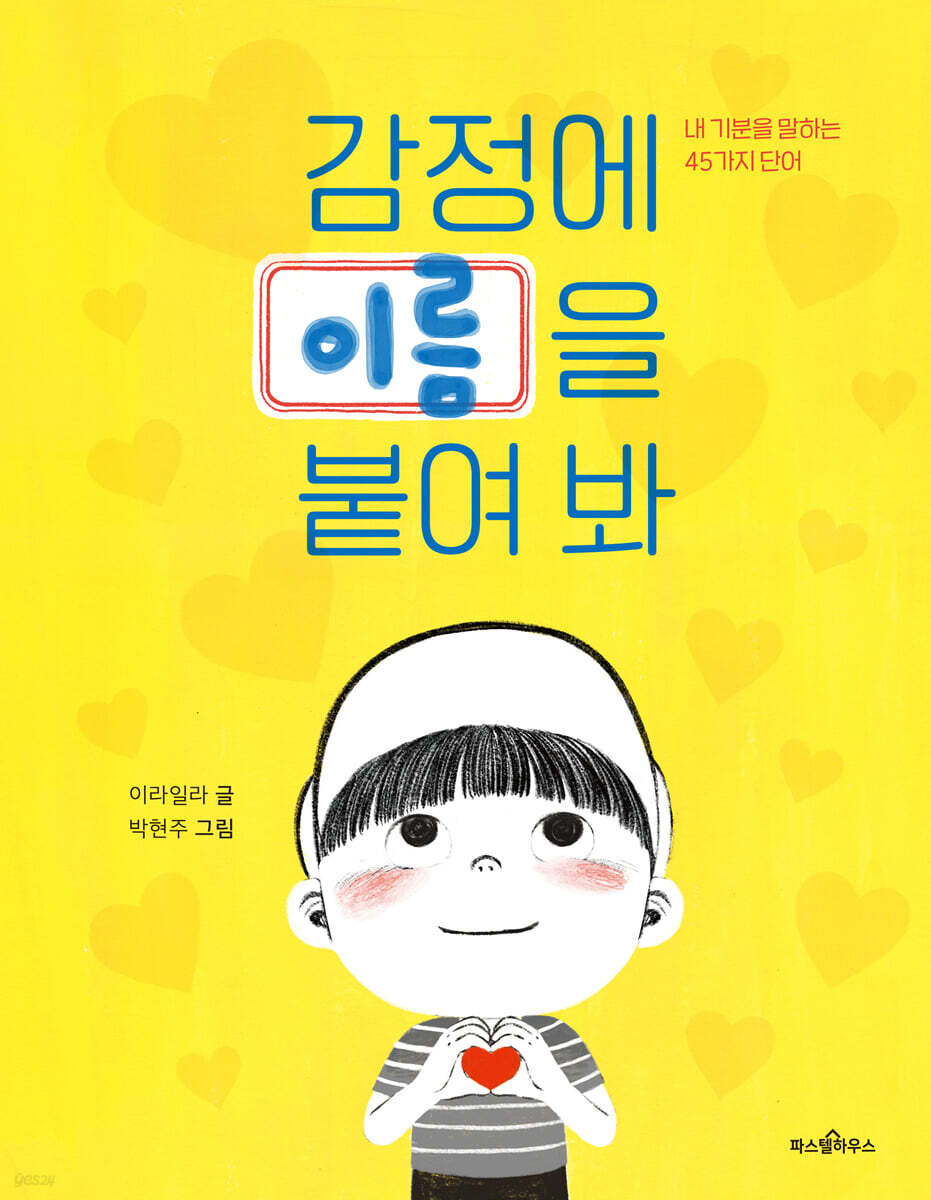
Name your feelings
 |
Description
Book Introduction
An encyclopedia of 45 emotion names that describe how I feel!
When you remember why emotions come to you, every emotion becomes precious.
Are you good at sensing and expressing the emotions that come to you from moment to moment? Sometimes, you don't know exactly what you're feeling, and you suppress emotions like anger or let them all out at once.
When we are afraid of something, we try to forget that feeling.
Maybe that's why my heart and emotions sometimes feel difficult.
However, emotions play a vital role in how we make decisions and take action every day.
All emotions work for us and bring us a lot of information.
Just as fear helps us avoid danger, worry makes us cautious and safe.
To help children learn to accurately distinguish and express their emotions, we introduce 45 rich words for the emotions they experience in their daily lives.
And it gives us tips on what each emotion does in our minds, what information it tells us, and what it means.
When you know the secret that all emotions ultimately exist and work for you, there is no such thing as good or bad emotions.
After reading the book, all emotions will become precious.
When you remember why emotions come to you, every emotion becomes precious.
Are you good at sensing and expressing the emotions that come to you from moment to moment? Sometimes, you don't know exactly what you're feeling, and you suppress emotions like anger or let them all out at once.
When we are afraid of something, we try to forget that feeling.
Maybe that's why my heart and emotions sometimes feel difficult.
However, emotions play a vital role in how we make decisions and take action every day.
All emotions work for us and bring us a lot of information.
Just as fear helps us avoid danger, worry makes us cautious and safe.
To help children learn to accurately distinguish and express their emotions, we introduce 45 rich words for the emotions they experience in their daily lives.
And it gives us tips on what each emotion does in our minds, what information it tells us, and what it means.
When you know the secret that all emotions ultimately exist and work for you, there is no such thing as good or bad emotions.
After reading the book, all emotions will become precious.
- You can preview some of the book's contents.
Preview
index
go
Emotion 9
Worry 11
Gratitude 13
Curiosity 15
Longing 17
Joy 19
me too
Surprise 21
Affection 23
Embarrassment 25
Fear 27
grave
Satisfaction 29
Sorry 31
Hate 33
Faith 35
hundred
Burden 37
Envy 39
Pity 41
Anxiety 43
Pride 45
cow
Love 47
Refreshing 49
Sorrow 51
Shyness 53
Sadness 55
Novelty 57
Disappointment 59
blanket
Injustice 61
Disgusting 63
Passion 65
Loneliness 67
Depression 69
trillion
Pride 71
Confidence 73
Frustration 75
Pleasure 77
Boredom 79
Jealousy 81
Annoyance 83
Ch-pp
Shame 85
Comfort 87
Give up 89
he
Happiness 91
Episode 93
Regret 95
Hope 97
Emotion name tag
Emotion 9
Worry 11
Gratitude 13
Curiosity 15
Longing 17
Joy 19
me too
Surprise 21
Affection 23
Embarrassment 25
Fear 27
grave
Satisfaction 29
Sorry 31
Hate 33
Faith 35
hundred
Burden 37
Envy 39
Pity 41
Anxiety 43
Pride 45
cow
Love 47
Refreshing 49
Sorrow 51
Shyness 53
Sadness 55
Novelty 57
Disappointment 59
blanket
Injustice 61
Disgusting 63
Passion 65
Loneliness 67
Depression 69
trillion
Pride 71
Confidence 73
Frustration 75
Pleasure 77
Boredom 79
Jealousy 81
Annoyance 83
Ch-pp
Shame 85
Comfort 87
Give up 89
he
Happiness 91
Episode 93
Regret 95
Hope 97
Emotion name tag
Detailed image
.jpg)
Publisher's Review
■ Managing emotions starts with using rich emotional words.
In the country of Tahiti, there is no word for 'sadness', so people have difficulty expressing this emotion.
That's why they say there are an unusually large number of people who struggle with sadness.
This story teaches us that simply expressing our feelings appropriately with rich emotional words can go a long way toward helping us release them in a healthy way.
This book contains the everyday use and meaning of 45 emotion words that are enough for children to express their feelings.
Friends who have studied basic emotions such as happiness, fear, sadness, surprise, and anger, try gradually increasing the number of emotions and using more rich emotional words.
According to one psychological experiment, even adults often use only a limited number of emotional words.
It's also great for parents and adults who want to manage their emotions in a healthy way to read together.
As the title of the book suggests, I recommend the game of ‘naming’ the feelings and emotions you feel.
The more emotional words you use, the more likely you are to express your feelings and emotions appropriately.
■ Emotions work hard for us every day!
Emotions are working hard in our minds.
The reason we have different emotions is so that we can deal with the various situations we face appropriately and safely.
Fear protects us by making us avoid dangerous situations.
The feeling of shame helps us behave appropriately in polite society and get along well with others.
The emotion of sadness reminds us of the things we truly cherish.
In this way, all emotions play a role in protecting us and helping us live well.
Let's reflect on the positive meaning of the 45 emotions mentioned in the book.
We learn that even the negative emotions we feel have a reason and are sending us important signals and stories.
It will be an opportunity to listen to and accept all emotions.
All emotions are necessary and precious.
■ Learn by connecting thoughts, body signals, and emotions.
Children may still have difficulty accurately distinguishing and expressing different types of emotions.
So I connected my thoughts, body signals, and emotions so that I could distinguish them more finely.
First, let's connect the thoughts and feelings that came to mind ①.
First, understand that the thought that starts the emotion is fear, like when you think, 'This is dangerous.'
Next, ② try connecting the emotional and physical signals.
When I'm very angry, I feel heat in my head and chest, and when I'm sad or depressed, I don't move my body very well.
If you don't know exactly what's going on in your mind, you can get hints from your body's signals like these.
Learn about emotions by understanding thoughts and body signals in a three-dimensional way.
You will be able to understand your mind and emotions more clearly and more delicately.
■ Know the positive side of emotions and use them properly.
Once you understand what emotions do and their positive aspects, it becomes easier to think of ways to use them in a positive way.
Just as anger, if used properly, can be a wonderful way to unleash the courage and strength to improve what you perceive as wrong,
When we feel angry, rather than thinking of the negative aspects first, such as, "Being angry is bad," we can accept that our inner mind is sending us an important signal through the emotion of anger.
I'm telling you to use anger as an opportunity to examine and nurture why your heart is upset.
Let's begin studying the emotions we need to more effectively cope with and adapt to the various situations and challenges facing us.
In the country of Tahiti, there is no word for 'sadness', so people have difficulty expressing this emotion.
That's why they say there are an unusually large number of people who struggle with sadness.
This story teaches us that simply expressing our feelings appropriately with rich emotional words can go a long way toward helping us release them in a healthy way.
This book contains the everyday use and meaning of 45 emotion words that are enough for children to express their feelings.
Friends who have studied basic emotions such as happiness, fear, sadness, surprise, and anger, try gradually increasing the number of emotions and using more rich emotional words.
According to one psychological experiment, even adults often use only a limited number of emotional words.
It's also great for parents and adults who want to manage their emotions in a healthy way to read together.
As the title of the book suggests, I recommend the game of ‘naming’ the feelings and emotions you feel.
The more emotional words you use, the more likely you are to express your feelings and emotions appropriately.
■ Emotions work hard for us every day!
Emotions are working hard in our minds.
The reason we have different emotions is so that we can deal with the various situations we face appropriately and safely.
Fear protects us by making us avoid dangerous situations.
The feeling of shame helps us behave appropriately in polite society and get along well with others.
The emotion of sadness reminds us of the things we truly cherish.
In this way, all emotions play a role in protecting us and helping us live well.
Let's reflect on the positive meaning of the 45 emotions mentioned in the book.
We learn that even the negative emotions we feel have a reason and are sending us important signals and stories.
It will be an opportunity to listen to and accept all emotions.
All emotions are necessary and precious.
■ Learn by connecting thoughts, body signals, and emotions.
Children may still have difficulty accurately distinguishing and expressing different types of emotions.
So I connected my thoughts, body signals, and emotions so that I could distinguish them more finely.
First, let's connect the thoughts and feelings that came to mind ①.
First, understand that the thought that starts the emotion is fear, like when you think, 'This is dangerous.'
Next, ② try connecting the emotional and physical signals.
When I'm very angry, I feel heat in my head and chest, and when I'm sad or depressed, I don't move my body very well.
If you don't know exactly what's going on in your mind, you can get hints from your body's signals like these.
Learn about emotions by understanding thoughts and body signals in a three-dimensional way.
You will be able to understand your mind and emotions more clearly and more delicately.
■ Know the positive side of emotions and use them properly.
Once you understand what emotions do and their positive aspects, it becomes easier to think of ways to use them in a positive way.
Just as anger, if used properly, can be a wonderful way to unleash the courage and strength to improve what you perceive as wrong,
When we feel angry, rather than thinking of the negative aspects first, such as, "Being angry is bad," we can accept that our inner mind is sending us an important signal through the emotion of anger.
I'm telling you to use anger as an opportunity to examine and nurture why your heart is upset.
Let's begin studying the emotions we need to more effectively cope with and adapt to the various situations and challenges facing us.
GOODS SPECIFICS
- Date of issue: January 24, 2022
- Format: Hardcover book binding method guide
- Page count, weight, size: 100 pages | 500g | 180*234*13mm
- ISBN13: 9791197494222
- ISBN10: 1197494227
- KC Certification: Certification Type: Conformity Confirmation
You may also like
카테고리
korean


korean

![ELLE 엘르 스페셜 에디션 A형 : 12월 [2025]](http://librairie.coreenne.fr/cdn/shop/files/b8e27a3de6c9538896439686c6b0e8fb.jpg?v=1766436872&width=3840)


