

Under the wheel
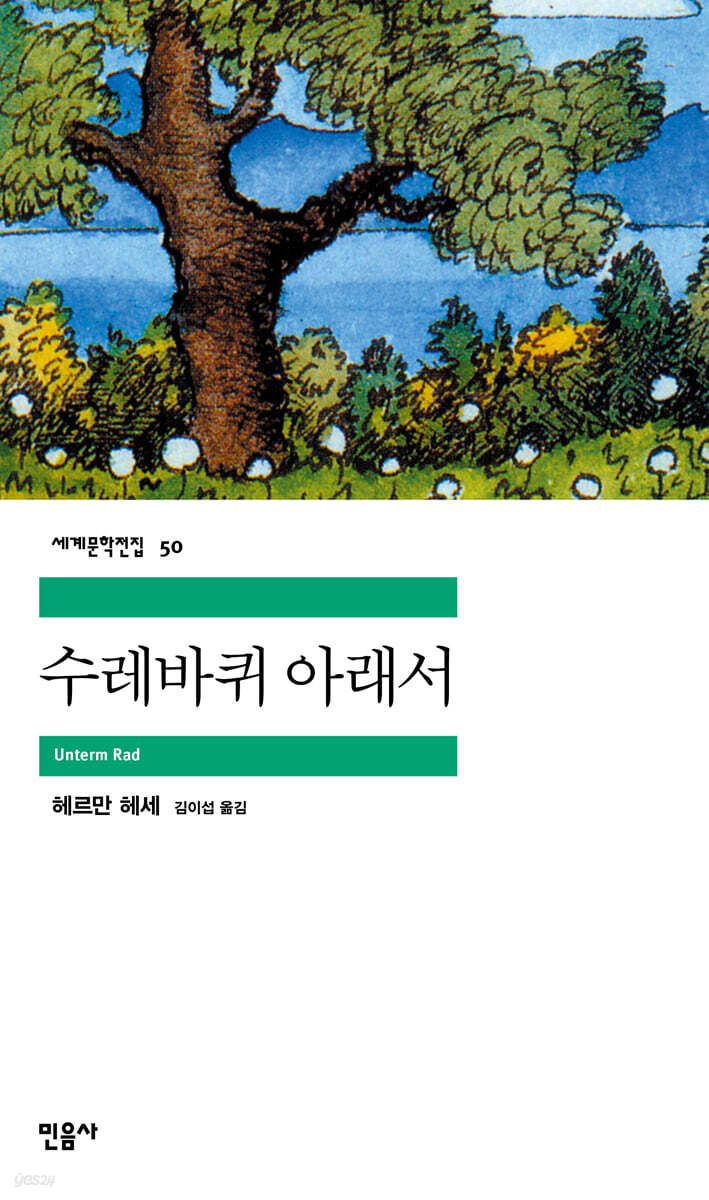 |
Description
Book Introduction
|
An autobiographical novel by Hermann Hesse, a master of German literature The tragedy of an innocent boy sacrificed to a stale and hypocritical authority. Criticism of the system and education that tramples on individual creativity and free will. “Anyway, you have to make sure you don’t get tired. Otherwise you might get crushed under the cartwheel “I don’t even know.” Beneath the Wheel is an autobiographical novel by Hermann Hesse. At the age of thirteen, Hesse left his parents and entered the Latin school in Göttingen. And the following year, he entered the seminary in Maulbronn to pursue the path of a pastor, just like his maternal grandfather had done. However, Hesse, who was born with literary talent, could not overcome the rules and conventions of the seminary dormitory life. So he goes AWOL, has a nervous breakdown, takes a leave of absence, and is finally expelled from school. Hesse, who returned to his hometown, tried his best to adapt to the given environment by working as an apprentice at a watch factory and as an apprentice at a bookstore, but suffered from depression and suffered for several years, eventually attempting suicide. The protagonist of this novel, Hans Giebenrath, is his alter ego. All of Hesse's works feature a dualistic structure of opposition, and Beneath the Wheel depicts the conflict between the oppressive religious traditions of home and school, and the stale and hypocritical authority of a young boy who fights against them. Hans, a young boy with exceptional talent, enters the seminary in Maulbronn. But the fame he gained could never fill his empty heart. After a series of love and heartbreak, Hans suffers a nervous breakdown and is expelled from school. He returns to his hometown where no one welcomes him. Hans was a man who perceived the world with a friendly and affectionate gaze. The young boy Hans had a home, a dream, and an adventure. In particular, my meeting with Hermann Heilner at the seminary was a shocking event. The experience of secretly kissing Heilner in the monastery basement was both a pleasure and a pain for Hans. He was delighted by the first premonition of a life overflowing with fresh love, and he was aching because his soul had departed from the world of childhood. But the happiness didn't last long. As time passes, everything Hans cherished, including Heilner and his childhood, leaves him one by one, and he struggles to survive under the harsh shackles of life, the wheel, with only beautiful memories in his heart. "Under the Wheel" criticizes the established society that oppresses people like a heavy wheel through the resistance of a young boy against outdated traditions and authority. Hans Giebenrath is not only the alter ego of the writer Hesse, but also a self-portrait of our youth living today. This work depicts the conflict with established society and authority that everyone experiences. |
- You can preview some of the book's contents.
Preview
Into the book
Perhaps no one, except perhaps the sympathetic tutor, saw behind the bewildered smile on the gaunt boy's face a fading soul, mired in a swamp, staring around in anxiety and despair.
No one had ever considered that the school, the father, and the vulgar pride of some teachers had so cruelly trampled upon a fragile young life.
Why was he forced to study late into the night every night during his most sensitive and vulnerable childhood? Why was his rabbit taken away from him and his fellow students at the Latin school ostracized? Why was he forbidden from going fishing or even strolling around town?
Now, this little calf, exhausted beyond belief, collapsed on the side of the road and became useless.
No one had ever considered that the school, the father, and the vulgar pride of some teachers had so cruelly trampled upon a fragile young life.
Why was he forced to study late into the night every night during his most sensitive and vulnerable childhood? Why was his rabbit taken away from him and his fellow students at the Latin school ostracized? Why was he forbidden from going fishing or even strolling around town?
Now, this little calf, exhausted beyond belief, collapsed on the side of the road and became useless.
--- From the text
Publisher's Review
We are not snails crushed under the wheels.
Perhaps we are the wheels themselves, destined to pull the cart forward.
A wheel that turns joyfully, smelling the rich earthy scent of one's hometown, in harmony with other wheels, to the rhythm of a clattering melody, towards a common utopia.
Carrying dreams, love, and history on that cart.
─ Kim Yi-seop, from “Work Commentary”
Perhaps we are the wheels themselves, destined to pull the cart forward.
A wheel that turns joyfully, smelling the rich earthy scent of one's hometown, in harmony with other wheels, to the rhythm of a clattering melody, towards a common utopia.
Carrying dreams, love, and history on that cart.
─ Kim Yi-seop, from “Work Commentary”
GOODS SPECIFICS
- Date of issue: August 31, 2001
- Page count, weight, size: 278 pages | 374g | 132*225*20mm
- ISBN13: 9788937460500
- ISBN10: 8937460505
You may also like
카테고리
korean


korean

![ELLE 엘르 스페셜 에디션 A형 : 12월 [2025]](http://librairie.coreenne.fr/cdn/shop/files/b8e27a3de6c9538896439686c6b0e8fb.jpg?v=1766436872&width=3840)


