

History of Central European Kingdoms
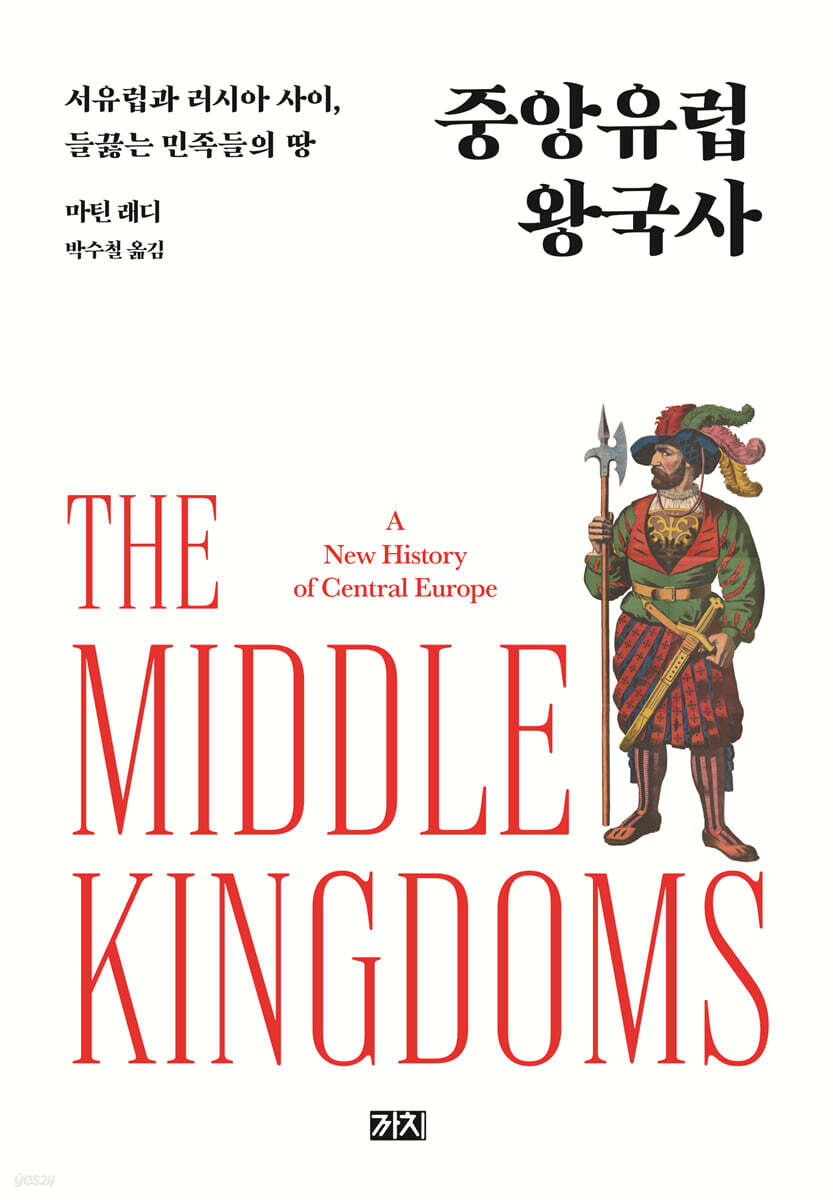 |
Description
Book Introduction
A land of conflict that has always been at the center of world history,
2,000 years of Central European history introduced for the first time in Korea
Martin Radi, who first introduced the history of the Habsburg family in "Habsburgs Rule the World" and received much love, has now compiled the vast history of Central Europe into a single volume.
Central Europe is often used as a geographical term referring to Germany, Austria, and Poland, but throughout history it has been a complex space where various ethnic groups interacted and constantly shifted borders.
Despite its geopolitical importance as a region located between Western Europe and Russia, there has not yet been a book in Korea that comprehensively covers the history of Central Europe.
Martin Rady, a leading expert on Central European history, illuminates the unique and significant history of Central Europe, not only highlighting the splendid civilizations shared by the kingdoms of Central Europe—their distinctive democratic traditions, aristocratic culture, and folklore—but also the darker history of ethnic cleansing and Stalinism.
Central Europe, based on a unique parliamentary culture that developed since the Middle Ages, practiced democracy before Western Europe, and later took the lead in enlightening its people based on strong state powers such as the Habsburg-Hungarian Empire and the Prussian Empire.
Additionally, by deeply studying language, appearance, and folklore to distinguish between various ethnic groups, each ethnic group was able to form its own identity.
But in the 20th century, strong state power transformed into totalitarianism, nationalism into racism, and Central Europe became a center of genocide.
Afterwards, the Soviet Union occupied Central Europe, and after the collapse of the Soviet Union, it became the stage for new democratic countries.
This book delves into the complex history of Central Europe, taking readers through the maelstrom of history from the Roman frontiers to the invasions of the Mongols, Tatars, and Turks, religious and counter-revolutionary revolutions, tumultuous parliaments that sometimes drew thousands of people, and the genocides of the 20th century.
The constantly shifting military and political boundaries remind us that even today's borders are not permanent.
Through this book, readers will be able to understand the complex yet fascinating events that have swayed the course of history and what they mean for us today.
2,000 years of Central European history introduced for the first time in Korea
Martin Radi, who first introduced the history of the Habsburg family in "Habsburgs Rule the World" and received much love, has now compiled the vast history of Central Europe into a single volume.
Central Europe is often used as a geographical term referring to Germany, Austria, and Poland, but throughout history it has been a complex space where various ethnic groups interacted and constantly shifted borders.
Despite its geopolitical importance as a region located between Western Europe and Russia, there has not yet been a book in Korea that comprehensively covers the history of Central Europe.
Martin Rady, a leading expert on Central European history, illuminates the unique and significant history of Central Europe, not only highlighting the splendid civilizations shared by the kingdoms of Central Europe—their distinctive democratic traditions, aristocratic culture, and folklore—but also the darker history of ethnic cleansing and Stalinism.
Central Europe, based on a unique parliamentary culture that developed since the Middle Ages, practiced democracy before Western Europe, and later took the lead in enlightening its people based on strong state powers such as the Habsburg-Hungarian Empire and the Prussian Empire.
Additionally, by deeply studying language, appearance, and folklore to distinguish between various ethnic groups, each ethnic group was able to form its own identity.
But in the 20th century, strong state power transformed into totalitarianism, nationalism into racism, and Central Europe became a center of genocide.
Afterwards, the Soviet Union occupied Central Europe, and after the collapse of the Soviet Union, it became the stage for new democratic countries.
This book delves into the complex history of Central Europe, taking readers through the maelstrom of history from the Roman frontiers to the invasions of the Mongols, Tatars, and Turks, religious and counter-revolutionary revolutions, tumultuous parliaments that sometimes drew thousands of people, and the genocides of the 20th century.
The constantly shifting military and political boundaries remind us that even today's borders are not permanent.
Through this book, readers will be able to understand the complex yet fascinating events that have swayed the course of history and what they mean for us today.
- You can preview some of the book's contents.
Preview
index
Introduction | The Dog Man and the Oak Forest of Berehove
Chapter 1: The Roman Empire, the Huns, and the Song of the Nibelungs
Chapter 2: The Franks and Charlemagne | Views from Lake Constance
Chapter 3: The Avars and the Slavs | Destruction and Conversion
Chapter 4: The Return of the Huns, the Slave States, and the Formation of Central Europe
Chapter 5: The Founding of the Holy Roman Empire and the Eastern Wastelands of Central Europe
Chapter 6: Mongol-Tatars, New Cities, New Knights
Chapter 7: Charles IV of Bohemia and the Prophets of the Antichrist
Chapter 8: Councils, Assembly, and Confusion of Laws
Chapter 9: Cities, Villages, and Freedom | From Friesland to Transylvania
Chapter 10: The Adventures of Henry Bolingbroke, High Prussia, and the Polish-Lithuanian Commonwealth
Chapter 11: Merchants, the Hanseatic League, and the House of Fugger
Chapter 12: The Dragon in the Porcelain Shop and the Habsburg Imagination
Chapter 13: The Raven King's Library and the Renaissance in Central Europe
Chapter 14: Luther's Reformation and the Court Painter of Saxony
Chapter 15 The Ottomans and the Long Frontier of Central Europe
Chapter 16: Tolerance, the Magician, and the Emperor of Alchemy
Chapter 17: The Restoration of Catholicism and the Thirty Years' War in Central Europe
Chapter 18: The State of the Countryside | Peasants, Gypsies, Jews, and Others
Chapter 19: The Human Laboratory of Official Scholars
Chapter 20: The Rise of Great States and the Twilight of the Balvasor Era
Chapter 21: The Prussian Way | Cemetery Puppets and the Machine State
Chapter 22: The Mutilated Orangutans of Europe | The Partition of Poland and Lithuania
Chapter 23: Napoleon and the Map of Central Europe
Chapter 24: The Magnificent World of the Moor Cat | Romanticism and the Brothers Grimm, Hanoverian Encyclopedia
Chapter 25: 1848 and the Coming of Revolution
Chapter 26: The Revenge of the Generals and the Formation of a Nation
Chapter 27: Bismarck's Germany and Kuen-Hedervari's Croatia
Chapter 28: Fairy Tales, Biology, and the Craniometrist
Chapter 29: 1914–1918 | The Great War in Central Europe
Chapter 30: Violence, the City, and the "Blue Angel"
Chapter 31: World War II, Ordinary Central Europeans, and Industrial Murder
Chapter 32: Stalinist Central Europe and Seething Discontent
Chapter 33: Communist Central Europe and its Collapse
Chapter 34: Post-Communism | Slavoj Žižek and the Lessons of Laibach
conclusion
Acknowledgements
More books to read
abbreviation
main
Biographical Index
Chapter 1: The Roman Empire, the Huns, and the Song of the Nibelungs
Chapter 2: The Franks and Charlemagne | Views from Lake Constance
Chapter 3: The Avars and the Slavs | Destruction and Conversion
Chapter 4: The Return of the Huns, the Slave States, and the Formation of Central Europe
Chapter 5: The Founding of the Holy Roman Empire and the Eastern Wastelands of Central Europe
Chapter 6: Mongol-Tatars, New Cities, New Knights
Chapter 7: Charles IV of Bohemia and the Prophets of the Antichrist
Chapter 8: Councils, Assembly, and Confusion of Laws
Chapter 9: Cities, Villages, and Freedom | From Friesland to Transylvania
Chapter 10: The Adventures of Henry Bolingbroke, High Prussia, and the Polish-Lithuanian Commonwealth
Chapter 11: Merchants, the Hanseatic League, and the House of Fugger
Chapter 12: The Dragon in the Porcelain Shop and the Habsburg Imagination
Chapter 13: The Raven King's Library and the Renaissance in Central Europe
Chapter 14: Luther's Reformation and the Court Painter of Saxony
Chapter 15 The Ottomans and the Long Frontier of Central Europe
Chapter 16: Tolerance, the Magician, and the Emperor of Alchemy
Chapter 17: The Restoration of Catholicism and the Thirty Years' War in Central Europe
Chapter 18: The State of the Countryside | Peasants, Gypsies, Jews, and Others
Chapter 19: The Human Laboratory of Official Scholars
Chapter 20: The Rise of Great States and the Twilight of the Balvasor Era
Chapter 21: The Prussian Way | Cemetery Puppets and the Machine State
Chapter 22: The Mutilated Orangutans of Europe | The Partition of Poland and Lithuania
Chapter 23: Napoleon and the Map of Central Europe
Chapter 24: The Magnificent World of the Moor Cat | Romanticism and the Brothers Grimm, Hanoverian Encyclopedia
Chapter 25: 1848 and the Coming of Revolution
Chapter 26: The Revenge of the Generals and the Formation of a Nation
Chapter 27: Bismarck's Germany and Kuen-Hedervari's Croatia
Chapter 28: Fairy Tales, Biology, and the Craniometrist
Chapter 29: 1914–1918 | The Great War in Central Europe
Chapter 30: Violence, the City, and the "Blue Angel"
Chapter 31: World War II, Ordinary Central Europeans, and Industrial Murder
Chapter 32: Stalinist Central Europe and Seething Discontent
Chapter 33: Communist Central Europe and its Collapse
Chapter 34: Post-Communism | Slavoj Žižek and the Lessons of Laibach
conclusion
Acknowledgements
More books to read
abbreviation
main
Biographical Index
Detailed image

Into the book
Invasion is a recurring theme in Central European history… …but historically Central Europe has never remained a passive victim.
--- pp.14-15
Just as the Huns overthrew the Roman Empire and redrawn the map of Europe, the Hungarians, whose name derives from the Huns, transformed the political landscape of Central Europe.
Through the destruction perpetrated by the Hungarians and the responses they provoked, Central Europe in this period began to take on a distinctive historical form.
--- p.87
In much of 13th-century Europe, including England and France, power was increasingly concentrated at the very top, while in the Holy Roman Empire power was moving downwards.
Rights that elsewhere belonged to the monarch became, in the Holy Roman Empire, the personal privileges of the native nobility.
--- p.101
Although they often competed with the rulers, the nobles' convened assemblies and general assemblies contributed to the stability of the kingdoms and duchies.
By convening the political community of a particular territory, either directly or through its representatives, the convening assembly conveyed a conception of the political community's space of activity, defined the physical boundaries within which power was exercised, and, because it contributed to decision-making, shared power.
--- p.154
Although medieval society was by no means democratic, popular participation in judgments, legislation, and local governance was widespread and intense in much of Central Europe.
--- p.157
Medieval Central Europe was a cradle of communal government and republican experiments, a place where top-down state formation and territorial integration clashed with bottom-up hegemony.
--- p.159
Printmaking and printing were first developed in Central Europe, and became the means by which Central European artistic styles and genres were disseminated internationally.
--- p.240
In fact, the 95 theses did not receive much response from Luther's fellow scholars at the time.
The reason there was no debate was not because the university authorities banned it (as some historians claim), but because no one was sufficiently interested in the subject.
--- p.254
From the 1740s, Maria Theresa began to centralize the Habsburg lands, imitating Prussian administrative methods.
Militarization and bureaucracy went hand in hand.
--- p.389
The mechanical elements of the Holocaust in Central Europe—officials busy with railway timetables, schedules, and personnel allocations, laborers pulling levers, and scientists using chemical apparatus—were as ordinary as the Central Europeans who perpetrated it.
--- p.596
At times, Central Europe, starting with Martin Luther, was under the protection of German monarchs long enough to establish strongholds throughout Western and Central Europe, leading to major events such as the Reformation.
--- pp.14-15
Just as the Huns overthrew the Roman Empire and redrawn the map of Europe, the Hungarians, whose name derives from the Huns, transformed the political landscape of Central Europe.
Through the destruction perpetrated by the Hungarians and the responses they provoked, Central Europe in this period began to take on a distinctive historical form.
--- p.87
In much of 13th-century Europe, including England and France, power was increasingly concentrated at the very top, while in the Holy Roman Empire power was moving downwards.
Rights that elsewhere belonged to the monarch became, in the Holy Roman Empire, the personal privileges of the native nobility.
--- p.101
Although they often competed with the rulers, the nobles' convened assemblies and general assemblies contributed to the stability of the kingdoms and duchies.
By convening the political community of a particular territory, either directly or through its representatives, the convening assembly conveyed a conception of the political community's space of activity, defined the physical boundaries within which power was exercised, and, because it contributed to decision-making, shared power.
--- p.154
Although medieval society was by no means democratic, popular participation in judgments, legislation, and local governance was widespread and intense in much of Central Europe.
--- p.157
Medieval Central Europe was a cradle of communal government and republican experiments, a place where top-down state formation and territorial integration clashed with bottom-up hegemony.
--- p.159
Printmaking and printing were first developed in Central Europe, and became the means by which Central European artistic styles and genres were disseminated internationally.
--- p.240
In fact, the 95 theses did not receive much response from Luther's fellow scholars at the time.
The reason there was no debate was not because the university authorities banned it (as some historians claim), but because no one was sufficiently interested in the subject.
--- p.254
From the 1740s, Maria Theresa began to centralize the Habsburg lands, imitating Prussian administrative methods.
Militarization and bureaucracy went hand in hand.
--- p.389
The mechanical elements of the Holocaust in Central Europe—officials busy with railway timetables, schedules, and personnel allocations, laborers pulling levers, and scientists using chemical apparatus—were as ordinary as the Central Europeans who perpetrated it.
--- p.596
At times, Central Europe, starting with Martin Luther, was under the protection of German monarchs long enough to establish strongholds throughout Western and Central Europe, leading to major events such as the Reformation.
--- p.654
Publisher's Review
From the frontiers of Rome to the birthplace of democracy and capitalism
Until today, it has become the scene of the most destructive conflict in Europe.
What is the most problematic region right now, Central Europe?
Central Europe has woven a complex history of invasions by various powers, absorption by tribes, revolutions, and wars.
The peoples who ruled this place changed continuously, starting with the Goths and Huns in the 4th century, to the Avars, Slavs, and Hungarians in the 7th and 9th centuries, and then to the Mongols and Ottomans in the late Middle Ages.
Afterwards, peoples such as the Bents, Lithuanians, and Cumans were absorbed into Central Europe.
The nature of this space, where different ethnicities were mixed, led to the absence of a “center” with strong power.
Although the Holy Roman Emperor proclaimed himself “King of the Germans,” the empire’s territories were in fact scattered and power was not centralized.
The princes of the Holy Roman Empire, which once comprised more than 1,000 individual petty states, gradually expanded their territory eastward and enjoyed their own autonomy.
The situation was similar in Hungary and Poland, which lay east of German lands.
Hungary, previously considered relatively backward, actively encouraged the migration of Germans from the west after the massive invasion of the Mongol-Tatars in the 13th century.
Germans who headed to Hungary established new settlements and became landowners (this is also the motif of the “Pied Piper” who played his pipe to attract German children to the east).
Poland, too, attracted residents after the Black Death that swept through Europe by offering large-scale tax cuts, self-government under a hereditary leader, and the right to establish its own internal rules.
The right of self-government granted to the settlers later became the basis for the formation of parliaments and the creation of customary law in each political unit, from villages to feudal estates and kingdoms.
Although countless dynasties were founded and fell, power in Central Europe was not the monopoly of monarchs.
Parliament served as a forum for political activity, allowing the public to voice their grievances and establish mutual obligations and rights.
Medieval Central Europe was “the home of communal government and republican experiments.”
The merchants' alliance is another form of power operating from below, showing that Central Europe also played a significant role in the development of capitalism.
Merchants formed alliances to protect themselves from pirates and illegal toll houses and to ensure the smooth movement of goods.
The most famous example, the Hanseatic League, was a union of merchant cities with up to 200 members.
The politics of moving from below came to an end with the rise of powerful dynasties such as the House of Luxembourg and the House of Habsburg.
While Sigismund of Luxembourg based his royal authority on a somewhat crude basis, the Habsburg rulers enacted laws “in their own right,” citing Roman law.
The more professional and academic terminology of governance than before has allowed politics from above to spread more clearly and rapidly.
In the late 17th century, as the specialized administrative discipline of Gwanbanghak developed, state control and censorship became more powerful.
Now the state “taught” the people, “trained” them as soldiers, and absorbed them into the bureaucracy.
After the revolutions of 1848, nationalism began to rise in Central Europe.
This revolution, which took place around Hungarian leaders, paradoxically instilled the concept of “nation” in the people by excluding all ethnic groups except the Magyars, the main ethnic group in Hungary.
Now each nation had to choose which ethnic group it belonged to, and they competed with each other, each believing that their own ethnic group was superior to the others.
The two world wars exploded the inherent conflicts in Central Europe, a country where different ethnic groups were mixed.
The new Central European states that emerged after World War I with the Treaty of Versailles were patchworks of parts that had broken off from the Prussian and Austro-Hungarian empires.
New states that lacked the capacity to unite various ethnic groups ruled authoritarianly and moved toward assimilating or exterminating ethnic minorities.
The Central European countries that were part of the Soviet Union in the 20th century emerged as new democratic states with the dissolution of the Soviet Union.
However, the region still faces challenges such as political corruption, media control, and dictatorship, and threats from external forces remain ongoing.
Martin Rady emphasizes that Central Europe is at the heart of Europe, both geographically and politically, and that stability in this region is crucial for peace in all of Europe.
In today's world, where interests from all over the world are intertwined, the geopolitical importance of Central Europe is by no means unrelated to our country.
This book, which combines solid historical foundations with current events, will allow readers to gain a deeper understanding of Central Europe, a region they previously lacked.
The birthplace of the Reformation, nationalism, and the symphony
Cultures developed in Central Europe
Central Europe has developed a unique culture that respects the identities of its diverse peoples while also distinguishing them.
A representative example of respect for diverse identities is the tolerant atmosphere toward religion.
After Martin Luther initiated the Reformation, all kinds of religious sects sprang up in Central Europe.
However, unlike Western Europe, where the persecution of heresy cost countless lives or forced them to flee their homes, in Central Europe they were able to preserve their faith in a relatively tolerant atmosphere.
Meanwhile, scholars in Central Europe distinguished the characteristics of each ethnic group by studying their history, culture, and language.
For example, the Brothers Grimm, based on the idea that a common language and culture are the fundamental elements of a nation, collected folklore passed down through generations in order to teach the German people to whom they belonged “what kind of people Germans are.”
The new ideas of religious reform and nationalism spread throughout the world through the printing press and engraving that developed in Central Europe.
Central Europe is also the birthplace of classical music.
Musicians, previously considered mere merchants who dined with servants, emerged as stars in Central Europe in the late 18th century.
In Vienna, where Mozart was active, and Hungary, where Haydn was active, music was reborn as an art form that had to be listened to with the right attitude, rather than as background music played while doing other things.
Martin Rady, a leading expert on Central Europe, culminates a lifetime of research.
The first domestic book to introduce the history of Central Europe in detail.
『History of the Central European Kingdoms』 is the first comprehensive introduction to the history of Central Europe in Korea.
The reason there has never been a book that deals with the history of Central Europe in depth is that not only have its political boundaries constantly shifted, but the ethnic groups that live there are also diverse, making it difficult to cover.
Martin Rady, recognized as the leading expert on Central European history, defines Central Europe not simply as a geographical concept, but as a space where various peoples interacted, and extends its history to include present-day Poland, Hungary, the Czech Republic, the German lands, Ukraine, Switzerland, and the Baltic states.
This perspective is useful because it allows us to understand the overall history of the region, transcending the difficulties of writing Central European history, which can easily get lost among the kingdoms that constantly appear and disappear.
Additionally, maps inserted at appropriate places help to grasp the changing situation in Central Europe at a glance.
Rather than tracing the history of specific Central European states, this book examines the unique politics, art, economy, and culture shared by the kingdoms of the region, reimagining the region as a conceptual rather than a geographical space.
Once home to one of the strongest parliamentary cultures in the world, the region veered in the opposite direction, towards totalitarianism centered around a strong state power, and then, under Soviet occupation, seethed with aspirations for democracy.
This book will provide readers with a comprehensive history of Central Europe and an understanding of the region's geopolitical importance.
Until today, it has become the scene of the most destructive conflict in Europe.
What is the most problematic region right now, Central Europe?
Central Europe has woven a complex history of invasions by various powers, absorption by tribes, revolutions, and wars.
The peoples who ruled this place changed continuously, starting with the Goths and Huns in the 4th century, to the Avars, Slavs, and Hungarians in the 7th and 9th centuries, and then to the Mongols and Ottomans in the late Middle Ages.
Afterwards, peoples such as the Bents, Lithuanians, and Cumans were absorbed into Central Europe.
The nature of this space, where different ethnicities were mixed, led to the absence of a “center” with strong power.
Although the Holy Roman Emperor proclaimed himself “King of the Germans,” the empire’s territories were in fact scattered and power was not centralized.
The princes of the Holy Roman Empire, which once comprised more than 1,000 individual petty states, gradually expanded their territory eastward and enjoyed their own autonomy.
The situation was similar in Hungary and Poland, which lay east of German lands.
Hungary, previously considered relatively backward, actively encouraged the migration of Germans from the west after the massive invasion of the Mongol-Tatars in the 13th century.
Germans who headed to Hungary established new settlements and became landowners (this is also the motif of the “Pied Piper” who played his pipe to attract German children to the east).
Poland, too, attracted residents after the Black Death that swept through Europe by offering large-scale tax cuts, self-government under a hereditary leader, and the right to establish its own internal rules.
The right of self-government granted to the settlers later became the basis for the formation of parliaments and the creation of customary law in each political unit, from villages to feudal estates and kingdoms.
Although countless dynasties were founded and fell, power in Central Europe was not the monopoly of monarchs.
Parliament served as a forum for political activity, allowing the public to voice their grievances and establish mutual obligations and rights.
Medieval Central Europe was “the home of communal government and republican experiments.”
The merchants' alliance is another form of power operating from below, showing that Central Europe also played a significant role in the development of capitalism.
Merchants formed alliances to protect themselves from pirates and illegal toll houses and to ensure the smooth movement of goods.
The most famous example, the Hanseatic League, was a union of merchant cities with up to 200 members.
The politics of moving from below came to an end with the rise of powerful dynasties such as the House of Luxembourg and the House of Habsburg.
While Sigismund of Luxembourg based his royal authority on a somewhat crude basis, the Habsburg rulers enacted laws “in their own right,” citing Roman law.
The more professional and academic terminology of governance than before has allowed politics from above to spread more clearly and rapidly.
In the late 17th century, as the specialized administrative discipline of Gwanbanghak developed, state control and censorship became more powerful.
Now the state “taught” the people, “trained” them as soldiers, and absorbed them into the bureaucracy.
After the revolutions of 1848, nationalism began to rise in Central Europe.
This revolution, which took place around Hungarian leaders, paradoxically instilled the concept of “nation” in the people by excluding all ethnic groups except the Magyars, the main ethnic group in Hungary.
Now each nation had to choose which ethnic group it belonged to, and they competed with each other, each believing that their own ethnic group was superior to the others.
The two world wars exploded the inherent conflicts in Central Europe, a country where different ethnic groups were mixed.
The new Central European states that emerged after World War I with the Treaty of Versailles were patchworks of parts that had broken off from the Prussian and Austro-Hungarian empires.
New states that lacked the capacity to unite various ethnic groups ruled authoritarianly and moved toward assimilating or exterminating ethnic minorities.
The Central European countries that were part of the Soviet Union in the 20th century emerged as new democratic states with the dissolution of the Soviet Union.
However, the region still faces challenges such as political corruption, media control, and dictatorship, and threats from external forces remain ongoing.
Martin Rady emphasizes that Central Europe is at the heart of Europe, both geographically and politically, and that stability in this region is crucial for peace in all of Europe.
In today's world, where interests from all over the world are intertwined, the geopolitical importance of Central Europe is by no means unrelated to our country.
This book, which combines solid historical foundations with current events, will allow readers to gain a deeper understanding of Central Europe, a region they previously lacked.
The birthplace of the Reformation, nationalism, and the symphony
Cultures developed in Central Europe
Central Europe has developed a unique culture that respects the identities of its diverse peoples while also distinguishing them.
A representative example of respect for diverse identities is the tolerant atmosphere toward religion.
After Martin Luther initiated the Reformation, all kinds of religious sects sprang up in Central Europe.
However, unlike Western Europe, where the persecution of heresy cost countless lives or forced them to flee their homes, in Central Europe they were able to preserve their faith in a relatively tolerant atmosphere.
Meanwhile, scholars in Central Europe distinguished the characteristics of each ethnic group by studying their history, culture, and language.
For example, the Brothers Grimm, based on the idea that a common language and culture are the fundamental elements of a nation, collected folklore passed down through generations in order to teach the German people to whom they belonged “what kind of people Germans are.”
The new ideas of religious reform and nationalism spread throughout the world through the printing press and engraving that developed in Central Europe.
Central Europe is also the birthplace of classical music.
Musicians, previously considered mere merchants who dined with servants, emerged as stars in Central Europe in the late 18th century.
In Vienna, where Mozart was active, and Hungary, where Haydn was active, music was reborn as an art form that had to be listened to with the right attitude, rather than as background music played while doing other things.
Martin Rady, a leading expert on Central Europe, culminates a lifetime of research.
The first domestic book to introduce the history of Central Europe in detail.
『History of the Central European Kingdoms』 is the first comprehensive introduction to the history of Central Europe in Korea.
The reason there has never been a book that deals with the history of Central Europe in depth is that not only have its political boundaries constantly shifted, but the ethnic groups that live there are also diverse, making it difficult to cover.
Martin Rady, recognized as the leading expert on Central European history, defines Central Europe not simply as a geographical concept, but as a space where various peoples interacted, and extends its history to include present-day Poland, Hungary, the Czech Republic, the German lands, Ukraine, Switzerland, and the Baltic states.
This perspective is useful because it allows us to understand the overall history of the region, transcending the difficulties of writing Central European history, which can easily get lost among the kingdoms that constantly appear and disappear.
Additionally, maps inserted at appropriate places help to grasp the changing situation in Central Europe at a glance.
Rather than tracing the history of specific Central European states, this book examines the unique politics, art, economy, and culture shared by the kingdoms of the region, reimagining the region as a conceptual rather than a geographical space.
Once home to one of the strongest parliamentary cultures in the world, the region veered in the opposite direction, towards totalitarianism centered around a strong state power, and then, under Soviet occupation, seethed with aspirations for democracy.
This book will provide readers with a comprehensive history of Central Europe and an understanding of the region's geopolitical importance.
GOODS SPECIFICS
- Date of issue: October 20, 2025
- Format: Hardcover book binding method guide
- Page count, weight, size: 736 pages | 930g | 150*217*43mm
- ISBN13: 9788972918837
- ISBN10: 8972918830
You may also like
카테고리
korean


korean

![GQ KOREA Mark (Monthly): December [2025]](http://librairie.coreenne.fr/cdn/shop/files/8ef265dbbfbf186523ed75ba7319009d.jpg?v=1765340328&width=3840)


