

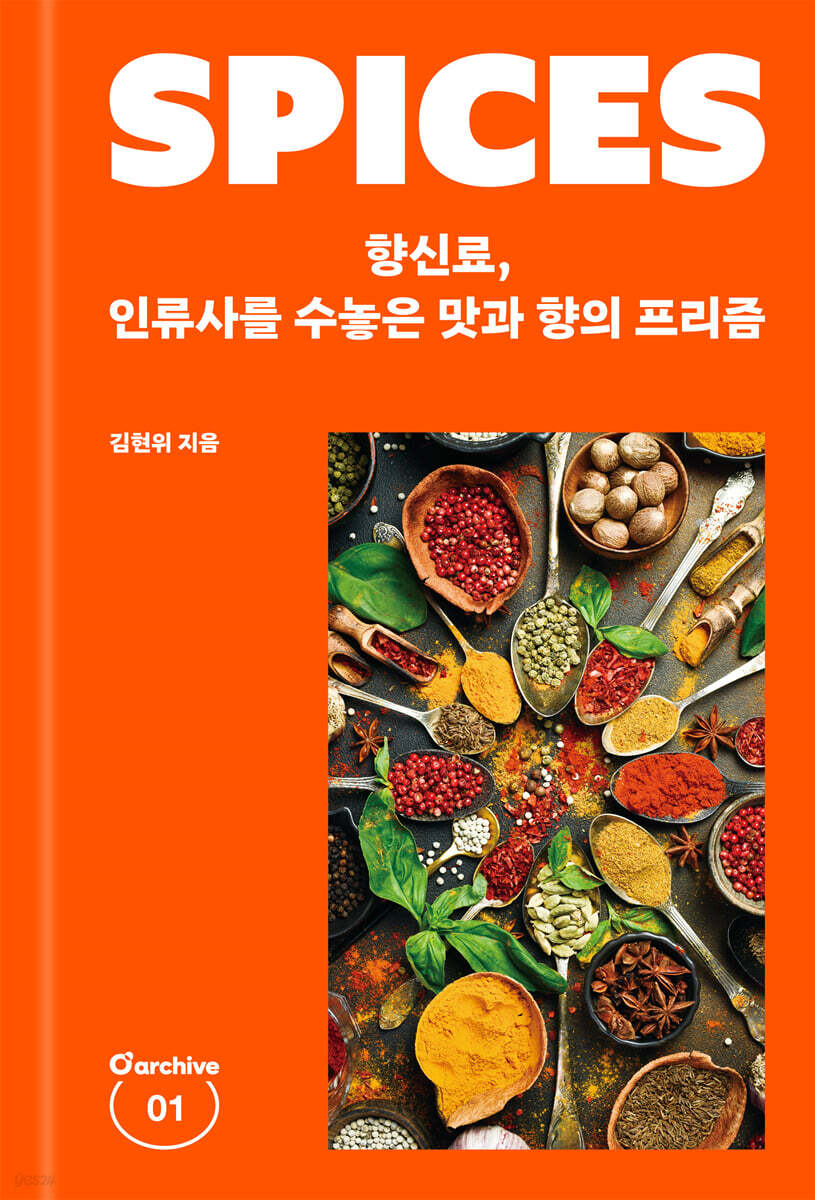
Spices, the prism of flavor and aroma that has adorned human history
 |
Description
Book Introduction
- A word from MD
-
The alluring scent and taste that color the cultureAn encyclopedia covering almost everything from the flavors and types of spices, to cultural spheres and market sizes, that fill the palates of mankind.
It delicately expresses the fragrance and taste of spices that have enriched the taste buds of mankind.
October 21, 2025. History PD Ahn Hyun-jae
A handful of spices, the taste and history of mankind,
And in search of that alluring scent and taste that has colored the culture
Was it really garlic that the bear and tiger in the Dangun myth ate?
Why do people put ginger in cookies?
What is the relationship between hot peppers and sweet paprika?
Are nutmeg and mace still grown only in the Spice Islands?
It's hard to imagine a meal without spices.
Seolleongtang without green onions and pepper, or galbijjim without ginger in the braising sauce, would taste like a dish without any flavor.
There is no one who does not know that spices enhance the taste and aroma of food, and it is also well known that spices have been a central item of trade between the East and the West since ancient times, and that the desire and competition for spices were the driving force that opened the Age of Exploration.
However, there has been no book that comprehensively covers what spices actually mean, how many different types there are, what foods use spices in different cultures, how the spices that our people have loved for a long time differ from the spices mainly used by people around the world, and the size of the spice market.
Tabi Publishing's new book, "Spices, the Prism of Taste and Fragrance that Decorated Human History," covers everything about spices, the essence that has enriched human food culture.
And in search of that alluring scent and taste that has colored the culture
Was it really garlic that the bear and tiger in the Dangun myth ate?
Why do people put ginger in cookies?
What is the relationship between hot peppers and sweet paprika?
Are nutmeg and mace still grown only in the Spice Islands?
It's hard to imagine a meal without spices.
Seolleongtang without green onions and pepper, or galbijjim without ginger in the braising sauce, would taste like a dish without any flavor.
There is no one who does not know that spices enhance the taste and aroma of food, and it is also well known that spices have been a central item of trade between the East and the West since ancient times, and that the desire and competition for spices were the driving force that opened the Age of Exploration.
However, there has been no book that comprehensively covers what spices actually mean, how many different types there are, what foods use spices in different cultures, how the spices that our people have loved for a long time differ from the spices mainly used by people around the world, and the size of the spice market.
Tabi Publishing's new book, "Spices, the Prism of Taste and Fragrance that Decorated Human History," covers everything about spices, the essence that has enriched human food culture.
- You can preview some of the book's contents.
Preview
index
A Long Journey of Flavors Connecting the World: A Book of Spices, Part 4
PART 1 What are spices?
01 Definition of spices 14
02 Origin of Spices 18
PART 2: The World History of Spices
03 From Ancient to Modern Times: How Spices Changed History 24
04 Modern Spices, Perception and Status 45
PART 3 Korean Spices
05 History and Culture of Korean Spices 50
06 Spices Loved by Koreans 57
PART 4 Types and characteristics of spices
07 Plants that fascinate humans, single-item spices 84
08 A Symbol of Regional Food Culture: Mixed Spices 262
PART 5 Food Science of Spices
09 Spices add color to local cuisine 298
10 World Spice Cuisines 300
11 Combinations of Ingredients and Spices 325
PART 6 The Science of Spices
12 The Cooking Science of Spices 1 336
13 The Cooking Science of Spices 2 347
14 The Science of Spices That Give It a Hot Flavor 362
15 The Science of Spice Processing 382
PART 7 The Health Science of Spices
16 Spices in Ancient Medicine 388
17 Spices in Modern Medicine 390
PART 8 Geography of Spice Production and Consumption
18 Major Spice Production Areas 408
19 Current Status of Cultivation and Production of Spices 410
20 Global Spice Market Status 422
21 Current Status of the Korean Spice Market 432
Appendix 438
Reference 451
Plate source 468
PART 1 What are spices?
01 Definition of spices 14
02 Origin of Spices 18
PART 2: The World History of Spices
03 From Ancient to Modern Times: How Spices Changed History 24
04 Modern Spices, Perception and Status 45
PART 3 Korean Spices
05 History and Culture of Korean Spices 50
06 Spices Loved by Koreans 57
PART 4 Types and characteristics of spices
07 Plants that fascinate humans, single-item spices 84
08 A Symbol of Regional Food Culture: Mixed Spices 262
PART 5 Food Science of Spices
09 Spices add color to local cuisine 298
10 World Spice Cuisines 300
11 Combinations of Ingredients and Spices 325
PART 6 The Science of Spices
12 The Cooking Science of Spices 1 336
13 The Cooking Science of Spices 2 347
14 The Science of Spices That Give It a Hot Flavor 362
15 The Science of Spice Processing 382
PART 7 The Health Science of Spices
16 Spices in Ancient Medicine 388
17 Spices in Modern Medicine 390
PART 8 Geography of Spice Production and Consumption
18 Major Spice Production Areas 408
19 Current Status of Cultivation and Production of Spices 410
20 Global Spice Market Status 422
21 Current Status of the Korean Spice Market 432
Appendix 438
Reference 451
Plate source 468
Detailed image

Into the book
This Shinan underwater relic has made a significant contribution to the study of porcelain from the Song and Yuan Dynasties of China in the 14th century, as well as to the study of trade history and ships among Korea, China, and Japan at the time. What is surprising is that a large amount of pepper was discovered inside the ship.
This shows that pepper was also an important trade item in East Asia.
--- p.65
The Dutch government, unaware that nutmeg and mace come from the same fruit, is said to have ordered the locals to cut down nutmeg trees and plant mace trees, as mace was in much greater demand and more expensive.
--- p.147
Magellan, who had attempted to open a route to the Spice Islands (Moluccas) across the Atlantic and Pacific Oceans, lost his life in the Philippines during the voyage, but the rest of his party continued their voyage and eventually succeeded in landing in the Moluccas. They loaded one remaining ship with cloves and returned home three years after setting sail.
It is said that the King of Spain made a huge profit from this alone, more than covering the entire cost of Magellan's circumnavigation of the world.
--- p.153
(Saffron) During the 15 to 20 day flowering period, the flowers must be picked by hand one by one, carefully separated from the stigmas, and dried immediately.
Therefore, since the production volume is small and it requires time and effort, it has been traded at a very high price since the past.
It is about 10 times more expensive than vanilla and 50 times more expensive than cardamom.
--- p.206
Rather than being dominated by the taste of a specific single spice, the flavors of each spice complement each other and create harmony, enriching the overall taste of the dish.
The synergistic effect of spices makes the dish more flavorful.
Additionally, it can be used in a wider range of dishes than individual spices, so its range of applications is wider.
--- p.338
Spices with a spicy flavor vary in intensity, but they are all stimulating.
This stimulation is several times stronger than the stimulation of salt.
In other words, the ingredients of spicy spices themselves do not replace salt, but rather the stimulation of the spices makes food taste good enough to eat without salt.
--- p.353
The non-volatile spicy component of chili peppers (capsaicin) is a pain sensation, but its expression is due to information transmission from the tongue nerve endings, while the volatile spicy component of wasabi and mustard (allyl isothiocyanate) is expressed through an olfactory mechanism.
The spiciness of chili peppers lasts a long time as a pain sensation on the tongue, while the spiciness of wasabi or mustard feels like a stinging sensation in the nose as soon as you eat it and then quickly disappears, and this phenomenon is due to this difference in mechanism.
--- pp.368-369
The reason why the scent of rosemary is effective in improving memory is because of its main aromatic component, cineole. Research has shown that smelling the scent of cineole increases blood flow to the brain.
The stimulation of scent increases blood flow to the brain and activates brain cells, which in turn improves memory.
Even if the amount is so small that you can't smell it with your nose, it has been revealed that the fragrance components enter the bloodstream through the respiratory system and directly affect the brain.
This shows that pepper was also an important trade item in East Asia.
--- p.65
The Dutch government, unaware that nutmeg and mace come from the same fruit, is said to have ordered the locals to cut down nutmeg trees and plant mace trees, as mace was in much greater demand and more expensive.
--- p.147
Magellan, who had attempted to open a route to the Spice Islands (Moluccas) across the Atlantic and Pacific Oceans, lost his life in the Philippines during the voyage, but the rest of his party continued their voyage and eventually succeeded in landing in the Moluccas. They loaded one remaining ship with cloves and returned home three years after setting sail.
It is said that the King of Spain made a huge profit from this alone, more than covering the entire cost of Magellan's circumnavigation of the world.
--- p.153
(Saffron) During the 15 to 20 day flowering period, the flowers must be picked by hand one by one, carefully separated from the stigmas, and dried immediately.
Therefore, since the production volume is small and it requires time and effort, it has been traded at a very high price since the past.
It is about 10 times more expensive than vanilla and 50 times more expensive than cardamom.
--- p.206
Rather than being dominated by the taste of a specific single spice, the flavors of each spice complement each other and create harmony, enriching the overall taste of the dish.
The synergistic effect of spices makes the dish more flavorful.
Additionally, it can be used in a wider range of dishes than individual spices, so its range of applications is wider.
--- p.338
Spices with a spicy flavor vary in intensity, but they are all stimulating.
This stimulation is several times stronger than the stimulation of salt.
In other words, the ingredients of spicy spices themselves do not replace salt, but rather the stimulation of the spices makes food taste good enough to eat without salt.
--- p.353
The non-volatile spicy component of chili peppers (capsaicin) is a pain sensation, but its expression is due to information transmission from the tongue nerve endings, while the volatile spicy component of wasabi and mustard (allyl isothiocyanate) is expressed through an olfactory mechanism.
The spiciness of chili peppers lasts a long time as a pain sensation on the tongue, while the spiciness of wasabi or mustard feels like a stinging sensation in the nose as soon as you eat it and then quickly disappears, and this phenomenon is due to this difference in mechanism.
--- pp.368-369
The reason why the scent of rosemary is effective in improving memory is because of its main aromatic component, cineole. Research has shown that smelling the scent of cineole increases blood flow to the brain.
The stimulation of scent increases blood flow to the brain and activates brain cells, which in turn improves memory.
Even if the amount is so small that you can't smell it with your nose, it has been revealed that the fragrance components enter the bloodstream through the respiratory system and directly affect the brain.
--- pp.402-403
Publisher's Review
A food culture steeped in spices
The word for spice is derived from the Latin word species (species), and has been translated into English spice and French epice.
In East Asia, the Chinese characters '物料' or '料物' refer to fragrant ingredients, and in the 20th century, Japan began using the Chinese character '향식料', which is a translation of the English word 'spice'.
Spices are a term used in both the East and the West to refer to plants with special flavors and aromas that are used not only as seasonings to add flavor to food but also as medicines to prevent and treat diseases.
In ancient civilizations, spices were precious and valuable items used as medicines, preservatives, and flavorings before being used as food.
This esteem for spices was due not only to their captivating flavor and aroma, but also to their rarity, being produced only in tropical Asia (the obsession with pepper can also be found in Joseon).
Spices have woven countless legends and stories along the ancient trade routes that stretched from tropical Asia through Central Asia to the Mediterranean region, and were a driving force behind the Age of Exploration and the creation of the modern European-led world through colonialism.
What makes spices interesting in terms of food culture is the 'regionality' that comes from this historical background.
In addition to the characteristics of plants that grow only in specific climates, the complex patterns of spice use resulting from the history of trade, conquest, and colonial rule between the East and the West soon become characteristics of the local food culture.
Just as the intense yellow color of turmeric symbolizes Indian food culture, the use of abundant herbs symbolizes Mediterranean food culture, and the scent of chili pepper and garlic symbolizes Korean food culture.
Humans have used spices obtained from a single plant on their own, but they have also blended various spices to create the unique flavors of each region's food culture.
A representative example is Indian masala.
It is no exaggeration to say that every country has its own unique blend of spices, including not only India and Southeast Asia, which can be considered the birthplace of spices, but also China's five-spice powder, England's pudding spice, North Africa's harissa, and America's barbecue spice rub.
"Spices, the Prism of Flavor and Fragrance that Embroidered Human History" not only introduces the origins and properties, flavor characteristics, and culinary aptitudes of 37 individual spices, but also closely examines 30 mixed spices beloved across various cultures.
Furthermore, it goes beyond simply introducing spices themselves, and by covering representative dishes from each country that utilize spices, it illuminates the diversity of world food cultures as seen through the prism of spices.
A Healthy Future Opened by Spices
It is said that medieval nobles used more pepper than necessary to show off their wealth and status.
No matter how much the refreshing spiciness and aroma of pepper masked the gamey smell of meat and enhanced its flavor, food with too much pepper would not have been tasty.
What does it take to string the "beads" of spices together to transform food into a "treasure"? It's science.
This book scientifically explains the tips for properly utilizing spices in cooking.
In addition to the culinary science behind blending, aging, and roasting to effectively bring out the flavors and aromas of distinct spices and blend them together, we'll also explore the synergistic and inhibitory effects that enhance and subdue salty and sweet flavors, exploring how to utilize spices for low-salt and low-sugar diets.
We also examine the mechanism by which our body perceives spicy taste by comparing ingredients such as chili pepper, pepper, ginger, garlic, mustard, and wasabi.
The flavors, aromas, and pigments of these spices come from chemicals that the plants themselves need to survive. This book also discusses the health benefits of the phytochemical components of spices for humans.
The author of this book is Kim Hyeon-wi, director of Ottogi Food Culture Center.
Based on his long history of scientifically exploring food as a researcher, he wrote this book to reexamine the value of spices in food culture and humanities.
The detailed description, which is imbued with his love for spices, seems to show his career at Ottogi Co., Ltd., which introduced the charm of spices to this country before anyone else through 'Ottogi Curry'.
Meanwhile, this book is the first in the Oak Archive series.
O'archive is a series of books planned by Ottogi Co., Ltd. to contribute to creating a richer and healthier food culture. It contains the will to explore and record the ingredients, food, and culture we encounter in our daily lives.
'O'Archive' will continue to publish books comprehensively covering a variety of foods, building a food culture archive that can be referenced by those who wish to study food, those interested in food culture, and those who enjoy food.
The word for spice is derived from the Latin word species (species), and has been translated into English spice and French epice.
In East Asia, the Chinese characters '物料' or '料物' refer to fragrant ingredients, and in the 20th century, Japan began using the Chinese character '향식料', which is a translation of the English word 'spice'.
Spices are a term used in both the East and the West to refer to plants with special flavors and aromas that are used not only as seasonings to add flavor to food but also as medicines to prevent and treat diseases.
In ancient civilizations, spices were precious and valuable items used as medicines, preservatives, and flavorings before being used as food.
This esteem for spices was due not only to their captivating flavor and aroma, but also to their rarity, being produced only in tropical Asia (the obsession with pepper can also be found in Joseon).
Spices have woven countless legends and stories along the ancient trade routes that stretched from tropical Asia through Central Asia to the Mediterranean region, and were a driving force behind the Age of Exploration and the creation of the modern European-led world through colonialism.
What makes spices interesting in terms of food culture is the 'regionality' that comes from this historical background.
In addition to the characteristics of plants that grow only in specific climates, the complex patterns of spice use resulting from the history of trade, conquest, and colonial rule between the East and the West soon become characteristics of the local food culture.
Just as the intense yellow color of turmeric symbolizes Indian food culture, the use of abundant herbs symbolizes Mediterranean food culture, and the scent of chili pepper and garlic symbolizes Korean food culture.
Humans have used spices obtained from a single plant on their own, but they have also blended various spices to create the unique flavors of each region's food culture.
A representative example is Indian masala.
It is no exaggeration to say that every country has its own unique blend of spices, including not only India and Southeast Asia, which can be considered the birthplace of spices, but also China's five-spice powder, England's pudding spice, North Africa's harissa, and America's barbecue spice rub.
"Spices, the Prism of Flavor and Fragrance that Embroidered Human History" not only introduces the origins and properties, flavor characteristics, and culinary aptitudes of 37 individual spices, but also closely examines 30 mixed spices beloved across various cultures.
Furthermore, it goes beyond simply introducing spices themselves, and by covering representative dishes from each country that utilize spices, it illuminates the diversity of world food cultures as seen through the prism of spices.
A Healthy Future Opened by Spices
It is said that medieval nobles used more pepper than necessary to show off their wealth and status.
No matter how much the refreshing spiciness and aroma of pepper masked the gamey smell of meat and enhanced its flavor, food with too much pepper would not have been tasty.
What does it take to string the "beads" of spices together to transform food into a "treasure"? It's science.
This book scientifically explains the tips for properly utilizing spices in cooking.
In addition to the culinary science behind blending, aging, and roasting to effectively bring out the flavors and aromas of distinct spices and blend them together, we'll also explore the synergistic and inhibitory effects that enhance and subdue salty and sweet flavors, exploring how to utilize spices for low-salt and low-sugar diets.
We also examine the mechanism by which our body perceives spicy taste by comparing ingredients such as chili pepper, pepper, ginger, garlic, mustard, and wasabi.
The flavors, aromas, and pigments of these spices come from chemicals that the plants themselves need to survive. This book also discusses the health benefits of the phytochemical components of spices for humans.
The author of this book is Kim Hyeon-wi, director of Ottogi Food Culture Center.
Based on his long history of scientifically exploring food as a researcher, he wrote this book to reexamine the value of spices in food culture and humanities.
The detailed description, which is imbued with his love for spices, seems to show his career at Ottogi Co., Ltd., which introduced the charm of spices to this country before anyone else through 'Ottogi Curry'.
Meanwhile, this book is the first in the Oak Archive series.
O'archive is a series of books planned by Ottogi Co., Ltd. to contribute to creating a richer and healthier food culture. It contains the will to explore and record the ingredients, food, and culture we encounter in our daily lives.
'O'Archive' will continue to publish books comprehensively covering a variety of foods, building a food culture archive that can be referenced by those who wish to study food, those interested in food culture, and those who enjoy food.
GOODS SPECIFICS
- Date of issue: October 20, 2025
- Format: Hardcover book binding method guide
- Page count, weight, size: 472 pages | 976g | 160*230*32mm
- ISBN13: 9791192169538
You may also like
카테고리
korean


korean

![GQ KOREA Mark (Monthly): December [2025]](http://librairie.coreenne.fr/cdn/shop/files/8ef265dbbfbf186523ed75ba7319009d.jpg?v=1765340328&width=3840)


