

Pilgrimage to the National Museum of Korea 1
 |
Description
Book Introduction
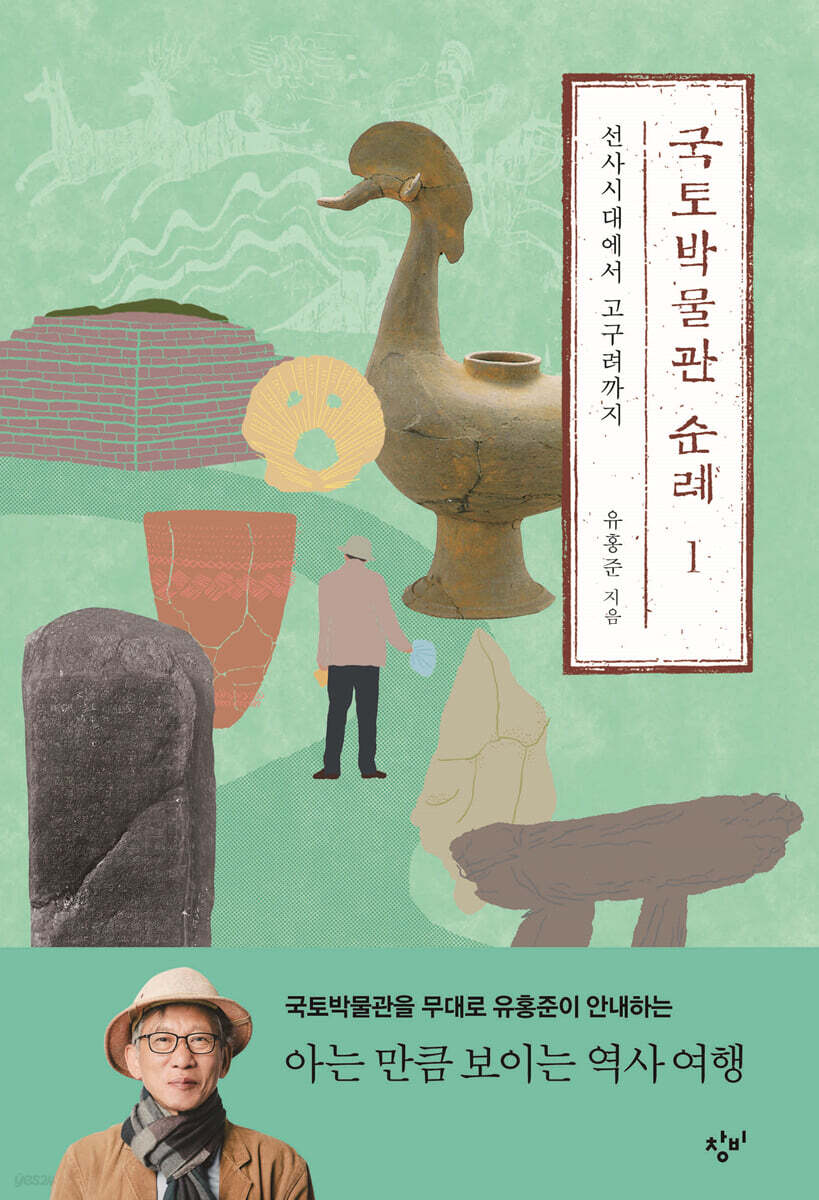
Yoo Hong-jun's new start, 『Pilgrimage to the National Museum of Korea』 A historical journey to visit representative relics of each era. Our era's 'cultural evangelist' Yoo Hong-jun has broken ground for a new series. This is the "National Museum Pilgrimage" series, which examines our history in chronological order and encounters regions and cultural heritage sites representing each era. Thirty years after the publication of "My Cultural Heritage Tour," which began with the slogan "The entire country is a museum," this is a new and evolved tour that seeks out the essence of our history, which could not be fully captured in the tour, in the National Museum of Korea. Starting with volumes 1 and 2, which cover prehistoric and ancient history, it will continue to modern and contemporary times. "Pilgrimage to the National Museum" is filled with insights and charm that can only be felt in the writings of Yoo Hong-jun, who has been touring and introducing the sites of our history for decades, encompassing history, culture, relics, and sites. Additionally, it provides a detailed introduction to the field trip sites and provides in-depth explanations of the relevant eras, making it a valuable historical textbook for both adult and youth readers. This book will be an excellent guide for readers who want to restart their studies of Korean history, those who want to embark on a historical tour with family or friends, or those who are involved in schools or clubs preparing field trips. Let's listen to the new historical story told by the National Museum of Korea. |
- You can preview some of the book's contents.
Preview
index
Preface: Beginning a Pilgrimage to the National Museum of Korea
Jeongok-ri, Yeoncheon, Paleolithic Age
The Story of the Hand Axe That Changed the World Archaeological Map
Yeongdo, Busan, Neolithic Age
Shell mounds, comb-patterned pottery, and scallop faces
Ulsan Eonyang, Neolithic, Bronze, and Early Iron Ages
The lives of prehistoric people as told by petroglyphs
Goguryeo 1 Manchuria Yalu River
The river does not divide or block
Goguryeo 2 Manchurian Huanren
Onyeosanseong Fortress and Jumong's founding myth
Goguryeo 3 Manchurian family
Goguryeo's rise at Hwandosanseong Fortress
Jeongok-ri, Yeoncheon, Paleolithic Age
The Story of the Hand Axe That Changed the World Archaeological Map
Yeongdo, Busan, Neolithic Age
Shell mounds, comb-patterned pottery, and scallop faces
Ulsan Eonyang, Neolithic, Bronze, and Early Iron Ages
The lives of prehistoric people as told by petroglyphs
Goguryeo 1 Manchuria Yalu River
The river does not divide or block
Goguryeo 2 Manchurian Huanren
Onyeosanseong Fortress and Jumong's founding myth
Goguryeo 3 Manchurian family
Goguryeo's rise at Hwandosanseong Fortress
Detailed image

Into the book
After much thought, I decided to embark on a 'pilgrimage to the National Museum of Korea'.
The goal is to visit historical sites that have not yet been covered in the travelogue, starting from prehistoric times, through the Three Kingdoms, Gaya, Balhae, Unified Silla, Goryeo, and Joseon, and continuing to modern times.
So, while enjoying the trip, I write a travelogue that naturally studies history.
--- p.5
“The entire country is a museum.”
--- p.6
Anyone who visits the Jeongok Prehistoric Museum and gazes upon the restored fossils of primitive humans, a glimpse of human evolution, is bound to be struck by a sense of wonder about the long journey we have taken to get to where we are today. Perhaps because modern life is so difficult, they also find themselves yearning to return to the days of apes, when they lived as mere molecules within nature.
--- p.42~43
In that moment, my imagination about the border was shattered.
We unconsciously think of a border as a place surrounded by barbed wire and guarded by soldiers with guns day and night.
The East Sea isn't even a border, but isn't there a barbed wire fence?
But in Dandong, there was no such border device or national defense tension.
--- p.205~206
That night when I returned to the hotel, poet Shin Kyeong-rim told me to go to bed first, saying that he would rather write a poem about the Yalu River than play Go today, and then went out to take a walk under the night sky of Dandong.
And when I woke up in the morning, there was a poem written on the manuscript paper.
The title was 'The river does not divide, it does not block.'
--- p.212
I thought I was going crazy.
Artist Lee Jong-gu, who is known for his quiet demeanor, finally managed to say something.
“I think it would be good to quit everything and rest here for a few days.”
The goal is to visit historical sites that have not yet been covered in the travelogue, starting from prehistoric times, through the Three Kingdoms, Gaya, Balhae, Unified Silla, Goryeo, and Joseon, and continuing to modern times.
So, while enjoying the trip, I write a travelogue that naturally studies history.
--- p.5
“The entire country is a museum.”
--- p.6
Anyone who visits the Jeongok Prehistoric Museum and gazes upon the restored fossils of primitive humans, a glimpse of human evolution, is bound to be struck by a sense of wonder about the long journey we have taken to get to where we are today. Perhaps because modern life is so difficult, they also find themselves yearning to return to the days of apes, when they lived as mere molecules within nature.
--- p.42~43
In that moment, my imagination about the border was shattered.
We unconsciously think of a border as a place surrounded by barbed wire and guarded by soldiers with guns day and night.
The East Sea isn't even a border, but isn't there a barbed wire fence?
But in Dandong, there was no such border device or national defense tension.
--- p.205~206
That night when I returned to the hotel, poet Shin Kyeong-rim told me to go to bed first, saying that he would rather write a poem about the Yalu River than play Go today, and then went out to take a walk under the night sky of Dandong.
And when I woke up in the morning, there was a poem written on the manuscript paper.
The title was 'The river does not divide, it does not block.'
--- p.212
I thought I was going crazy.
Artist Lee Jong-gu, who is known for his quiet demeanor, finally managed to say something.
“I think it would be good to quit everything and rest here for a few days.”
--- p.253
Publisher's Review
'The whole country is a museum!'
The Korean Peninsula is a treasure trove of prehistoric artifacts.
The newly published volumes 1 and 2 of 『Pilgrimage to the National Museum』 introduce our history and cultural heritage from the Paleolithic Age to the Three Kingdoms Period.
Volume 1, 'From Prehistory to Goguryeo', covers key sites from the Paleolithic Age, Neolithic Age, Bronze Age, Early Iron Age, and Goguryeo Age.
The Yeoncheon Jeongok-ri site is a site of groundbreaking excavations that changed the world archaeological map.
In 1978, American soldier Greg Bowen discovered the 'Acheulean hand axe' here, overturning the existing theory that hand axes were not found in East Asia.
Afterwards, the entire site was developed into a park and the Jeongok Prehistoric Museum was built, transforming this place into a representative site and learning center for our Paleolithic Age.
Yeoncheon also boasts a diverse range of historical and natural cultural heritage sites, making it a recommended destination for historical tours.
So far, more than 150 Neolithic sites have been confirmed on the Korean Peninsula.
This book introduces the Neolithic Age on the Korean Peninsula by visiting the shell mound site in Yeongdo, Busan, which stands out for its historical value due to the abundance of artifacts unearthed among the ruins distributed throughout the country.
This shell mound, which shows the diet and living environment of Neolithic people, has unearthed comb-pattern pottery, band-pattern pottery, and shell masks, telling us about the past.
It introduces not only the origin and history of Yeongdo, where the relics are located, but also Busan's representative relics and museums. Surprisingly, this is the first time that Busan has been covered in "My Cultural Heritage Tour."
Historical relics are hidden like ancient treasures in Daegokcheon, Eonyang, Ulsan.
You can find relics from the Neolithic, Bronze, and Early Iron Ages, as well as traces from the Silla and Joseon Dynasties.
In particular, the Bangudae Petroglyphs and Cheonjeonri Petroglyphs, which represent the Neolithic and Bronze Age relics of Korea, are precious cultural heritages that show the spiritual world of prehistoric people.
Even these rock paintings and writings, which seemed simply strange, can be seen as the gazes and gestures of the ancient people come to life when examined under Yu Hong-jun's guidance.
We come to realize that the various aspects of our prehistoric times are condensed here.
In search of Goguryeo's 'heung (興)' and 'seong (盛)'
Cultural Heritage Sites We Didn't Know About in the Manchurian Plains
Next, we explore Manchuria, the center of Goguryeo history.
First, we begin our journey to Goguryeo by familiarizing ourselves with the map of Manchuria, the stage of our ancient history.
The first course starts in Shenyang, the center of the three northeastern provinces of China, and passes through Bongwhangsanseong Fortress, Dandong, and the Hushan Great Wall, and encounters the beauty of the Yalu River.
Bonghwangsanseong Fortress and Hosanjangseong Fortress are believed to be Goguryeo Ogolseong Fortress and Bakjakseong Fortress, respectively, and are places that clearly show Goguryeo mountain fortress culture.
In Dandong, where we briefly stopped for a full-scale exploration, we experienced the beauty of the Yalu River and the nobility and pain of our history, including the division.
Next, we move to the Huanren region of Liaoning Province, China, which was the first capital of Goguryeo.
Onyeosanseong Fortress, which was a royal castle and mountain fortress located here, stands out among the Goguryeo relics for its grandeur and grandeur.
This is a place where you can feel the spirit and strength of the new kingdom of Goguryeo, built as a natural fortress.
However, not long after Goguryeo established its capital here, it moved its capital to Guknaeseong in the Ji'an region of Jilin Province.
In this way, the author recalls the story of Jumong's founding of the nation and moves along the route of moving the capital to Jilin Province.
The house is a pair of Goguryeo's Guknaeseong and Hwandosanseong, which served as the center of Goguryeo for 400 years.
There are many representative Goguryeo relics concentrated there.
The Goguryeo ruins exploration team stayed in this house for several days, feeling the scent of history and the lyricism of the Yalu River.
The inner city's Guknaeseong Fortress was badly damaged and the interior of Hwandosan Fortress had become an orchard, but China completed restoration several years ago in order to have the Goguryeo ruins in this area registered as a UNESCO World Heritage Site.
It would take roughly a day to see all the large royal tombs and ancient tombs of Goguryeo here.
The first volume of the ‘National Museum Pilgrimage’ concludes with an introduction to the Gwanggaeto Stele, after a ‘pilgrimage to the tombs’ including the Taewangneung Royal Tomb, Janggunchong Tomb, and the mural tombs, which are relics from the golden age of Goguryeo that support the pride of our history.
The doors of the National Museum of Korea open.
History comes to me!
Yoo Hong-jun's historical pilgrimage: The more you know, the more you see
Author Yoo Hong-jun said that the reason he conceived of “Pilgrimage to the National Museum of Korea” was “to write a travelogue that naturally studies history while having fun traveling.”
The 30 years of "My Cultural Heritage Tour" have not been without such tours, but the result of thinking about a more systematic and accessible method is this "Pilgrimage to National Museums."
Thirty years ago, when author Yoo Hong-jun declared, "Our entire country is a museum," many readers happily agreed with this statement, but they also thought it was partly an expression of national pride.
However, the author says that it took 30 years to prove, without any embellishment or distortion, his belief that our country is truly a museum.
Now, to clearly inform all citizens of the value of the National Museum, Professor Yoo Hong-jun begins the grand journey of "Pilgrimage to the National Museum."
Because the journey of learning the value of our history is the process of feeling the value of our lives.
The Korean Peninsula is a treasure trove of prehistoric artifacts.
The newly published volumes 1 and 2 of 『Pilgrimage to the National Museum』 introduce our history and cultural heritage from the Paleolithic Age to the Three Kingdoms Period.
Volume 1, 'From Prehistory to Goguryeo', covers key sites from the Paleolithic Age, Neolithic Age, Bronze Age, Early Iron Age, and Goguryeo Age.
The Yeoncheon Jeongok-ri site is a site of groundbreaking excavations that changed the world archaeological map.
In 1978, American soldier Greg Bowen discovered the 'Acheulean hand axe' here, overturning the existing theory that hand axes were not found in East Asia.
Afterwards, the entire site was developed into a park and the Jeongok Prehistoric Museum was built, transforming this place into a representative site and learning center for our Paleolithic Age.
Yeoncheon also boasts a diverse range of historical and natural cultural heritage sites, making it a recommended destination for historical tours.
So far, more than 150 Neolithic sites have been confirmed on the Korean Peninsula.
This book introduces the Neolithic Age on the Korean Peninsula by visiting the shell mound site in Yeongdo, Busan, which stands out for its historical value due to the abundance of artifacts unearthed among the ruins distributed throughout the country.
This shell mound, which shows the diet and living environment of Neolithic people, has unearthed comb-pattern pottery, band-pattern pottery, and shell masks, telling us about the past.
It introduces not only the origin and history of Yeongdo, where the relics are located, but also Busan's representative relics and museums. Surprisingly, this is the first time that Busan has been covered in "My Cultural Heritage Tour."
Historical relics are hidden like ancient treasures in Daegokcheon, Eonyang, Ulsan.
You can find relics from the Neolithic, Bronze, and Early Iron Ages, as well as traces from the Silla and Joseon Dynasties.
In particular, the Bangudae Petroglyphs and Cheonjeonri Petroglyphs, which represent the Neolithic and Bronze Age relics of Korea, are precious cultural heritages that show the spiritual world of prehistoric people.
Even these rock paintings and writings, which seemed simply strange, can be seen as the gazes and gestures of the ancient people come to life when examined under Yu Hong-jun's guidance.
We come to realize that the various aspects of our prehistoric times are condensed here.
In search of Goguryeo's 'heung (興)' and 'seong (盛)'
Cultural Heritage Sites We Didn't Know About in the Manchurian Plains
Next, we explore Manchuria, the center of Goguryeo history.
First, we begin our journey to Goguryeo by familiarizing ourselves with the map of Manchuria, the stage of our ancient history.
The first course starts in Shenyang, the center of the three northeastern provinces of China, and passes through Bongwhangsanseong Fortress, Dandong, and the Hushan Great Wall, and encounters the beauty of the Yalu River.
Bonghwangsanseong Fortress and Hosanjangseong Fortress are believed to be Goguryeo Ogolseong Fortress and Bakjakseong Fortress, respectively, and are places that clearly show Goguryeo mountain fortress culture.
In Dandong, where we briefly stopped for a full-scale exploration, we experienced the beauty of the Yalu River and the nobility and pain of our history, including the division.
Next, we move to the Huanren region of Liaoning Province, China, which was the first capital of Goguryeo.
Onyeosanseong Fortress, which was a royal castle and mountain fortress located here, stands out among the Goguryeo relics for its grandeur and grandeur.
This is a place where you can feel the spirit and strength of the new kingdom of Goguryeo, built as a natural fortress.
However, not long after Goguryeo established its capital here, it moved its capital to Guknaeseong in the Ji'an region of Jilin Province.
In this way, the author recalls the story of Jumong's founding of the nation and moves along the route of moving the capital to Jilin Province.
The house is a pair of Goguryeo's Guknaeseong and Hwandosanseong, which served as the center of Goguryeo for 400 years.
There are many representative Goguryeo relics concentrated there.
The Goguryeo ruins exploration team stayed in this house for several days, feeling the scent of history and the lyricism of the Yalu River.
The inner city's Guknaeseong Fortress was badly damaged and the interior of Hwandosan Fortress had become an orchard, but China completed restoration several years ago in order to have the Goguryeo ruins in this area registered as a UNESCO World Heritage Site.
It would take roughly a day to see all the large royal tombs and ancient tombs of Goguryeo here.
The first volume of the ‘National Museum Pilgrimage’ concludes with an introduction to the Gwanggaeto Stele, after a ‘pilgrimage to the tombs’ including the Taewangneung Royal Tomb, Janggunchong Tomb, and the mural tombs, which are relics from the golden age of Goguryeo that support the pride of our history.
The doors of the National Museum of Korea open.
History comes to me!
Yoo Hong-jun's historical pilgrimage: The more you know, the more you see
Author Yoo Hong-jun said that the reason he conceived of “Pilgrimage to the National Museum of Korea” was “to write a travelogue that naturally studies history while having fun traveling.”
The 30 years of "My Cultural Heritage Tour" have not been without such tours, but the result of thinking about a more systematic and accessible method is this "Pilgrimage to National Museums."
Thirty years ago, when author Yoo Hong-jun declared, "Our entire country is a museum," many readers happily agreed with this statement, but they also thought it was partly an expression of national pride.
However, the author says that it took 30 years to prove, without any embellishment or distortion, his belief that our country is truly a museum.
Now, to clearly inform all citizens of the value of the National Museum, Professor Yoo Hong-jun begins the grand journey of "Pilgrimage to the National Museum."
Because the journey of learning the value of our history is the process of feeling the value of our lives.
GOODS SPECIFICS
- Date of issue: November 20, 2023
- Page count, weight, size: 324 pages | 494g | 142*208*19mm
- ISBN13: 9788936480073
- ISBN10: 8936480073
You may also like
카테고리
korean


korean

![GQ KOREA Mark (Monthly): December [2025]](http://librairie.coreenne.fr/cdn/shop/files/8ef265dbbfbf186523ed75ba7319009d.jpg?v=1765340328&width=3840)


