

365-day folk painting calendar
 |
Description
Book Introduction
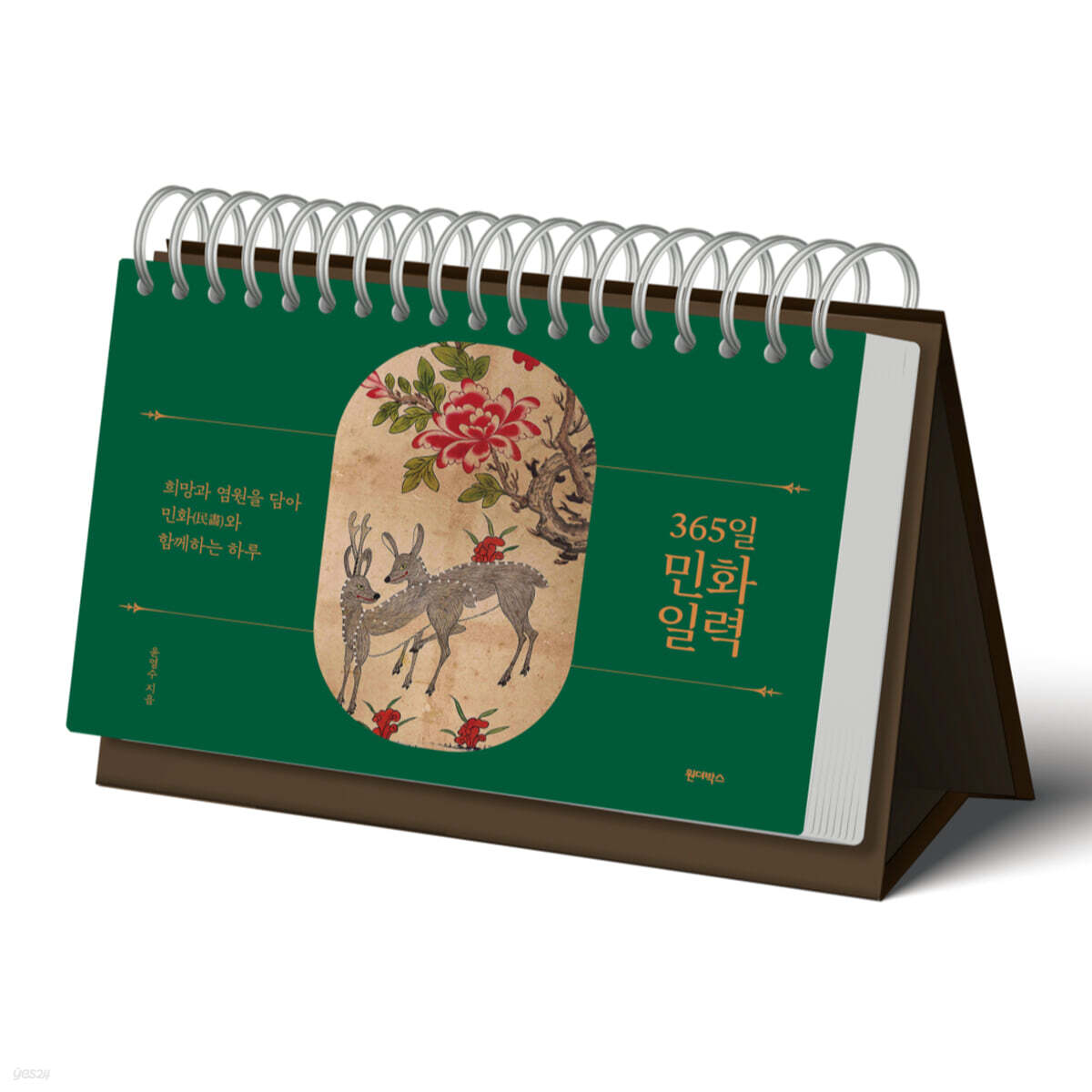
『365-Day Folk Painting Calendar』is a book that contains 366 folk paintings and commentaries to help you have a good day by appreciating one folk painting each day, a painting of hope and aspiration.
This collection features the main characters of folk tales that have been with our people from birth to death, from the first day of the new year to the last day, bringing good luck and fortune: dragons and tigers that ward off evil spirits, turtles and elixirs that wish for health and longevity, carp and mandarin fish that symbolize passing the civil service examination and success in the world, peonies and peaches that bring wealth and abundance, mandarin ducks and butterflies that symbolize a happy couple, and rabbits and watermelons that symbolize family harmony and prosperity.
Here, we have included a description that highlights the key points of each picture so that you can enjoy both the 'pleasure of looking' and the 'pleasure of reading'.
The book kindly explains the roles played by plants, animals, and imaginary creatures appearing in folk paintings, the historical background in which the paintings were created, the artist's intentions, and the hearts of the people reflected in the paintings.
This collection features the main characters of folk tales that have been with our people from birth to death, from the first day of the new year to the last day, bringing good luck and fortune: dragons and tigers that ward off evil spirits, turtles and elixirs that wish for health and longevity, carp and mandarin fish that symbolize passing the civil service examination and success in the world, peonies and peaches that bring wealth and abundance, mandarin ducks and butterflies that symbolize a happy couple, and rabbits and watermelons that symbolize family harmony and prosperity.
Here, we have included a description that highlights the key points of each picture so that you can enjoy both the 'pleasure of looking' and the 'pleasure of reading'.
The book kindly explains the roles played by plants, animals, and imaginary creatures appearing in folk paintings, the historical background in which the paintings were created, the artist's intentions, and the hearts of the people reflected in the paintings.
- You can preview some of the book's contents.
Preview
Detailed image

Publisher's Review
A giant in the folk painting world
Carefully selected by Director Yoon Yeol-su of the Gahoe Folk Painting Museum
366 folk paintings and affectionate commentary
Every day is a good day with Minhwa!
『365-Day Folk Painting Calendar』is a book that contains 366 folk paintings and commentaries to help you have a good day by appreciating one folk painting each day, a painting of hope and aspiration.
This collection features the main characters of folk tales that have been with our people from birth to death, from the first day of the new year to the last day, bringing good luck and fortune: dragons and tigers that ward off evil spirits, turtles and elixirs that wish for health and longevity, carp and mandarin fish that symbolize passing the civil service examination and success in the world, peonies and peaches that bring wealth and abundance, mandarin ducks and butterflies that symbolize a happy couple, and rabbits and watermelons that symbolize family harmony and prosperity.
The collection is centered around the collection of the Gahoe Folk Painting Museum, Korea's representative folk painting museum, as well as works from national and public museums, private collections, and works stored overseas, including in Japan.
Here, we have included a description that highlights the key points of each picture so that you can enjoy both the 'pleasure of looking' and the 'pleasure of reading'.
He kindly explains the roles of the plants, animals, and imaginary creatures that appear in folk paintings, the historical background and the artist's intentions in the paintings, and the feelings of the people reflected in the paintings.
Picture of the mind
In the late Joseon Dynasty, near Gwangtonggyo Bridge on Cheonggyecheon Stream in Hanyang, there was Korea's first and largest 'painting market'.
Among them, the Seohwasa (書畵肆) mainly traded paintings by high-level painters, and among them was the painting of Jang Seung-eop (1843-1897), one of the three greatest painters of the Joseon Dynasty.
The items covered included decorative paintings in the royal court style, paintings of the Four Gentlemen, and landscape paintings.
However, the places where most people came and went were not calligraphy shops, but paper shops and paper stores.
Folk paintings were mainly traded here.
Especially around the end of the year, a large crowd of people flocked to buy door-blocking maps to ward off evil spirits for the coming year.
It wasn't just the end of the year or the New Year.
Folk paintings were an indispensable part of people's lives 365 days a year, including weddings, funerals, and other ceremonial occasions.
Wedding ceremonies usually had to feature a folding screen with a picture of mandarin ducks, symbolizing marriage, and the newlyweds' room had paintings of grapes, watermelons, cucumbers, and cantaloupes, symbolizing fertility.
Adults who reached their 60th or 70th birthdays were given pictures of butterflies or cats as gifts, and scholars preparing for the civil service examination hung pictures of fish transforming into dragons or crabs in their rooms to nurture their dreams.
The plots of popular novels of the time, such as 『Romance of the Three Kingdoms』, 『The Nine Clouds Dream』, and 『The Tale of Chunhyang』, as well as tales of a tiger eating tobacco and a rabbit pounding medicine on the moon, were also expressed in folk paintings.
In addition, there was active work to create pictures of the eight characters of Confucianism that are most valued: filial piety, brotherhood, loyalty, trustworthiness, propriety, righteousness, and shame.
Wherever I went, it was not unfamiliar to see a folk painting hanging.
Those who lived in this land believed that folk paintings had a special power to make our wishes come true.
So, I painted and enshrined a folk painting with my earnest wish.
This is why folk paintings are called 'pictures of the heart', and why the protagonists of folk paintings have been summoned back to us in this era.
Carefully selected by Director Yoon Yeol-su of the Gahoe Folk Painting Museum
366 folk paintings and affectionate commentary
Every day is a good day with Minhwa!
『365-Day Folk Painting Calendar』is a book that contains 366 folk paintings and commentaries to help you have a good day by appreciating one folk painting each day, a painting of hope and aspiration.
This collection features the main characters of folk tales that have been with our people from birth to death, from the first day of the new year to the last day, bringing good luck and fortune: dragons and tigers that ward off evil spirits, turtles and elixirs that wish for health and longevity, carp and mandarin fish that symbolize passing the civil service examination and success in the world, peonies and peaches that bring wealth and abundance, mandarin ducks and butterflies that symbolize a happy couple, and rabbits and watermelons that symbolize family harmony and prosperity.
The collection is centered around the collection of the Gahoe Folk Painting Museum, Korea's representative folk painting museum, as well as works from national and public museums, private collections, and works stored overseas, including in Japan.
Here, we have included a description that highlights the key points of each picture so that you can enjoy both the 'pleasure of looking' and the 'pleasure of reading'.
He kindly explains the roles of the plants, animals, and imaginary creatures that appear in folk paintings, the historical background and the artist's intentions in the paintings, and the feelings of the people reflected in the paintings.
Picture of the mind
In the late Joseon Dynasty, near Gwangtonggyo Bridge on Cheonggyecheon Stream in Hanyang, there was Korea's first and largest 'painting market'.
Among them, the Seohwasa (書畵肆) mainly traded paintings by high-level painters, and among them was the painting of Jang Seung-eop (1843-1897), one of the three greatest painters of the Joseon Dynasty.
The items covered included decorative paintings in the royal court style, paintings of the Four Gentlemen, and landscape paintings.
However, the places where most people came and went were not calligraphy shops, but paper shops and paper stores.
Folk paintings were mainly traded here.
Especially around the end of the year, a large crowd of people flocked to buy door-blocking maps to ward off evil spirits for the coming year.
It wasn't just the end of the year or the New Year.
Folk paintings were an indispensable part of people's lives 365 days a year, including weddings, funerals, and other ceremonial occasions.
Wedding ceremonies usually had to feature a folding screen with a picture of mandarin ducks, symbolizing marriage, and the newlyweds' room had paintings of grapes, watermelons, cucumbers, and cantaloupes, symbolizing fertility.
Adults who reached their 60th or 70th birthdays were given pictures of butterflies or cats as gifts, and scholars preparing for the civil service examination hung pictures of fish transforming into dragons or crabs in their rooms to nurture their dreams.
The plots of popular novels of the time, such as 『Romance of the Three Kingdoms』, 『The Nine Clouds Dream』, and 『The Tale of Chunhyang』, as well as tales of a tiger eating tobacco and a rabbit pounding medicine on the moon, were also expressed in folk paintings.
In addition, there was active work to create pictures of the eight characters of Confucianism that are most valued: filial piety, brotherhood, loyalty, trustworthiness, propriety, righteousness, and shame.
Wherever I went, it was not unfamiliar to see a folk painting hanging.
Those who lived in this land believed that folk paintings had a special power to make our wishes come true.
So, I painted and enshrined a folk painting with my earnest wish.
This is why folk paintings are called 'pictures of the heart', and why the protagonists of folk paintings have been summoned back to us in this era.
GOODS SPECIFICS
- Date of issue: January 17, 2024
- Format: Springbook book binding method guide
- Page count, weight, size: 372 pages | 800g | 225*180*26mm
- ISBN13: 9791192953229
- ISBN10: 1192953223
You may also like
카테고리
korean


korean

![GQ KOREA Mark (Monthly): December [2025]](http://librairie.coreenne.fr/cdn/shop/files/8ef265dbbfbf186523ed75ba7319009d.jpg?v=1765340328&width=3840)


