

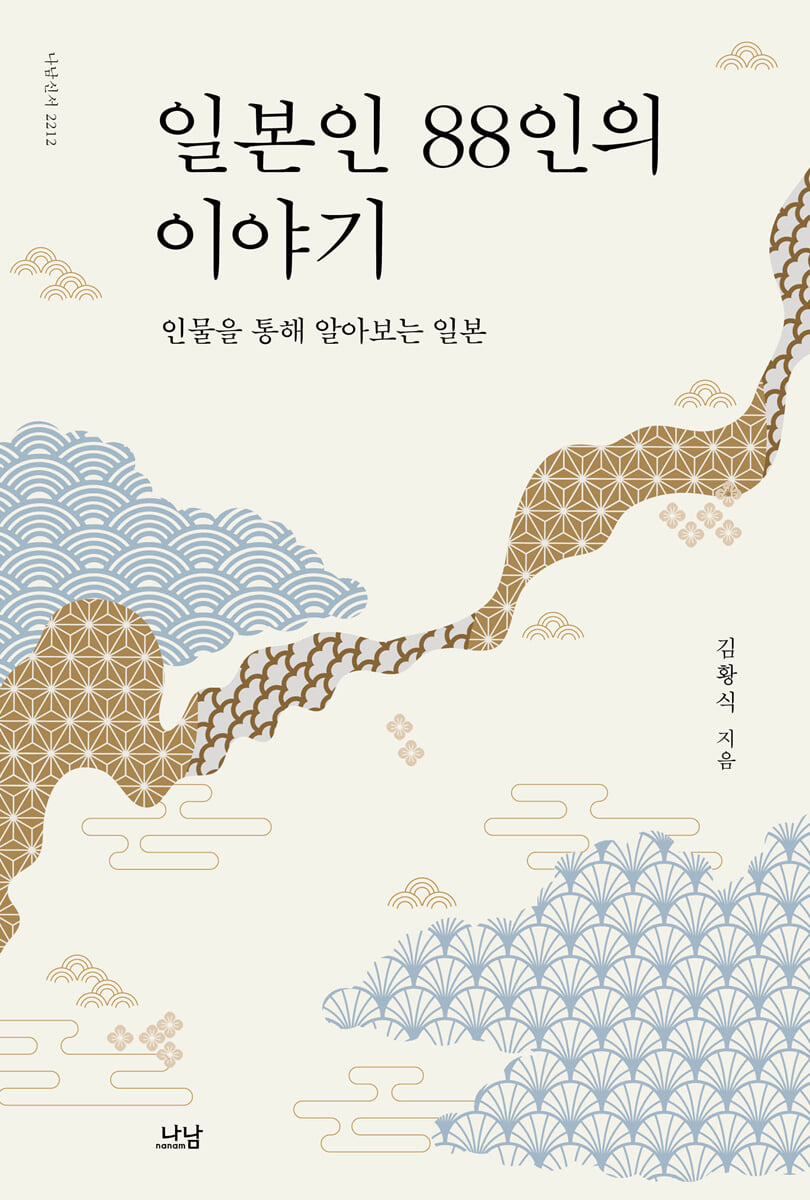
The story of 88 Japanese people
 |
Description
Book Introduction
A neighboring country that is both far and close, 'Prime Minister Lee Seul-bi' has taken notice of
A Look into Japan Through the Stories of 88 People in History
Former Prime Minister Hwang-sik Kim, who served as the 41st Prime Minister of the Republic of Korea, has published a new book, “Stories of 88 Japanese People.”
The relationship between Korea and Japan has been entangled with love and hate for a long time, sometimes hardening into confrontation and sometimes into indifference.
The author wrote this book with a historical consciousness that seeks to go beyond this reality and deeply understand Japan through the lives and choices of historical figures, and to redefine future relationships.
The author illuminates the lives and thoughts of 88 representative figures in Japanese history, as well as their influence on Japanese society.
From Prince Shotoku to Shohei Otani, if we follow the trajectories of various figures, including political leaders, thinkers, artists, and social reformers, we can clearly see the structure of consciousness of Japanese society and the Japanese people.
Rather than simply listing events, it interweaves historical context with the lives of individual figures to provide a three-dimensional view of the Japanese way of thinking and cultural characteristics.
Furthermore, it poses the questions, "Why should we reread Japan now?" and "How can we look at Korea-Japan relations in a new way?" and seeks answers through biographies.
This book, which contains the author's insight that reflecting on the past is preparing for the future, offers a new perspective to all readers contemplating the right direction for Korea-Japan relations.
A Look into Japan Through the Stories of 88 People in History
Former Prime Minister Hwang-sik Kim, who served as the 41st Prime Minister of the Republic of Korea, has published a new book, “Stories of 88 Japanese People.”
The relationship between Korea and Japan has been entangled with love and hate for a long time, sometimes hardening into confrontation and sometimes into indifference.
The author wrote this book with a historical consciousness that seeks to go beyond this reality and deeply understand Japan through the lives and choices of historical figures, and to redefine future relationships.
The author illuminates the lives and thoughts of 88 representative figures in Japanese history, as well as their influence on Japanese society.
From Prince Shotoku to Shohei Otani, if we follow the trajectories of various figures, including political leaders, thinkers, artists, and social reformers, we can clearly see the structure of consciousness of Japanese society and the Japanese people.
Rather than simply listing events, it interweaves historical context with the lives of individual figures to provide a three-dimensional view of the Japanese way of thinking and cultural characteristics.
Furthermore, it poses the questions, "Why should we reread Japan now?" and "How can we look at Korea-Japan relations in a new way?" and seeks answers through biographies.
This book, which contains the author's insight that reflecting on the past is preparing for the future, offers a new perspective to all readers contemplating the right direction for Korea-Japan relations.
- You can preview some of the book's contents.
Preview
index
At the beginning of the book
Yamato and Asuka periods, Nara period
Prince Shotoku, a politician who laid the foundation for Japan by introducing new systems and ideas
Emperor Tenji overthrew the Soga clan and implemented the Great Reforms.
Emperor Tenmu seized the throne through the Imjin War and exercised strong imperial power.
Emperor Shomu built Todaiji Temple to pray for national peace and prosperity through the power of Buddhism.
A monk who was enthusiastic about social work while spreading Buddhism.
Heian period
Emperor Kanmu, a Baekje emperor, established Kyoto, the capital for a thousand years.
Sugawara no Michizane stopped sending envoys to Tang China, and was posthumously revered as a god of learning.
Fujiwara no Michinaga, the embodiment of power at the pinnacle of aristocracy during the Heian period
Murasaki Shikibu, author of Japan's renowned novel, The Tale of Genji
Emperor Shirakawa continued his expeditions for 43 years after abdicating as emperor.
Taira no Kiyomori opened the golden age of the Heishi clan, so much so that no one could be considered a person other than the Heishi clan.
Kamakura and Muromachi periods
Minamoto no Yoritomo, founder of Japan's first shogunate, the Kamakura shogunate
Minamoto no Yoshitsune, the ill-fated warrior beloved by the Japanese
Hojo Masako, the heroine who became the pillar of the Kamakura shogunate
Emperor Godaigo, the emperor who abolished the shogunate and dreamed of an emperor-centered politics
Ashikaga Takauji establishes the Muromachi shogunate in Kyoto and becomes shogun.
Ashikaga Yoshimitsu, the third shogun who stabilized the Muromachi shogunate and ended the Northern and Southern Courts period
Ashikaga Yoshimasa, the shogun who caused the Onin War and led the shogunate to decline
Sengoku and Azuchi-Momoyama periods
Takeda Shingen's Tiger, a soldier who gave Oda the chance to unify the country.
Oda Nobunaga, a reformist warrior who dreamed of unifying the country
Toyotomi Hideyoshi, a military general with delusions who achieved the unification of Japan from humble beginnings
Sen Rikyu, the tea master of Toyotomi Hideyoshi who perfected the Japanese tea ceremony
Ishida Mitsunari, Hideyoshi's confidant who planned the Battle of Sekigahara and confronted Ieyasu
Edo period
Tokugawa Ieyasu, the shogun who unified the country through strategy and patience and established the Edo shogunate.
Tokugawa Iemitsu, the third shogun who solidified the Edo shogunate's rule over the country
Miyamoto Musashi, the legendary swordsman who boasted of invincibility
The founder of Yangmingism, revered as a saint by Nakae Doju Omi
Amakusa Shiro, the 17-year-old Christian who led the Shimabara Rebellion
Matsuo Basho, the poet who elevated haiku to a high art form and made it a national literature
Tokugawa Tsunayoshi, the "dog shogun," was an eccentric scholar who loved animals too much.
Tokugawa Yoshimune, the "Rice Shogun" who saved the shogunate through the Kyoho Reforms
Ishida Baigan, a philosopher who established the merchant code and justified the pursuit of profit by merchants.
Uesugi Yozan, a Japanese man admired by President Kennedy and an outstanding daimyo
Matsudaira Sadanobu, an upright lord who led the Kansei Reforms
Ninomiya Sontoku, an agricultural thinker who succeeded in regional reconstruction projects with innovative ideas
Mizuno Tadakuni, the Roju who led the failed Tempo Reform
Hiraga Gennai, a pioneering Dutch scholar and a versatile talent
Ino Tadataka, the obsessive astronomer and surveyor who created a map of Japan by walking
Katsushika Hokusai, the Ukiyo-e artist who is Japan's pride and praise to the world
Sugita Genpaku's translation of "Kaitai Shinsho" was published, paving the way for the development of Dutch studies.
Oshio Heihachiro, a former government official who raised a rebellion for the poor people
Before the Edo period and the Meiji Restoration
Ii Naosuke was assassinated while working hard during the political turmoil of the late Edo period.
Yoshida Shoin, founder of Songhachon School, which trained disciples who led the Meiji Restoration, and a proponent of the Jeonghan theory
Katsu Kaishu, the shogunate's representative for negotiations, who saved Edo from war.
Sakamoto Ryoma, a man of great courage who ushered in a new era by establishing the Satsuma-Choshu Alliance
Tokugawa Yoshinobu, the last shogun of the Edo shogunate who prevented the division of Japan by restoring the imperial rule.
Kondo Isami, head of the Shinsengumi, a quasi-judicial organization formed under the pretext of protecting the shogunate.
Iwakura Tomomi, a politician who played a key role in establishing the Meiji government and led the Iwakura Mission
Shinpei Eto, an unfortunate politician who contributed to the establishment of a modern judicial system and was executed for rebellion.
Saigo Takamori, a key figure in the Restoration and the last samurai to rebel against the Meiji government
Okubo Toshimichi, the key figure in the Restoration Government that designed a new Japan
Kido Takayoshi, a man of both literary and martial arts from the Choshu domain, one of the three great figures of the Restoration
Meiji era and after
Emperor Meiji The emperor who ushered in the Meiji era, the beginning of Japan's modernization.
Yukichi Fukuzawa, an enlightenment thinker who supported Japan's modernization academically and ideologically.
Ito Hirobumi, a politician who led Japan's modernization and the architect of its invasion of Korea
Daisuke Itagaki, a political figure who worked for the freedom and rights of the people.
Shigenobu Okuma, Prime Minister of Japan's first political party cabinet and educator who founded Waseda University
Eiichi Shibusawa, the father of Japanese capitalism
Yataro Iwasaki, founder of Mitsubishi, a conglomerate that emerged during the Meiji period
Mutsu Munemitsu, a pioneer in Japanese diplomacy who improved the unequal treaties
Jutaro Komura, a diplomat who secured tariff autonomy and improved unequal treaties
Shiba Goro, a military officer who bravely resisted the Boxer Rebellion and contributed to Japan's national interests
Togo Heihachiro, the Japanese naval hero who led the Russo-Japanese War to victory
Shozo Tanaka, Japan's first environmental activist who fought for pollution victims
Yoshino Sakuzo, a political scientist and ideological activist representing Taisho Democracy
Inazo Nitobe, a world-renowned figure who wrote "Bushido" to promote Japan and served as Under-Secretary-General of the League of Nations
Inukai Tsuyoshi, an ill-fated politician who was assassinated while trying to maintain constitutional rule against the tyrannical military.
Kanzo Uchimura, a Christian thinker who pursued a non-church-oriented Christian faith
Hideyo Noguchi, a bacteriologist who dedicated his life to the study of bacteriology
Natsume Soseki, the great writer known as the father of Japanese literature
Higuchi Ichiyo, a genius female novelist who died at the age of 25
Takuboku Ishikawa, Japan's national poet who died at the age of 26
Ryunosuke Akutagawa, the author who founded the famous Japanese literary award, the Akutagawa Prize
Kenji Miyazawa, a pure-souled fairy tale writer who wrote "Night on the Galactic Railroad"
Tsuda Umeko, a pioneer in Japanese women's education who studied in the United States at the age of seven
Akiko Yosano, a passionate poet who advocated for women's independence and freedom of love.
Hiratsuka Raicho, the pioneer of Japanese feminism, who claimed that "women were truly the sun."
Ichikawa Fusae, a peace activist and a leading figure in the introduction of women's suffrage
Chiune Sugihara: Japan's Oskar Schindler, Who Saved the Lives of 6,000 Jews
Shigenori Togo, a Korean-Japanese who served as Foreign Minister twice and was later convicted of war crimes and imprisoned
Hideki Yukawa, Japan's first Nobel laureate, who boosted the morale of the Japanese people.
Shigeru Yoshida, a conservative politician who helped rebuild postwar Japan.
Konosuke Matsushita, the god of management who created Japanese management style and philosophy
Prime Minister Hayato Ikeda, who successfully implemented the income doubling plan and led Japan to become an economic powerhouse.
Shusaku Endo, author of "Humanity is so sad, Lord! The sea is so blue."
Kazuo Inamori, the son-in-law of Dr. Woo Jang-chun, founder of Kyocera and known as the "God of Management"
Haruki Murakami is a bestselling author representing modern Japan and a strong candidate for the Nobel Prize in Literature.
Shohei Ohtani, a two-way baseball player whose skill and character are raising Japan's pride.
Yamato and Asuka periods, Nara period
Prince Shotoku, a politician who laid the foundation for Japan by introducing new systems and ideas
Emperor Tenji overthrew the Soga clan and implemented the Great Reforms.
Emperor Tenmu seized the throne through the Imjin War and exercised strong imperial power.
Emperor Shomu built Todaiji Temple to pray for national peace and prosperity through the power of Buddhism.
A monk who was enthusiastic about social work while spreading Buddhism.
Heian period
Emperor Kanmu, a Baekje emperor, established Kyoto, the capital for a thousand years.
Sugawara no Michizane stopped sending envoys to Tang China, and was posthumously revered as a god of learning.
Fujiwara no Michinaga, the embodiment of power at the pinnacle of aristocracy during the Heian period
Murasaki Shikibu, author of Japan's renowned novel, The Tale of Genji
Emperor Shirakawa continued his expeditions for 43 years after abdicating as emperor.
Taira no Kiyomori opened the golden age of the Heishi clan, so much so that no one could be considered a person other than the Heishi clan.
Kamakura and Muromachi periods
Minamoto no Yoritomo, founder of Japan's first shogunate, the Kamakura shogunate
Minamoto no Yoshitsune, the ill-fated warrior beloved by the Japanese
Hojo Masako, the heroine who became the pillar of the Kamakura shogunate
Emperor Godaigo, the emperor who abolished the shogunate and dreamed of an emperor-centered politics
Ashikaga Takauji establishes the Muromachi shogunate in Kyoto and becomes shogun.
Ashikaga Yoshimitsu, the third shogun who stabilized the Muromachi shogunate and ended the Northern and Southern Courts period
Ashikaga Yoshimasa, the shogun who caused the Onin War and led the shogunate to decline
Sengoku and Azuchi-Momoyama periods
Takeda Shingen's Tiger, a soldier who gave Oda the chance to unify the country.
Oda Nobunaga, a reformist warrior who dreamed of unifying the country
Toyotomi Hideyoshi, a military general with delusions who achieved the unification of Japan from humble beginnings
Sen Rikyu, the tea master of Toyotomi Hideyoshi who perfected the Japanese tea ceremony
Ishida Mitsunari, Hideyoshi's confidant who planned the Battle of Sekigahara and confronted Ieyasu
Edo period
Tokugawa Ieyasu, the shogun who unified the country through strategy and patience and established the Edo shogunate.
Tokugawa Iemitsu, the third shogun who solidified the Edo shogunate's rule over the country
Miyamoto Musashi, the legendary swordsman who boasted of invincibility
The founder of Yangmingism, revered as a saint by Nakae Doju Omi
Amakusa Shiro, the 17-year-old Christian who led the Shimabara Rebellion
Matsuo Basho, the poet who elevated haiku to a high art form and made it a national literature
Tokugawa Tsunayoshi, the "dog shogun," was an eccentric scholar who loved animals too much.
Tokugawa Yoshimune, the "Rice Shogun" who saved the shogunate through the Kyoho Reforms
Ishida Baigan, a philosopher who established the merchant code and justified the pursuit of profit by merchants.
Uesugi Yozan, a Japanese man admired by President Kennedy and an outstanding daimyo
Matsudaira Sadanobu, an upright lord who led the Kansei Reforms
Ninomiya Sontoku, an agricultural thinker who succeeded in regional reconstruction projects with innovative ideas
Mizuno Tadakuni, the Roju who led the failed Tempo Reform
Hiraga Gennai, a pioneering Dutch scholar and a versatile talent
Ino Tadataka, the obsessive astronomer and surveyor who created a map of Japan by walking
Katsushika Hokusai, the Ukiyo-e artist who is Japan's pride and praise to the world
Sugita Genpaku's translation of "Kaitai Shinsho" was published, paving the way for the development of Dutch studies.
Oshio Heihachiro, a former government official who raised a rebellion for the poor people
Before the Edo period and the Meiji Restoration
Ii Naosuke was assassinated while working hard during the political turmoil of the late Edo period.
Yoshida Shoin, founder of Songhachon School, which trained disciples who led the Meiji Restoration, and a proponent of the Jeonghan theory
Katsu Kaishu, the shogunate's representative for negotiations, who saved Edo from war.
Sakamoto Ryoma, a man of great courage who ushered in a new era by establishing the Satsuma-Choshu Alliance
Tokugawa Yoshinobu, the last shogun of the Edo shogunate who prevented the division of Japan by restoring the imperial rule.
Kondo Isami, head of the Shinsengumi, a quasi-judicial organization formed under the pretext of protecting the shogunate.
Iwakura Tomomi, a politician who played a key role in establishing the Meiji government and led the Iwakura Mission
Shinpei Eto, an unfortunate politician who contributed to the establishment of a modern judicial system and was executed for rebellion.
Saigo Takamori, a key figure in the Restoration and the last samurai to rebel against the Meiji government
Okubo Toshimichi, the key figure in the Restoration Government that designed a new Japan
Kido Takayoshi, a man of both literary and martial arts from the Choshu domain, one of the three great figures of the Restoration
Meiji era and after
Emperor Meiji The emperor who ushered in the Meiji era, the beginning of Japan's modernization.
Yukichi Fukuzawa, an enlightenment thinker who supported Japan's modernization academically and ideologically.
Ito Hirobumi, a politician who led Japan's modernization and the architect of its invasion of Korea
Daisuke Itagaki, a political figure who worked for the freedom and rights of the people.
Shigenobu Okuma, Prime Minister of Japan's first political party cabinet and educator who founded Waseda University
Eiichi Shibusawa, the father of Japanese capitalism
Yataro Iwasaki, founder of Mitsubishi, a conglomerate that emerged during the Meiji period
Mutsu Munemitsu, a pioneer in Japanese diplomacy who improved the unequal treaties
Jutaro Komura, a diplomat who secured tariff autonomy and improved unequal treaties
Shiba Goro, a military officer who bravely resisted the Boxer Rebellion and contributed to Japan's national interests
Togo Heihachiro, the Japanese naval hero who led the Russo-Japanese War to victory
Shozo Tanaka, Japan's first environmental activist who fought for pollution victims
Yoshino Sakuzo, a political scientist and ideological activist representing Taisho Democracy
Inazo Nitobe, a world-renowned figure who wrote "Bushido" to promote Japan and served as Under-Secretary-General of the League of Nations
Inukai Tsuyoshi, an ill-fated politician who was assassinated while trying to maintain constitutional rule against the tyrannical military.
Kanzo Uchimura, a Christian thinker who pursued a non-church-oriented Christian faith
Hideyo Noguchi, a bacteriologist who dedicated his life to the study of bacteriology
Natsume Soseki, the great writer known as the father of Japanese literature
Higuchi Ichiyo, a genius female novelist who died at the age of 25
Takuboku Ishikawa, Japan's national poet who died at the age of 26
Ryunosuke Akutagawa, the author who founded the famous Japanese literary award, the Akutagawa Prize
Kenji Miyazawa, a pure-souled fairy tale writer who wrote "Night on the Galactic Railroad"
Tsuda Umeko, a pioneer in Japanese women's education who studied in the United States at the age of seven
Akiko Yosano, a passionate poet who advocated for women's independence and freedom of love.
Hiratsuka Raicho, the pioneer of Japanese feminism, who claimed that "women were truly the sun."
Ichikawa Fusae, a peace activist and a leading figure in the introduction of women's suffrage
Chiune Sugihara: Japan's Oskar Schindler, Who Saved the Lives of 6,000 Jews
Shigenori Togo, a Korean-Japanese who served as Foreign Minister twice and was later convicted of war crimes and imprisoned
Hideki Yukawa, Japan's first Nobel laureate, who boosted the morale of the Japanese people.
Shigeru Yoshida, a conservative politician who helped rebuild postwar Japan.
Konosuke Matsushita, the god of management who created Japanese management style and philosophy
Prime Minister Hayato Ikeda, who successfully implemented the income doubling plan and led Japan to become an economic powerhouse.
Shusaku Endo, author of "Humanity is so sad, Lord! The sea is so blue."
Kazuo Inamori, the son-in-law of Dr. Woo Jang-chun, founder of Kyocera and known as the "God of Management"
Haruki Murakami is a bestselling author representing modern Japan and a strong candidate for the Nobel Prize in Literature.
Shohei Ohtani, a two-way baseball player whose skill and character are raising Japan's pride.
Publisher's Review
Rereading Japanese History Through Historical Figures
This book brings Japanese history from ancient times to the present to life through the lives of its characters.
It shows the multi-layered aspects of Japanese society by covering not only political leaders such as Emperor Meiji, but also enlightenment thinkers such as Yukichi Fukuzawa and Daisuke Itagaki, and artists such as Haruki Murakami who changed the landscape of Japanese society.
The story of Japan's adoption of rice farming and Buddhism from the Korean Peninsula, its early acceptance and subsequent introduction of Western civilization, and its winding history from the Imjin War and colonial rule to the present day unfolds in three dimensions through the trajectories of these characters.
In particular, the author objectively describes figures familiar to Koreans, such as Toyotomi Hideyoshi and Ito Hirobumi, and provides a balanced account of the impact their decisions had on Korea-Japan relations.
At the same time, it illuminates the diversity and values within Japanese society through the stories of lesser-known figures such as Shozo Tanaka (Japan's first environmental activist) and Ichiyo Higuchi (female writer).
88 Stories Connecting Past and Present, Insights into the Future
After extensively studying Japan, the author sought to reread Japanese history as a “history of people.”
This is because the values and consciousness structure of a society that cannot be captured by institutional or historical accounts are most clearly revealed in the lives and choices of specific individuals.
Just as Sima Qian recorded Chinese history and its spirit through the lives of people in his Records of the Grand Historian, this book also depicts the flow of Japanese history through people.
The 88 selected people were chosen based on the author's own historical awareness and reflections on the times, without being bound by any fixed criteria.
The trajectories of these diverse figures—political leaders, thinkers, artists, and social reformers—cross different eras and fields, revealing the complex and unique character of Japan.
By following their lives, we can naturally understand the underlying consciousness and cultural aspects of Japanese society.
The balanced perspective of former Prime Minister Kim Hwang-sik, who earned the nickname "Prime Minister Drizzle" for his calm and meticulous leadership during his tenure as Prime Minister, shines through in this book.
He objectively describes the character's life while calmly reflecting on its implications for Korea-Japan relations.
The author expresses his humble wish to "share small lessons and entertainment through figures from neighboring countries," offering readers a chance to look at Japan in a new light and explore the future of both Korea and Japan together.
This book brings Japanese history from ancient times to the present to life through the lives of its characters.
It shows the multi-layered aspects of Japanese society by covering not only political leaders such as Emperor Meiji, but also enlightenment thinkers such as Yukichi Fukuzawa and Daisuke Itagaki, and artists such as Haruki Murakami who changed the landscape of Japanese society.
The story of Japan's adoption of rice farming and Buddhism from the Korean Peninsula, its early acceptance and subsequent introduction of Western civilization, and its winding history from the Imjin War and colonial rule to the present day unfolds in three dimensions through the trajectories of these characters.
In particular, the author objectively describes figures familiar to Koreans, such as Toyotomi Hideyoshi and Ito Hirobumi, and provides a balanced account of the impact their decisions had on Korea-Japan relations.
At the same time, it illuminates the diversity and values within Japanese society through the stories of lesser-known figures such as Shozo Tanaka (Japan's first environmental activist) and Ichiyo Higuchi (female writer).
88 Stories Connecting Past and Present, Insights into the Future
After extensively studying Japan, the author sought to reread Japanese history as a “history of people.”
This is because the values and consciousness structure of a society that cannot be captured by institutional or historical accounts are most clearly revealed in the lives and choices of specific individuals.
Just as Sima Qian recorded Chinese history and its spirit through the lives of people in his Records of the Grand Historian, this book also depicts the flow of Japanese history through people.
The 88 selected people were chosen based on the author's own historical awareness and reflections on the times, without being bound by any fixed criteria.
The trajectories of these diverse figures—political leaders, thinkers, artists, and social reformers—cross different eras and fields, revealing the complex and unique character of Japan.
By following their lives, we can naturally understand the underlying consciousness and cultural aspects of Japanese society.
The balanced perspective of former Prime Minister Kim Hwang-sik, who earned the nickname "Prime Minister Drizzle" for his calm and meticulous leadership during his tenure as Prime Minister, shines through in this book.
He objectively describes the character's life while calmly reflecting on its implications for Korea-Japan relations.
The author expresses his humble wish to "share small lessons and entertainment through figures from neighboring countries," offering readers a chance to look at Japan in a new light and explore the future of both Korea and Japan together.
GOODS SPECIFICS
- Date of issue: October 1, 2025
- Page count, weight, size: 372 pages | 634g | 152*225*21mm
- ISBN13: 9788930042123
- ISBN10: 8930042120
You may also like
카테고리
korean


korean

![GQ KOREA Mark (Monthly): December [2025]](http://librairie.coreenne.fr/cdn/shop/files/8ef265dbbfbf186523ed75ba7319009d.jpg?v=1765340328&width=3840)


