

The Art of War
 |
Description
Book Introduction
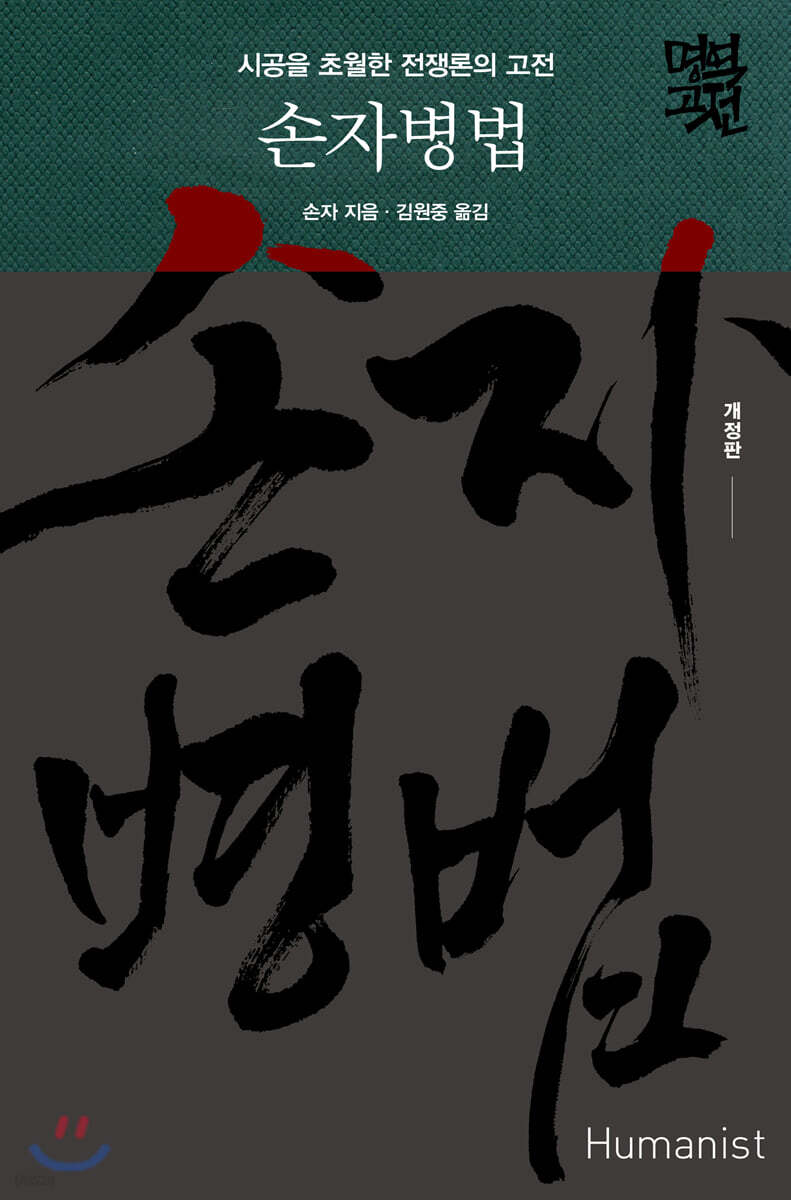
The best strategy is to win without fighting. The Art of War, a classic on warfare read by the most leaders of all time and place After countless wars between feudal lords during the Spring and Autumn Period, Sun Tzu's "The Art of War," which contains everything necessary for warfare, has been a classic that has been read by countless leaders throughout the East and the West, past and present. The most important point Sun Tzu discusses in this book is to understand war from an economic perspective and to 'win without fighting.' The Art of War, which does not deny or unconditionally oppose war, but rather calls for viewing war as it is and thoroughly preparing for it, is a book brimming with sharp insights that inspire modern people living in a competitive economic society. The revised edition of 『The Art of War』 published by Humanist Publishing House was further refined by Professor Kim Won-joong of the Department of Chinese Language Education at Dankook University, an authority on translating Oriental classics who was the first in the world to completely translate Sima Qian's 『Records of the Grand Historian』, and added examples from various classics to the commentary, bringing a vivid sense of reality to the original text of 『The Art of War』, which is only 6,000 characters in 13 chapters. We have revisited the translation of the first edition, which has been verified by countless readers, selling over 30,000 copies in just four years since its publication, and have added over 20 pages of commentary and explanations to unfold the world of 『The Art of War』 with greater fidelity and depth. |
- You can preview some of the book's contents.
Preview
index
Preface to the Revised Edition
Preface to the first edition
Be careful in your fights, but win without fighting.
Part 1: Planning Before War
War is a matter of life and death | Five things to consider before war | Seven things to consider before war | War is a deception | Calculate before fighting
【Precedent】The May War as seen in the idiom "Sleeping on firewood and tasting gall"
Part 2: Operations: How to Fight a War
Count the Costs | Procrastination Leads to Failure | Gather Food from the Enemy | The Harm of Prolonged War | Local Procurement Strategy | Seize the Enemy's Goods | The Only Purpose of War is Victory
A war in which 450,000 soldiers were lost due to a blockage in the food supply route.
Part 3: Attack with Stratagem
Winning without fighting is the best policy | Attacking a castle is the worst policy | Four principles of mercenary warfare | Three things a ruler should avoid interfering with his general's affairs | Five paths to victory | Know your enemy and know yourself, and you will not be in danger.
【Precedent 1】 The strategy of Beolgyo
【Precedent 2】 The strategy of winning by the noble and knowing oneself and the enemy
Part 4: Form: Offensive and defensive formations
Don't let the enemy defeat you | It's not a compliment to say you fought well | Five paths to complete victory
Precedent: A weak nation defeats a powerful nation
Part 5: The Three Forces: War Posture
Four Keys to Operation | The Dialectics of Frontline and Surprise | The Importance of Momentum and Moderation | Lure with Bait, Attack with Ambushes | Stop when it's square, and roll when it's round.
【Precedent】Turning the tables and turning absolute disadvantage into advantage
Part 6: Falsehood and Reality: The Use of Falsehood and Seizing the Initiative
Attract the Enemy | The Principles of Marching and Defense | The Unwritten Laws of Offense and Defense | The Difference Between Tangible and Intangible | Attack and Defend Against Expectations | Four Tactics | Follow the Law of Water
【Precedent】 The strategy of 'avoiding the real attack and striking the weak'
Part 7: Military Conflict: A fight between armies for an advantageous position
The easy road is actually a bad road | Avoid hasty wars | Be like the wind, like the forest, like fire, like the mountain | The drum and the gong are your eyes and ears | Master the four | The eight taboos
【Precedent】 Liu Bei's diversionary strategy in the battle between Cao Cao and Liu Bei for control of Hanzhong.
Part 8: The Nine Changes: Nine Improvisational Strategies
Warfare Based on the Five Terrains | Don't Believe the Enemy Will Not Appear; Strengthen Yourself | Five Dangers a General Must Beware of
【Precedent】 Zhou Yafu suppresses the War of the Seven States
Part 9: Marching: Principles of Military Marching
Four ways to fight according to the situation | Consider your soldiers' health and environment | Six types of terrain that are absolutely harmful | 33 ways to read enemy movements | Don't rely solely on numbers | Don't get too close or too distant
【Precedent】The Importance of Geographical Conditions During Marching
Part 10: Topography: The Relationship Between Topography and War
Judge differently based on six terrains | Six types of defeat due to a general's faults | The key to true war is understanding the terrain | Sometimes be kind, sometimes harsh | Know your enemy and know yourself, and you will not be in danger.
【Precedent】Zhuge Ke conquers the impregnable Danyang
Part 11: The Nine Terrains: Operational Principles for the Nine Terrains
The way to fight varies depending on the situation on the battlefield | Eight principles of mercenaries | Four secrets to infiltrating and fighting in enemy territory | Use your troops like snakes on Mount Xiang | Place them on the roof and take down the ladder | Defend when surrounded, fight when you have no choice | The army of the overlord | War is like a maiden, like a rabbit
【Precedent】 Hanshin's victory with Bae Su-jin
Part 12: Fire Attack: Attack with Fire
Five Types of Fire Attacks | Five Principles of Fire Attacks Based on Tactics | How to Secure Your Nation and Strengthen Your Army
【Precedent】Battle of Red Cliffs
Chapter 13: Use Your Spies
Obtaining Information Through People | Five Types of Spy Use | The Role of Spying and How to Use Double Agents
【Precedent 1】The fall of Han Xin after Huiyin was also due to the Yonggan strategy.
[Precedent 2] Xiang Yu loses his advisor Fan Zeng.
【Precedent 3】 If a spy returns without knowing anything, he or she will be suspected.
References
Search
Preface to the first edition
Be careful in your fights, but win without fighting.
Part 1: Planning Before War
War is a matter of life and death | Five things to consider before war | Seven things to consider before war | War is a deception | Calculate before fighting
【Precedent】The May War as seen in the idiom "Sleeping on firewood and tasting gall"
Part 2: Operations: How to Fight a War
Count the Costs | Procrastination Leads to Failure | Gather Food from the Enemy | The Harm of Prolonged War | Local Procurement Strategy | Seize the Enemy's Goods | The Only Purpose of War is Victory
A war in which 450,000 soldiers were lost due to a blockage in the food supply route.
Part 3: Attack with Stratagem
Winning without fighting is the best policy | Attacking a castle is the worst policy | Four principles of mercenary warfare | Three things a ruler should avoid interfering with his general's affairs | Five paths to victory | Know your enemy and know yourself, and you will not be in danger.
【Precedent 1】 The strategy of Beolgyo
【Precedent 2】 The strategy of winning by the noble and knowing oneself and the enemy
Part 4: Form: Offensive and defensive formations
Don't let the enemy defeat you | It's not a compliment to say you fought well | Five paths to complete victory
Precedent: A weak nation defeats a powerful nation
Part 5: The Three Forces: War Posture
Four Keys to Operation | The Dialectics of Frontline and Surprise | The Importance of Momentum and Moderation | Lure with Bait, Attack with Ambushes | Stop when it's square, and roll when it's round.
【Precedent】Turning the tables and turning absolute disadvantage into advantage
Part 6: Falsehood and Reality: The Use of Falsehood and Seizing the Initiative
Attract the Enemy | The Principles of Marching and Defense | The Unwritten Laws of Offense and Defense | The Difference Between Tangible and Intangible | Attack and Defend Against Expectations | Four Tactics | Follow the Law of Water
【Precedent】 The strategy of 'avoiding the real attack and striking the weak'
Part 7: Military Conflict: A fight between armies for an advantageous position
The easy road is actually a bad road | Avoid hasty wars | Be like the wind, like the forest, like fire, like the mountain | The drum and the gong are your eyes and ears | Master the four | The eight taboos
【Precedent】 Liu Bei's diversionary strategy in the battle between Cao Cao and Liu Bei for control of Hanzhong.
Part 8: The Nine Changes: Nine Improvisational Strategies
Warfare Based on the Five Terrains | Don't Believe the Enemy Will Not Appear; Strengthen Yourself | Five Dangers a General Must Beware of
【Precedent】 Zhou Yafu suppresses the War of the Seven States
Part 9: Marching: Principles of Military Marching
Four ways to fight according to the situation | Consider your soldiers' health and environment | Six types of terrain that are absolutely harmful | 33 ways to read enemy movements | Don't rely solely on numbers | Don't get too close or too distant
【Precedent】The Importance of Geographical Conditions During Marching
Part 10: Topography: The Relationship Between Topography and War
Judge differently based on six terrains | Six types of defeat due to a general's faults | The key to true war is understanding the terrain | Sometimes be kind, sometimes harsh | Know your enemy and know yourself, and you will not be in danger.
【Precedent】Zhuge Ke conquers the impregnable Danyang
Part 11: The Nine Terrains: Operational Principles for the Nine Terrains
The way to fight varies depending on the situation on the battlefield | Eight principles of mercenaries | Four secrets to infiltrating and fighting in enemy territory | Use your troops like snakes on Mount Xiang | Place them on the roof and take down the ladder | Defend when surrounded, fight when you have no choice | The army of the overlord | War is like a maiden, like a rabbit
【Precedent】 Hanshin's victory with Bae Su-jin
Part 12: Fire Attack: Attack with Fire
Five Types of Fire Attacks | Five Principles of Fire Attacks Based on Tactics | How to Secure Your Nation and Strengthen Your Army
【Precedent】Battle of Red Cliffs
Chapter 13: Use Your Spies
Obtaining Information Through People | Five Types of Spy Use | The Role of Spying and How to Use Double Agents
【Precedent 1】The fall of Han Xin after Huiyin was also due to the Yonggan strategy.
[Precedent 2] Xiang Yu loses his advisor Fan Zeng.
【Precedent 3】 If a spy returns without knowing anything, he or she will be suspected.
References
Search
Detailed image

Publisher's Review
1.
The definitive edition of The Art of War, read with the best translation!
- Meet the Art of War on a different scale through the translation of Professor Kim Won-joong, the translator of 『Records of the Grand Historian』!
The Art of War is a masterpiece of the East and the West, written in 13 short chapters and 6,000 characters, in which Sun Tzu, who experienced the fierce wars between feudal lords during the Spring and Autumn Period, concisely describes how to wage war based on various examples, historical records, and actual experiences.
The Art of War is one of the most translated books in the world, and several editions have been published in Korea.
Among them, Professor Won-Joong Kim of the Department of Chinese Language Education at Dankook University has the experience of being the first individual in the world to completely translate the entire 『Records of the Grand Historian』 and has translated and referenced numerous documents from the Spring and Autumn Period. As such, he is able to explain the core content of "The Art of War" in light of the Spring and Autumn Period's background better than any other translator in Korea.
Among the numerous translations, I recommend that readers read The Art of War in the edition by Professor Kim Won-joong, who did his best to accurately restore Sun Tzu's original voice.
2.
If we must go to war, we must win.
- Read the war view of Sun Tzu, a realist who experienced the fierce wars of the Spring and Autumn Period!
In The Art of War, Sun Tzu viewed war as an unavoidable social phenomenon.
Contrary to popular belief that Sun Tzu was very fond of war, Sun Tzu personally participated in wars during the Spring and Autumn Period and achieved many meritorious achievements, but he was cautious about war.
However, this does not mean that the war was denied or ignored.
Although it is realistically impossible to refuse war, it does not mean that the people will suffer if they are only focused on war, so the goal is to avoid war if possible, but if it is unavoidable, to win without fail.
So, among the various war strategies, Sun Tzu considered the 'siege', which reduces the enemy's city to ashes but also causes great damage to the friendly forces, to be the worst strategy.
Sun Tzu's view of war depended on whether there would be economic gain after the war.
So, tactics such as stealing food from the enemy and training prisoners as allies are examples that clearly show that side of him.
3.
Discover strategies for surviving the fiercely competitive modern society, past and present!
- The Art of War, which teaches people strategies for surviving in a competitive society, transcending time and space.
The Art of War is considered one of the most widely read books by leaders across the globe.
Although the book is only about 6,000 characters long, it surprisingly accurately encapsulates the principles of victory, defeat, and change in destiny in those concise words.
The Art of War goes beyond simply teaching us how to deal with war, and offers profound insights into human psychology.
It teaches you not only how to win by fighting, but also how to win without fighting.
It is widely known that the book that Mao Zedong, the revolutionary who gave birth to today's China, and Napoleon of France always kept by their bedsides was The Art of War.
Not only that, it is a book that Microsoft's Bill Gates and Softbank founder Masayoshi Son used as a business guideline, and it is also a book that numerous domestic leaders have read consistently.
The reason why 『The Art of War』 has been read consistently throughout the ages is because it not only teaches us how to wage war, but also contains profound insights into humanity condensed into short texts, making it possible to read it anew at any time.
The definitive edition of The Art of War, read with the best translation!
- Meet the Art of War on a different scale through the translation of Professor Kim Won-joong, the translator of 『Records of the Grand Historian』!
The Art of War is a masterpiece of the East and the West, written in 13 short chapters and 6,000 characters, in which Sun Tzu, who experienced the fierce wars between feudal lords during the Spring and Autumn Period, concisely describes how to wage war based on various examples, historical records, and actual experiences.
The Art of War is one of the most translated books in the world, and several editions have been published in Korea.
Among them, Professor Won-Joong Kim of the Department of Chinese Language Education at Dankook University has the experience of being the first individual in the world to completely translate the entire 『Records of the Grand Historian』 and has translated and referenced numerous documents from the Spring and Autumn Period. As such, he is able to explain the core content of "The Art of War" in light of the Spring and Autumn Period's background better than any other translator in Korea.
Among the numerous translations, I recommend that readers read The Art of War in the edition by Professor Kim Won-joong, who did his best to accurately restore Sun Tzu's original voice.
2.
If we must go to war, we must win.
- Read the war view of Sun Tzu, a realist who experienced the fierce wars of the Spring and Autumn Period!
In The Art of War, Sun Tzu viewed war as an unavoidable social phenomenon.
Contrary to popular belief that Sun Tzu was very fond of war, Sun Tzu personally participated in wars during the Spring and Autumn Period and achieved many meritorious achievements, but he was cautious about war.
However, this does not mean that the war was denied or ignored.
Although it is realistically impossible to refuse war, it does not mean that the people will suffer if they are only focused on war, so the goal is to avoid war if possible, but if it is unavoidable, to win without fail.
So, among the various war strategies, Sun Tzu considered the 'siege', which reduces the enemy's city to ashes but also causes great damage to the friendly forces, to be the worst strategy.
Sun Tzu's view of war depended on whether there would be economic gain after the war.
So, tactics such as stealing food from the enemy and training prisoners as allies are examples that clearly show that side of him.
3.
Discover strategies for surviving the fiercely competitive modern society, past and present!
- The Art of War, which teaches people strategies for surviving in a competitive society, transcending time and space.
The Art of War is considered one of the most widely read books by leaders across the globe.
Although the book is only about 6,000 characters long, it surprisingly accurately encapsulates the principles of victory, defeat, and change in destiny in those concise words.
The Art of War goes beyond simply teaching us how to deal with war, and offers profound insights into human psychology.
It teaches you not only how to win by fighting, but also how to win without fighting.
It is widely known that the book that Mao Zedong, the revolutionary who gave birth to today's China, and Napoleon of France always kept by their bedsides was The Art of War.
Not only that, it is a book that Microsoft's Bill Gates and Softbank founder Masayoshi Son used as a business guideline, and it is also a book that numerous domestic leaders have read consistently.
The reason why 『The Art of War』 has been read consistently throughout the ages is because it not only teaches us how to wage war, but also contains profound insights into humanity condensed into short texts, making it possible to read it anew at any time.
GOODS SPECIFICS
- Date of publication: December 7, 2020
- Format: Hardcover book binding method guide
- Page count, weight, size: 384 pages | 576g | 140*210*30mm
- ISBN13: 9788958623427
- ISBN10: 895862342X
You may also like
카테고리
korean


korean

![GQ KOREA Mark (Monthly): December [2025]](http://librairie.coreenne.fr/cdn/shop/files/8ef265dbbfbf186523ed75ba7319009d.jpg?v=1765340328&width=3840)


