

Legacy of Violence
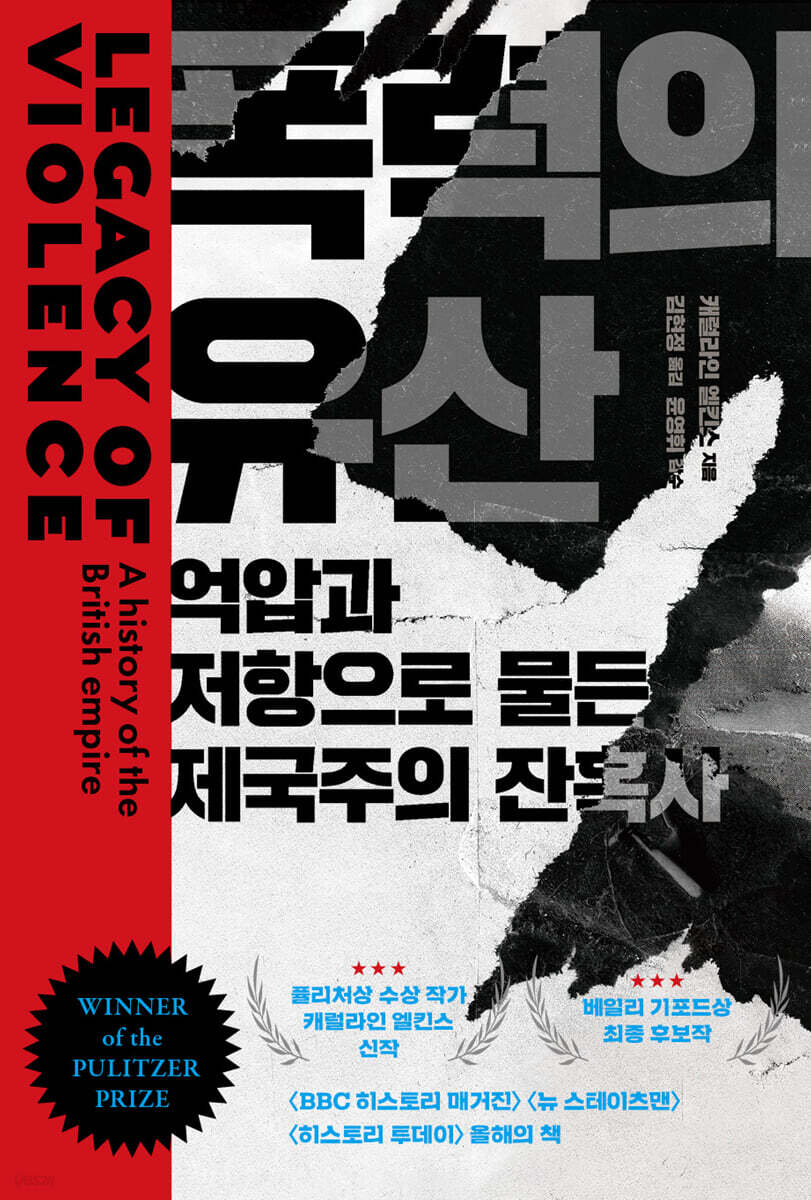 |
Description
Book Introduction
How is the world divided today?
From the mission of civilization to the Israel-Hamas war,
A Pulitzer Prize-winning author shares a history of brutal violence.
By delving into the history of Britain's empire, "The Legacy of Violence" vividly exposes the fact that violence was not a "means" of imperialism, but "imperialism itself."
In this book, Harvard University professor and Pulitzer Prize-winning author Caroline Elkins reveals to readers the "real history" of the blood-stained British Empire.
Based on hundreds of records and vivid testimonies, it exposes the true nature of the state-sponsored violence perpetrated by Britain.
He also does not ignore the fact that the sparks of all these conflicts, including the war between Israel and Hamas, the conflict with Iran, and the clash between India and Pakistan, actually originated from the British Empire.
This provides readers with an unfiltered understanding of British imperial history, essential for understanding today's international situation.
This book, which clearly unravels the rise and fall of the British Empire, the "nation on which the sun never sets," through a focus on people and events, allows us to confront the roots of imperialism that still causes grief around the world today.
From the mission of civilization to the Israel-Hamas war,
A Pulitzer Prize-winning author shares a history of brutal violence.
By delving into the history of Britain's empire, "The Legacy of Violence" vividly exposes the fact that violence was not a "means" of imperialism, but "imperialism itself."
In this book, Harvard University professor and Pulitzer Prize-winning author Caroline Elkins reveals to readers the "real history" of the blood-stained British Empire.
Based on hundreds of records and vivid testimonies, it exposes the true nature of the state-sponsored violence perpetrated by Britain.
He also does not ignore the fact that the sparks of all these conflicts, including the war between Israel and Hamas, the conflict with Iran, and the clash between India and Pakistan, actually originated from the British Empire.
This provides readers with an unfiltered understanding of British imperial history, essential for understanding today's international situation.
This book, which clearly unravels the rise and fall of the British Empire, the "nation on which the sun never sets," through a focus on people and events, allows us to confront the roots of imperialism that still causes grief around the world today.
- You can preview some of the book's contents.
Preview
index
Praise poured in for this book
Reviewer's note
Introduction
Part 1 Imperialist States
Chapter 1: Liberal Imperialism
Chapter 2: Wars, Big and Small
Chapter 3 Legalized Illegality
Chapter 4 “I am just a pro-British person.”
Chapter 5 Imperialism Focused on Palestine
Part 2: An Empire in the Whirlwind of War
Chapter 6: Imperial Wars
Chapter 7: Ideological War
Chapter 8: Partnership
Chapter 9: Rise of an Empire
Part 3: A Promise with Fate
Chapter 10: Glass House
Chapter 11 Leaving Palestine for Malaya
Chapter 12 A small place close to home
Chapter 13 Systematized Violence
Chapter 14: Operation Legacy
Epilogue
Acknowledgements
annotation
References
Search
Reviewer's note
Introduction
Part 1 Imperialist States
Chapter 1: Liberal Imperialism
Chapter 2: Wars, Big and Small
Chapter 3 Legalized Illegality
Chapter 4 “I am just a pro-British person.”
Chapter 5 Imperialism Focused on Palestine
Part 2: An Empire in the Whirlwind of War
Chapter 6: Imperial Wars
Chapter 7: Ideological War
Chapter 8: Partnership
Chapter 9: Rise of an Empire
Part 3: A Promise with Fate
Chapter 10: Glass House
Chapter 11 Leaving Palestine for Malaya
Chapter 12 A small place close to home
Chapter 13 Systematized Violence
Chapter 14: Operation Legacy
Epilogue
Acknowledgements
annotation
References
Search
Detailed image
.jpg)
Into the book
Frankly, this book is not about colonial capitalism.
Rather, it seeks to address how and why this highly unusual state-sponsored violence was perpetrated across Britain's Second Empire.
How were these systems conceived, enacted, experienced, understood, and justified in the British colonies?
--- From "Introduction"
What circumstances make violence absolutely necessary? At what point is violence legitimate? Could martial law be declared to nullify ordinary law and establish new rules reflecting the racist order the empire advocates? Would such an order require varying degrees of violence and reform?
Violence in the colonies was increasingly justified by the liberal logic of the "cause of civilization," and liberalism played a dual role, both obscuring and revealing some of the empire's actions.
--- From "Chapter 1 'Liberal Imperialism'"
The British controlled the local population first through conquest, then through the rule of law and a monopoly on legitimate violence.
As legal scholar John Komarov explains, law ruled the empire.
It was 'a blade of colonialism, an instrument of power in a foreign country, and part of the process of exercising coercion' that brought peace to the empire.
--- From "Chapter 2 'Big and Small Wars'"
State-sponsored violence was reaching a new level not only in Palestine but also elsewhere in the British Empire.
The Arabs of Palestine took up arms and turned their anger against the British infantry head-on.
The logic of state-led violence and its evolving violence has been expressed on a widespread, unprecedented scale and in unprecedented ways.
--- From Chapter 4, “I am just a pro-British person.”
When the Arab suspects refused to open their mouths, police hung one of them upside down and beat the soles of his feet with a leather belt.
Another officer held a lit cigarette to his testicles and beat him until he confessed.
This behavior had the Gestapo's signature.
As Britain plotted for its empire, it paid little attention to the consequences of its strategy of fostering Jews as allies during the Arab uprisings.
For three years, Jews, who had served as allies of the British army, witnessed the spread of legalized lawlessness and the ingenuity of various British officials in every corner of the country, skillfully integrating various norms and logics.
The Arab uprisings were a crucial turning point in the process of imperial integration and a political knot that would eventually lead to another Palestinian war.
--- From Chapter 5, “Imperialism Focused on Palestine”
Some of the subjects wrote about what others had experienced, calling the British Empire a "den of the devil."
The empire was a system of violence, a fascist project.
Yet, all the history, heroes, and symbols will prove the legitimacy of the British Empire.
--- From Chapter 6, "Imperial War"
The imperialist past is full of examples similar to the Nazis.
Hitler claimed that Britain had cracked down on the Indian subcontinent and elsewhere had exterminated local populations under the terra nullius policy.
The intelligence report said this about the subjects living in the empire:
“They live a loyal and happy life under British rule.
And he will do his best to help us as circumstances permit.
“The policy is helpful for their enlightenment, is humane, and is quite progressive.”
--- From "Chapter 7 'Ideological War'"
Britain without an empire is no longer Britain.
This was especially evident to the British.
--- From Chapter 9, "Rise of an Empire"
As the curtain fell on the British Indian Empire, Indian documents related to the British Empire were burned in a thick smoke.
British government officials threw a cart full of documents into a bonfire in the Red Fort courtyard.
--- From "Chapter 10, 'The Glass House'"
As hidden truths threatened to erode the nation's secrecy, doublethink intensified, safeguarding Britain and its future.
After World War II, the British, desperately trying to rebuild, were indifferent to the violence used by the empire, and this attitude was also influenced by the still-lingering belligerent and imperialistic nationalism.
--- From Chapter 11, "Leaving Palestine for Malaya"
A monarch who was only twenty-five years old sat on the British throne.
In the first adjournment of Parliament, Elizabeth II's speech echoed the tone of Queen Victoria.
Britain's new queen reminded a grieving nation of the greatness of the empire and the sacrifices made to combat the threat of terror.
--- From "Chapter 13 'Systematized Violence'"
The legacy of Pax Britannica extends beyond the harsh rules and constitutions that prioritize law and order.
Rather, it seeks to address how and why this highly unusual state-sponsored violence was perpetrated across Britain's Second Empire.
How were these systems conceived, enacted, experienced, understood, and justified in the British colonies?
--- From "Introduction"
What circumstances make violence absolutely necessary? At what point is violence legitimate? Could martial law be declared to nullify ordinary law and establish new rules reflecting the racist order the empire advocates? Would such an order require varying degrees of violence and reform?
Violence in the colonies was increasingly justified by the liberal logic of the "cause of civilization," and liberalism played a dual role, both obscuring and revealing some of the empire's actions.
--- From "Chapter 1 'Liberal Imperialism'"
The British controlled the local population first through conquest, then through the rule of law and a monopoly on legitimate violence.
As legal scholar John Komarov explains, law ruled the empire.
It was 'a blade of colonialism, an instrument of power in a foreign country, and part of the process of exercising coercion' that brought peace to the empire.
--- From "Chapter 2 'Big and Small Wars'"
State-sponsored violence was reaching a new level not only in Palestine but also elsewhere in the British Empire.
The Arabs of Palestine took up arms and turned their anger against the British infantry head-on.
The logic of state-led violence and its evolving violence has been expressed on a widespread, unprecedented scale and in unprecedented ways.
--- From Chapter 4, “I am just a pro-British person.”
When the Arab suspects refused to open their mouths, police hung one of them upside down and beat the soles of his feet with a leather belt.
Another officer held a lit cigarette to his testicles and beat him until he confessed.
This behavior had the Gestapo's signature.
As Britain plotted for its empire, it paid little attention to the consequences of its strategy of fostering Jews as allies during the Arab uprisings.
For three years, Jews, who had served as allies of the British army, witnessed the spread of legalized lawlessness and the ingenuity of various British officials in every corner of the country, skillfully integrating various norms and logics.
The Arab uprisings were a crucial turning point in the process of imperial integration and a political knot that would eventually lead to another Palestinian war.
--- From Chapter 5, “Imperialism Focused on Palestine”
Some of the subjects wrote about what others had experienced, calling the British Empire a "den of the devil."
The empire was a system of violence, a fascist project.
Yet, all the history, heroes, and symbols will prove the legitimacy of the British Empire.
--- From Chapter 6, "Imperial War"
The imperialist past is full of examples similar to the Nazis.
Hitler claimed that Britain had cracked down on the Indian subcontinent and elsewhere had exterminated local populations under the terra nullius policy.
The intelligence report said this about the subjects living in the empire:
“They live a loyal and happy life under British rule.
And he will do his best to help us as circumstances permit.
“The policy is helpful for their enlightenment, is humane, and is quite progressive.”
--- From "Chapter 7 'Ideological War'"
Britain without an empire is no longer Britain.
This was especially evident to the British.
--- From Chapter 9, "Rise of an Empire"
As the curtain fell on the British Indian Empire, Indian documents related to the British Empire were burned in a thick smoke.
British government officials threw a cart full of documents into a bonfire in the Red Fort courtyard.
--- From "Chapter 10, 'The Glass House'"
As hidden truths threatened to erode the nation's secrecy, doublethink intensified, safeguarding Britain and its future.
After World War II, the British, desperately trying to rebuild, were indifferent to the violence used by the empire, and this attitude was also influenced by the still-lingering belligerent and imperialistic nationalism.
--- From Chapter 11, "Leaving Palestine for Malaya"
A monarch who was only twenty-five years old sat on the British throne.
In the first adjournment of Parliament, Elizabeth II's speech echoed the tone of Queen Victoria.
Britain's new queen reminded a grieving nation of the greatness of the empire and the sacrifices made to combat the threat of terror.
--- From "Chapter 13 'Systematized Violence'"
The legacy of Pax Britannica extends beyond the harsh rules and constitutions that prioritize law and order.
--- From Chapter 14, "Operation Legacy"
Publisher's Review
★A new work by Pulitzer Prize-winning author Caroline Elkins
★Bailey Gifford Award Finalist
★BBC History Magazine, New Statesman, History Today Book of the Year
★Recommended by historians Kim Jae-won and Shim Yong-hwan
Everything about imperialist violence, compiled by a Pulitzer Prize-winning author!
The best book to understand the roots of today's international situation.
Since the war between Israel and Hamas began, the news has been reporting on the tragedy in the Gaza Strip almost every day.
Innocent civilians were killed by Israeli bombing, and children cried under collapsed buildings.
Parents sometimes carve their child's name into their body while they are still alive, in case their child's body is ever found.
Meanwhile, Hamas has been threatening Israel by kidnapping and killing countless civilians, including children.
What could have caused such a terrible war?
In her book, Legacy of Violence, author Caroline Elkins argues that the answer lies in the "duplicitous policies of British imperialism in Palestine in the early 20th century."
It points out that immediately after World War I, Britain made a contradictory promise to Arabs and Jews regarding the land of Palestine, calling it "an independent state of its own."
The author, who won the Pulitzer Prize for his first book, Imperial Reckoning, points out in this book, Legacy of Violence, that Britain, like his previous work, cleverly sowed discord between Zionist and Islamic forces, and was only focused on maximizing its own interests, based on extensive research.
This British action sparked hatred and anger between the two powers, and the spark that led to today's devastating war.
"Legacy of Violence" traces the hidden "footprints of Britain" around the world, answering the question, "How were the seeds of conflict, large and small, sown around the world today?"
It is not only Israel and Hamas that Britain has sown the seeds of hatred.
Under the banner of its "civilizing mission," Britain wielded imperialistic violence against numerous countries from India, Pakistan, Iran, the Middle East, Africa, and East Asia since the 18th century.
Violence, exploitation, and discrimination were all justified in the name of 'law,' and the entire empire was eventually ruled by 'legalized lawlessness.'
The author proves this by personally interviewing numerous victims of the British Empire, based on various records collected and compiled over a long period of time.
The sheer volume of footnotes and references gives us a glimpse into the author's critical awareness and dedication in completing this book.
The book also calmly describes the process by which author Caroline Elkins, as an academic whistleblower and witness against historical cover-ups and state violence, made a decisive contribution in bringing the truth about the Mau Mau incident to light.
Thanks to these efforts, Legacy of Violence was selected as one of the New York Times' "100 Notable Books" of 2022, and as a Book of the Year by BBC History Magazine, New Statesman, and History Today.
Professor Yoon Young-hwi of the Department of History at Kyungpook National University, who supervised this book to ensure that the author's critical awareness is conveyed to Korean readers without misinterpretation, and who has appeared on various history programs such as tvN's "Naked World History" and KBS's "Correspondent's Report, The World Now," speaks as follows.
“The Legacy of Violence” is a work that dispels vague illusions about the British Empire.
In fact, this is an attempt to go beyond simply removing the bubble that covers the truth and reveal a cross-section of history showing how many people's human rights have been violated and their lives massacred in the shadow of this 'land on which the sun never sets.'
To this end, the author unearths previously unknown evidence and lists the facts it reveals.
“The dark side of the British Empire revealed in this book is so shocking that it weighs heavily on your shoulders.”
By examining the fall of the British Empire in "Legacy of Violence," we can objectively view the impact of colonial rule on the formation of modern states and the long-term aftereffects of imperialism on colonial societies within the context of world history.
Just as our people experienced when they were under Japanese imperialist colonial rule in the early 20th century.
The scars left by imperialism still deeply impact the nation's politics, economy, and social structure to this day.
In this way, "The Legacy of Violence" provides essential insights for understanding the facts, forcing us to confront the past, understand the present, and contemplate the world to come.
In that sense, this book will serve as a reliable guide for all of us who are contemplating a new future on the ashes of the past.
★Bailey Gifford Award Finalist
★BBC History Magazine, New Statesman, History Today Book of the Year
★Recommended by historians Kim Jae-won and Shim Yong-hwan
Everything about imperialist violence, compiled by a Pulitzer Prize-winning author!
The best book to understand the roots of today's international situation.
Since the war between Israel and Hamas began, the news has been reporting on the tragedy in the Gaza Strip almost every day.
Innocent civilians were killed by Israeli bombing, and children cried under collapsed buildings.
Parents sometimes carve their child's name into their body while they are still alive, in case their child's body is ever found.
Meanwhile, Hamas has been threatening Israel by kidnapping and killing countless civilians, including children.
What could have caused such a terrible war?
In her book, Legacy of Violence, author Caroline Elkins argues that the answer lies in the "duplicitous policies of British imperialism in Palestine in the early 20th century."
It points out that immediately after World War I, Britain made a contradictory promise to Arabs and Jews regarding the land of Palestine, calling it "an independent state of its own."
The author, who won the Pulitzer Prize for his first book, Imperial Reckoning, points out in this book, Legacy of Violence, that Britain, like his previous work, cleverly sowed discord between Zionist and Islamic forces, and was only focused on maximizing its own interests, based on extensive research.
This British action sparked hatred and anger between the two powers, and the spark that led to today's devastating war.
"Legacy of Violence" traces the hidden "footprints of Britain" around the world, answering the question, "How were the seeds of conflict, large and small, sown around the world today?"
It is not only Israel and Hamas that Britain has sown the seeds of hatred.
Under the banner of its "civilizing mission," Britain wielded imperialistic violence against numerous countries from India, Pakistan, Iran, the Middle East, Africa, and East Asia since the 18th century.
Violence, exploitation, and discrimination were all justified in the name of 'law,' and the entire empire was eventually ruled by 'legalized lawlessness.'
The author proves this by personally interviewing numerous victims of the British Empire, based on various records collected and compiled over a long period of time.
The sheer volume of footnotes and references gives us a glimpse into the author's critical awareness and dedication in completing this book.
The book also calmly describes the process by which author Caroline Elkins, as an academic whistleblower and witness against historical cover-ups and state violence, made a decisive contribution in bringing the truth about the Mau Mau incident to light.
Thanks to these efforts, Legacy of Violence was selected as one of the New York Times' "100 Notable Books" of 2022, and as a Book of the Year by BBC History Magazine, New Statesman, and History Today.
Professor Yoon Young-hwi of the Department of History at Kyungpook National University, who supervised this book to ensure that the author's critical awareness is conveyed to Korean readers without misinterpretation, and who has appeared on various history programs such as tvN's "Naked World History" and KBS's "Correspondent's Report, The World Now," speaks as follows.
“The Legacy of Violence” is a work that dispels vague illusions about the British Empire.
In fact, this is an attempt to go beyond simply removing the bubble that covers the truth and reveal a cross-section of history showing how many people's human rights have been violated and their lives massacred in the shadow of this 'land on which the sun never sets.'
To this end, the author unearths previously unknown evidence and lists the facts it reveals.
“The dark side of the British Empire revealed in this book is so shocking that it weighs heavily on your shoulders.”
By examining the fall of the British Empire in "Legacy of Violence," we can objectively view the impact of colonial rule on the formation of modern states and the long-term aftereffects of imperialism on colonial societies within the context of world history.
Just as our people experienced when they were under Japanese imperialist colonial rule in the early 20th century.
The scars left by imperialism still deeply impact the nation's politics, economy, and social structure to this day.
In this way, "The Legacy of Violence" provides essential insights for understanding the facts, forcing us to confront the past, understand the present, and contemplate the world to come.
In that sense, this book will serve as a reliable guide for all of us who are contemplating a new future on the ashes of the past.
GOODS SPECIFICS
- Date of issue: August 13, 2025
- Format: Hardcover book binding method guide
- Page count, weight, size: 1,148 pages | 1,716g | 162*230*65mm
- ISBN13: 9791198854360
- ISBN10: 1198854367
You may also like
카테고리
korean


korean

![GQ KOREA Mark (Monthly): December [2025]](http://librairie.coreenne.fr/cdn/shop/files/8ef265dbbfbf186523ed75ba7319009d.jpg?v=1765340328&width=3840)


