

Ancient Egyptian Anatomy Atlas
 |
Description
Book Introduction
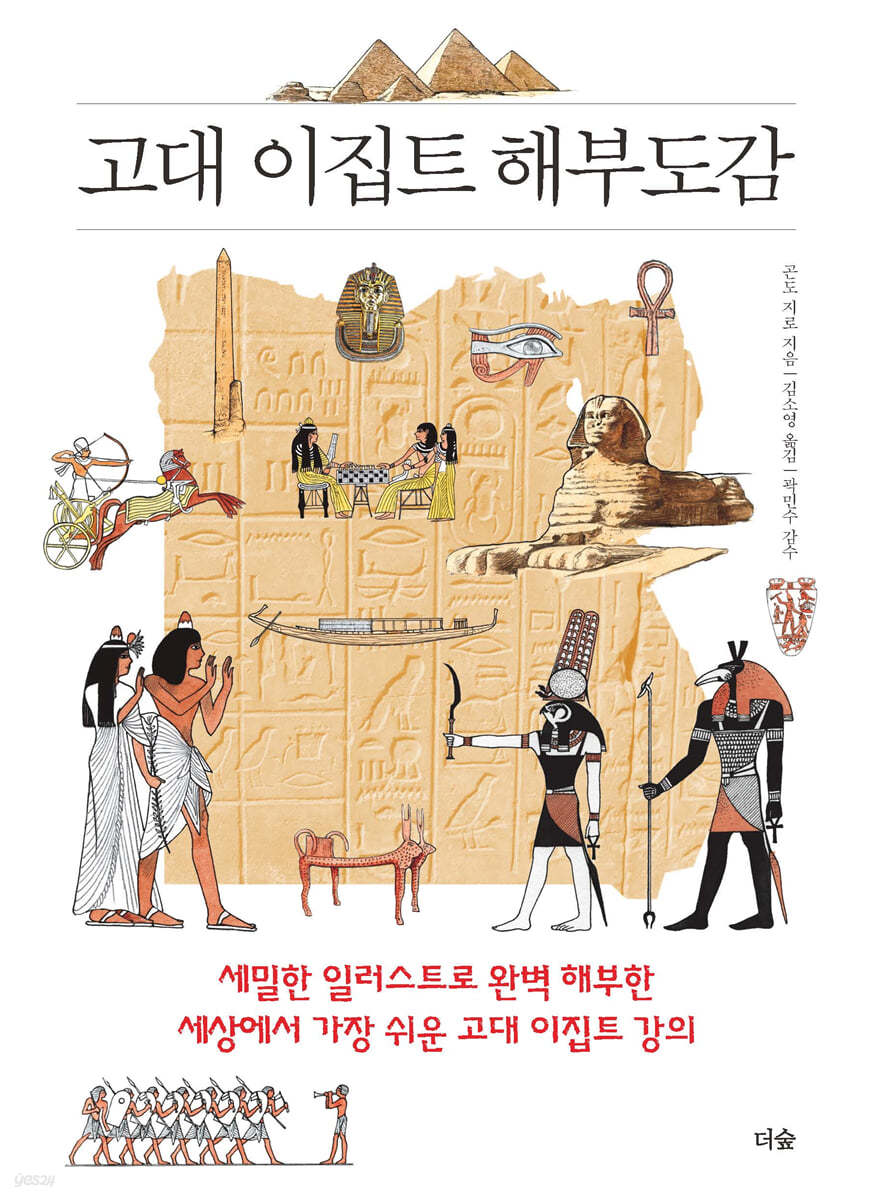
A book for those who only know the pyramids when they think of Egypt.
Perfectly dissected with detailed illustrations
The World's Easiest Ancient Egypt Lesson
With the largest-scale Egyptian Mummy Exhibition in Korea underway and preparations underway, and Egypt tours becoming a popular travel product for tourists, public interest in North Africa's Egypt is gradually increasing.
In the midst of this, an introductory book that explains everything about ancient Egypt, the pinnacle of the four great civilizations, in a simple and friendly way has been published in Korea.
Unlike most existing books on ancient Egypt, which were primarily children's books, this book is a full-fledged introductory text aimed at a wide range of readers, from teenagers to adults.
In particular, the detailed and realistic illustrations in this book visually convey knowledge about ancient Egypt in detail, providing the excitement and sense of presence that makes you feel as if you are touring an Egyptian exhibition.
This book breaks away from the conventional view that is only interested in the stories of 'Tutankhamun', 'Cleopatra', and 'The Great Pyramid', and contains all the knowledge about ancient Egypt, from the major pharaohs of ancient Egypt to their tombs (the pyramids), ceremonial temples and the gods worshipped in the temples, the social structure of ancient Egypt, the lives of ancient Egyptians, and even how to read murals.
Author Jiro Kondo, a world-renowned Egyptologist who has led numerous excavations in Egypt and a professor of archaeology at Waseda University, has, through this extensive work, corrected many of the misconceptions about ancient Egypt and, through this book, clearly revealed knowledge about Egyptian civilization that had been shrouded in vague mystery and enigma.
Why did the pyramids change shape? Why was the Sphinx built to resemble the Pharaoh Khafre? What was the identity of the enigmatic beauty Nefertiti? Why does Khafre's Second Pyramid, located at the center of the three pyramids of Giza, appear larger than the Great Pyramid? How did workers live back then? When did the world's first strike occur in Egypt? What foods and entertainment did ancient Egyptians enjoy?
This book presents a variety of stories, arguments, and opinions on topics that will be of interest to readers interested in ancient Egypt, as well as those encountering ancient Egypt for the first time.
Not only that, it also accurately and vividly conveyed detailed information, such as the locations of the sites where ancient Egyptian relics and ruins are currently stored.
Furthermore, the book's completeness was enhanced by introducing and supplementing the content with verified theories and claims revealed in the latest research through the thorough review of Kwak Min-su, Korea's leading Egyptian archaeologist and director of the Korea Egyptology Institute.
Perfectly dissected with detailed illustrations
The World's Easiest Ancient Egypt Lesson
With the largest-scale Egyptian Mummy Exhibition in Korea underway and preparations underway, and Egypt tours becoming a popular travel product for tourists, public interest in North Africa's Egypt is gradually increasing.
In the midst of this, an introductory book that explains everything about ancient Egypt, the pinnacle of the four great civilizations, in a simple and friendly way has been published in Korea.
Unlike most existing books on ancient Egypt, which were primarily children's books, this book is a full-fledged introductory text aimed at a wide range of readers, from teenagers to adults.
In particular, the detailed and realistic illustrations in this book visually convey knowledge about ancient Egypt in detail, providing the excitement and sense of presence that makes you feel as if you are touring an Egyptian exhibition.
This book breaks away from the conventional view that is only interested in the stories of 'Tutankhamun', 'Cleopatra', and 'The Great Pyramid', and contains all the knowledge about ancient Egypt, from the major pharaohs of ancient Egypt to their tombs (the pyramids), ceremonial temples and the gods worshipped in the temples, the social structure of ancient Egypt, the lives of ancient Egyptians, and even how to read murals.
Author Jiro Kondo, a world-renowned Egyptologist who has led numerous excavations in Egypt and a professor of archaeology at Waseda University, has, through this extensive work, corrected many of the misconceptions about ancient Egypt and, through this book, clearly revealed knowledge about Egyptian civilization that had been shrouded in vague mystery and enigma.
Why did the pyramids change shape? Why was the Sphinx built to resemble the Pharaoh Khafre? What was the identity of the enigmatic beauty Nefertiti? Why does Khafre's Second Pyramid, located at the center of the three pyramids of Giza, appear larger than the Great Pyramid? How did workers live back then? When did the world's first strike occur in Egypt? What foods and entertainment did ancient Egyptians enjoy?
This book presents a variety of stories, arguments, and opinions on topics that will be of interest to readers interested in ancient Egypt, as well as those encountering ancient Egypt for the first time.
Not only that, it also accurately and vividly conveyed detailed information, such as the locations of the sites where ancient Egyptian relics and ruins are currently stored.
Furthermore, the book's completeness was enhanced by introducing and supplementing the content with verified theories and claims revealed in the latest research through the thorough review of Kwak Min-su, Korea's leading Egyptian archaeologist and director of the Korea Egyptology Institute.
- You can preview some of the book's contents.
Preview
index
Entering
Reviewer's note
Administrative divisions of ancient Egypt - a long and narrow territory along the Nile River
3000 years of ancient Egypt history
Chapter 1: Major Pharaohs of Ancient Egypt
What is a Pharaoh? - One who carries out the order of the universe (Ma'at) in this world.
Early Dynastic Period - First Dynasty
Narmer - Was Narmer Menes?
Old Kingdom - Third Dynasty
Netzeriket (Djoser) - the first king to build a pyramid
Old Kingdom - Fourth Dynasty
Snefru - Challenge the General Pyramid
Khufu - the king who built Egypt's largest pyramid
Khafre - the king who built the second pyramid of Giza
Menkaure - the last king to build the three great pyramids
New Kingdom - 18th Dynasty
Hatshepsut - the king who laid the foundation for the prosperity of the 18th Dynasty
Thutmose III - The king who expanded his territory to the greatest extent through expeditions
Amenhotep III - The King Who Wanted to Become an Autocrat
Akhenaten (Amenhotep IV) - the world's first king to implement religious reform
Tutankhamun - The Mysterious Boy King Who Was Fooled by His Time
New Kingdom - 19th Dynasty
Ramses II - Ancient Egypt's greatest pharaoh
New Kingdom - 20th Dynasty
Ramses III - The last great king of the New Kingdom
Third Intermediate Period - 22nd Dynasty
Sheshonk I - Libyan king who reunited Egypt
Ptolemaic Dynasty
Cleopatra VII - The Last Ruler of Ancient Egypt? Queen
One Step Further | A Contributor to Ancient Egyptology ① Belzoni
Chapter 2: Burial Facilities in Ancient Egypt
What is a pyramid?—a symbol of authority that is also a tomb.
Distribution of pyramids - construction concentrated near the royal capital
The evolution of the pyramids: from their peak in the Fourth Dynasty to their decline.
Sun worship and pyramids: a new form of faith born in the Fifth Dynasty
How to build a pyramid - a construction process that involved quarrying, transporting, and stacking stones.
Pyramid-Building Cities - How Did the Workers Live?
The Step Pyramid of Nechelikat - Completed through Trial and Error at the Mastaba Tomb
Snefru's Bent Pyramid - Why was its slope changed during construction?
The Three Great Pyramids of Giza - From Dahshur to Giza
The Great Pyramid of Khufu - the most famous and enigmatic of all.
The Pyramids of Khafre and Menkaure - From Their Discovery to Their Decline
Location of the Valley of the Kings - From Pyramids to Rock Tombs
One Step Further | A Contributor to Ancient Egyptology ② Mariette
Chapter 3: Mummies, Life, Death, and the Gods of Ancient Egypt
Life and Death in Ancient Egypt - The Quest for Eternal Life
How to Make a Mummy - Egyptian Artificial Mummies Preserve Bodies
Funeral Ceremony - A Journey Across the Nile to the Underworld
Pharaoh's Grave Goods - For the Unchanged Life of the Deceased
Ancient Egyptian Beliefs - Feeling Divinity in Everything Around Us
Creation Myths and Gods - The Creator God Created the World
One Step Further | A Contributor to Ancient Egyptology ③ Champollion
Chapter 4: A Complete Anatomy of an Ancient Egyptian Temple
The role and main rituals of the temple - an important facility connecting gods and humans
Karnak Temple - a temple complex divided into three temples
Luxor Temple - A key location for the Opet Festival
Hatshepsut's Funerary Temple - The Beginning of the Independent Funerary Temple
Abu Simbel Temple - A massive structure symbolizing the mighty power of the king
Ramesseum - Funeral Temple of the Great Architect
The Temple of Horus at Edfu - A Masterpiece of the Ptolemaic Dynasty
Philae Island and the Temple of Isis - The "Pearl of the Nile," a place brimming with mystical charm
One Step Further | Pitri, a Contributor to Ancient Egyptology
Chapter 5 Life in Ancient Egypt
Living with the Nile River in Egypt, a Three-Seasonal Life
The social structure of ancient Egypt - pyramid society with the pharaoh at the top
There were many professions, including clerks.
Recreation and Entertainment - Enjoyed by both the King and the Common People
Ancient Egyptians paid special attention to their grooming and decoration.
The Ancient Egyptian Table - A Balanced Diet
How to Read Hieroglyphs: The Greatest Forgotten Relic Because It's So Obscure
How to Read Murals - The Rules Contain Unique Ancient Egyptian Meaning
Appendix - Glossary of Terms and References on Ancient Egypt
Glossary of Terms
References
Reviewer's note
Administrative divisions of ancient Egypt - a long and narrow territory along the Nile River
3000 years of ancient Egypt history
Chapter 1: Major Pharaohs of Ancient Egypt
What is a Pharaoh? - One who carries out the order of the universe (Ma'at) in this world.
Early Dynastic Period - First Dynasty
Narmer - Was Narmer Menes?
Old Kingdom - Third Dynasty
Netzeriket (Djoser) - the first king to build a pyramid
Old Kingdom - Fourth Dynasty
Snefru - Challenge the General Pyramid
Khufu - the king who built Egypt's largest pyramid
Khafre - the king who built the second pyramid of Giza
Menkaure - the last king to build the three great pyramids
New Kingdom - 18th Dynasty
Hatshepsut - the king who laid the foundation for the prosperity of the 18th Dynasty
Thutmose III - The king who expanded his territory to the greatest extent through expeditions
Amenhotep III - The King Who Wanted to Become an Autocrat
Akhenaten (Amenhotep IV) - the world's first king to implement religious reform
Tutankhamun - The Mysterious Boy King Who Was Fooled by His Time
New Kingdom - 19th Dynasty
Ramses II - Ancient Egypt's greatest pharaoh
New Kingdom - 20th Dynasty
Ramses III - The last great king of the New Kingdom
Third Intermediate Period - 22nd Dynasty
Sheshonk I - Libyan king who reunited Egypt
Ptolemaic Dynasty
Cleopatra VII - The Last Ruler of Ancient Egypt? Queen
One Step Further | A Contributor to Ancient Egyptology ① Belzoni
Chapter 2: Burial Facilities in Ancient Egypt
What is a pyramid?—a symbol of authority that is also a tomb.
Distribution of pyramids - construction concentrated near the royal capital
The evolution of the pyramids: from their peak in the Fourth Dynasty to their decline.
Sun worship and pyramids: a new form of faith born in the Fifth Dynasty
How to build a pyramid - a construction process that involved quarrying, transporting, and stacking stones.
Pyramid-Building Cities - How Did the Workers Live?
The Step Pyramid of Nechelikat - Completed through Trial and Error at the Mastaba Tomb
Snefru's Bent Pyramid - Why was its slope changed during construction?
The Three Great Pyramids of Giza - From Dahshur to Giza
The Great Pyramid of Khufu - the most famous and enigmatic of all.
The Pyramids of Khafre and Menkaure - From Their Discovery to Their Decline
Location of the Valley of the Kings - From Pyramids to Rock Tombs
One Step Further | A Contributor to Ancient Egyptology ② Mariette
Chapter 3: Mummies, Life, Death, and the Gods of Ancient Egypt
Life and Death in Ancient Egypt - The Quest for Eternal Life
How to Make a Mummy - Egyptian Artificial Mummies Preserve Bodies
Funeral Ceremony - A Journey Across the Nile to the Underworld
Pharaoh's Grave Goods - For the Unchanged Life of the Deceased
Ancient Egyptian Beliefs - Feeling Divinity in Everything Around Us
Creation Myths and Gods - The Creator God Created the World
One Step Further | A Contributor to Ancient Egyptology ③ Champollion
Chapter 4: A Complete Anatomy of an Ancient Egyptian Temple
The role and main rituals of the temple - an important facility connecting gods and humans
Karnak Temple - a temple complex divided into three temples
Luxor Temple - A key location for the Opet Festival
Hatshepsut's Funerary Temple - The Beginning of the Independent Funerary Temple
Abu Simbel Temple - A massive structure symbolizing the mighty power of the king
Ramesseum - Funeral Temple of the Great Architect
The Temple of Horus at Edfu - A Masterpiece of the Ptolemaic Dynasty
Philae Island and the Temple of Isis - The "Pearl of the Nile," a place brimming with mystical charm
One Step Further | Pitri, a Contributor to Ancient Egyptology
Chapter 5 Life in Ancient Egypt
Living with the Nile River in Egypt, a Three-Seasonal Life
The social structure of ancient Egypt - pyramid society with the pharaoh at the top
There were many professions, including clerks.
Recreation and Entertainment - Enjoyed by both the King and the Common People
Ancient Egyptians paid special attention to their grooming and decoration.
The Ancient Egyptian Table - A Balanced Diet
How to Read Hieroglyphs: The Greatest Forgotten Relic Because It's So Obscure
How to Read Murals - The Rules Contain Unique Ancient Egyptian Meaning
Appendix - Glossary of Terms and References on Ancient Egypt
Glossary of Terms
References
Detailed image

Into the book
The Fourth Dynasty, beginning with Snefru, was a period in which huge pyramids were built one after another, but it is not necessarily correct to judge the strength or weakness of royal power based on the size of the pyramids.
The first half of the Fourth Dynasty was a time when huge pyramids were needed.
The pyramids of the era of Snefru, Khufu, and Khafre were monumental structures built by the pharaohs, the gods of this world, to symbolize the greatness of the sun god and the authority of the king.
The people who participated there also volunteered to work hard to pile up large stones to prove their belief in the sun.
The completed great pyramid shone dazzlingly, revealing the sun god and the pharaoh's image on earth.
---From "Kupu"
When you think of ancient Egypt, pyramids come to mind.
The massive pyramid-shaped structure can be said to be a symbol of ancient Egypt.
The pyramids were basically built as 'king's tombs'.
The oldest step pyramids were monumental structures that prayed to the Northern Hemisphere's circumpolar stars for the eternal life and resurrection of the deceased king.
It also had the purpose of showing off the king's powerful royal power along with his eternal life.
By the 4th Dynasty, pyramids were symbolic structures of sun worship and also served as festival devices.
When Snefru became the high priest of Heliopolis (Iunu in ancient Egyptian, located in the Al-Matariya district of downtown Cairo), the center of solar worship, the royal family and solar worship became extremely close.
The pyramid changed from a stepped shape to a regular pyramid with an isosceles triangle cross-section, and its shape symbolized the sun's rays, symbolizing eternal life and resurrection as the sun rises on the eastern horizon, signifying eternity.
---From "What is a Pyramid?"
The Great Sphinx, one of the three pyramids, is located on a level lower than its surroundings, which was created by quarrying and clearly shows how extensive the quarrying was.
However, high-quality limestone was used for important parts such as the surface of the pyramid.
In that case, they went far away to quarry.
A famous place is the Tura region across the Nile from Giza.
There are traces of stone carving there.
The hewn stones were loaded onto ships and transported across the Nile. Once the stones arrived, they were placed in a pile.
There are several theories, but the most popular one is that they were built by building a ramp into the pyramid, as shown in the picture on the left.
However, some argue that this is not a realistic method because the higher the pyramid gets, the more the height and width of the ramp needs to be adjusted, requiring enormous effort and building materials.
It is also questionable whether the strength decreases as the ramp gets higher and the width gets narrower.
Despite being such a famous building, no records of its construction remain, so the exact technology has not yet been revealed.
---From "How to Build a Pyramid"
When we think of pyramid construction sites, images of slaves being whipped and working often come to mind.
But that image is set to completely disappear, according to recent research.
The remains of a city, which appears to be a worker's residence, were discovered about 400 meters southeast of the Great Sphinx, revealing that the living environment there was sufficiently equipped.
The workers are said to have stayed in communal housing within the walled city.
It was also revealed that the diet was guaranteed to enable them to endure extreme physical labor.
Within the city there were kitchens that could produce large quantities of bread and beer every day.
The grains, vegetables, and meat that became the ingredients were also provided by the country.
Moreover, it is said that not only meals but also clothing and sandals were provided.
The lives of pyramid workers, which have been hidden for a long time, are about to be unveiled.
---From "The Pyramid-Building City"
'Egypt is the gift of the Nile.' This is a famous saying by the Greek historian Herodotus, which actually describes the story of how the Nile Delta expanded the land through the sedimentation of the Nile River.
When looking at Egypt from above, there is a black land to the east and west of the Nile River, and outside of that, a red desert spreads out.
This black land is a fertile land that brings the blessings of plants, and people recognized that 'the black land is the world of life, and the red land is the world of death.'
The Nile River floods once a year when its water level rises.
These floods carried soil containing organic matter from upstream to downstream and deposited it on the land of the basin.
When the water receded, fertile farmland was created there without the need for fertilizer.
Thanks to this environment, Egypt became a prosperous country with developed agriculture.
---From "Egypt in Three Seasons"
After the pyramids, the most popular tourist attraction in Egypt is probably the temples.
Many of the temples that still remain today played an important role since ancient Egypt.
(……) The place where rituals were performed to the gods was the temple, and the person who performed the rituals was the priest.
The social status of priests was high, and it is said that they sometimes influenced the politics and economy of the country.
The king was the so-called mediator between humans and gods, serving the gods and observing their will.
However, as the number of gods increased and the number of temples where sacrifices were performed increased, the number of priests serving daily also became enormous.
---From “The Role and Main Rituals of the Temple”
The ancient Egyptians felt a sense of divinity in all things around them and believed that they were inhabited by gods.
This thinking is common in polytheistic worlds.
The Book of Amduat, an ancient Egyptian religious document, contains the names of over 700 gods.
The ancient Egyptians regarded the universe, including the sun, moon, and stars; the sky, the earth, the atmosphere, the natural environment, including mountains, rivers, and deserts; and animals with powers far beyond human capabilities, such as birds with the ability to fly, which humans cannot do, as special beings.
This fact is understandable given that there were several bird gods in ancient Egypt.
In addition to birds, they also worshipped animals with ferocity and strength that were incomparable to human strength, such as lions, hippos, crocodiles, and buffalo.
In addition, dung beetles, which make animal feces into balls and carry them to their nests, were also worshipped as sun gods.
---From "The Beliefs of the Ancient Egyptians"
It seems that the ancient Egyptians were always concerned about their appearance.
Their living environment seems to have a great deal to do with this.
Having worked extensively in rivers and swamps, where they sweated profusely and harbored infectious pathogens, they would have known how important it was to keep their skin clean.
(……) The king started his day by cleansing himself with a bath.
It is said that common people also washed their bodies once a day and washed several times during religious ceremonies.
Regularly apply oil (animal fat or vegetable oil) to the skin to prevent it from drying out.
Fragrance oil mixed with oil was also popular.
The clothes were made of breathable flax material.
Nobles and royalty used wigs when appearing in public or performing religious ceremonies.
It is also said that eye shadows used on a daily basis have a sterilizing effect on the pigment and have the property of repelling flies, so they are effective in protecting the eyes.
The first half of the Fourth Dynasty was a time when huge pyramids were needed.
The pyramids of the era of Snefru, Khufu, and Khafre were monumental structures built by the pharaohs, the gods of this world, to symbolize the greatness of the sun god and the authority of the king.
The people who participated there also volunteered to work hard to pile up large stones to prove their belief in the sun.
The completed great pyramid shone dazzlingly, revealing the sun god and the pharaoh's image on earth.
---From "Kupu"
When you think of ancient Egypt, pyramids come to mind.
The massive pyramid-shaped structure can be said to be a symbol of ancient Egypt.
The pyramids were basically built as 'king's tombs'.
The oldest step pyramids were monumental structures that prayed to the Northern Hemisphere's circumpolar stars for the eternal life and resurrection of the deceased king.
It also had the purpose of showing off the king's powerful royal power along with his eternal life.
By the 4th Dynasty, pyramids were symbolic structures of sun worship and also served as festival devices.
When Snefru became the high priest of Heliopolis (Iunu in ancient Egyptian, located in the Al-Matariya district of downtown Cairo), the center of solar worship, the royal family and solar worship became extremely close.
The pyramid changed from a stepped shape to a regular pyramid with an isosceles triangle cross-section, and its shape symbolized the sun's rays, symbolizing eternal life and resurrection as the sun rises on the eastern horizon, signifying eternity.
---From "What is a Pyramid?"
The Great Sphinx, one of the three pyramids, is located on a level lower than its surroundings, which was created by quarrying and clearly shows how extensive the quarrying was.
However, high-quality limestone was used for important parts such as the surface of the pyramid.
In that case, they went far away to quarry.
A famous place is the Tura region across the Nile from Giza.
There are traces of stone carving there.
The hewn stones were loaded onto ships and transported across the Nile. Once the stones arrived, they were placed in a pile.
There are several theories, but the most popular one is that they were built by building a ramp into the pyramid, as shown in the picture on the left.
However, some argue that this is not a realistic method because the higher the pyramid gets, the more the height and width of the ramp needs to be adjusted, requiring enormous effort and building materials.
It is also questionable whether the strength decreases as the ramp gets higher and the width gets narrower.
Despite being such a famous building, no records of its construction remain, so the exact technology has not yet been revealed.
---From "How to Build a Pyramid"
When we think of pyramid construction sites, images of slaves being whipped and working often come to mind.
But that image is set to completely disappear, according to recent research.
The remains of a city, which appears to be a worker's residence, were discovered about 400 meters southeast of the Great Sphinx, revealing that the living environment there was sufficiently equipped.
The workers are said to have stayed in communal housing within the walled city.
It was also revealed that the diet was guaranteed to enable them to endure extreme physical labor.
Within the city there were kitchens that could produce large quantities of bread and beer every day.
The grains, vegetables, and meat that became the ingredients were also provided by the country.
Moreover, it is said that not only meals but also clothing and sandals were provided.
The lives of pyramid workers, which have been hidden for a long time, are about to be unveiled.
---From "The Pyramid-Building City"
'Egypt is the gift of the Nile.' This is a famous saying by the Greek historian Herodotus, which actually describes the story of how the Nile Delta expanded the land through the sedimentation of the Nile River.
When looking at Egypt from above, there is a black land to the east and west of the Nile River, and outside of that, a red desert spreads out.
This black land is a fertile land that brings the blessings of plants, and people recognized that 'the black land is the world of life, and the red land is the world of death.'
The Nile River floods once a year when its water level rises.
These floods carried soil containing organic matter from upstream to downstream and deposited it on the land of the basin.
When the water receded, fertile farmland was created there without the need for fertilizer.
Thanks to this environment, Egypt became a prosperous country with developed agriculture.
---From "Egypt in Three Seasons"
After the pyramids, the most popular tourist attraction in Egypt is probably the temples.
Many of the temples that still remain today played an important role since ancient Egypt.
(……) The place where rituals were performed to the gods was the temple, and the person who performed the rituals was the priest.
The social status of priests was high, and it is said that they sometimes influenced the politics and economy of the country.
The king was the so-called mediator between humans and gods, serving the gods and observing their will.
However, as the number of gods increased and the number of temples where sacrifices were performed increased, the number of priests serving daily also became enormous.
---From “The Role and Main Rituals of the Temple”
The ancient Egyptians felt a sense of divinity in all things around them and believed that they were inhabited by gods.
This thinking is common in polytheistic worlds.
The Book of Amduat, an ancient Egyptian religious document, contains the names of over 700 gods.
The ancient Egyptians regarded the universe, including the sun, moon, and stars; the sky, the earth, the atmosphere, the natural environment, including mountains, rivers, and deserts; and animals with powers far beyond human capabilities, such as birds with the ability to fly, which humans cannot do, as special beings.
This fact is understandable given that there were several bird gods in ancient Egypt.
In addition to birds, they also worshipped animals with ferocity and strength that were incomparable to human strength, such as lions, hippos, crocodiles, and buffalo.
In addition, dung beetles, which make animal feces into balls and carry them to their nests, were also worshipped as sun gods.
---From "The Beliefs of the Ancient Egyptians"
It seems that the ancient Egyptians were always concerned about their appearance.
Their living environment seems to have a great deal to do with this.
Having worked extensively in rivers and swamps, where they sweated profusely and harbored infectious pathogens, they would have known how important it was to keep their skin clean.
(……) The king started his day by cleansing himself with a bath.
It is said that common people also washed their bodies once a day and washed several times during religious ceremonies.
Regularly apply oil (animal fat or vegetable oil) to the skin to prevent it from drying out.
Fragrance oil mixed with oil was also popular.
The clothes were made of breathable flax material.
Nobles and royalty used wigs when appearing in public or performing religious ceremonies.
It is also said that eye shadows used on a daily basis have a sterilizing effect on the pigment and have the property of repelling flies, so they are effective in protecting the eyes.
---From "The Body of the Ancient Egyptians"
Publisher's Review
The pharaohs, their tombs including pyramids, their temples and gods,
Everything about ancient Egypt, including the lives and social structure of the ancient Egyptians and how to read murals.
The secrets of ancient Egyptian history and culture spanning over three thousand years.
This book consists of a total of five chapters.
Chapter 1 selects 15 major pharaohs from among the 200 or so pharaohs and provides detailed information on their achievements and characteristics.
It introduces the history of the various pyramids and tombs built by the pharaohs, who were mediators between humans and gods and agents of the gods, from Narmes, who is believed to be the first king, to the last queen, Cleopatra VII, and it also richly touches on the history of trade and wars waged by the pharaohs of the time, such as Hatshepsut, who led the prosperity of the 18th Dynasty, Thutmose III, who was the first to go on an expedition to Asia, and Akhenaten, the king who implemented the world's first religious reform.
The tomb of Tutankhamun, the boy king who was the most notable of the pharaohs and the protagonist of a tomb discovered in almost perfect condition in 1922, has amplified interest by concisely charting the various theories about the cause of death of Tutankhamun, the most notable of the pharaohs, and the process of discovering Tutankhamun's tomb.
Chapter 2 contains detailed knowledge about pyramids, which are commonly associated with Egypt, including the meaning and distribution of various pyramids in Egypt, such as the Step Pyramid of Necheliket, the Bent Pyramid of Snefru, and the Great Pyramid of Khufu, the evolution of pyramid shapes, and methods of building pyramids.
The internal structure of each pyramid was illustrated to help students understand the use and role of pyramids, such as funerary temples and burial chambers.
It also covers the reality of the working conditions of the workers who actually built the pyramids.
When we think of the workers who built the pyramids, we often picture them as slaves being whipped.
However, the lives of the workers who actually built the pyramids were different from those of slaves.
They stayed in communal houses within the city walls and used kitchens where they could produce bread and beer.
Food ingredients and clothing were also provided by the state.
Chapter 3 focuses on the meaning of mummies, which the ancient Egyptians created to preserve their afterlife, and delves into the Egyptian worldview and gods regarding life and death.
By introducing the 'Book of the Dead' scroll, which records the process of mummification and the spell to resurrect the dead, we have summarized the unique characteristics of Egypt and provided a glimpse into the worldview of the ancient Egyptians who hoped to achieve eternal life through resurrection after death.
In addition, it richly portrays scenes such as the funeral procession of an Egyptian king, the opening of the mouth ceremony to revive the five senses of the dead, etc.
It also contains the meaning of the burial goods and new items that the deceased should bring to ensure that the afterlife is just as it was in life.
Chapter 4 examines the temples that are popular tourist destinations in Egypt, from the most famous Karnak Temple to its subsidiary temples, the Luxor Temple, Philae Island, and the Temple of Isis.
Egypt had a total of 42 nomos, with 22 nomos in Upper Egypt in the south and 20 nomos in Lower Egypt in the north, and each nomos had a patron god.
Each region of Egypt worshipped its own gods, and it vividly shows the process of development centered around temples dedicated to local gods.
Chapter 5 examines the pyramid-shaped social structure and the social organization centered on the pharaoh, and examines the unique culture of Egypt, including the lifestyles of the ancient Egyptians, their various occupations, diet, entertainment, and fashion.
You can experience a variety of unique cultures, such as the three-season life cycle based on the Nile River's rising water cycle, specialized occupations such as scribes, hieroglyphs, an Egyptian script that even the Greeks and Romans who invaded Egypt could not learn, a method of reading murals using rules unique to ancient Egypt, and a board game called 'Senet' that was discovered in temples and tombs.
A country with a vivid history and culture
A friendly introduction that reveals the rare details of ancient Egypt.
Egypt, a vibrant treasure trove of history and culture, has always fascinated people around the world.
Films, novels, documentaries, and exhibitions large and small that deal with their culture and stories, which are still shrouded in mystery, have taken people into a world of imagination, and have guided them not only into the stories of a few countries and peoples, but also into diverse world histories that transcend time and space.
This book is a friendly introduction that shows them the inner workings of ancient Egypt, which is a bit more difficult to see.
The appendix, which includes a chart outlining the administrative regions of ancient Egypt at the beginning of the book, a chronology that provides a quick overview of ancient Egyptian history, “One Step Further,” which covers key figures in the establishment of Egyptology, and a “Glossary” that summarizes the book’s key terms, all demonstrate the author’s intense efforts and solid foundation as a scholar.
These subtleties and details serve as a foundation for understanding and reading the whole, making their history and culture even more enjoyable to read.
It also provides an opportunity to think again about the joy of learning.
Everything about ancient Egypt, including the lives and social structure of the ancient Egyptians and how to read murals.
The secrets of ancient Egyptian history and culture spanning over three thousand years.
This book consists of a total of five chapters.
Chapter 1 selects 15 major pharaohs from among the 200 or so pharaohs and provides detailed information on their achievements and characteristics.
It introduces the history of the various pyramids and tombs built by the pharaohs, who were mediators between humans and gods and agents of the gods, from Narmes, who is believed to be the first king, to the last queen, Cleopatra VII, and it also richly touches on the history of trade and wars waged by the pharaohs of the time, such as Hatshepsut, who led the prosperity of the 18th Dynasty, Thutmose III, who was the first to go on an expedition to Asia, and Akhenaten, the king who implemented the world's first religious reform.
The tomb of Tutankhamun, the boy king who was the most notable of the pharaohs and the protagonist of a tomb discovered in almost perfect condition in 1922, has amplified interest by concisely charting the various theories about the cause of death of Tutankhamun, the most notable of the pharaohs, and the process of discovering Tutankhamun's tomb.
Chapter 2 contains detailed knowledge about pyramids, which are commonly associated with Egypt, including the meaning and distribution of various pyramids in Egypt, such as the Step Pyramid of Necheliket, the Bent Pyramid of Snefru, and the Great Pyramid of Khufu, the evolution of pyramid shapes, and methods of building pyramids.
The internal structure of each pyramid was illustrated to help students understand the use and role of pyramids, such as funerary temples and burial chambers.
It also covers the reality of the working conditions of the workers who actually built the pyramids.
When we think of the workers who built the pyramids, we often picture them as slaves being whipped.
However, the lives of the workers who actually built the pyramids were different from those of slaves.
They stayed in communal houses within the city walls and used kitchens where they could produce bread and beer.
Food ingredients and clothing were also provided by the state.
Chapter 3 focuses on the meaning of mummies, which the ancient Egyptians created to preserve their afterlife, and delves into the Egyptian worldview and gods regarding life and death.
By introducing the 'Book of the Dead' scroll, which records the process of mummification and the spell to resurrect the dead, we have summarized the unique characteristics of Egypt and provided a glimpse into the worldview of the ancient Egyptians who hoped to achieve eternal life through resurrection after death.
In addition, it richly portrays scenes such as the funeral procession of an Egyptian king, the opening of the mouth ceremony to revive the five senses of the dead, etc.
It also contains the meaning of the burial goods and new items that the deceased should bring to ensure that the afterlife is just as it was in life.
Chapter 4 examines the temples that are popular tourist destinations in Egypt, from the most famous Karnak Temple to its subsidiary temples, the Luxor Temple, Philae Island, and the Temple of Isis.
Egypt had a total of 42 nomos, with 22 nomos in Upper Egypt in the south and 20 nomos in Lower Egypt in the north, and each nomos had a patron god.
Each region of Egypt worshipped its own gods, and it vividly shows the process of development centered around temples dedicated to local gods.
Chapter 5 examines the pyramid-shaped social structure and the social organization centered on the pharaoh, and examines the unique culture of Egypt, including the lifestyles of the ancient Egyptians, their various occupations, diet, entertainment, and fashion.
You can experience a variety of unique cultures, such as the three-season life cycle based on the Nile River's rising water cycle, specialized occupations such as scribes, hieroglyphs, an Egyptian script that even the Greeks and Romans who invaded Egypt could not learn, a method of reading murals using rules unique to ancient Egypt, and a board game called 'Senet' that was discovered in temples and tombs.
A country with a vivid history and culture
A friendly introduction that reveals the rare details of ancient Egypt.
Egypt, a vibrant treasure trove of history and culture, has always fascinated people around the world.
Films, novels, documentaries, and exhibitions large and small that deal with their culture and stories, which are still shrouded in mystery, have taken people into a world of imagination, and have guided them not only into the stories of a few countries and peoples, but also into diverse world histories that transcend time and space.
This book is a friendly introduction that shows them the inner workings of ancient Egypt, which is a bit more difficult to see.
The appendix, which includes a chart outlining the administrative regions of ancient Egypt at the beginning of the book, a chronology that provides a quick overview of ancient Egyptian history, “One Step Further,” which covers key figures in the establishment of Egyptology, and a “Glossary” that summarizes the book’s key terms, all demonstrate the author’s intense efforts and solid foundation as a scholar.
These subtleties and details serve as a foundation for understanding and reading the whole, making their history and culture even more enjoyable to read.
It also provides an opportunity to think again about the joy of learning.
GOODS SPECIFICS
- Publication date: December 7, 2022
- Page count, weight, size: 168 pages | 310g | 152*209*15mm
- ISBN13: 9791192444352
- ISBN10: 1192444353
You may also like
카테고리
korean


korean

![GQ KOREA Mark (Monthly): December [2025]](http://librairie.coreenne.fr/cdn/shop/files/8ef265dbbfbf186523ed75ba7319009d.jpg?v=1765340328&width=3840)


