

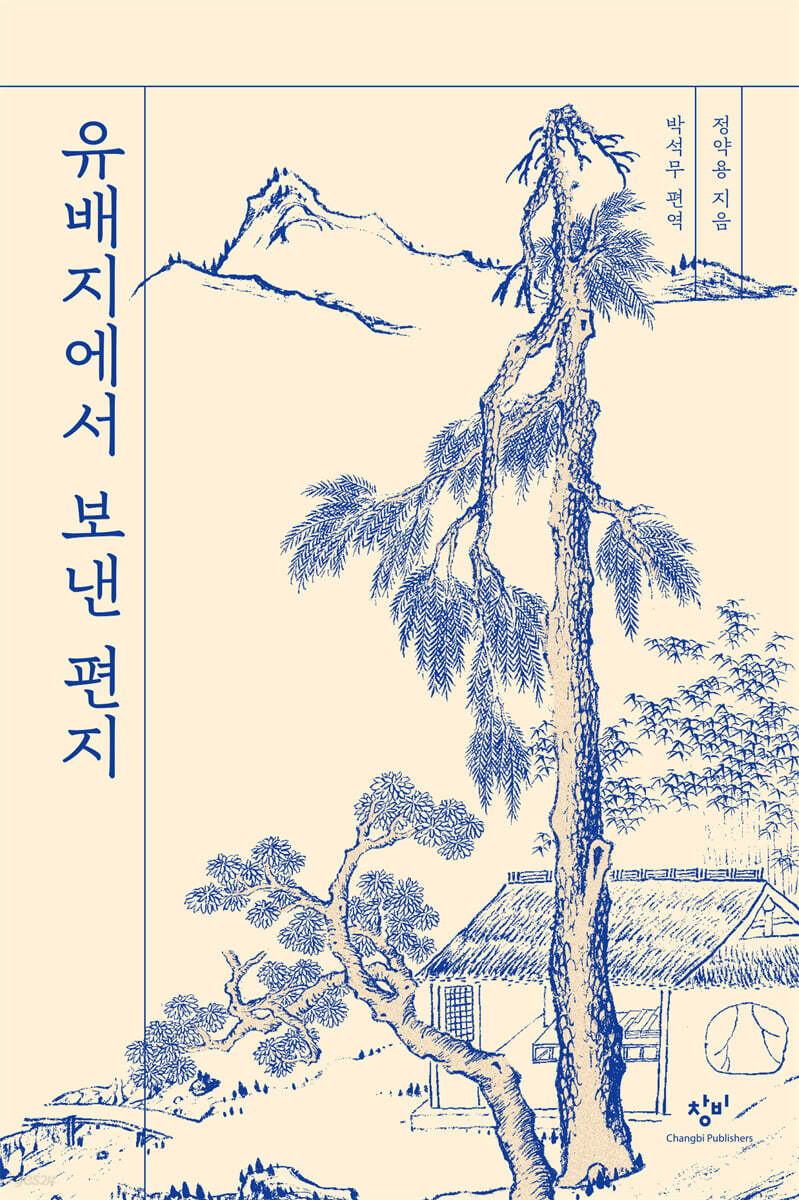
Letters from exile
 |
Description
Book Introduction
The most humane record of Dasan Jeong Yak-yong
As a father and intellectual, Dasan's teachings passed down to future generations
Reading the depths of Jeong Yak-yong's personality through 82 letters
『Letters from Exile』, a collection of letters by Jeong Yak-yong, a master of Silhak (practical learning) in the late Joseon Dynasty and beloved as an immortal intellectual, is now available to readers in a new edition of 'Dasan's Wisdom' along with 『Jeongseon Mokminsimseo』.
Because he wrote extensively in numerous fields, including law, literature, geography, medicine, and biology, his achievements are classified as a separate discipline called Dasanhak.
This edition of Dasan's Wisdom brings together some of his most famous works and his most personal records, giving them a fresh look and containing Dasan's teachings on how to govern ourselves both internally and externally.
If 『Mokminsimseo』 contains guidelines that local magistrates, or Mokmin-gwan, must follow, and makes us ponder the attitude of public officials who play political, social, and administrative roles, 『Letters from Exile』 contains the words that an intellectual and father left for future generations.
The two books, each edited by the Dasan Research Association, which has long devoted itself to Dasan and established Silhak and Dasan Studies, and translated by Park Seok-mu, a distinguished professor at Dankook University and an authority on Dasan studies, are filled with proverbs that transcend time and still enlighten us.
Especially, it is a classic book of life that can be kept by one's side and pondered for a long time by all those who wish to wisely navigate these turbulent times, both as leaders and as individuals.
As a father and intellectual, Dasan's teachings passed down to future generations
Reading the depths of Jeong Yak-yong's personality through 82 letters
『Letters from Exile』, a collection of letters by Jeong Yak-yong, a master of Silhak (practical learning) in the late Joseon Dynasty and beloved as an immortal intellectual, is now available to readers in a new edition of 'Dasan's Wisdom' along with 『Jeongseon Mokminsimseo』.
Because he wrote extensively in numerous fields, including law, literature, geography, medicine, and biology, his achievements are classified as a separate discipline called Dasanhak.
This edition of Dasan's Wisdom brings together some of his most famous works and his most personal records, giving them a fresh look and containing Dasan's teachings on how to govern ourselves both internally and externally.
If 『Mokminsimseo』 contains guidelines that local magistrates, or Mokmin-gwan, must follow, and makes us ponder the attitude of public officials who play political, social, and administrative roles, 『Letters from Exile』 contains the words that an intellectual and father left for future generations.
The two books, each edited by the Dasan Research Association, which has long devoted itself to Dasan and established Silhak and Dasan Studies, and translated by Park Seok-mu, a distinguished professor at Dankook University and an authority on Dasan studies, are filled with proverbs that transcend time and still enlighten us.
Especially, it is a classic book of life that can be kept by one's side and pondered for a long time by all those who wish to wisely navigate these turbulent times, both as leaders and as individuals.
index
At the beginning of the book
Part 1: Letters to My Two Sons
On the way to Gwiyang
The true path to study
The worst and greatest sin in the world
Know your ancestors' deeds and relatives
Strive to write true poetry.
About proper conduct
Set an example first
Beware of pretense
To create a book called 『Ju Seo Yeo Pae』
How to make 『Jegyeong』
Compile the 『Geogasabon』
How to make 『Beergo』
Don't let lies out your mouth.
Even if you are of the same clan, do not form groups.
The ancestral rites table must be prepared according to the rules.
The way of life of a nobleman
Remembering my second older brother
Academic trends in Japan and China
The foundation of poetry
Benevolence, righteousness, propriety, and wisdom are expressed in practice.
The fallen must work a hundred times harder.
My youngest son died
About heat
Help your poor relatives
Maintaining integrity
The spirit of a nobleman
Father's love and lessons written on mother's skirt
Part 2: Family Advice to Two Sons
Become a person that the king can respect.
Meaning of writing
How to write poetry
Even if you fall, you must get up
You must be able to see far ahead
I will pass on a spiritual talisman
Thinking of old friends
Cheongun's will must not be broken
Even when making a living, he behaves like a nobleman
Letter to my second older brother, Part 3
Ancient Site Law of the Yao and Shun Dynasties of China
I also learn from the old woman who sells rice.
About the 『Hyeonsan Eobo』
I hope you think about it deeply, brother.
Mathematics is the antithesis of music.
I read books for adults and give my opinion.
Academic discussions between brothers
About the ceremony
My nephew will grow up to be a great man.
Criteria for admission
About the 『Lectures on the Classic of Poetry』
How to forget the pain of exile
Forgetting to eat and sleep
Words to tell to Yak-Hyung
Part 4: Words of Advice to the Disciples
A request to Yoon Jong-moon
I ask Yoon Jong-moon again.
I ask Yoon Jong-eok
A word of advice to the students of Dasan
A request to Yeongam County Governor Lee Jong-young
I entrust this to Lee Jong-yeong, the Commander of the Royal Guard.
I ask Jeong Su-chil
A request to Yoon Jong-shim
I ask Yisun
I ask Lee In-young
Recommended for Gear Jahong
Recommended for young people with a disability
Part 1: Letters to My Two Sons
On the way to Gwiyang
The true path to study
The worst and greatest sin in the world
Know your ancestors' deeds and relatives
Strive to write true poetry.
About proper conduct
Set an example first
Beware of pretense
To create a book called 『Ju Seo Yeo Pae』
How to make 『Jegyeong』
Compile the 『Geogasabon』
How to make 『Beergo』
Don't let lies out your mouth.
Even if you are of the same clan, do not form groups.
The ancestral rites table must be prepared according to the rules.
The way of life of a nobleman
Remembering my second older brother
Academic trends in Japan and China
The foundation of poetry
Benevolence, righteousness, propriety, and wisdom are expressed in practice.
The fallen must work a hundred times harder.
My youngest son died
About heat
Help your poor relatives
Maintaining integrity
The spirit of a nobleman
Father's love and lessons written on mother's skirt
Part 2: Family Advice to Two Sons
Become a person that the king can respect.
Meaning of writing
How to write poetry
Even if you fall, you must get up
You must be able to see far ahead
I will pass on a spiritual talisman
Thinking of old friends
Cheongun's will must not be broken
Even when making a living, he behaves like a nobleman
Letter to my second older brother, Part 3
Ancient Site Law of the Yao and Shun Dynasties of China
I also learn from the old woman who sells rice.
About the 『Hyeonsan Eobo』
I hope you think about it deeply, brother.
Mathematics is the antithesis of music.
I read books for adults and give my opinion.
Academic discussions between brothers
About the ceremony
My nephew will grow up to be a great man.
Criteria for admission
About the 『Lectures on the Classic of Poetry』
How to forget the pain of exile
Forgetting to eat and sleep
Words to tell to Yak-Hyung
Part 4: Words of Advice to the Disciples
A request to Yoon Jong-moon
I ask Yoon Jong-moon again.
I ask Yoon Jong-eok
A word of advice to the students of Dasan
A request to Yeongam County Governor Lee Jong-young
I entrust this to Lee Jong-yeong, the Commander of the Royal Guard.
I ask Jeong Su-chil
A request to Yoon Jong-shim
I ask Yisun
I ask Lee In-young
Recommended for Gear Jahong
Recommended for young people with a disability
Detailed image

Into the book
Dasan's letters are new every time I read them.
There is much to be learned from Dasan's example: the way he constantly encouraged his sons, who were extremely unfortunate due to the decline of his family, to continue to study without being discouraged; the way he considered his older brother Jeong Yak-jeon, who was exiled on the remote island of Heuksando, as his lifelong confidant and engaged in deep and wide-ranging academic discussions; and the way he taught his students all kinds of wisdom while deeply worrying about their futures.
It is not easy to find out the inner thoughts of the human being in the books he wrote to be revealed to the world, but his private letters to his son, older brother, and disciples clearly reveal his deep inner thoughts.
This book will serve as a guide to Dasan's scholarship and thought for those studying Dasan studies as well as for the general public interested in Dasan.
---From "Introduction"
Remember that telling a single lie is the greatest sin in the world, and that this is the first step into the study of the Holy Spirit.
--- p.57
If it does not contain content that is painful for the times and indignant at the world, it is not poetry. If it does not contain the meaning of calling beautiful things beautiful and detesting ugly things, and of encouraging goodness and punishing evil, it is not poetry.
--- p.63
Even so, if you have a little sincerity in your heart, you will be able to make progress no matter how chaotic the situation is.
Don't you have books at home? Are you physically incompetent? Are you lacking in sharp eyes and ears? Why do you want to give up on yourself?
--- p.76
If we carefully examine every single word in a letter and every single word in our daily conversations to ensure that they are not even slightly inconsistent with the truth, we will be following the example of our ancestors.
--- p.97
I've realized something about reading a few years ago: if you just read haphazardly, even if you read a hundred or a thousand times a day, it's no different from not reading at all.
Whenever you come across a word you don't understand while reading, you should examine it extensively and study it in detail to understand its origins and understand the entire text.
If you read books like this every day, it's like reading hundreds of books at once.
Only by reading it this way can you fully grasp the meaning of the book, so keep this in mind.
--- p.105~106
The true taste of alcohol lies in what moistens the lips.
People who drink like water pour it straight down their throats without even wetting their lips or tongue. How could they possibly know what it tastes like? The pleasure of drinking lies in getting slightly drunk. If your face turns red like a carrot, you vomit, and you fall asleep, what pleasure is there in drinking?
--- p.109
Benevolence, righteousness, propriety, and wisdom can only be realized after they are put into practice through actions and deeds. Feelings of pity and compassion [惻隱], feeling ashamed of wrongdoing, and hating what is not good [羞惡] also come from within.
--- p.124
In serving the king, it is important to be someone who is respected by the king, not someone who is favored by the king.
Also, it is important to be a person who is trusted by the king, not a person who pleases the king.
--- p.157
The wheel of fortune goes round and round, so if you fall once, it doesn't mean you can't get up again.
--- p.174
There is no better way to keep your wealth secret than to give it away to others.
If you give it away, you don't have to worry about it being stolen by thieves, or burned, or the trouble of transporting it by ox or horse.
Also, after one's death, one can leave behind a beautiful name that will last a thousand years.
Could there be such a great gain in the world? The more you hold on to wealth, the more it slips away. Could this be called a catfish?
--- p.180
The thing about a sentence is that it is something that accumulates knowledge within and its style is revealed on the outside.
There is much to be learned from Dasan's example: the way he constantly encouraged his sons, who were extremely unfortunate due to the decline of his family, to continue to study without being discouraged; the way he considered his older brother Jeong Yak-jeon, who was exiled on the remote island of Heuksando, as his lifelong confidant and engaged in deep and wide-ranging academic discussions; and the way he taught his students all kinds of wisdom while deeply worrying about their futures.
It is not easy to find out the inner thoughts of the human being in the books he wrote to be revealed to the world, but his private letters to his son, older brother, and disciples clearly reveal his deep inner thoughts.
This book will serve as a guide to Dasan's scholarship and thought for those studying Dasan studies as well as for the general public interested in Dasan.
---From "Introduction"
Remember that telling a single lie is the greatest sin in the world, and that this is the first step into the study of the Holy Spirit.
--- p.57
If it does not contain content that is painful for the times and indignant at the world, it is not poetry. If it does not contain the meaning of calling beautiful things beautiful and detesting ugly things, and of encouraging goodness and punishing evil, it is not poetry.
--- p.63
Even so, if you have a little sincerity in your heart, you will be able to make progress no matter how chaotic the situation is.
Don't you have books at home? Are you physically incompetent? Are you lacking in sharp eyes and ears? Why do you want to give up on yourself?
--- p.76
If we carefully examine every single word in a letter and every single word in our daily conversations to ensure that they are not even slightly inconsistent with the truth, we will be following the example of our ancestors.
--- p.97
I've realized something about reading a few years ago: if you just read haphazardly, even if you read a hundred or a thousand times a day, it's no different from not reading at all.
Whenever you come across a word you don't understand while reading, you should examine it extensively and study it in detail to understand its origins and understand the entire text.
If you read books like this every day, it's like reading hundreds of books at once.
Only by reading it this way can you fully grasp the meaning of the book, so keep this in mind.
--- p.105~106
The true taste of alcohol lies in what moistens the lips.
People who drink like water pour it straight down their throats without even wetting their lips or tongue. How could they possibly know what it tastes like? The pleasure of drinking lies in getting slightly drunk. If your face turns red like a carrot, you vomit, and you fall asleep, what pleasure is there in drinking?
--- p.109
Benevolence, righteousness, propriety, and wisdom can only be realized after they are put into practice through actions and deeds. Feelings of pity and compassion [惻隱], feeling ashamed of wrongdoing, and hating what is not good [羞惡] also come from within.
--- p.124
In serving the king, it is important to be someone who is respected by the king, not someone who is favored by the king.
Also, it is important to be a person who is trusted by the king, not a person who pleases the king.
--- p.157
The wheel of fortune goes round and round, so if you fall once, it doesn't mean you can't get up again.
--- p.174
There is no better way to keep your wealth secret than to give it away to others.
If you give it away, you don't have to worry about it being stolen by thieves, or burned, or the trouble of transporting it by ox or horse.
Also, after one's death, one can leave behind a beautiful name that will last a thousand years.
Could there be such a great gain in the world? The more you hold on to wealth, the more it slips away. Could this be called a catfish?
--- p.180
The thing about a sentence is that it is something that accumulates knowledge within and its style is revealed on the outside.
--- p.346
Publisher's Review
An immortal scholar and a timeless intellectual
The Virtues of a Leader Learned from Dasan
Since its first publication, 『Letters from Exile』 has served as the most friendly channel for meeting Dasan Jeong Yak-yong.
This book, a compilation of letters sent to family and friends during his exile filled with sincerity and warmth, offers a glimpse into the human side of Dasan before he became a great scholar, and has become a steady seller loved by many readers today.
Throughout this book, we can read the traces of Dasan, who left behind words of affection and encouragement as a communicative intellectual and a person of ordinary life, even in unfortunate circumstances.
Why have the letters of a lonely scholar exiled to the harsh lands of the southern provinces over 200 years ago retained such longevity? While Dasan Jeong Yak-yong is undoubtedly regarded today as the greatest thinker of the late Joseon Dynasty, as a human being, he was nothing more than a father who lost his official position and honor, spent a long period in exile, and lost his beloved son during his exile.
The suffering of Jeong Yak-yong as a human being that we can read through these letters, his positive attitude in enduring and overcoming adversity, and his sincere inner self in caring for his family and disciples, move us more deeply than any of Dasan's books.
Moreover, Dasan developed a unique anthropology by emphasizing filial piety and brotherly love through 82 letters he left to his children, older brothers, and disciples.
The concept of filial piety, which formed the basis of his ethical consciousness, was different from the Confucian values prevalent at the time, and valued the fulfillment of human will to live as a human being, as an ethics inherent in humans.
Family responsibilities to become a 'good' person overall.
It means that we need to refine all aspects of our daily lives, such as our relationships with our neighbors, how we make friends, and our attitude toward studying.
As we face countless worries today and cannot help but ask ourselves how we should live, his meticulous advice to set ourselves straight remains a timeless guideline that remains deeply engraved even today.
Translated by Professor Park Seok-mu, an authority on fertility studies
A new future opened by the wisdom of Dasan
Professor Park Seok-mu, who had continuously cultivated 『Letters from Exile』 through four revisions over 40 years, became known as a 'Dasan expert' by compiling this book in 1979.
He devoted himself to the democracy movement and was imprisoned four times. It is said that he never let go of Dasan in order to not lose hope during the dark and uncertain prison life.
Just as Dasan matured his studies during his 18 years of exile, his research on Dasan also flourished in prison.
This book can be said to be the culmination of the communication between two scholars who, separated by a gap of 200 years, each embraced and pondered the anguish of their times and the pain of the people.
The 'Wisdom of Dasan' edition does not simply shed light on past writings; it provides practical teachings and inspiration to all of us living in the modern era.
Dasan's insight and humane side serve as invaluable guidance for those contemplating true leadership and the right kind of human nature in today's complex and rapidly changing society, and remind us of the fundamental principles necessary to promote harmony and progress throughout society.
The reason why Dasan's wisdom is still valid and necessary for us today is because the utopia he dreamed of is the future we are creating today.
I hope that through the two books, 『Jeongseon Mokminsimseo』 and 『Letters from Exile』, we can have the opportunity to reflect on what is necessary to refine ourselves and establish a proper community.
The Virtues of a Leader Learned from Dasan
Since its first publication, 『Letters from Exile』 has served as the most friendly channel for meeting Dasan Jeong Yak-yong.
This book, a compilation of letters sent to family and friends during his exile filled with sincerity and warmth, offers a glimpse into the human side of Dasan before he became a great scholar, and has become a steady seller loved by many readers today.
Throughout this book, we can read the traces of Dasan, who left behind words of affection and encouragement as a communicative intellectual and a person of ordinary life, even in unfortunate circumstances.
Why have the letters of a lonely scholar exiled to the harsh lands of the southern provinces over 200 years ago retained such longevity? While Dasan Jeong Yak-yong is undoubtedly regarded today as the greatest thinker of the late Joseon Dynasty, as a human being, he was nothing more than a father who lost his official position and honor, spent a long period in exile, and lost his beloved son during his exile.
The suffering of Jeong Yak-yong as a human being that we can read through these letters, his positive attitude in enduring and overcoming adversity, and his sincere inner self in caring for his family and disciples, move us more deeply than any of Dasan's books.
Moreover, Dasan developed a unique anthropology by emphasizing filial piety and brotherly love through 82 letters he left to his children, older brothers, and disciples.
The concept of filial piety, which formed the basis of his ethical consciousness, was different from the Confucian values prevalent at the time, and valued the fulfillment of human will to live as a human being, as an ethics inherent in humans.
Family responsibilities to become a 'good' person overall.
It means that we need to refine all aspects of our daily lives, such as our relationships with our neighbors, how we make friends, and our attitude toward studying.
As we face countless worries today and cannot help but ask ourselves how we should live, his meticulous advice to set ourselves straight remains a timeless guideline that remains deeply engraved even today.
Translated by Professor Park Seok-mu, an authority on fertility studies
A new future opened by the wisdom of Dasan
Professor Park Seok-mu, who had continuously cultivated 『Letters from Exile』 through four revisions over 40 years, became known as a 'Dasan expert' by compiling this book in 1979.
He devoted himself to the democracy movement and was imprisoned four times. It is said that he never let go of Dasan in order to not lose hope during the dark and uncertain prison life.
Just as Dasan matured his studies during his 18 years of exile, his research on Dasan also flourished in prison.
This book can be said to be the culmination of the communication between two scholars who, separated by a gap of 200 years, each embraced and pondered the anguish of their times and the pain of the people.
The 'Wisdom of Dasan' edition does not simply shed light on past writings; it provides practical teachings and inspiration to all of us living in the modern era.
Dasan's insight and humane side serve as invaluable guidance for those contemplating true leadership and the right kind of human nature in today's complex and rapidly changing society, and remind us of the fundamental principles necessary to promote harmony and progress throughout society.
The reason why Dasan's wisdom is still valid and necessary for us today is because the utopia he dreamed of is the future we are creating today.
I hope that through the two books, 『Jeongseon Mokminsimseo』 and 『Letters from Exile』, we can have the opportunity to reflect on what is necessary to refine ourselves and establish a proper community.
GOODS SPECIFICS
- Date of issue: January 24, 2025
- Page count, weight, size: 356 pages | 464g | 140*210*23mm
- ISBN13: 9788936480691
You may also like
카테고리
korean


korean

![GQ KOREA Mark (Monthly): December [2025]](http://librairie.coreenne.fr/cdn/shop/files/8ef265dbbfbf186523ed75ba7319009d.jpg?v=1765340328&width=3840)


