

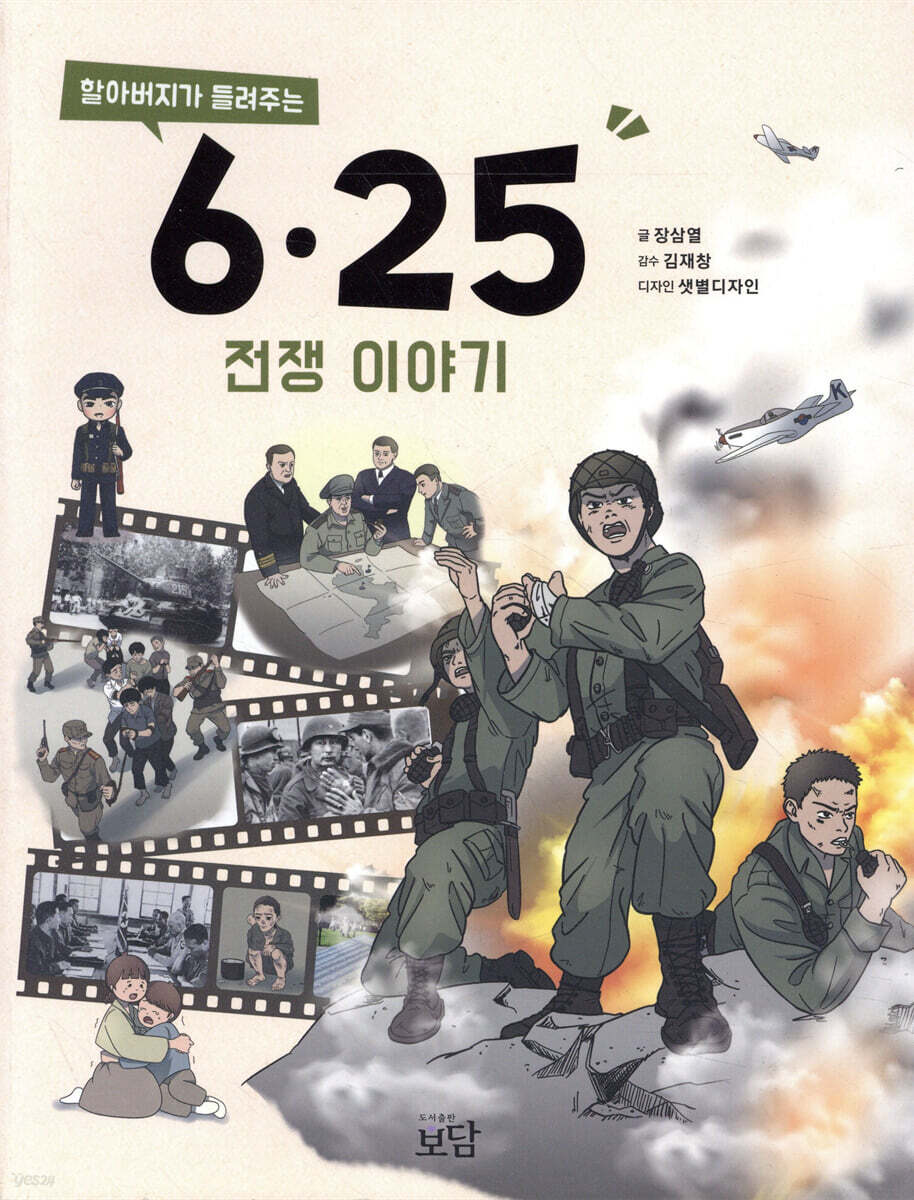
Grandfather's story of the Korean War
 |
Description
Book Introduction
Modern and contemporary history made easy with pictures and photos, a story told by a grandfather.
The story of the '6/25 War', a time of blood, sweat, and tears to protect a free Republic of Korea, is still not over!
On June 25, 1950, North Korea launched a surprise attack on South Korea without a declaration of war.
The war, which lasted for three years and one month, devastated the Korean Peninsula and drenched it in blood.
The defense line was pushed back to the Nakdong River, and South Korea was on the verge of collapse, but the United Nations (UN) forces centered around the United States were quickly dispatched, enabling the Republic of Korea to survive as a free nation.
The ROK and UN forces fought for 1,129 days, killing or injuring 780,000 people to save the Republic of Korea.
We must never forget the noble sacrifice of these veterans.
However, the Korean War is becoming a forgotten war for the post-war generation.
Why? The Korean War we learn about in school is largely distorted and downplayed.
It's hard to find books suitable for teenagers in major bookstores.
The recently published "The Story of the Korean War Told by Grandfather" reminds us of the lesson, "If you want peace, prepare for war."
The author, Dr. Jang Sam-yeol, has incorporated the history of war, UN peacekeeping operations, and his experience in the Iraq War into his storytelling, along with photographs and illustrations from the time, so that the next generation, the hope for the future, can easily read it.
The story of the '6/25 War', a time of blood, sweat, and tears to protect a free Republic of Korea, is still not over!
On June 25, 1950, North Korea launched a surprise attack on South Korea without a declaration of war.
The war, which lasted for three years and one month, devastated the Korean Peninsula and drenched it in blood.
The defense line was pushed back to the Nakdong River, and South Korea was on the verge of collapse, but the United Nations (UN) forces centered around the United States were quickly dispatched, enabling the Republic of Korea to survive as a free nation.
The ROK and UN forces fought for 1,129 days, killing or injuring 780,000 people to save the Republic of Korea.
We must never forget the noble sacrifice of these veterans.
However, the Korean War is becoming a forgotten war for the post-war generation.
Why? The Korean War we learn about in school is largely distorted and downplayed.
It's hard to find books suitable for teenagers in major bookstores.
The recently published "The Story of the Korean War Told by Grandfather" reminds us of the lesson, "If you want peace, prepare for war."
The author, Dr. Jang Sam-yeol, has incorporated the history of war, UN peacekeeping operations, and his experience in the Iraq War into his storytelling, along with photographs and illustrations from the time, so that the next generation, the hope for the future, can easily read it.
- You can preview some of the book's contents.
Preview
index
I.
The start of the Korean War
1.
North and South Korea divided by the 38th parallel
2.
The Korean War was a joint work of the three powers of the communist countries.
3.
The capital, Seoul, was taken away in three days
4.
The precarious Han River defense line
5.
The Battle of Chuncheon, which prevented the defeat of the national army
6.
Baekdusan and the Battle of the Korea Strait
II.
UN assistance and the Nakdong River defense line
1.
Help from the United States and the United Nations
2.
The Battle of Daejeon, which saved us precious time
3.
The ROK Army gains confidence after its victory in the Battle of Hwaryeongjang.
4.
The Battle of the Nakdong River Defense Line that Saved South Korea
III.
Incheon Landing Operation and the Northward Advance
1.
Incheon Landing Operation, 1/5000 chance of success
2.
The Taegeukgi hanging in the restored Seoul and the Central Government Complex
3.
Operation to break through the 38th parallel and advance northward
4.
The military finally plants the Taegeukgi in the Yalu River!
5.
The blame for all these deaths lies with those who started the war.
IV.
The Korean War, which turned into an international conflict due to the illegal intervention of the Chinese military.
1.
Illegal intervention by the Chinese military and the retreat of UN forces
2.
The Battle of Chosin Reservoir, a great retreat recorded in human history
3.
The Hungnam Evacuation Operation and the Christmas Miracle
4.
The January 4th Retreat and General Ridgway's Decision
5.
Chinese offensive and UN counterattack
6.
Victory in the Battle of Yongmunsan and the Battle of Paroho
7.
Occupy Mt. Dosol, which the US Marines abandoned!
V.
Armistice negotiations and the ROK-US Mutual Defense Treaty
1.
A tedious battle for the high ground
2.
Armistice negotiations, that long tunnel
3.
Syngman Rhee's diplomatic victory: the ROK-US Mutual Defense Treaty
4.
The gunfire ceased and the division remained under the armistice agreement.
5.
What the 1,129-day war left behind
VI.
If you want peace, remember the war.
1.
The UN forces that helped the Republic of Korea, which was like a light in the wind
2.
War heroes who saved South Korea from crisis
3.
An amazing 70 years of great dedication, now a blessing!
4.
Places worth visiting
The start of the Korean War
1.
North and South Korea divided by the 38th parallel
2.
The Korean War was a joint work of the three powers of the communist countries.
3.
The capital, Seoul, was taken away in three days
4.
The precarious Han River defense line
5.
The Battle of Chuncheon, which prevented the defeat of the national army
6.
Baekdusan and the Battle of the Korea Strait
II.
UN assistance and the Nakdong River defense line
1.
Help from the United States and the United Nations
2.
The Battle of Daejeon, which saved us precious time
3.
The ROK Army gains confidence after its victory in the Battle of Hwaryeongjang.
4.
The Battle of the Nakdong River Defense Line that Saved South Korea
III.
Incheon Landing Operation and the Northward Advance
1.
Incheon Landing Operation, 1/5000 chance of success
2.
The Taegeukgi hanging in the restored Seoul and the Central Government Complex
3.
Operation to break through the 38th parallel and advance northward
4.
The military finally plants the Taegeukgi in the Yalu River!
5.
The blame for all these deaths lies with those who started the war.
IV.
The Korean War, which turned into an international conflict due to the illegal intervention of the Chinese military.
1.
Illegal intervention by the Chinese military and the retreat of UN forces
2.
The Battle of Chosin Reservoir, a great retreat recorded in human history
3.
The Hungnam Evacuation Operation and the Christmas Miracle
4.
The January 4th Retreat and General Ridgway's Decision
5.
Chinese offensive and UN counterattack
6.
Victory in the Battle of Yongmunsan and the Battle of Paroho
7.
Occupy Mt. Dosol, which the US Marines abandoned!
V.
Armistice negotiations and the ROK-US Mutual Defense Treaty
1.
A tedious battle for the high ground
2.
Armistice negotiations, that long tunnel
3.
Syngman Rhee's diplomatic victory: the ROK-US Mutual Defense Treaty
4.
The gunfire ceased and the division remained under the armistice agreement.
5.
What the 1,129-day war left behind
VI.
If you want peace, remember the war.
1.
The UN forces that helped the Republic of Korea, which was like a light in the wind
2.
War heroes who saved South Korea from crisis
3.
An amazing 70 years of great dedication, now a blessing!
4.
Places worth visiting
Detailed image

Into the book
The Korean War was planned by Kim Il-sung, approved by Stalin, and supported by Mao Zedong.
Kim Il-sung, the leader of North Korea at the time, wanted to communize the Korean Peninsula even if it meant starting a war after South Korea was recognized by the United Nations as the sole legitimate government on the Korean Peninsula.
They asked for help from the Soviet Union and China in order to quickly swallow up South Korea before the US military intervened.
Kim Il-sung visited Stalin several times.
In fact, Stalin initially refused because he did not want a conflict with the United States, but after repeated requests, he agreed to provide various weapons and permitted the invasion of South Korea.
China's Mao Zedong also sent tens of thousands of troops to North Korea.
It is said to have been a great help to North Korea, which had been secretly preparing for war.
--- p.28
The fiercest battle of Tabudong
The North Korean army occupied 90% of our territory in just one month, and we had nowhere else to retreat.
In this desperate situation, the Nakdong River defense line had to be defended at all costs in order to secure the Busan bridgehead.
The 'Nakdong River Defense Line' conceived by General Walker was a 240km defensive line connecting Masan, Waegwan, Nakdong-ri, Sangju-gun, and Yeongdeok, and was also called the 'Walker Line'.
--- p.80
Crossing the 38th parallel was a difficult but moving experience.
The ROK military was in a difficult position as to whether to follow the UN's orders or President Syngman Rhee's orders.
At that time, US military advisor James H.
Hausman) informed me that there is a 'right to urgent pursuit'.
On October 1st, when the 3rd Division of the ROK Army crossed the 38th parallel in Yangyang, Gangwon Province, other divisions quickly followed suit as if they had been waiting for it.
--- p.124
The Yongmunsan victory report that washed away the shame of the defeat at the Battle of Sachang-ri
In the Battle of Yongmunsan in Yangpyeong, the ROK Army defeated three divisions of the Chinese Army.
The protagonist of this victory was the 6th Division of the ROK Army, which suffered a humiliating defeat to the Chinese army in the Battle of Sachang-ri.
Division Commander General Jang Do-young said, "Our Cheongseong unit must fight with the resolve to die.
There is no retreat now.
He said, "Don't even think about retreating a single step and hold your ground until the end."
Accordingly, the soldiers carved the word 'death' (決死) on their headbands and helmets, gritted their teeth, and went into battle.
--- p.191
Syngman Rhee's diplomatic victory: the ROK-US Mutual Defense Treaty
US President Eisenhower, worried that the release of anti-communist prisoners would derail the armistice talks, dispatched a special envoy to Korea on June 25.
Robertson, who was a special envoy (Walter S.
Under Secretary of State Robertson even prepared the card of 'withdrawal of UN forces' to deal with the uncompromising Syngman Rhee.
But this president went one step further and is said to have prepared a trump card called the 'Korea-US Mutual Defense Treaty'.
--- p.222
Reckless, the horse who became a war hero
During the Korean War, there was a military horse that performed admirably in the mission of transporting ammunition and weapons on the battlefield where bullets were flying.
For this achievement, a horse, not a human, was promoted to the rank of sergeant for the first time in the history of the US Marine Corps.
Born in Korea, 'Achimhae' was raised as a racehorse, but when the war broke out, he was sold to the US Marine Corps.
'Morning Sun' was so brave and clever that he was almost reckless on the battlefield, so the American soldiers called him 'Reckless'.
Kim Il-sung, the leader of North Korea at the time, wanted to communize the Korean Peninsula even if it meant starting a war after South Korea was recognized by the United Nations as the sole legitimate government on the Korean Peninsula.
They asked for help from the Soviet Union and China in order to quickly swallow up South Korea before the US military intervened.
Kim Il-sung visited Stalin several times.
In fact, Stalin initially refused because he did not want a conflict with the United States, but after repeated requests, he agreed to provide various weapons and permitted the invasion of South Korea.
China's Mao Zedong also sent tens of thousands of troops to North Korea.
It is said to have been a great help to North Korea, which had been secretly preparing for war.
--- p.28
The fiercest battle of Tabudong
The North Korean army occupied 90% of our territory in just one month, and we had nowhere else to retreat.
In this desperate situation, the Nakdong River defense line had to be defended at all costs in order to secure the Busan bridgehead.
The 'Nakdong River Defense Line' conceived by General Walker was a 240km defensive line connecting Masan, Waegwan, Nakdong-ri, Sangju-gun, and Yeongdeok, and was also called the 'Walker Line'.
--- p.80
Crossing the 38th parallel was a difficult but moving experience.
The ROK military was in a difficult position as to whether to follow the UN's orders or President Syngman Rhee's orders.
At that time, US military advisor James H.
Hausman) informed me that there is a 'right to urgent pursuit'.
On October 1st, when the 3rd Division of the ROK Army crossed the 38th parallel in Yangyang, Gangwon Province, other divisions quickly followed suit as if they had been waiting for it.
--- p.124
The Yongmunsan victory report that washed away the shame of the defeat at the Battle of Sachang-ri
In the Battle of Yongmunsan in Yangpyeong, the ROK Army defeated three divisions of the Chinese Army.
The protagonist of this victory was the 6th Division of the ROK Army, which suffered a humiliating defeat to the Chinese army in the Battle of Sachang-ri.
Division Commander General Jang Do-young said, "Our Cheongseong unit must fight with the resolve to die.
There is no retreat now.
He said, "Don't even think about retreating a single step and hold your ground until the end."
Accordingly, the soldiers carved the word 'death' (決死) on their headbands and helmets, gritted their teeth, and went into battle.
--- p.191
Syngman Rhee's diplomatic victory: the ROK-US Mutual Defense Treaty
US President Eisenhower, worried that the release of anti-communist prisoners would derail the armistice talks, dispatched a special envoy to Korea on June 25.
Robertson, who was a special envoy (Walter S.
Under Secretary of State Robertson even prepared the card of 'withdrawal of UN forces' to deal with the uncompromising Syngman Rhee.
But this president went one step further and is said to have prepared a trump card called the 'Korea-US Mutual Defense Treaty'.
--- p.222
Reckless, the horse who became a war hero
During the Korean War, there was a military horse that performed admirably in the mission of transporting ammunition and weapons on the battlefield where bullets were flying.
For this achievement, a horse, not a human, was promoted to the rank of sergeant for the first time in the history of the US Marine Corps.
Born in Korea, 'Achimhae' was raised as a racehorse, but when the war broke out, he was sold to the US Marine Corps.
'Morning Sun' was so brave and clever that he was almost reckless on the battlefield, so the American soldiers called him 'Reckless'.
--- p.280
Publisher's Review
When I go to a bookstore, I hardly see any books about the Korean War that young people can read.
Most of the booklets are filled with unfamiliar military terms.
So I decided to write a war story that would be easy and fun to read for the next generation, the hope of the future.
My small wish is that through this book, grandfather and grandson will become close friends, and that the next generation will gain a correct understanding of the Korean War.
Most of the booklets are filled with unfamiliar military terms.
So I decided to write a war story that would be easy and fun to read for the next generation, the hope of the future.
My small wish is that through this book, grandfather and grandson will become close friends, and that the next generation will gain a correct understanding of the Korean War.
GOODS SPECIFICS
- Date of issue: January 3, 2024
- Page count, weight, size: 304 pages | 190*250*30mm
- ISBN13: 9791197073021
- ISBN10: 1197073027
- KC Certification: Certification Type: Conformity Confirmation
You may also like
카테고리
korean


korean

![GQ KOREA Mark (Monthly): December [2025]](http://librairie.coreenne.fr/cdn/shop/files/8ef265dbbfbf186523ed75ba7319009d.jpg?v=1765340328&width=3840)


