

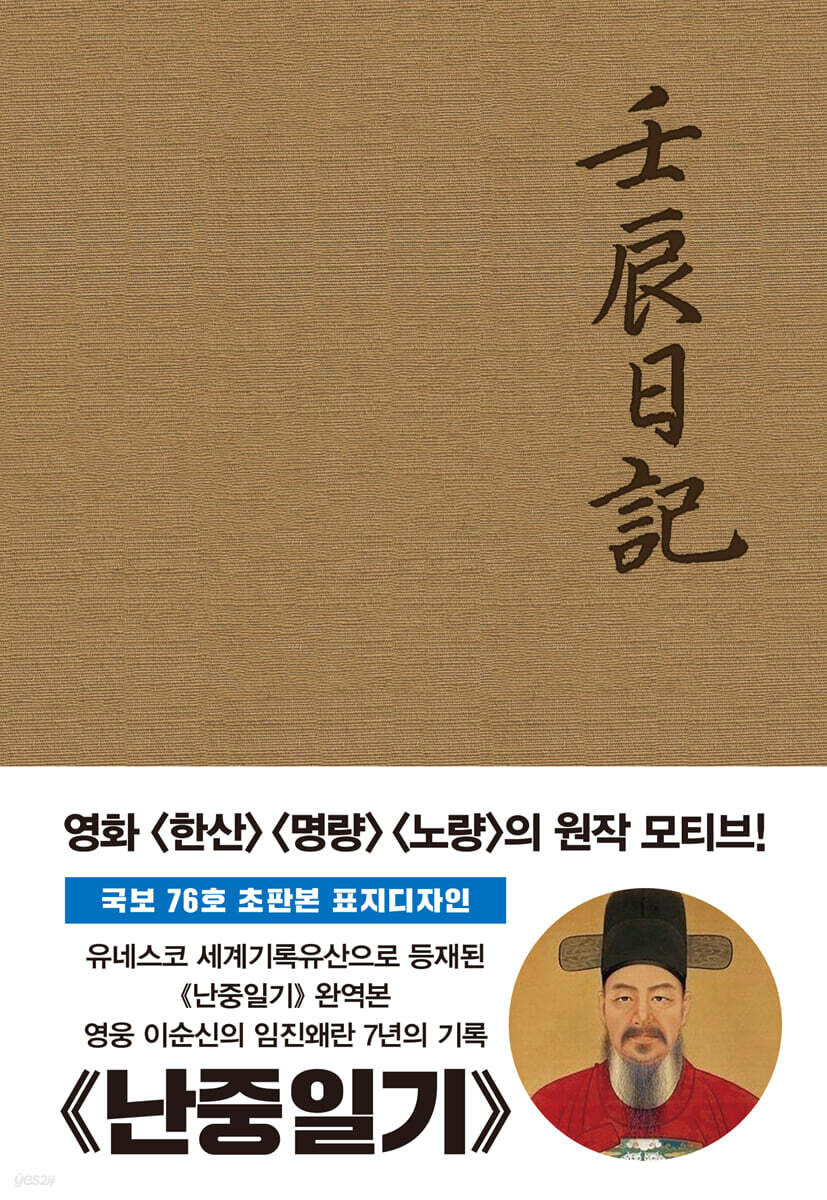
First edition of Nanjung Ilgi
 |
Description
Book Introduction
The original motif of the movies [Hansan], [Roaring Currents], and [Noryang]! A complete translation of the 『Nanjung Ilgi』, designated as National Treasure No. 76 and a UNESCO World Heritage Site! Meet Admiral Yi Sun-sin, the eternal hero of Korean history! The Chronicle of Joseon's Defense, Protected by the Immortal Yi Sun-sin Through Death “If you want to die, you will live, and if you want to live, you will die!” 1592, the year of Imjin. The story of the Imjin War, in which the king overcame countless difficulties to the point of even fleeing to face the Japanese invasion and fought bravely to win, is deeply ingrained in the emotions of Koreans, with high-rated TV dramas such as [Immortal Admiral Yi Sun-sin] and [Jingbirok], and the box office success of the film [Roaring Currents], which holds the number one spot in Korean film history with a cumulative audience of 17 million. Therefore, the 『Nanjung Ilgi (亂中日記)』 written by Admiral Yi Sun-sin, who led the Japanese invasions of Korea to victory, is considered a book that must be read at least once in one's life. 『Nanjung Ilgi』 is a diary written by Admiral Yi Sun-sin over a period of seven years during the Imjin War. It covers the period from January 1, 1592, the month after the Imjin War broke out, to November 17, 1598, the month before he died in battle. The original manuscript of the diary is currently kept at the Hyeonchungsa Shrine in Asan, South Chungcheong Province. Originally, this diary had no name, but when compiling the 『Complete Works of Admiral Yi Sun-sin』 in 1795, the compiler conveniently named it ‘Nanjung Ilgi’ and included it. Admiral Yi Sun-sin, who saved the country by defeating the Japanese during turbulent times and died a heroic death, is not a fictional character but a real person, so the diary he left behind is also of great value as a historical document. 『Nanjung Ilgi』 is a diary-style work that vividly records the tragedy of the Imjin War. It was registered as a UNESCO Memory of the World in 2013 and is currently designated as National Treasure No. 76. Along with 『Jingbirok』 by Seoae Ryu Seong-ryong, which is also designated as National Treasure No. 132, it is considered one of the two major mountains of records of the Imjin War. The phrase "If you want to die, you will live, and if you want to live, you will die (必死則生 必生則死)" from the diary entry of September 15, 1915 (October 25 in the solar calendar) in the 『Nanjung Ilgi』 allows us to reflect on the attitude of emptying one's mind in life even in extreme situations, and has become a famous saying representing Admiral Yi Sun-sin. The diary he left behind still shows countless people today what a true hero is, one who is loyal to his country and filial to his parents, and what Yi Sun-sin's spirit of love for the people was, protecting them. In addition to the records of battles against the Japanese army, it also contains sharp criticism of the incompetent aristocrats and the corrupt Joseon society of the time. Let's take a look at the original first edition fabric cover design of The Story, which includes fabric materials you would want to own, of 『Nanjung Ilgi』, which contains the human agony of Admiral Yi Sun-sin who stood before the fate of a nation that was like a light in the wind. The three-foot oath of heaven, the mountains and rivers of Samcheok Seocheon, the same color One sweep, one sweep, one blood-stained mountain and river I swear to heaven with a three-foot sword, and the mountains and rivers tremble, With one swing, blood stains the rivers and mountains. _The inscription engraved in Admiral Yi Sun-sin's own handwriting on one side of the blade of Chungmugong's sword |
- You can preview some of the book's contents.
Preview
index
Special Appendix | Nanjung Diary in Pictures
Imjin Year 1592
January: Feeling the spirit of war / February: Preparing for battle / March: Firing the turtle ship's cannons /
April: The Imjin War broke out. May: Confrontation with the Japanese at Okpo. June: Defeat of the Japanese at Danghangpo.
August: Reaching the waters off Busan
Year of the Dog, 1593
February: Go to Ungcheon to eliminate Japanese pirates / March: Confrontation with Japanese pirates continues / May: Meet Ming officials /
June: Move the army to Hansando / July: Jinjuseong Fortress falls / August: Meet Ryu Seong-ryong in a dream /
September: Making a rifle
1594, the year of Gap-o
January: Visiting Mother for a Brief Time / February: Defeating the Japanese in Honam / March: Commanding the Navy Despite Being Ill
April: Over 100 Japanese ships sail to Jeolyeongdo Island / May: Capture Japanese pirates / June: Lose someone you trusted /
July: Meet with a Ming general / August: Talk with Kwon Yul / September: Set up camp at the equator /
October: Threatening the Japanese pirates / November: Ordering a search for the Japanese pirates
Year of the Goat, 1595
January: Worrying about the country and mother / February: Distributing military supplies / March: Seeing through Toyotomi Hideyoshi's scheme /
April: About 50 Japanese ships sail to Jinhae / May: Japanese pirates are beheaded / June: Mother's illness is completely cured /
July: The Japanese pirates in Geoje retreat / August: The king's will is confirmed / September: Parting ways with someone you cherish /
October: Observe the situation of the Japanese pirates / November: Cut off the heads of Japanese pirates who try to escape / December: Talk with the inspector
1596, the year of the monkey
January: Watching the movements of the Japanese pirates / February: Receiving rice from the fields / March: Groaning from discomfort /
April: Hearing of Toyotomi Hideyoshi's death / May: Hearing rumors that the Japanese would withdraw /
June: Continue shooting arrows / July: Bandits rise / August: Spend time with sons /
August: Witnessing the miserable lives of the people / September: Touring Jeolla Province / October: Holding a wedding for his mother
Year of the Dog, 1597
April: Saying goodbye to my mother forever / May: Enduring heartbreak / June: Losing my general /
July: Defeated by the Japanese / August: Received the king's order to concurrently serve as the naval commander of the three provinces /
September: Victory in the Battle of Myeongnyang / October: Loss of son Myeon forever / November: Receives congratulations from a Ming general /
December: Moved by the King's Order
1598, the year of the Monkey
January: Set up camp and fight off the Japanese / September: Join forces with the Ming Dynasty / October: Accept bribes and withdraw the Ming army /
November: Admiral Yi Sun-sin dies in battle
References
Yi Sun-sin's Chronology
Translator's Note | The Nanjung Ilgi of Admiral Yi Sun-sin, a True Leader
Imjin Year 1592
January: Feeling the spirit of war / February: Preparing for battle / March: Firing the turtle ship's cannons /
April: The Imjin War broke out. May: Confrontation with the Japanese at Okpo. June: Defeat of the Japanese at Danghangpo.
August: Reaching the waters off Busan
Year of the Dog, 1593
February: Go to Ungcheon to eliminate Japanese pirates / March: Confrontation with Japanese pirates continues / May: Meet Ming officials /
June: Move the army to Hansando / July: Jinjuseong Fortress falls / August: Meet Ryu Seong-ryong in a dream /
September: Making a rifle
1594, the year of Gap-o
January: Visiting Mother for a Brief Time / February: Defeating the Japanese in Honam / March: Commanding the Navy Despite Being Ill
April: Over 100 Japanese ships sail to Jeolyeongdo Island / May: Capture Japanese pirates / June: Lose someone you trusted /
July: Meet with a Ming general / August: Talk with Kwon Yul / September: Set up camp at the equator /
October: Threatening the Japanese pirates / November: Ordering a search for the Japanese pirates
Year of the Goat, 1595
January: Worrying about the country and mother / February: Distributing military supplies / March: Seeing through Toyotomi Hideyoshi's scheme /
April: About 50 Japanese ships sail to Jinhae / May: Japanese pirates are beheaded / June: Mother's illness is completely cured /
July: The Japanese pirates in Geoje retreat / August: The king's will is confirmed / September: Parting ways with someone you cherish /
October: Observe the situation of the Japanese pirates / November: Cut off the heads of Japanese pirates who try to escape / December: Talk with the inspector
1596, the year of the monkey
January: Watching the movements of the Japanese pirates / February: Receiving rice from the fields / March: Groaning from discomfort /
April: Hearing of Toyotomi Hideyoshi's death / May: Hearing rumors that the Japanese would withdraw /
June: Continue shooting arrows / July: Bandits rise / August: Spend time with sons /
August: Witnessing the miserable lives of the people / September: Touring Jeolla Province / October: Holding a wedding for his mother
Year of the Dog, 1597
April: Saying goodbye to my mother forever / May: Enduring heartbreak / June: Losing my general /
July: Defeated by the Japanese / August: Received the king's order to concurrently serve as the naval commander of the three provinces /
September: Victory in the Battle of Myeongnyang / October: Loss of son Myeon forever / November: Receives congratulations from a Ming general /
December: Moved by the King's Order
1598, the year of the Monkey
January: Set up camp and fight off the Japanese / September: Join forces with the Ming Dynasty / October: Accept bribes and withdraw the Ming army /
November: Admiral Yi Sun-sin dies in battle
References
Yi Sun-sin's Chronology
Translator's Note | The Nanjung Ilgi of Admiral Yi Sun-sin, a True Leader
Detailed image

Into the book
We set sail on the morning of June 5, 1592, and arrived at Danghangpo.
The size of one of the Japanese ships is the same as that of a panokseon, and the pavilion on top of the ship is tall, and a so-called general sits on top of it.
In addition, there were 12 medium-sized ships and 20 small ships.
They all struck at once and broke it, and the arrows rained down like rain. The number of people who died from the arrows was innumerable, and seven heads of the Japanese generals were cut off.
The remaining Japanese pirates went up to land and fled immediately, but their number was not large.
From this point on, our momentum increased significantly.
On August 23, 1595, I went to the place where the inspector was and while talking quietly, I had many thoughts about how I should alleviate the suffering of the people.
In the evening, I went to Chokseokru with Kim Eung-seo and saw the place where the soldiers died in battle.
I couldn't overcome my sadness and resentment.
The inspector told me to go first, so I took a boat back to Sobipo and anchored.
It is said that on May 21, 1597, Gwacheon Left Commander An Hong-je and others were released after offering a horse and a 20-year-old female servant to this court lady.
An Hong-je was not originally guilty of a crime that deserved death, but he was punished several times and almost died, and was only released after offering up an object.
They say that the severity of a sin is determined by the amount of things offered, both inside and out, so I don't know what the outcome will be.
So, is it true that if you have money, you can even find the soul of a dead person?
On November 17, 1598, Manho So Gye-nam, the commander of the ambush, and Manho Jo Hyo-yeol of Dangjinpo, the commander of the ambush, chased a Japanese pirate ship carrying a full load of military supplies across the sea from the South Sea to the waters off Hansando.
The Japanese pirates climbed up the hill and fled to land.
(Admiral Yi Sun-sin died in the Battle of Noryang two days later, on the morning of November 19th.)
The size of one of the Japanese ships is the same as that of a panokseon, and the pavilion on top of the ship is tall, and a so-called general sits on top of it.
In addition, there were 12 medium-sized ships and 20 small ships.
They all struck at once and broke it, and the arrows rained down like rain. The number of people who died from the arrows was innumerable, and seven heads of the Japanese generals were cut off.
The remaining Japanese pirates went up to land and fled immediately, but their number was not large.
From this point on, our momentum increased significantly.
On August 23, 1595, I went to the place where the inspector was and while talking quietly, I had many thoughts about how I should alleviate the suffering of the people.
In the evening, I went to Chokseokru with Kim Eung-seo and saw the place where the soldiers died in battle.
I couldn't overcome my sadness and resentment.
The inspector told me to go first, so I took a boat back to Sobipo and anchored.
It is said that on May 21, 1597, Gwacheon Left Commander An Hong-je and others were released after offering a horse and a 20-year-old female servant to this court lady.
An Hong-je was not originally guilty of a crime that deserved death, but he was punished several times and almost died, and was only released after offering up an object.
They say that the severity of a sin is determined by the amount of things offered, both inside and out, so I don't know what the outcome will be.
So, is it true that if you have money, you can even find the soul of a dead person?
On November 17, 1598, Manho So Gye-nam, the commander of the ambush, and Manho Jo Hyo-yeol of Dangjinpo, the commander of the ambush, chased a Japanese pirate ship carrying a full load of military supplies across the sea from the South Sea to the waters off Hansando.
The Japanese pirates climbed up the hill and fled to land.
(Admiral Yi Sun-sin died in the Battle of Noryang two days later, on the morning of November 19th.)
--- From the text
GOODS SPECIFICS
- Date of issue: December 20, 2023
- Format: Hardcover book binding method guide
- Page count, weight, size: 556 pages | 128*188*35mm
- ISBN13: 9791164458769
- ISBN10: 1164458760
You may also like
카테고리
korean


korean

![GQ KOREA Mark (Monthly): December [2025]](http://librairie.coreenne.fr/cdn/shop/files/8ef265dbbfbf186523ed75ba7319009d.jpg?v=1765340328&width=3840)


