

About women
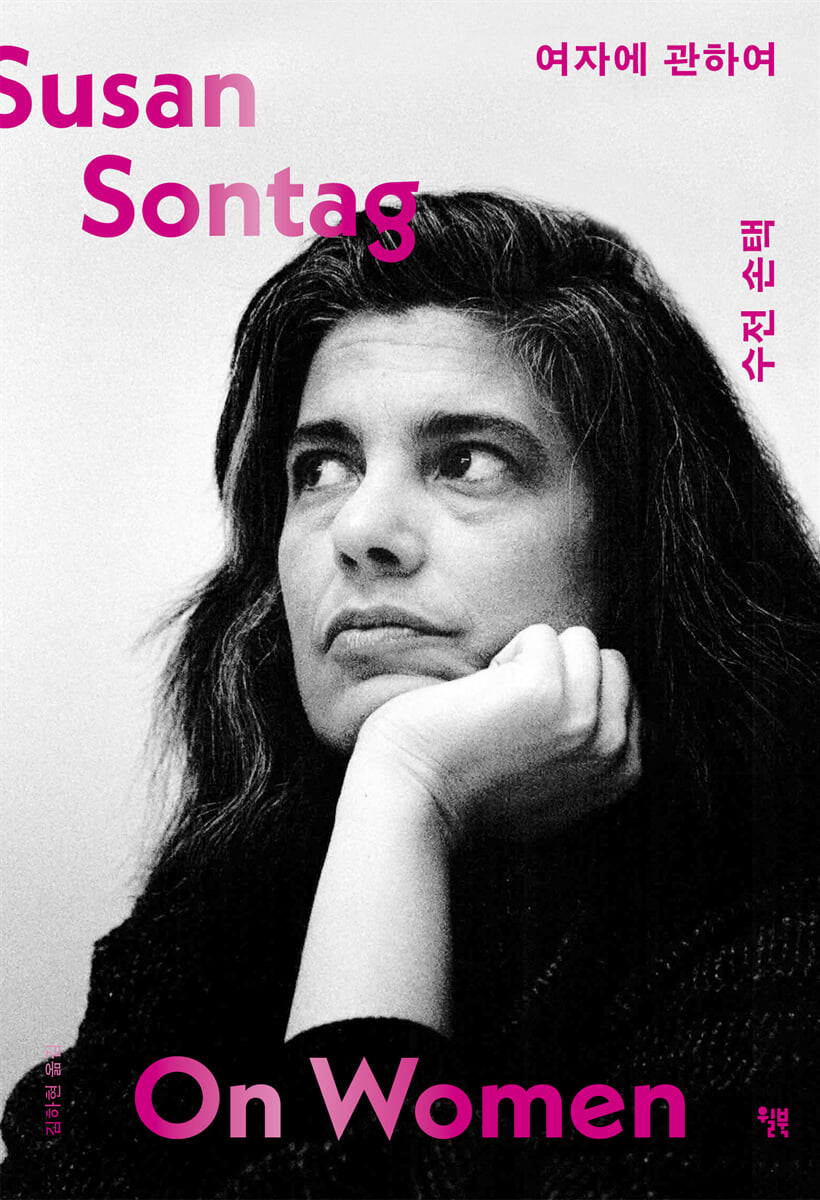 |
Description
Book Introduction
★ The first Korean translation of essays by Susan Sontag, the author of irreplaceable authority and fascination that everyone has been waiting for.
★ A hidden treasure, anthology released for the first time in 20 years after his death.
★ A selection of seven essays and interviews on topics that Son Taek has devoted his life to.
★ “I’m finally reading Sontag properly!”
From top-notch translations to beautiful designs and expert commentary—
The first volume in the Susan Sontag Essay Masterpieces series, presented in exquisite detail.
★ Kristen Stewart's "Sontag" movie to be released soon
★ Recommended by Jeong Hee-jin, Vivian Gonick!
“About Women” fits so well with Korean society today.
Sontag's extraordinary talent is a gift to the reader.”
The most influential intellectual voice of the 20th century.
A writer who left behind some of the most powerful works in modern history, including 『Against Interpretation』 and 『Disease as Metaphor』.
We present the series [Susan Sontag the Text], which introduces the representative works and first-translated essays of Susan Sontag, who was called the 'Queen of Intellectuals' and the 'Original Text Hip' and who ushered in a new era of sensibility and thought.
Accurate translations with a modern sensibility, robust yet beautiful design, and in-depth expert commentary.
It reaches readers with a high level of perfection in every aspect.
The first volume in the series, “On Women,” is a hidden treasure of an essay collection that was first published 20 years after Sontag’s death and is being introduced as the first Korean translation.
This book contains a selection of seven interesting essays and interviews on “women,” which Sontag described as “a subject I have followed my entire life.”
From the shame women feel as they age, to the enforced obsession with beauty and appearance, to desire and sexuality, to film and feminism, and even fascism.
In a world of relatable themes that “directly confront the current state of Korean society” (foreword by Jeong Hee-jin), Sontag unravels the truth of “what it means to live as a woman in this world” with clear language and intelligent humor.
These writings, written in the 1970s when the author was at his most active, around the time he was in his forties, demonstrate the pinnacle of Sontag's signature watertight thinking, captivating style, and profound insight.
As author Vivian Gornick puts it, “Sontag’s extraordinary talent is a gift to the reader,” and this short, powerful book gives readers the thrill of thinking itself.
It's time to meet Susan Sontag, a spectacle of intellect that will expand the scope of our lives and experiences and the depth of our thinking.
★ A hidden treasure, anthology released for the first time in 20 years after his death.
★ A selection of seven essays and interviews on topics that Son Taek has devoted his life to.
★ “I’m finally reading Sontag properly!”
From top-notch translations to beautiful designs and expert commentary—
The first volume in the Susan Sontag Essay Masterpieces series, presented in exquisite detail.
★ Kristen Stewart's "Sontag" movie to be released soon
★ Recommended by Jeong Hee-jin, Vivian Gonick!
“About Women” fits so well with Korean society today.
Sontag's extraordinary talent is a gift to the reader.”
The most influential intellectual voice of the 20th century.
A writer who left behind some of the most powerful works in modern history, including 『Against Interpretation』 and 『Disease as Metaphor』.
We present the series [Susan Sontag the Text], which introduces the representative works and first-translated essays of Susan Sontag, who was called the 'Queen of Intellectuals' and the 'Original Text Hip' and who ushered in a new era of sensibility and thought.
Accurate translations with a modern sensibility, robust yet beautiful design, and in-depth expert commentary.
It reaches readers with a high level of perfection in every aspect.
The first volume in the series, “On Women,” is a hidden treasure of an essay collection that was first published 20 years after Sontag’s death and is being introduced as the first Korean translation.
This book contains a selection of seven interesting essays and interviews on “women,” which Sontag described as “a subject I have followed my entire life.”
From the shame women feel as they age, to the enforced obsession with beauty and appearance, to desire and sexuality, to film and feminism, and even fascism.
In a world of relatable themes that “directly confront the current state of Korean society” (foreword by Jeong Hee-jin), Sontag unravels the truth of “what it means to live as a woman in this world” with clear language and intelligent humor.
These writings, written in the 1970s when the author was at his most active, around the time he was in his forties, demonstrate the pinnacle of Sontag's signature watertight thinking, captivating style, and profound insight.
As author Vivian Gornick puts it, “Sontag’s extraordinary talent is a gift to the reader,” and this short, powerful book gives readers the thrill of thinking itself.
It's time to meet Susan Sontag, a spectacle of intellect that will expand the scope of our lives and experiences and the depth of our thinking.
- You can preview some of the book's contents.
Preview
index
Opening remarks - Jeong Hee-jin
Double Standards About Aging
"The Third World of Women"
"Feminine Beauty: Insult or Source of Power?"
Beauty: What's Next?
"Fascinating Fascism"
Feminism and Fascism: The Debate Between Adrienne Rich and Susan Sontag
Interview with Salmon Gundy
clear
Translator's Note
Where the article is included
Double Standards About Aging
"The Third World of Women"
"Feminine Beauty: Insult or Source of Power?"
Beauty: What's Next?
"Fascinating Fascism"
Feminism and Fascism: The Debate Between Adrienne Rich and Susan Sontag
Interview with Salmon Gundy
clear
Translator's Note
Where the article is included
Detailed image

Into the book
“How old are you?” Anyone can ask this question.
The person answering would be, to borrow a cautious French expression, a woman “of a certain age.”
---From the "first sentence"
Beauty, which is considered a woman's duty in this society, is a place where women are subjugated.
There is only one standard of female beauty: girlish beauty.
Women must always strive to be beautiful.
At least women are oppressed by the social pressure to not be ugly.
Men don't feel this pressure.
In many ways that women are not, men are 'allowed' to age without any disadvantage.
---From "Double Standards on Aging"
Occasionally, people I met would subtly mention the difficulties of living as an independent woman.
I was always surprised and sometimes annoyed because at the time I thought they were stupid.
I had no problem.
Although I was aware that I was an exception, living as an exception was not difficult at all, and I accepted the benefits I enjoyed as my right.
Now I know it was wrong.
---From "The Third World of Women"
“The privilege of beauty is immense,” said Cocteau.
Clearly, beauty is a form of power.
That's the way it should be.
What is regrettable is that this power is not the power to do something, but the power to attract someone, the power to deny oneself.
Because it is not a power that can be freely chosen (at least not for women) nor is it a power that can be given up without being condemned by society.
Even when women reach the top in fields like politics, law, medicine, and business, they still face constant pressure to maintain their attractiveness.
But as long as she maintains the status of a pretty woman, her objectivity, expertise, authority, and depth of thought are questioned.
It's a problem either way.
---From "Feminine Beauty: Insult or Source of Power?"
Like all important moral truths, feminism is somewhat simple.
That is the power and the limitations of feminism.
Just as life stories can often lead to reflections on the inevitability of death and the fleetingness of human hope, virtually every tragic event in human history becomes a source of repeated feminist lament.
So, a distinction is necessary, and it is impossible to explain everything within the context of feminism.
Truth requires all kinds of effort.
I have carefully distinguished several things, and if there is any merit to my essay, it will probably lie in those distinctions.
---From "Feminism and Fascism"
I hope many women and men will point out the sexist stereotypes that exist everywhere in our society, in our language and behavior.
If this is what you mean by feminist criticism, then such criticism, no matter how clumsy, always has some value.
But I want to see feminist intellectuals do their part in the fight against misogyny, leaving behind or incorporating feminist implications into their work, without the risk of being labeled apostate by their fellow women.
I don't like political lines.
It leads to intellectual monotony and bad writing.
---From "Interview with Salmer Gundy"
The concept of culture that distinguishes between 'elite culture' and 'popular culture' is too vulgar and trite.
Such a distinction would only make sense to someone who has never been immersed in, or experienced intense joy in, modern poetry, music, or painting.
Diagnosing culture in such self-satisfied terms is a symptom of the problem, not the solution.
The person answering would be, to borrow a cautious French expression, a woman “of a certain age.”
---From the "first sentence"
Beauty, which is considered a woman's duty in this society, is a place where women are subjugated.
There is only one standard of female beauty: girlish beauty.
Women must always strive to be beautiful.
At least women are oppressed by the social pressure to not be ugly.
Men don't feel this pressure.
In many ways that women are not, men are 'allowed' to age without any disadvantage.
---From "Double Standards on Aging"
Occasionally, people I met would subtly mention the difficulties of living as an independent woman.
I was always surprised and sometimes annoyed because at the time I thought they were stupid.
I had no problem.
Although I was aware that I was an exception, living as an exception was not difficult at all, and I accepted the benefits I enjoyed as my right.
Now I know it was wrong.
---From "The Third World of Women"
“The privilege of beauty is immense,” said Cocteau.
Clearly, beauty is a form of power.
That's the way it should be.
What is regrettable is that this power is not the power to do something, but the power to attract someone, the power to deny oneself.
Because it is not a power that can be freely chosen (at least not for women) nor is it a power that can be given up without being condemned by society.
Even when women reach the top in fields like politics, law, medicine, and business, they still face constant pressure to maintain their attractiveness.
But as long as she maintains the status of a pretty woman, her objectivity, expertise, authority, and depth of thought are questioned.
It's a problem either way.
---From "Feminine Beauty: Insult or Source of Power?"
Like all important moral truths, feminism is somewhat simple.
That is the power and the limitations of feminism.
Just as life stories can often lead to reflections on the inevitability of death and the fleetingness of human hope, virtually every tragic event in human history becomes a source of repeated feminist lament.
So, a distinction is necessary, and it is impossible to explain everything within the context of feminism.
Truth requires all kinds of effort.
I have carefully distinguished several things, and if there is any merit to my essay, it will probably lie in those distinctions.
---From "Feminism and Fascism"
I hope many women and men will point out the sexist stereotypes that exist everywhere in our society, in our language and behavior.
If this is what you mean by feminist criticism, then such criticism, no matter how clumsy, always has some value.
But I want to see feminist intellectuals do their part in the fight against misogyny, leaving behind or incorporating feminist implications into their work, without the risk of being labeled apostate by their fellow women.
I don't like political lines.
It leads to intellectual monotony and bad writing.
---From "Interview with Salmer Gundy"
The concept of culture that distinguishes between 'elite culture' and 'popular culture' is too vulgar and trite.
Such a distinction would only make sense to someone who has never been immersed in, or experienced intense joy in, modern poetry, music, or painting.
Diagnosing culture in such self-satisfied terms is a symptom of the problem, not the solution.
---From "Interview with Salmer Gundy"
Publisher's Review
"Now I'm finally reading Susan Sontag properly."
An essential text for understanding modern society and culture.
Meet Susan Sontag, a pioneer of intellectual thought and the original text-heap of the 20th century.
“Susan Sontag’s influence on style, writing, and modern culture in general is
“No matter how much I exaggerate, it’s not enough.”
― The New York Times
Susan Sontag is a significant 'phenomenon' that has had a profound impact on art and popular culture.
— Max Hollein, Director of the Metropolitan Museum of Art
Susan Sontag is a central figure in modern intellectual history, with insights into a wide range of topics, from art and politics, style and taste, feminism and sexuality, to disease and medicine.
Much of the thinking and style that has become the standard today is under Sontag's influence.
His writings provide crucial clues to understanding the society and culture we live in today.
Sontag was a unique thinker and writer who resisted old conventions and proposed new styles and ways of thinking.
He said, “A writer is someone who is interested in the world, and must stand at the forefront of society and speak out.” He rejected intellectual monotony and left behind works that explored and reflected intensely.
His writing, which clearly captures the realities faced by women from different classes, still provides living insights to readers today.
Its influence remains strong even 20 years after his death.
The 2019 Met Gala, the fashion world's biggest event hosted by the Metropolitan Museum of Art and Vogue in New York, was themed after Sontag's essay "Notes on 'Camp'," and a biographical film starring Kristen Stewart is currently in production.
Even 20 years after his death, Sontag continues to be re-evaluated as an inspiration to contemporary artists and thinkers.
As a project to revisit Sontag's thoughts, we present [Susan Sontag: The Text], a series of essay masterpieces that includes the author's representative works and essays translated for the first time in Korea.
Beginning with her first book, “On Women,” Sontag’s representative works, “Against Interpretation,” “Disease as Metaphor,” and the first domestically published version of “On Cinema,” and “NEW SONTAG READER,” will be published.
Top Korean translators, including Hong Han-byeol, Kim Ha-hyeon, and Kim Yu-gyeong, have meticulously translated Sontag's signature sentences, and each volume includes expert commentary to allow for a deeper exploration of Sontag's thoughts.
“We don’t even need to find a ‘room of our own.’”
About living as a 'woman' in this world
A spectacle of sharp and captivating intelligence
"On Woman" is a collection of Susan Sontag's most interesting and important writings on the subject of "woman."
Edited by David Leaf, Sontag's son, the author and journalist, it was first published in the United States in 2023, 20 years after Sontag's death.
Of the seven essays and interviews included, all except “Fascinating Fascism” are being translated for the first time in Korea.
It covers a wide range of topics, from short, sophisticated pieces published in popular media like Vogue to controversial works that shook the intellectual world, and it shows the essence of the 'Susan Sontag style', which combines sharp thinking and clear sentences throughout.
In particular, the latter part includes "Fascinating Fascism," which is considered to be Sontag's most outstanding essay, and "Feminism and Fascism," which contains Sontag's debate with poet Adrienne Rich regarding this essay.
Another highlight of this book is reading the two intellectuals' scathing debates on artistic achievement and political correctness, aesthetics and gender.
“The beauty that this society considers ‘a woman’s duty’ is nothing other than a place where women are subjugated.
“There is only one standard of female beauty: that of a girl.”
“The double standard of aging.”
“Like all important truths, feminism is somewhat simple.
“That is the power and the limitations of feminism.”
Interview with Salmer Gundy
“I never consider myself a liberated woman.
But I have always been a feminist.”
"The Third World of Women"
From the double standards imposed on women and men as they age, to the relationship between women and beauty, to the power and complexity of feminism, to aesthetics and gender.
Sontag clearly reveals that 'living as a woman' is a political and economic issue, as well as an aesthetic and personal one.
As gender conflict deepens and social media creates pathological standards of beauty, Sontag's insights become even more vivid.
Above all, the essence of Sontag's approach to the subject of 'women' was her attitude of rejecting convention and stereotypes, not avoiding criticism, pursuing fundamental transformation rather than compromise, and constantly thinking.
The writings in this book, written between Sontag's late 30s and early 40s, vividly show the process of willingly revising, responding, and challenging one's thoughts again.
"On Women" is Sontag's powerful request to never stop thinking, and it is a weighty proposal to the readers here and now.
“Sontag’s ‘On Women,’ written in the American society of the 1970s, fits so well with today’s Korean society.
Son Taek's writing possesses both the intellect to comprehensively contemplate complex realities and a clear understanding of women's realities." (Preface by Jeong Hee-jin)
An essential text for understanding modern society and culture.
Meet Susan Sontag, a pioneer of intellectual thought and the original text-heap of the 20th century.
“Susan Sontag’s influence on style, writing, and modern culture in general is
“No matter how much I exaggerate, it’s not enough.”
― The New York Times
Susan Sontag is a significant 'phenomenon' that has had a profound impact on art and popular culture.
— Max Hollein, Director of the Metropolitan Museum of Art
Susan Sontag is a central figure in modern intellectual history, with insights into a wide range of topics, from art and politics, style and taste, feminism and sexuality, to disease and medicine.
Much of the thinking and style that has become the standard today is under Sontag's influence.
His writings provide crucial clues to understanding the society and culture we live in today.
Sontag was a unique thinker and writer who resisted old conventions and proposed new styles and ways of thinking.
He said, “A writer is someone who is interested in the world, and must stand at the forefront of society and speak out.” He rejected intellectual monotony and left behind works that explored and reflected intensely.
His writing, which clearly captures the realities faced by women from different classes, still provides living insights to readers today.
Its influence remains strong even 20 years after his death.
The 2019 Met Gala, the fashion world's biggest event hosted by the Metropolitan Museum of Art and Vogue in New York, was themed after Sontag's essay "Notes on 'Camp'," and a biographical film starring Kristen Stewart is currently in production.
Even 20 years after his death, Sontag continues to be re-evaluated as an inspiration to contemporary artists and thinkers.
As a project to revisit Sontag's thoughts, we present [Susan Sontag: The Text], a series of essay masterpieces that includes the author's representative works and essays translated for the first time in Korea.
Beginning with her first book, “On Women,” Sontag’s representative works, “Against Interpretation,” “Disease as Metaphor,” and the first domestically published version of “On Cinema,” and “NEW SONTAG READER,” will be published.
Top Korean translators, including Hong Han-byeol, Kim Ha-hyeon, and Kim Yu-gyeong, have meticulously translated Sontag's signature sentences, and each volume includes expert commentary to allow for a deeper exploration of Sontag's thoughts.
“We don’t even need to find a ‘room of our own.’”
About living as a 'woman' in this world
A spectacle of sharp and captivating intelligence
"On Woman" is a collection of Susan Sontag's most interesting and important writings on the subject of "woman."
Edited by David Leaf, Sontag's son, the author and journalist, it was first published in the United States in 2023, 20 years after Sontag's death.
Of the seven essays and interviews included, all except “Fascinating Fascism” are being translated for the first time in Korea.
It covers a wide range of topics, from short, sophisticated pieces published in popular media like Vogue to controversial works that shook the intellectual world, and it shows the essence of the 'Susan Sontag style', which combines sharp thinking and clear sentences throughout.
In particular, the latter part includes "Fascinating Fascism," which is considered to be Sontag's most outstanding essay, and "Feminism and Fascism," which contains Sontag's debate with poet Adrienne Rich regarding this essay.
Another highlight of this book is reading the two intellectuals' scathing debates on artistic achievement and political correctness, aesthetics and gender.
“The beauty that this society considers ‘a woman’s duty’ is nothing other than a place where women are subjugated.
“There is only one standard of female beauty: that of a girl.”
“The double standard of aging.”
“Like all important truths, feminism is somewhat simple.
“That is the power and the limitations of feminism.”
Interview with Salmer Gundy
“I never consider myself a liberated woman.
But I have always been a feminist.”
"The Third World of Women"
From the double standards imposed on women and men as they age, to the relationship between women and beauty, to the power and complexity of feminism, to aesthetics and gender.
Sontag clearly reveals that 'living as a woman' is a political and economic issue, as well as an aesthetic and personal one.
As gender conflict deepens and social media creates pathological standards of beauty, Sontag's insights become even more vivid.
Above all, the essence of Sontag's approach to the subject of 'women' was her attitude of rejecting convention and stereotypes, not avoiding criticism, pursuing fundamental transformation rather than compromise, and constantly thinking.
The writings in this book, written between Sontag's late 30s and early 40s, vividly show the process of willingly revising, responding, and challenging one's thoughts again.
"On Women" is Sontag's powerful request to never stop thinking, and it is a weighty proposal to the readers here and now.
“Sontag’s ‘On Women,’ written in the American society of the 1970s, fits so well with today’s Korean society.
Son Taek's writing possesses both the intellect to comprehensively contemplate complex realities and a clear understanding of women's realities." (Preface by Jeong Hee-jin)
GOODS SPECIFICS
- Date of issue: July 31, 2025
- Page count, weight, size: 232 pages | 130*190*15mm
- ISBN13: 9791155818428
You may also like
카테고리
korean


korean

![GQ KOREA Mark (Monthly): December [2025]](http://librairie.coreenne.fr/cdn/shop/files/8ef265dbbfbf186523ed75ba7319009d.jpg?v=1765340328&width=3840)


