

Gansong Jeon Hyeong-pil
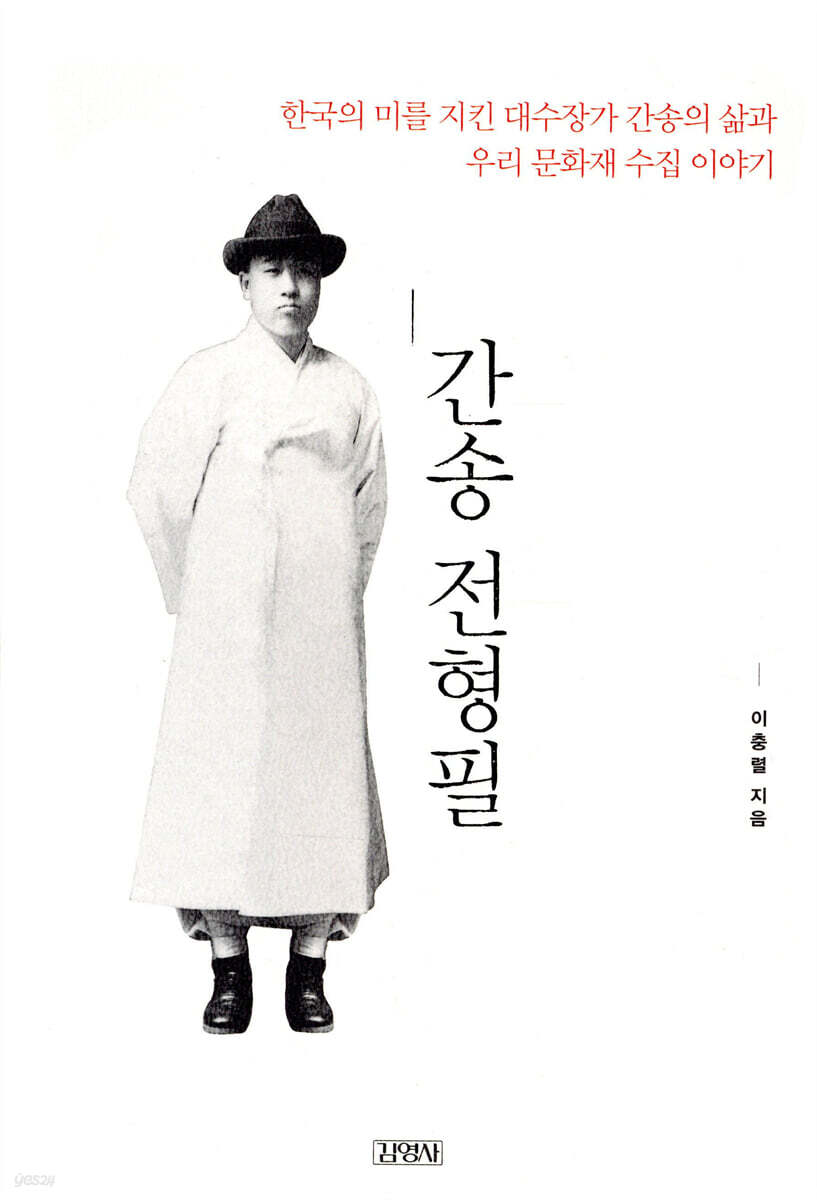 |
Description
Book Introduction
A pioneer who established the quality and standards of Korean beauty with his outstanding aesthetic sense.
The story of Gansong Jeon Hyeong-pil's collection of Korean cultural assets
Gansong, who restored the golden age of our culture, the "Jingyeong era," supported contemporary calligraphers, painters, and writers, including O Se-chang, Woltan Park Jong-hwa, and Cheongjeon Lee Sang-beom, and brought about the flowering of modern art of aesthetics and fascination in the dark colonial Joseon.
This book contains the life story of Jeon Hyeong-pil, who founded Korea's first private museum, the Gansong Art Museum, to preserve the calligraphy, paintings, and antiques he had accumulated by devoting his youth and millions of dollars to his wealth.
Gansong was a person who, with his outstanding aesthetic sense, established the quality and standards of Korean beauty at a time when research on Joseon's cultural and artistic history was virtually non-existent.
As a descendant of a 99-room family in Jongno 4-ga, Seoul, he pondered, "What should I do as a young Korean during the colonial era?" and decided that he would protect the cultural heritage of Joseon from the Japanese colonial rule, even if it meant emptying his entire fortune.
After that, he dedicated his billions of dollars and youth to collecting paintings, calligraphy, ceramics, Buddhist statues, stone objects, and books that were smuggled out to Japan and left them in this land.
Among the cultural properties that were brought to Japan, if it was judged to be of such value that it had to be visited, they were returned to Joseon regardless of the price.
The author, fascinated by the life of Gansong, who inherited a tremendous fortune during the Japanese colonial period but chose a path less traveled than others, instead of living a life of leisure and comfort, brought Gansong's life and times to life through persistent data collection and reporting, as well as thorough and meticulous research.
Gansong's life, which taught him that the true duty of the rich is to use their wealth for valuable causes rather than personal gain, still resonates deeply today.
The story of Gansong Jeon Hyeong-pil's collection of Korean cultural assets
Gansong, who restored the golden age of our culture, the "Jingyeong era," supported contemporary calligraphers, painters, and writers, including O Se-chang, Woltan Park Jong-hwa, and Cheongjeon Lee Sang-beom, and brought about the flowering of modern art of aesthetics and fascination in the dark colonial Joseon.
This book contains the life story of Jeon Hyeong-pil, who founded Korea's first private museum, the Gansong Art Museum, to preserve the calligraphy, paintings, and antiques he had accumulated by devoting his youth and millions of dollars to his wealth.
Gansong was a person who, with his outstanding aesthetic sense, established the quality and standards of Korean beauty at a time when research on Joseon's cultural and artistic history was virtually non-existent.
As a descendant of a 99-room family in Jongno 4-ga, Seoul, he pondered, "What should I do as a young Korean during the colonial era?" and decided that he would protect the cultural heritage of Joseon from the Japanese colonial rule, even if it meant emptying his entire fortune.
After that, he dedicated his billions of dollars and youth to collecting paintings, calligraphy, ceramics, Buddhist statues, stone objects, and books that were smuggled out to Japan and left them in this land.
Among the cultural properties that were brought to Japan, if it was judged to be of such value that it had to be visited, they were returned to Joseon regardless of the price.
The author, fascinated by the life of Gansong, who inherited a tremendous fortune during the Japanese colonial period but chose a path less traveled than others, instead of living a life of leisure and comfort, brought Gansong's life and times to life through persistent data collection and reporting, as well as thorough and meticulous research.
Gansong's life, which taught him that the true duty of the rich is to use their wealth for valuable causes rather than personal gain, still resonates deeply today.
- You can preview some of the book's contents.
Preview
index
Introduction_ Here, Mr. Gansong is here.
Azure sky, a thousand cranes
Colonial boy carrying a heavy load
What to do?
Lifelong mentor, Wichang Oh Se-chang
Heaven-sent wealth
First collection
We must protect cultural heritage by moving it away from the world's eyes.
Hannamseorim, a forward base for collecting ancient books and paintings
Dream of the Golden Age
Comrades of friendship and devotion, Lee Soon-hwang and Shin Bo
Meet Chusa
Gyemjae and Jinkyung era
Crossing the Korea Strait to find Hyewon
crisis!
The sesame oil bottle that became a national treasure
The Battle of 400 Tiled Houses
Bohwagak, Korea's first private museum
Relief and education projects
Obtaining the Hunminjeongeum Haeryebon
Ah, Jeon Hyeong-pil
Commentary: The Cultural and Historical Significance of the Jeon Hyeong-pil Collection
List of designated cultural properties from the Gansong collection
Gansong Jeon Hyeong-pil's Chronology
reference book
Browse included works
Azure sky, a thousand cranes
Colonial boy carrying a heavy load
What to do?
Lifelong mentor, Wichang Oh Se-chang
Heaven-sent wealth
First collection
We must protect cultural heritage by moving it away from the world's eyes.
Hannamseorim, a forward base for collecting ancient books and paintings
Dream of the Golden Age
Comrades of friendship and devotion, Lee Soon-hwang and Shin Bo
Meet Chusa
Gyemjae and Jinkyung era
Crossing the Korea Strait to find Hyewon
crisis!
The sesame oil bottle that became a national treasure
The Battle of 400 Tiled Houses
Bohwagak, Korea's first private museum
Relief and education projects
Obtaining the Hunminjeongeum Haeryebon
Ah, Jeon Hyeong-pil
Commentary: The Cultural and Historical Significance of the Jeon Hyeong-pil Collection
List of designated cultural properties from the Gansong collection
Gansong Jeon Hyeong-pil's Chronology
reference book
Browse included works
Into the book
“The young man’s spirit is truly amazing.
I lost.
“I would appreciate it if you could just smile and ignore my rudeness.”
Murakami bowed his head toward the young Jeon Hyeong-pil.
Jeon Hyeong-pil also responded with an apology for not being able to give up the Cheonhak Mae-byeong.
Murakami advised Jeon Hyeong-pil to become the ‘best collector in Joseon’ in the future.
After liberation, the 'Celadon Inlaid Cloud and Crane Design Plum Bottle', designated as National Treasure No. 68, remained in Joseon territory.
--- p.33
Oh Se-chang's expression was complicated.
How can that bright young man, who has never suffered from the world, manage such a large fortune?
“So, today I came to see you to discuss my future with you.
As I mentioned last summer, I would like to start collecting our country's old books, calligraphy, and paintings so that they do not get scattered here and there.
If Mr. Chun-gok and the elders can guide us, I will do my best to preserve the calligraphy, paintings, and antiques that must remain in Joseon.”
Oh Se-chang nodded and said.
“You’ve made a big decision that wasn’t easy.
But why do we want to preserve the records of calligraphy and painting?”
Jeon Hyeong-pil was confused for a moment.
What's the point of asking such an obvious question? --- p.82
Jeon Hyeong-pil first saw the “Geunyeokseohwajing.”
I took a close look at the evaluations of old connoisseurs introduced in the biographical dictionary “Geunyeok Seohwajing”, which covers 1,117 calligraphers and painters from the Silla Dynasty to the reign of King Cheoljong at the end of the Joseon Dynasty.
When I saw a calligrapher or painter who had received excellent reviews, I looked up his painting in the Geunyeok Hwahwi that Oh Se-chang had lent me.
For two months, I studied the "Geunyeokhwahwi" without a single day off, wondering if I could create an album that surpassed it.
Sometimes, even when I was confident, I felt like it was too late when I saw a painting of King Gongmin that was no longer available.
--- p.87
Museum! Oh Se-chang and Lee Sun-hwang's eyes widened simultaneously.
Oh Se-chang asked, calming his heart.
“If you say museum… are you talking about something like the Yi Royal Family Museum in Changgyeonggung Palace?”
At that time, Korea only had the Yi Royal Family Museum, the Government-General Museum built in 1915 in Gyeongbokgung Palace, and branches of the Government-General Museum in Gyeongju and Buyeo.
In this situation, when Jeon Hyeong-pil announced that he would build Korea's first private museum, how could Oh Se-chang or Lee Sun-hwang not be surprised?
--- p.156
Jeon Hyeong-pil read and reread Hunminjeongeum all night long.
It was a treasure among treasures that was excavated 500 years after it was created, and it was a great excavation that Jeon Hyeong-pil accomplished 13 years after he started collecting, so I cried and then laughed, and then cried again.
And at dawn, I put it in a paulownia box and put it in the deepest place in the house.
Jeon Hyeong-pil considered Hunminjeongeum to be the greatest treasure among the collections he owned.
I carried it in my arms when I was fleeing during the Korean War, and I kept it under my pillow when I slept.
I lost.
“I would appreciate it if you could just smile and ignore my rudeness.”
Murakami bowed his head toward the young Jeon Hyeong-pil.
Jeon Hyeong-pil also responded with an apology for not being able to give up the Cheonhak Mae-byeong.
Murakami advised Jeon Hyeong-pil to become the ‘best collector in Joseon’ in the future.
After liberation, the 'Celadon Inlaid Cloud and Crane Design Plum Bottle', designated as National Treasure No. 68, remained in Joseon territory.
--- p.33
Oh Se-chang's expression was complicated.
How can that bright young man, who has never suffered from the world, manage such a large fortune?
“So, today I came to see you to discuss my future with you.
As I mentioned last summer, I would like to start collecting our country's old books, calligraphy, and paintings so that they do not get scattered here and there.
If Mr. Chun-gok and the elders can guide us, I will do my best to preserve the calligraphy, paintings, and antiques that must remain in Joseon.”
Oh Se-chang nodded and said.
“You’ve made a big decision that wasn’t easy.
But why do we want to preserve the records of calligraphy and painting?”
Jeon Hyeong-pil was confused for a moment.
What's the point of asking such an obvious question? --- p.82
Jeon Hyeong-pil first saw the “Geunyeokseohwajing.”
I took a close look at the evaluations of old connoisseurs introduced in the biographical dictionary “Geunyeok Seohwajing”, which covers 1,117 calligraphers and painters from the Silla Dynasty to the reign of King Cheoljong at the end of the Joseon Dynasty.
When I saw a calligrapher or painter who had received excellent reviews, I looked up his painting in the Geunyeok Hwahwi that Oh Se-chang had lent me.
For two months, I studied the "Geunyeokhwahwi" without a single day off, wondering if I could create an album that surpassed it.
Sometimes, even when I was confident, I felt like it was too late when I saw a painting of King Gongmin that was no longer available.
--- p.87
Museum! Oh Se-chang and Lee Sun-hwang's eyes widened simultaneously.
Oh Se-chang asked, calming his heart.
“If you say museum… are you talking about something like the Yi Royal Family Museum in Changgyeonggung Palace?”
At that time, Korea only had the Yi Royal Family Museum, the Government-General Museum built in 1915 in Gyeongbokgung Palace, and branches of the Government-General Museum in Gyeongju and Buyeo.
In this situation, when Jeon Hyeong-pil announced that he would build Korea's first private museum, how could Oh Se-chang or Lee Sun-hwang not be surprised?
--- p.156
Jeon Hyeong-pil read and reread Hunminjeongeum all night long.
It was a treasure among treasures that was excavated 500 years after it was created, and it was a great excavation that Jeon Hyeong-pil accomplished 13 years after he started collecting, so I cried and then laughed, and then cried again.
And at dawn, I put it in a paulownia box and put it in the deepest place in the house.
Jeon Hyeong-pil considered Hunminjeongeum to be the greatest treasure among the collections he owned.
I carried it in my arms when I was fleeing during the Korean War, and I kept it under my pillow when I slept.
--- p.377
Publisher's Review
The secret vault of Gansong's life, never before revealed, is opened!
The whole country is buzzing in the spring and fall when the exhibition at the 'Gansong Art Museum' in Seongbuk-dong is held.
Visitors are expected to wait outside the museum for at least one or two hours.
More than 100,000 visitors flock here every year to see masterpieces and authentic works of Korean art, including Jeong Seon, Kim Hong-do, Shin Yun-bok, and Kim Jeong-hui.
The collection of the Gansong Art Museum is, in terms of quality, the best among all national, public, and private museums in Korea.
It spans all eras from the Three Kingdoms period to the modern Joseon period, and encompasses all fields of plastic art, including calligraphy, painting, sculpture, and crafts.
This place, whose total size is unknown, is referred to as a "treasure trove of national cultural heritage," with 22 nationally designated cultural properties, including 12 national treasures and 10 treasures, and 4 Seoul-designated cultural properties, including a stone pagoda, stupa, and Buddhist statues displayed in the courtyard.
Therefore, experts say that the history of Korean art can be described only with the collection of the Gansong Art Museum, and that the history of Korean painting cannot be imagined without it.
The life and story of Jeon Hyeong-pil of Gansong (1906-1962), the founder of Gansong Art Museum, Korea's first private art museum, and Joseon's greatest collector, has been published in the book "Jeon Hyeong-pil of Gansong" by Kim Young-sa.
In a time when research on Joseon's cultural and artistic history was virtually non-existent, Jeon Hyeong-pil, a visionary who established the quality and standards of Korean beauty with his exceptional aesthetic sense, and a gatekeeper who protected Joseon's national treasures and soul during the desperate times of Japanese colonial rule,
Why did he pour millions of dollars into collecting cultural assets? What was his lifelong goal? What significance do the calligraphy, paintings, ceramics, Buddhist statues, stonework, and books he left behind in this land hold? After ten years of research, over 100 color photographs, and the assistance and supervision of the Gansong family, we finally uncover the story of Gansong Jeon Hyeong-pil!
The first biography supervised and authorized by the Gansong family
This book is a biography of the pioneering and moving life of Jeon Hyeong-pil.
The author, fascinated by the life of Gansong, who inherited a tremendous fortune during the Japanese colonial period but chose a path less traveled than others, instead of living a life of leisure and comfort, perfectly recreated Gansong's life and times through remarkably persistent data collection and reporting, as well as thorough and meticulous research.
It vividly portrays why Gansong devoted all his wealth and youth to collecting cultural assets, what anguish and pain he experienced, and what Korean beauty captivated him, as if looking into Gansong's mind.
The contents of this book were approved and reviewed by Jeon Seong-wu, the eldest son of Gansong Jeon Hyeong-pil.
I received assistance with materials and illustrations from the Gansong family who read the manuscript and gave advice.
Therefore, this book is a biography and canon that faithfully reproduces every corner of Gansong Jeonhyeongpil's existential life.
Today, 100 years after his birth, we finally get to meet Gansong!
Gansong, the father of culture who protected Korea's beauty, brought about the flowering of the era of art and aesthetics!
Gansong restored the golden age of our culture, the "Jingyeong era," and supported contemporary calligraphers, painters, and writers, including O Se-chang of Wichang, Park Jong-hwa of Woltan, and Lee Sang-beom of Cheongjeon, thereby bringing about the flowering of modern art of aesthetics and fascination in the dark colonial Joseon.
The Gansong Art Museum, Korea's first private museum, was established to preserve calligraphy, paintings, and antiques collected through the devotion of billions of dollars of wealth and youth.
He was a cultural treasure who discovered and preserved the beauty of Korea!
Jeon Hyeong-pil, a descendant of a 99-kan family in Jongno 4-ga, Seoul, pondered, "What should I do as a young Korean during the colonial era?"
Jeon Hyeong-pil, who was passionate about collecting books, had a major turning point in his life when he met Oh Se-chang, an independence fighter and a connoisseur of the times.
Jeon Hyeong-pil was deeply moved by the sight of his teacher writing a collection of works by Korean calligraphers and painters from all over the world called “Geunyeokseohwajing.”
He decides to protect the cultural heritage from Japanese colonial rule in Joseon even if it means emptying his entire fortune.
After that, he dedicated his billions of dollars and youth to collecting paintings, calligraphy, ceramics, Buddhist statues, stone objects, and books that were smuggled out to Japan and left them in this land.
Among the cultural properties that were brought to Japan, if it was judged to be of such value that it had to be visited, they were returned to Joseon regardless of the price.
In addition, Gansong, who established the art museum in Bukdanjang, interacted with contemporary calligraphers, painters, and writers, including Wichang, Go Hui-dong, Woltan Park Jong-hwa, Cheongjeon Lee Sang-beom, and Simsan No Su-hyeon, and acted as their patron.
He opened the door to modern times by bringing about the flowering of culture and art in the dark colonial Joseon.
This book, which calmly and persuasively traces how Jeon Hyeong-pil, a young man who agonized over his identity as a Joseon youth during the colonial era, became the foremost artisan in Joseon and a visionary who established the dignity and standards of Korean beauty, and how he put noblesse oblige into practice by utilizing the wealth bestowed upon him for the benefit of his time and people, is deeply moving.
Gansong was a wealthy man worthy of respect, as he realized that the true duty of the rich was to use their wealth for valuable causes rather than for personal gain.
Although society was not stable enough to talk about the moral obligations of the rich, he was a visionary and ahead of his time.
From Cheonhak Maebyeong to Hunminjeongeum, I was happy because I loved!
From the treasure of the century, the Hunminjeongeum, to the Cheonhak Maebyeong, considered the pinnacle of Goryeo celadon, to the collection of 100 masterpieces by masters such as Gyeomjae, Hyeonjae, Danwon, Hyewon, Owon, and Chusa! Watch the epic battles of Gansong's pursuit to find and own these national treasures and treasures.
What was the greatest treasure that shook Gansong's heart? Hidden among the world's finest items, a story more thrilling than any drama unfolds.
Because Gansong collected only luxury items regardless of price, he was able to amass many national treasures.
The 『Hyewonjeonsincheop』 (National Treasure No. 135), which had been leaked to Japan, was purchased at an exceptionally low price, and the 818-centimeter-long masterpiece, "Chokkjando," painted by Sim Sa-jeong in 1768, the year before his death when he was 62, was purchased for a large sum of money despite its poor preservation condition, and was sent to Japan to be restored at a cost equivalent to the painting's price.
It was in 1935, when Gansong was 30 years old, that he acquired National Treasure No. 68, the “Celadon Inlaid Cloud and Crane Design Plum Bottle,” which is considered the best celadon bottle, and in 1938, he acquired the entire collection of John Gasby, a British lawyer stationed in Japan and the greatest collector of Goryeo celadon.
(Page 398)
The acquisition of Hunminjeongeum in 1943 was particularly dramatic.
When Jeon Hyeong-pil heard the news that Hunminjeongeum had been discovered, he paid 10,000 won, equivalent to the price of ten houses, to obtain it.
The Japanese, who were perpetually suppressing the Korean language, were worried that it would cause trouble if it was discovered, so they kept it secret, but after liberation in 1945, they made it public.
The hidden efforts of Jeon Hyeong-pil were instrumental in bringing the greatest invention in our history, Hunminjeongeum, whose creation motives are clearly known, to light.
Jeon Hyeong-pil even went to Japan to find our cultural heritage.
『Hyewonjeonsincheop』 (National Treasure No. 135), which contains paintings by Shin Yun-bok, which are still considered representative works of Joseon Dynasty genre painting, is a work that Jeon Hyeong-pil found in Japan.
In addition, the best cultural assets, including Goryeo celadon, Joseon white porcelain, paintings by Kim Hong-do and Jeong Seon, and calligraphy and paintings by Kim Jeong-hui, passed through the hands of Jeon Hyeong-pil and are currently stored at the Gansong Art Museum.
Now his legacy was passed on to his eldest son, Jeon Seong-u, and in 1966, the Institute of Korean Folk Art and the Gansong Art Museum were established to organize and research Jeon Hyeong-pil's collection.
Currently, the Gansong Art Museum regularly holds special exhibitions twice a year, in spring and fall, to introduce the best masterpieces of our cultural heritage.
The whole country is buzzing in the spring and fall when the exhibition at the 'Gansong Art Museum' in Seongbuk-dong is held.
Visitors are expected to wait outside the museum for at least one or two hours.
More than 100,000 visitors flock here every year to see masterpieces and authentic works of Korean art, including Jeong Seon, Kim Hong-do, Shin Yun-bok, and Kim Jeong-hui.
The collection of the Gansong Art Museum is, in terms of quality, the best among all national, public, and private museums in Korea.
It spans all eras from the Three Kingdoms period to the modern Joseon period, and encompasses all fields of plastic art, including calligraphy, painting, sculpture, and crafts.
This place, whose total size is unknown, is referred to as a "treasure trove of national cultural heritage," with 22 nationally designated cultural properties, including 12 national treasures and 10 treasures, and 4 Seoul-designated cultural properties, including a stone pagoda, stupa, and Buddhist statues displayed in the courtyard.
Therefore, experts say that the history of Korean art can be described only with the collection of the Gansong Art Museum, and that the history of Korean painting cannot be imagined without it.
The life and story of Jeon Hyeong-pil of Gansong (1906-1962), the founder of Gansong Art Museum, Korea's first private art museum, and Joseon's greatest collector, has been published in the book "Jeon Hyeong-pil of Gansong" by Kim Young-sa.
In a time when research on Joseon's cultural and artistic history was virtually non-existent, Jeon Hyeong-pil, a visionary who established the quality and standards of Korean beauty with his exceptional aesthetic sense, and a gatekeeper who protected Joseon's national treasures and soul during the desperate times of Japanese colonial rule,
Why did he pour millions of dollars into collecting cultural assets? What was his lifelong goal? What significance do the calligraphy, paintings, ceramics, Buddhist statues, stonework, and books he left behind in this land hold? After ten years of research, over 100 color photographs, and the assistance and supervision of the Gansong family, we finally uncover the story of Gansong Jeon Hyeong-pil!
The first biography supervised and authorized by the Gansong family
This book is a biography of the pioneering and moving life of Jeon Hyeong-pil.
The author, fascinated by the life of Gansong, who inherited a tremendous fortune during the Japanese colonial period but chose a path less traveled than others, instead of living a life of leisure and comfort, perfectly recreated Gansong's life and times through remarkably persistent data collection and reporting, as well as thorough and meticulous research.
It vividly portrays why Gansong devoted all his wealth and youth to collecting cultural assets, what anguish and pain he experienced, and what Korean beauty captivated him, as if looking into Gansong's mind.
The contents of this book were approved and reviewed by Jeon Seong-wu, the eldest son of Gansong Jeon Hyeong-pil.
I received assistance with materials and illustrations from the Gansong family who read the manuscript and gave advice.
Therefore, this book is a biography and canon that faithfully reproduces every corner of Gansong Jeonhyeongpil's existential life.
Today, 100 years after his birth, we finally get to meet Gansong!
Gansong, the father of culture who protected Korea's beauty, brought about the flowering of the era of art and aesthetics!
Gansong restored the golden age of our culture, the "Jingyeong era," and supported contemporary calligraphers, painters, and writers, including O Se-chang of Wichang, Park Jong-hwa of Woltan, and Lee Sang-beom of Cheongjeon, thereby bringing about the flowering of modern art of aesthetics and fascination in the dark colonial Joseon.
The Gansong Art Museum, Korea's first private museum, was established to preserve calligraphy, paintings, and antiques collected through the devotion of billions of dollars of wealth and youth.
He was a cultural treasure who discovered and preserved the beauty of Korea!
Jeon Hyeong-pil, a descendant of a 99-kan family in Jongno 4-ga, Seoul, pondered, "What should I do as a young Korean during the colonial era?"
Jeon Hyeong-pil, who was passionate about collecting books, had a major turning point in his life when he met Oh Se-chang, an independence fighter and a connoisseur of the times.
Jeon Hyeong-pil was deeply moved by the sight of his teacher writing a collection of works by Korean calligraphers and painters from all over the world called “Geunyeokseohwajing.”
He decides to protect the cultural heritage from Japanese colonial rule in Joseon even if it means emptying his entire fortune.
After that, he dedicated his billions of dollars and youth to collecting paintings, calligraphy, ceramics, Buddhist statues, stone objects, and books that were smuggled out to Japan and left them in this land.
Among the cultural properties that were brought to Japan, if it was judged to be of such value that it had to be visited, they were returned to Joseon regardless of the price.
In addition, Gansong, who established the art museum in Bukdanjang, interacted with contemporary calligraphers, painters, and writers, including Wichang, Go Hui-dong, Woltan Park Jong-hwa, Cheongjeon Lee Sang-beom, and Simsan No Su-hyeon, and acted as their patron.
He opened the door to modern times by bringing about the flowering of culture and art in the dark colonial Joseon.
This book, which calmly and persuasively traces how Jeon Hyeong-pil, a young man who agonized over his identity as a Joseon youth during the colonial era, became the foremost artisan in Joseon and a visionary who established the dignity and standards of Korean beauty, and how he put noblesse oblige into practice by utilizing the wealth bestowed upon him for the benefit of his time and people, is deeply moving.
Gansong was a wealthy man worthy of respect, as he realized that the true duty of the rich was to use their wealth for valuable causes rather than for personal gain.
Although society was not stable enough to talk about the moral obligations of the rich, he was a visionary and ahead of his time.
From Cheonhak Maebyeong to Hunminjeongeum, I was happy because I loved!
From the treasure of the century, the Hunminjeongeum, to the Cheonhak Maebyeong, considered the pinnacle of Goryeo celadon, to the collection of 100 masterpieces by masters such as Gyeomjae, Hyeonjae, Danwon, Hyewon, Owon, and Chusa! Watch the epic battles of Gansong's pursuit to find and own these national treasures and treasures.
What was the greatest treasure that shook Gansong's heart? Hidden among the world's finest items, a story more thrilling than any drama unfolds.
Because Gansong collected only luxury items regardless of price, he was able to amass many national treasures.
The 『Hyewonjeonsincheop』 (National Treasure No. 135), which had been leaked to Japan, was purchased at an exceptionally low price, and the 818-centimeter-long masterpiece, "Chokkjando," painted by Sim Sa-jeong in 1768, the year before his death when he was 62, was purchased for a large sum of money despite its poor preservation condition, and was sent to Japan to be restored at a cost equivalent to the painting's price.
It was in 1935, when Gansong was 30 years old, that he acquired National Treasure No. 68, the “Celadon Inlaid Cloud and Crane Design Plum Bottle,” which is considered the best celadon bottle, and in 1938, he acquired the entire collection of John Gasby, a British lawyer stationed in Japan and the greatest collector of Goryeo celadon.
(Page 398)
The acquisition of Hunminjeongeum in 1943 was particularly dramatic.
When Jeon Hyeong-pil heard the news that Hunminjeongeum had been discovered, he paid 10,000 won, equivalent to the price of ten houses, to obtain it.
The Japanese, who were perpetually suppressing the Korean language, were worried that it would cause trouble if it was discovered, so they kept it secret, but after liberation in 1945, they made it public.
The hidden efforts of Jeon Hyeong-pil were instrumental in bringing the greatest invention in our history, Hunminjeongeum, whose creation motives are clearly known, to light.
Jeon Hyeong-pil even went to Japan to find our cultural heritage.
『Hyewonjeonsincheop』 (National Treasure No. 135), which contains paintings by Shin Yun-bok, which are still considered representative works of Joseon Dynasty genre painting, is a work that Jeon Hyeong-pil found in Japan.
In addition, the best cultural assets, including Goryeo celadon, Joseon white porcelain, paintings by Kim Hong-do and Jeong Seon, and calligraphy and paintings by Kim Jeong-hui, passed through the hands of Jeon Hyeong-pil and are currently stored at the Gansong Art Museum.
Now his legacy was passed on to his eldest son, Jeon Seong-u, and in 1966, the Institute of Korean Folk Art and the Gansong Art Museum were established to organize and research Jeon Hyeong-pil's collection.
Currently, the Gansong Art Museum regularly holds special exhibitions twice a year, in spring and fall, to introduce the best masterpieces of our cultural heritage.
GOODS SPECIFICS
- Date of issue: May 3, 2010
- Page count, weight, size: 408 pages | 671g | 153*224*30mm
- ISBN13: 9788934939429
- ISBN10: 8934939427
You may also like
카테고리
korean


korean

![GQ KOREA Mark (Monthly): December [2025]](http://librairie.coreenne.fr/cdn/shop/files/8ef265dbbfbf186523ed75ba7319009d.jpg?v=1765340328&width=3840)


