

Roger Federer
 |
Description
Book Introduction
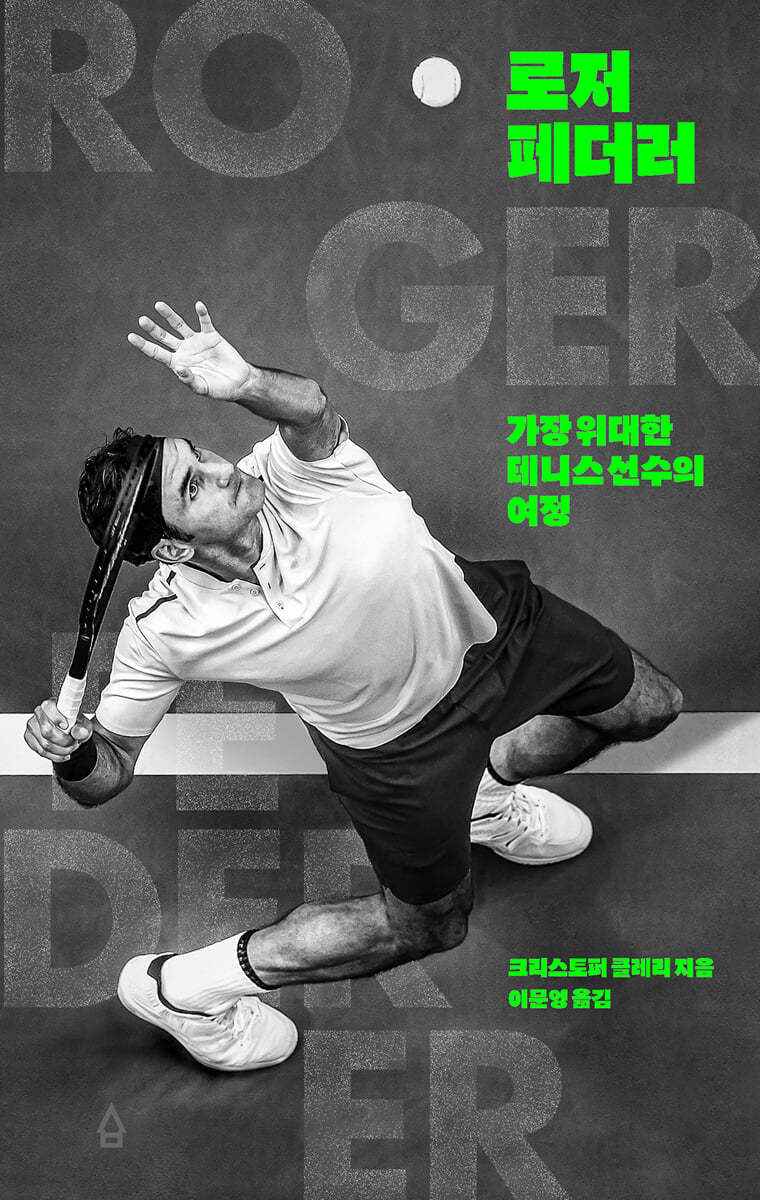
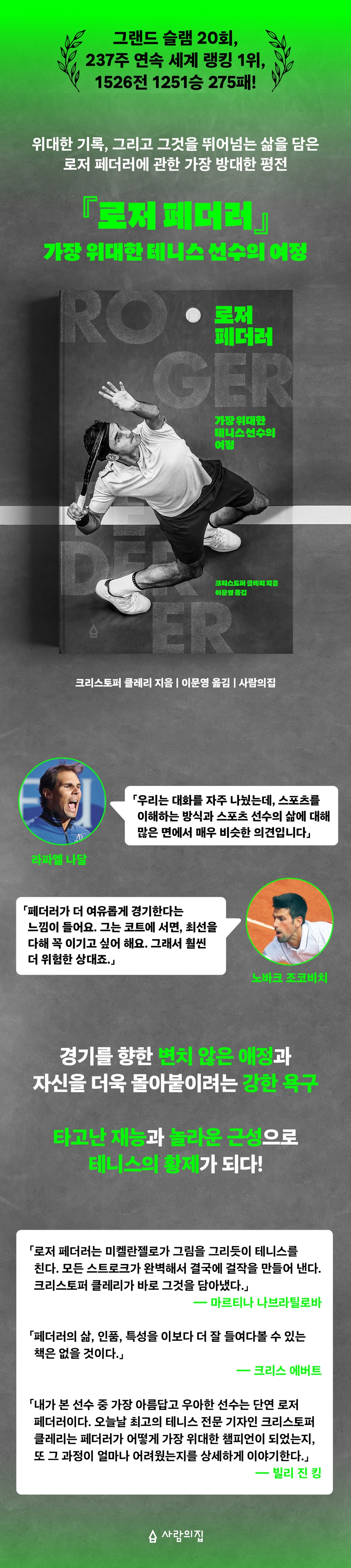
The most comprehensive biography on Roger Federer A biography, Roger Federer, has been published, focusing on the people, places, and moments that must be noted in the long and illustrious career of tennis player Roger Federer. Christopher Clary, one of today's leading tennis journalists, has covered more than 100 Grand Slam tournaments and written articles and columns on international sports for 30 years. His experience of conducting more than 20 exclusive interviews with Federer has enabled him to write the most extensive book on him. The author details Federer's journey, marked by both glory and frustration, from his childhood to his retirement. Federer is called the “Emperor of Tennis.” One of the reasons for this may be the great records he has accumulated over 24 years as a tennis player. Federer became the first man in tennis history to win 20 Grand Slams. He has won 369 individual matches in the four major tournaments, has been ranked No. 1 in the world for a total of 310 weeks, 237 of them consecutive, and has won 103 times on the men's tennis tour. As a result of his outstanding performance and elegant play on the court, he was able to achieve a dazzling record of 1,251 wins and 275 losses in 1,526 professional matches. Federer's characteristic manners and dignified demeanor extended beyond the court, and his exemplary performance was enough to excite the crowd. Despite being a top-tier player in the global spotlight, he has never been involved in a single scandal and has even established a foundation named after himself, actively participating in charity work, befitting an emperor. Federer officially retired in 2022. But he is still a figure who is mentioned without fail whenever a new star emerges in the tennis world or when a long-time rival is about to end his career. A look into the life of Federer, considered one of the greatest tennis players of all time, leaves no doubt that his influence will continue for generations to come. |
- You can preview some of the book's contents.
Preview
index
1 Argentina, Tigre
2. Basel, Switzerland
3 Switzerland, Equiblanc
4 Switzerland, Biel/Bienne
5 Sydney, Australia
6 Wimbledon, England
7 Melbourne, Australia
8 Palma, Mallorca, Spain
9 France, Paris
10 Los Angeles, USA
11. Switzerland, Feusisberg
12 New York, USA
13 France, Lille
14 Dubai
15 Indian Wells, California, USA
16. Felsberg, Switzerland
17 South Africa
Acknowledgements
Translator's Note
2. Basel, Switzerland
3 Switzerland, Equiblanc
4 Switzerland, Biel/Bienne
5 Sydney, Australia
6 Wimbledon, England
7 Melbourne, Australia
8 Palma, Mallorca, Spain
9 France, Paris
10 Los Angeles, USA
11. Switzerland, Feusisberg
12 New York, USA
13 France, Lille
14 Dubai
15 Indian Wells, California, USA
16. Felsberg, Switzerland
17 South Africa
Acknowledgements
Translator's Note
Detailed image
Into the book
As midnight approached, Roger Federer approached.
---From the "first sentence"
Federer is undoubtedly talented, but what sets him apart from other great talents of his generation is his unwavering love of the game and his desire to push himself further.
He believed that maintaining the same level of play in professional tennis was essentially a regression, a belief that influenced his younger rivals.
--- pp.23~24
Federer's backhand was still long, but it was developing.
“He never missed or mishit his backhand again.
I thought the hand-eye coordination was amazing.
He hit a backhand, and that became his backhand shot today.
He's improved his stride, but occasionally he takes a big step with his right foot towards his backhand and hits it really hard.
Then you start to think, “Where does that power come from? How do I hit it?”
--- pp.89~90
The odds of winning a Grand Slam are always slim, but for Federer, it didn't seem so far off.
Unlike Sampras, he continued to win on clay.
He dreamed of a Grand Slam, possessing the skills and competitive edge to handle every surface of the court.
--- p.263
Unlike when playing against other players, Federer felt pressure when playing against Nadal.
Federer was still ranked No. 1 and was still the back-to-back champion of Wimbledon and the US Open, the most prestigious tournaments in the world.
But Nadal re-evaluated Federer and made him sensitive.
This may seem like an exaggeration, considering that Federer won three of the four major singles titles in 2006 and 2007 and held the No. 1 ranking for 237 consecutive weeks.
But despite a season of high achievement, it was difficult to shake off the image of Nadal repeatedly beating him on clay, and Federer's confidence dwindling as that pattern repeated itself.
If he had lost to multiple players in the same match, the ripple effect would have been less.
But the impact and public attention grew as he continued to lose to a player five years younger than him.
--- pp.299~300
This wasn't a problem for Federer, who had a booming voice, jokes, small talk and the ability to change his demeanor when it was time to walk onto the court.
“Roger unlocked the door and let people in.
On the other hand, when I go into the locker room, I go to my locker and stay away.
Roger comes into the locker room and greets everyone, being friendly.
Basically, it's more friendly.
--- p.376
When Federer came along, the previous generation of top players, like Agassi and Sampras, were either getting older or declining.
But Djokovic emerged during the prime of Federer and Nadal.
He became their rival and often outdid himself.
Including dominance in Grand Slam events, where players' reputations and legacies are more evident than ever before.
--- p.461
Federer's earnings continued to grow, and surprisingly, in 2018, after his contract with Nike fell through, he signed a 10-year apparel deal with Japan's Uniqlo.
Reports suggest Federer is contractually paid $30 million annually, but some other agents in the industry believe the guaranteed figure is even lower.
Either way, that sum was far more than Nike was willing to pay the aging superstar, no matter how clean his image was.
--- p.580
It was clear that Federer intended to focus more on his foundation after retirement.
“There hasn’t been much time so far.
My dream for the future is to become as famous for my foundation as I am for tennis.
Really.
---From the "first sentence"
Federer is undoubtedly talented, but what sets him apart from other great talents of his generation is his unwavering love of the game and his desire to push himself further.
He believed that maintaining the same level of play in professional tennis was essentially a regression, a belief that influenced his younger rivals.
--- pp.23~24
Federer's backhand was still long, but it was developing.
“He never missed or mishit his backhand again.
I thought the hand-eye coordination was amazing.
He hit a backhand, and that became his backhand shot today.
He's improved his stride, but occasionally he takes a big step with his right foot towards his backhand and hits it really hard.
Then you start to think, “Where does that power come from? How do I hit it?”
--- pp.89~90
The odds of winning a Grand Slam are always slim, but for Federer, it didn't seem so far off.
Unlike Sampras, he continued to win on clay.
He dreamed of a Grand Slam, possessing the skills and competitive edge to handle every surface of the court.
--- p.263
Unlike when playing against other players, Federer felt pressure when playing against Nadal.
Federer was still ranked No. 1 and was still the back-to-back champion of Wimbledon and the US Open, the most prestigious tournaments in the world.
But Nadal re-evaluated Federer and made him sensitive.
This may seem like an exaggeration, considering that Federer won three of the four major singles titles in 2006 and 2007 and held the No. 1 ranking for 237 consecutive weeks.
But despite a season of high achievement, it was difficult to shake off the image of Nadal repeatedly beating him on clay, and Federer's confidence dwindling as that pattern repeated itself.
If he had lost to multiple players in the same match, the ripple effect would have been less.
But the impact and public attention grew as he continued to lose to a player five years younger than him.
--- pp.299~300
This wasn't a problem for Federer, who had a booming voice, jokes, small talk and the ability to change his demeanor when it was time to walk onto the court.
“Roger unlocked the door and let people in.
On the other hand, when I go into the locker room, I go to my locker and stay away.
Roger comes into the locker room and greets everyone, being friendly.
Basically, it's more friendly.
--- p.376
When Federer came along, the previous generation of top players, like Agassi and Sampras, were either getting older or declining.
But Djokovic emerged during the prime of Federer and Nadal.
He became their rival and often outdid himself.
Including dominance in Grand Slam events, where players' reputations and legacies are more evident than ever before.
--- p.461
Federer's earnings continued to grow, and surprisingly, in 2018, after his contract with Nike fell through, he signed a 10-year apparel deal with Japan's Uniqlo.
Reports suggest Federer is contractually paid $30 million annually, but some other agents in the industry believe the guaranteed figure is even lower.
Either way, that sum was far more than Nike was willing to pay the aging superstar, no matter how clean his image was.
--- p.580
It was clear that Federer intended to focus more on his foundation after retirement.
“There hasn’t been much time so far.
My dream for the future is to become as famous for my foundation as I am for tennis.
Really.
--- pp.626~627
Publisher's Review
With natural talent and amazing tenacity
Become the Emperor of Tennis
Watching Roger Federer play tennis makes tennis seem easy.
It's a grueling sport that demands focus, strength, agility, and endurance, but Federer rarely even breaks a sweat.
In addition, he uses techniques such as a powerful forehand, an excellent serve, and a precise volley in a simple and sophisticated manner.
He is also known for his outstanding mentality, which is a factor that determines the outcome of a match.
So, while there are those who say that Federer is a genius with innate talent, 『Roger Federer』 says that his amazing tenacity should not be underestimated.
Federer believes that staying at the same level in professional tennis is essentially regressing, and has consistently proven his skills by growing.
The book also covers the people around Federer in detail.
Federer has constantly, but impulsively, changed his support team, including his coach, to gain fresh perspectives, and has even played matches without a coach.
Although he has a friendly personality, he is a true professional player who does not lose his cool for the sake of his career.
Also, his family, who give him their full support and encouragement, are very important to Federer.
Of course, we also did not leave out the stories of world-class players, including Nafael Nadal and Novak Djokovic, who were colleagues and rivals during the golden age of tennis.
The testimonies and experiences of those who watched Federer closely and accompanied him shed new light on his achievements.
Meanwhile, the vivid depiction of historic matches that left a lasting impression at major tournaments such as Wimbledon, the Australian Open, the French Open, and the US Open is also noteworthy.
Furthermore, it is very interesting as it mentions Federer's ordinary daily life of traveling around the world to prepare for matches, the sponsorship contracts he has signed with companies from Nike to Uniqlo, and the Roger Federer Foundation he founded.
Through this, tennis fans and readers will be able to experience the true value of Federer as a person as well as the essence of the sport of tennis.
“We talk a lot, and we have similar views on many aspects of how we understand sports and the life of an athlete.” ― Rafael Nadal
“I feel like Federer plays more relaxed.
When he stands on the court, he gives his all and wants to win.
That's why he's a more dangerous opponent." ― Novak Djokovic
Become the Emperor of Tennis
Watching Roger Federer play tennis makes tennis seem easy.
It's a grueling sport that demands focus, strength, agility, and endurance, but Federer rarely even breaks a sweat.
In addition, he uses techniques such as a powerful forehand, an excellent serve, and a precise volley in a simple and sophisticated manner.
He is also known for his outstanding mentality, which is a factor that determines the outcome of a match.
So, while there are those who say that Federer is a genius with innate talent, 『Roger Federer』 says that his amazing tenacity should not be underestimated.
Federer believes that staying at the same level in professional tennis is essentially regressing, and has consistently proven his skills by growing.
The book also covers the people around Federer in detail.
Federer has constantly, but impulsively, changed his support team, including his coach, to gain fresh perspectives, and has even played matches without a coach.
Although he has a friendly personality, he is a true professional player who does not lose his cool for the sake of his career.
Also, his family, who give him their full support and encouragement, are very important to Federer.
Of course, we also did not leave out the stories of world-class players, including Nafael Nadal and Novak Djokovic, who were colleagues and rivals during the golden age of tennis.
The testimonies and experiences of those who watched Federer closely and accompanied him shed new light on his achievements.
Meanwhile, the vivid depiction of historic matches that left a lasting impression at major tournaments such as Wimbledon, the Australian Open, the French Open, and the US Open is also noteworthy.
Furthermore, it is very interesting as it mentions Federer's ordinary daily life of traveling around the world to prepare for matches, the sponsorship contracts he has signed with companies from Nike to Uniqlo, and the Roger Federer Foundation he founded.
Through this, tennis fans and readers will be able to experience the true value of Federer as a person as well as the essence of the sport of tennis.
“We talk a lot, and we have similar views on many aspects of how we understand sports and the life of an athlete.” ― Rafael Nadal
“I feel like Federer plays more relaxed.
When he stands on the court, he gives his all and wants to win.
That's why he's a more dangerous opponent." ― Novak Djokovic
GOODS SPECIFICS
- Date of issue: July 30, 2023
- Format: Hardcover book binding method guide
- Page count, weight, size: 656 pages | 926g | 135*215*35mm
- ISBN13: 9788932923444
- ISBN10: 8932923442
You may also like
카테고리
korean


korean

![GQ KOREA Mark (Monthly): December [2025]](http://librairie.coreenne.fr/cdn/shop/files/8ef265dbbfbf186523ed75ba7319009d.jpg?v=1765340328&width=3840)


