

Automotive Structure Textbook
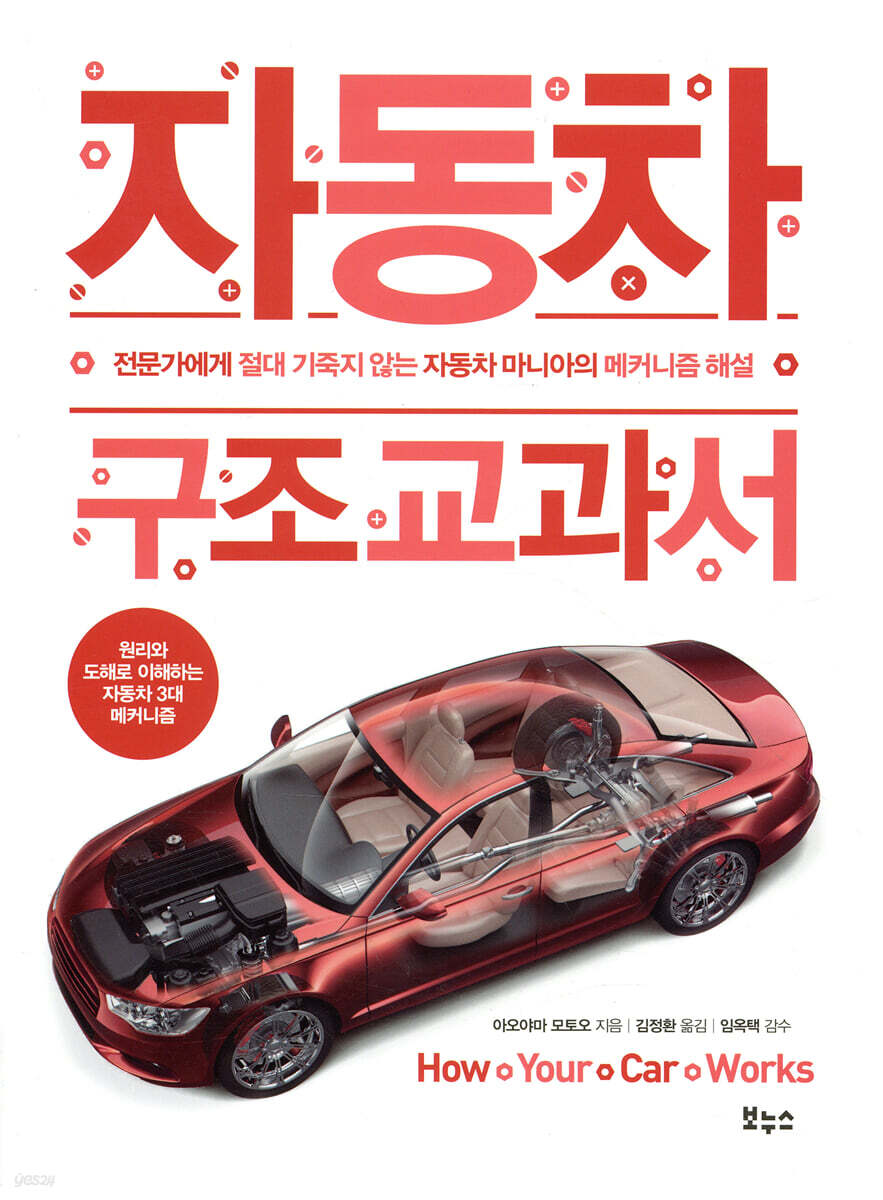 |
Description
Book Introduction
The Ultimate Automotive Technology Guide for Enthusiasts
As automobiles have become widespread and deeply rooted in society and culture, we have entered an era where not only experts like journalists and critics, but also ordinary consumers and enthusiasts evaluate automobiles based on their own perspectives and standards and share opinions and information. However, understanding and evaluating automobiles, the pinnacle of mechanical engineering, remains a challenge.
Because of this, there are many different standards for a good car.
It's hard to even grasp what factors, such as fuel economy, torque, and acceleration, are the criteria and goals for a great car.
But it's not like there's no way.
You just need to have a solid understanding of the structure and principles of the car.
In other words, if you want to instantly improve your perspective on cars, you need to understand the essence of cars.
Forward, braking, steering.
The essence of a car can be summarized in these three things.
A car is ultimately a collection of mechanical structures designed to precisely execute the actions of running, stopping, and changing direction.
The question, 'What is a good car?' also unfolds within the categories of these three essentials.
The structure of the 《Automobile Structure Textbook》, which consists of eight chapters, is not much different from this.
Chapters 1 through 5 cover the forward mechanism, while chapters 6 and 7 describe the braking and steering mechanisms.
And Chapter 8 looks at electric vehicles, which are a demand and trend of the times.
As automobiles have become widespread and deeply rooted in society and culture, we have entered an era where not only experts like journalists and critics, but also ordinary consumers and enthusiasts evaluate automobiles based on their own perspectives and standards and share opinions and information. However, understanding and evaluating automobiles, the pinnacle of mechanical engineering, remains a challenge.
Because of this, there are many different standards for a good car.
It's hard to even grasp what factors, such as fuel economy, torque, and acceleration, are the criteria and goals for a great car.
But it's not like there's no way.
You just need to have a solid understanding of the structure and principles of the car.
In other words, if you want to instantly improve your perspective on cars, you need to understand the essence of cars.
Forward, braking, steering.
The essence of a car can be summarized in these three things.
A car is ultimately a collection of mechanical structures designed to precisely execute the actions of running, stopping, and changing direction.
The question, 'What is a good car?' also unfolds within the categories of these three essentials.
The structure of the 《Automobile Structure Textbook》, which consists of eight chapters, is not much different from this.
Chapters 1 through 5 cover the forward mechanism, while chapters 6 and 7 describe the braking and steering mechanisms.
And Chapter 8 looks at electric vehicles, which are a demand and trend of the times.
- You can preview some of the book's contents.
Preview
index
preface
Chapter 0 The Three Major Elements of a Car
The essence of a car is to run, stop, and change direction.
Chapter 1 The Mechanism of a Car's Movement
Friction and traction: When friction occurs, the car moves forward.
Friction Limits: Beyond this limit, you cannot move forward.
Force and Acceleration: When driving force is generated, speed increases.
Inertia and Driving Resistance: Cars Fight Driving Resistance
Kinetic energy: Cars require kinetic energy.
Potential energy: On a slope, potential energy affects the slope.
Slope and Friction: Slope on the road reduces driving force.
Driving resistance: Driving resistance hinders a moving vehicle.
Heat Engines and Internal Combustion Engines: Engines Convert Energy in Two Steps
Basic structure of an engine: the piston and cylinder create the combustion space.
4-cycle gasoline engine: Gasoline engines operate in four strokes.
4-cycle diesel engine: Diesel engines operate in four strokes.
Thermal efficiency: Not all of the fuel's energy can be utilized.
Engine Performance: A car without a transmission cannot be driven.
Rotary Engine Facts 1
Chapter 2 Basic Mechanisms of the Engine
Crank mechanism: The piston converts reciprocating motion into rotary motion.
Multi-turn and flywheel: Kinetic energy is generated during combustion and expansion.
Cylinder block and cylinder head: Make the cylinder out of metal and put the piston in it.
Combustion Chamber and Displacement: Power is generated in the combustion chamber.
Number of cylinders and cylinder arrangement: The more cylinders, the higher the power output.
Primary motor system: The primary motor system operates when generating force.
Intake and exhaust valves: Control intake and exhaust according to the four-stroke cycle.
Valve system: Opens and closes the cam by using the rotation of the crankshaft.
Valve Timing: There is a subtle error in the timing of opening and closing the intake and exhaust valves.
Engine body and auxiliary equipment: Several systems are required for the engine to operate.
Common Sense 2: Inline 6-cylinder engine
Chapter 3 Mechanisms that Operate the Engine
Intake: The engine needs clean air.
Throttle valve: Controls the amount of intake air in response to the operation of the accelerator pedal.
Exhaust system: Smooth exhaust ensures normal combustion.
Catalytic converter: Converts harmful substances into harmless substances.
Muffler: Reduces the pressure and temperature of exhaust gases
Fuel device: Injects the optimal amount of fuel at the optimal timing.
Port injection and intra-chamber injection: Fuel is injected in a fine atomized state.
Ignition device: Ignition is caused by a discharge of high-voltage current.
Direct ignition device: creates high voltage by interrupting the current.
Spark plug: The electrode is made into a thin, pointed shape.
Engine Control Unit: Controls engine status with various information
Tip 3: Ultra-lean combustion
Chapter 4 Mechanisms that Assist the Engine
Cooling System: If the engine gets too hot, it won't function properly.
Pressure cooling: The coolant does not boil even at temperatures exceeding 100 degrees Celsius.
Thermostat: There are many downsides to having an engine that's too cold.
Lubricating device: Allows the parts inside the engine to move smoothly.
Engine Oil: The Role of Engine Oil Is More Than Just Lubrication
Starting device: Starts the engine by rotating the crankshaft.
Charging device: Prepare for startup and power shortages
Battery: Stores or releases electricity
Supercharger: Sends compressed air to the engine to increase performance.
Fragmented Facts 4 Oil and Fluid
Chapter 5 Mechanism for transmitting rotation to the wheel
Power transmission: There is a method of driving the front or rear wheels.
Gears, pulleys, and transmissions: changing rotational speed and torque through transmission.
Transmissions: Classified according to the presence or absence of manual operation and shifting stages.
Manual transmission: Choose the gear combination you need from among different gear ratios.
Clutch: Uses friction to smoothly connect rotating shafts.
Torque converter 1: Transmits rotation and amplifies torque
Torque converter 2: Clipping for ultra-low speed driving
Hydraulic mechanism: uses the pressure of liquid to operate machinery
Planetary gear: Responsible for shifting gears in automatic transmissions
Automatic transmission: Shifts gears according to driving conditions under the direction of the TCU.
CVT: Changes gears by changing the width of the pulley.
Differential gear: When turning a curve, the rotation speed of the left and right wheels changes.
Differential gear and final gear: Distributes rotation according to the size of left and right resistance.
Limited-Slip Differential: Addressing the Weaknesses of Differential Gears
Axis and joints: Rotation can be transmitted through the axis even when the positional relationship changes.
Four-wheel drive: The appeal of 4WD isn't just about rough roads.
Full-time 4WD: Absorbs the difference in rotational speed between the front and rear wheels
Standby 4WD: Automatically switches from 2WD to 4WD
Fact 5: Toroidal CVT
Chapter 6 Mechanisms for stopping or changing direction of a car
Braking and Friction: Slowing down a car by using the reaction force of friction.
Foot brake: Transmits the force applied to the pedal to the brake body.
Disc brakes: The discs generate frictional heat to slow down the vehicle.
Drum brakes: Reduce speed by pressing the inside of the cylinder with friction material.
Brake assist device: Assists the force applied to the brake pedal
ABS: Controls friction so that it does not exceed its limit.
Parking brake: Hooks the brakes to keep them engaged.
Centrifugal and Centripetal Forces: To turn a curve, you must counteract centrifugal force.
Cornering Force and Friction: Tire friction and deformation create centripetal force.
Steering: Changes the direction the tires are heading
Power steering system: Assists steering operation with hydraulic or motor power
Common Sense 6: Engine Brake
Chapter 7 Wheels and the Mechanism that Supports the Wheels
Suspension system: Ensures tire contact for a stable ride
Movement of a car: Inertial force or centrifugal force acts as a force that tilts the car.
Spring: Used as a suspension through motion control
Shock absorber: Absorbs vibrations by providing resistance as oil passes through small holes.
Axle suspension: The movement of the wheels varies depending on which part is supported.
Independent suspension: The suspension performance varies depending on the number of arms used.
Tires: Different rubber properties are used for each part.
Tread pattern: Uses grooves to smoothly drain water that gets between the tire and the road surface.
Profile ratio: The tire's characteristics change depending on the ratio of its height to width.
Air pressure: The performance of a tire changes as the pressure of the air inside it changes.
Wheel: Transfers rotation to the tires
Unsprung weight: The lighter the wheels or tires, the more agile the ride.
Common Sense 7: Pumping Brakes
Chapter 8 Electric and Hybrid Vehicles
Electric vehicles: powered by motors rather than engines
Permanent magnet synchronous motor: A permanent magnet rotates in a magnetic field created by an alternating current.
Regenerative braking: Recovers wasted energy to reduce waste.
Secondary Battery Electric Vehicles: Increasing battery capacity can extend driving range.
Fuel cell electric vehicles: generate electricity from hydrogen and oxygen to drive.
Hybrid vehicles: Driven by two types of power sources
Parallel hybrid: uses energy from regenerative braking to assist the engine with a motor.
Power-split hybrid: Drives using both power sources efficiently.
References
Search
Chapter 0 The Three Major Elements of a Car
The essence of a car is to run, stop, and change direction.
Chapter 1 The Mechanism of a Car's Movement
Friction and traction: When friction occurs, the car moves forward.
Friction Limits: Beyond this limit, you cannot move forward.
Force and Acceleration: When driving force is generated, speed increases.
Inertia and Driving Resistance: Cars Fight Driving Resistance
Kinetic energy: Cars require kinetic energy.
Potential energy: On a slope, potential energy affects the slope.
Slope and Friction: Slope on the road reduces driving force.
Driving resistance: Driving resistance hinders a moving vehicle.
Heat Engines and Internal Combustion Engines: Engines Convert Energy in Two Steps
Basic structure of an engine: the piston and cylinder create the combustion space.
4-cycle gasoline engine: Gasoline engines operate in four strokes.
4-cycle diesel engine: Diesel engines operate in four strokes.
Thermal efficiency: Not all of the fuel's energy can be utilized.
Engine Performance: A car without a transmission cannot be driven.
Rotary Engine Facts 1
Chapter 2 Basic Mechanisms of the Engine
Crank mechanism: The piston converts reciprocating motion into rotary motion.
Multi-turn and flywheel: Kinetic energy is generated during combustion and expansion.
Cylinder block and cylinder head: Make the cylinder out of metal and put the piston in it.
Combustion Chamber and Displacement: Power is generated in the combustion chamber.
Number of cylinders and cylinder arrangement: The more cylinders, the higher the power output.
Primary motor system: The primary motor system operates when generating force.
Intake and exhaust valves: Control intake and exhaust according to the four-stroke cycle.
Valve system: Opens and closes the cam by using the rotation of the crankshaft.
Valve Timing: There is a subtle error in the timing of opening and closing the intake and exhaust valves.
Engine body and auxiliary equipment: Several systems are required for the engine to operate.
Common Sense 2: Inline 6-cylinder engine
Chapter 3 Mechanisms that Operate the Engine
Intake: The engine needs clean air.
Throttle valve: Controls the amount of intake air in response to the operation of the accelerator pedal.
Exhaust system: Smooth exhaust ensures normal combustion.
Catalytic converter: Converts harmful substances into harmless substances.
Muffler: Reduces the pressure and temperature of exhaust gases
Fuel device: Injects the optimal amount of fuel at the optimal timing.
Port injection and intra-chamber injection: Fuel is injected in a fine atomized state.
Ignition device: Ignition is caused by a discharge of high-voltage current.
Direct ignition device: creates high voltage by interrupting the current.
Spark plug: The electrode is made into a thin, pointed shape.
Engine Control Unit: Controls engine status with various information
Tip 3: Ultra-lean combustion
Chapter 4 Mechanisms that Assist the Engine
Cooling System: If the engine gets too hot, it won't function properly.
Pressure cooling: The coolant does not boil even at temperatures exceeding 100 degrees Celsius.
Thermostat: There are many downsides to having an engine that's too cold.
Lubricating device: Allows the parts inside the engine to move smoothly.
Engine Oil: The Role of Engine Oil Is More Than Just Lubrication
Starting device: Starts the engine by rotating the crankshaft.
Charging device: Prepare for startup and power shortages
Battery: Stores or releases electricity
Supercharger: Sends compressed air to the engine to increase performance.
Fragmented Facts 4 Oil and Fluid
Chapter 5 Mechanism for transmitting rotation to the wheel
Power transmission: There is a method of driving the front or rear wheels.
Gears, pulleys, and transmissions: changing rotational speed and torque through transmission.
Transmissions: Classified according to the presence or absence of manual operation and shifting stages.
Manual transmission: Choose the gear combination you need from among different gear ratios.
Clutch: Uses friction to smoothly connect rotating shafts.
Torque converter 1: Transmits rotation and amplifies torque
Torque converter 2: Clipping for ultra-low speed driving
Hydraulic mechanism: uses the pressure of liquid to operate machinery
Planetary gear: Responsible for shifting gears in automatic transmissions
Automatic transmission: Shifts gears according to driving conditions under the direction of the TCU.
CVT: Changes gears by changing the width of the pulley.
Differential gear: When turning a curve, the rotation speed of the left and right wheels changes.
Differential gear and final gear: Distributes rotation according to the size of left and right resistance.
Limited-Slip Differential: Addressing the Weaknesses of Differential Gears
Axis and joints: Rotation can be transmitted through the axis even when the positional relationship changes.
Four-wheel drive: The appeal of 4WD isn't just about rough roads.
Full-time 4WD: Absorbs the difference in rotational speed between the front and rear wheels
Standby 4WD: Automatically switches from 2WD to 4WD
Fact 5: Toroidal CVT
Chapter 6 Mechanisms for stopping or changing direction of a car
Braking and Friction: Slowing down a car by using the reaction force of friction.
Foot brake: Transmits the force applied to the pedal to the brake body.
Disc brakes: The discs generate frictional heat to slow down the vehicle.
Drum brakes: Reduce speed by pressing the inside of the cylinder with friction material.
Brake assist device: Assists the force applied to the brake pedal
ABS: Controls friction so that it does not exceed its limit.
Parking brake: Hooks the brakes to keep them engaged.
Centrifugal and Centripetal Forces: To turn a curve, you must counteract centrifugal force.
Cornering Force and Friction: Tire friction and deformation create centripetal force.
Steering: Changes the direction the tires are heading
Power steering system: Assists steering operation with hydraulic or motor power
Common Sense 6: Engine Brake
Chapter 7 Wheels and the Mechanism that Supports the Wheels
Suspension system: Ensures tire contact for a stable ride
Movement of a car: Inertial force or centrifugal force acts as a force that tilts the car.
Spring: Used as a suspension through motion control
Shock absorber: Absorbs vibrations by providing resistance as oil passes through small holes.
Axle suspension: The movement of the wheels varies depending on which part is supported.
Independent suspension: The suspension performance varies depending on the number of arms used.
Tires: Different rubber properties are used for each part.
Tread pattern: Uses grooves to smoothly drain water that gets between the tire and the road surface.
Profile ratio: The tire's characteristics change depending on the ratio of its height to width.
Air pressure: The performance of a tire changes as the pressure of the air inside it changes.
Wheel: Transfers rotation to the tires
Unsprung weight: The lighter the wheels or tires, the more agile the ride.
Common Sense 7: Pumping Brakes
Chapter 8 Electric and Hybrid Vehicles
Electric vehicles: powered by motors rather than engines
Permanent magnet synchronous motor: A permanent magnet rotates in a magnetic field created by an alternating current.
Regenerative braking: Recovers wasted energy to reduce waste.
Secondary Battery Electric Vehicles: Increasing battery capacity can extend driving range.
Fuel cell electric vehicles: generate electricity from hydrogen and oxygen to drive.
Hybrid vehicles: Driven by two types of power sources
Parallel hybrid: uses energy from regenerative braking to assist the engine with a motor.
Power-split hybrid: Drives using both power sources efficiently.
References
Search
Detailed image
.jpg)
Publisher's Review
If you know the structure and principles, you won't lose even if you compete with experts.
《Automobile Structure Textbook》 delves into the essence of cars from the ground up and explains them to the general reader.
Rather than simply introducing and explaining the structure, it explains how the mechanism is created and why it works the way it does.
It explains the basic principles step by step, such as why the car moves forward when the tires rotate, how the difference in resistance between the two wheels operates the differential gear, and the relationship between the cause of the car's deceleration and the ABS system.
Physics is used to explain the principles, but explanations using formulas are avoided.
Anyone can easily understand it if they know even basic middle school level common sense.
The content is organized to enable accurate understanding of concepts by attaching detailed illustrations to concise explanations that summarize the key points.
Although it doesn't introduce a lot of the latest technologies, "Automobile Structure Textbook" literally covers the essence of cars from the very beginning, so if you understand the contents of the book well, it will be easy to understand the structure and principles of any new mechanism you encounter.
Even when someone gives you a professional explanation about cars, you can calmly and confidently express your logic and opinions without being intimidated by technical terms and concepts.
93 Key Knowledge That Understands the Essence of Automobiles
Chapter 1 covers the various principles that make forward motion possible, looking at heat engines and internal combustion engines, and then explains the basic structure of engines and the fundamental reason why transmissions exist.
Chapter 2 begins with a detailed explanation of the engine.
This course introduces the basic mechanisms that make up an engine, including the crank mechanism, cylinder block and head, combustion chamber and main moving system, and intake and exhaust system.
Chapter 3 covers the intake system, catalytic converter, muffler, fuel delivery system, ignition system, etc.
Chapter 4 also focuses on engine description.
It covers auxiliary devices that contribute to engine operation, such as cooling devices, lubricating devices, starting devices, charging devices, superchargers, and batteries.
Chapter 5 explains the power transmission device that transmits the rotation created by the engine to the wheels, and the transmission, hydraulic mechanism, torque converter, planetary gear, CVT, and differential gear involved in the device.
A car that only moves forward cannot reach its desired destination.
This is why steering and braking are as important as the forward mechanism.
Chapter 6 covers braking and steering mechanisms, explaining foot/disc/drum brakes, power steering, ABS, and power steering systems.
Chapter 7 introduces the mechanisms of the tires and the suspension system that supports them, which implement all practical movements of the car.
This chapter covers the principles and types of suspension, tread patterns, aspect ratio, air pressure, wheels, and spring loads.
Electric cars, developed as early as the 19th century, remained out of the public eye for a long time.
Then, starting in the late 20th century, the automobile industry began to receive renewed attention as issues such as excessive use of fossil fuels, resulting global warming, air pollution, and resource depletion emerged as major issues.
Chapter 8 introduces the types of electric vehicles, including secondary battery electric vehicles, fuel cell electric vehicles, and hybrid electric vehicles, as well as their basic driving principles (permanent magnet synchronous motors) and unique technologies unique to electric vehicles, such as regenerative braking. "Automobile Structure Textbook" is a technical guide and educational resource that effectively combines a unique composition method that explains fundamental principles with concise, illustrated illustrations that present complex concepts in a concise manner.
This book will be a great opportunity for those who want to understand automobiles more deeply and accurately than others, but have experienced the high wall of technical terminology and complex technical explanations.
《Automobile Structure Textbook》 delves into the essence of cars from the ground up and explains them to the general reader.
Rather than simply introducing and explaining the structure, it explains how the mechanism is created and why it works the way it does.
It explains the basic principles step by step, such as why the car moves forward when the tires rotate, how the difference in resistance between the two wheels operates the differential gear, and the relationship between the cause of the car's deceleration and the ABS system.
Physics is used to explain the principles, but explanations using formulas are avoided.
Anyone can easily understand it if they know even basic middle school level common sense.
The content is organized to enable accurate understanding of concepts by attaching detailed illustrations to concise explanations that summarize the key points.
Although it doesn't introduce a lot of the latest technologies, "Automobile Structure Textbook" literally covers the essence of cars from the very beginning, so if you understand the contents of the book well, it will be easy to understand the structure and principles of any new mechanism you encounter.
Even when someone gives you a professional explanation about cars, you can calmly and confidently express your logic and opinions without being intimidated by technical terms and concepts.
93 Key Knowledge That Understands the Essence of Automobiles
Chapter 1 covers the various principles that make forward motion possible, looking at heat engines and internal combustion engines, and then explains the basic structure of engines and the fundamental reason why transmissions exist.
Chapter 2 begins with a detailed explanation of the engine.
This course introduces the basic mechanisms that make up an engine, including the crank mechanism, cylinder block and head, combustion chamber and main moving system, and intake and exhaust system.
Chapter 3 covers the intake system, catalytic converter, muffler, fuel delivery system, ignition system, etc.
Chapter 4 also focuses on engine description.
It covers auxiliary devices that contribute to engine operation, such as cooling devices, lubricating devices, starting devices, charging devices, superchargers, and batteries.
Chapter 5 explains the power transmission device that transmits the rotation created by the engine to the wheels, and the transmission, hydraulic mechanism, torque converter, planetary gear, CVT, and differential gear involved in the device.
A car that only moves forward cannot reach its desired destination.
This is why steering and braking are as important as the forward mechanism.
Chapter 6 covers braking and steering mechanisms, explaining foot/disc/drum brakes, power steering, ABS, and power steering systems.
Chapter 7 introduces the mechanisms of the tires and the suspension system that supports them, which implement all practical movements of the car.
This chapter covers the principles and types of suspension, tread patterns, aspect ratio, air pressure, wheels, and spring loads.
Electric cars, developed as early as the 19th century, remained out of the public eye for a long time.
Then, starting in the late 20th century, the automobile industry began to receive renewed attention as issues such as excessive use of fossil fuels, resulting global warming, air pollution, and resource depletion emerged as major issues.
Chapter 8 introduces the types of electric vehicles, including secondary battery electric vehicles, fuel cell electric vehicles, and hybrid electric vehicles, as well as their basic driving principles (permanent magnet synchronous motors) and unique technologies unique to electric vehicles, such as regenerative braking. "Automobile Structure Textbook" is a technical guide and educational resource that effectively combines a unique composition method that explains fundamental principles with concise, illustrated illustrations that present complex concepts in a concise manner.
This book will be a great opportunity for those who want to understand automobiles more deeply and accurately than others, but have experienced the high wall of technical terminology and complex technical explanations.
GOODS SPECIFICS
- Date of issue: August 20, 2015
- Page count, weight, size: 224 pages | 586g | 172*235*16mm
- ISBN13: 9788964942192
- ISBN10: 8964942191
You may also like
카테고리
korean


korean

![ELLE 엘르 스페셜 에디션 A형 : 12월 [2025]](http://librairie.coreenne.fr/cdn/shop/files/b8e27a3de6c9538896439686c6b0e8fb.jpg?v=1766436872&width=3840)


