

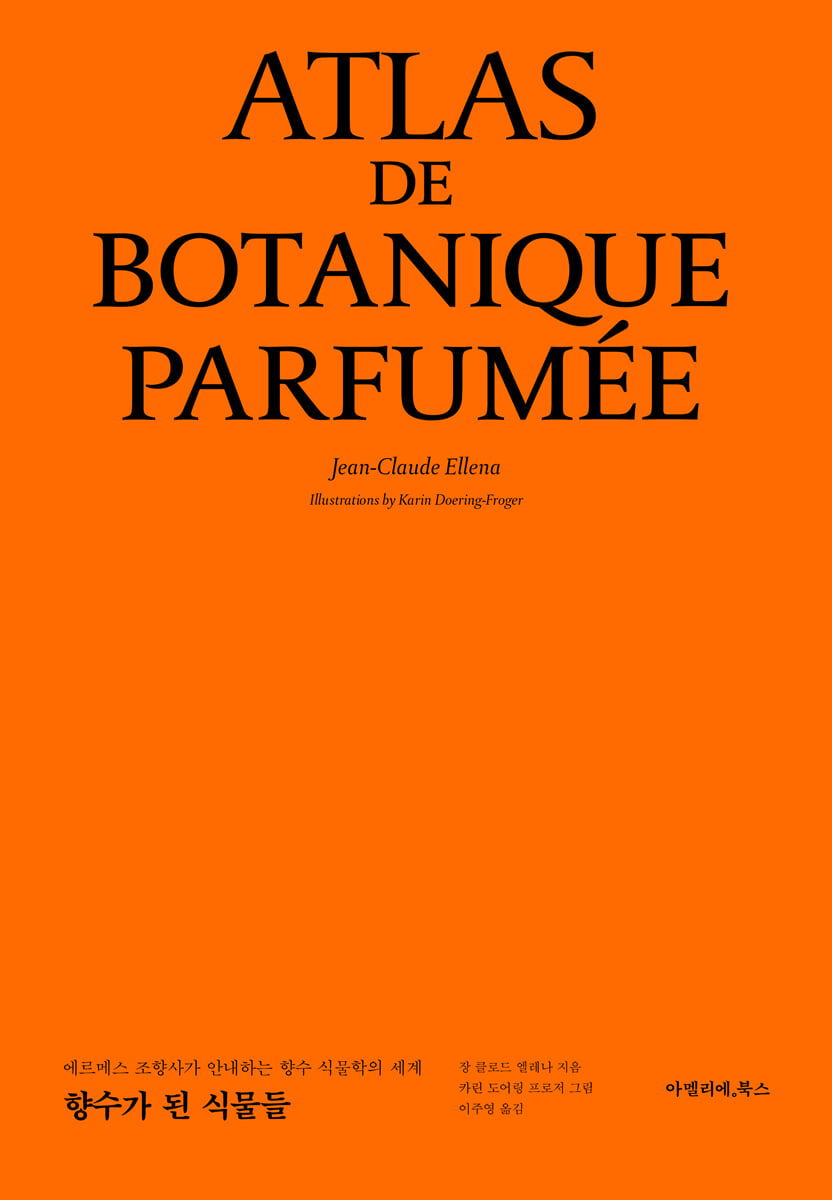
Plants that became perfume
 |
Description
Book Introduction
Hermes, Sisley, Cartier, Frederic Malle, Yves Saint Laurent… The master perfumer who created world-class perfumes Welcome to the world of Jean-Claude Elena's 'Perfume Botany'! Jean-Claude Elena, one of the world's leading master perfumers and former chief perfumer of the famous French brand Hermès. He came to us with a new theme called ‘Perfume Botany’. Perfume and plants, just the name alone makes me excited and look forward to this combination. This book, "Plants that Became Perfume," is written by Jean-Claude Elena, a living legend in the world of perfumery, and introduces how these plants provide inspiration for perfume and how they are transformed into perfume. Famous perfumes he personally perfumed, such as Hermes' 'Un Jardin Surnil', 'Terre d'Hermes', Sisley's 'Eau de Campagne', Cartier's 'Déclaration', and Frederic Malle's 'L'Eau d'Hive', as well as over 70 perfumes from Dior, Chanel, Guerlain, etc., started from the scent of certain plants, and the memories related to plants and scents, as well as episodes in the process of creating perfumes, are all interesting information that cannot be heard anywhere else. In particular, the 40 or so illustrations that express the plants that appear in the book in the most beautiful and elegant way further enhance the book's quality. When you look at it, it creates the illusion that you can smell the actual scent of the plant. [Vogue.com] has already selected this book as one of the 'Best Gift Books of 2022', and it can be said to be the most attractive introductory book on fragrance written by an author who has been working as a perfumer for 60 years. |
- You can preview some of the book's contents.
Preview
index
prolog
1.
wood and bark
sandalwood
cinnamon
cedar
oak moss
2.
leaves
Rockrose
Absinthe and wormwood
Basil and tarragon
Rose geranium
Patchouli
violet
3.
flower
Jasmine
lavender
Mimosa
daffodil
Bitter Orange
Osmanthus
rose
Tuberose
Ylang ylang
4.
fruit
Bergamot
blackcurrant
lemon
Sweet Orange
5.
sap
Benzoin
Galbanum
Myrrh and frankincense
6.
seeds
Ambrette seeds
cardamom
carrot
nutmeg
pepper
Tonka bean
vanilla
7.
root
Angelica
Iris
Vetiver
Epilogue
1.
wood and bark
sandalwood
cinnamon
cedar
oak moss
2.
leaves
Rockrose
Absinthe and wormwood
Basil and tarragon
Rose geranium
Patchouli
violet
3.
flower
Jasmine
lavender
Mimosa
daffodil
Bitter Orange
Osmanthus
rose
Tuberose
Ylang ylang
4.
fruit
Bergamot
blackcurrant
lemon
Sweet Orange
5.
sap
Benzoin
Galbanum
Myrrh and frankincense
6.
seeds
Ambrette seeds
cardamom
carrot
nutmeg
pepper
Tonka bean
vanilla
7.
root
Angelica
Iris
Vetiver
Epilogue
Detailed image

Into the book
At first, humans were just children, but they gradually imitated God and nature and began to create essential oils and perfumes as they sought to understand the principles of all things.
Words like essential oils and perfume weren't just created by accident.
To make them, humans first used plants, and later chemicals.
It smells bad to people too (though I don't know).
Fortunately, perfumes are created by people with good intentions.
Even if an ingredient doesn't originally smell that good, perfumers can eventually create a good scent.
Sometimes unexpected scents can be used to create great perfumes.
Perfumers believe that a scent speaks a thousand words.
So they listen carefully and understand what each scent is trying to convey before they get to the heart of it.
Because fragrance is complex and mysterious, it will never reveal itself unless it is sure that it is loved.
--- p.12
Bwa Parin was sold on a case-by-case basis, and the theme of this perfume was 'Scents stolen by a traveling perfumer'.
I always write down ideas in a notebook to create perfumes that suit my customers' tastes, and I often look at that notebook.
Then, my eyes stopped at the Ruizia Cordata flower tree.
The note I wrote about this flower tree was 'the smell of flour'.
Whenever I had even a little bit of free time while on business trips, I would go to the botanical garden.
Botanical gardens are a treasure trove of ideas for perfumers.
When I discovered the flower that smelled like flour, I felt as if I had received a gift, and perhaps that was the best gift I had ever received from nature.
Excited and happy with my new discovery, I called the CEO and told him in advance what name I wanted to give to my future perfume, and he even approved it.
I also bought a bag of flour to use as a reference.
A blend of the oat-scented chemical Orivone with Virginia cedar and sandalwood creates a sensual fragrance.
That perfume was Bwa Parin.
--- p.28
Violet is not produced in large quantities, so the extract is very expensive.
In fact, perfume companies currently use extracts from violet leaves because the leaves are nearly 10 times cheaper than the petals.
The scent of violets is artificially created through chemical technology without flowers.
This is made possible thanks to ionone.
Ferdinand Thiemann, the German chemist who invented vanillin, discovered the fragrant compound ionone in essential oils in 1893, which had a scent similar to iris.
However, Timan made the mistake of thinking that ionone smelled like violets.
Then, the French perfume company Roget et Gallet, attracted by the scent of violets that was popular at the time, entered into negotiations with another French perfume company, De Laire.
This is because De Ler had a partnership with Haarmann & Reimer, the German chemical company where Thieman worked.
In this way, Rose & Gallé obtained the exclusive right to use ionone and launched the perfume 'Vera Violetta' in 1905.
It was a perfume name that brought hope.
--- p.70
I like cardamom.
The first time you smell cardamom essential oil, you may be surprised.
Because it has a similar scent to that of eucalyptus trees.
It might seem odd that a perfumer would love a plant that is used to clear blocked noses.
That's why you shouldn't judge a book by its cover.
Using cardamom in perfumery adds a breath of life to the ingredients.
Cardamom acts like wind that fills the sails.
It is this cardamom that creates the wide, cool scent of the sea.
Suddenly, there was progress in the work.
Cardamom is again at work, as in the perfume 'Jardin apres la mousson' (The Garden After the Tropical Monsoon, 2008).
Instead, cardamom lacked a humane aroma.
I only found the answer to why later.
The author Virginia Woolf once said this in a radio interview:
“Words only make sense when they become sentences.” Virginia Woolf’s simple and precise words resonated deeply with me.
I took note of Virginia Woolf's words and treasured them.
The same goes for perfume.
To me, each scent is like a word.
Therefore, I think that a scent has meaning only when it becomes perfume.
Words like essential oils and perfume weren't just created by accident.
To make them, humans first used plants, and later chemicals.
It smells bad to people too (though I don't know).
Fortunately, perfumes are created by people with good intentions.
Even if an ingredient doesn't originally smell that good, perfumers can eventually create a good scent.
Sometimes unexpected scents can be used to create great perfumes.
Perfumers believe that a scent speaks a thousand words.
So they listen carefully and understand what each scent is trying to convey before they get to the heart of it.
Because fragrance is complex and mysterious, it will never reveal itself unless it is sure that it is loved.
--- p.12
Bwa Parin was sold on a case-by-case basis, and the theme of this perfume was 'Scents stolen by a traveling perfumer'.
I always write down ideas in a notebook to create perfumes that suit my customers' tastes, and I often look at that notebook.
Then, my eyes stopped at the Ruizia Cordata flower tree.
The note I wrote about this flower tree was 'the smell of flour'.
Whenever I had even a little bit of free time while on business trips, I would go to the botanical garden.
Botanical gardens are a treasure trove of ideas for perfumers.
When I discovered the flower that smelled like flour, I felt as if I had received a gift, and perhaps that was the best gift I had ever received from nature.
Excited and happy with my new discovery, I called the CEO and told him in advance what name I wanted to give to my future perfume, and he even approved it.
I also bought a bag of flour to use as a reference.
A blend of the oat-scented chemical Orivone with Virginia cedar and sandalwood creates a sensual fragrance.
That perfume was Bwa Parin.
--- p.28
Violet is not produced in large quantities, so the extract is very expensive.
In fact, perfume companies currently use extracts from violet leaves because the leaves are nearly 10 times cheaper than the petals.
The scent of violets is artificially created through chemical technology without flowers.
This is made possible thanks to ionone.
Ferdinand Thiemann, the German chemist who invented vanillin, discovered the fragrant compound ionone in essential oils in 1893, which had a scent similar to iris.
However, Timan made the mistake of thinking that ionone smelled like violets.
Then, the French perfume company Roget et Gallet, attracted by the scent of violets that was popular at the time, entered into negotiations with another French perfume company, De Laire.
This is because De Ler had a partnership with Haarmann & Reimer, the German chemical company where Thieman worked.
In this way, Rose & Gallé obtained the exclusive right to use ionone and launched the perfume 'Vera Violetta' in 1905.
It was a perfume name that brought hope.
--- p.70
I like cardamom.
The first time you smell cardamom essential oil, you may be surprised.
Because it has a similar scent to that of eucalyptus trees.
It might seem odd that a perfumer would love a plant that is used to clear blocked noses.
That's why you shouldn't judge a book by its cover.
Using cardamom in perfumery adds a breath of life to the ingredients.
Cardamom acts like wind that fills the sails.
It is this cardamom that creates the wide, cool scent of the sea.
Suddenly, there was progress in the work.
Cardamom is again at work, as in the perfume 'Jardin apres la mousson' (The Garden After the Tropical Monsoon, 2008).
Instead, cardamom lacked a humane aroma.
I only found the answer to why later.
The author Virginia Woolf once said this in a radio interview:
“Words only make sense when they become sentences.” Virginia Woolf’s simple and precise words resonated deeply with me.
I took note of Virginia Woolf's words and treasured them.
The same goes for perfume.
To me, each scent is like a word.
Therefore, I think that a scent has meaning only when it becomes perfume.
--- p.178
Publisher's Review
★★★ [Vogue.com] Selected as the "Best Books to Give as Gifts of 2022"
★★★ 16 Gifts for the Magistrate, selected by the Financial Times
★★★ The most fascinating introductory book on fragrance from an author who has been a perfumer for 60 years.
★★★ The most elegant and luxurious Korean edition of Hermes style hardcover
“How are the scents of plants transformed into perfume?”
The meeting of plants and fragrances that inspired the world's greatest perfumers.
“When I write, I first arrange the words that come to mind and then make sentences with them.
And they come together to form one story.
Words must form sentences to have meaning.
The same goes for steering.
“Each scent is a word, and when those words come together, they become a perfume, a story about scents.” This is what Jean-Claude Elena always says.
The recently published 『Plants that Became Perfume』 is the book that best shows how he was able to transform the word fragrance into a story, perfume.
He guides readers on a journey of discovering the scents of over 40 plants from which fragrances are extracted, from an emotional, geographical, and botanical perspective, and creating perfumes from them.
Unlike existing books that focus only on finished perfumes, this book focuses on the plants that are the source of perfume and their scents, making it a good introductory book on perfume.
This is truly a masterpiece of the steering industry.
Sandalwood, oak moss, mimosa, lavender, jasmine, ylang ylang, rose, galbanum, vetiver, bitter orange… .
The book is full of useful information for perfumers, including how the plants that inspired the creation of perfume originated in history, where they are mainly sourced, and how they are used in the perfume industry.
Here, the author shares his philosophy of giving a temporary name to a perfume when creating it, which will give you a rough idea of the fragrance's direction, as well as his extensive knowledge and wisdom about perfume, such as how he finds inspiration from literature, paintings, and cooking, and which plants are used in his perfumes.
Will spraying Dior 'Poison' ban you from entering restaurants?
Why aren't there many lemon fragrances?
Is there a perfume themed around the scent of flour?
Colorful and interesting stories we didn't know about the scents and perfumes of plants.
Another reason this book is so interesting is because of the colorful behind-the-scenes stories about fragrant plants and perfumes.
The most impressive plant is tuberose, which was called the 'king of perfume' in the 1980s.
Dior's 'Poisin', which uses a tuberose scent, was a fragrance that was banned from high-end restaurants with high ratings.
The reason was that the smell was so strong that it disturbed the dining of the guests around them.
Some say that children should not come near tuberose because its scent is so strong that it can cause headaches.
(But in reality, the circumstances are completely different.
The author explains that tuberose has weak stems and can easily break if care is not taken.
The attractive lemon scent is also a suffering.
In 1949, Procter & Gamble launched Joy, a lemon-scented liquid dishwashing detergent, and since then, the scent of lemon has become synonymous with liquid detergent and dishwashing machines.
As a result, it has become difficult to completely connect lemon with the image of perfume, and the only ones known are Leuven's 'Gin Fizz' and Hermes' 'Citron Noir'.
The birth process of Latizan Perfumer's 'Bois Farine' is also unique.
The author, who often visits botanical gardens when on business trips, happens to discover a flower that smells like flour.
Excited by his new discovery, he calls the CEO and tells him the name he wants for his future perfume, even getting his approval.
For reference, I bought a bag of flour and blended it with chemicals like oribon, Virginia cedar, and sandalwood to create 'Bwa Parin'.
The behind-the-scenes stories of the creation of perfumes such as Hermès' 'Epice Marine', which was created with the addition of the scent of 'cardamom' after receiving feedback from Olivier Rollinger, a chef who has received three Michelin stars; 'Absinthe', a plant with a bitter scent first introduced by Jean-Paul Guerlain; and Hermèssance's 'Osmanthe Yunnan', which was created with the scent of osmanthus as its theme during a trip to China, are fascinating stories that can only be felt in this book.
Violets have no scent at all?
Carrots extract their flavor from their seeds?
A new approach from a 60-year-old master perfumer who distinguishes scents by plant parts.
Each perfumer has his own criteria for classifying scents.
After being exposed to fragrance for a long time, you create your own standards for type, concentration, purpose, etc.
The author, the world's greatest fragrance alchemist, introduces the classification of fragrances in this book by dividing them into plants that have become perfumes.
What is unique is that the fragrances are divided not by the scent of the plant or the color of the flower, but by the parts of the plant, such as the bark, leaves, fruits, flowers, seeds, and roots.
The reason is clear.
In the case of irises, the fragrance comes from the roots, not the beautiful purple flowers, and in the case of violets, the flowers do not have a fragrance, and the leaves are nearly 10 times cheaper, so the fragrance is extracted from the leaves (the fragrance of violets is artificially created through chemical technology without flowers).
Because carrots come from the seeds, not the roots, and patchouli's fragrance comes from the leaves, not the tree.
Having entered the world of perfumery at the age of 17 and worked in it for nearly 60 years, I have presented another way to understand and discover fragrance.
The values and working methods of the world's best perfumers,
A book that provides a glimpse into the perfume industry.
“Perfumers believe that a scent speaks a thousand words.
So they listen carefully and understand what each scent is trying to convey before they get to the heart of it.
“Fragrance is complex and mysterious, and it will never reveal itself unless it is sure that it is loved.”
What Jean-Claude Elena said in the prologue is similar to his way of working as a perfumer.
The deep love for plants shown in this book is also the source that made it possible for him to create world-class perfumes.
Born and raised in Grasse, France, the birthplace of perfume, he has been exposed to fragrant plants for a long time and has created perfumes while sharing an intimate relationship with plants.
That's why I was able to write this book.
As a perfumer, my love and passion for fragrance is evident even in the process of selecting fragrances.
He has been pursuing the authenticity of his profession as a perfumer, ordering new varieties every year from a store that has been collecting irises for three generations, personally going to Pouilly to smell each of the 600 irises and noting the characteristics of the scent on an order form, and even going to the Indian Ocean island of Reunion to purposely wander around the small market in Saint-Denis to enjoy the sweet and languid scent of ylang-ylang.
When asked if she has a particular favorite scent, Elena always answers, “I like all scents, and the reasons for that are different.”
When making perfume, the scent is basically created through chemical processing, and the fact that he doesn't want to reveal that fact shows his consideration for perfume lovers.
Also, his long-held value that 'there is no gender distinction in fragrance' is clearly revealed in the book, as mixed spices are used regardless of gender.
The book also offers a glimpse into the realistic world of perfumery, where the utility of flowers is determined by two criteria: production volume and price.
Iris extract is 50 times more expensive than carrot extract, so perfumers use more carrot extract, and they also prefer bitter orange essence over sweet orange essence because it is less expensive.
Also, the fact that white flowers, such as tuberose, jasmine, orange blossom, and daffodil, have a stronger fragrance and are used as perfume ingredients, and that perfumes containing over 1,000 types of fragrance substances contain about 800 naturally derived fragrance substances and about 15 flower extracts, are surprising facts learned through this book.
★★★ 16 Gifts for the Magistrate, selected by the Financial Times
★★★ The most fascinating introductory book on fragrance from an author who has been a perfumer for 60 years.
★★★ The most elegant and luxurious Korean edition of Hermes style hardcover
“How are the scents of plants transformed into perfume?”
The meeting of plants and fragrances that inspired the world's greatest perfumers.
“When I write, I first arrange the words that come to mind and then make sentences with them.
And they come together to form one story.
Words must form sentences to have meaning.
The same goes for steering.
“Each scent is a word, and when those words come together, they become a perfume, a story about scents.” This is what Jean-Claude Elena always says.
The recently published 『Plants that Became Perfume』 is the book that best shows how he was able to transform the word fragrance into a story, perfume.
He guides readers on a journey of discovering the scents of over 40 plants from which fragrances are extracted, from an emotional, geographical, and botanical perspective, and creating perfumes from them.
Unlike existing books that focus only on finished perfumes, this book focuses on the plants that are the source of perfume and their scents, making it a good introductory book on perfume.
This is truly a masterpiece of the steering industry.
Sandalwood, oak moss, mimosa, lavender, jasmine, ylang ylang, rose, galbanum, vetiver, bitter orange… .
The book is full of useful information for perfumers, including how the plants that inspired the creation of perfume originated in history, where they are mainly sourced, and how they are used in the perfume industry.
Here, the author shares his philosophy of giving a temporary name to a perfume when creating it, which will give you a rough idea of the fragrance's direction, as well as his extensive knowledge and wisdom about perfume, such as how he finds inspiration from literature, paintings, and cooking, and which plants are used in his perfumes.
Will spraying Dior 'Poison' ban you from entering restaurants?
Why aren't there many lemon fragrances?
Is there a perfume themed around the scent of flour?
Colorful and interesting stories we didn't know about the scents and perfumes of plants.
Another reason this book is so interesting is because of the colorful behind-the-scenes stories about fragrant plants and perfumes.
The most impressive plant is tuberose, which was called the 'king of perfume' in the 1980s.
Dior's 'Poisin', which uses a tuberose scent, was a fragrance that was banned from high-end restaurants with high ratings.
The reason was that the smell was so strong that it disturbed the dining of the guests around them.
Some say that children should not come near tuberose because its scent is so strong that it can cause headaches.
(But in reality, the circumstances are completely different.
The author explains that tuberose has weak stems and can easily break if care is not taken.
The attractive lemon scent is also a suffering.
In 1949, Procter & Gamble launched Joy, a lemon-scented liquid dishwashing detergent, and since then, the scent of lemon has become synonymous with liquid detergent and dishwashing machines.
As a result, it has become difficult to completely connect lemon with the image of perfume, and the only ones known are Leuven's 'Gin Fizz' and Hermes' 'Citron Noir'.
The birth process of Latizan Perfumer's 'Bois Farine' is also unique.
The author, who often visits botanical gardens when on business trips, happens to discover a flower that smells like flour.
Excited by his new discovery, he calls the CEO and tells him the name he wants for his future perfume, even getting his approval.
For reference, I bought a bag of flour and blended it with chemicals like oribon, Virginia cedar, and sandalwood to create 'Bwa Parin'.
The behind-the-scenes stories of the creation of perfumes such as Hermès' 'Epice Marine', which was created with the addition of the scent of 'cardamom' after receiving feedback from Olivier Rollinger, a chef who has received three Michelin stars; 'Absinthe', a plant with a bitter scent first introduced by Jean-Paul Guerlain; and Hermèssance's 'Osmanthe Yunnan', which was created with the scent of osmanthus as its theme during a trip to China, are fascinating stories that can only be felt in this book.
Violets have no scent at all?
Carrots extract their flavor from their seeds?
A new approach from a 60-year-old master perfumer who distinguishes scents by plant parts.
Each perfumer has his own criteria for classifying scents.
After being exposed to fragrance for a long time, you create your own standards for type, concentration, purpose, etc.
The author, the world's greatest fragrance alchemist, introduces the classification of fragrances in this book by dividing them into plants that have become perfumes.
What is unique is that the fragrances are divided not by the scent of the plant or the color of the flower, but by the parts of the plant, such as the bark, leaves, fruits, flowers, seeds, and roots.
The reason is clear.
In the case of irises, the fragrance comes from the roots, not the beautiful purple flowers, and in the case of violets, the flowers do not have a fragrance, and the leaves are nearly 10 times cheaper, so the fragrance is extracted from the leaves (the fragrance of violets is artificially created through chemical technology without flowers).
Because carrots come from the seeds, not the roots, and patchouli's fragrance comes from the leaves, not the tree.
Having entered the world of perfumery at the age of 17 and worked in it for nearly 60 years, I have presented another way to understand and discover fragrance.
The values and working methods of the world's best perfumers,
A book that provides a glimpse into the perfume industry.
“Perfumers believe that a scent speaks a thousand words.
So they listen carefully and understand what each scent is trying to convey before they get to the heart of it.
“Fragrance is complex and mysterious, and it will never reveal itself unless it is sure that it is loved.”
What Jean-Claude Elena said in the prologue is similar to his way of working as a perfumer.
The deep love for plants shown in this book is also the source that made it possible for him to create world-class perfumes.
Born and raised in Grasse, France, the birthplace of perfume, he has been exposed to fragrant plants for a long time and has created perfumes while sharing an intimate relationship with plants.
That's why I was able to write this book.
As a perfumer, my love and passion for fragrance is evident even in the process of selecting fragrances.
He has been pursuing the authenticity of his profession as a perfumer, ordering new varieties every year from a store that has been collecting irises for three generations, personally going to Pouilly to smell each of the 600 irises and noting the characteristics of the scent on an order form, and even going to the Indian Ocean island of Reunion to purposely wander around the small market in Saint-Denis to enjoy the sweet and languid scent of ylang-ylang.
When asked if she has a particular favorite scent, Elena always answers, “I like all scents, and the reasons for that are different.”
When making perfume, the scent is basically created through chemical processing, and the fact that he doesn't want to reveal that fact shows his consideration for perfume lovers.
Also, his long-held value that 'there is no gender distinction in fragrance' is clearly revealed in the book, as mixed spices are used regardless of gender.
The book also offers a glimpse into the realistic world of perfumery, where the utility of flowers is determined by two criteria: production volume and price.
Iris extract is 50 times more expensive than carrot extract, so perfumers use more carrot extract, and they also prefer bitter orange essence over sweet orange essence because it is less expensive.
Also, the fact that white flowers, such as tuberose, jasmine, orange blossom, and daffodil, have a stronger fragrance and are used as perfume ingredients, and that perfumes containing over 1,000 types of fragrance substances contain about 800 naturally derived fragrance substances and about 15 flower extracts, are surprising facts learned through this book.
GOODS SPECIFICS
- Date of issue: August 30, 2023
- Format: Hardcover book binding method guide
- Page count, weight, size: 228 pages | 170*245*20mm
- ISBN13: 9791197606946
- ISBN10: 1197606947
You may also like
카테고리
korean


korean

![ELLE 엘르 스페셜 에디션 A형 : 12월 [2025]](http://librairie.coreenne.fr/cdn/shop/files/b8e27a3de6c9538896439686c6b0e8fb.jpg?v=1766436872&width=3840)


