

Awareness
 |
Description
Book Introduction
- A word from MD
-
Teachings that will straighten your tangled mindHumans have suffered from mental problems in the past, present, and future.
There is hope.
2,500 years ago, mankind discovered a wonderful remedy called meditation.
And in 2025, meditation practitioner Kwak Jeong-eun published a wonderful meditation book suitable for modern people.
October 22, 2025. Min-gyu Son, Humanities PD
★★★ The ultimate wisdom proven over 2500 years ★★★
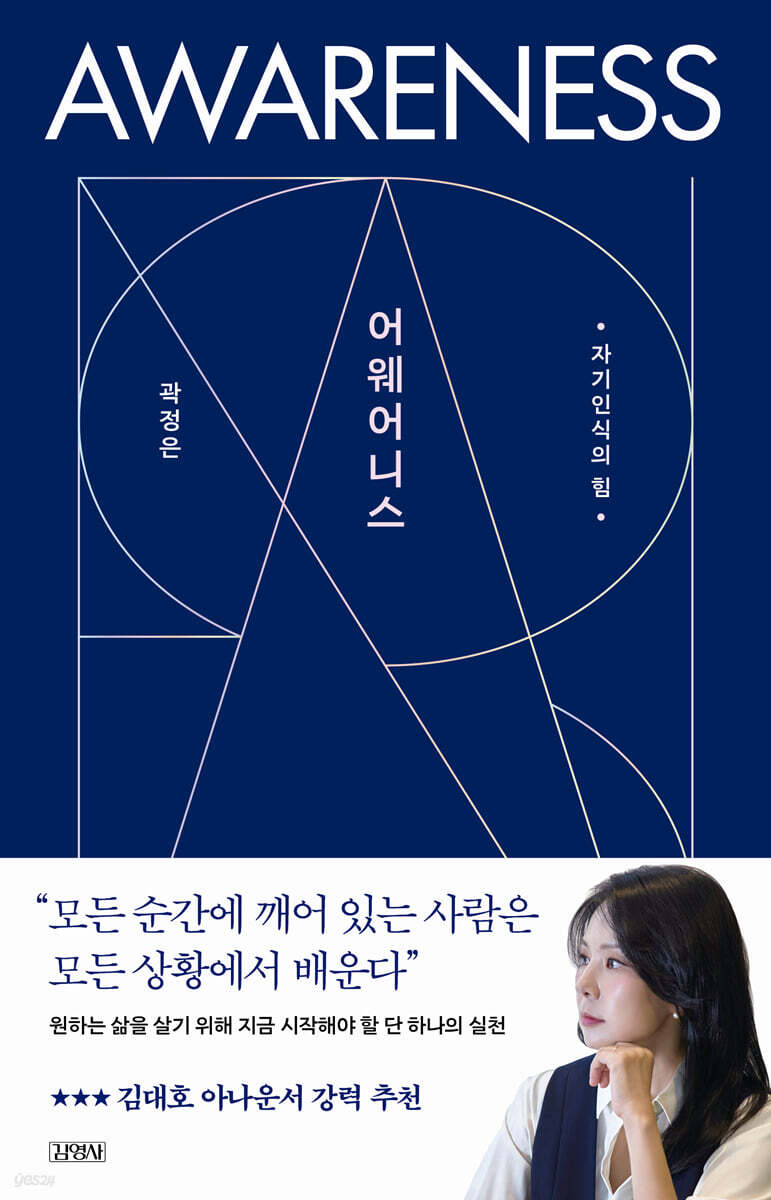
★★★ Strongly recommended by announcer Kim Dae-ho ★★★
“He who is awake at all times learns from all situations.”
Awareness: The One Power to Reclaim Control of Your Life
Are you living the life you want?
Aren't you being dragged around by life?
Author and meditation practitioner Kwak Jeong-eun, who has suggested a life of growth to countless readers and audiences through broadcasts, columns, and lectures, presents decisive keywords that will help us regain the "lost control over life" by synthesizing her 10 years of field experience and academic research.
It is the power of ‘awareness’ and self-awareness.
Awareness asks how we can detect and interpret the mental alarms of lethargy, irritation, loss of focus, and self-reproach in the fast-paced world of everyday life.
And he says that when we do not ignore these signals but are quick to recognize them, we can turn the crisis into an opportunity for growth and live a life of unwavering leadership.
We can achieve success and still fall short of our desired lives, or we can suffer and still live more mature lives.
Ultimately, it is up to us to decide whether to grow or settle.
This book will be the most crucial answer for those who wish to achieve sustainable success and stability, unshaken by life's conditions and external circumstances.
★★★ Strongly recommended by announcer Kim Dae-ho ★★★
“He who is awake at all times learns from all situations.”
Awareness: The One Power to Reclaim Control of Your Life
Are you living the life you want?
Aren't you being dragged around by life?
Author and meditation practitioner Kwak Jeong-eun, who has suggested a life of growth to countless readers and audiences through broadcasts, columns, and lectures, presents decisive keywords that will help us regain the "lost control over life" by synthesizing her 10 years of field experience and academic research.
It is the power of ‘awareness’ and self-awareness.
Awareness asks how we can detect and interpret the mental alarms of lethargy, irritation, loss of focus, and self-reproach in the fast-paced world of everyday life.
And he says that when we do not ignore these signals but are quick to recognize them, we can turn the crisis into an opportunity for growth and live a life of unwavering leadership.
We can achieve success and still fall short of our desired lives, or we can suffer and still live more mature lives.
Ultimately, it is up to us to decide whether to grow or settle.
This book will be the most crucial answer for those who wish to achieve sustainable success and stability, unshaken by life's conditions and external circumstances.
- You can preview some of the book's contents.
Preview
index
Introduction
1.
STILLNESS
How to start your day
Why a Trained Mind Is Necessary
How to achieve a focused mind
Why I Trained in Stillness
How I Practiced Samatha
What Needs to Change to Become the Master of Your Time
What to train to become the master of time
2.
Recovery
How to connect and heal your body and mind
How to heal your mind through writing
What does it mean to know me?
What does it mean to love me
What does it mean to live positively?
3.
Compassion
Why Altruism Towards Others Is Important
Why is it necessary to train oneself to be compassionate toward others?
The practice of loving-kindness and the four consciences
How to Apply Your Office Conscience to Your Career
Resilience and Leadership Through Compassion
4.
Acceptance
What are the four inevitable sufferings?
Recognize the difference between pain and suffering
How to train an accepting mind
How to Accept Your Vulnerability
Eight Ways to Practice Acceptance
5.
RELATIONSHIP
How to build relationships with others
How to Deal with Loneliness in a Relationship
How to deal with public and private relationships
What kind of relationship comes after suffering?
How to continue the conversation
6.
Wisdom
How to Create Wisdom in Everyday Life
How to Understand the Three Truths That Run Through Life
Your Misconceptions About Wisdom and Mindfulness
The practice of insight that cultivates wisdom, the practice of Vipassana
What intention should I live with?
Going out words
1.
STILLNESS
How to start your day
Why a Trained Mind Is Necessary
How to achieve a focused mind
Why I Trained in Stillness
How I Practiced Samatha
What Needs to Change to Become the Master of Your Time
What to train to become the master of time
2.
Recovery
How to connect and heal your body and mind
How to heal your mind through writing
What does it mean to know me?
What does it mean to love me
What does it mean to live positively?
3.
Compassion
Why Altruism Towards Others Is Important
Why is it necessary to train oneself to be compassionate toward others?
The practice of loving-kindness and the four consciences
How to Apply Your Office Conscience to Your Career
Resilience and Leadership Through Compassion
4.
Acceptance
What are the four inevitable sufferings?
Recognize the difference between pain and suffering
How to train an accepting mind
How to Accept Your Vulnerability
Eight Ways to Practice Acceptance
5.
RELATIONSHIP
How to build relationships with others
How to Deal with Loneliness in a Relationship
How to deal with public and private relationships
What kind of relationship comes after suffering?
How to continue the conversation
6.
Wisdom
How to Create Wisdom in Everyday Life
How to Understand the Three Truths That Run Through Life
Your Misconceptions About Wisdom and Mindfulness
The practice of insight that cultivates wisdom, the practice of Vipassana
What intention should I live with?
Going out words
Detailed image

Into the book
Before you go to sleep, ask yourself quietly:
What was my state of mind today?
Open your eyes and ask again, gently.
With what kind of heart do I want to live today?
In the difficult moments of everyday life, don't forget to ask again.
What is my heart full of right now?
The more you ask yourself these calm and gentle questions, the more often you try to look within yourself, and the more your mind will become filled with balance and tranquility.
That's how the journey back to me begins.
--- From "How to Start Your Day"
A person who has confirmed his own deep and calm mind will never go back.
To put it bluntly, there is no going back.
It just happens.
The journey of reflection, where I face myself only as my refuge, rather than as a union with the Divine, began through the practice of Samatha.
--- From "Why I Trained in Stillness"
Since I developed a strong spirit of self-love deep within my heart, which supports me, I have become someone who never struggles or cries in sorrow over anything.
I stopped hurting myself and being in pain.
Even when depression and emptiness occasionally visit my heart, I have become a person who can let them go without getting angry.
--- From "What Does It Mean to Love Me"
If you think about it with affection in your heart, there is nothing you are not grateful for, and there is no way you can not be grateful.
Living each day with a cynical heart, the value of each day I have received is incalculable, and if you think about it, countless privileges and opportunities have been given to me without any particular reason.
It would be a shame and a pity to lose them all.
If it all disappears someday, I will accept that too, but before that, I want to live my life with enough gratitude and enjoyment.
--- From "What Does It Mean to Live Positively"
Have you ever felt a sense of discomfort when you see friends on social media who seem much more successful and happier than you? And as you continue to socialize, aren't you finding yourself increasingly disliking more and more people? This is proof that you lack conscience in your life, and it's a reason to cultivate it within yourself.
--- From “Practice of Compassion and the Fourfold Mind”
In the past, I would only regret things after my emotions or situations had burned to ashes, but the moments of belated regret have gradually begun to decrease.
Furthermore, I was able to recognize the very moment a fire was about to break out, so I didn't have to let my mind get to the point where it was tormenting me.
It was entirely thanks to the power of practice that I was able to wink and smile at my own impatience and sensitivity.
--- From "How to Apply Conscience to Your Career"
No matter how embarrassing or upsetting the situation may be, you must always wait until the raw anger subsides.
And let's remember that we are all human beings with vulnerabilities and that we all want to hide them, that you and I are not so different.
--- From "How to Accept Your Vulnerability"
No matter how good a car is, it cannot run properly if it is filled with the wrong fuel or poor quality fuel.
You have to think about what kind of driving force is driving your life.
If your driving force is greed, your future will be unhappy or empty. If your driving force is love, every step you take will be filled with abundance and meaning.
--- From "Eight Ways to Practice Acceptance"
Many people believe that work-life balance means turning off your work after a few o'clock in the evening, or after Friday afternoon.
But true work-life balance must first be achieved on a mental level.
Throughout my life, there has to be a certain balance between the joy I get from work and the joy I get from things other than work.
--- From "How to Deal with Public and Private Relationships"
Since I first learned about the three stages of wisdom called the Moon Sa-su and resolved to apply their meaning in my life, I have been able to clearly discern what knowledge I need and have completely broken free from the habit of tormenting myself with self-reproach, big and small.
I have become clear about how I should live my life, which will never last forever, and the mental emptiness that I could not recover from no matter how many books I read is now a thing of the past.
--- From "How to Create Wisdom in Everyday Life"
Think about how to convey your love to the place where you live.
Remember that although you were born with nothing, you already have so much to enjoy.
Whether you remember it or not, your life is already filled with someone's care and love.
There may have been times when you were lacking, and times when you were in pain, but you endured and survived through all that pain and lack.
What was my state of mind today?
Open your eyes and ask again, gently.
With what kind of heart do I want to live today?
In the difficult moments of everyday life, don't forget to ask again.
What is my heart full of right now?
The more you ask yourself these calm and gentle questions, the more often you try to look within yourself, and the more your mind will become filled with balance and tranquility.
That's how the journey back to me begins.
--- From "How to Start Your Day"
A person who has confirmed his own deep and calm mind will never go back.
To put it bluntly, there is no going back.
It just happens.
The journey of reflection, where I face myself only as my refuge, rather than as a union with the Divine, began through the practice of Samatha.
--- From "Why I Trained in Stillness"
Since I developed a strong spirit of self-love deep within my heart, which supports me, I have become someone who never struggles or cries in sorrow over anything.
I stopped hurting myself and being in pain.
Even when depression and emptiness occasionally visit my heart, I have become a person who can let them go without getting angry.
--- From "What Does It Mean to Love Me"
If you think about it with affection in your heart, there is nothing you are not grateful for, and there is no way you can not be grateful.
Living each day with a cynical heart, the value of each day I have received is incalculable, and if you think about it, countless privileges and opportunities have been given to me without any particular reason.
It would be a shame and a pity to lose them all.
If it all disappears someday, I will accept that too, but before that, I want to live my life with enough gratitude and enjoyment.
--- From "What Does It Mean to Live Positively"
Have you ever felt a sense of discomfort when you see friends on social media who seem much more successful and happier than you? And as you continue to socialize, aren't you finding yourself increasingly disliking more and more people? This is proof that you lack conscience in your life, and it's a reason to cultivate it within yourself.
--- From “Practice of Compassion and the Fourfold Mind”
In the past, I would only regret things after my emotions or situations had burned to ashes, but the moments of belated regret have gradually begun to decrease.
Furthermore, I was able to recognize the very moment a fire was about to break out, so I didn't have to let my mind get to the point where it was tormenting me.
It was entirely thanks to the power of practice that I was able to wink and smile at my own impatience and sensitivity.
--- From "How to Apply Conscience to Your Career"
No matter how embarrassing or upsetting the situation may be, you must always wait until the raw anger subsides.
And let's remember that we are all human beings with vulnerabilities and that we all want to hide them, that you and I are not so different.
--- From "How to Accept Your Vulnerability"
No matter how good a car is, it cannot run properly if it is filled with the wrong fuel or poor quality fuel.
You have to think about what kind of driving force is driving your life.
If your driving force is greed, your future will be unhappy or empty. If your driving force is love, every step you take will be filled with abundance and meaning.
--- From "Eight Ways to Practice Acceptance"
Many people believe that work-life balance means turning off your work after a few o'clock in the evening, or after Friday afternoon.
But true work-life balance must first be achieved on a mental level.
Throughout my life, there has to be a certain balance between the joy I get from work and the joy I get from things other than work.
--- From "How to Deal with Public and Private Relationships"
Since I first learned about the three stages of wisdom called the Moon Sa-su and resolved to apply their meaning in my life, I have been able to clearly discern what knowledge I need and have completely broken free from the habit of tormenting myself with self-reproach, big and small.
I have become clear about how I should live my life, which will never last forever, and the mental emptiness that I could not recover from no matter how many books I read is now a thing of the past.
--- From "How to Create Wisdom in Everyday Life"
Think about how to convey your love to the place where you live.
Remember that although you were born with nothing, you already have so much to enjoy.
Whether you remember it or not, your life is already filled with someone's care and love.
There may have been times when you were lacking, and times when you were in pain, but you endured and survived through all that pain and lack.
--- From "With what intention should we live?"
Publisher's Review
“You have a responsibility to put yourself in the right place before it’s too late.”
By adjusting and managing the stem of the mind
6 Optimal Paths to Leading Your Life in a Beneficial and Happy Direction
“I was on the verge of death, not knowing how to look into and cut out my responsibilities, which were festering and rotting away.
I finally got to see my doctor.
This is the book, Awareness.”―Kim Dae-ho
Kwak Jeong-eun has shared her life of growth with countless readers and audiences through broadcasts, columns, and lectures.
The author and meditation practitioner is publishing his book, Awareness, based on over ten years of public lectures and academic research, through Kim Young Publishing.
'Awareness' is the power of self-awareness rooted in the concept of 'sati' in early Buddhist scriptures, and is a crucial keyword that allows us to regain the control we have lost over our lives.
The advice of the early scriptures, proven and proven over 2,500 years, can lead us to fundamental change more than any self-help book, intellectual, or mentor.
For example, regarding wealth management, the Buddha says, “Invest one-fourth in living, one-fourth in savings, and the remaining half in work.”
This simple yet clear guideline frees us from the compulsion and impatience to 'earn more' and allows us to reflect on 'how well we are using the money we earn.'
Awareness connects the practical advice found in early scriptures to the concerns of our time, and presents it in clear, tangible language.
When we embrace the attitude of 'stillness', which is to escape from external stimuli and return to the 'present moment', we can shake off the myth of 'new birth' and 'recover' the connection between body and mind.
In an age of endless competition, 'compassion', which allows us to let go of anger and fear, is ultimately a quality of self-love, and this is made possible through 'acceptance', which allows us to break free from self-reproach, criticism, and negative over-immersion.
When we save ourselves without relying on anyone, we can form healthy 'relationships' and ultimately enter the realm of 'wisdom', which turns every moment of achievement and failure into learning.
The book also includes an "Awareness Journal" that you can practice daily. "Think about the most recent experience you regretted.
Taking even five minutes a day to answer short but powerful questions like, "What did I say to myself then?" or "Is there someone whose memory makes you feel uncomfortable? Is there another way to interpret that person?" reminds us that we are the agents of change in our own lives.
At the end of each chapter, the author's interpretation, which synthesizes early scriptures, psychology, and brain science, is included.
It helps readers acquire balance and maturity in their daily lives by explaining core Buddhist concepts such as the 'four immeasurable minds (brahmavih?ra)', which serve as 'a clear baseline for those who seek balance and maturity', and practices such as 'the practice of loving-kindness (mett? bh?van?)', which 'produces a wish for all beings other than oneself to be peaceful and happy', in a modern context.
When your life feels unfamiliar, like someone else's, when your mind is cluttered with difficult decisions, when your heart is in turmoil over painful emotions or difficult relationships, there's only one thing you need to do.
Return to any page of this book.
“What growth and value will I achieve today?”
No need to look like a smart person or grab more,
A special ritual for me to become my only refuge
Most of us are constantly cycling between 'fresh' and 'lethargy'.
I tried the 5 a.m. Miracle Morning, but a few days later I reluctantly woke up to the sound of my alarm. Even after going to a foreign language academy after work, I quickly got tired and unconsciously threw on my shorts in bed.
At this time, Kwak Jeong-eun asks.
“What kind of life do you want to live?
“Where do you want this life to go?” His story is that without this question, all attempts are bound to be temporary and useless.
Awareness proposes a fundamental change that encompasses my life, not a conditional change that is only possible when all circumstances are favorable.
Before an important meeting or presentation, most people are so preoccupied with thinking about what to say that they end up even more nervous and fail to fully convey what they have prepared.
In times like these, I recommend taking a calm breath, thinking about the faces of the people you will meet, and saying the following to yourself:
"May we all grow through this meeting." "May the stories shared in this meeting be of great help to everyone in the world."
The book also introduces specific self-therapy methods.
For example, you can gently encourage yourself by tapping the palms, between the eyebrows, temples, under the eyes, and philtrum with your fingertips.
“I feel anxious right now, but that’s a normal reaction.” “I feel pressured to do a lot of work.
But still, I'm safe." "It's not unusual to feel this kind of stress."
No matter how many obligations and pressures we have, we can only breathe.
The various practices introduced in the book, such as Samatha practice and Vipassana practice, are not the exclusive domain of some practitioners, but can become a special journey that I can take to become my own refuge.
If only you were ready to breathe.
Let's not forget.
The moment you sit quietly on a cushion, most of life's problems are solved.
And in that silence, we will once again discover the power to choose our own lives.
By adjusting and managing the stem of the mind
6 Optimal Paths to Leading Your Life in a Beneficial and Happy Direction
“I was on the verge of death, not knowing how to look into and cut out my responsibilities, which were festering and rotting away.
I finally got to see my doctor.
This is the book, Awareness.”―Kim Dae-ho
Kwak Jeong-eun has shared her life of growth with countless readers and audiences through broadcasts, columns, and lectures.
The author and meditation practitioner is publishing his book, Awareness, based on over ten years of public lectures and academic research, through Kim Young Publishing.
'Awareness' is the power of self-awareness rooted in the concept of 'sati' in early Buddhist scriptures, and is a crucial keyword that allows us to regain the control we have lost over our lives.
The advice of the early scriptures, proven and proven over 2,500 years, can lead us to fundamental change more than any self-help book, intellectual, or mentor.
For example, regarding wealth management, the Buddha says, “Invest one-fourth in living, one-fourth in savings, and the remaining half in work.”
This simple yet clear guideline frees us from the compulsion and impatience to 'earn more' and allows us to reflect on 'how well we are using the money we earn.'
Awareness connects the practical advice found in early scriptures to the concerns of our time, and presents it in clear, tangible language.
When we embrace the attitude of 'stillness', which is to escape from external stimuli and return to the 'present moment', we can shake off the myth of 'new birth' and 'recover' the connection between body and mind.
In an age of endless competition, 'compassion', which allows us to let go of anger and fear, is ultimately a quality of self-love, and this is made possible through 'acceptance', which allows us to break free from self-reproach, criticism, and negative over-immersion.
When we save ourselves without relying on anyone, we can form healthy 'relationships' and ultimately enter the realm of 'wisdom', which turns every moment of achievement and failure into learning.
The book also includes an "Awareness Journal" that you can practice daily. "Think about the most recent experience you regretted.
Taking even five minutes a day to answer short but powerful questions like, "What did I say to myself then?" or "Is there someone whose memory makes you feel uncomfortable? Is there another way to interpret that person?" reminds us that we are the agents of change in our own lives.
At the end of each chapter, the author's interpretation, which synthesizes early scriptures, psychology, and brain science, is included.
It helps readers acquire balance and maturity in their daily lives by explaining core Buddhist concepts such as the 'four immeasurable minds (brahmavih?ra)', which serve as 'a clear baseline for those who seek balance and maturity', and practices such as 'the practice of loving-kindness (mett? bh?van?)', which 'produces a wish for all beings other than oneself to be peaceful and happy', in a modern context.
When your life feels unfamiliar, like someone else's, when your mind is cluttered with difficult decisions, when your heart is in turmoil over painful emotions or difficult relationships, there's only one thing you need to do.
Return to any page of this book.
“What growth and value will I achieve today?”
No need to look like a smart person or grab more,
A special ritual for me to become my only refuge
Most of us are constantly cycling between 'fresh' and 'lethargy'.
I tried the 5 a.m. Miracle Morning, but a few days later I reluctantly woke up to the sound of my alarm. Even after going to a foreign language academy after work, I quickly got tired and unconsciously threw on my shorts in bed.
At this time, Kwak Jeong-eun asks.
“What kind of life do you want to live?
“Where do you want this life to go?” His story is that without this question, all attempts are bound to be temporary and useless.
Awareness proposes a fundamental change that encompasses my life, not a conditional change that is only possible when all circumstances are favorable.
Before an important meeting or presentation, most people are so preoccupied with thinking about what to say that they end up even more nervous and fail to fully convey what they have prepared.
In times like these, I recommend taking a calm breath, thinking about the faces of the people you will meet, and saying the following to yourself:
"May we all grow through this meeting." "May the stories shared in this meeting be of great help to everyone in the world."
The book also introduces specific self-therapy methods.
For example, you can gently encourage yourself by tapping the palms, between the eyebrows, temples, under the eyes, and philtrum with your fingertips.
“I feel anxious right now, but that’s a normal reaction.” “I feel pressured to do a lot of work.
But still, I'm safe." "It's not unusual to feel this kind of stress."
No matter how many obligations and pressures we have, we can only breathe.
The various practices introduced in the book, such as Samatha practice and Vipassana practice, are not the exclusive domain of some practitioners, but can become a special journey that I can take to become my own refuge.
If only you were ready to breathe.
Let's not forget.
The moment you sit quietly on a cushion, most of life's problems are solved.
And in that silence, we will once again discover the power to choose our own lives.
GOODS SPECIFICS
- Date of issue: October 24, 2025
- Page count, weight, size: 348 pages | 445g | 135*210*30mm
- ISBN13: 9791173323737
- ISBN10: 1173323732
You may also like
카테고리
korean


korean

![GQ KOREA Mark (Monthly): December [2025]](http://librairie.coreenne.fr/cdn/shop/files/8ef265dbbfbf186523ed75ba7319009d.jpg?v=1765340328&width=3840)


