

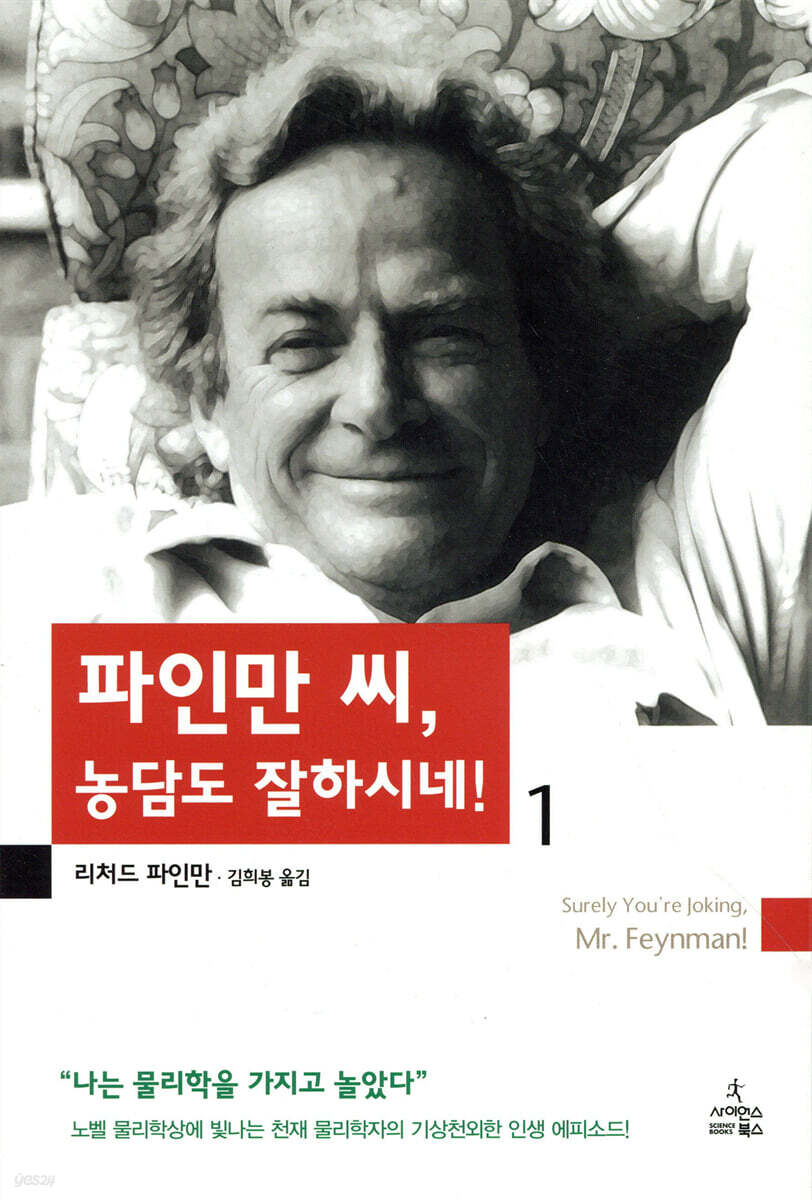
Mr. Feynman, you're good at making jokes. 1
 |
Description
Book Introduction
The unique and fascinating life story of Dr. Richard Feynman, who won the Nobel Prize in Physics for redefining quantum mechanics and is considered one of the greatest physicists of the 20th century, along with Einstein.
His life story, which includes his diverse experiences as a physicist, safecracker, bongo player, and painter, is filled with his unique way of thinking that breaks stereotypes, his endless curiosity, and his boldness, conveying to readers the wit and emotion of life.
His life story, which includes his diverse experiences as a physicist, safecracker, bongo player, and painter, is filled with his unique way of thinking that breaks stereotypes, his endless curiosity, and his boldness, conveying to readers the wit and emotion of life.
- You can preview some of the book's contents.
Preview
index
1.
From Farakaway to MIT
The boy who fixes the radio with his thoughts
Easy way to cut peas
Who stole the door?
Latin? Italian?
Always trying to escape
I am the head of that company's research lab.
2.
Princeton graduate school days
Mr. Feynman, you're good at telling jokes!
Mehhhhhhh!
Ragu?
Great scientists
Mixing paints
My own calculation method
mind reader
amateur scientist
3.
Atomic bombs and the military
unexploded bomb
Imitating a hunting dog
Los Alamos from the bottom
Safecracker meets safecracker
My country doesn't want me.
From Farakaway to MIT
The boy who fixes the radio with his thoughts
Easy way to cut peas
Who stole the door?
Latin? Italian?
Always trying to escape
I am the head of that company's research lab.
2.
Princeton graduate school days
Mr. Feynman, you're good at telling jokes!
Mehhhhhhh!
Ragu?
Great scientists
Mixing paints
My own calculation method
mind reader
amateur scientist
3.
Atomic bombs and the military
unexploded bomb
Imitating a hunting dog
Los Alamos from the bottom
Safecracker meets safecracker
My country doesn't want me.
Into the book
Back at MIT, I loved making fun of people.
One time, during a mechanical drawing class, some random guy was holding a squiggle (a squiggle used to draw curves) and said,
'Is there a formula for this curve?' I said after thinking for a moment.
'Yes, this curve is a very special curve.
'I'll show you,' he said, then continued talking while slowly turning his wheel.
'The curve of the Yun-hyeong is made so that the tangent at the lowest point remains horizontal no matter which way you turn it.' Everyone in the classroom checked that the tangent was horizontal by holding up their Yun-hyeong and turning it this way and that way while holding a pencil in one hand and holding it horizontally to the lowest point.
In calculus class, everyone was excited about the fact that the derivative (tangent line) of all curves at their minimum points is 0 (horizontal).
They don't know what they don't know.
One time, during a mechanical drawing class, some random guy was holding a squiggle (a squiggle used to draw curves) and said,
'Is there a formula for this curve?' I said after thinking for a moment.
'Yes, this curve is a very special curve.
'I'll show you,' he said, then continued talking while slowly turning his wheel.
'The curve of the Yun-hyeong is made so that the tangent at the lowest point remains horizontal no matter which way you turn it.' Everyone in the classroom checked that the tangent was horizontal by holding up their Yun-hyeong and turning it this way and that way while holding a pencil in one hand and holding it horizontally to the lowest point.
In calculus class, everyone was excited about the fact that the derivative (tangent line) of all curves at their minimum points is 0 (horizontal).
They don't know what they don't know.
--- p.
44
44
One day two or three young lawyers came and said,
'We have learned that in the modern world you cannot be a rabbi without knowing science.
So I'd like to ask you a few questions, Professor.'
Of course, there were many places to learn about science.
But I wanted to know what problems they were wondering about.
They said
'For example, is electricity fire?'
'No, but... why does that matter?'
They said.
According to the Talmud, we cannot use fire on Saturday.
So the question is, can we use electricity on Saturday?' One day, two or three young lawyers came and said,
'We have learned that in the modern world you cannot be a rabbi without knowing science.
So I'd like to ask you a few questions, Professor.'
Of course, there were many places to learn about science.
But I wanted to know what problems they were wondering about.
They said
'For example, is electricity fire?'
'No, but... why does that matter?'
They said.
According to the Talmud, we cannot use fire on Saturday.
So the question is, can we use electricity on Saturday?'
'We have learned that in the modern world you cannot be a rabbi without knowing science.
So I'd like to ask you a few questions, Professor.'
Of course, there were many places to learn about science.
But I wanted to know what problems they were wondering about.
They said
'For example, is electricity fire?'
'No, but... why does that matter?'
They said.
According to the Talmud, we cannot use fire on Saturday.
So the question is, can we use electricity on Saturday?' One day, two or three young lawyers came and said,
'We have learned that in the modern world you cannot be a rabbi without knowing science.
So I'd like to ask you a few questions, Professor.'
Of course, there were many places to learn about science.
But I wanted to know what problems they were wondering about.
They said
'For example, is electricity fire?'
'No, but... why does that matter?'
They said.
According to the Talmud, we cannot use fire on Saturday.
So the question is, can we use electricity on Saturday?'
--- p.187
One day, I was working with my cousin Francis, and I told my sister Joan that there was a special program she absolutely had to hear, so I made her stay downstairs.
Then we ran upstairs and started broadcasting.
-I'm Mr. Money.
There is a kind and cute little girl named Joan on New Broadway.
The child's birthday is coming up, but it's not today, it's on the 1st of the 2nd month.
She is such a pretty girl.
Then we sang and imitated the music.
-Diritdi, doodudu, dirididiridiri, durururu....
After everything was over, I went downstairs and asked my younger brother.
-How was it? Was it good?
"That's nice, but... why are your songs playing on the radio?" One day, I was working with my cousin Francis, and I told my younger sister Joan that there was a special program she absolutely had to hear, so I made her stay downstairs.
Then we ran upstairs and started broadcasting.
-I'm Mr. Money.
There is a kind and cute little girl named Joan on New Broadway.
The child's birthday is coming up, but it's not today, it's on the 1st of the 2nd month.
She is such a pretty girl.
Then we sang and imitated the music.
-Diritdi, doodudu, dirididiridiri, durururu....
After everything was over, I went downstairs and asked my younger brother.
-How was it? Was it good?
-It's good, but... why are your songs playing on the radio?
Then we ran upstairs and started broadcasting.
-I'm Mr. Money.
There is a kind and cute little girl named Joan on New Broadway.
The child's birthday is coming up, but it's not today, it's on the 1st of the 2nd month.
She is such a pretty girl.
Then we sang and imitated the music.
-Diritdi, doodudu, dirididiridiri, durururu....
After everything was over, I went downstairs and asked my younger brother.
-How was it? Was it good?
"That's nice, but... why are your songs playing on the radio?" One day, I was working with my cousin Francis, and I told my younger sister Joan that there was a special program she absolutely had to hear, so I made her stay downstairs.
Then we ran upstairs and started broadcasting.
-I'm Mr. Money.
There is a kind and cute little girl named Joan on New Broadway.
The child's birthday is coming up, but it's not today, it's on the 1st of the 2nd month.
She is such a pretty girl.
Then we sang and imitated the music.
-Diritdi, doodudu, dirididiridiri, durururu....
After everything was over, I went downstairs and asked my younger brother.
-How was it? Was it good?
-It's good, but... why are your songs playing on the radio?
--- p.19-20
I repeated this three or four times, pouring out all the emotions I had heard on the Italian broadcast, and the kids were going wild, saying it was fun.
After the party, the scout leader and the school teacher came to me and said they had discussed the poem.
One person thought the poem was Italian, another thought it was Latin.
The school teacher said.
Which one is correct?
I answered like this.
'Ask the kids.
They understood the words themselves,' he said, repeating this three or four times, pouring out all the emotions he had heard on the Italian broadcast, and the children were all having a blast, saying it was hilarious.
After the party, the scout leader and the school teacher came to me and said they had discussed the poem.
One person thought the poem was Italian, another thought it was Latin.
The school teacher said.
Which one is correct?
I answered like this.
'Ask the kids.
Because they understood the words themselves.'
After the party, the scout leader and the school teacher came to me and said they had discussed the poem.
One person thought the poem was Italian, another thought it was Latin.
The school teacher said.
Which one is correct?
I answered like this.
'Ask the kids.
They understood the words themselves,' he said, repeating this three or four times, pouring out all the emotions he had heard on the Italian broadcast, and the children were all having a blast, saying it was hilarious.
After the party, the scout leader and the school teacher came to me and said they had discussed the poem.
One person thought the poem was Italian, another thought it was Latin.
The school teacher said.
Which one is correct?
I answered like this.
'Ask the kids.
Because they understood the words themselves.'
--- p.55
I also cut vegetables in the kitchen.
Peas should be cut into 1-inch pieces.
Here's how to use peas:
Hold two peas in one hand and cut them with a knife in the other.
If you do it wrong, you can cut your hand, and the work is slow.
So I came up with an idea.
I put a wooden table outside the kitchen, placed a large plate on my lap, and held a very sharp knife against the table at about a 45-degree angle.
Next, he piles up a bunch of peas on either side of the table, holds a pea in each hand, and swings his sword so fast that it cuts the peas.
The cut pieces fall onto a plate on my lap.
So I chopped the peas in turn.
Everyone brought me peas, and while I was working at a furious pace, the boss came.
'What are you doing?' 'Look at this.
'A new way to cut peas!' As soon as he said this, his hand was cut instead of the peas, and blood flowed out onto the peas he had cut.
The boss was furious and said, 'Look, you threw away all the peas! Why are you doing such a stupid thing?' So I never improved on this method again.
There were improvements such as attaching a guardrail, but there was no opportunity to do so.
I also cut vegetables in the kitchen.
Peas should be cut into 1-inch pieces.
Here's how to use peas:
Hold two peas in one hand and cut them with a knife in the other.
If you do it wrong, you can cut your hand, and the work is slow.
So I came up with an idea.
I put a wooden table outside the kitchen, placed a large plate on my lap, and held a very sharp knife against the table at about a 45-degree angle.
Next, he piles up a bunch of peas on either side of the table, takes one pea in each hand, and swings his sword so fast that it cuts the peas.
The cut pieces fall onto a plate on my lap.
So I chopped the peas in turn.
Everyone brought me peas, and while I was working at a furious pace, the boss came.
'What are you doing?' 'Look at this.
'A new way to cut peas!' As soon as he said this, his hand was cut instead of the peas, and blood flowed out onto the peas he had cut.
The boss was furious and said, 'Look, you threw away all the peas! Why are you doing such a stupid thing?' So I never improved on this method again.
There were improvements such as attaching a guardrail, but there was no opportunity to do so.
Peas should be cut into 1-inch pieces.
Here's how to use peas:
Hold two peas in one hand and cut them with a knife in the other.
If you do it wrong, you can cut your hand, and the work is slow.
So I came up with an idea.
I put a wooden table outside the kitchen, placed a large plate on my lap, and held a very sharp knife against the table at about a 45-degree angle.
Next, he piles up a bunch of peas on either side of the table, holds a pea in each hand, and swings his sword so fast that it cuts the peas.
The cut pieces fall onto a plate on my lap.
So I chopped the peas in turn.
Everyone brought me peas, and while I was working at a furious pace, the boss came.
'What are you doing?' 'Look at this.
'A new way to cut peas!' As soon as he said this, his hand was cut instead of the peas, and blood flowed out onto the peas he had cut.
The boss was furious and said, 'Look, you threw away all the peas! Why are you doing such a stupid thing?' So I never improved on this method again.
There were improvements such as attaching a guardrail, but there was no opportunity to do so.
I also cut vegetables in the kitchen.
Peas should be cut into 1-inch pieces.
Here's how to use peas:
Hold two peas in one hand and cut them with a knife in the other.
If you do it wrong, you can cut your hand, and the work is slow.
So I came up with an idea.
I put a wooden table outside the kitchen, placed a large plate on my lap, and held a very sharp knife against the table at about a 45-degree angle.
Next, he piles up a bunch of peas on either side of the table, takes one pea in each hand, and swings his sword so fast that it cuts the peas.
The cut pieces fall onto a plate on my lap.
So I chopped the peas in turn.
Everyone brought me peas, and while I was working at a furious pace, the boss came.
'What are you doing?' 'Look at this.
'A new way to cut peas!' As soon as he said this, his hand was cut instead of the peas, and blood flowed out onto the peas he had cut.
The boss was furious and said, 'Look, you threw away all the peas! Why are you doing such a stupid thing?' So I never improved on this method again.
There were improvements such as attaching a guardrail, but there was no opportunity to do so.
--- p.33
I often saw my two senior roommates studying theoretical physics.
One day they were racking their brains over a topic that seemed obvious to me.
So I said this.
"Why don't you try using the Baronalai equation?" "What is that? What on earth are you talking about?"
I explained what I meant and how it applied to this case, and then solved the problem.
What I was talking about was Bernoulli's equation, but I didn't know how to pronounce it because I had seen it in an encyclopedia and not heard it from anyone.
Anyway, my roommates were so inspired by this that they started asking me physics problems from then on.
I didn't do well on these problems either, but I made rapid progress when I took the course the following year.
It was a great educational experience to solve my seniors' problems and learn how to pronounce them.
I often saw my two senior roommates studying theoretical physics.
One day they were racking their brains over a topic that seemed obvious to me.
So I said this.
"Why don't you try using the Baronalai equation?" "What is that? What on earth are you talking about?"
I explained what I meant and how it applied to this case, and then solved the problem.
What I was talking about was Bernoulli's equation, but I didn't know how to pronounce it because I had seen it in an encyclopedia and not heard it from anyone.
Anyway, my roommates were so inspired by this that they started asking me physics problems from then on.
I didn't do well on these problems either, but I made rapid progress when I took the course the following year.
It was a great educational experience to solve my seniors' problems and learn how to pronounce them.
One day they were racking their brains over a topic that seemed obvious to me.
So I said this.
"Why don't you try using the Baronalai equation?" "What is that? What on earth are you talking about?"
I explained what I meant and how it applied to this case, and then solved the problem.
What I was talking about was Bernoulli's equation, but I didn't know how to pronounce it because I had seen it in an encyclopedia and not heard it from anyone.
Anyway, my roommates were so inspired by this that they started asking me physics problems from then on.
I didn't do well on these problems either, but I made rapid progress when I took the course the following year.
It was a great educational experience to solve my seniors' problems and learn how to pronounce them.
I often saw my two senior roommates studying theoretical physics.
One day they were racking their brains over a topic that seemed obvious to me.
So I said this.
"Why don't you try using the Baronalai equation?" "What is that? What on earth are you talking about?"
I explained what I meant and how it applied to this case, and then solved the problem.
What I was talking about was Bernoulli's equation, but I didn't know how to pronounce it because I had seen it in an encyclopedia and not heard it from anyone.
Anyway, my roommates were so inspired by this that they started asking me physics problems from then on.
I didn't do well on these problems either, but I made rapid progress when I took the course the following year.
It was a great educational experience to solve my seniors' problems and learn how to pronounce them.
--- pp.41-42
I traced the history since this study.
Next experiment too.
The next experiment also did not mention the spirit experiment.
They did not use methods such as sand-padding the corridors that the spirit had revealed, nor did they experiment carefully.
They used the same old methods and.......................
But it is characteristic of cargo cult science to pay no attention to such experiments.
I traced the history since this study.
Next experiment too.
The next experiment also did not mention the spirit experiment.
They did not use methods such as sand-padding the corridors that the spirit had revealed, nor did they experiment carefully.
They used the same old methods and.......................
But it is characteristic of cargo cult science to pay no attention to such experiments.
Next experiment too.
The next experiment also did not mention the spirit experiment.
They did not use methods such as sand-padding the corridors that the spirit had revealed, nor did they experiment carefully.
They used the same old methods and.......................
But it is characteristic of cargo cult science to pay no attention to such experiments.
I traced the history since this study.
Next experiment too.
The next experiment also did not mention the spirit experiment.
They did not use methods such as sand-padding the corridors that the spirit had revealed, nor did they experiment carefully.
They used the same old methods and.......................
But it is characteristic of cargo cult science to pay no attention to such experiments.
--- p.271 (volume 2)
I don't use tricks when meeting people. But in this case, meeting this person was so important that I first found out where his office was. So, at first, I just walked past his door in the evening and went to my office. That's all.
I was just passing by.
A few days passed and all I said was 'hello'. ~A few weeks passed like this~and we started talking more and more~and finally the time came.
He asked me to have dinner with him. The next day, I started fiddling with the thing. I showed him the hole and explained the trick I had used. But I hadn't said a word about locks or safes yet.
I don't use tricks when meeting people. But in this case, meeting this person was so important that I first found out where his office was. So, at first, I just walked past his door in the evening and went to my office. That's all.
I was just passing by.
A few days passed and all I said was 'hello'. ~A few weeks passed like this~and we started talking more and more~and finally the time came.
He asked me to have dinner with him. The next day, I started fiddling with the thing. I showed him the hole and explained the trick I had used. But I hadn't said a word about locks or safes yet.
I was just passing by.
A few days passed and all I said was 'hello'. ~A few weeks passed like this~and we started talking more and more~and finally the time came.
He asked me to have dinner with him. The next day, I started fiddling with the thing. I showed him the hole and explained the trick I had used. But I hadn't said a word about locks or safes yet.
I don't use tricks when meeting people. But in this case, meeting this person was so important that I first found out where his office was. So, at first, I just walked past his door in the evening and went to my office. That's all.
I was just passing by.
A few days passed and all I said was 'hello'. ~A few weeks passed like this~and we started talking more and more~and finally the time came.
He asked me to have dinner with him. The next day, I started fiddling with the thing. I showed him the hole and explained the trick I had used. But I hadn't said a word about locks or safes yet.
--- p.211-214
Publisher's Review
Feynman was born in 1918 in a small town called Farrakaway, USA, graduated from MIT and Princeton University, and served as a professor at Cornell University and the California Institute of Technology before passing away in February 1988.
He was a physicist and won the Nobel Prize in Physics in 1965 for his development of .
This is a biography of Feynman that could be found in any biographical dictionary.
Meanwhile, in his younger years, he was a renowned technician known for his ability to repair radios, enjoyed opening safes and locks, and was also an accomplished drummer and painter.
As I read Feynman's story one by one, who was good at studying, good at playing, good at being handsome, funny, had a great artistic sense, was good at playing drums, good at drawing, and had many girlfriends, I get the feeling that there must be some kind of central point, as there are only a few lives in a century, and although it is vague, I believe that this book will leave a special feeling to each reader.
He was a physicist and won the Nobel Prize in Physics in 1965 for his development of .
This is a biography of Feynman that could be found in any biographical dictionary.
Meanwhile, in his younger years, he was a renowned technician known for his ability to repair radios, enjoyed opening safes and locks, and was also an accomplished drummer and painter.
As I read Feynman's story one by one, who was good at studying, good at playing, good at being handsome, funny, had a great artistic sense, was good at playing drums, good at drawing, and had many girlfriends, I get the feeling that there must be some kind of central point, as there are only a few lives in a century, and although it is vague, I believe that this book will leave a special feeling to each reader.
GOODS SPECIFICS
- Date of issue: May 19, 2000
- Page count, weight, size: 229 pages | 440g | 148*210*20mm
- ISBN13: 9788983710444
- ISBN10: 8983710446
You may also like
카테고리
korean


korean

![ELLE 엘르 스페셜 에디션 A형 : 12월 [2025]](http://librairie.coreenne.fr/cdn/shop/files/b8e27a3de6c9538896439686c6b0e8fb.jpg?v=1766436872&width=3840)


