

Steve Jobs
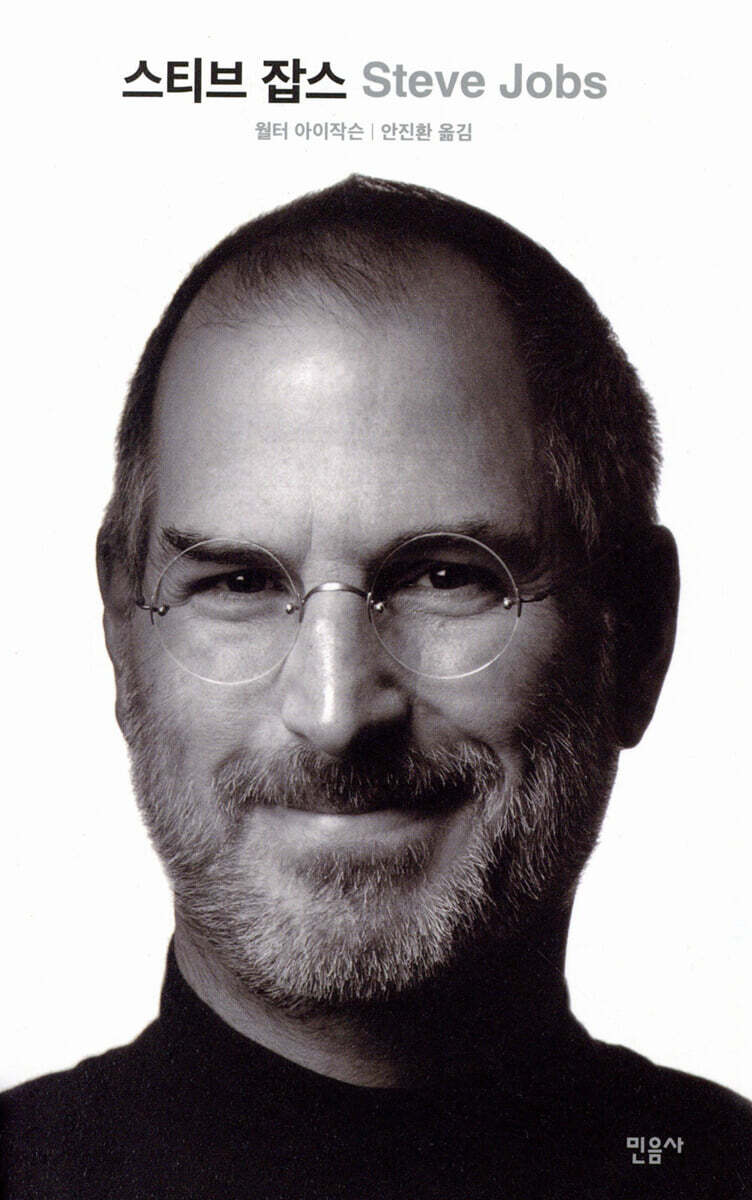 |
Description
Book Introduction
The only official biography in which Jobs participated directly
Walter Isaacson's Steve Jobs: 10th Anniversary Expanded Edition
To mark the 10th anniversary of Jobs' death in 2021, author Walter Isaacson has added a 10th-anniversary postscript to his only official biography, Steve Jobs.
In the book's introduction, Isaacson adds a final poignant touch to Jobs's ferocious and passionate life by spending the decade since his death exploring the role he played in answering the central question of our time: how humans should relate to and interact with machines.
In his expanded afterword, Isaacson says Jobs modeled himself on da Vinci, and that the duo's creative genius lay in "not distinguishing between art and science."
This is in line with what Jobs said in his last presentation before he passed away in 2011.
"The philosophy that technology alone is not enough is inherent in Apple's DNA.
We believe that science and technology combined with the humanities produce heart-wrenching results."
When Steve Jobs passed away in 2011, many were concerned about Apple's future.
Could Apple survive without the powerful charisma that guided it from hardware to software, from product conception to its famous presentations?
Ten years later, in 2021, Apple is still going strong, with its iPhones continuing to break sales records with new releases.
The Mac and iOS ecosystem, born from Jobs' stubbornness, remains more attractive to Apple users than any other option, and Apple, which is expanding its integrated ecosystem to various fields such as iPad, iPod, and Watch, remains a constant 'outpost of innovation.'
Jobs's dedication to building a lasting company that makes great products rather than mere profits remains the driving force behind Apple's progress.
Walter Isaacson's Steve Jobs: 10th Anniversary Expanded Edition
To mark the 10th anniversary of Jobs' death in 2021, author Walter Isaacson has added a 10th-anniversary postscript to his only official biography, Steve Jobs.
In the book's introduction, Isaacson adds a final poignant touch to Jobs's ferocious and passionate life by spending the decade since his death exploring the role he played in answering the central question of our time: how humans should relate to and interact with machines.
In his expanded afterword, Isaacson says Jobs modeled himself on da Vinci, and that the duo's creative genius lay in "not distinguishing between art and science."
This is in line with what Jobs said in his last presentation before he passed away in 2011.
"The philosophy that technology alone is not enough is inherent in Apple's DNA.
We believe that science and technology combined with the humanities produce heart-wrenching results."
When Steve Jobs passed away in 2011, many were concerned about Apple's future.
Could Apple survive without the powerful charisma that guided it from hardware to software, from product conception to its famous presentations?
Ten years later, in 2021, Apple is still going strong, with its iPhones continuing to break sales records with new releases.
The Mac and iOS ecosystem, born from Jobs' stubbornness, remains more attractive to Apple users than any other option, and Apple, which is expanding its integrated ecosystem to various fields such as iPad, iPod, and Watch, remains a constant 'outpost of innovation.'
Jobs's dedication to building a lasting company that makes great products rather than mere profits remains the driving force behind Apple's progress.
- You can preview some of the book's contents.
Preview
index
Dedicated to the 10th anniversary of Steve Jobs' death
Preface - How This Book Came to Become
1 Childhood - Abandoned and Chosen
2 Unexpected Couples - Two Steves
3 Dropout - Hallucinations and Reflection
4 Atari and India - Game Design Techniques and Zen
5 Apple I - Turn on, boot, and interact
6 Apple II - The Dawn of a New Era
7 Chris Ann and Lisa - Because they were the ones who were abandoned… …
8 Xerox and Lisa - Graphical User Interface
9. IPO - The Man Who Gained Both Wealth and Fame
10 The Birth of Mac - Say You Want a Revolution
11 Reality Distortion Field - A Boss Who Sticks to His Own Rules
12 Design - True Artists Live by Simplicity
13 Making Macs - The Journey Itself Is the Reward
14. Recruiting Scully - Pepsi Challenge
15 Macintosh Launch - Leaving a Trace on the Universe
16 Bill Gates and Steve Jobs - The Intersection of Two Orbits
17 Icarus - Going up is… …
18 Next - Prometheus Freed from Chains
19 Pixar - Technology Meets Art
20 Ordinary Man - Two Words: Love
21 Toy Story - Buzz and Woody to the Rescue
22 The Return of Jobs - The Fierce Beast Finally Returns
23 Resurrection - The losers of today will become the winners of tomorrow.
24 Think Different - iCEO Jobs
25 Design Principles - Jobs and Ive's Studio
26 iMac - Nice to meet you again
27 CEO - Still unique after all these years
28 Apple Store - Gray Sandstone and Genius Bar
29 Digital Hub - From iTunes to iPod
30 iTunes Store - The Pied Piper
31 Music Man - The Soundtrack to His Life
32 Pixar Friends - … … and Enemies
33 The 21st Century Mac - What Sets Apple Apart
34 Round 1 - Memento Mori
35 iPhone - Three innovative products in one
36 Round 2 - Cancer Recurrence
37 iPad - Into the Post-PC Era
38 New Battles - and Echoes of Old Battles
39 Towards Infinity - Clouds, Spaceships, and Beyond
Round 3 - Final Struggle
41 Legacy - A Heaven of Brightest Creativity
Reviews
Interview
References
annotation
Biographical Dictionary
Preface - How This Book Came to Become
1 Childhood - Abandoned and Chosen
2 Unexpected Couples - Two Steves
3 Dropout - Hallucinations and Reflection
4 Atari and India - Game Design Techniques and Zen
5 Apple I - Turn on, boot, and interact
6 Apple II - The Dawn of a New Era
7 Chris Ann and Lisa - Because they were the ones who were abandoned… …
8 Xerox and Lisa - Graphical User Interface
9. IPO - The Man Who Gained Both Wealth and Fame
10 The Birth of Mac - Say You Want a Revolution
11 Reality Distortion Field - A Boss Who Sticks to His Own Rules
12 Design - True Artists Live by Simplicity
13 Making Macs - The Journey Itself Is the Reward
14. Recruiting Scully - Pepsi Challenge
15 Macintosh Launch - Leaving a Trace on the Universe
16 Bill Gates and Steve Jobs - The Intersection of Two Orbits
17 Icarus - Going up is… …
18 Next - Prometheus Freed from Chains
19 Pixar - Technology Meets Art
20 Ordinary Man - Two Words: Love
21 Toy Story - Buzz and Woody to the Rescue
22 The Return of Jobs - The Fierce Beast Finally Returns
23 Resurrection - The losers of today will become the winners of tomorrow.
24 Think Different - iCEO Jobs
25 Design Principles - Jobs and Ive's Studio
26 iMac - Nice to meet you again
27 CEO - Still unique after all these years
28 Apple Store - Gray Sandstone and Genius Bar
29 Digital Hub - From iTunes to iPod
30 iTunes Store - The Pied Piper
31 Music Man - The Soundtrack to His Life
32 Pixar Friends - … … and Enemies
33 The 21st Century Mac - What Sets Apple Apart
34 Round 1 - Memento Mori
35 iPhone - Three innovative products in one
36 Round 2 - Cancer Recurrence
37 iPad - Into the Post-PC Era
38 New Battles - and Echoes of Old Battles
39 Towards Infinity - Clouds, Spaceships, and Beyond
Round 3 - Final Struggle
41 Legacy - A Heaven of Brightest Creativity
Reviews
Interview
References
annotation
Biographical Dictionary
Into the book
Leonardo da Vinci was Jobs' hero and role model.
One day, realizing that he didn't have much time left, Jobs urged me to write a biography of the great Renaissance engineer and artist, and I eventually complied.
And then I realized why Jobs felt so connected to da Vinci.
Their creative genius all came from the same lesson.
“Stand at the intersection of art and science.” In fact, both figures understood something more profound.
“Don’t separate art from science.” … … Jobs would often end his new product launches with a slide showing a crossroads sign marked “Liberal Arts” and “Technology.”
In his last presentation, a few months before his death in 2011, he said:
“The philosophy that technology alone is not enough is inherent in Apple’s DNA.
We believe that science and technology combined with the humanities produce heart-wrenching results.
--- p.12
“A lot of people at Apple started living a different life once they started making a lot of money.
He started driving a luxury Rolls-Royce and bought several houses.
Each house has a manager, and later on, someone else is hired to manage the manager.
Their wives kept getting plastic surgery and ended up looking grotesque.
I didn't want that kind of life.
That's crazy.
I promised myself that I would never let money ruin my life.” --- p.187
Jobs furnished his Woodside mansion with nothing but the bare essentials.
The bedroom contained only a wardrobe and a mattress, and the dining area contained only a card table and a few folding chairs.
He wanted to surround himself with only things he could admire, so the very act of going out and buying a lot of furniture was daunting.
But now, living in an ordinary neighborhood with his wife and soon-to-be-born child, he finds himself in a situation where he must make compromises.
It wasn't easy.
They bought a bed, a dresser, and a stereo system for the living room, but it took much longer to buy furniture like a sofa.
“We basically spent eight years discussing buying furniture,” Powell recalled.
“We asked ourselves over and over again:
"What exactly is the purpose of a sofa?" Buying home appliances wasn't just an impulse purchase; it was a philosophical task. --- p.447
Jobs also began to think that it would be nice to have a uniform for himself to wear.
Not only was it convenient for everyday use (which was why he insisted), but it also allowed for the expression of a distinctive style.
“So I asked Issei to make me a few of his black turtlenecks that I liked.
“So he made about 100 of those clothes for me.” Seeing my surprise at hearing this, Jobs showed me a pile of black turtlenecks in his closet.
“This is what I wear.
“There are enough to wear until you die.”--- p.578
Jobs learned from his father that the hallmark of passionate craftsmanship is the thoroughness with which even the hidden details are made beautiful.
The most extreme and striking example of this philosophy in action was when Jobs meticulously inspected the printed circuit boards that would house the chips and other components that would go deep inside the Macintosh.
No consumer ever saw it.
But Jobs began to critique printed circuit boards on aesthetic grounds.
“That part is really pretty.
But look at the memory chips.
It's so ugly.
“The lines are too close together,” one of the new engineers chimed in, asking what the big deal was.
"What matters is how well it works. Who wants to look at a PC circuit board?" Jobs responded with a typical response.
“You have to make it as beautiful as possible.
Even if it's in a box.
“A good carpenter doesn’t put cheap wood on the back of a cabinet because no one sees it.” In an interview a few years later, after the Macintosh was released, Jobs once again referred to a lesson he had learned from his father.
“A carpenter who builds a beautiful chest of drawers doesn’t use cheap plywood because the back of the chest of drawers faces the wall, so no one can see it.
The carpenter himself knows that he must use beautiful wood for the back as well.
“To sleep well at night, you must pursue beauty and dignity to the end.” --- p.230
“He had an extraordinary passion for his products, bordering on obsession.
“It’s a passion to create the perfect product.” On the other hand, Mike Scott was the type who prioritized pragmatism over pursuing perfection.
The two also clashed over the Apple II's case design.
Pantone, the color specialist Apple chose to determine the color of the plastic case, had 2,000 shades of beige.
Scott recalls:
“Oh my goodness, Steve said he didn’t like any of them.
I wanted a slightly different beige color.
“Eventually, I had to step in and convince them.” Even when fine-tuning the details of the case design, Jobs spent days agonizing over how rounded the corners should be.
--- p.152
“Steve had the ability to motivate by seeing the big picture.” As a result, the Macintosh development team shared Jobs’ passion for building great products, not just products that made money.
“Jobs thought of himself as an artist.
“And I encouraged the design team to think that way too,” Hertzfeld says.
“My goal has never been to win competitions or make a lot of money.
“The goal was to do the greatest thing possible, or take it one step further.” Jobs even took his team to the Metropolitan Museum of Art in Manhattan to see an exhibition of Louis Tiffany glasswork.
Because I thought we could learn a lesson from Tiffany's example of creating great works of art that could be mass-produced. --- p.215
“Rectangles with rounded corners are everywhere!” Jobs said, rising from his seat and getting excited.
“Look around this room!” He pointed to the whiteboard, the table, and other rectangular objects with rounded corners.
“And if you look outside, there’s more.
“It’s almost everywhere you look!” he said, leading Atkinson on a walk, showing him car windows, billboards, and street signs.
“I came three blocks and found seventeen examples,” Jobs says.
“I searched everywhere until he was completely convinced.” “When he finally got to the no parking sign, I said,
'Yes, what the chairman said is right.
I lost.
“We need to use a rectangle with rounded corners as a base!” Hertzfeld remembers.
“Bill returned to Texaco Towers the next afternoon with a big smile on his face.
His demo could now draw beautiful rectangles with rounded corners at incredible speeds.” Dialog boxes and windows on the Lisa, Mac, and virtually every computer since then have rounded corners. --- p.225
Jobs' product launch shows were elaborately choreographed.
He strolled leisurely across the stage wearing jeans and a turtleneck, carrying a bottle of water.
The auditorium was packed with supporters.
The atmosphere at the event was more like a religious revival than a corporate product launch.
The reporters' seats were located in the center of the auditorium.
Jobs personally wrote and revised the content for the slides and the main points of the speech, then showed them to his friends and discussed them with colleagues, making improvements along the way.
“He revises each slide six or seven times.
“I would often stay with him late into the night before a presentation, checking his slides,” says Jobs’ wife, Laurene Powell.
Jobs would show her three versions of a slide and ask her which one she liked best.
“I tend to get very obsessed with even the smallest details.
“After rehearsing the presentation once, I change one or two words and rehearse it again from the beginning.” --- p.582
Remembering that I will die soon has been the most important tool I've ever encountered to help me make the big choices in life.
Almost everything—external expectations, pride, fear of embarrassment or failure—fade away in the face of death, leaving only what is truly important.
Remembering that you are going to die is the best way to avoid the trap of thinking that you have too much to lose.
We are already naked.
There's no reason not to follow your heart. --- p.729
He admitted that facing death, he may have overestimated the possibility of an afterlife because of his desire to believe in it.
“I’d like to think that something of me lives on after I die.
It's a strange feeling to think that after gaining so much experience, and maybe even some wisdom, it's all just going away.
So I want to believe that something survives, that maybe my consciousness endures.”
He was silent for a long time.
Then finally he opened his mouth again.
“But on the other hand, it might just be like a power switch.
“If you press ‘click!’ it just turns off.”
He paused again, then smiled faintly and said:
“Maybe that’s why I hated putting switches on my Apple devices so much.” --- p.895
--- p.895
Publisher's Review
Creative management, passionate life, and unwavering focus
Moving towards continuous innovation
Everything Steve Jobs dreamed and aspired to
“I’d like to think that something of me lives on after I die.
It's a strange feeling to think that after gaining so much experience, and maybe even some wisdom, it's all just going away.
So I want to believe that something survives, that maybe my consciousness endures.”
At the end of the book, Jobs states:
Perhaps the reason he, who had maintained a mysticism throughout his life, asked for his only official biography, “Steve Jobs,” to be written before his death was because he wanted to leave behind “a little bit of wisdom” that he had accumulated throughout his life.
That bit of wisdom goes like this:
“My passion has been building lasting companies where people are motivated to make great products.
Everything else was secondary.
Of course, making a profit was also good.
That's how we can create great products.
But the product, not the profit, was the greatest motivator.”
In short, what does it take to “build a lasting company that makes great products”?
This book tells the story of the great products Steve Jobs created, the great organizations that created those products, and the great people who led those organizations.
There are already a plethora of books on the market about this great man, Steve Jobs.
But Jobs always expressed extreme dissatisfaction with those books.
It is a famous anecdote that Jobs was so displeased with the publication of a biography without his permission that he ordered that all other books from the same publisher be removed from the Apple Store.
Having pursued the perfect product that combines art and technology all his life, he decided to honestly reveal his life by calling on his close friend Walter Isaacson, former editor-in-chief of Time and former CEO of CNN, to write a biography to perfect his life.
“As I started to feel sick, it occurred to me that after I died, other people would write books about me.
But what do they know? They won't be able to produce a proper book.
So I felt like I had to tell my story directly to someone.”
So, this book is the first and last record of Steve Jobs opening his mouth and revealing everything about his life, and it is the final “And One More Thing” of his life, just as he always opened his mouth at the end of his presentations to make people excited.
This book contains everything about Steve Jobs, the creator who redefined the 21st century.
I dare say that it's difficult to talk about Apple, IT, creativity, innovation, management, and the future without reading this book.
The secrets of Apple's incredible growth from a small garage in his parents' house to the world's best company, the behind-the-scenes story of the birth of innovative products from the Apple I to the Macintosh and Toy Story to the iPhone and iPad, and all the stories revealed for the first time up to the last two months after his resignation as CEO of Apple, along with the management secrets symbolized by extreme restraint and perfectionism in the process of preparing the legendary presentation that made him world-famous, this book is filled with the insightful words of Steve Jobs, the ultimate mentor of our time.
The content of this book, which shockingly confesses what Steve Jobs loved, hated, dreamed of, and cherished, surpasses all similar books that have dealt with Jobs so far.
All those books were just trailers, and this book is the definitive version that clears up all the rumors and speculations about him.
Isaacson conducted more than 40 intensive interviews with Jobs over two years, starting in 2009, visiting his childhood home and taking walks with him, and met with more than 100 people, including his friends, family, colleagues, and even those who had feelings for him or were rivals.
Among them are world-famous IT heroes such as Bill Gates, who was Jobs' biggest rival, Apple co-founder Steve Wozniak, Apple's key designer Jonathan Ive, and Apple's successor Tim Cook.
The book also covers Jobs' entire personal history, from his childhood in Silicon Valley to his final moments, from deeply personal anecdotes to publicly significant events, his eccentric vegetarian beliefs and influences from Zen Buddhism, his work in the design studio, his vision at Pixar, and the innovative spirit of Apple.
Jobs had no influence on the writing process and did not ask to see it beforehand, as Isaacson had been promised before he began writing.
Thanks to this, this biography records his intimate story without any exaggeration.
Chapters 20 and 40 in particular contain a comprehensive look into his complex family and love lives, which have never been revealed in detail before.
His personal story is introduced, including the anecdote of meeting his biological mother and younger sister, his tumultuous relationship with his daughter Lisa, whom he later acknowledged, the women he met, and the fact that he actually ran into his father, whom he had not met until after his death.
Jobs also worked with Isaacson to select the photographs to be included in this biography.
The photo he took with his father as a child, which was included on the first page he personally selected, is being revealed for the first time.
And chapters 40 and 41 contain an account of his last moments.
Another reason why Steve Jobs, who was known for his secrecy, had author Isaacson write this book was because of his children.
In his last interview with Isaacson, just days before his death, he said:
“I wanted my children to know about me.
I couldn't always be there for my children when they needed me.
So I wanted the kids to know why, to understand what I did.” Steve Jobs, a man who never stopped for a moment to make his ideas come true throughout his life, gave his children these words of love that will touch the hearts of those who read them.
Steve Jobs, a creative entrepreneur who brought about amazing revolutions in six industries, a media innovator who changed the way we communicate with technology, a minimalist who valued technology's accessibility to the public, a digital philosopher who combined technology and humanities, and above all, a man crazy with endless passion, has loved, dreamed, and longed for everything he ever dreamed of, all the stories that have been hidden are now revealed through his own voice.
■ Words of Condolence from People from All Over the World Upon Steve Jobs' Death
Barack Obama (former US President)
“There could be no greater tribute to Jobs than the fact that so many people around the world heard the news of his death through a device he invented.”
Bill Gates (founder of Microsoft)
“Steve and I first met over 30 years ago, and we have been colleagues, competitors, and friends for more than half of our lives.
I was fortunate to have the opportunity to work with Steve.
“Steve will be greatly missed.”
Mark Zuckerberg (Facebook founder)
“Steve, thank you for being my mentor and my friend.
“Thank you for showing me that you can change the world with what you create.”
Sergey Brin (Google co-founder)
“Larry Page and I looked to Cupertino for inspiration on vision and leadership.”
“Steve, your passion for excellence has been felt by everyone who has touched an Apple product, including the MacBook I am writing this message on.”
Steve Wozniak (Apple co-founder)
“Ever since we were young developers, he was passionate about testing technologies that were still in their infancy and exploring what future developments might look like.
At that time, we had no capital or management experience, and we worked from home to make ends meet through other jobs.
In that sense, we were like millions of other young people, struggling and competing with only one idea that could change the future.”
Eric Schmidt (former Google Chairman)
“For me, Steve is the one who showed me that artists, not idiots, win.
“Steve, who was both a technician and an artist, showed us what those artistic aspects were, and what everyone else was missing was that beautiful, simple products were what people really wanted.”
Bob Iger (former CEO of The Walt Disney Company)
“Jobs’s legacy will live on beyond the products he created or the businesses he built, in the millions of people he inspired, the lives he transformed, and the culture he defined.
He was a highly creative and innovative 'original' who defined an era.
“Disney has lost its greatest partner.”
Rupert Murdoch (Chairman of News Corp)
“Today we have lost one of our most influential thinkers, creators and entrepreneurs.
Steve Jobs was the greatest CEO of our time.
I am deeply saddened by his death and recall the tremendous impact I received from Jobs over the years.
He is the protagonist who revolutionized the way people access and consume media and entertainment.”
GOODS SPECIFICS
- Date of issue: October 5, 2015
- Page count, weight, size: 1,116 pages | 798g | 113*183*60mm
- ISBN13: 9788937432118
- ISBN10: 8937432110
You may also like
카테고리
korean


korean

![GQ KOREA Mark (Monthly): December [2025]](http://librairie.coreenne.fr/cdn/shop/files/8ef265dbbfbf186523ed75ba7319009d.jpg?v=1765340328&width=3840)


