

Being in place
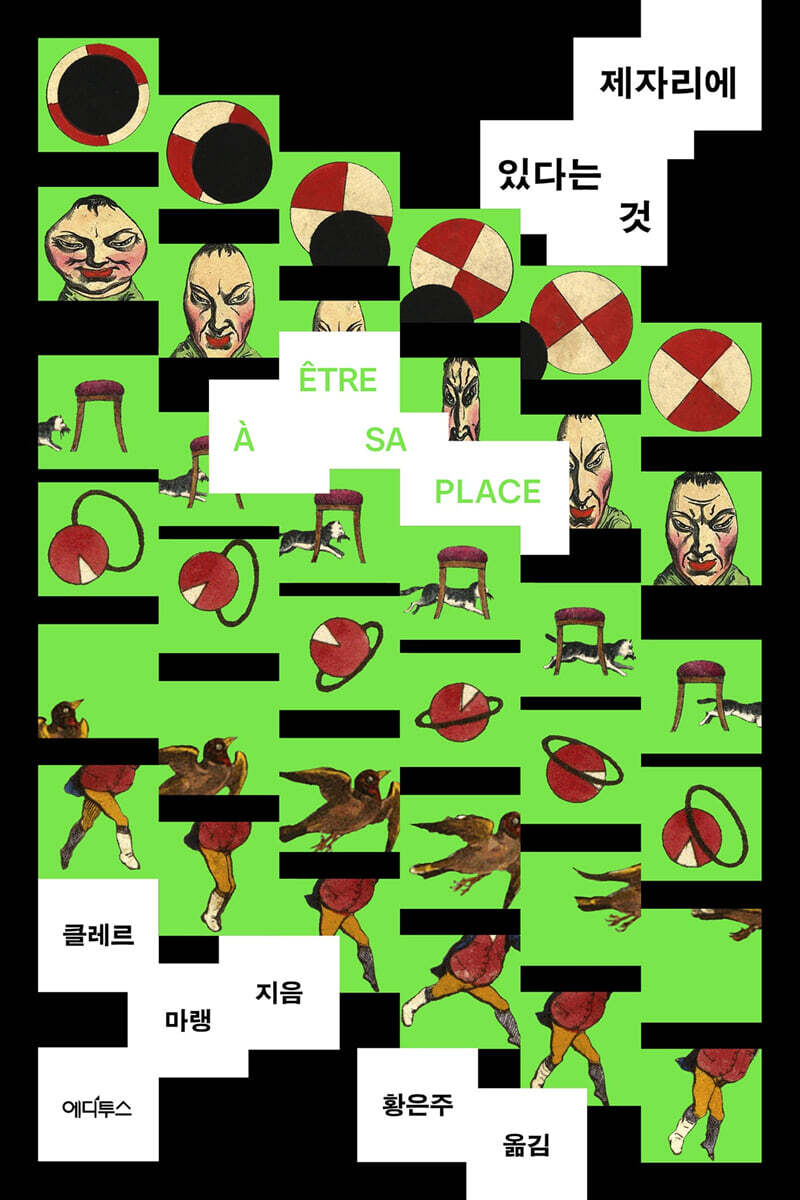 |
Description
Book Introduction
The phrase 'bird without feet' appears in Leslie Cheung's lines in 'A Fei Zheng Zhuan', but it is a metaphor for the anxiety of uprooted youth and cannot exist in reality.
All living things are beings of place.
They never stop moving willingly, taking risks and finding their place.
The needs of human existence cannot be met by the desire for survival alone.
When Simone Weil said that “rooting is the most important and yet poorly understood need of the human soul,” she could be understood as evoking the unyielding yearning and agony to reach a place where one can truly experience the depth and fullness of existence.
So some people are willing to risk being uprooted in order to truly take root.
To hear the music of harmony created by the various elements of one's existence.
To truly reconcile with one's own life.
Yet, while we yearn for a place that serves as a reference point, a starting point, a source, is such a place waiting for us? As we navigate a world that threatens us daily, "This world has made no space for you," aren't we busy searching for a place permitted by this world's order, asserting ourselves as the missing piece of the puzzle, and hoping to be defined and identified by our given place? In the meantime, haven't we become stuck in a fixed position, forgetting how to move, and even becoming merely replaceable commodities of labor? When every moment is predictable, when the game of life is predetermined, do we still want to play? French philosopher Claire Marin's "On Being in Place" is a book of questions that intersects the sharp dilemmas of the reality of today's world and our own existence within it.
From the beginning, the place we desire (our place) is not prepared, so the place becomes a question.
What is lacking exists in excess, and in the given space we always overflow.
We learn more about existence when we recognize ourselves as overflowing from our limitations in a barren place than when we remain in the illusion that everything is just right for us.
Again, we are beings of place and yet constantly moving.
Her philosophical and literary essays, which delicately address nearly every aspect of the reason for moving, propose a dialogue with each individual rather than an overbearing exhortation, and I hope that they will reach readers who are not afraid to get lost on their journey to find their place in existence.
All living things are beings of place.
They never stop moving willingly, taking risks and finding their place.
The needs of human existence cannot be met by the desire for survival alone.
When Simone Weil said that “rooting is the most important and yet poorly understood need of the human soul,” she could be understood as evoking the unyielding yearning and agony to reach a place where one can truly experience the depth and fullness of existence.
So some people are willing to risk being uprooted in order to truly take root.
To hear the music of harmony created by the various elements of one's existence.
To truly reconcile with one's own life.
Yet, while we yearn for a place that serves as a reference point, a starting point, a source, is such a place waiting for us? As we navigate a world that threatens us daily, "This world has made no space for you," aren't we busy searching for a place permitted by this world's order, asserting ourselves as the missing piece of the puzzle, and hoping to be defined and identified by our given place? In the meantime, haven't we become stuck in a fixed position, forgetting how to move, and even becoming merely replaceable commodities of labor? When every moment is predictable, when the game of life is predetermined, do we still want to play? French philosopher Claire Marin's "On Being in Place" is a book of questions that intersects the sharp dilemmas of the reality of today's world and our own existence within it.
From the beginning, the place we desire (our place) is not prepared, so the place becomes a question.
What is lacking exists in excess, and in the given space we always overflow.
We learn more about existence when we recognize ourselves as overflowing from our limitations in a barren place than when we remain in the illusion that everything is just right for us.
Again, we are beings of place and yet constantly moving.
Her philosophical and literary essays, which delicately address nearly every aspect of the reason for moving, propose a dialogue with each individual rather than an overbearing exhortation, and I hope that they will reach readers who are not afraid to get lost on their journey to find their place in existence.
- You can preview some of the book's contents.
Preview
index
The problem of standing still
Playing lizard, lounging in the sun
“Everything is in its place”
Escape
People who can't stay in one place
Taking root
shrinking life
The Ordeal of Space
Queen without a kingdom
Finding my voice
rude people
The logic of intrusion
The predicament of the seat
The “true place”
Dissonance of Desire
Drift and overflow
double life
Make room in me
space inside
Live in my body
Right here
Seven Family Games
Cut off the branches
musical chairs
Missing seats
Inventing a seat
Ghosts
displaced people
Being in the wrong place
A place that came to be by chance
migratory birds
Circle of Sound
Considering the move
What is this place for?
In the margins of the book
Translator's Note
Playing lizard, lounging in the sun
“Everything is in its place”
Escape
People who can't stay in one place
Taking root
shrinking life
The Ordeal of Space
Queen without a kingdom
Finding my voice
rude people
The logic of intrusion
The predicament of the seat
The “true place”
Dissonance of Desire
Drift and overflow
double life
Make room in me
space inside
Live in my body
Right here
Seven Family Games
Cut off the branches
musical chairs
Missing seats
Inventing a seat
Ghosts
displaced people
Being in the wrong place
A place that came to be by chance
migratory birds
Circle of Sound
Considering the move
What is this place for?
In the margins of the book
Translator's Note
Publisher's Review
All living things are beings of place.
however...
All living things are beings of place.
The same goes for plants that dig into the ground to grow deeper roots while staying in one place, and for living, moving creatures that are willing to take risks and move in search of better places to survive.
The same goes for humans.
Humans, too, have finite bodies and thus need space and location, but in the case of human existence, location has a meaning beyond mere survival.
As beings within society, we must establish ourselves somewhere and as something, and because we have souls, we must assume roles and identities.
As Simone Weil said, “Rooting is the most important and yet poorly understood need of the human soul.” Deep within our hearts, humans possess an unyielding yearning and anguish to reach a place where we can truly experience the depth and fulfillment of existence, but we are also beings who risk being uprooted in order to truly put down roots.
However, the reality we must face as social beings is by no means easy.
In short, the question of position feels beyond our control, a matter of fate rather than choice, determined by external conditions rather than assets.
That's why most of us grow up hearing from a young age that we should "know our place" and "be content with what we have now."
Otherwise, I would be rejected and unhappy even in my current position.
In a society where the advertising slogan, “The apartment you live in says who you are,” is considered a life motto, isn’t it true that the war over space is ongoing, and the premonition that tomorrow will be a more fierce battlefield than today dominates our consciousness?
Place is neither neutral nor equal.
For humans, place is a geographical, hierarchical, social, and political location, and depending on the location, the inner tone of consciousness changes and goes through ups and downs.
Thus, people who feel excluded because of their gender, class, race, religion, etc. often fight to gain their place in a society that is hostile to them.
However, changing social and political systems does not mean that the problem of position will be solved.
Political utopias promise an equal distribution of power, but they do not address the various dimensions of human existence.
The idea that space corresponds to human existence is an illusion and a kind of ideology.
The saying “existence determines consciousness” was once a statement that awakened class consciousness, but is now more frequently used as a proposition of capitalism.
Like the apartment advertisement above.
The claim that in an orderly and planned world, one's position can fully reflect one's personality and values is a misunderstanding and delusion of human existence.
We not only want life to last, we want life to be lived.
Being in a certain position doesn't make you feel like you're in the right place.
The feeling of being “in place” is like the music of harmony created by the various elements of existence, and only you can know it.
We find comfort in repetitive and habitual positions, but at the same time we feel uneasy about being trapped in that order.
While we take comfort in being part of a social list, we are horrified by the fact that being listed in a series means we are replaceable.
In a reality where people are threatened with “this world has no room for you” and where people are openly told that they are replaceable labor commodities, is it possible to find a place for the fulfillment of existence?
When every moment is predictable, when the game of life is predetermined, would we still want to play it?
We long for a stable and unshakable place, a place that cannot be violated, a point of reference, a starting point, a source, but such places do not exist in this world from the beginning.
There is no place waiting for us, no place tailored to us.
There is no such thing as a fixed position, and the illusion of a stable position is constantly being displaced and condensed.
What awaits us are the positions assigned to us according to the classification system established by society.
The “normal” world where everyone “has their place” has violence built into it.
Since there is no place of one's own, place (space) becomes a question and a doubt.
What distortions were necessary to inscribe ourselves into this world's order? What unnatural performances and tricks were necessary? When we begin to find ourselves forced to shrink and shrink, fixed in our assigned positions, when we begin to feel the humiliation of a groping existence, when we find ourselves in a cold and barren place, rather than dwelling on the illusion of a world where everything fits together, we learn more about our existence. Only then do we begin to take an interest in the lives of others, not as objects of the positional game.
Why do some people refuse to settle down and seek to move on? When we ask such questions, we begin to question ourselves, the very idea of ourselves as small pieces of a puzzle.
You start to feel uneasy in your seat, and you start to think that maybe you're just a wrong note in a melody, a grain of sand caught in a machine.
Those who are about to leave have a vague, almost physical feeling that they can no longer stay there.
This gesture may seem cruel at first glance, but it goes beyond the selfishness of existence.
When he tries to rise from the comfort of his own crouching in peace and familiarity, when he is dissatisfied with the limited existence of a diminished world and tries to step toward the possibility of another life, he is willing to endure the trials of space that the move will bring.
They anticipate the dangers that relocation will bring.
They may drift and run aground, and find themselves doubly and triply isolated, like class crossers or migrants.
But who would fear getting lost in it? Perhaps we are more alive in our dreams than when we are awake.
We have simply forgotten how to move, but being a being of place means being a being of movement.
To constantly re-possess oneself.
It may take luck, persistence, and courage to achieve a sense of belonging.
When we make peace with and accept the chaos of life, we discover new delightful combinations and fertile collisions.
On the chessboard of the real-life game of position, there are moves we miss, gusts of wind that knock pieces down, and furies that sweep them away.
However, the game itself would not work without any forward, diagonal, or backward movement.
Likewise, if there were no detours or forks in the road, I would not exist.
When Kafka said, “Everyone has a room inside them,” isn’t that room itself a place that contains all these inner movements, these fleeting impulses, the turmoil and shock of obsession?
Where philosophy begins - how is one's place found in the midst of constant movement?
We cannot find our place in a social space without adapting to it, yet we do not feel like we belong in the space we are assigned, and we continue to shift our places as we go through life.
Ultimately, the problem of seating is a problem of moving.
French philosopher Claire Marin's philosophical essay, "On Being in Place," is a book of questions that cross the sharp dilemma of the reality of today's world and our existence within it, and it unfolds before us clues for beginning to think about this very shift.
From the very first theme, she argues that the division between settlers and nomads is a false either-or choice.
This is because rooting and relocation are not mechanically separate or apart, but are connected in tension.
Being is always a journey, and staying is merely an emotional, social, geographical, and political stopover that constitutes that journey.
In reality, we can never be in the same place.
We are beings who walk on constantly shifting sand, beings in between, always perhaps between two worlds, between two temporalities, between two ways of being ourselves.
Isn't it precisely in this interlude that philosophy exists and must exist? Even in moments of drift and peril, stranded on unknown lands, humans are capable of discovering themselves.
Is there a place for myself in this world where I can fully reside? How do we find our place in this constant process of movement? We must find our place even within a space structured by the logic of territory and belonging.
Even when we are constantly urged to behave with discernment, we must strive to find our true self against such demands.
Risking uprooting in order to truly take root.
Because it is a demand from deep within oneself, not a demand from anyone else.
To hear the music of unity that our own existence plays, to truly reconcile ourselves with our lives, we must begin with a journey to contemplate what it means to be “in place.”
So where to begin? This exquisite philosophical and literary essay, which meticulously examines nearly every dimension of "the thought of moving"—including love, contact, and relationships—hopes to reach readers who yearn to find their own place in a harsh world while simultaneously hoping that that place will be open to others.
however...
All living things are beings of place.
The same goes for plants that dig into the ground to grow deeper roots while staying in one place, and for living, moving creatures that are willing to take risks and move in search of better places to survive.
The same goes for humans.
Humans, too, have finite bodies and thus need space and location, but in the case of human existence, location has a meaning beyond mere survival.
As beings within society, we must establish ourselves somewhere and as something, and because we have souls, we must assume roles and identities.
As Simone Weil said, “Rooting is the most important and yet poorly understood need of the human soul.” Deep within our hearts, humans possess an unyielding yearning and anguish to reach a place where we can truly experience the depth and fulfillment of existence, but we are also beings who risk being uprooted in order to truly put down roots.
However, the reality we must face as social beings is by no means easy.
In short, the question of position feels beyond our control, a matter of fate rather than choice, determined by external conditions rather than assets.
That's why most of us grow up hearing from a young age that we should "know our place" and "be content with what we have now."
Otherwise, I would be rejected and unhappy even in my current position.
In a society where the advertising slogan, “The apartment you live in says who you are,” is considered a life motto, isn’t it true that the war over space is ongoing, and the premonition that tomorrow will be a more fierce battlefield than today dominates our consciousness?
Place is neither neutral nor equal.
For humans, place is a geographical, hierarchical, social, and political location, and depending on the location, the inner tone of consciousness changes and goes through ups and downs.
Thus, people who feel excluded because of their gender, class, race, religion, etc. often fight to gain their place in a society that is hostile to them.
However, changing social and political systems does not mean that the problem of position will be solved.
Political utopias promise an equal distribution of power, but they do not address the various dimensions of human existence.
The idea that space corresponds to human existence is an illusion and a kind of ideology.
The saying “existence determines consciousness” was once a statement that awakened class consciousness, but is now more frequently used as a proposition of capitalism.
Like the apartment advertisement above.
The claim that in an orderly and planned world, one's position can fully reflect one's personality and values is a misunderstanding and delusion of human existence.
We not only want life to last, we want life to be lived.
Being in a certain position doesn't make you feel like you're in the right place.
The feeling of being “in place” is like the music of harmony created by the various elements of existence, and only you can know it.
We find comfort in repetitive and habitual positions, but at the same time we feel uneasy about being trapped in that order.
While we take comfort in being part of a social list, we are horrified by the fact that being listed in a series means we are replaceable.
In a reality where people are threatened with “this world has no room for you” and where people are openly told that they are replaceable labor commodities, is it possible to find a place for the fulfillment of existence?
When every moment is predictable, when the game of life is predetermined, would we still want to play it?
We long for a stable and unshakable place, a place that cannot be violated, a point of reference, a starting point, a source, but such places do not exist in this world from the beginning.
There is no place waiting for us, no place tailored to us.
There is no such thing as a fixed position, and the illusion of a stable position is constantly being displaced and condensed.
What awaits us are the positions assigned to us according to the classification system established by society.
The “normal” world where everyone “has their place” has violence built into it.
Since there is no place of one's own, place (space) becomes a question and a doubt.
What distortions were necessary to inscribe ourselves into this world's order? What unnatural performances and tricks were necessary? When we begin to find ourselves forced to shrink and shrink, fixed in our assigned positions, when we begin to feel the humiliation of a groping existence, when we find ourselves in a cold and barren place, rather than dwelling on the illusion of a world where everything fits together, we learn more about our existence. Only then do we begin to take an interest in the lives of others, not as objects of the positional game.
Why do some people refuse to settle down and seek to move on? When we ask such questions, we begin to question ourselves, the very idea of ourselves as small pieces of a puzzle.
You start to feel uneasy in your seat, and you start to think that maybe you're just a wrong note in a melody, a grain of sand caught in a machine.
Those who are about to leave have a vague, almost physical feeling that they can no longer stay there.
This gesture may seem cruel at first glance, but it goes beyond the selfishness of existence.
When he tries to rise from the comfort of his own crouching in peace and familiarity, when he is dissatisfied with the limited existence of a diminished world and tries to step toward the possibility of another life, he is willing to endure the trials of space that the move will bring.
They anticipate the dangers that relocation will bring.
They may drift and run aground, and find themselves doubly and triply isolated, like class crossers or migrants.
But who would fear getting lost in it? Perhaps we are more alive in our dreams than when we are awake.
We have simply forgotten how to move, but being a being of place means being a being of movement.
To constantly re-possess oneself.
It may take luck, persistence, and courage to achieve a sense of belonging.
When we make peace with and accept the chaos of life, we discover new delightful combinations and fertile collisions.
On the chessboard of the real-life game of position, there are moves we miss, gusts of wind that knock pieces down, and furies that sweep them away.
However, the game itself would not work without any forward, diagonal, or backward movement.
Likewise, if there were no detours or forks in the road, I would not exist.
When Kafka said, “Everyone has a room inside them,” isn’t that room itself a place that contains all these inner movements, these fleeting impulses, the turmoil and shock of obsession?
Where philosophy begins - how is one's place found in the midst of constant movement?
We cannot find our place in a social space without adapting to it, yet we do not feel like we belong in the space we are assigned, and we continue to shift our places as we go through life.
Ultimately, the problem of seating is a problem of moving.
French philosopher Claire Marin's philosophical essay, "On Being in Place," is a book of questions that cross the sharp dilemma of the reality of today's world and our existence within it, and it unfolds before us clues for beginning to think about this very shift.
From the very first theme, she argues that the division between settlers and nomads is a false either-or choice.
This is because rooting and relocation are not mechanically separate or apart, but are connected in tension.
Being is always a journey, and staying is merely an emotional, social, geographical, and political stopover that constitutes that journey.
In reality, we can never be in the same place.
We are beings who walk on constantly shifting sand, beings in between, always perhaps between two worlds, between two temporalities, between two ways of being ourselves.
Isn't it precisely in this interlude that philosophy exists and must exist? Even in moments of drift and peril, stranded on unknown lands, humans are capable of discovering themselves.
Is there a place for myself in this world where I can fully reside? How do we find our place in this constant process of movement? We must find our place even within a space structured by the logic of territory and belonging.
Even when we are constantly urged to behave with discernment, we must strive to find our true self against such demands.
Risking uprooting in order to truly take root.
Because it is a demand from deep within oneself, not a demand from anyone else.
To hear the music of unity that our own existence plays, to truly reconcile ourselves with our lives, we must begin with a journey to contemplate what it means to be “in place.”
So where to begin? This exquisite philosophical and literary essay, which meticulously examines nearly every dimension of "the thought of moving"—including love, contact, and relationships—hopes to reach readers who yearn to find their own place in a harsh world while simultaneously hoping that that place will be open to others.
GOODS SPECIFICS
- Date of issue: May 8, 2025
- Page count, weight, size: 212 pages | 296g | 140*210*16mm
- ISBN13: 9791191535174
- ISBN10: 1191535177
You may also like
카테고리
korean


korean

![ELLE 엘르 스페셜 에디션 A형 : 12월 [2025]](http://librairie.coreenne.fr/cdn/shop/files/b8e27a3de6c9538896439686c6b0e8fb.jpg?v=1766436872&width=3840)


