

I am me
 |
Description
Book Introduction
2022 Seoul International Book Fair "This Book Again" Selections
The life of Fumiko Kaneko that the film [Anarchist from Colony] failed to capture
This memoir is a gift to her readers from someone who owned nothing.
After the Great Kanto Earthquake in Japan in 1923, Korean independence activist and anarchist Park Yeol and his wife Kaneko Fumiko were arrested on charges of assassinating the Emperor and Crown Prince.
At this time, Fumiko Kaneko is ordered by the presiding judge to write her own life story to help with the trial.
Accordingly, he wrote his life story, focusing solely on facts.
After the trial, Fumiko Kaneko received the manuscript back and sent it to her colleague, expressing her intention to publish it, asking that no embellishments be used in the manuscript.
The memoir containing his life story was published five years after Fumiko Kaneko took her own life.
In 2012, Fumiko Kaneko's life story, "I Am I," was translated and published in Korea, but sales were poor.
It was a meaningful book about the life of Fumiko Kaneko, but her life did not receive much attention.
And in 2017, five years later, with the release of the movie [Anarchist from Colony], "I Am I," which had been buried in a warehouse, was brought to light.
As the movie [Anarchist from Colony] began to attract attention, the public became curious about the Korean independence activist Park Yeol and Fumiko Kaneko, who signed a cohabitation agreement with him as an equal.
The book contains the childhood and youth of Fumiko Kaneko that the film did not depict.
Fumiko Kaneko, who had the courage to live as “herself” and not as someone’s daughter or someone’s wife until she ended her short life of 23 years in prison for treason.
This memoir is a record of his intense life, in which he aspired to live as himself, free from the ideology of the state and patriarchy.
- You can preview some of the book's contents.
Preview
index
At the Book Launch - Kazuo Kurihara
Hopes for editing
preface
Part 1: Childhood
father
mother
Kobayashi's hometown
Mother's home
Part 2 Joseon
new home
wealth
Iwashita family
Life in Joseon
Part 3: Back Home
Return to your hometown
To the tiger's den
Swirling Castle
Goodbye, Father
Part 4 Independence
To Tokyo
My little maternal grandfather's house
Newspaper seller
street vendors
Living as a maid
Street Vagabond
Work! Work for myself!
Conclusion
Translator's Note
Detailed image

Into the book
At the time, I was passionate about everything, and my only goal was to study hard and grow into a great person.
But I definitely realized it.
In a world like today, even if you study hard, you can't become great.
no.
And that's not all.
That there is no one so insignificant as the one who is treated as excellent.
What does it mean when people around you say you're great?
I don't live for the evaluation of people around me.
Shouldn't I find true satisfaction and freedom for myself?
I have to be myself.
I have lived as a slave to so many people.
I have truly lived as a toy for many men.
I didn't live myself.
I have to do something for myself.
Yes, that's right.
It's my own business.
But what is my own work?
I want to know that.
I want to realize it and put it into practice.
--- p.360
I have never said anything like this before.
But now that my existence may disappear from this world, there is no need to hide it.
Everything that has influenced my life, my thoughts, and my character must now be made public.
It is necessary to inform the judge, but I believe it is also absolutely necessary to clarify a greater truth.
--- p.224
I thought that even though we cannot have ideals in our society, we have something for ourselves.
Whether it is achieved or not is none of my concern.
We just have to think of it as a real thing.
Doing that, doing such things, is the true life for ourselves.
I wanted to do something real for myself.
By doing so, our lives will soon become aligned with us.
It's different from setting an ideal goal far in the distance.
--- p.363
Publisher's Review
▶The life of Fumiko Kaneko, an anarchist who came to light
September 1, 1923, 11:58 AM.
Suddenly, the ground beneath the Kanto region, including the capital Tokyo, began to shake.
After the Great Kanto Earthquake in Japan in 1923, Korean independence activist and anarchist Park Yeol and his wife Kaneko Fumiko were arrested on charges of assassinating the Emperor and Crown Prince.
At this time, Fumiko Kaneko is ordered by the presiding judge to write her own life story to help with the trial.
Accordingly, he wrote his life story, focusing solely on facts.
After the trial, Fumiko Kaneko received the manuscript back and sent it to her colleague, expressing her intention to publish it, asking that no embellishments be used in the manuscript.
The memoir containing his life story was published five years after Fumiko Kaneko took her own life.
In 2012, Fumiko Kaneko's life story, "I Am I," was translated and published in Korea, but sales were poor.
It was a meaningful book about the life of Fumiko Kaneko, but her life did not receive much attention.
And in 2017, five years later, with the release of the movie “Anarchist from Colony,” “I Am I,” which had been buried in a warehouse, was brought to light.
As the movie "Anarchist from Colony" began to attract attention, the public became curious about the Korean independence activist Park Yeol and Fumiko Kaneko, who signed a cohabitation agreement with him as an equal.
The book contains the childhood and youth of Fumiko Kaneko that the film did not depict.
Fumiko Kaneko, who had the courage to live as “herself” and not as someone’s daughter or someone’s wife until she ended her short life of 23 years in prison for treason.
This memoir is a record of his intense life, in which he aspired to live as himself, free from the ideology of the state and patriarchy.
▶I must be myself
As a character who was brought to light again through the movie “Anarchist from Colony,” people do not escape the frame of “Anarchist from Colony” when talking about Fumiko Kaneko.
The media also highlights Fumiko as an unusual example of a Japanese person who received the Order of Merit for National Foundation of the Republic of Korea, along with Park Yeol, an independence activist.
However, the fact that Kaneko Fumiko is Park Yeol's wife is only one of the many identities he possesses.
She was a woman who was true to her desires and ideals, and who constantly learned and practiced even in difficult situations, wishing to live as an independent being.
Fumiko Kaneko's life was a series of misfortunes.
Born to poor parents who did not get along well, he was an 'unregistered child' who had not registered his birth.
Even after reaching school age, he was unable to attend school and studied at a private school, but even that did not last long due to financial difficulties.
Her father started a new family with her mother's younger sister (Fumiko's aunt), and her mother remarried several times. In 1912, Fumiko came to Joseon as the adopted daughter of her aunt who lived in Bugang, North Chungcheong Province.
But there, not an adopted daughter, but the life of a maid awaited him.
After suffering severe mental and physical abuse for about seven years, to the point of suicidal thoughts, Fumiko was abandoned and returned to Japan. She moved to Tokyo with the intention of studying, but life in Tokyo was not easy either.
He tried to continue his education by working various jobs such as selling newspapers, being a street vendor, a peddler, and a maid, but the hard work and inadequate wages did not allow him time to hold a pencil.
Fumiko met and was betrayed by people from various walks of life, including socialists, bourgeois, Korean students studying abroad, and Christians, and although she despaired, she never broke down.
He fought through the hardships and used them as an opportunity to grow.
I am grateful for my fate, not being born into a wealthy family, but rather being abused in every environment I went to.
Because if I had grown up in my father's or my grandparents' house without knowing what was lacking, I would have simply adopted the thoughts, character, and lifestyle of those I so despised and despised, and would never have found myself.
But by some unfortunate coincidence, I was able to discover myself.
And I'm already seventeen years old.
I am already old enough to be independent.
Yes, that's right.
I have to carve out my own life and create it myself.
_From "To Tokyo"
A gift called "hope" for readers who are carving out their own paths in life.
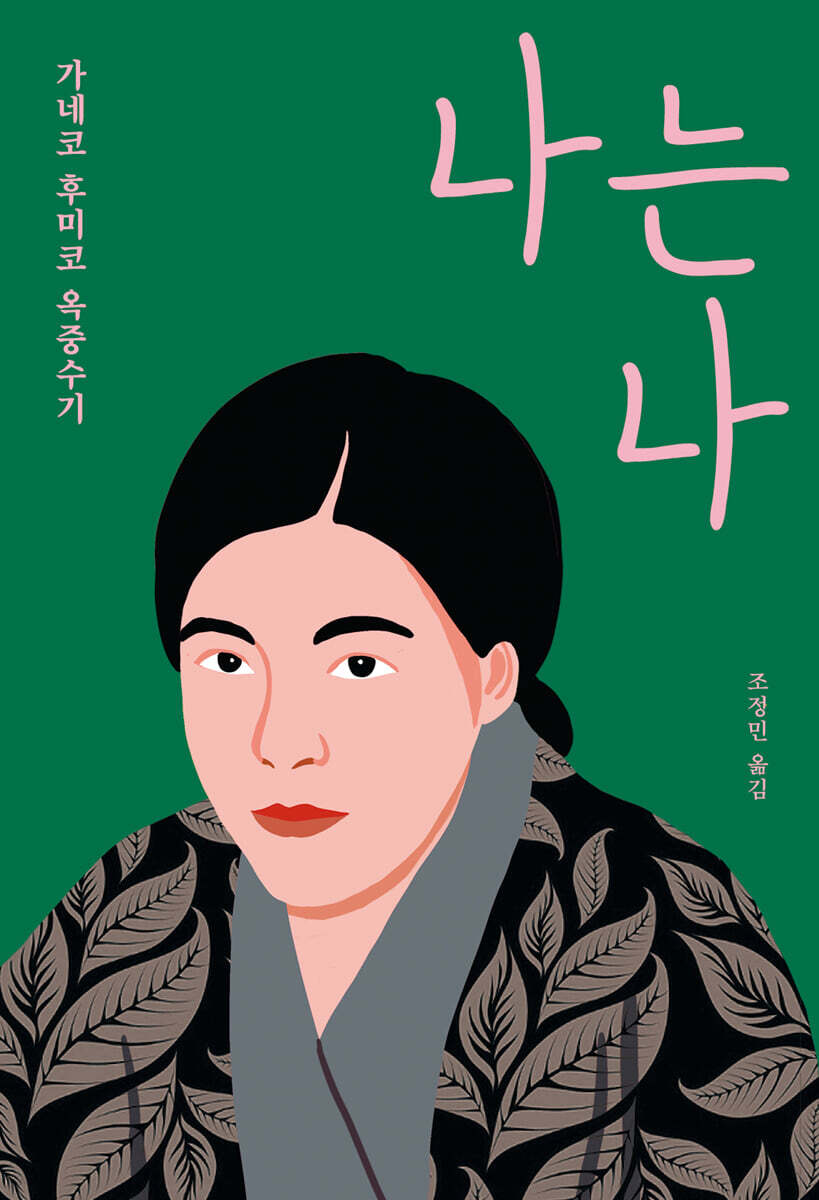
The newly released 『I Am Me』 cover features Fumiko Kaneko's illustrations, honoring his wish to live as himself more than anyone else.
Having lived a life as short as a flame, he looks back on his childhood and life to explore 'what made me this way'.
I hope more parents around the world read this memoir.
No, I hope that not only parents, but also educators, politicians, and social thinkers who want to create a better society will read it.
_〈Introduction〉
He recorded his life and burned it to create a better society, and it conveys the courage to live one's life tenaciously even in the face of an unfortunate fate.
This memoir is a story of a woman's struggle against a violent ideology to live as herself, a record of a person who lived 23 years of her life independently and subjectively, and a passionate gift from Fumiko Kaneko to readers who will carve out their own destiny.
GOODS SPECIFICS
- Date of issue: June 1, 2022
- Page count, weight, size: 384 pages | 140*205*30mm
- ISBN13: 9791168610309
- ISBN10: 1168610303
You may also like
카테고리
korean


korean


