

Biography of Cheon Gyeong-ja
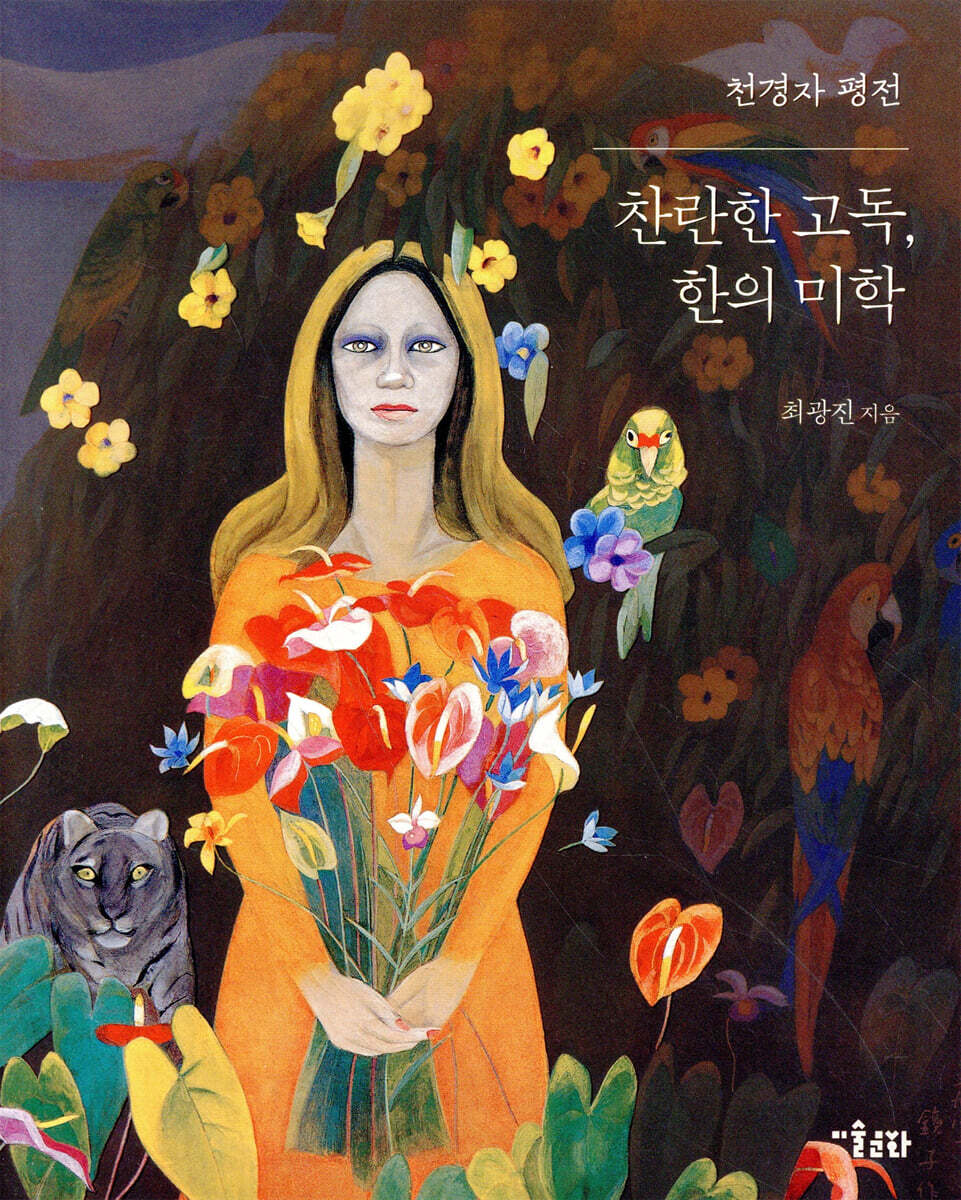 |
Description
Book Introduction
A painter of the soul who sublimated loneliness and sorrow into art.
The legendary life and artistic world of Cheon Kyung-ja, who lived like a flame
Even in the midst of life's trials that swirl like a stormy hill,
Cheon Kyung-ja, a natural artist who sublimated her loneliness and sorrow into art without compromising with the world.
To her, hardship and sorrow were nothing but fuel that fueled the flame of her soul.
Uncovering the truth behind the biggest scandal in the 20th century art world: [Portrait of a Beauty].
The legendary life and artistic world of Cheon Kyung-ja, with over 50 representative works.
Cheon Kyung-ja endured extreme poverty due to conflicts with two men caused by an unhappy marriage, the death of her younger sister, and the downfall of her family.
This book covers the life and artistic world of painter Cheon Kyung-ja, who pursued her dreams without compromising with the world despite suffering and adversity in unfortunate times.
By reading over 50 major works, a wealth of photographs, interesting anecdotes, and poignant stories, readers will naturally come to understand the background of the paintings' creation.
Furthermore, after encountering Cheon Kyung-ja's moving artistic spirit and aesthetic sense, you will realize your own dreams, which are fading away in today's bleak society, and gain the wisdom and courage to overcome the hardships and trials of reality.
- You can preview some of the book's contents.
Preview
index
In publishing a book
Prologue: The Magic of Cheon Kyung-ja's Art
Cheon Kyung-ja Syndrome | The Empress's Charisma | An Unhappy Life, a Happy Artist
1.
The root of Jeonghan
Spring in My Hometown | Adolescence's Wanderings | Studying Abroad in Japan, Filled with Dreams | A Love That Went Wrong | My Sister's Death | Grief Sublimated into a Snake | Busan Seagulls
2.
Shadow of Happiness
Rosy Seoul | Purple Fantasy: The Nerve of Color Painting | Gray Melancholy
3.
In search of dreams and romance
From New York to Samoa | Tahiti, in Gauguin's footsteps | Paris, splendid solitude | Italy, intoxicated by Botticelli | Vietnam, poetry on the battlefield | Africa, becoming the queen of the desert | India, a land of mystery and silence | Central and South America, in search of tango
4.
Literary Travelogue
Wuthering Heights | Hemingway's House | A Streetcar Named Desire | Monument Valley | Gone with the Wind
5.
Self-image in fantasy
The Tragic Heroine | Sister Gil-rye | Space Girl | Frida Kahlo and Chun Kyung-ja
Epilogue
An existential romantic who sublimated his own sorrow
Appendix: The Great Authenticity Controversy: The Truth About [Portrait of a Beauty]
The Origins of the Incident | How the Authenticity Determination Came | The Original of the [Portrait of a Beauty] | The Essence of the Problem and Its Solution
Cheon Gyeong-ja's chronology
List of illustrations
Detailed image

Into the book
We all suffer and are tormented by trials and tribulations, big and small, in life.
But if sadness can become beauty, then sadness is no longer an unpleasant pain.
Painter Cheon Kyung-ja transformed her tragic sorrow into splendid beauty, like a lotus blooming in the mud.
And despite experiencing unfortunate events, he did not compromise with the world and realized his dream as a painter.
In the artistic world of Cheon Kyung-ja, who cultivated her own colors like jewels even in splendid solitude, we learn the lesson that the pain and sorrow of life can actually become fuel that ignites the flame of the soul.
---From "Publishing a Book"
It is not yet known how the writer Cheon Kyung-ja will be evaluated by future generations, but it is not easy to find a writer who has dedicated her life solely to creation with such a fierce sense of authorship.
Although she was the most popular writer in Korea during her lifetime, her popularity was limited to her home country.
However, if the dramatic artistic world of Cheon Kyung-ja, who sublimated life's adversities into a fierce artistic spirit, becomes known, I believe she deserves to be loved by people around the world more than the Mexican female painter Frida Kahlo.
---From "Publishing a Book"
At that time, Cheon Gyeong-ja's charisma and pride as a painter were great.
She often used the expression, “I was an empress in my past life, but I am a poor painter in this life,” and as my encounters with her continued, I began to think that maybe she really was an empress in her past life.
And it was surprising that in a modern society where all kinds of social norms oppress individuals, the dream and elegance of an empress can still be preserved.
---From "Prologue: The Magic of Cheon Kyung-ja's Art"
Not long after I started sketching snakes, the Korean War broke out.
The world was in turmoil as rumors of North Korean invasion spread, but she visited the snake house every single day.
After spending a month like that, the poisonous snake's body began to look as breathtakingly beautiful as a flower.
She saw her own destiny in the behavior of snakes, which, when angry, become pale, bloated, coiled, or erect.
And I strengthened my will to live.
---「1.
From "The Roots of Jeonghan"
Has the torrential downpour of life, which poured down in torrents during my youth, finally ceased? In "After the Rain," umbrellas lie scattered on the ground, seemingly no longer needed.
In her twenties, she had to walk a lonely and solitary path in a storm where even an umbrella was useless.
However, the rain that seemed like it would never end has gradually subsided, and the flowers are now fluttering in brilliant purple petals, as if foreshadowing the sun that will soon appear.
The air was clear because of the rain that swallowed the dust of the earth, and the umbrella finally became a comfortable nest that protected the lonely self.
This minimal nest is a precious foundation that will help you endure a difficult life and nurture your dreams.
When this rain stops, the warm sun will soon shine and the flowers will come back to life.
---「2.
From "Shadow of Happiness"
As I became a professor at Hongik University, my life in Seoul gradually became more stable, but the bleak city life became a cause of depletion of the aesthetic sense necessary for an artist.
As her source of fantasy dried up and her motivation to create weakened, she felt a sense of crisis as a writer and went on a trip abroad.
It was not a trip for relaxation, but a fierce struggle to extend his life as a painter.
---「3.
From "In Search of Dreams and Romance"
The women of Cheon Kyung-ja wear gorgeous flowers on their heads, but their inner feelings of anxiety and sensitive nerves seem to be transmitted to their fingertips.
In this way, Cheon Kyung-ja's work does not deal with the idealistic primitivism of humans completely assimilating into nature, like Gauguin or Rousseau, but rather with her own inner conflict of longing for nature but being unable to assimilate into it.
In that respect, Cheon Kyung-ja's art is extremely personal and subjective, but by observing her own internal conflicts and confrontations, she elevates consciousness and creates a universal empathy that transcends autobiographical egoism.
---「3.
From "In Search of Dreams and Romance"
Cheon Kyung-ja was able to forget everything as she stood in the very place where Heathcliff had wandered in search of Catherine's soul and felt the wind blowing.
In a barren wilderness with nothing but heather flowers and weeds, Cheon Kyung-ja washed away the humiliation, discomfort, and painful wounds she had endured throughout her life.
In a way, her life was a stormy hill, enduring steep slopes, gentle hills, and winds that swept through deep valleys.
---「4.
From “Literary Journey”
Cheon Kyung-ja's female figures always wear colorful flowers in their hair, which was inspired by the crazy women in her hometown from her childhood who wore flowers in their hair.
Madness is a good and sad disease that occurs when one's desires are suppressed by others, leading to a loss of rational control, and when one tortures oneself and endures pain without subduing others.
A cunning and violent person is never crazy.
To be mad is, in other words, to be in a state of confusion, to have lost the gap between reality and fantasy.
What a sad happiness this is.
Cheon Kyung-ja felt a strange beauty in these crazy women whose fantasies became reality, and made this the subject of her work.
---「5.
From “Self-Image in Fantasy”
Some people dismiss Cheon Kyung-ja's work as the work of an artist who has absorbed the styles of Western artists such as Chagall, Gauguin, Rousseau, or Frida Kahlo.
However, aesthetically, neither Chagall's fantastical style nor Gauguin and Rousseau's primitivist works reflect their own existential anxiety and loneliness stemming from life.
Frida Kahlo's work also vividly reflects her own existential suffering, but it lacks the fantasy and romanticism to transcend it.
Unlike them, Cheon Kyung-ja is an existential romantic who resolves the conflict within life by allowing her painful existence and fantastical romanticism to coexist, and this originates from the unique Korean aesthetics of Han and Shinmyeong.
---From the "Epilogue"
This incident involved many leading experts in the Korean art world, and I, too, am not free from their relationships, but I have guarded myself against shame before the truth and history.
Sometimes covering up a wound can be a virtue, but if it continues to fester after decades, I think it's necessary to squeeze out the festering pain.
---From the "Appendix"
After returning to Seoul after a four-month stay in the United States, Chun Kyung-ja realized with a keen sense that “stopping writing is like death,” and silently picked up her brush for her final retrospective exhibition.
The rumor that he stopped painting after the [Portrait of a Beauty] incident is not true.
Rather, because he painted without being conscious of the art gallery transaction, he was able to produce masterpieces of artistic quality.
---From the "Appendix"
Time has passed, but if we stick to the principles, the solution to the [Portrait of a Beauty] incident is simple.
Since the artist has already stated that it is a forgery, if the National Museum of Modern and Contemporary Art wants to claim that it is genuine, it must present convincing evidence through an official announcement even now.
Until now, the rumors and reports secretly leaked by the National Museum of Modern and Contemporary Art were distorted and different from the truth.
Also, although there is no empirical evidence, if it is considered genuine, then an academic response is required.
If that is not possible, then even now, they should apologize for driving a writer to insanity, admit that it is a forgery, and dispose of [Portrait of a Beauty].
This is common sense that most people think.
The National Museum of Modern and Contemporary Art has consistently maintained distorted rumors and authoritative claims for 25 years without publishing a single academic paper on [Portrait of a Beauty].
---From the "Appendix"
I sincerely hope that this book will stimulate sound academic discussions, replacing distorted rumors, and serve as an opportunity to deeply understand and disseminate Cheon Kyung-ja's world of work.
Because only that will be the way to sublimate Cheon Kyung-ja's resentment over the [Portrait of a Beauty] incident that she will never forget even after death.
---From the "Appendix"
Publisher's Review
1.
The legendary life and artistic world of Cheon Kyung-ja, with over 50 representative works.
Cheon Kyung-ja endured extreme poverty due to conflicts with two men caused by an unhappy marriage, the death of her younger sister, and the downfall of her family.
This book covers the life and artistic world of painter Cheon Kyung-ja, who pursued her dreams without compromising with the world despite suffering and adversity in unfortunate times.
By reading over 50 major works, a wealth of photographs, interesting anecdotes, and poignant stories, readers will naturally come to understand the background of the paintings' creation.
Furthermore, after encountering Cheon Kyung-ja's moving artistic spirit and aesthetic sense, you will realize your own dreams, which are fading away in today's bleak society, and gain the wisdom and courage to overcome the hardships and trials of reality.
2.
The aesthetics of Korean medicine by Chun Kyung-ja, a Korean painter no less than Frida Kahlo
Although Cheon Kyung-ja was the most popular writer in Korea during her lifetime, her popularity was limited to her home country.
The author argues that if Cheon Kyung-ja's moving artistic world, which sublimated life's adversities into a fierce artistic spirit, becomes known, she will be worthy of receiving the love of the world, even more so than the Mexican female painter Frida Kahlo.
This book does not stop at introducing Cheon Kyung-ja's life journey, but also aesthetically addresses how human sorrow and resentment can be sublimated into art, and how Cheon Kyung-ja's unique world of art is similar to and different from artists such as Chagall, Gauguin, Rousseau, or Frida Kahlo.
By doing so, we shed new light on the artistic world of Cheon Kyung-ja, buried in [Portrait of a Beauty], and preach Cheon Kyung-ja's aesthetics of Korean medicine, which are different from those of Western artists.
The author, who recently received attention for his book, “Korean Aesthetics: Discussing Differences with the West, China, and Japan,” defines Cheon Gyeong-ja as an “existential romantic” who resolves the conflict within life by allowing her existence and romance to coexist, and argues that this stems from the unique Korean aesthetic of han and shinmyeong that appears in gut (traditional Korean folk music) and pansori (traditional Korean music).
3.
Scandal of the Century: Tracing the Truth Behind [Portrait of a Beauty]
The [Portrait of a Beauty] incident, which brought the greatest pain and ordeal to Cheon Kyung-ja in her turbulent life, is remembered as the biggest scandal in the Korean art world of the 20th century.
Even though 25 years have passed since the issue first surfaced in 1991, the noise surrounding [Portrait of a Beauty] continues.
The author, who planned the Cheon Kyung-ja retrospective at the Ho-Am Art Museum in 1995 and once served as an appraiser for the Gallery Association, is using empirical data to dissect the distorted rumors and truths about [Portrait of a Beauty] and approaching the truth about [Portrait of a Beauty] through aesthetic analysis.
He also argues that we should refrain from authoritative claims and use academic discussions as an opportunity to understand Cheon Kyung-ja's artistic world.
That is the only way to sublimate Cheon Kyung-ja's resentment over the [Portrait of a Beauty] incident that she will never forget even after death.
GOODS SPECIFICS
- Date of publication: June 25, 2016
- Page count, weight, size: 256 pages | 541g | 173*215*15mm
- ISBN13: 9791185954158
- ISBN10: 1185954155
You may also like
카테고리
korean


korean


